Category Archives: Movie Reviews

Our reviews and thoughts on the latest releases, classics, and nostalgic favourites. Things we loved, things we hated, and worst of all, things we were ambivalent about.

Da 5 Bloods

The Vietnam War. Yeah, we all flinch at the words. As a Canadian, I actually didn’t learn about this in school as we were “non-belligerent” (what a term!) (also, we were busy learning about our contributions in WW2, a war America remembers fondly by screaming at random Europeans “we saved your asses!” but Canadians remember as the war we joined immediately because we “thought Nazis were bad” and America ignored for two whole years because “Nazis were maybe okay” and finally joined when “something bad happened to us, on our soil.” Ahem) and I was born long enough after it that there was already a hit Broadway musical about it. But we can’t help having absorbed quite a bit about it, through pop culture of course, and by sheer proximity to our war-mongering neighbours to the south. I knew that it was a tough war because many Americans came to oppose it, which was probably the right attitude, but it meant that a lot of returning vets didn’t get the respect they deserved or the help they needed – which is an American hallmark, actually, by no means exclusive to the Vietnam war. And I knew that bad shit had happened there: we called it the My Lai Massacre; the Vietnamese call it the Son My Massacre, but either way you slice, it meant that 500 unarmed civilians – men, women, children, babies – were slaughtered by U.S. soldiers. Women were gang-raped and their bodies mutilated, as were children as young as 12. When their cover-up was eventually busted, 26 soldiers were charged with criminal offenses but only Lieutenant William Calley Jr. was convicted. Found guilty of killing 22 villagers, he was given a life sentence but served only three and a half years under house arrest. And for me, the Vietnam war was oddly muddled up with hippies and their peaceful sit-in protests and with civil rights and their peaceful marches. And historically, that’s correct. Some were putting daisies into guns for peace and others were being sent to war, and those things were happening concurrently but not equally. Young black men were being sent to Vietnam in disproportionate numbers while young white men could easily avoid it simply by attending college: Bill Clinton deferred once for college, Joe Biden and Dick Cheney each deferred 5 times. And if staying in school indefinitely wasn’t your bag, your wealth and privilege could work for you in other ways; Donald Trump avoided the draft 4 times with educational deferments but the 5th time Uncle Sam came calling he out and out dodged it – his father called in a favour from a Queens podiatrist who wrote up a false diagnosis of “bone spurs” even though he’d been found physically fit to fight just two years prior and has since said it just “healed up on its own” with no treatment necessary!

Anyway, black civil rights leaders, including Martin Luther King Jr., were opposed to the war for exactly this reason. Once again, black men were being asked (well, told) to serve their country, and there weren’t any colleges or doctors writing bogus deferrals for them. They were asked to protect the freedoms of people in other countries when they still didn’t have that at home for themselves. They were called up in greater numbers of course, and were a higher proportion of combat casualties in Vietnam, and African American soldiers encountered bigots in their ranks, discrimination in the field, disadvantage when it came to promotions and decorations, and fewer services if and when they returned home. That’s a whole lot to untangle, but have no fear: Spike Lee is reaching back into the baggage of his righteous anger, and he’s not afraid to tackle these iniquities.
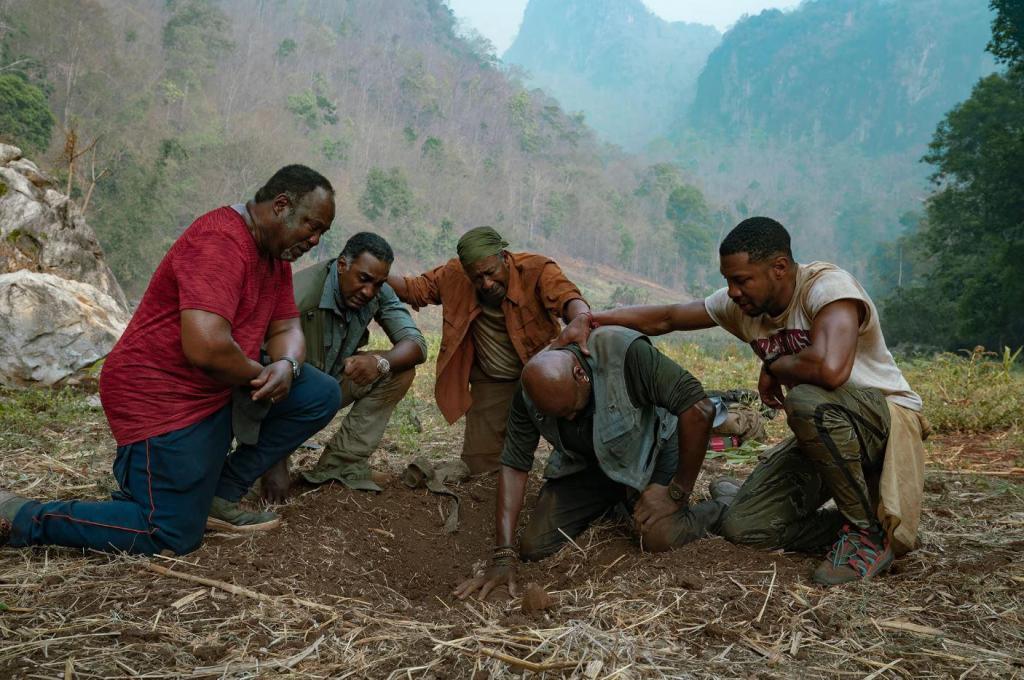
In Spike Lee’s Da 5 Bloods, Norman (Chadwick Boseman), a soldier in 1970s Vietnam, tells us “War is about money. Money is about war. Every time I walk out my front door, I see cops patrolling my neighborhood like it’s some kind of police state. I can feel just how much I ain’t worth.” Spike Lee always ends up sounding prescient in his films, but his trick is simply having the temerity to acknowledge that the patterns in our shameful history march on today.

Many years later, four Vietnam vets, Paul (Delroy Lindo), Otis (Clarke Peters), Eddie (Norm Lewis), and Melvin (Isiah Whitlock Jr.) return to Vietnam to repatriate the body of their fallen comrade and 5th Blood, Norman…and also the pile of gold they stashed along with him. Now surely worth millions of dollars, you might guess that this buried treasure is not going to bring out the best in even the most devoted of brothers in arms. Greed, guilt, nostalgia, regret – these we understand, but Paul’s motivation is particularly murky. Unabashedly sporting a MAGA hat, prone to racist outbursts, he’s convinced himself that he’s doing this for Norman’s honour. But propelled by fury, by a barely-restrained rage for the many ways he and his African American servicemen were vilified for their role in Vietnam, that pile of gold bricks starts to feel like reparations. And this recovery mission starts to feel more like one of revenge – against an enemy that Paul can no longer distinguish.

Delroy Lindo’s performance is the sun around which all the other planets orbit, and like all bright balls of fury, Paul is flirting with supernova. And for his part, Spike Lee has of course never been known for his reticence. As a director, he’s prone to flourishes, allowing Paul’s stream-of-consciousness mutterings to morph into a rousing monologue, staring down the barrel of the camera, staring us down, charging us with his passion and urgency. Lee splices the story of his 5 Bloods with real life footage – Muhammad Ali’s conscientious objections, the Kent State massacre, the Black Lives Matter movement (yes, his film is once AGAIN that prescient, he’s taking the pulse of America right from the jugular, right from its crushed windpipe, his alarm and his agitation a perfect reflection of today simply by being unafraid to hold an honest mirror up to the ugliness of yesterday). His script stresses the cyclical nature of the violence without letting anyone off the hook. Spike Lee’s strength as a filmmaker has always been his point of view, his authorial voice resonating backwards and forwards through time, the immediacy of his plea undiminished.

Da 5 Bloods is as potent as anything Spike Lee has ever done, and possibly the boldest feather in Netflix’s cap. The film is visually arresting, the aspect ratio in constant flux as we travel through time (and our four main actors embody their characters in both timelines, a choice I can only assume is deliberate since Netflix has proven willing to splash out for de-aging, perhaps a nod to these men wanting and needing to believe they are still heroic, still capable, still virile, or a symptom of having glorified the time in their heads, and wanting to recapture that now, before it’s too late). But most of all I admire Da 5 Bloods as an allegory for reparations. Not even an allegory, really, but a template what financial amends might look like and how we can begin to take the next steps forward.


The King of Staten Island

Spoiler alert: it’s Pete Davidson. He’s the king of Staten Island. Supposably. You know, Pete Davidson. The young SNL cast member who told us, from experience, that you shouldn’t choose your rehab while you’re high (I believe “equine therapy” was involved), and who was briefly engaged to Ariana Grande.

Pete Davidson has obviously had his share of addictions issues. He’s suffered from depression, anxiety, PTSD, and borderline personality disorder. His mom got him through high school by bribing him with stand-up in exchange for his attendance. He smokes weed so he can perform. He smokes weed to treat his Crohn’s, a painful medical condition. He smokes weed because he likes it. And maybe he smokes weed to forget his traumatic personal connection to the most horrific day in American history: his father, a fire-fighter, died in 9/11.

The King of Staten Island, a collaboration between Pete Davidson and Judd Apatow, is a semi-autobiographical film about Davidson’s particular relationship/struggle with growing up.

“Scott” (Davidson) is a 20-something pothead who dreams of being a tattoo artist, as evidenced by some very inconsistent ink on his friends’ bodies. One of his canvasses/victims is a 9 year old boy, and you can bet that boy’s father is soon pounding on Scott’s mom’s door. Did I mention he still lives with his mom? He does. His younger sister has recently gone off to college and now his mom Margie (Marisa Tomei) is mourning her empty nest while also not actually benefiting from it because of course Scott won’t/can’t actually leave, drawing permanent stickmen on his friends’ torsos not paying particularly well/at all. But it turns out that tattooing a 9 year old boy has an upside: the boy’s angry father Ray (Bill Burr) takes Margie out on her first date in 17 years. Which, admittedly, is nicer for her than it is for Scott, who isn’t exactly keen to see his dead father replaced, isn’t a big fan Ray, and isn’t thrilled to be displaced by him.

Judd Apatow is of course the king of comedy. He’s paired up with Steve Carell (The 40-Year-Old Virgin), Seth Rogen (Knocked Up), Adam Sandler (Funny People) and Amy Schumer (Trainwreck) – comedians at the top of their game, or just cresting their fame, and Apatow’s gotten career-best performances out of all of them. It’s weird then that this collab with Davidson has set new watermarks for both juvenile humour and serious themes. Together they navigate sacrifice and childhood trauma but manage to season generously with firehouse frat-boy antics. Like most of Apatow’s films, it’s long for a comedy; the script is loose, breezy even, and Apatow gives his actors plenty of space. It’s low-key for the most part, but it hits on both fragility and hilarity with surprising ease. Pete Davidson may not be the most versatile of actors, but he’s good enough to play some version of himself, seemingly relaxed and comfortable, and hopefully somewhat cleansed by the process. Healing comes in all shapes and sizes and grief is a malleable, personal thing. Sometimes it even looks like an R-rated comedy.

Keep the party going with our Youtube review!

365 Dni (365 Days)

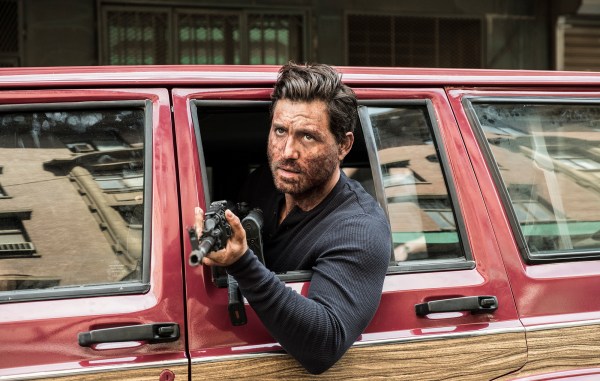
Laura is kidnapped on her 29th birthday by a criminal who saw her in a vision after being shot. The criminal’s plan is to hold Laura captive for one year and wait for her to fall in love with him. And in the meantime, force himself on her at every turn. Essentially, this is a Beauty and the Beast situation, if Beast was a sex offender.

msemail_days__5_jpg-JS575478900The worst part is this guy clearly believes Laura will love him despite his abuse, or possibly because of it. Has he been watching too much Disney, too much porn, or both?
The second worst part is the English, the low quality of which seems like it’s dubbed, but it’s not. This is a Polish film that uses three languages, Polish for Laura, Italian for the criminal, and “English” for when they talk to each other. I’m almost positive you will recognize many of the phrases in this film, such as:

“Who the fuck you are?”

Or, “I’m not a bag of potatoes.”

Or, “If you feel like running you should wear a different pair of shoes.”

Or, “Why are you looking at it? Do you want to touch it?”

And that’s just a small sample of the prose that’s on offer. Naturally, the “it” in that last one is the rapist’s penis. And naturally, we shut off this movie at that point, much later than we should have. Here’s hoping I can save you from making a similar mistake.

I Am Not Your Negro

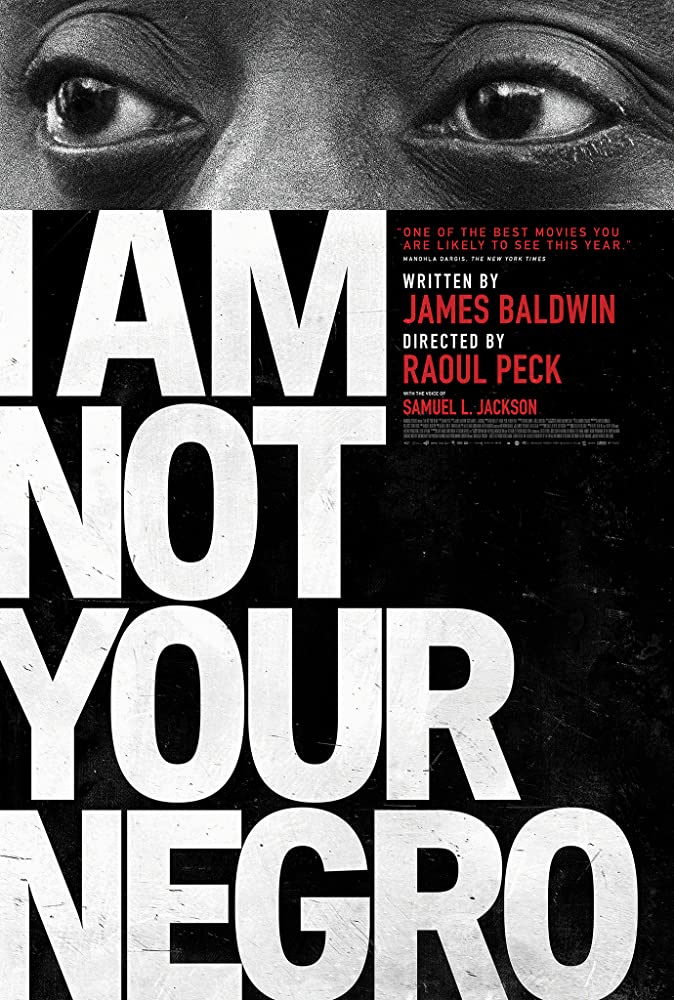
In 1979, James Baldwin wrote a letter to his agent describing his next book, “Remember This House.” It was to be a revolutionary, personal account of the lives and assassinations of three of his close friends: Medgar Evers, Malcolm X and Martin Luther King, Jr. But when Baldwin died, he’d only managed about 30 completed pages of this manuscript. Filmmaker Raoul Peck delivers a stirring documentary as an ode to the book James Baldwin never finished, a work that enmeshes the civil rights work not only of these 3 great men, but that of Baldwin himself.

Samuel L. Jackson narrates some of the strongest and most poetic words – which will not surprise you if you’ve read Baldwin before. He had his finger on the pulse of America, his America, the oft-forgotten America, and he reported on his people with undeniable lyricism, beauty, and confidence.

The documentary expands on his thoughts with archival footage, which is used most effectively when bridging words he wrote 40 or 50 years ago to images of modern conditions and protest, which still apply. I Am Not Your Negro is about civil rights, but it’s also an expression of identity, of unrest, of passion, of hope. He wrote about his people because he saw beauty there, even in the struggle. He was buoyed by it, as much as they were by him. They shored each other up, and as these same issues continue to be fought for even today, it is no wonder we still turn to his words of wisdom and of utter poetry.

Fruitvale Station

Cineplex is offering Canadians a whole bunch of movies that speak to the black experience for free this month – check here for a complete list – and this is one of them, as it should be. I hadn’t seen it since it was released in theatres and Sean hadn’t seen it at all.

It’s been 7 years since this movie came out, but I still remember how deeply it had moved me, saddened me, enraged me, which is why a part of me wasn’t super keen to revisit it. And another part of me was disgusted by that part’s response: the suffering and inherent iniquity of my fellow human beings makes me uncomfortable because IT SHOULD. My ancestors helped create this mess, my privilege benefits from it, and my inaction maintains it.

Oscar Grant III was just 22 years old when he was shot by a white cop while lying face down on the ground. It’s been nearly 12 years since his death signaled a significant problem in policing, and nearly 12 years since we’ve continued to allow our darker skinned friends to die for their melanin. The problem has of course existed as long as policing has; American law enforcement was built in the wake of slavery as a new way to round up black bodies and extort free labour from them, but only in this century has the presence of cellphones allowed these shootings to be captured on film. Grant’s name joins a long list of black men and women murdered by police.

Fruitvale Station is the first feature length film by director Ryan Coogler and his first collaboration with Michael B. Jordan – but not his last. His next film, Creed, gives Rocky fans (and Rocky himself) a strong black protagonist to root for, an extension of Apollo Creed’s (Carl Weathers) legacy, but also a modern American hero for a new audience to look up to. Coogler’s next film takes that premise to an even greater height with Marvel’s first black super hero movie, Black Panther. Through Wakanda, Coogler explores themes of responsibility and identity. He casts Jordan as Killmonger, the fearsome but ultimately sympathetic villain. He helps T’Challa realize that Wakanda’s relative strength and power means they owe something to their neighbours in need, a message that seems not to permeate stubborn white audiences.

Cineplex and other streaming services are also offering another Michael B. Jordan super hero movie for fee this month: Just Mercy. Bryan Stevenson is a real-life African American lawyer who helps wrongfully convicted death row prisoners. Just Mercy is further proof that Michael B. Jordan is himself a black idol, and a major, bankable Hollywood star, living up to his name’s GOAT status.

The Night Clerk

Bart Bromley is an Aspie; he’ll tell you as much in one of his many long-winded, one-sided “conversations.” Bart (Tye Sheridan) lives with his mother. Well, not so much “with” as very much separately, but in her basement. She (Helen Hunt) leaves his meals on the top stair, and he eats them alone, while watching his filmed-in-secret videos, studying and imitating the people he tapes. Wanting to be like them, or at least pretend more convincingly.

Bart is a hotel night clerk, which, not coincidentally, is a great place to hide a bunch of cameras and really get into voyeurism for real. He doesn’t mean to do anything bad, it’s just that observing people is how he learns to live among them. Inevitably (it seems), one night he checks in a woman who is then murdered in her hotel room. Bart is at home, watching it happen. He sprints back to work and arrives just in time for the detective (John Leguizamo) to find him covered in blood, standing over her body. Not a good look, and Bart’s demeanor doesn’t exactly exude innocence. Transferred to another hotel, he checks in Andrea (Ana de Armas), an even more beguiling guest, one who he can actually talk to. So it kinda sucks when it seems she might end up the next victim.

Sheridan and de Armas are actually quite good in this, which is frustrating because the movie itself is…not. Sheridan’s put in the work, and his performance is convincing, even if I’m not thrilled by how his Asperger’s is portrayed. The real problem is that for a thriller – for a murder mystery! – there are no thrills whatsoever. Not even a frisson. And even though there’s a murderer unaccounted for, we don’t really care. There’s no tension, no real worry. The detective is the most chill, low-key cop you’ve ever met, the mother is strangely hands-off, Bart’s boss is surprisingly accommodating, and Andrea is an understanding and receptive romantic interest. Never has being a murder suspect been so easy breezy!

Writer-director Michael Cristofer doesn’t find anything interesting beyond his basic premise, and he fails to make a significant connection with his audience.

The Last Days of American Crime

Welcome to near future Detroit, just a few days before a new mind-control signal will be broadcast across the U.S.A. to end crime.  In the lead-up to turning on the mind-control switch, anyone trying to cross the border to Canada is shot on sight by the fine, upstanding members of the U.S. Border Patrol.  Also, all police officers are being laid off, which puts an awful lot of faith in this new system to be in good working order as it comes online. Oh, and for some reason you have to trade in your old money for new money as part of this switchover. Last_Days_Of_American_Crime

Anyway, a few idiots decide to stage the last great heist in American history (hence the title) by hacking the mind-control system, stealing a billion dollars’ worth of the old money, driving to Canada, and living free for the rest of their lives. That is literally their plan, word for word.

Why do they want to steal money that the U.S. government has marked for destruction? Well, that’s why I called them idiots in the previous paragraph. Their plan doesn’t make sense. And that’s just the heist. Don’t even try to reconcile the implementation of the mind-control system with little things like the U.S. Constitution or self-defence, or make sense of why people are lining up to kill themselves before this system comes into effect, or figure out why there are numerous large protests IN FAVOUR OF the mind-control system.

This movie is absolutely intolerable for many reasons but is absolutely unforgivable right now since police officers and FBI agents abuse incapacitated subjects ON MULTIPLE OCCASIONS. All the stupidity in the script pales in comparison to Netflix’s decision to release this in the same week as George Floyd was laid to rest.

Avoid this film at all costs.


God’s Own Country

God’s Own Country is the poor man’s Brokeback Mountain. Well, that’s not fair. It’s not just the men who are poor, even the mountain is more of a hill, or just, you know, fairly flat land, maybe?

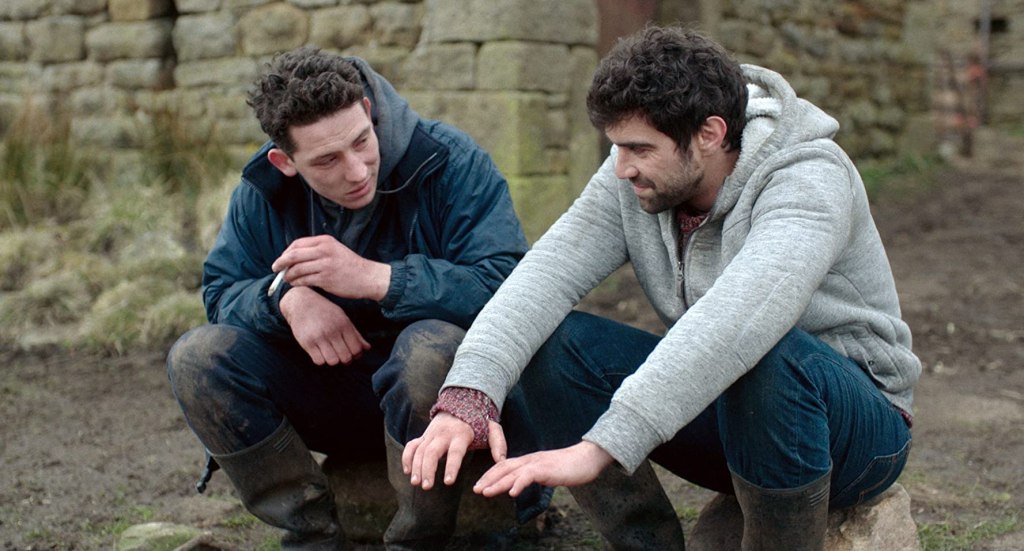
It is spring on the Yorkshire farm where Johnny (Josh O’Connor) works from dawn until dusk. It is perhaps not anyone’s first choice to waste one’s youth doing backbreaking work on an isolated farm, but for Johnny, there’s not much choice at all. The family farm is in disrepair and he’s the only labour, the only other inhabitants being his disabled father Martin (Ian Hart) and his elderly grandmother (Gemma Jones), who shower him with love and gratitude. Just kidding. What would be the movie in that? Johnny toils ceaselessly only to be met with criticism and an ever-growing list of tasks. It’s no wonder he escapes into town at night, to numb his frustration with shots and casual sex. He’ll be wrecked in the morning, and take abuse for it, but there is literally no other joy in his life.

And then lambing season comes. Johnny will spend it camping in whichever remote location the ewes have chosen. They hire Gheorghe (Alec Secareanu), a Romanian migrant worker, to help out, and as we know from Enis Del Mar and Jack Twist, those cold and forbidding nights inevitably end in some hot hot heat. They fall upon each other roughly, their early lovemaking looking a lot like rodeo calf roping, as only sex between cowboys and farmers can. Their initial passion is hungry and desperate but eventually makes way to an intense but intimate relationship.

Writer-director Francis Lee is speaking to us from experience. His story is not about forbidden love or being different, or searching for acceptance. His theme is much more universal: it’s about loneliness. It’s about how love can give meaning to your life if you let it. It’s about the bravery necessary for letting love in even when you feel like a garbage person. I’m paraphrasing of course, but Johnny doesn’t feel ashamed to me, or all that concerned about hiding. Mainly he seems broken and helpless and angry.

The setting is of course thrillingly authentic, painted in graphic, gritty detail. Cinematographer Joshua James Richards does amazing work, allowing Johnny to literally come into the light.

O’Connor and Secareanu give performances filled with achy longing; even as they repair holes in the farm’s fencing, they are dismantling their own barriers. Francis Lee delivers his romance with a dose of reality; we don’t smell roses, we smell manure. But there is beauty in honesty, and underneath the grime and filth is transformative vulnerability.

Despite my initial impression, God’s Own Country is not some poor relation of Brokeback Mountain. It is its son, born of a generation more hopeful and more tender. Jack and Enis would be proud.

Judy & Punch

If your memory needs refreshing, Punch and Judy are traditional puppets who have been entertaining crowds in the UK and beyond for over 400 years. They started out as marionettes in Italy; Punch was derived from the Neapolitan stock character of Pulcinella, which was anglicized to Punchinello and eventually just Punch when the show made the jump over to Great Britain, and the marionettes became hand puppets out of convenience or laziness or both.The show costarred Mr. Punch’s wife, Judy, and a cast of rotating characters. Much like a soap opera, the story wasn’t fixed, but it always featured some key elements: their baby, mishandled by Punch, a hungry crocodile, an officious policeman, a prop string of sausages, a generic hangman named Jack Ketch. The show was a series of scenes in which various foes come for Punch, but each is eventually victim to his slapstick (note: though Mr. Punch does an awful lot of clowning around, his slapstick is indeed a large stick used for slapping people, often to death). Mr. Punch will then utter his famous catchphrase “That’s the way to do it!” which is how the expression “pleased as punch” was derived – from his sense of gleeful self-satisfaction. Despite the numerous murders, a Punch and Judy show is a comedy, often provoking shocked laughter.

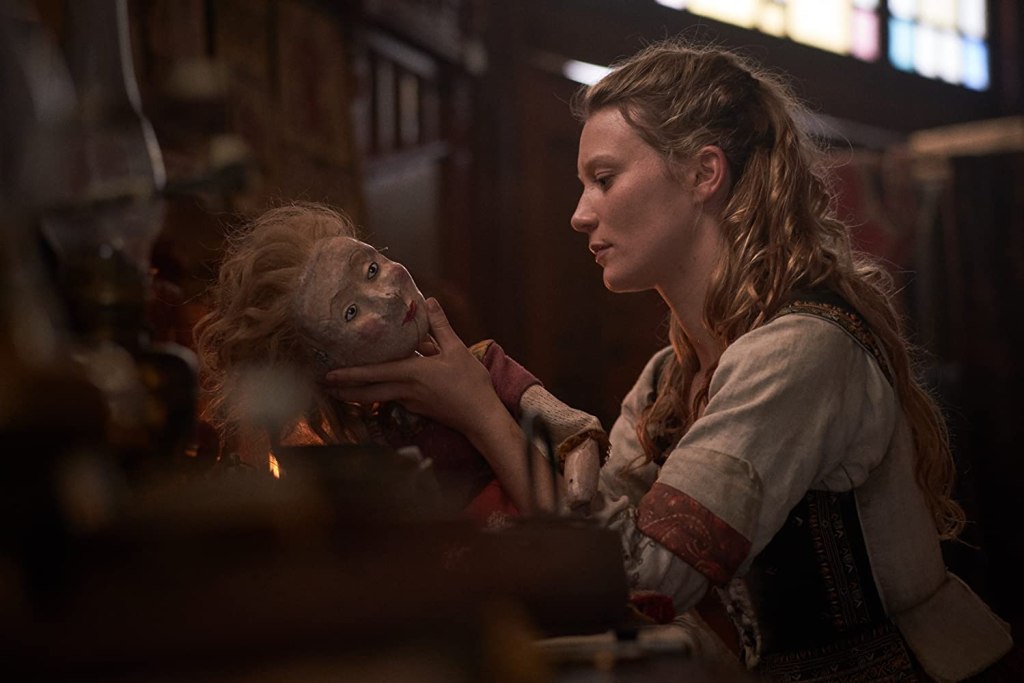
Cut to 2020 when writer-director Mirrah Foulkes re-imagines the show’s origin story in her own sordid tale, called Judy & Punch. In the tiny 17th century English village of Seaside (actually nowhere near the sea), Punch and Judy entertain the villagers with their weekly puppet show. The violent show is right at home among these people, who satisfy their bloodlust with public “stoning days” where their anarchic mob rule interprets random coincidences as witchcraft, condemning their neighbours to die – unless of course the crime is though to be particularly heinous, wherein they might just be hanged immediately.

At home, Punch (Damon Herriman) is a drunk and Judy (Mia Wasikowska) his hard-working and long-suffering wife. One day while she makes a quick trip to market, Punch accidentally kill their baby during a drinking binge. Judy has been gone but an hour and is understandably heart broken to find her baby murdered but her sobs only enrage Punch, who then makes her a victim of his slapstick. He disposes of both bodies.

Allow me to interrupt myself here to say this: when the baby dies, it is under circumstances so perfectly orchestrated, so perfectly designed and directed that I uttered a single “Ha!,” followed by a horrified silence as I processed that the baby is in fact dead. If you were not familiar with the particular and very specific brand of dark humour found in a traditional Punch and Judy show, you might think that this movie has a serious problem with tone. But understanding the history means you cannot fail to admire Foulkes’ ability to find what has to be the very slimmest of veins wherein a baby’s death can be both funny and cruel, and executing it to perfection.

In the film, Judy narrowly survives the beating, unbeknownst to Punch, and hides among a band of outcast heretics while she heals. Together they plot revenge not just on Punch but indeed on the whole town who have so successfully driven out or eliminated anyone with a difference. In this way, Foulkes is able to explore the kind of atmosphere where such a show could have proliferated. Punch is undoubtedly a bad man. Each show usually includes a scene wherein Punch lays out the bodies of each and every one of his victims for the audience to count, yet they still cheer when he bests the hangman, or indeed even the devil himself. These were cruel times fueled by fear: if not them, then us.

Mia Wasikowska delivers a strong performance as a woman with talent, brains, and resources, yet so few options that she must hide in the forest for fear that her survival may be interpreted as witchcraft. Herriman pulls off an even harder feat as damned Mr. Punch: a fool, a predator, a charmer, a pretender. The thing about puppets is that whether dancing with their wives or bludgeoning them, their expressions never change. Perhaps a painted-on grin helped the audience swallow his violent attacks. But our Mr. Punch is a man, a puppeteer. Herriman has to be believable as both the bumbling buffoon chasing after a dog who’s stolen his sausages, and mere moments later, a father who has not only charbroiled his own baby, but pinned her murder on elderly innocents. And he is!

I am reminded of a time back in 2016 when I reviewed a “black comedy” that I felt was SO black it merited a whole new category, so I invented the Vantablack comedy, Vantablack being in fact a colour that is blacker than black, absorbing all but 0.035% of light; a black so black our human minds can’t actually perceive it. I would like to unroll this categorization once again, in honour of Judy & Punch, Mirrah Foulkes’ audacious directorial debut.

Judy & Punch is available digitally on Apple/iTunes as well as VOD services.


To Wong Foo Thanks For Everything, Julie Newmar

June seems like a good time to revisit this film – it’s been a while, but watching it makes me realize that it’s been a LONG while.

The 90s were an interesting time. After the conservative 80s, the 90s felt like a time of revolution. We thought we were cool and edgy; we were open to the changing times. But looking back now, it’s much easier to spot that we weren’t pushing boundaries so much as testing them. We were starting to explore this LGBTQ thing (though we were still a good decade away from calling it that), but doing it safely, within familiar contexts.

Hollywood had already given us Some Like It Hot and Tootsie and Mrs. Doubtfire. We could deal with dudes in dresses. So To Wong Foo Thanks For Everything, Julie Newmar gave us three.

Drag is an art form which has held an esteemed position within the gay community for decades. Far more than entertainment, it was an expression of one’s true self, it was a middle finger to the political establishment, a celebration of life, an opportunity to let loose at night after being closeted all day, a dismantling of traditional notions of gender, a platform for activism, an embrace of difference and diversity, a way to foster community, to plant one’s flag in the ground and say: this is me.

[I understand that some women are concerned about the appropriation of female bodies and the highly stereotypical and overly sexualized images of drag’s display of femininity in order for men to gain power, prestige, and status within the queer community. Generally, I tend to admire a drag queen’s ability to reject gender norms and embrace a whole spectrum of expression, but I do cringe over some of the misogynistic terms, such as a queen who is very feminine-presenting (“passing”) being labelled ‘fish.’]

But with my 2020 goggles on, and drag having largely been adopted by the mainstream, I can’t help but notice To Wong Foo presents an incredibly confusing portrait of drag; namely, that drag queens are always in drag. For most drag queens, the heels and lashes and hip pads are part of the uniform of their work – often a staggeringly and prohibitively expensive uniform, but still. They dress for their performance, but they don’t live as women. They are, for the most part, gay men. There are occasionally drag queens who transition male to female, but that’s very much the exception.

Let’s call Wong Foo what it is: three cis-gender, heterosexual Hollywood actors wearing dresses and gesturing with a limp wrist. If this film were made today, there’d be an understandable outcry. But in 1995, this shit was legitimately (and sadly) groundbreaking.

Wesley Snipes and Patrick Swayze play Noxeema and Vida, two NYC queens newly crowned and headed for Hollywood to compete in Miss Drag America. Like all good fairy dragmothers, they bring along baby drag queen Chi Chi (John Leguizamo) to teach her the rules of the game. They travel cross country in a big ole Buick convertible, which of course breaks down in Hillbilly City. Sorry, that’s unfair. It’s nowhere near being a city, or even a town. I don’t think it has a single stop light. Population: 3 wife beaters, 4 rapists, 1 bigoted cop, and 1 lisping shop owner (see Michael Vartan as ‘Rapist #1’ and Chris Penn as ‘bigoted cop’).

Anyway, as I said, the 3 “drag queens” are NEVER out of drag. They discuss identity but don’t get it right. And not a single one of them would be allowed to compete on RuPaul’s Drag Race – I shudder to think what Michelle Visage would have to say. But mama Ru did give the film her blessing (in a cameo, she appears under maybe the best drag name ever: Rachel Tensions, confederate flag dress and all) alongside other drag stars Lady Bunny, Candis Cayne, Coco Peru, Hedda Lettuce, and Lady Catiria.

Regardless of its inaccuracies and liberties, the gay community embraced its camp, but a broader audience flocked to it too, opening the film at #1 at the box office. It’s no Paris Is Burning. It’s a product of its time, and a landmark in the ongoing fight for queer representation.