Category Archives: Sucks ass

These movies are to be avoided at all costs. The only good thing about them is probably our review.

Music

You may already know about this movie even if you haven’t seen it. Sia, the popular singer-songwriter with the oversized wigs, is its director and co-writer, but more importantly, is the woman who made a movie about a young woman on the autism spectrum without casting or seemingly consulting anyone on the spectrum. And when she was called out about it, she got kind of defensive. Understandable, maybe, but not a great look. She has since half-apologized, the very definition of too little, too late.

While I definitely believe that inclusion is good and right, and representation important, I decided to see if I could set the controversy aside and enjoy the movie anyway. The short answer is NO. The long answer is:

Music is not about a young woman on the spectrum named Music. Music (Maddie Ziegler) lives with grandma Millie (Mary Kay Place), who has carefully constructed a safe space in which Music can exist. Music is barely verbal, but she likes to go for walks and visit the library, and she’s never without her headphones. But then Millie suffers a deadly stroke and Music’s sister Zu (Kate Hudson) has to step up and take custody, which is a real head scratcher since Zu is an addict and a drug dealer recently released from prison and currently on parole. How she gets custody is beyond me. She can barely care for herself, she’s 40 but hardly an adult. Caring for a special needs sister seems wildly beyond her, which is probably why things get so wildly out of control. Anyway, this movie is not about Music, it’s about Zu. Music is merely used as a prop to help Zu achieve her goals. She’s a plot device on Zu’s road to redemption.

While this is hardly Hollywood’s first ‘marginalized person as a plot device’ narrative, it is a particularly offensive portrayal by Maddie Ziegler, who, by her own admission only prepared for the role by watching Youtube videos of kids on the spectrum having meltdowns. Ziegler’s performance is without depth or nuance. It’s one-dimensional, insensitive, and doesn’t begin to describe a person as a whole. But director Sia doesn’t understand this, and the script, co-written by Sia and children’s author Dallas Clayton, isn’t interested in fully-realized characters anyway. Music remains opaque and unknowable, Zu is hardly treated to anything resembling an arc or development, and other characters aren’t just basic but sometimes downright offensively stereotypical. It’s surprising that Sia was able to get the likes of Hector Elizondo, Mary Kay Place, Ben Schwartz, and Leslie Odom Jr. to sign on, but then again, none of them would have seen Ziegler’s patronizing performance until everyone was already on set and the ink on contracts was good and dry. But the whole notion that Zu can achieve some sort of absolution merely by learning to love her “challenging” sister is gross. Music doesn’t exist to make Zu look good. She shouldn’t be used as a way to illustrate someone else’s good vibes and positive intentions. She’s not an instrument or a stop along her big sister’s victory tour; her depiction as such is cruel and irresponsible. Why does a movie named after her fail to see Music as a person?

This patronizing and poorly judged filmed is frequently interrupted by an entire album’s worth of Sia songs – performed by Ziegler, Hudson, and Odom Jr. – and their accompanying music videos, which masquerade as insight into Music’s interior life but are really just an excuse to trade on the director’s only real talent. If only she had merely put out 10 videos instead. The musical interludes are of course pastel pieces of choreography heaven, but they not only have little if anything to do with the film itself, they also get really old really fast. Sia lacks the skill to connect these interjections to the larger story and the videos feel shoe-horned into a film that doesn’t want them. And though Maddie Ziegler’s other Sia collaborations (on her videos for Chandelier, Elastic Heart, and Big Girls Cry) are borderline genius, these are of course tainted by Ziegler’s self-evidently problematic aping of disability.

The film’s ignorant and infantilizing portrayal of autism is disastrous, so it might be a good time to yet again point out that actually involving people on the spectrum in this film’s conception, casting, development, and shooting would have resulted in something more authentic and representative. I know it’s tempting, in today’s cancel-prone culture, to dismiss or boycott this film, but I think that we can still learn valuable lessons from bad art. And Music is very, very bad. It’s so bad that it should serve as a new benchmark for productions going forward. It’ll be harder for mistakes like this to be made in the future. That’s not so much a silver lining as a tin foil lining, paltry perhaps, meager consolation, but it’s important to remember that a movie like this doesn’t just do a disservice to a marginalized community, it sets us all back, our understanding and our empathy and our ability to build a more inclusive society. Music isn’t a disease, it’s a symptom, and the only way we can be part of the cure is to talk about the way forward.

Bliss

Greg (Owen Wilson) is having a very bad day: he’s getting divorced, estranged from his kids, living in a motel, and now he’s getting fired. And now he’s accidentally killing his boss while getting fired! And how he’s hiding the body and fleeing the building! A very bad day indeed. In the bar across the street (note: not the wisest place to hide out), he meets Isabel (Salma Hayek), who tells him not to sweat it. Why? Good question. Because this whole world is fake, she tells him, a mere simulation of her own creation. She and Greg are real (in fact they’re “together”) but nearly everyone else is essentially an NPC, just a simulated person able to walk around and interact, but nothing more than a character in a very sleek video game. And there’s proof: Greg and Isabel have powers! They can make the fake characters do things with their minds. How about that?

Greg and Isabel go on a bit of a bender, Greg intoxicated by his newfound powers, happy to forget the woes of his other life and to reap the benefits of a new partner in crime. But there’s more. This world, remember, is a mere simulation. In the real world, Greg and Isabel are scientists, and this is Isabel’s research, and her creation. When they exit the simulation, Greg finds himself in a utopia, a world made perfect by science and technology. A little too perfect, actually; because you need bad in order to appreciate good, the utopia has become less and less satisfying, hence Isabel’s creation – a world in which you can live a rough life in order to better appreciate the perfection back home. Except Greg and Isabel have exited the simulation too abruptly and now both worlds are starting to bleed into each other and they’ll need to risk going back and getting stuck in order to correct it.

Or.

Or there’s another way to watch and interpret this movie. Perhaps Greg’s addiction to painkillers takes a turn for the worse when he loses his job and his home. Maybe Isabel is just a schizophrenic addict and they’re sharing a common hallucination in order to escape their life on the streets.

Bliss is purposely ambiguous and this movie is going to be very divisive because of it. Sean hated it because he made up his mind very early on and felt the whole exercise was pointless once he’d “figured it out.” I felt differently, having embraced the dichotomous possibilities. Writer-director Mike Cahill is careful to scrub the film of any telling language. No one says drugs. No one says addict. Yet there remains evidence for both sides of the coin. Greg has a grown daughter who never gives up looking for him. Isabel is adamant that Emily (Nesta Cooper) is just another fake character, but if that’s the case, why does the story sometimes get told from Emily’s point of view? That would seem to indicate that she’s real. Which goes double for Isabel, who might be just a figment of Greg’s imagination (or a side effect of his high), but she, too, is seen working independently in the movie. Sean insists that Greg is an addict, case closed, but this easy interpretation doesn’t account for the fact that we glitches in the matrix very early on. His wallet, for example, suffers a glitch, unobserved by Greg, seen only by us. Why would Cahill go out of his way to show us this if he wasn’t planting seeds of doubt? Of course there’s a third possibility here, that neither of these worlds is the “real” world and we haven’t seen the end of the simulations. Of course, you’ll have to watch the movie to find out where on the spectrum your belief lays. Some will see this in black and white and others will rejoice in the grays. But I believe there’s some hidden pink, and a very careful watch may uncover it still.

If you’re interested in taking on this puzzle, you can find it on Amazon Prime – but do promise to come back and let us know what you think, because Bliss is only 90% a movie. The other 10% depends on what you bring to the table.

The Little Things

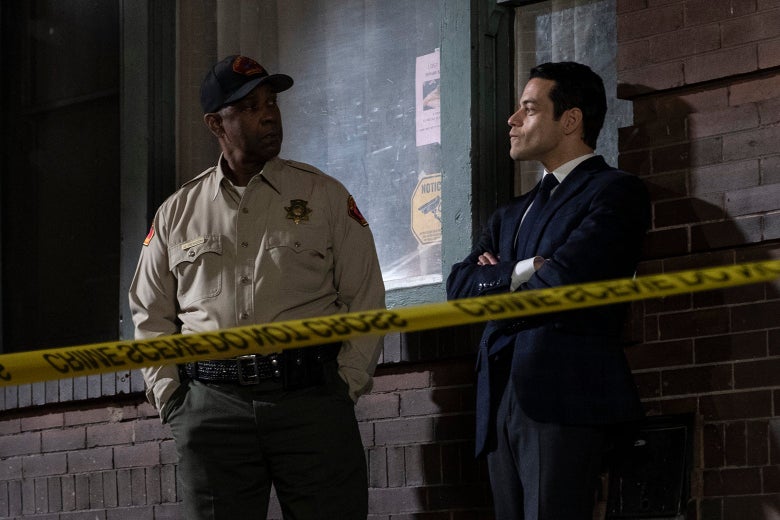
Deke (Denzel Washington) is in L.A. from up north on some menial task, evidence transport or some such. He used to be on the force here, but no longer; his former colleagues don’t have great things to say about him, and they’re not shy about filling in the new guy, Baxter (Rami Malek) on all the ways Deke was found wanting. Mainly that he worked a case too hard, was so obsessed that he jeopardized his career, failed his marriage, and risked his health. Baxter, however, has some sympathy for Deke. He doesn’t know it yet, but he’s a lot like him. He’s about to get a case that will haunt him in a very familiar way, and as Deke says – these are the ones that stay with you.

Deke has the opportunity to say this to Baxter because for some reason Deke sticks around to work the case with him. Totally unsanctioned of course – the dude has to sneakily take vacation from his real job to pursue this one totally against the rules. And Baxter lets him. Together they pursue an elusive serial killer, which leads them straight to Jared Leto. I mean, to Sparma, played by Jared Leto. And Jared Leto’s long greasy hair, distinguished gut, and totally unnecessary hitch in his giddyup – he literally walks around like he just got off an 8 hour horse ride over very rough terrain, only this is L.A. and even creeps like Sparma have a car. Anyway, Deke and Baxter agree that this guy is a Super Creep and that he’s guilty by virtue of just being so obviously a Super Creep. And honestly, Jared Leto so devotedly gives this guy every serial killer accessory he can think of that we openly despise him too, and don’t care much whether or not he’s actually guilty.

Anyway, as Deke likes to say, it’s the little things that add up, which is ironic because director John Lee Hancock, who also wrote those words, can’t even get the big things right. Hancock started writing this movie 30 years ago and it feels like any number of movies that have come out since, many of them much better, and all of them more original by default. But even if it wasn’t overly familiar, it would still lack suspense, or indeed any momentum. It’s a lot of moping around. You’ve perhaps come to see a trio of ostensibly talented Oscar-winning actors doing their thing but what you get is a solid performance by Denzel trapped in a shitty movie that has one of the most disappointing, anticlimactic third acts in cinematic history. The Little Things is available to stream, but why would you? This movie fails to satisfy in any way. You’ve got no places to go, no people to see, but you still have your dignity, and even during lockdown, time is precious.

Sundance 2021: Land

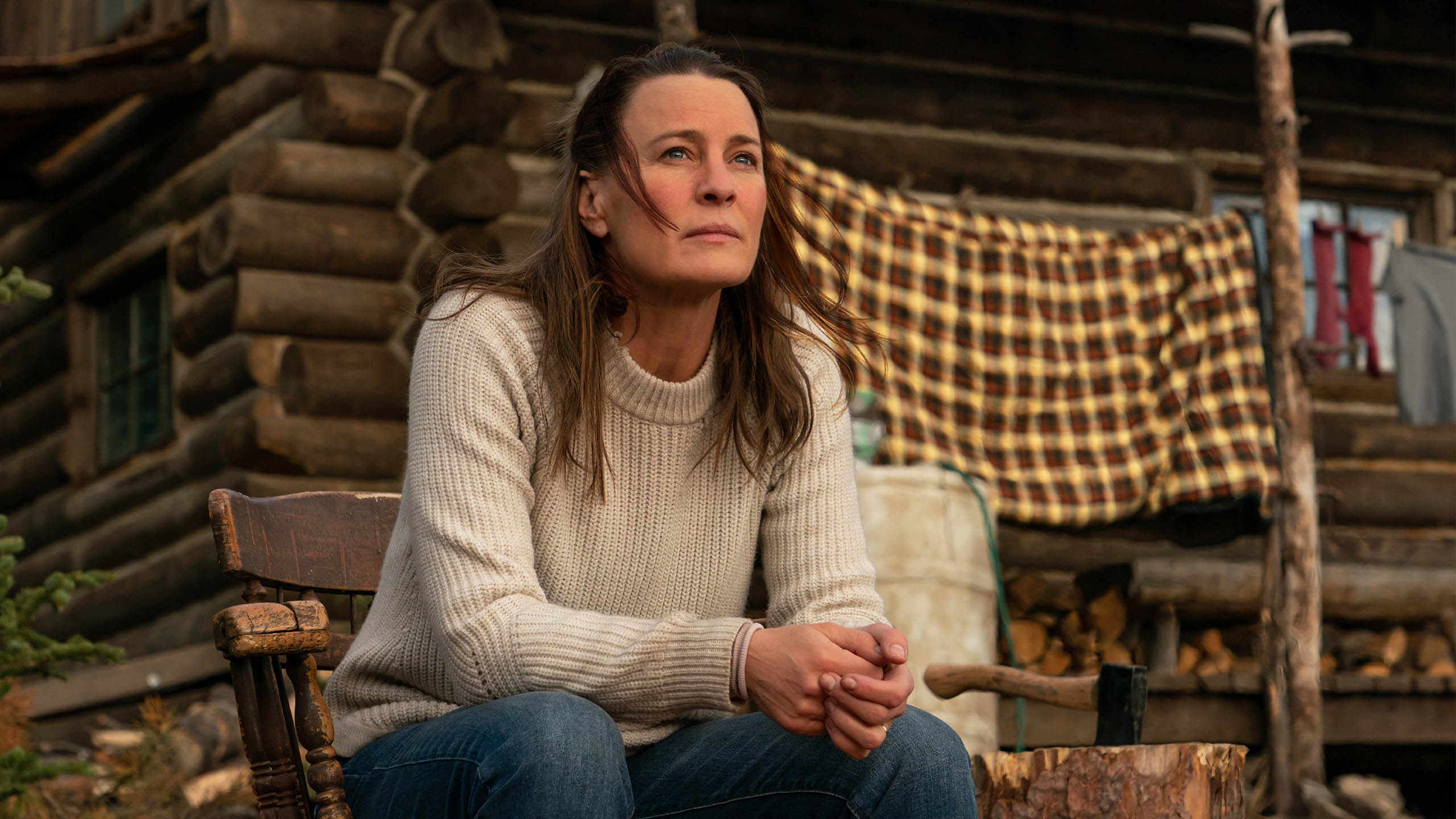
Bereft from some ambiguous tragedy, some half-crazy white lady drops everything to go live on a mountain, totally alone, without being adequately prepared. No phone, no car, nor running water even, this scenario spells disaster to absolutely everyone except her, who persists against all common sense.

Edee (Robin Wright) seems not to have thought of pretty obvious things, like cold, and like bears, which are both pretty big threats to isolated cabins in the woods. This is shaping up to be a pretty short movie. Lucky for Edee a hunter (Demián Bichir) happens by and thoughtfully notes the absence of smoke from her chimney (Edee having lacked the skill to chop wood and the sense to stack it inside). He saves her from the brink of death, and when she’s finally healthy enough to speak, she tells him to get the heck out. She’s come up here to be alone, you know. Grudgingly she consents to semi-regular visits as long as he brings no news of the outside world. He teaches her all the survival skills that she had no business living up here without, and in exchange she’s barely grateful. Because she’s sad! And because she doesn’t consider that others might be sad too.

Land isn’t a bad movie – how could it be? It’s been made so many times there’s a tried and tested blueprint to follow, and as a first time director directing herself, Robin Wright follows it pretty closely. There’s some very pretty scenery and a quietly commanding performance from Wright, but nothing we haven’t seen before, no new insights, no new tricks. It’s hard enough having empathy for a woman who’s so cavalier and careless, but truth be told, neither character is well-developed and we need more to get a true connection.

Wright is a competent director but Land is a retread of places we’ve seen, people we’ve known, emotions we’ve explored. It’s safe and it’s familiar and it probably didn’t need to get made.

The White Tiger

I didn’t like the book and I didn’t like the movie.

I am so, so tempted to leave this review at just that one sentence but I know that would be a bit disingenuous since I am very much in the minority on this. So I’ll give you a slightly fuller picture and you will be your own judge. If you’d like to watch this movie, you have my blessing, and you’ll find it on Netflix.

Balram (Adarsh Gourav) is a servant in India; his caste is his destiny. He works for people he admires – Ashok (Rajkummar Rao) and Pinky (Priyanka Chopra) – which doesn’t mean they’re nice, only that they’re wealthy, and upwardly mobile . Balram would like to be those things one day too, but for him there is no opportunity and no path toward a better life. Society itself is built around oppressing his kind and making sure they never, ever get their own ideas. So he must beat down his own path, with whatever meagre tools and talents he has. It’s going to be brutal, and it’s going to be bloody, but for Balram, entrepreneurship is the ultimate goal and the holy grail in one. It is worth any price.

The movie kept my attention better than the book, which I found tedious; the film benefits from brisk editing and a Jay-Z remix. I still didn’t enjoy it though, and I’m realizing it’s partially because the protagonist is so dislikable. Balram is hardly the first anti-hero though, and somehow I usually manage to cope. I suppose it’s that when I encounter other characters I dislike – Batman, for example – there’s usually something else I can root for, like good vs. evil. The White Tiger doesn’t give you that; it’s bad vs. worse and you can never be sure which of these slippery sides our protagonist is leaning toward. I guess I needed something to hold onto, and Balram’s underdog status just wasn’t cutting it. Balram’s story is given to us via a letter he’s writing to some successful Chinese businessman, who ultimately brushes him off, unimpressed by the story and the man, and I suppose I, too, was left cold by Balram’s plight. Perhaps you will feel more sympathetic.

Rapture-Palooza

The “Rapture,” if you believe in such things, is an end-time fairy tale made up by evangelicals that basically says God is going to pull a Thanos, do a snap, and with that, all the good little boys and girls (and men and women) will vanish from earth, having ascended to heaven, and the rest of us will be left behind, shrugging at each other like “Ooops!”

The rapture has happened and young lovers Lindsey (Anna Kendrick) and Ben (John Francis Daley) have indeed been left behind. The rapture is followed by several plagues, like locusts and blood rain, and the anti-christ’s reign. The anti-christ, who prefers to be called The Beast (Craig Robinson), nukes Chicago and Orlando and threatens to do more, and worse. Whatever he asks, you say yes. That’s just how it is now. Unemployment is high and what little you have can be taken at any moment by the flaming rocks falling from the sky, so to get by you’d better do as you’re asked. And just in case Jesus gets any big ideas about coming back to save humanity (again), The Beast has a really big laser for that.

Anyway, when Lindsey and Ben’s dreams of owning a sandwich cart are crushed, literally, by one of those big flaming rocks, so they have to go to work with Ben’s dad (Rob Corddry), who works for The Beast. Which is how The Beast lays eyes on Lindsey, and decides to take her for himself. This situation suits neither Lindsey nor Ben, so they hatch a plan to rid the Earth of The Beast. One little catch: you can’t kill The Beast, or he comes back as Satan. So the plan involves trapping him, subduing him, and caging him…for one thousand years. It’s a great plan. What could go wrong?

Is this a good movie? It is not. If you like any of the talent involved, you might eke out a few laughs, but you won’t be proud of yourself for it. You have to be smart to pull of satire, and this movie is very, very dumb. It’s crass where it should be incisive, crass where it should be biting, crass where it should be crafty. You get the idea. It’s stoner r-rated raunch and I’m pretty sure the world could live without it.

The Vanished

Well that was a hot mess.

Paul (Thomas Jane) and Wendy (Anne Heche) take their ten year old daughter Taylor on a camping trip over the Thanksgiving weekend, But Taylor doesn’t make it to the holiday. She disappears on the very first day, while mom is away and dad is flirting with the hottie next door.

Over the next week, as the cops try and fail to find their daughter, Paul and Wendy unravel. Almost anyone would, in their shoes. It’s a terrible thing to lose your child, and to sit helplessly by while search and rescue continues to turn up nothing. But it’s also terrible to disregard official police “advice” and take things in hand themselves. People under incredible emotional duress don’t make the best decisions. Wendy and Paul make particularly bad decisions, but it turns out they’re not the most stable people.

Peter Facinelli writes, directs, and appears as one of the inept cops, and should be deeply ashamed of all three. This movie is so out of this world improbable that, at times, it feels like the writer meant it as a comedy but the director wildly misinterpreted everything, except that Facinelli is of course both the writer and the director and very very bad at both. The entire movie is built around a terrible twist ending that takes a page from the very worst of M. Night Shyamalan and actively seeks to one-up him in a competition of awfulness. Even Anne Heche and Thomas Jane, neither of whom was ever mistaken for a good actor, do their best worst acting in this.

My very best advice: try your damnedest to avoid this one on Netflix.

Asphalt Burning

About 20 minutes into this movie, Jay decided it would be worth throwing her laptop at the TV if it stopped us from watching any more. Honestly, I am surprised it took that long for her to get to that point.

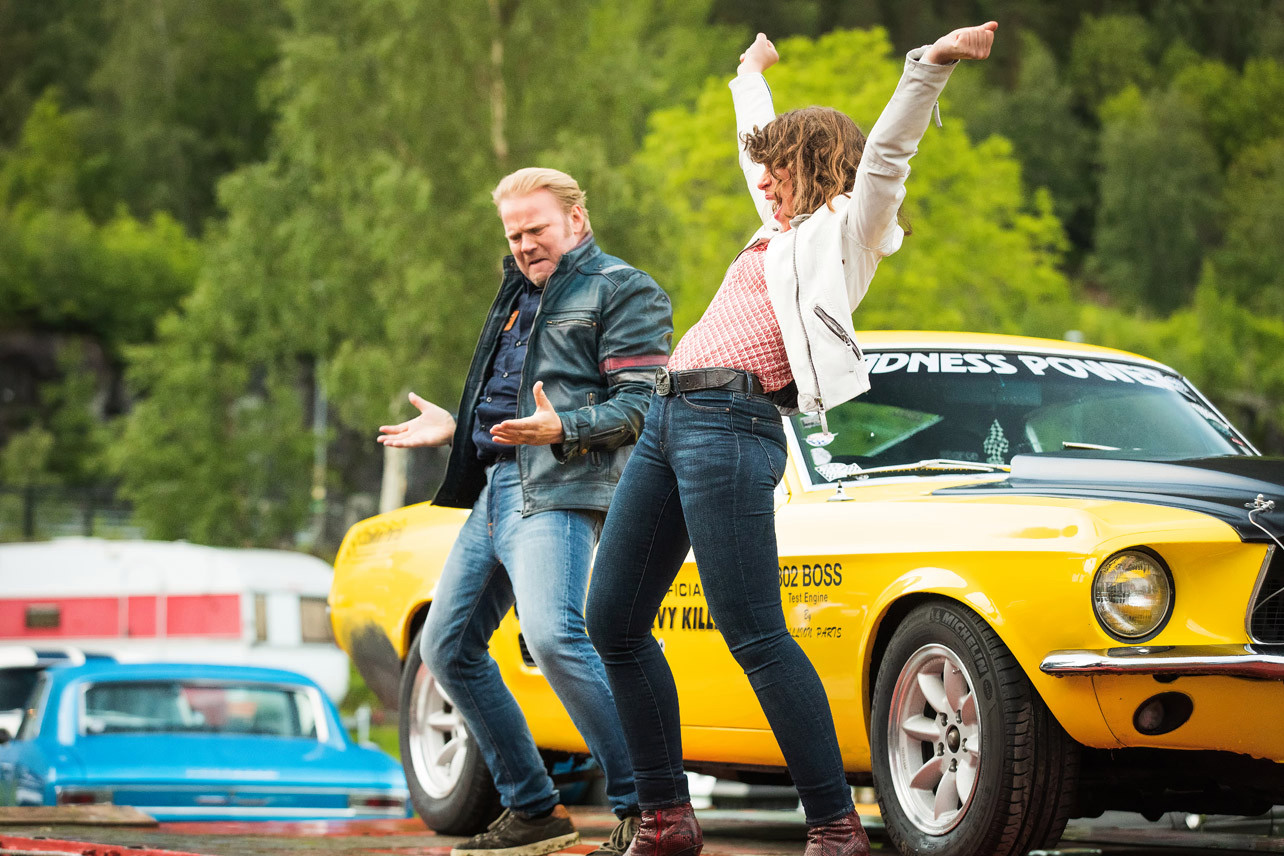
Roy (Anders Baasmo Christansen) is a Norwegian car junkie and proud Mustang owner who, while celebrating his upcoming wedding, kisses his fiancée’s ex-girlfriend Robyn (Alexandra Maria Lara). Despite Roy’s best attempts, for some reason his fiancée Sylvia (Kathrine Thorborg Johansen) does not agree that the kiss shouldn’t count because Roy could not have known the two knew each other. Roy’s only chance to win Sylvia back is to travel from Norway to Germany’s Nürburgring and beat Robyn’s Porsche on its home track, in a race for Sylvia’s hand. Sylvia is surprisingly satisfied with this arrangement despite every single minute of in this movie proving that marrying Roy is a terrible idea.

Having raced on a virtual Nürburgring in both Gran Turismo and Forza Motorsport I can confirm that Roy’s Mustang would have no chance at all there against Robyn’s Porsche, but of course the race is going to play out very differently in Asphalt Burning than in virtual reality, let alone real reality. Still, despite being totally unrealistic, the final race is actually one of the more believable parts of this film, even factoring in a bizarre tour bus subplot which I cannot even begin to explain.

Clearly, Asphalt Burning had aspirations of being Europe’s answer to Fast & Furious, or at least Cannonball Run, but it comes at least a quarter mile short of that not-so-lofty goal. There is a valuable lesson to be found here for any filmmakers with similar aspirations, though: do not use CGI to stand in for practical vehicle effects. If you can’t make a trick happen with a combination of practical effects and editing, then don’t make that trick a part of your film. Not coincidentally, all of Asphalt Burning’s stunts seem to have been done entirely on a computer.

It’s not helping anyone to include totally unbelievable and unrealistic stunts in your movie. It’s distracting, it’s annoying, and it’s going to make me hate your movie even more than the bad dialogue, dislikeable protagonist, and inane plot points already did. As always, I should have listened to Jay.

Charming

So let me tell you about a movie that never should have been made. I might sometimes admit that certain bad movies have a right to exist, but this particular movie should be wiped off the face of the earth just to preserve human dignity.

Three decades elapsed between Disney’s Sleeping Beauty (1959) and The Little Mermaid (1989), three pivotal decades during which feminism swelled and laid the groundwork toward a sexual revolution and a women’s liberation movement. When Disney eventually went back to the princess well, it knew that passive, unconscious princesses were passé, and Ariel, the feisty, rebellious teenager was born. She is problematic in her own ways of course, but she was the first step on a path toward more progressive princesses like Anna and Elsa. Disney didn’t get there overnight. According to Charming (which I must stress, is NOT a Disney property), they needn’t have bothered. Though this 21st century film just got its North American release in 2021, it seems determined to set feminism back by about nineteen decades or so.

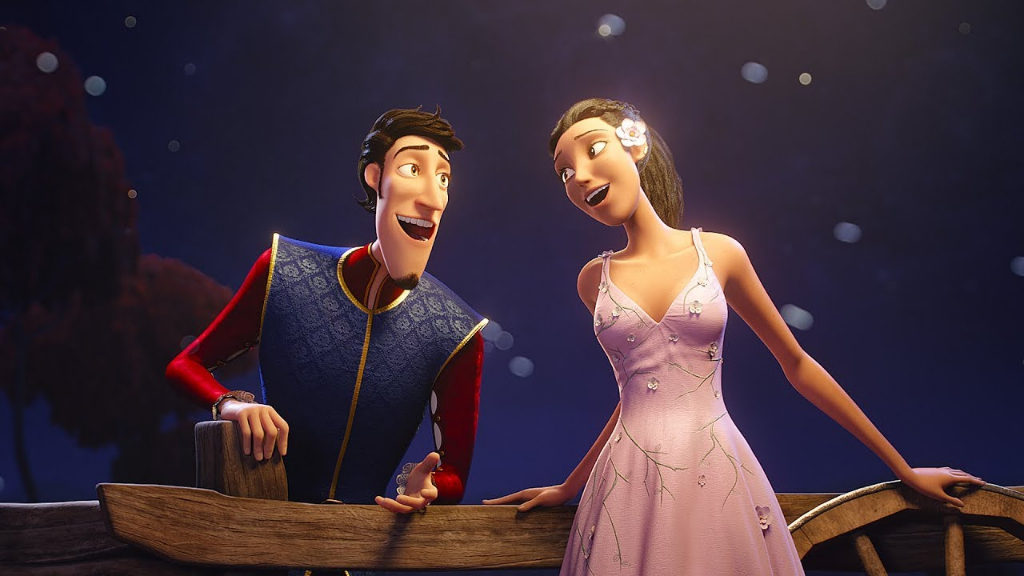
Need I say: written and directed by a man (Ross Venokur), this animated film has somehow decided to revisit those first three passive princesses, and stomp them further into the ground. According to the premise, Snow White (Avril Lavigne), Cinderella (Ashley Tisdale), and Aurora (G.E.M.) find themselves all simultaneously engaged to the same man, Prince Charming (Wilmer Valderrama). Although still very much leading them on, he plans to marry none of them. He’s not in love, he’s just cursed with being excessively charming. So gold-diggers like these princesses are actually planning their weddings and he can’t be bothered to let them know he’s just not that into them.

Note: though the princes in these first 3 Disney princess films don’t get elaborate back stories, they are three different and distinct princes. Only Cinderella’s prince is referred to as Charming; Aurora’s prince is named Phillip, though Snow’s is only ever called The Prince. And as for gold-digging, that’s not coming from me (Aurora and Snow are already princesses in their own right, and Cindy’s got some legit hustle), it’s actually the subject of an entire song called ‘Trophy Boy,’ inexplicably written by Fallout Boy’s Patrick Stump, with lyrics like “I want that ring on my finger like I want that crown” and “I don’t even care if he ever makes a sound just as long as when you see me, he’s around, and he’s bound to me.” Dear god.

Anyway, part of Charming’s charmed curse is that he has to find a true love before his 21st birthday or his kingdom will be doomed to live without love for all eternity. With his birthday just days away, King Charming sends him to run a gauntlet, a series of macho challenges designed to make him a man (raise your hand if you just vomited in your mouth a little) which somehow should help him find his true love. Don’t look at me, I didn’t write this stuff. Apparently neither Charming is confident in Junior’s ability, so they hire a guide, Lenny, to help him through. Only Lenny is actually – gasp! – a woman, Lenore (Demi Lovato), in disguise. And by disguise I of course mean a fake mustache. Lenore is a thief and is only interested in Charming’s money – that is, until she too falls victim to his inimitable charms.

This movie is an entire dumpster’s worth of sexist trash and my only hope is that this review symbolically lights it on fire. Watching it burn would be the only entertainment derived from this film, which is also incredibly miscast, extremely dull, and has mediocre animation at best. Nothing about this film works. It’s baffling that a movie can be this bad. If Venokur was gunning for ironic rather than moronic, he needed the help of a better writer and a more intentional director. Instead he puts his own curse on the film, and believe me, excessive charm is NOT its problem. I feel bad for the innocent victims caught up in its clutches: John Cleese, for example, who voices the Fairygodmother, and Sia and Steve Aoki, who also contribute songs.

Whatever you do, do not put scorch marks on your 2021 this early on in the year by accidentally watching a movie that will infuriate you. Protect your children from it. Hide the ashes of this review underneath the nearest rug. Let’s pretend it never happened. Ptooey (that’s the sound of me spitting on the embers). Peace out.

The Man Who Walked Around The World

Anthony Wonke has a wonky way of starting movies. It can never be any director’s intention to confuse the viewer into turning the movie off just to double check they’ve clicked on the right one, and yet that’s exactly the effect he creates when he introduces the topic in the most roundabout way possible.

For those of you who think you might like to tackle this documentary, know that the film will make you believe, for the first 5 minutes or so, that this is about some very bad men in Iraq, but when Mr. Iraq eventually gets to his point, which isn’t very interesting, it’s that whisky saved Iraq. Won Iraq? Whatever the hell they were doing there, whisky helped. And not just any whisky. Johnnie Walker whisky.

Note: I very much want to spell it whiskey, as I always have, and always will, but since Johnnie Walker spelled it whisky, I’ll honour his wishes this one and only time since we are indeed talking about the 200 year history of his well known and well loved brand.

Johnnie Walker was indeed a man, the son of a farmer who poured his inheritance into a grocery store where he blended and sold his own whisky, which his ancestors shrewdly turned into a global brand that may or may not help Americans end wars. Don’t worry, the hyperbole won’t stop there: Johnnie Walker was also the hero of prohibition, and the brave solver of racism. According to this documentary, which I’m beginning to suspect may be a little biased. It is not, however, contributing in any positive way to sexism, because the brand aims to be synonymous with masculinity, so if you’re a woman who drinks whisky, go fuck yourself.

But at least it’s not contradictory. For example, Johnnie Walker is a respected and recognized brand that is its own best advocate and is so sophisticated it would be demeaning to pay for product placement or celebrity endorsement, and don’t just take our word for it, let’s hear from brand ambassador Sophia Bush, or the guy in charge of pointing out it’s the preferred brand of Superman (in Superman 3) and Rick Deckard (Harrison Ford, Blade Runner).

The Man Who Walked Around the World is either a very bad documentary or a very good commercial. If you hit the red label hard enough, it probably doesn’t matter which. If you’re sober, however, you might want to…well, keep walking.