
A woman is rooting through her garage, looking for Halloween decor she can repurpose for her daughter’s 5th birthday, which falls around the holiday. She retrieves a styrofoam grave marker that says RIP, purchased at Kmart 2 years prior but not yet used. Out of the box falls a note, a plea really, begging the recipient to turn it in to a human rights organization. The note details the abuses suffered by the man who made the decorative headstone; it is signed by a prisoner from China’s most notorious forced labour camp – Masanjia.
The woman is understandable freaked out but she complies with the note’s directive – she contacts Human Rights Watch but they are unresponsive. She goes to Kmart with it but they ballsily deny using labour camps, which are illegal. So she goes to her state newspaper, The Oregonian, and it publishes an investigative piece, and basically the story blows up from there – even reaching so far as China, where the people have to bypass a firewall in order to read western news. a man named Sun Yi is surprised to read the story and recognize his note.
Sun Yi had been released from the camp 2 years earlier, but is still haunted by the torture he suffered there. This documentary explores Sun Yi’s experience, the common labour camp experience. Director Leon Lee interviews prison guards, civil rights lawyers, and Sun Yi’s wife. Sun Yi suffered corporeally while in the prison, but his wife and their family faced raids, discrimination, and harassment on the outside.
Sun Yi is not a criminal. He’s a practitioner of falun gong, those slow exercise paired with moral philosophy that espouses tenants of truthfulness, compassion, and tolerance – the mind body improved together. China’s communist party felt threatened by the sheer number of falun gong followers, and began persecuting them systematically. Since 1999, Sun Yi had been arrested, detained, or abducted 12 times. Pressure increased around the time of the Olympics (circa 2008) and Sun Yi was ultimately sentenced to two and a half years for being in the possession of printer paper, suggesting he’d printed materials about his beliefs.
To really understand the torture and the suffering of this labour camp, you simply must watch. Sun Yi is a wonderful subject but his stories are tough. His experiences are horrific. But this isn’t just about one man’s harrowing time. It’s about the effectiveness/ineffectiveness of news stories going viral; about paying attention to where and how things are made; about the China’s long arm and continued human rights abuses. Letter From Masanjia is the best kind of eye-opener, unsettling to its core.
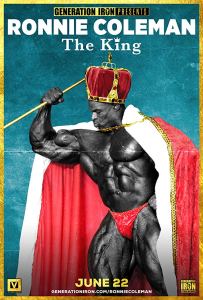 prism of his disability, they’re not exactly dimmed, but the context is clearly costly. Too costly, some, in fact most, would say. But as Ronnie pulls up to the supplement store, he parks in the handicap accessibility parking – and even then he barely makes it in. But what is he even doing there? Well, despite the fact that he’s popping the max dosage in pain pills, Ronnie is still drinking his protein shakes because Ronnie is still training. It’s killing him, but he can’t stop.
 though Millie’s family certainly will be. In Kings, we see the trial on the tiny, fuzzy TV sets in every living room. People are living and breathing it. Millie is deeply moved by the updates on the news, and Halle Berry’s excellent work reaches out to touch us in the audience. Millie is raising multiple black boys in a neighourhood patrolled by white cops looking for any excuse (or no excuse) to take out their disgust with the trial on anyone whose skin fits the profile. For her, it’s real, and the consequences are terrifying. Halle Berry hasn’t had roles really worthy of her lately, but this is a good one to sink into.
 a baby, was always attracted to my baubles. He’d pull on them and gum them as a tot but when he was old enough, he’d steal them and be a very well-accessorized toddler. Another nephew insisted on having his finger nails painted whenever his mother did hers. One little guy had a dolly that he loved to play with. Once, when we brought him to Build-A-Bear, he insisted on our purchasing him a pink stroller for his bear. We obliged of course, and presto, change-o: instant mall hazard, a 3 year old on a complete tear, careening his plastic stroller possibly right into your shins. Does any of this mean anything? Other than that kids aren’t born knowing about gender stereotypes. Most kids will do whatever’s fun, grab whatever’s sparkly, unless of course they’re shamed.
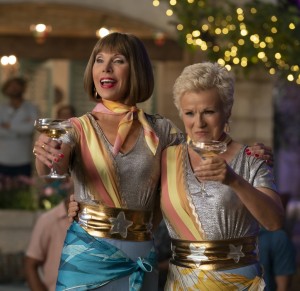 three dads (Colin Firth, Pierce Brosnan, Stellan Skarsgard), Mom’s best friends (Christine Baranski, Julie Walters) – even Grandma (Cher)! But because one party full of old people is pretty lame (could someone tell Sophie that?), the movie is 80% flashback. Meryl Streep’s character is now played by the lush and nubile Lily James, and we get to watch her have all the unprotected, close together sex with three different men (at least!) alluded to in the first movie, which resulted in all the daddy confusion.
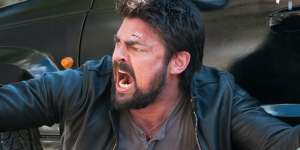 what went wrong. So he does that thing where he circles the date on the calendar and his heart is filled with revenge lust and he has a beard so you know he’s morose and broody. His mentor (Andy Garcia) is more concerned for his love life and maybe his personal safety, and both of those might be threatened by a mysterious government agent (Sofia Vergara).
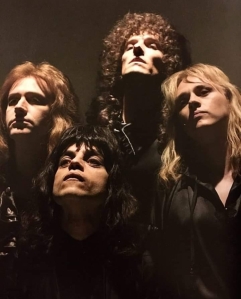 such. But he was more than gay or straight; he was fluid. He could wear a unitard on stage so confidently that he made people forget to be so judgmental. He won them over with his energy and stage presence. But after the show, Freddie was his own man. He did not lead a PG-13 life, so the PG-13 movie that attempts to immortalize it is of course sanitized. There is not much in the way of sex or drugs but the rock and roll – oh man.
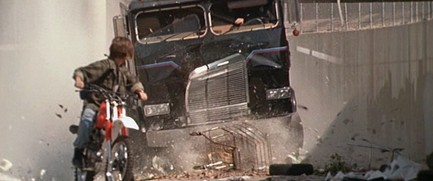 truck, right? But what if the dirt bike also comes with an assist from Arnold Schwarzenegger’s T-800?
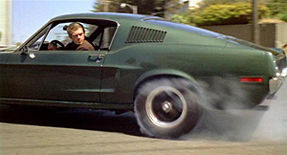 streets of San Francisco and a rival driver in a Dodge Charger.
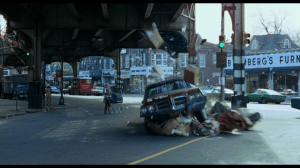 The French Connection’s chase is iconic for good reason. This claustrophobic subway/car chase was filmed without a permit in real Brooklyn traffic, causing real car crashes that were left in the film (the producers paid for the repairs, but still).
 essentially a two-hour long chase scene, so on that measure it has to be number one.
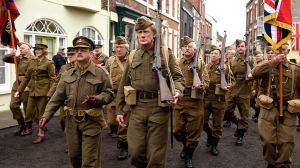 much else; they mostly spend their days blending into the scenery. Literally. So when a beautiful woman (Catherine Zeta-Jones) arrives in town, they and the whole town are ripe for some shaking up. Rose is an intoxicating distraction until it turns out there’s an actual German spy in town and the home guard is too busy thinking dirty thoughts about Rose to notice his intelligence gathering, let alone catch him.
 years of estrangement (her ex-wife didn’t feel Jheri should have any contact with the kids). Jheri helps another son, Wade, run his business, and is grandmother to his two kids, who don’t know Jheri is transgender. After hiding her true identity for so long, this lying in reverse doesn’t sit well with Jheri either, though she wants to spare her grandkids any pain or bullying.
 ASSHOLES WATCHING MOVIES