
The Ballad of Buster Scruggs is actually 6 distinct stories. The first one opens in spectacular fashion, Buster (Tim Blake Nelson) mounted on his horse, strumming his guitar, his pleasing singing voice echoing off the mountains around him. When he rides into town, he lives up to the second part of his illustrious reputation: he’s the best gun slinger in town. No matter how jaded a western, shoot ’em up, action hero connoisseur you are, Buster has some moves that will impress you. This opening vignette sets such a strong tone, and an enjoyable one, that its abrupt shift left me confused and grief-stricken, and maybe even bored.
We turned the movie off halfway through. But that opening part really stayed with me. It did such a good job establishing the movie as one to watch that I succumbed to the  pressure and made attempt #2 the next night. I rewound to the beginning and what I found was: yes, the switch between the first and second chapter is brusque, and because for me unexpected, I had lost interest when I failed to keep up. In this second portion, James Franco is a bank robber who gets the ultimate sentence for his crime. Our first extended look at his face is perhaps one of the most striking portraits of a man I’ve ever seen on film. The editing is astonishingly economical: the story is told not so much quickly as efficiently. But during my second watch, with all guns firing, not only was I less confused, I was incredibly impressed.
Joel and Ethan Cohen know what the hell they’re doing. If their movie isn’t speaking to me, I should damn well know that it isn’t their failing as writer-directors, but mine as a viewer. Subsequent chapters star the likes of Liam Neeson, Tom Waits, and Zoe Kazan. They all tell their own stories about brutal and unforgiving life in the Old West.
The Coen Brothers have been at this a long time yet they’ve still got the ability to surprise. Their brevity inspires them to experiment in yet more ways, crafting stories that are compelling exhibitions of their dark humour and signature style. Did I like this movie? No. I fecking loved it. It took me two tries to get there, mind you, but it was fecking worth it.
 It’s 1953 and the awful dictator Stalin has just died unexpectedly, and left quite a stain on a very nice rug. All of his cronies spring into action, each filled with fantasies of how he might benefit from the situation. Most bypass grief or even basic respect and go straight to power mongering.
 p cleaning the kitchen and start playing Red Dead Redemption 2, but still. Making me feel even older is that I just learned it has been six full years since Wreck-It Ralph was released and I never would have guessed it had been so long.
 ttempts to help Vanellope get her new steering wheel.
 Spencer, and the always hilarious Tig Notaro, playing her straight(ish) woman) let their students know that they’re in for some VERY hard work. Ellie and Pete end up fostering (with the hope to adopt) not one but three siblings, the oldest of whom is a dreaded teenager. And it turns out that ‘hard work’ is putting it almost hysterically mildly. Parenting is hard. Foster parenting is the stuff movies are made of.
 Rather than cash, she gets paid in designer hand bags and trips to Paris. Wait. Is this sounding a little too much like sex with Sean? Not that Sean has ever bought me a sex moped. A “ho”ped if you will. But bags and trips for sure. So there’s a gifty element to almost any relationship. And Blake wonders why we’re so squeamish about gold diggers anyway. History is filled with patrons.
 conversation with an elderly gentleman who may or may not have some soapstone to sell exposes some cracks in the foundation of her marriage. Are they even on the same page?
 believe from the outside all the difficulties they face. But Mo and Lui are good at communicating a marriage strained by years of putting someone else’s needs above their own, of never having the time to honour their coupledom. We know that this is not Mr. Wong’s first dalliance, and we see the toll it’s taken on their marriage.
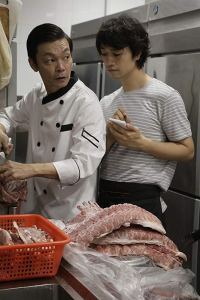 The cast is endearing, and I love how director Eric Khoo blends together race as if it’s fusion cooking. The Japanese and Chinese people have had an uneasy past and you can see that Masato has a hard time reconciling the two parts of himself. However, grief is a powerful motivator, and when he understands how his father honoured his mother’s memory by incorporating her culture into his cooking, Masato is inspired to do the same.
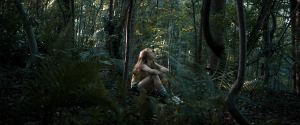 emotionally, her physical transformation is NOT normal teenage stuff. She’s suddenly compelled to eat the family’s pet goldfish. She grows webbing between her toes. In her mind, these are linked to the onset of her period but her doctor disagrees. Moodier than ever, Mia is also learning to be more secretive.
 ASSHOLES WATCHING MOVIES