SXSW: Making The Grade

My grandmother had a very old, very creaky stand up piano in her dining room. Once we’d eaten all her cookies and drawn all over her church stationery, we’d pound away on the untuned keys, convinced we were making loud, beautiful music. We were not. But lessons were for rich people and we were not that either.

This documentary acquaints us with a whole spectrum of Irish piano students, those studying for their first grade exams all the way to the 8th. Old and young are peppered randomly throughout; some have natural ability and others are a little plonkier, but they’re all more dedicated than me. The kids astound me, of course. The piano seems the antithesis of our sped-up society and I’m impressed that any of them have the chutzpah to put in adequate practice, persevere through the tough spots, and pursue an accomplishment that isn’t very well rewarded anymore. But my favourite of director Ken Wardrop’s subjects is a woman with short gray hair and colourful tunics who persists though she’s the first to admit she isn’t any good. I suppose that’s what I admire most: yes, the music sounds better coming from the fingers of someone for whom this comes easily – but it’s so much sweeter coming from the clumsy fingers of a woman who possesses not the teeniest drop of rhythm.

Making the Grade isn’t flashy. There are no stylish tricks. But you’ll find that simply pointing the camera at a bunch of people who know a secret – well, the camera loves secrets, doesn’t it? This is what documentaries are for: exposing those we wouldn’t otherwise know. Whether it’s a little girl discover power and confidence in her music, or a woman finding solace and self-care in hers, it’s moving just to see others be moved by music of their own creation. And of their teachers? This is a loving tribute.

SXSW: A Bluebird In My Heart

It’s rude to ask Danny what he went to prison for. Instead let’s concentrate on the fact that he’s out, and he’s trying to put his life back together. He’s staying in a motel run by a single mother, and her daughter. He’s washing dishes in a Chinese restaurant. He’s seeing his parole officer every day. He’s getting by by keeping mostly to himself, which is how he prefers it. Too bad things just couldn’t stay quiet.

Clara, the daughter at the motel, is ripe for a new friend. Her own father is in jail and she hasn’t seen him in a long time. When she gets assaulted one night while her mother is away, Danny kind of gets pulled into a scrape that he can’t really afford to be involved in, but can’t seem to avoid either. Now the motel is not the refuge he was hoping for and a-bluebird-in-my-heart-124678he’s awfully tempted to resort to his old methods for dealing with this kind of crap.

A Bluebird in My Heart, in many ways, is asking us whether a person’s nature can really change. Peace and violence will clash, as they must, in a movie that looks as dirty as it feels. Danny (Roland Møller) is an elusive character; a tough exterior shell with a vague interior and mysterious past. Our biggest and best clue to what makes him tick is the Charles Bukowski poem after which the movie is titled. “There’s a bluebird in my heart that wants to get out but I’m too tough for him, I say, stay in there, I’m not going to let anybody see you.” We never fully see Danny, but we do have a front seat for his actions, and the consequences of those actions. It’s not a pretty sight necessarily, but it’s a strength of the script that we don’t have to know him to know him. He’s got anger and pain and he tries really hard to bury them, perhaps in the bluebird’s nest, but once unleashed, well, he becomes a pretty powerful outlet. Danny wrestles with his innermost self, with his nature, with his destiny. For a movie about a violent, hardened criminal, it’s actually quite quiet and contemplative, but when the action ramps up, well, the outbursts are intense. So be prepared, and watch out for the little bird.


SXSW: Galveston

Roy (Ben Foster) is a hitman on his last legs. Things have gone terribly wrong when he regains consciousness tied to a chair, discovering that instead of doing a job, he IS the job – his mobster boss has it in for him. He manages to escape, and to free the frightened young prostitute, Raquel, on his way out, but he knows it’s only temporary.

Raquel (Elle Fanning) doesn’t have anywhere to go, so they pick up a third wheel (Raquel’s baby sister Tiffany), and head for Roy’s home town of Galveston to regroup MV5BMTc4ODk2MTc5N15BMl5BanBnXkFtZTgwMjcxMzY3NDM@._V1_and hopefully plot some revenge. Of course, Roy’s zero-fucks lifestyle is not quite as becoming now that he’s got a ready-made family, but forgiving-and-forgetting isn’t really in Roy’s repertoire, or his boss’s, for that matter.

On paper it sounds like a typical noir crime thriller, but in fact, in the hands of director Melanie Laurent, it becomes something else. It gets filtered through a distinctly European lens. The pace is sometimes languid, the cinematography often plain old gorgeous. It’s a slowed-down piece that gives both the audience, and the protagonist, time to think, time to plot, time to savour, time to say goodbye. And that drives us off-kilter because the material can be so dark while Laurent’s picture looks so sweet: the difference between what we know and how we experience is jolting.

Roy and Raquel are interesting to watch because we feel that they’re living on the edge – perhaps even on the outer edge of their lifespans. They’re stuck in Galveston and running out of options. Laurent is poetic with her lensing but make no mistake: the reality here is quite gritty and desperate. And Roy is not exactly a redemptive character. He’s kind of an asshole, and Foster, who is good, is not quite sympathetic. And Fanning, also good, isn’t going to go easy on him. Galveston turns the genre on its head, but it’s not smooth watching, and the prognosis isn’t pretty.

SXSW: Take Your Pills

Oh lord – I can’t decide what I’m more relieved about: not being a kid today, or not being a parent today.

Every era gets the drug it deserves, so says the movie’s clever blurb. This generation? This generation takes Adderall. Amphetamines have been around for a long time, but it’s never been more eagerly prescribed to kids than it is today, in the form of ADHD meds, or more abused by students who just like the feeling of being “zoned in” – hence its nickname, college crack.

I’ve never heard of a drug that made me feel old. But back in my day, we took drugs to turn off and check out, but kids today are taking it to check in. And that’s a pretty MV5BNWQ5NDYxNjYtODc4Ni00NmIyLWEyMGYtNGM0N2ZmYjgzYTliXkEyXkFqcGdeQXVyNTg0MzU3NjM@._V1_damning comment on today’s hyper competitive culture in which young adults liken abusing prescribed drugs to drinking a cup of coffee. Like I said, amphetamines aren’t new: The Beatles took them, Andy Warhol took them, Vietnam soldiers took them in order to go, go, go. And then they became horribly addicted, and the drugs became controlled. Except now students are seeking them out as performance-enhancers, faking ADHD to gain an edge while taking the SATs, and getting their hands on drugs whether prescribed or not.

It’s not like this phenomenon was news to me, but being confronted by the statistics in this movie had me uttering “oh shit” with alarming frequency. And that’s what you want in a documentary: facts to open your eyes, and anecdotes to give them colour. Director Alison Klayman looks at the drug’s history, its effects, its draw, its efficacy, the truth and the lies behind it. This documentary takes an issue that may have been niggling at you for a while and makes it not just a headline but an easily digestible information bomb. There are ethics at play here, so ultimately Klayman provides the context but the judgements and decisions are still yours to make – but information is power, and if you’re willing to dose yourself a stimulant, the LEAST you can do is prescribe yourself a little reality to go along with it.

Game Over, Man!

First of all, I don’t like punctuation in movie titles.

Second, it’s possible that I both consciously repressed having watched this film on Friday night and unconsciously blamed Sean for having made me watch it all weekend long. And I’ve only just made that connection in the cold, cold light of Monday morning.

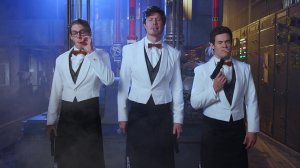
Alex, Darren, and Joel are members of the self-styled “dude crew” – which is just 3 weird guys who are hotel maids. Which, since we’re on the topic, in what universe does it take 3 maids to clean one room? Well, the same universe that employs 3 white men instead of 1 brown woman I suppose. But anyway, with Daniel Stern running the hotel, I suppose this flimsy premise isn’t the most unbelievable thing that’s going to happen in the next hour and a half.

So anyway. Bae, some billionaire’s son, is visiting the hotel which means two things: a) the stoner maids are going to pitch him their video game idea because they sure aren’t busy cleaning any rooms or anything, and b) Bae’s own security team is going to hold him and a whole bunch of other hotel guests hostage for money and the love of explosions. Will Alex (Adam Devine), Darren (Anders Holm) and Joel (Blake MV5BNzQ5YmQxZDMtNjEyNi00MmVhLWFkMTQtMTk0MjQzNWQwOTc5XkEyXkFqcGdeQXVyMzcyNDk1NTk@._V1_SX1777_CR0,0,1777,999_AL_Anderson) step up and save the day? Haha, no. Not even close. Not even unintentionally. I mean, they’ll mistakenly believe in their own hero potential at times (I extrapolate this from the slow-motion hero walks they do down dingy hotel hallways) but they’re never sober enough, smart enough, or organized enough to get shit done. But don’t worry for a single second that there won’t be enough bone-headed antics to go around: there will be blood. And guts. And digits and limbs and pieces of face sprayed all over this damn hotel.

These are the same idiots who brought you Workaholics for 7 agonizing seasons, so if you think that’s funny, this movie will provide you more of the same. But if your tolerance for lowbrow bro humour is as nonexistent as mine, and you like your movies to make sense, and baffling b-list cameos don’t impress you  much, and you’ve never been all that curious about human cheek prosciutto, then Game Over, Man! should be a hard pass for you as it should have been for me.

Good Time

It’s times like this when I must truly sit and reflect on what a movie review really is. It’s an opinion. Truly, it is only an opinion. Some people’s opinions are informed by education or experience, and other people are just very good at being opinionated. Personally, I haven’t been to film school. I’m curious and fascinated by movies, which has motivated me to look into the behind-the-scenes stuff that contributes to what makes a movie great as opposed to good. But I’m also just a nerd when it comes to story-telling in general. Before I reviewed movies, I reviewed books (for Random House). And I write. Obviously. Constantly. I have an instinctive idea of what makes a story good and compelling and worthy. But when it comes to judging whether that story’s been told effectively on the screen, well, it’s all subjective.

We started Assholes Watching Movies as a group of friends who frequently went to movies together and left the movie arguing about it. It was a passion of ours to dissect a movie and find out which pieces were working and which weren’t, and which ones stuck with us, or became part of our culture. Over the months and years it has dwindled to just Sean and I, still duking it out, still good-naturedly disagreeing with each about which movie is worth our time, and yours. Since the world doesn’t necessarily need yet another review of the movie Keanu, we try to inject our reviews with a little piece of ourselves – in this case, a diatribe against cat ownership and a shameless excuse to post pictures of our far superior dogs. Actually that’s true of at least 10% of the reviews on this site.

The great thing about being part of a blogging community is that we get to read the words of others, and do so on an extremely regular basis. So while I hadn’t yet seen Good Time, I already knew it was a good time. Reviewers that I know and respect had told me so. Was I prepared to love it? Heck yes. Did I? Oh, no, no I did not.

But I don’t want to discourage anyone from checking it out, because I think little movies like this deserve to be seen, to be given a chance. And I love films that take risks, even if for me, this one didn’t pan out. It’s about a stupid criminal named Constantine (Robert Pattinson) who botches a bank robbery and lets his brother get caught by the cops. In a period of just 24 hours, he’s in a real frenzy to set his brother free. Of course his plans derail and he’s increasingly desperate and he takes us on a pretty crazy tour of society’s gritty underbelly, which is well-shot and occasionally looks breath-takingly cool. See, even as I write this, it sounds like I loved it. Except the truth is I never engaged and was really kind of bored. Sean and I started this more than a week ago and I had to ask him to pause it because I just wasn’t happy spending my time with it. I came back to it only reluctantly, and only because I can never let things go.

So yeah, this movie is not for me, but maybe it is for you. And if you’d like to hear more, here are some of the excellent, persuasive reviews I’ve read and enjoyed on the film. Feel free to add yours in the comments!

Liam says “A chilling performance from Robert Pattinson, coupled with edgy crime-drama, and we’ve got ourselves a damn good film.”

The Film Blog writes “This is genre cinema that puts a beating heart at the centre of its twisty, metropolitan plot, before repeatedly ripping it out to jaw-dropping effect. Fantastic.”

Anna says “Good Time is a delight.”

Jade writes “Promising less than its namesake, Good Time presents an unflinching portrait of crime, propelled by misguided familial love.”

Keith calls it “a thrill ride from beginning to end.”

Joel notes a “gripping atmosphere created by the well-crafted gritty thriller script.”

812 Film Reviews calls it “white arrogance on overdrive” and this may be the review you should read above all because while I hadn’t formulated the thought myself, it resonated real hard.


SXSW: The Breaker Upperers

For such a little country, New Zealand not only has a lot of talent oozing out of its confines, it’s also got a pretty distinct voice. Which is not to compare this movie to New Zealand’s most famous export, Taika Waititi (although it is produced by him), but there is a sense of humour there that is unique to its people, but travels well.

Madeleine Sami and Jackie van Beek write, direct, and star in The Breaker Upperers about a couple of best friends who, sharing a history of bad breakups, now run a business together breaking couples up. Mel and Jen think it’s pretty genius work. breakerSomeone wanting out of their relationship will contact them, and they’ll do what it takes to make a clean break – anything from singing telegrams, to pretend cheating scenarios, to even faking someone’s disappearance (which on paper sounds cruel, but this is all played for wide-brimmed comedy, and largely succeeds). It’s good money for them and quite entertaining for us, but we start to get an inkling that perhaps this line of work has stunted them – neither woman has a love life of her own to speak of. But when Mel starts to have a little too much sympathy for the wrong (ie, non-paying) end of the couples, what starts breaking up is their friendship, which is inconvenient when it’s the only relationship you’ve got.

The Breaker Upperers will definitely appeal to those of us who appreciate comedies that happen outside the Hollywood mainstream. Sami and van Beek have free reign to mine and prod whichever corners they choose, and they always find some sort of comedic dustbunny. If that means a 5 minute tribute to Celine Dion, then so be it. And it is funny, funny in the way it reminds of you of a movie you might have made with your own friends when you were twelve. It’s comedy that doesn’t have to hit specific buttons. It doesn’t have a predetermined arc; its route is more meandering, and retains the ability to surprise you without forgetting to entertain you.

I’m not sure how much reach this film will ultimately have, but I think it’s one worth seeking out, particularly if you’re a fan of Waititi’s, in which case, both their faces should already be familiar to you. And if they aren’t yet, they will be.

SXSW: Most Likely To Murder

Billy was the king of his high school but high school was a long time ago. He puts up a pretty glamourous facade which is easy(ish) to maintain as long as he’s a long way from home but if people could see the reality of his Vegas life, they might see him as a figure more to be pitied than celebrated. So of course he’s uneasy about returning to his hometown in New York state, especially as it’s likely to be his last visit (his folks are selling up and moving away).

You can never go home again. Home isn’t home. Even if your parents are freaks who have let your childhood bedroom be preserved for the ages, you’ll never be the same person occupying it. The town has changed. Your friends have changed.

Billy (Adam Pally) comes home to find his parents have sold his prized shitbox car to the weirdo next door and worse still, Billy’s ex girlfriend (Rachel Bloom) is dating him! Lowell (Vincent Kartheiser) from next door was a loser in high school, and the guy still lives with his mom. What can Kara possibly see in him? And just when MV5BNjkxM2Y1OGEtMjQzOC00OWI5LWE3NDgtNzBkOGY0YWNlYjU3XkEyXkFqcGdeQXVyNDg2MjUxNjM@._V1_SY1000_CR0,0,1497,1000_AL_Billy’s head is about to explode with all the backwardness, he sees something out his bedroom window that leads him to believe that Lowell is a murderer. But everyone in town has had a lobotomy, ie, they all think Lowell is this stand up guy. What the heck? Even Billy’s own best bud thinks Lowell is a nice guy, so Billy’s got an uphill battle – against popular opinion, and his own less than stellar reputation.

Of course Billy’s got a serious case of wanting to tear someone else down in order to make himself look better (which doesn’t mean his wrong). Dan Gregor’s film is about dealing with who you were, who you thought you’d become, and who you actually turned out to be. Seeing old friends who ‘knew us back when’ really forces us to reassess, and to see ourselves, our progress and success, or lack thereof, through their eyes, and it’s not always easy to see what’s reflected back. We experience insecurity through Billy, who isn’t used to feeling that way. He sees himself as a laid-back, fun guy, so neuroses aren’t his comfort zone. His paranoia acts out on a pretty grand scale, where he’s scaling fences and cowering among dead possums and calling the police, but there’s still a sense of relatability there. And of course, being a fan of Pally’s and basically this mumblecore, indie stuff that he’s so well-known for, I like the improvisational style of the film. I thought it was funny and interesting in a way where you do actually care how it turns out. Who is this creepy Lowell, and does his identity change Billy’s? Do any of us turn out how we think?

SXSW: Unlovable

Joy is on the brink of total disaster. After a failed suicide attempt, she finally admits that the disease she doesn’t 100% believe she has maybe needs to be treated: she’s a sex and love addict. So she joins a group and gets a sponsor. But restarting her life isn’t easy. She’s just lost her boyfriend and her job and her apartment. These are the kinds of circumstances that often lead her straight back into the arms of her addiction.

Luckily her new sponsor Maddie offers her her grandma’s guest house. “Just don’t bother the caretaker” she warns – so of course Joy’s first stop is to bother the grandmother’s caretaker, who is Maddie’s weird, reclusive brother, Jim.

Maddie (Melissa Leo) is of course a recovering sex and love addict herself and Jim (John Hawkes) has his own issues. [My issue is: with these actors both in their very late 50’s, how on earth do they have a living grandparent?] Throwing Joy, who is a bowl of mixed nuts what with her quirky, cheerful, suicidal, hopeless personality into the blender – well, it makes for a smoothie with a kick, that’s for sure.

Joy (Charlene deGuzman) suffers her share of ups and downs – lots of perogies and orgies – but for all the “love” and all the sex, she doesn’t really begin to understand true intimacy until she and Jim bond over music and start a friendship, and a band, not necessarily in that order.

Addiction is not a disease that is “cured” but one that is managed, very carefully, and with lots of effort. It’s sort of a relief to see a “nice girl” felled by addictions – truly, they don’t discriminate – and it’s good to see representation both good and bad on the big screen. Joy perhaps doesn’t look like she fits the common mold, but dig a little deeper and you’ll find the pain that she’s been hiding behind cat tshirts and loud prints for years. And support systems are key in maintaining a healthy life, but they don’t always come for where we’d expect. Each character in Unlovable has something to give, but also a reason for wanting to hold back.

At one point Maddie says “We get what we think we deserve” and I’ve said the same often myself. We let people treat us terribly when we think we’re worthless. Unlovable is about finding yourself lovable and worthy of love, and learning a way to give that love to yourself.

SXSW: Won’t You Be My Neighbor?

It’s a beautiful day in this neighbourhood, a beautiful day for a neighbour, would you be mine? Could you be mine?

It was in fact another beautiful day in Austin, Texas when we shunned the sunshine in favour of a SXSW venue to watch Morgan Neville’s documentary about everybody’s childhood friend, Mr. Rogers. It was the 10th day of a 10 day film festival, and Sean and I were worn down but still happy to be there, bellies full of fajitas, not minding the neighbourhood at all, except for the unfortunate fact that there was a bomber on the loose. [You may have read about this in the news – the package bombings had started MV5BMTkxNzgwMjg4NV5BMl5BanBnXkFtZTgwMDk2MDk1NDM@._V1_SY1000_CR0,0,663,1000_AL_slightly before the festival began and continued, threats shutting down an event, and police dogs sniffing the larger venues for traces of explosives. The alleged bomber died days later, blowing himself up when the cops arrived to arrest him] But the festival always felt like a safe space and we’d seen lots of great movies and done some once-in-a-lifetime things, and were not just coasting until the closing movie Isle of Dogs later that night.

Won’t You Be My Neighbor? seemed like a good way to spend an innocuous afternoon. The documentary had been well-received at Sundance, and Sean and I both had some warm, if fuzzy, memories if the cardigan-wearing man who sang his gentle songs to us through the TV.

Turns out, Mr. Rogers was a much more interesting man than I ever knew. An ordained minister, he was at the forefront of childhood development and had some very concrete ideas on how children needed to be treated in order to feel safe and secure – and how television could be a tool toward that goal, but mostly wasn’t.

The documentary has clips from old shows, ancient, that date back to the 1960s, black and white stuff I never knew existed. It’s also got archival footage of him in interviews, and clips from TV shows he did aimed at adults, which are quite another thing. But he’s the same guy, always: slow, steady speech, in that comforting tone of voice, slightly goofy, easy smile, bushy eyebrows, lean, lolloping gait. He spoke directly to children, and sometimes on very difficult, specific topics. I was floored to hear one of his puppets ask what ‘assassination’ meant – but yes, he did dare to cover such things as they made national headlines.

But what is Mr. Rogers’ legacy? This is where the documentary gets really interesting. Did he succeed in making children confident? Or, as some critics say, did he render them entitled when he told each and every one of us that we were special? He was a bit of a radical in his way, and he likely had some effect on most of us North Americans, one way or another. He’s been dead more than a decade but we’re still remembering him with some reverence, and it’s fun to look back – because his history is also our childhoods, and that’s something we can all share.