
A Light Beneath Their Feet – Taryn Manning plays a bipolar mother who has worked hard to get her life back on track. After a severe episode left her hospitalized, she lost custody of her  daughter for several years and only with diligent, close work with a doctor did she earn back that custody and now has a very close relationship with her. The daughter (Madison Davenport), however, a high school student in her senior year, is feeling the pressure of that relationship. This is really the daughter’s story. She dreams of going away to college – to California, where the weather is “stable,” but knows that her mother remains medicated only for fear of losing her. If her daughter is gone, what’s the point? I liked this for the portrayal of bipolar disorder – not always done well or compassionately or truthfully or fairly in the movies. Yes, Hollywood likes to dramatize. But at this film’s poignant core is a loving mother who would do anything for her daughter. And she happens to have a disorder that’s really tough to manage – tough on her, and tough on her loved ones. And yet we’re able to talk about the daughter’s challenges without vilifying her mother. It’s an honest conversation that I wish we’d see more often.
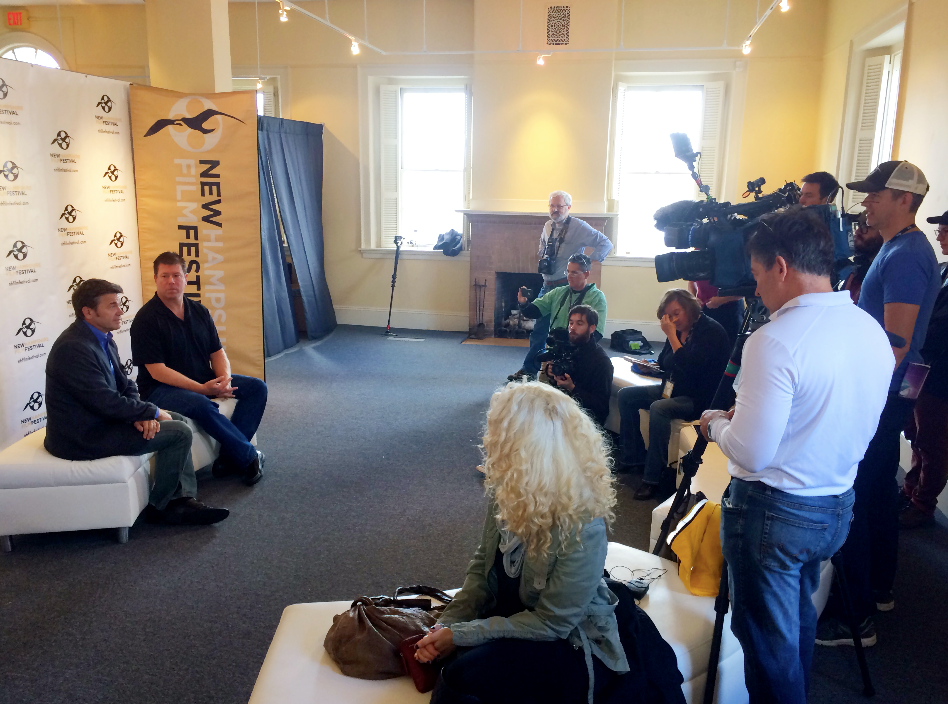
Director Valerie Weiss is also the kind of film maker we need to see more often. With a dual passion for both art and science, she majored in Molecular Biology at Princeton while earning a Certificate in Theater and Dance. “It was at Princeton that I transitioned from acting to directing plays and really felt that I’d found my niche. Directing was so much more suited to my personality and my desire to think about the whole picture as well as the minutiae. So, I decided to keep going with these dual interests and went to Harvard Medical School to do a Ph.D. in X-ray Crystallography (the 3-D photography of molecules) and founded a film program for graduate students so I could continue directing and learn to make movies. I made my first film while I was writing my dissertation, and two weeks after we wrapped production, I had to defend my thesis.”
The Second Mother: I enjoyed this movie even more in the discussing than the watching. Brazil’s official submission to the 2016 Oscar race for best foreign language film, The Second Mother (actual title: Que Horas Ela Volta) tells the story of Val (Regina Case), a long-time  housekeeper to an affluent family, who spent years caring for someone else’s child while her own daughter is raised “back home”, the recipient of Val’s hard-earned paycheques but not her physical presence. After a decade’s absence, her daughter moves into the employer’s home, and cracks open the class system, exposing hypocrisy. The film is quite subtle, and I struggled with the fact that I actually found the daughter to be quite abrasive, which made it hard for me to admit she was making some valid points. The film is character-driven, but I suspect that you’ll find afterward that it has provoked the heck out of your thoughts at the same time. What’s interesting is that eschewing the drama, this film is actually quite mild in tone, and often more than a little comic. It’s not lecturing you, but there’s a subversive undercurrent that builds. The writing is taut and the acting on-point; Regina Casé is so good that we inhabit her shabby shoes despite the fact that the action belongs to everyone else.
Director Anna Muylaert (that’s right, two female film makers in a row! – good job, New Hampshire!) co-wrote the piece with star Casé and held two special screenings in Brazil. The first was for housekeepers and nannies, including the woman who worked for her parents for 30 years. There were lots of tears at this screening. The second screening was attended by friends of family, many of whom felt uncomfortable watching the film, and recognized themselves in the mirror staring back. The country’s social dynamics are persistent, Casé remarks “If you cannot change the world, at least you can change the situation that is close to you.”
Bridgend: Sara and her dad move to a small village in the county of Bridgend (Wales) where the quiet teenaged girl starts to make friends with a group of kids her cop father doesn’t approve of, and not because of their clothes or manners or grades or attitude. It’s because this small town is having an epidemic of teenaged suicide, and now his daughter’s smack in the middle of 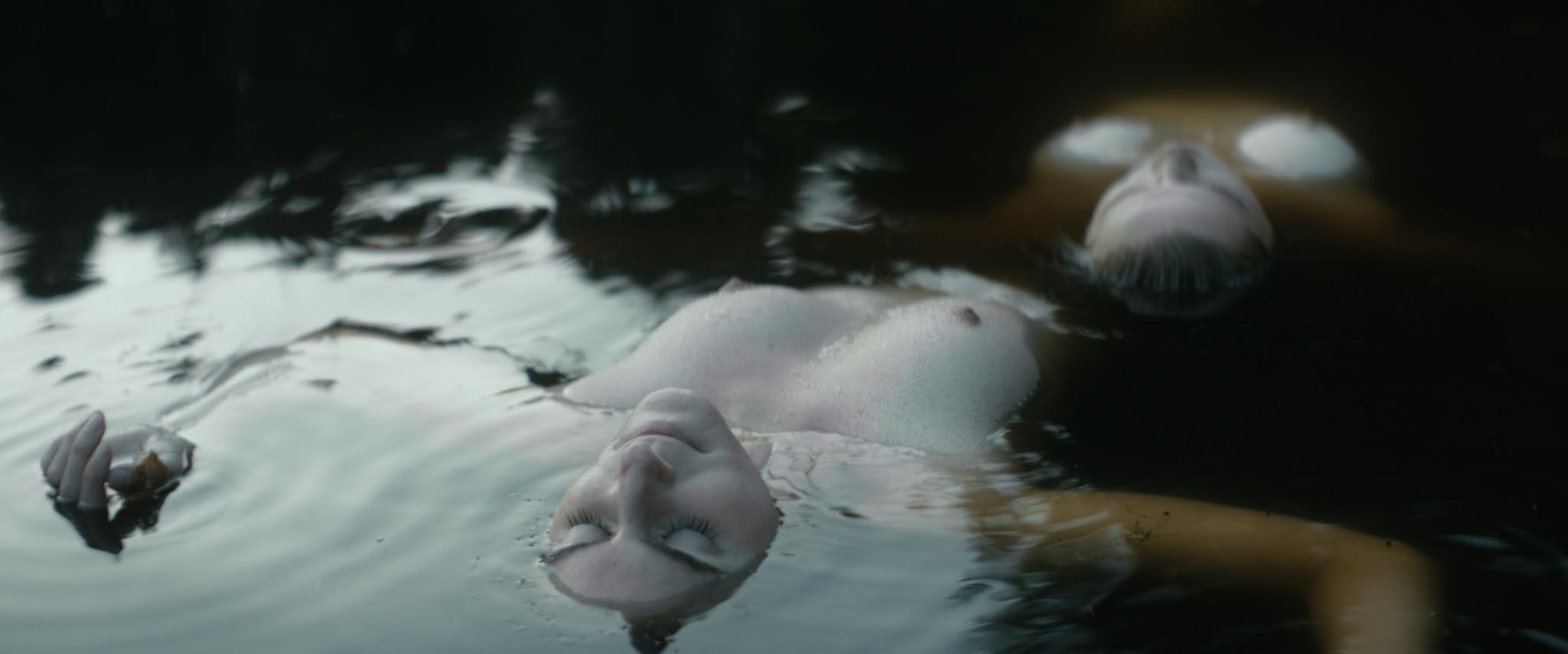 it. If that’s not unsettling enough, this film is actually based on real events – between 2007 and 2012, 79 suicides were reported in the tiny borough of less than 20 000. The movie never explains why these suicides are happening because the real world was never able to either. Cult mentality? Small town boredom? Irresponsible press? Teenaged rebellion? Bad parenting? It was disorienting and I felt helpless and scared – one by one these kids just disappear. There’s a communal depression that’s oppressive, and yet it’s pain-stakingly well-shot, at times visually beautiful, a jarring juxtaposition to what we’re experiencing emotionally. The memorial rituals and obsession with mortality deteriorate near the end into what I can only describe as a fever dream, because I honestly don’t know what to make of it. I’m desperate to know one single other person in the world who’s seen this movie and who can guess as to why I felt this movie was so…aggressive. Grounded sadly in reality, this film still has the shivery feel of a horror, and it’s been hard to shake.










 I’m late to the party but the trailers for Star Wars: The Force Awakens have been so good. I cannot wait to see this movie but I will not be paying hundreds of dollars for an opening night ticket (at least, that is what I keep trying to convince myself). Be strong, Sean!
 Falcon instead of the way-too-slick prequel ships. I especially liked the speeder rolling by the crashed Star Destroyer. What a great image.




 ASSHOLES WATCHING MOVIES