The Prey

A prison yard fight is instigated, as a group of wealthy men look on. As the prisoners exchange blows, the men watching from above nod at some, shake their heads at others. The men they’ve chosen are hooded and driven out to a field. When the hoods come off, a lineup of shabby prisoners stand before a trio of men, each laden with weapons. It looks and feels like they’re standing before a firing squad, with one important difference: these wealthy men will allow the prisoners to make a break for it. How kind of them! The prisoners will scatter, each trying to reach the relative safety of the woods beyond the field. Very few will survive, but those who do survive only to become the prey.

These rich men have not paid the sadistic prison warden (Vithaya Pansringarm) to play at execution. They have paid to hunt – to hunt the most dangerous prey. The fact that the prisoners are running only makes the game more exciting to those with guns. The chase is on, and prisoners make the perfect prey – no one will miss them, no one will even notice they’re gone. Except: except that right now, 2 police officers have just stepped into the warden’s office. They are looking for their man Xin (Gu Shangwei). Xin is no average prisoner. He’s actually an undercover cop…who is now running for his life in a very one-sided fight that wasn’t part of the job description and sure as heck isn’t reflected in the pay.

Filmed in the jungle of Cambodia, you get a real sense of danger not just from the hunters but from the environment itself. Director Jimmy Henderson is only the most recent in a long and proud history of remaking The Most Dangerous Game but his film certainly has a local flavour that makes it worth seeing – especially if you love martial arts. Fight choreography blends kung-fu with bokator, Cambodia’s own close quarters martial art, to deliver satisfying bone-crunching action. The Prey may not be making any unique contributions to the genre, but it’s a solid effort nonetheless. Under Pol Pot’s regime, Cambodia’s culture was nearly wiped out completely, so it’s nice to see them rebounding, and it’s extra nice that for once the blood is being spilled only on screen.

The Prey is screening in virtual theatres in major cities including Los Angeles and New York, and is now available via VOD on platforms including  iTunes, Amazon, Google Play, Xbox, and Vudu.

Ava (2020)

Ava (Jessica Chastain) is an assassin who has started making things very personal at her job(s). She’s started asking her targets what bad thing they did to get themselves added to her hit list, which is a no-no in her line of work. Things get worse for Ava when faulty intel blows up one of her jobs and her employer deems her a loose end. She’s now a target herself. Clearly, Ava needs to disappear but before leaving town, she wants to try to make amends for leaving her family eight years ago without any explanation.

This film surrounds Chastain with lot of familiar faces, including John Malkovich as Ava’s handler, Geena Davis as Ava’s mother, Common as Ava’s former lover/sister’s boyfriend (super awkward), and Colin Farrell as Ava’s boss. After a troubled development, which included a director stepping down due to allegations of assault and abuse, and the movie being renamed, Ava then went straight to VOD because of COVID-19.

All in all, VOD is probably the best place for this film. It’s an interesting portrayal of an assassin’s daily life, which is not as glamorous as some films make it out to be. Ava is an addict who has no one close to her and struggles with guilt. She’s trying to reconnect with her family after walking out on them, a task made much harder when she can’t even tell them what she’s been up to since.

The character bits are solid but due to the nature of Ava’s work, this is an action movie, and the action sequences simply aren’t as good as they need to be. The game has been raised by John Wick and Ava does not measure up. This isn’t a casting problem, as Chastain appears eager and able to follow peers like Charlize Theron and Gal Gadot into action star territory. But Chastian is let down by a lack of imaginative choreography or stylish cinematography. The fight scenes just don’t pop like they need to, and the action sequences need to be stronger for this film to really shine. As it is, Ava is a decent but easily forgettable film, which in the time of COVID still makes it better than most rental options.

Hope Frozen: A Quest To Live Twice

Matrix wanted a younger sibling and was thrilled when little sister Einz was born. Einz means love, and she certainly was. But brain cancer ravaged her little body, spreading faster than her father, Dr. Sahatorn Naovaratpong, a Buddhist scientist, could research the disease that was robbing him of his beloved toddler. That’s why he and wife Nareerat chose what they did: cryo-preservation. Moments after she died, before even her third birthday, a team was there in her home to start the freezing process, and her preserved brain was sent to America for as long as it might take to find both a cure for her cancer and a way to regenerate her body.

Let me be clear: this is a documentary. This is a real family from Bangkok. You may already be familiar with their story, because at the time little Einz was the youngest person in the world to undergo cryogenics. Their story made international headlines and scandal wasn’t far behind – some angered that they’d taken the place of god, others worried for her soul, worried she’d be unable to find peace, and others still wondering what her life would be like should she wake up some vague time in the future when everyone she once knew, even if she remembered them at all, would be dead.

Sahatorn knows that the science will not catch up to him in his lifetime, so he’s bequeathed this rather large burden to his son, Matrix, in the hopes that he will continue down the scientific rabbit hole of bringing his baby sister back to life.

I’m not going to judge these people because obviously the pain of losing a child is unbearable yet must, sometimes, be borne. And I do understand, all too well, the yearning, the need, to have someone back.

Director Pailin Wedel does a great job of rounding up experts, from those that believe death is merely a problem to be solved, to those who see it as an ascension to the afterlife, but the heart of the film is with the family as they grieve a little girl who, to them, is not quite dead.

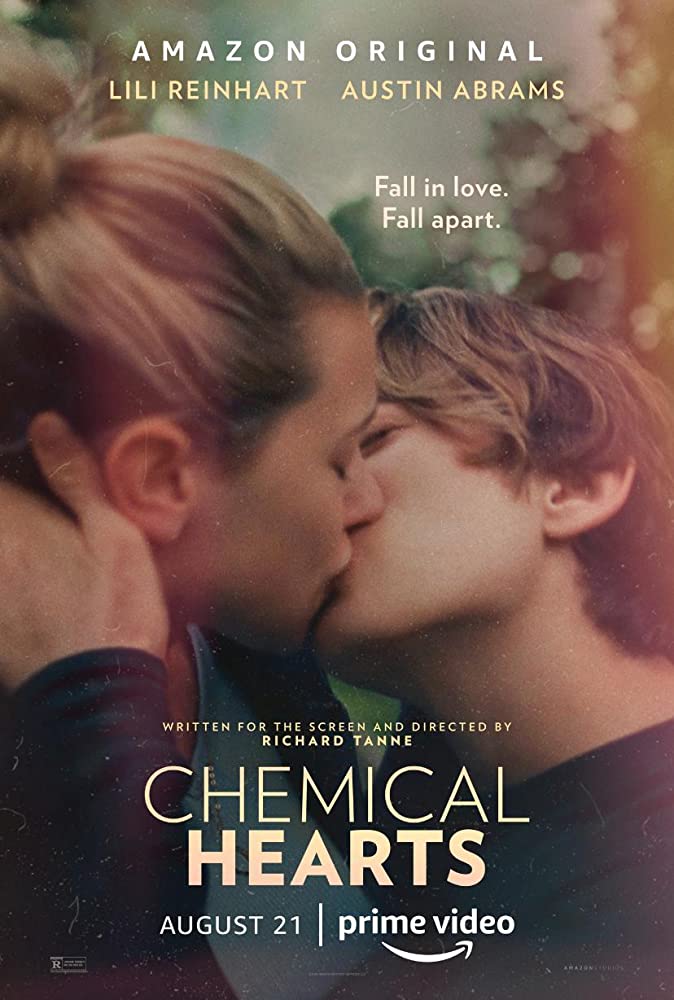
Chemical Hearts

Grace is the mysterious new girl in school who limps along with a cane and nearly stole the school newspaper editing job right from the stranglehold position Henry’s been leveraging throughout his entire high school career. Of course he can’t resist her. She’s broken. He wants to fix her, in that grand tradition of teenage boys the world over. Haha, only kidding. Only books and movies think teenage boys lust after loner girls. In real life I’m pretty sure it’s the outgoing cheerleader types, the girls who do most of the work for them.

But then again, Henry (Austin Abrams) is not your typical leading man. Millennials redefined masculinity, and our leading men have reflected the change – think Adam Driver, Paul Dano, Domhnall Gleeson, Dev Patel, Robert Pattinson, Ezra Miller – men who have pushed back against the beer swilling, no feelings having, sexism propagating pigs Hollywood has excused for years. Millennial men ask for consent. They manscape. They try. They like your friends and meet your mother and declare their intentions on IG. Think of 21 Jump Street when Jonah Hill and Channing Tatum first meet Dave Franco’s character. Hill and Tatum are likely borderline millennials themselves, but in this movie, Franco engendered the new man: he cared. He held hands. He waited until you were ready. And now we have Henry, a Generation Z leading man – in fact, a Gen Z leading person, because Gen Z is progressive and inclusive and they know that gender’s a social construct and not tied to a binary system their grandparents were content to force themselves into. Gen Z is diverse and aware; they’re digital natives used to personalized content but not fond of labels. They’re also overwhelmed and lonely. They’re moving away from traditional notions of beauty (well, at least for men) – yesterday’s hunks were broad, buff, and weren’t content with just a 6 pack but had upgraded to an 8 pack. Gen Z’s leading men, like Tom Holland, Finn Wolfhard, and indeed Austin Abrams have leaner, rangier physiques. Even comparatively fit Noah Centineo was body-shamed on Insta for not having abs – though people were quick to come to his defense. Abrams has a mopey, droopy-haired, anemic look about him, handsome in a hurt kind of way, like Kurt Cobain if you’ll allow the reference to – ew – Generation X.

So maybe kids these days really are turned on by chicks with mobility issues and a preternatural affinity for disaffected solitude. At any rate, Henry cannot resist. He’s smitten. But Grace (Lili Reinhart) truly is the walking wounded, and she’s got more ghosts than a teenage boy, even a very sensitive, very vulnerable one, is equipped to deal with.

Even given that I am bad with titles, it still took me a minute to figure out that I’ve read this book, and fairly recently too. It’s a fairly forgettable work of YA and is equally forgettable as a film. Tragic teenage love stories are a well-worn genre and even if Gen Z’s cardigans are slim-cut and their haircuts gender neutral, their love stories still follow the tried and true emotional roller-coaster we’ve all been through. Young love is still young love. Abrams and Reinhart have as much chemistry as their hearts promised in the title. Director Richard Tanne takes the trauma of teenage heartbreak very seriously, as does everyone who’s ever had one. Maybe a little too seriously – the film is coated in apathy and despair, leaving little room for growth or agency or change. I don’t feel we get to know the characters very well, and I was disappointed Henry’s friends get such short shrift in the film compared to the novel. There’s nothing inherently wrong with the film, it just relies too heavily on all the old cliches and fails to stir up much beyond sympathy, which gets tiring after a while. Check out Chemical Hearts if you’re a fan of these actors, or are in need of a genre fix, but otherwise, this movie is missable.

The Sleepover

Kevin’s having a bad day. First his teacher, the humourless Mrs. W, busts him for fabricating his family history for an oral presentation (hint: pick something less obvious than best-selling novel The Martian), then he gets caught on camera by the school bully dancing his pants off in the boys’ washroom, and then he gets saved by his mommy/lunch lady in front of the whole cafeteria. Could his day get any worse?

Yes. Yes it can. While Kevin (Maxwell Simkins) and nerdy friend Lewis (Lucas Jaye) are having a sleepover in the backyard, and big sister Clancy (Sadie Stanley) and her friend Mim (Cree Cicchino) are trying to sneak out to a party, their parents Margot (Malin Akerman) and Ron (Ken Marino) are abducted by what witness Lewis can only describe as “ninjas.” But the fact that Margot has left them a series of clues hints at another sort of life, one her family knows nothing about, but these intrepid kids are going to follow them into the city and a whole heap of trouble, all in the name of rescuing their parents.

The Sleepover plays like a kid version of National Treasure or The Da Vinci Code; director Trish Sie serves up some decent action sequences, but the tone and the humour do much to dilute the sense of peril and remains appropriate for family viewing. Ken Marino offers up his particular brand of wimpy wit, but it’s the kids who hog the spotlight. Maxwell Simkins is an especially wonderful addition; his bathroom dance is so charming and well-executed it’s hard to believe he’s bullied for it rather than praised – especially in the age of Tiktok, where this kind of thing would likely turn him into an overnight sensation. Actually, it sort of does anyway: the video posted to tease him goes viral, which is sort of what gets them into this mess.

Casting the right kids is imperative for a movie like this, but The Sleepover gets it right. It’s way too easy for a movie like this to go sideways, falling prey to either inauthentic child performances or an overly trite script, but Sie and screenwriter Sarah Rothschild manage a delicate balance of broad humour and credible adventure in crafting a fun ride fit for the whole family.

The One and Only Ivan

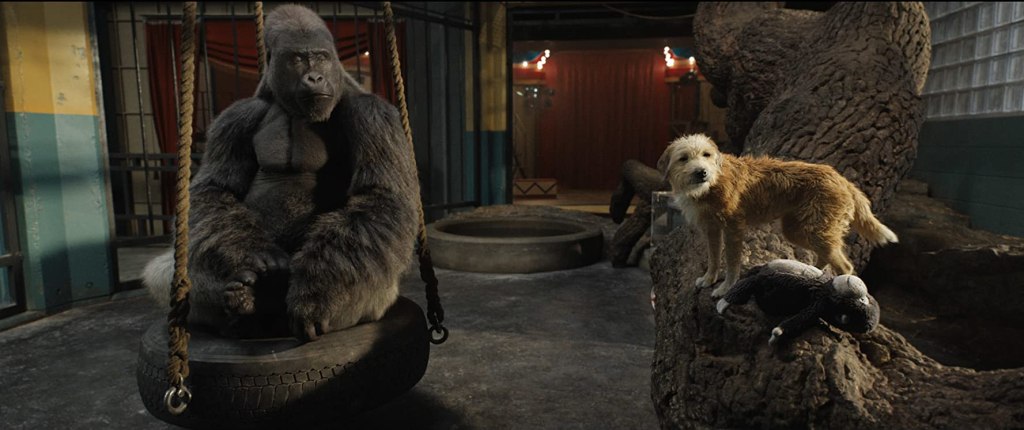
At the big top mall and video arcade at exit 8, Mack (Bryan Cranston) is the ringleader of a tiny circus inside a shopping mall. Home to animals including elephant Stella (voiced by Angelina Jolie), poodle Snickers (Helen Mirren), baseball-playing chicken Henrietta (Chaka Khan), mangy mutt Bob (Danny DeVito), Murphy the firetruck-driving bunny (Ron Funches), a neurotic seal named and most impressively, the headlining silverback gorilla, the one and only Ivan (Sam Rockwell). But the truth is, both the mall and the circus within it have fallen upon hard times. The crowds aren’t filling the seats anymore, and the circus is barely making enough money to keep the animals fed.

Mack brings in a baby elephant named Ruby (Brooklynn Prince) to reinvigorate the show, but even though she radiates cuteness, she’s not enoujgh to save the circus. That role, as ever, belongs to Ivan. But for the first time in his life, he’s wondering if maybe circus captivity isn’t the best or only option. He’s not concerned for himself so much as for baby Ruby, who deserves to be in the wild, a concept he can hardly recall or imagine.

This movie is based on the children’s novel by K.A. Applegate, which in turn is based on the true story of Ivan, a western lowland gorilla who spent 27 years living inside a mall enclosure in Tacoma, Washington, never setting foot outdoors. You don’t have to be good at math to figure how emotional this one’s going to be.

A live action/animation hybrid, this movie looks slick, and seamless enough not to detract from its sweet but simple story. The movie, directed by Thea Sharrock based on a script by Mike White (the very one who produced scripts as varied as Beatriz at Dinner and The Emoji Movie), isn’t quite sure where to take its darker themes but it draws some very sympathetic characters and a heartwarming tale about family and home. Cranston seems to be morphing into Ian McKellan before our very eyes, but it’s little Ariana Greenblatt who steals the show and all her scenes as Julia, the arty and intrepid zookeeper’s daughter who just wants her friends to be happy. The One and Only Ivan stole my heart and quite a few tears – a small price to pay for a solid, family friendly option new to Disney+.

Random Acts of Violence

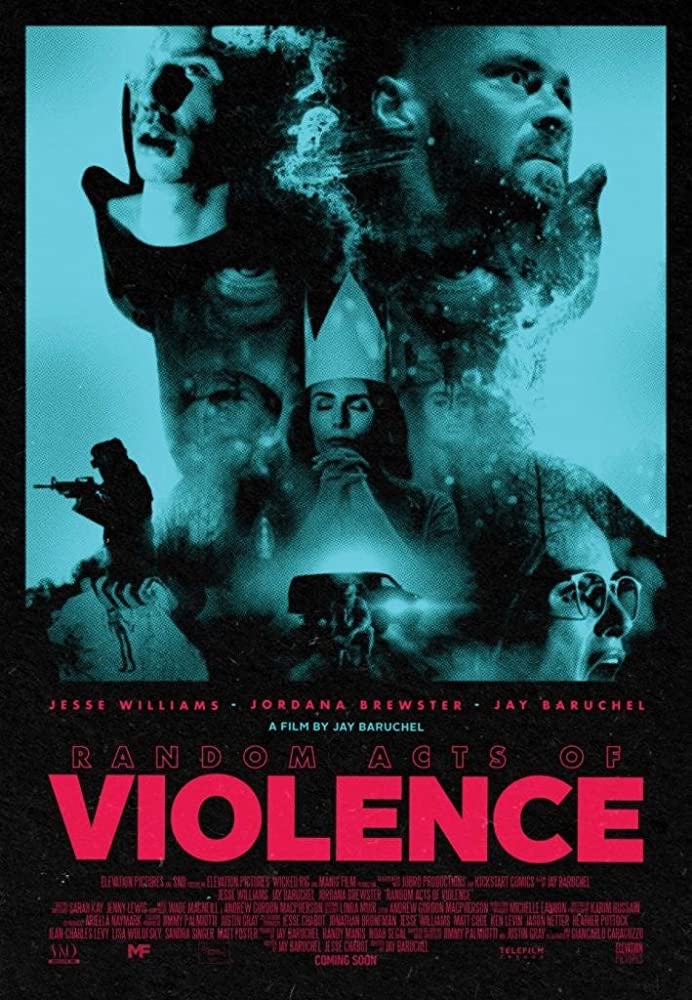
Todd (Jesse Williams) writes a comic book inspired by a real-life serial killer known as Slasherman. The murders took place in and around the small town where Todd grew up and caught people’s interest because of their brutal and seemingly random nature. The killer was never caught but Todd has made him the hero of his graphic novels. Slasherman doesn’t just kill, his murder scenes are the canvas to a very bloody work of art.

The Slasherman comic books are coming to an end. Todd’s publisher Ezra (Jay Baruchel) has arranged for a little book tour of sorts, through small town Americana, where Todd can draw inspiration and push through the writer’s blog that’s plaguing his last issue. Joining them on the road is his assistant Aurora (Niamh Wilson) and his girlfriend Kathy (Jordana Brewster). Kathy’s got a mission of her own. She’s interviewing anyone with ties to Slasherman’s actual victims. She’s worried that Todd’s work fetishizes horrific crime and glorifies the perpetrator. She wants to keep the victims in people’s memories, but to Todd, and from the story-teller’s perspective, the victims’ stories are finished but Slasherman lives on. As you can imagine, it’s a point of contention between them.

But ethical debates are soon going to fall by the wayside because this little press tour is going to attract more attention than they’d planned for. Someone is committing the exact same murders Todd has illustrated in his book. Shit’s about to get real, boiiiiii.

Jay Baruchel turns director for this film (he cowrote it as well, with Jesse Chabot, based on the comic by Jimmy Palmiotti and Justin Gray) and clearly has a handle on what a slasher flick should be. He plays around with colour in an interesting way, he fleetingly touches on themes like our fascination with anti-heros and whether they legitimize violence, but ultimately, it styles itself a horror film and it delivers the goods: dread and gore.

This is a movie based on a comic book about a guy who writes a comic book about a serial killer protagonist who then gets stalked by a serial killer himself. There are so many levels of meta it’s best not to do the math. It wants to say something about the implications of consuming graphic violence while also presenting graphic violence. It has a brain, but most of all it has guts. Guts galore. The violence may or may not be random, but it is brutal and it is varied. Enjoy.

Howard

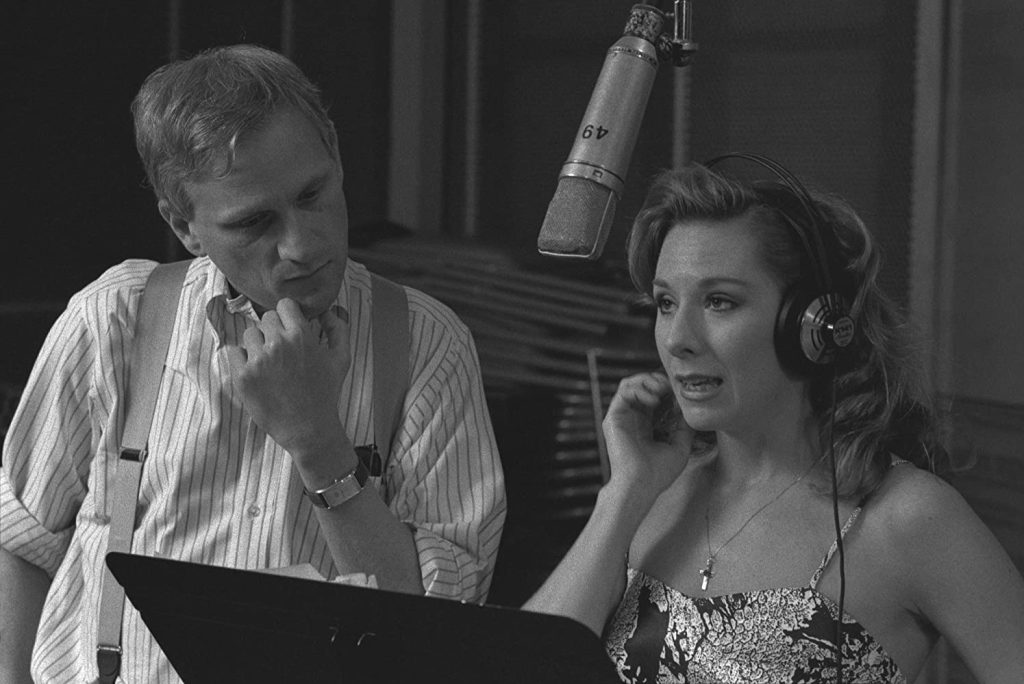
You probably can’t even imagine a world in which Howard Ashman had never existed, and yet you probably don’t even know his name. He’s been dead nearly 30 years but you’re still singing his songs. Along with frequent collaborator Alan Menken, he wrote some of your favourite songs from The Little Mermaid, Beauty and the Beast, Aladdin – and those are just his Disney creds.

The night they won the Oscar for their work on The Little Mermaid, Howard whispered in Menken’s ear that they should sit down and talk once they were back in New York. He revealed that he’d been diagnosed with HIV a couple of years earlier, when they were deep into production on The Little Mermaid. His health was failing. He’d be dead just a year later. But he spent that year putting whatever energy and time he had left into making Beauty and the Beast into one of if not the most memorable and beloved Disney fairytales of all time. The studio flew Disney animators out to his home in upstate New York to suit his schedule but his illness was largely kept secret – many in the crew assumed they were dealing the diva temperament of someone with an Oscar-shaped hunk of gold on the mantle. They put up with it because he was a genius, because the team of Ashman & Menken were basically unbeatable.

In this documentary, lots of his close friends and colleagues reminisce about how easily story-telling came to him, especially in song form. Lyrics spilled out of him, getting the story to where it needed to be. We also see him in archival footage, at the Beauty & The Beast recording session, for an example, where an orchestra played along to Angela Lansbury and Jerry Orbach laying down the track to that most famous of songs. Meanwhile, a separate team of animators already hard at work on Aladdin were picking his brain. He died before Belle ever set foot in a theatre, let alone Jasmine, but producer Don Hahn visited him in hospital after a particularly glowing test screening. Menken was down to 80lbs, was blind, and could hardly speak. This the man whose voice first sang the songs that princesses would later make famous. He died 4 days later. When Beauty & The Beast hit theatres later that year, it was dedicated to “our dear friend Howard, who gave a mermaid her voice and a beast his soul, we will be forever grateful.” Posthumously he would earn another four Academy Award nominations and rack up another win, but his legacy is much more than mere accolades. He was the voice of a generation, and his contributions are so timeless that they are rediscovered by each subsequent generation.

Howard’s friend, colleague, and Beauty & the Beast producer Don Hahn directs this documentary to say thanks to a man who is gone but clearly not forgotten.

Fearless

I’m sorry to have to tell you that Fearless (Fe@rLeSS_) is a not very good animated film on Netflix. It’s not even a very good video game handle, but that’s what we’re dealing with.

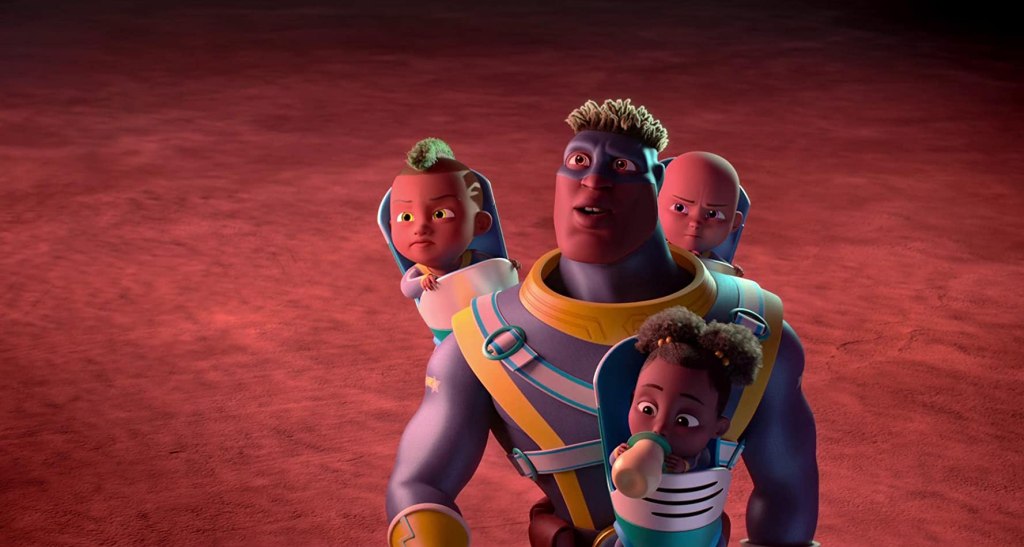
Reid is a teenage boy who is definitely “not” going to sit on his couch playing video games all weekend while his parents are away (at least that’s what he tells his mom when she calls to check up on him – he’s not even that convincing). Logged in as Fe@rLeSS_, Reid (Miles Robbins) is on the last impossible level of a very difficult game into which he’s already sunk many, many hours of play. When fat shaming the monster (I guess this is what passes for PG trash talk?) doesn’t work, he realizes that his character, Captain Lightspeed (Jadakiss), doesn’t have the necessary weapon to defeat the ultimate boss, Arcannis (Miguel). As Fe@rLeSS_ and sidekick/teammate Fleech (Tom Kenny) discover, Captain Lightspeed has one weapon in his arsenal they’ve never deployed: babies. Babies? What kind of creepy code name is that? It’s not. They’re actual babies, triplets actually, who all have some sort of super power like their dad, only they’ll have to be deposited into daycare so they can “grow” into them, or something like that. Obviously they should have been cultivating the baby potential a long time ago. But then something really weird happens (bear with me, and don’t shoot the messenger): the babies end up in Reid’s living room. Reid who is a real, human, teenage boy, with science homework due on Monday, and the babies, who are fictional video game characters, just a bunch of 0s and 1s, are now living and breathing and crying and pooping in his living room. As babies do. Real ones, anyway, which these ones aren’t…and yet here they are, adorable, needy little monsters, encouraging the awful screenwriters to commit a multitude of heinous poop puns. Thank goodness for Melanie (Yara Shahidi), Reid’s unsuspecting lab partner, who shows up to do “homework” (I see you, Melanie: don’t go thinking you invented that move yourself) but gets redeployed into babysitting/saving the world. Which is when this movie tries to rip-off The Incredibles but clearly got a pirated version and a bad stenographer.

Which may still satisfy young audiences, who have notoriously bad taste in EVERYTHING (sorry, but: velcro, Lunchables, Caillou, Baby Shark, toys with sirens, etc, etc), but it lacks Pixar’s more universal appeal. In fact, it’s so far out of Pixar’s league it would be unfair to compare them had they not brought it on themselves by making a carbon copy of The Incredibles and delivering the 7th or 8th carbon down and not pressing nearly hard enough. If you got that reference, you’re way too old for this movie. But you will get the one throw-away E.T. reference, which is hard to miss because it’s both lazy and obvious. I can’t seem to keep the contempt out of this review even though the film itself is relatively harmless. It just reminds me of the kind of forgettable movie Dreamworks would have put out 12 years ago, the kind that only ever gets played in the back seats of minivans (a local car dealership once had a “promotion” – buy a car, get some dijon mustard. Incredible, I know. Yet true. I never saw the numbers on the avalanche of deals that were made that day or just how enticing that $4 jar of mustard was on the back end of a $20 000 investment that starts depreciating the minute you sign on the dotted line ((did lines used to be dotted, or is that just a really stupid expression?)), but I’m sure the Grey Poupon ((I hope it was Grey Poupon)) was better bait than not one but TWO copies of Megamind. Two because mini vans come standard with not one but two screens that have better picture quality in a moving vehicle than even the movie theatre itself had when I was a kid, and how dare you ask your glazed-eye children to choose between The Lego Movie and The Lego Batman Movie for the 6 minute drive to Nana’s?) (Whew, someone sure woke up on the ranty side of the bed this morning!)

Anyway, what was I saying?

Oh yeah, Fe@rLeSS_.

More like Dickless.

Heh. Cross that off the old bucketlist: end a children’s movie review with a swear. Peace out, motherfuckers!

I Used To Go Here

Kate’s new novel isn’t doing very well. The book tour’s cancelled and as she’s posing between the three enormous baby bellies of her three best friends, she simply holding a book, she’s realizing that maybe her baby was better off aborted.

But then her old professor calls, asking her to do a reading at her alma matter, and maybe things are a bit redeemed? Kate (Gillian Jacobs) returns to her former stomping grounds, 15 years later. Is it a triumphant return? Well, besides the fact that no one’s read the book and professor David (Jemaine Clement) isn’t quite as welcoming as she’d hoped and the B&B lady might be slightly psychotic and she accidentally wore the same blazer to the reading as she’s wearing on the book jacket. Apart from that, sure?

But her feelings of inadequacy and malaise seems to have her untethered, and instead of heading back home to Chicago, she hangs out maybe a little bit longer than she should. She drops by her old frat house and makes friends with the kids she finds there. They were in kindergarden when she herself was in college, but what’s a little age difference? Their problems seem so trivial compared to hers. They are young and full of promise, with their whole lives ahead of them. They haven’t compromised their dreams yet, their hopes haven’t been dulled by the brunt force of survival, they haven’t experienced the steady sucking of one’s soul. But this is a temporary balm at best, a bit of respite maybe, but eventually Kate will need to confront and make peace with reality vs. expectation, surely?

Writer-director Kris Rey has a playful style, but well-observed. I was pleasantly surprised to find Gillian Jacobs not resorting to an insufferable whininess that could have easily made this comedy boorish. Instead we find a lovely little character arc and a tidy if light comedy about a second coming of age.