Don’t Say We Didn’t Warn You

2020 is a very confusing time for movie lovers. With most theatres closed or at reduced capacity, big studios won’t release movies that won’t at least make their money back. That has left the few cinemas that are open in a bit of a bind – they’ve been hemorrhaging money for months and are desperate to stay afloat, but with no movies being released, it’s hard to attract even the brave few willing to risk the virus. Which has left the door open to quite a few oddities being dusted off and earning releases they may not have otherwise.

Call Me Brother

Lisa (Christina Parrish) and Tony (Andrew Dismukes) are teenage brother and sister who have lived with separate parents ever since they got divorced but they’re reunited under their father’s roof while mom’s away in Cabo. Tony and Lisa even get to share a bedroom since their dad’s new wife has converted the one that might have been Lisa’s into a sitting room – literally an empty room for sitting on the floor, as if such a thing were ever necessary.

Long story short: this is an incestuous comedy. Well not literally. It’s not actually funny. But it is very much incestuous. Lisa and Tony find themselves oddly drawn to each other. They’re both odd ducks, even besides the fact that they spend way too much time together and sit way too close to each other and masturbate to the sound of the other one masturbating in the bed next to theirs. You know, typical brother-sister stuff.

I’m not sure if there’s a world in which I think incest is funny, but this isn’t it. I generally think any topic is tolerable if the jokes are good enough, but this movie’s having an identity crisis if it thinks it’s being funny. And they really have nothing else to offer, it’s incest or bust. Sibling raunchiness just isn’t what I’m into (thank god) and I only blame myself for not turning it off when I should have.

Koko-di Koko-da

It does get weirder, let me tell you.

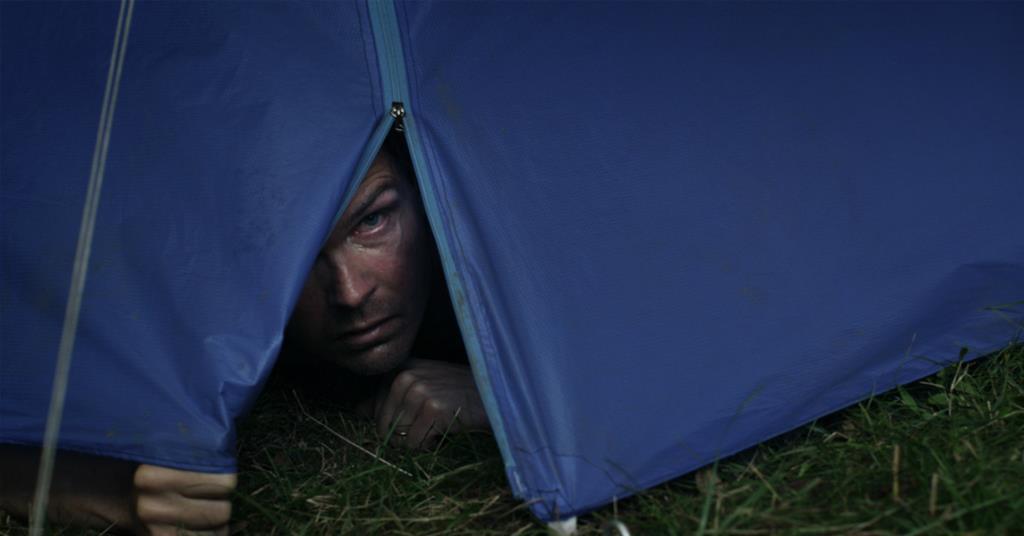
Koko-di Koko-da is a movie about a family who go on a camping trip in a last-ditch attempt to get back on track after a devastating event has left them emotionally crushed and swiftly growing apart. But they didn’t count on being crashed by a creepy sideshow artist and his shifty gang who’ve been roaming the woods singing chilling songs and generally putting out bad vibes. And that’s before they start terrorizing and brutally murdering the family over and over.

How can you murder someone over and over? Time loop, bitches! It’s the worst Groundhog Day imaginable. It’s a metaphor for grief, an apt one if unsubtle, but in my opinion, it’s just not watchable. It’s hopeless, disturbing, unsatisfying, tasteless, and it makes me think that writer-director Johannes Nyholm has a work crush on David Lynch but not the skill or the mastery to properly mimic him. This one, I turned off. I do learn my lessons.
Disclosure

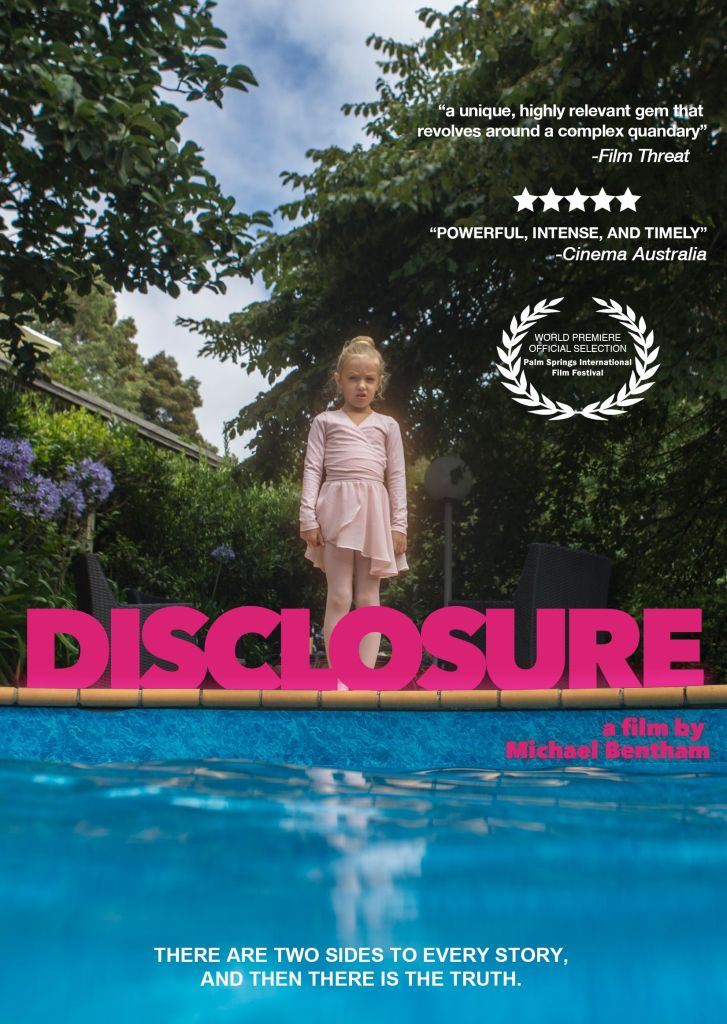
Emily and Danny Bowman have a 4 year old daughter. Family friends Bek and Joel Chalmers have a couple of sons. The kids play together, the parents drink together, it’s an easy if not intimate friendship that all have enjoyed…until the Bowmans’ daughter claimed that the Chalmers’ son has touched her inappropriately. The little girl has been in therapy this past month, and today she’s out with her grandmother. Emily (Matilda Ridgway) and Danny (Mark Leonard Winter) are at home, relaxing poolside when Bek (Geraldine Hakewill) and Joel (Tom Wren) drop by unexpectedly, catching them unawares.

Bek and and Joel were horrified, of course, to hear what their son had done. But after a month’s consideration, they’ve decided their initial reaction was rash. They now believe their son to be innocent, and are here to persuade the Bowmans to leave his name off the report. Joel is in government and suspects there would be repercussion to his career. As you might expect, Emily and Danny aren’t too fond of this abdication of responsibility, and aren’t at all comfortable with the Chalmers’ motivations.

Disclosure is not about the event itself; in fact, we hardly meet the children and we never see the incident. Instead, we deal with its fallout. We see two sets of parents each wanting to do right by their child, and each bringing their own personal histories and beliefs into the fray. The poolside confrontation turns rather vicious and we see how quickly a friendship can go from cordial to sour. Of course, even the couples themselves are not in perfect agreement – Danny feels more lenient toward this “good family” while Emily worries about the next victim. The entire situation is wired with explosives and everyone’s holding a trigger.

Writer-director Michael Bentham keeps the truth in his own pocket. The rest of us merely get two versions of the same story, and it’s up to us to decide whether we will take a little girl at her word. This absence of certainty only helps Bentham’s minimalist style feel taut and tense the whole way through. The talented cast make their broad characters feel real, and exposed. Every puckered mouth, every arched brow gives us an additional layer tipping the viewer’s scale of justice in one direction or the other.

And of course there’s the big picture here, the collective response to trauma and how the undermining not to mention denial of pain can quickly tear a community asunder, and that veneer of politeness cracks wide open. We are all hanging on by mere threads.

Michael Bentham’s Disclosure is available on VOD today.

Over on Youtube…

We’re celebrating Queer, Black, Female voices in Hollywood. It’s still Pride Month, people, drop us a Thumbs Up and show you care!

The Handmaiden

During the 1930s Japanese occupation of Korea, Lady Hideko (Min-hee Kim) lives on a large countryside estate with her abusive uncle. A new handmaid, Sook-Hee (Tae-ri Kim) arrives in the house to assist her, only the two bond in unexpected ways.

But what Hideko doesn’t know is that Sook-Hee was raised in a den of thieves – and pickpockets, forgers, human traffickers, and so on. A fellow criminal, playing the long con and posing as Japanese gentleman Count Fujiwara (Jung-woo Ha), came to her with a proposal. Lady Hideko stands to inherit a vast fortune. If Sook-Hee agrees to help Hideko fall in love with him, they’ll rob her of her money and have her locked up in a madhouse. Sook-Hee accepts. But as she encourages Hideko’s seduction, she herself is falling for the lady, but her poverty and pride won’t let feelings get in the way of fortune.

The Handmaiden is an exceedingly beautifully-shot film with a score that sounds an awful lot like Downton Abbey. It’s loosely based on Sarah Waters’ crime novel, Fingersmith, but director Chan-wook Park (yes, the very same who gave us Oldboy) has his fingerprints all over this adaptation. His interpretation is visually luscious, of course, and the story more complex than it seems. This one too cleverly hints at the various power dynamics at play – between sexes, classes, and even colonized and colonizer.

While the erotic scenes are somewhat familiar and cliched, one bathtub scene involving a thimble will go down in the history books as a delightfully powerful lesbian maneuver. The Handmaiden is lush and decadent and often disturbing.

Athlete A

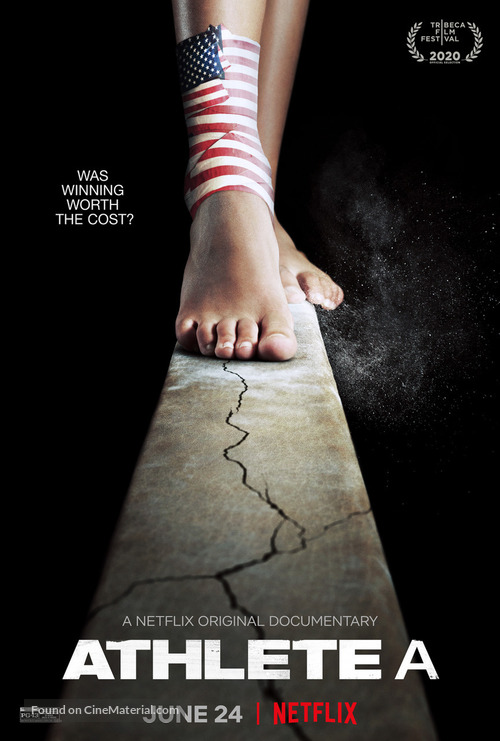
USA Gymnastics knew that Dr. Larry Nassar was routinely and repeatedly sexually assaulting the many young girls in his care. They knew and they did nothing. They knew and the covered it up. They knew and they kept him in the position, kept sending child gymnasts to him, kept inviting him into their midst. They had a duty to protect their young charges. They had a duty, morally and legally, not only to remove him, but to report him to the police. Rather than doing so, they continued to feed victims into the hands of a known pedophile.

In Jon Stewart’s recent political satire Irresistible, he talks a bit about about the pundit economy, how the news has largely been replaced by talking head opinion. These aren’t journalists, not by a long shot, but they sit behind anchor desks as if they are, injecting issues with their own agendas. It’s a dangerous trend, especially when you consider it took reporters from the Indianapolis Star to expose these crimes and trigger a police investigation. Once the newspaper made the allegations public, women started coming forward. In droves. Hundreds. Newspapers are nearly extinct, but can we afford to lose the last few people dedicated digging for truth and informing the people?

Because USA Gymnastics was never going to do the right thing. In fact, they’d fostered a culture of abuse with coaches like Bela Karolyi who believed dominating and terrorizing young gymnasts was the key to success. USA Gymnastics wasn’t just looking the other way, it was enabling abusers and suppressing evidence because that’s how they kept the sponsorship dollars rolling in.

This is a difficult film to watch, obviously. But directors Bonni Cohen and Jon Shenk deliver on a sense of hope, too. And hope? She’s female. Called Athlete A in the documents, in court, woman after woman stood up, identified themselves, and spoke to the man who’d abused them, and to the judge who would sentence him. And also to all of us. They showed us there is power and dignity in being able to name the crime, and the perpetrator. It takes real courage to do that, but it made me want that same thing for every woman. Many, many, many sexual assault victims don’t get justice. They don’t speak up because they don’t feel they can. Or they are not believed. It took years for these gymnasts to see their day in court, but isn’t justice the very least we can do for these victims?

Straight Up

Netflix just dropped a bizarre comedy this weekend starring Will Ferrell and Rachel McAdams. Netflix will green-light just about everything, which was music to Ferrell’s ears – literally. Finally, his semi-chub for Eurovision would pay off! If it’s not already the #1 viewed film on the streaming platform, I’m sure it will be soon. And it does have its funny moments, even I can admit that.

But Straight Up is also a new release on Netflix, and this one’s a movie you actually should see.

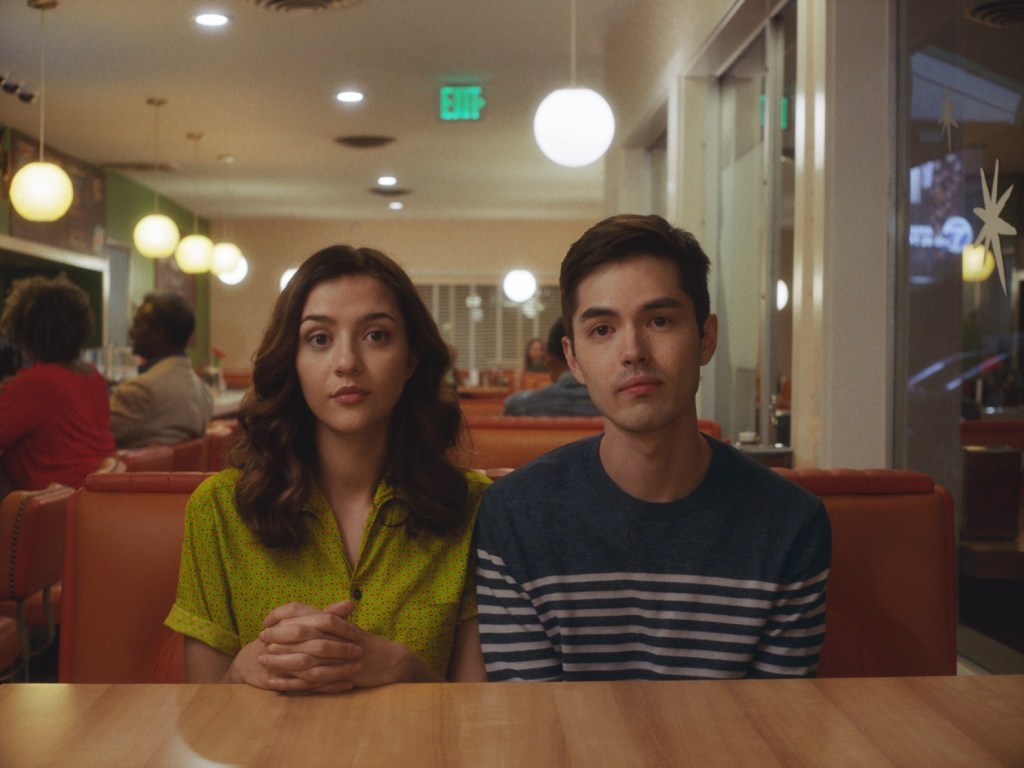
Todd (James Sweeney) is a confused young man. He’s neurotic, he’s OCD, he’s phobic, he’s addicted to therapy, which tends to stir up more questions than answers. One recent question is: am I actually gay?

Sexuality may be quite obvious to most, but Todd is wondering if maybe he just internalized the label from having been bullied as a child. He hasn’t really had any relationships, nor has he had sex thanks to an aversion to bodily fluids. He tests out this new theory on two long-time (/only) friends, who are less than enthusiastic for this line of thinking. Of course he’s gay, they assure him. Of course. But Todd is petrified of dying alone, and since adding females to the mix more than doubles the dating pool, the math is on his side. More or less. It may be a tad difficult to attract women with his distinct “I’m gay” vibe.

But not, it turns out, impossible. He meets Rory (Katie Findlay) and they immediately bond of Gilmore Girls, which is apt because they too are hyper-verbal. The dialogue zings between them rapid-fire and yet feels natural. Sweeney and Findlay have an incredible chemistry that belies an instant connection and intimacy. They are intellectual soulmates. But can they sustain a romance?

This film is all kinds of incredible. First, we get to explore a young and fluid concept of sexual identity. These kids are not afraid to redefine society’s so-called institutions to suit their own needs. They don’t ask whether they can be romantic partners but not sexual ones – they just get to it. Nothing’s off the table and everything can be negotiated.

It’s still pride month, and you may have noticed that among all of the letters of the rainbow (LGBTQia2+), the Q stands for both queer, and for questioning, which doesn’t necessarily mean that someone’s sexuality is in limbo. It can simply be an admission that sexuality is a spectrum, and one’s place on it may be in flux (a sort of agnosticism for sexual orientation, if you will). Generation Z much more readily embraces these gradations. And I don’t mean that it’s easy or it’s perfect, just that our understanding continues to expand, and there’s a lot more nuance than just the binary female/male, hetero/homosexual.

Five years ago, James Sweeney was a lowly assistant to Duke Johnson, who himself is not a household name, but he was co-director on that wonderful stop-motion animated film by Charlie Kaufman, Anomalisa. Flash forward only a few years, and he’s already writing and directing his own films, and even more incredibly, they’re actually first rate. He’s not just putting sexuality on trial, he’s questioning our basic definition of romantic love. As he should. The truth is, no relationship strictly conforms to a dictionary’s ideal. Maybe love can only be defined by the people who are feeling it. And maybe we should just chuck out these meaningless labels anyway.

I feel energized by these challenges to the status quo, but most of all I was just falling a little in love with Rory and Todd myself. Their wit and effervescence perfectly captures that consuming and in fact addicting aspect of new love. Recognition of this higher connection is intoxicating and exhilarating and you just want more, more, more. While I would categorize Sean as “distressingly straight” and myself as “pansexual,” still we recognize a bit of ourselves in this young couple, because those first heady days of romance are unmistakable. Sweeney and Findlay give generous performances and make easy work of what I can only imagine was a pretty hefty script. And an impressive one at that.

Look for Straight Up on Netflix.

Irresistible

Hilary campaigners woke up with a tremendous political hangover on November 9th, 2016. Liberals began to realize that they’d been living in bubbles. They were fundamentally surprised by their loss, surprised that so many people across America could vote against their own best interests. Where had they gone wrong? And how do we begin to address that disconnect?

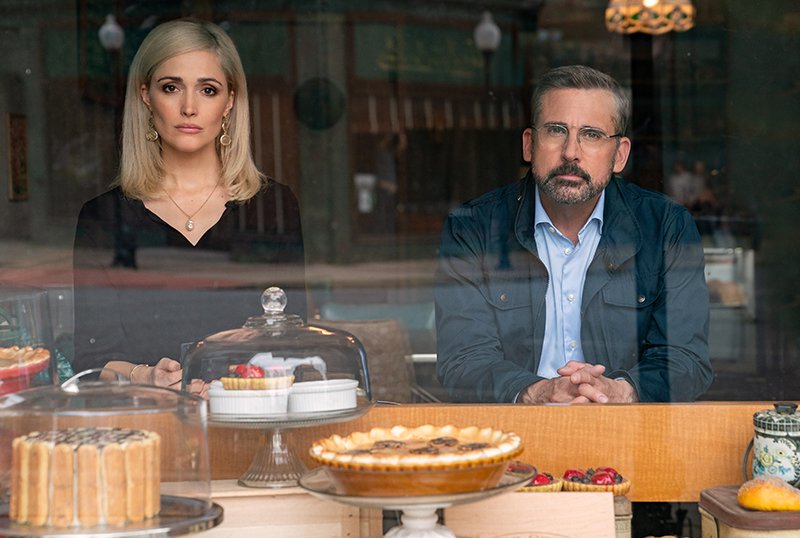
Democrat strategist Gary (Steve Carrell) is disillusioned, like a lot of us. He regroups and refocuses in conservative, smalltown (swing state) Wisconsin, USA where he finds an unlikely candidate in Col. Jack Hastings (Chris Cooper). Jack Hastings likely doesn’t know what it means to go viral, but he has, for an impassioned speech he gave to city council. Gary smells potential: Jack, a veteran, a farmer, a widower; you couldn’t build a better crossover candidate if you tried, and god knows they have. Jack’s a Democrat…he just doesn’t know it yet. It’s just one rural mayoral race, but maybe that’s a foothold the Democrats badly need to expand their base – a Democrat for the heartland, a “redder kind of blue.”

Writer-director Jon Stewart is a master satirist and for a long time he set the tone for how we voiced our discontent, how we parsed and digested the news, how we conquered our apathy and our hopelessness. He may have given up the anchor’s chair behind the desk of the Daily Show in 2015, but he’s clearly got more to say.

Irresistible is about the disingenuous handshake between money and politics. Mere seconds after Gary makes his move to Wisconsin, the other side sends rival strategist Faith (Rose Byrne) to even the odds. If anyone had any illusion that campaigns were about ideals, values, promises, or intentions, it was quickly, summarily, definitively dispersed. A campaign is about math: who has the most money, and how to turn those dollars into votes. It’s cynical as hell, but even with a glossy coat of Hollywood spin, it’s still not half as bad as real life. People don’t matter. They’re not individuals with specific needs and hopes, they’re reduced to “demographics,” a slick political term that divorces voters from their identity. Politicians don’t want to better your life, they want to trick you into believing in them for just long enough to cast a vote. And failing that, they want to trigger you into withholding your vote on the other side. Demographics are equations waiting to be solved, and campaigns hire lots of people to crack those numbers.

Jack represents a “redder kind of blue,” a shade of blue that people who are traditionally red would consider turning pink for. Except even children know that red and blue make purple, and that may be American democracy’s greatest failing. It forces 328 million people to contort themselves into one of two boxes: red, or blue. Both boxes suck and neither one fits anyone perfectly. Worse, though, it creates a dangerous “us” vs. “them” mentality. Its binary nature focuses on what divides us instead of what we share in common. It makes enemies of the other side, when in fact those people are our neighbours, our friends, our kin. We are capitalists. We thrive on choice. The pharmacy sells dozens of brands of toothpaste. The grocery store stocks even more brands of orange juice. You stand in front of the refrigerated case, and maybe you reach for the sweetest juice, or the one that’s locally sourced, or the one with the most vitamins, or the one with the most pulp, or the least pulp, or the cutest carton, or the most memorable commercials, or the healthiest ingredients, or maybe you just reach for whatever’s cheap. Or maybe you bypass the refrigerated section and buy a can of frozen orange juice, from concentrate. Or maybe you prefer the powdered stuff. Or the shelf-stable stuff. Or orange ‘drink.’ Or maybe, and yes this sounds crazy, but maybe you prefer cranberry juice. We need 87 orange juice options but only 2 political parties? Doesn’t that seem a little…crazy? But having that much choice means the brands have to be competitive. They have to care about what you, the consumer, wants. They have to bend to your will, not the other way around. If they want to make money, they have to be the most appealing and offer the very best. But the American political system forces you to choose between two disappointing options. Sure they could put some energy into finding out what you actually need, but instead they embrace the time-honoured American tradition of fear-mongering so you vote for them, or flinging mud so that you don’t vote for the other side.

Anyway, don’t worry, the movie doesn’t actually mention orange juice once. It’s just one of the tangents my mind follows when it’s been stimulated by something thoughtful, and interesting. While some critics didn’t care for it, I enjoyed Irresistible very much. I like Carrell’s charmingly pompous performance, and Stewart’s condescending liberal voice. I did wonder, for a while, what exactly was meant to be so irresistible, but of course the answer was right in front of me the whole time: money. To which Jon Stewart has just one simple message: resist.

Eurovision Song Contest: The Story of Fire Saga

I will give it this: it is the funniest comedy of 2020. Is it (so far) the only comedy of 2020? Basically yes. But as this movie teaches us: sometimes you win just by showing up.

Lars (Will Farrell) has been obsessed with Eurovision since he was a little boy.

[For us non-Europeans, a crash course in Eurovision Song Contest, which is a real thing: it’s an annual international song competition, held every year since 1956, with participants from many of the 50 eligible countries (confusingly, some eligible countries are not European, and one, Scotland, is not even a country). Like the Olympics, each country holds internal trials and sends their best delegation to the competition, where an original song is to be performed on live TV and radio. Then people vote on their favourite. Countries cannot vote for themselves; each country awards two sets of points, one set decided by a panel of music industry experts, and the second decided by viewers voting by phone and text. Occasionally the winner achieves success outside of the broadcast area; Abba won for Sweden and Celine Dion won for Switzerland *record scratch* wait, what? That’s right: for some reason you don’t have to be from the country you’re representing. Some people compete multiple times by singing for different countries. Dion, who is ours (Canadian), was a good horse to bet on, but it does smack of cheating. Although, to be fair, so does every other thing about the contest. Russia won’t vote for queer performers and China won’t even show them. Jordan won’t show Israeli entries because they don’t recognize it as a country, and neither does Lebanon. And it seems that neighbouring countries tend to vote for each other; geographical and even political alliances pop up, and reciprocal votes are exchanged. You could even allocate points to an unpopular performance in order to boost your own relative success. 2020 was to be the show’s 65th anniversary, with this film’s release set to coincide with it. Alas, COVID has other plans, and for the first time, the contest was cancelled)]

Back to Lars (Will Ferrell), a little Icelandic boy who fell in love with Eurovision the day he first heard Abba sing Waterloo, much to his father’s disapproval. Many, many years later, Lars is now a middle-aged man but his dream is the same. His father’s (Pierce Brosnan) stance hasn’t changed, if anything, he’s more critical of his son’s “wasted life.” But his Fire Saga bandmate Sigrit (Rachel McAdams) has more than enough enthusiasm and encouragement to go around, and in their own heads, they’re already stars (the local pub tells an entirely different story, interrupting their original music to request Ja Ja Ding Dong, a silly but exceedingly catchy piece of shit – think of it as Iceland’s Chicken Dance). They’ll never get sent to compete on Eurovision on their own merits, but luckily the elves are on their side and something happens to tie up literally every other singer-songwriter in the country.

Off to Scotland they go: cue some fish out of water humour, some anti-American jabs, an oversexed Russian (Dan Stevens), and some pretty bizarre on-stage theatrics (which apparently are also a real thing – it’s a visual medium, and performers do their utmost to stand out). Iceland is basically the laughing stock of Eurovision.

This is the movie Will Ferrell was born to write. Scratch that: it’s the movie his wife was born for him to write (She’s Swedish – her family introduced him to the contest and he’s followed it rather ardently since 1999). That’s a pretty serious investment. He planted those comedy crops last century – does he harvest the rewards in this movie? Well, not exactly. His family won’t starve to death, but it’s a meager little crop, and a little mealy to boot. Sean thought it was pretty fun, and I won’t deny the film does have its merits. Will Ferrell is a larger than life comedian. His bits are always big so they either fail big or they win big, and with a 2 hour run time, the premise doesn’t quite have enough steam to keep paying out. Still, considering it’s on Netflix, your risk is small. If you’d paid to see this in a theatre, you’d probably leave feeling disappointed, but it’s just good enough for a Netflix view.

This is the second collaboration between director David Dobkin and stars Will Ferrell and Rachel McAdams. They had no scenes together in Wedding Crashers, in fact Ferrell had a pretty small part, but it was a wildly and unexpectedly successful movie. Perhaps Will Ferrell in small doses is the key here, and it’s one that’s definitely lacking in this prohibitively-long-titled movie. As troubling is his character is, we’re doomed to follow him around through all his lows and lowers. Rachel McAdams is basically inoffensive. She’s not exactly known for her comedic chops, so she provides an earnest counterpoint to Ferrell’s hammy, over-the-top antics. It’s not a match made in heaven. It’s not even a great match for Iceland, whose couplings tend to be a touch inbred. But like the proud and wonderful Icelandic people, this movie is unabashedly, embracingly weird. And like Iceland’s relationship with Europe, Eurovision Song Contest: The Story of Fire Saga is not the best that Netflix has to offer, but occasionally it surprises you.

Trauma Center

Madison Taylor (Nicky Whelan) is having a heck of a day. First she has the misfortune of walking in on a murder in progress, and then she takes a bullet to the leg in the crossfire. She wakes up in the hospital with dependable Lt. Steve Wakes (Bruce Willis) assigned to her protection; she is a key witness to the crime. But Wakes leaves almost immediately, and sure he’s doing his job “solving the murder” but he’s kind of “a really shitty protector” since he LEAVES HER ALL ALONE. So of course the murderers seize their opportunity, and now poor Madison is limping away through the halls of a locked down hospital, desperately trying to evade some very bad guys who, ironically, would very much like to shoot her dead. I’m calling it ironic because the reason they want her dead is because the bullet in her leg is evidence of their crime, so they want to plug her with a few new ones, but scoop that first bad boy out, because some dirty cop went and pulled his service revolver during a crime and that shit is traceable.

Three things to know:

He doesn’t look half as baffled as I feel. Believe me.
  1. The hospital is on “lockdown” which basically just means that the exits have been sealed off. It is still a functioning hospital, at least upstairs, where Madison’s little sister is a patient (panic attack? asthma attack? something like that). Madison and her stalkers are mostly in the basement, which has an abandoned, horror movie feel.
  2. Lt. Steve Wakes has abandoned his post, and the basement obviously gets very poor cell service. But can he even be trusted? The criminals are cops and trusting one of them, especially a flake, is a lot to ask of a woman who’s got police force ammunition buried in her flesh.
  3. Steve Guttenberg plays a doctor. That’s actually not at all important, it’s a blink-and-you’ll-miss-it part. You’d call it a cameo if he was at all famous anymore, but in his case it’s probably better called a “bit part.” But still: Steve Guttenberg! If you’re at all prone to pity spirals or second hand shame, do NOT read his IMDB page.

Anyway, the killer cops just basically hunt her in some creepy medical settings, unsuccessfully enough to really stretch the bounds of credibility, while Whelan does her best to look sexy in a hospital gown.

Bruce Willis is…not good. His character is MIA for a good chunk of the movie and he’s still remarkably bad. I blame Die Hard, really. It convinced Sean to always bet on Bruce, and he always does, and somehow I’m the one who always loses. Does anyone even remember the last time he was good? Please get back to me ASAP – my Netflix queue depends on it.

A Lego Brickumentary

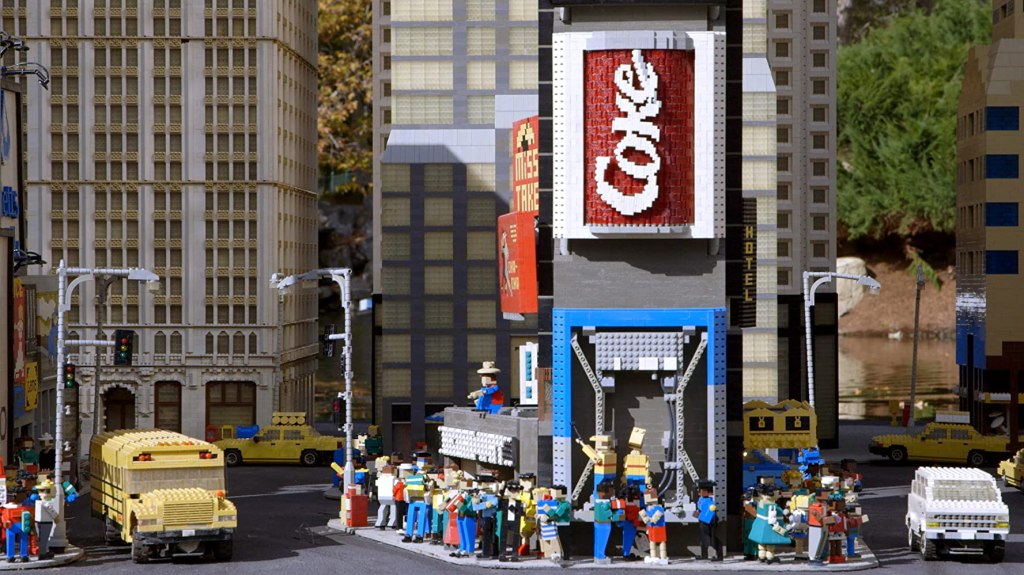
Jason Bateman gets the mini fig treatment, and as the documentary’s narrator, he helps us discover aspects of the Lego culture we’ve perhaps not before considered.

I mean, someone has. Definitely not me. But someone. I grew up in a house of women; we were four sisters, close enough in age to swap clothes, braid each other’s hair, and influence each other’s tastes in movies and music and books. Eventually we got it into our pony-tailed heads to put Legos on our Christmas lists, not much caring who received the list as our entire basement was a communal playroom. But instead we got more Barbies. We had, literally, hundreds of Barbies. We had so many Barbies that we’d often get repeats of the same ones – we’d call them “the twins” or “the triplets” and carry on as usual. We loved Barbies. But we never got any Legos.

I didn’t really discover Legos until my oldest nephew was old enough to play with them. And by old enough, I mean old enough to last about four seconds before wandering away, leaving his dad to complete the project, who was the one who really wanted them in the first place. Sean would linger for an hour in the Lego aisle, sizing up each kit, weighing the options. I remembered Legos as a massive pile of plastic bricks to dump over your living room floor, from which to build the blueprints in your mind. But the Lego aisle of the past decade tells a different story: boxes with exactly the parts necessary to build the project illustrated on the cover, many of them heavily licensed to appeal to children. And many of them not. Lego has discovered a second crucial customer base: adults! My nephew’s dad, and Sean – they’re not outliers. Adults make up such a large portion of Lego’s customers they even have their own acronym: AFOL, adult fan of Lego. These are the people splashing out serious cash: $350 for 3898 pieces of Manchester United’s Old Trafford stadium; $400 for an authentic replica on a 1:8 scale of a Bugatti Chiron; $900 for a massive 7541 piece Millennium Falcon. People love the zen aspect of following precise instructions, but lots of AFOLs are building outside the box too, exhibiting their impressive creations at Lego conventions or submitting them to Lego to win the chance to see their design reproduced and sold in stores.

Whether you played with them as a kid or as an adult, or merely browsed them endlessly as an aunt who cares, Lego has maintained their hold as a top toy for decades. But they’ve transcended toy stores, they’ve been used in art and architecture, we’ve seen them in movies and museums. And now we can celebrate them in this Amazon Prime documentary too.

Tell us about your own Lego projects: do you like Technic, Creator sets, or licensed stuff? Have you built the Death Star, the Taj Mahal, the Simpsons living room?