
We are very shortly headed to TIFF where one of the many movies we’ll see is Ed Norton’s passion project, Motherless Brooklyn. While not his first time in the director’s chair, it IS the first one he also wrote, and of course stars in as well, because what the heck. He’ll play a Tourette’s-inflicted private investigator charged with solving the murder of his only friend (Bruce Willis). It looks good, and it’s had me thinking about Ed Norton’s other famous roles, of which there are actually quite a few, though he tends to be a bit under the radar (by which I mean: he’s always been more of an actor than a movie star).
Born in Boston circa 1969, Edward Harrison Norton became an actor because his childhood babysitter starred as Cosette in Les Miserables, and he caught the acting bug from her. He went to Yale as an undergrad where he was friends with Ron Livingston and Giamatti, and though he took some theatre classes, he graduated with a major in history. He was working on the stage, in New York, when he auditioned for a role opposite Richard Gere in Primal Fear; DiCaprio had passed on it, and Norton was chosen out of 2000 hopefuls. At the audition, he claimed that, like the character, he came from Kentucky (he grew up in Maryland), a lie that went undiscovered since his twang was evidently convincing. He picked it up watching Coal Miner’s Daughter, and threw in a stutter for good measure.
Lest you think that Primal Fear (1996) is his first IMDB credit, let me assure you that he wasn’t a complete noob – he’d previously appeared in a plethora of roles (including The Museum Guard) in an educational video designed to help newcomers learn English.
Before Primal Fear was even released, his test screenings were causing a Hollywood sensation, and he was soon offered roles in Woody Allen’s Everyone Says I Love You, and The People vs. Larry Flynt. You may remember that Norton went on to win the Golden Globe for his supporting role in Primal Fear, and secured his first Oscar nomination as well: not bad for his first attempt.
Next he did Rounders (1998) with Matt Damon, and the two bonded by playing cards together (or, I suppose, against each other) in the World Series of Poker.
And then he earned his second Oscar nomination before the age of 30 for his transformative turn in American History X, in which he somehow extinguished the twinkle in his eye to play a Neo-Nazi, yet somehow keeps his humanity. And perhaps you’ve heard of his follow-up, a little film called Fight Club (1999)? Yeah, not to make Matt Damon jealous or anything, but he bonded with Brad Pitt by taking soap-making classes together. Hopefully with all safety precautions strictly followed.
And next we’ve got Keeping The Faith (2000), which is actually his directing debut. He plays a priest, and he and his rabbi friend (Ben Stiller) both fall awkwardly in love with the same woman (Jenna Elfman) even though neither of them can have her.
I took to Twitter to poll people’s favourite role, and American History X had a resounding win with 45%, including a vote from The Telltale Mind, and Fight Club pulling in a respectable 34%. Birdman took a surprisingly small slice with only 6%. Write-ins included Primal Fear, The People vs. Larry Flynt from Reely Bernie, 25th Hour from Matt of Armchair Directors, and even The Italian Job, this according to FilmGamer.
His more interesting roles this century include Death To Smoochy, The Illusionist, Moonrise Kingdom, and an astonishing supporting role opposite Michael Keaton in Birdman, for which he received a third Oscar nomination.
Motherless Brooklyn is his first writing credit but he’s done uncredited script work for 2001’s The Score, 2002’s Frida, and 2008’s The Incredible Hulk.
He lost a role to buddy Matt Damon in The Rainmaker. He turned down Damon’s role in Saving Private Ryan. He was the runner up to Jim Carrey for Man on the Moon (in which he played Andy Kaufman). He turned down the role of Bruce Banner in 2003’s Hulk but accepted it in 2008.
He’s had an incredible career but it feels like Motherless Brooklyn is a new frontier for him, and very likely a successful one (watch for the review – coming soon).
What’s your favourite role of his?
 L.A. but it was a long, long time before the acting bug caught him back. He had a contract where he did a lot of background and bit parts, and most of those are lost to the either; his first known role is of course uncredited but he played a bellhop in Dead Heat on a Merry-Go-Round (1966). His first credited role was a year later in the western A Time For Killing – he appears as Harrison J. Ford. He needed the initial to distinguish himself from a dead silent film star but in fact, Harrison does not have a middle name and so the J. stood for nothing and was soon dropped.
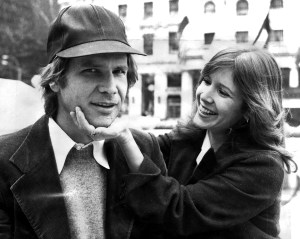 which would make him a star of a franchise that has now spanned 5 decades. Jesus. He was paid somewhere in the neighbourhood of $20M for the last installment, plus a 0.5% share of revenues; he was paid $10k for the first one, and was glad to have it.
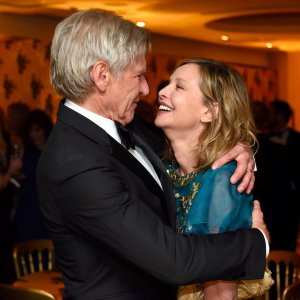 Board of the Archaeological Institute of America. He’s also the vice-chair of Conservation International, an American nonprofit environmental organization, which as led to two species being named after him: a newly discovered spider now called Calponia harrisonfordi, and an ant henceforth known as Pheidole harrisonfordi. He also got to name a butterfly, and he named it after his daughter, Georgia.
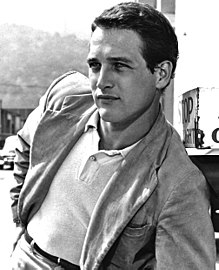 House and was part of the Curtain Pullers children’s theatre program. He was briefly at Ohio University but war intervened (well, war, and the fact that he dented the president’s car with a beer keg). He enrolled at the Navy pilot training program at Yale but was kicked out when his colourblindness was discovered. He went on to serve in the Navy as a radioman and rear gunner. He likely would have died in the war but for the fact that on the day his unit was attacked and killed by a kamikaze pilot, his own pilot was grounded due to an ear infection. Back home, he completed his degree in drama and economics. He toured with summer stock theatre programs before putting in a year at the Yale School of Drama, which he ultimately left to go to NYC to study acting under Lee Strasberg at the famous Actors Studio.
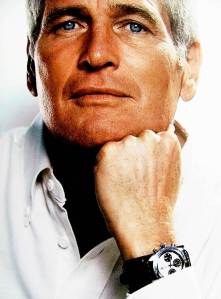 obviously sounds like something I need to see. In 1954 he appeared in a screen test with James Dean for East of Eden, testing for the part of Aron Trask, the fraternal twin of Dean’s character, Cal. Dean won his part but Newman lost out to Richard Davalos. Even though it wasn’t successful, it would be fateful. That same year, Newman co-starred with Eva Marie Saint and Frank Sinatra in a live (and in colour!) television broadcast of Our Town – Newman was a last-minute replacement for none other than James Dean. Newman’s name would often come up for Dean’s roles. The roles of Billy the Kid in The Left Handed Gun and Rocky in Somebody Up There Likes Me were both ear-marked for Dean but went to Newman after James Dean died in a car crash. Although Newman’s first film for Hollywood was in 1954 for The Silver Chalice, it was a flop and he often talked about his dislike for it (he took out a full-page ad in a trade paper apologizing for it to anyone who might have seen it!). But just two years later Somebody Up There Likes Me was earning him acclaim and in 1958 he earned his first Oscar nomination, for Cat on a Hot Tin Roof. Also that year he starred in The Long, Hot Summer with Joanne Woodward for which he won Best Actor at Cannes but perhaps more importantly, he won the heart of the woman he would love for the rest of his life.
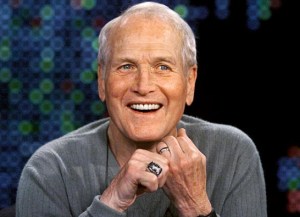 organizations; scholarships; theatre endeavors; a residential camp which he co-founded called Hole in the Wall Gang Camp, named for the gang in Butch Cassidy and the Sundance Kid naturally where 13 000 kids are served free of charge every year; and another of his bright ideas, the Committee Encouraging Corporate Philanthropy, which encourages CEOs of big companies to commit to charities – now responsible for $10 billion in corporate giving annually. Jeezum. So it’s not exactly surprising that Givingback.org would name him the Most Generous Celebrity of 2008; even since his death his foundations continue to generate good around the world.
 ASSHOLES WATCHING MOVIES