Tag Archives: Amazon Prime

The Vast of Night

Picture it: small town New Mexico, sometime in the late 1950s. On this particular evening, the whole town is crowded into the high school gym to watch a basketball game. It’s literally standing room only. The players’ shorts are very short; the cheerleaders’ skirts are very long. The town’s streets are all but deserted. The only two people who seem not to be at the game are a couple of intrepid teenagers – fast-talking Fay (Sierra McCormick) is the town’s telephone switchboard operator and charismatic Everett (Jake Horowitz) is hosting a live radio show. Fay is of course very faithfully tuned into the radio program and notices the broadcast is briefly interrupted by a strange audio frequency.

Few witness it of course, most people being at the game, but one man who does calls in with quite a story. He’s heard these tones before. And boy does he have some theories. From there, Fay and Everett get caught up in a night neither will ever forget.

The Vast of Night is a pretentious title for a film eager to live up to that insinuation. Stylistically it’s reminiscent of The Twilight Zone; a retro sci-fi throwback that strains the limits of its (low) budget but proves good ideas trump production value when it comes to building a watchable, suspenseful film. Most of all I enjoyed the dynamic between the two young actors. McCormick in particular has a massive job handling a demanding long take but handles it like a true professional. The two really convey a sense of immediacy that contributes richly to the film’s ominous atmosphere.

Despite some very strong elements, I never quite liked the film as much as I wanted to. I didn’t really enjoy the film’s conceits, or director Andrew Patterson’s self-conscious attempts to use all the tricks in his bag in one go. And some of his choices are just confounding: why the black screen, for example? During a long exchange with a caller during the live radio broadcast, we mostly focus on Everett’s face as he absorbs the story, but sometimes the camera cuts away to…nothing. A totally black, blank screen. And then back to Everett, who continues to listen intently, sitting perfectly still, hardly giving anything away on his face, and then back to black. I’ve thought a long time about this choice and though I’ve come up with a few plausible scenarios, I don’t like any of them. It feels more like a mistake than a choice. Later on in the film, when two people are running across a field, the camera spends multiple lengthy takes focusing on knees down. This is likely a budgetary concern, either the shot cost them enough that they had to use it a little too liberally in order to justify it, or they simply couldn’t afford to show anything that might have happening thighs and above. Either way, I don’t want the line item to be so glaringly apparent on the screen.

What I do want is another film from Patterson, who’s clearly got some potential if he hasn’t already burned all his bridges (one of the items in the film’s IMDB trivia section is a list of all the film festivals who rejected the movie – a particularly ungracious display of privilege from a first-time white, male director, and some pretty juvenile sour grapes), and some better material for McCormick, who deserves to showcase her talent.

Selah and the Spades

At an elite private boarding school, five “factions” rule the school. I’ve gone and put factions into quotation marks because these factions are taken so seriously they feel more like the mob. And each one has an equally fearsome mob don at the top. To ensure a smooth school year, these gangs make temporary alliances, but rest assured that they each mob has its own interests at heart. The head of the most powerful faction – The Spades – is of course our girl Selah (Lovie Simone) and her trusted consigliere is Maxxie (Jharrel Jerome) (if you don’t speak gangster, a consigliere is an advisor and right hand man).

It took me a minute to even pinpoint this movie’s setting as a high school because there’s nothing tongue in cheek about this; they take it VERY seriously. Most of all Selah, who knows her power comes from being feared and loved in equal measure, both of which require a certain distance to achieve. So though she is indisputably the most popular girl in school, she is lonely and basically friendless, other than Maxxie. And Maxxie’s about to become dangerously distracted by a new love. So there’s a juicy spot open for Selah’s new protégé, and in fact this role is in desperate need of filling since Selah is a senior with no one to pass the baton to. Enter: Paloma (Celeste O’Connor). Paloma is neither as charming nor as callous as Selah but she’s something much more important: likable. Paloma proves very worthy of the position, rising in prominence among the factions a little too easily for Selah’s comfort. Being number one for so long has painted Selah with insecurity, and if Paloma was once a friend, she is now a threat – Selah will not give up control one day before graduation, and is willing to go to some pretty sinister lengths to ensure it.

The young cast of Selah and the Spades is very talented and very watchable, even if their characters are all shades on the despicable spectrum. The film takes the concept of “cliques” and heightens it to make a point: high school is a dangerous game. Selah may be an unlikable protagonist but you can’t argue that she isn’t complex. All of the characters in writer-director Tayarisha Poe’s film are layered and interesting. Teenagers are treated with the respect they deserve, although not always with the respect they demand. Poe’s notion of high school is not unlike the seediest underbelly of organized crime, everyone ready to stab each other in the back the moment anyone shows vulnerability.

Tayarisha Poe’s film is like a rock veined with gold. There are flashes of brilliance but no one’s striking it rich. For me, the film ended right where it should have begun. Our protagonist is treated more like an antagonist and it leaves us mildly confused, moderately disappointed, and largely unsatisfied.

Home For Christmas Day

Betsy (Matreya Fedor) is a high school student, a choir soloist, a horse lover and wannabe vet, a diner waitress, and about half a year away from college, so this is potentially her last Christmas while living at home with her mother. Betsy is a good kid with a clear path toward her goals, but when a handsome soldier walks into the diner one day, things get rearranged. She and Tyler (Anthony Konechny) fall in love despite an imminent tour of duty, and despite her mother’s stern disapproval.

Betsy’s mother Jane (Catherine Bell) isn’t normally the wet blanket type, but thanks to long, lingering shots of a framed photo, we get the hint that her own soldier boy, Betsy’s father, was killed in action long ago. Might this possibly be the source of her concern?

It’s definitely the source of her concern, but teenage love thrives when it’s forbidden, and not even the hunky diner owner (Victor Webster) can distract Jane from her objection, driving a wedge between her and her daughter during a time they should be treasuring as the last of its kind.

Home For Christmas Day follows all the familiar Hallmark beats, and director Gary Harvey know how to make the most of his modest budget, tapping Fedor’s talent as a singer for a do-it-yourself music montage that pays for itself, although I did question the need for a montage summing up a relationship that had, at that point, existed for literally all of 2 days. I get it though: your first love feels like it’s bigger and more important than the whole world. Plus, a montage is a great way to pad out a movie; 84 minutes can feel like a lot of time to fill when everyone already knows not only the destination, but also the the well-worn path of the journey.

My Spy

My Spy is about as good a movie as JJ is a spy. Which is to say: not at all. In fact, when JJ (Dave Bautista) is assigned to surveil a mother and daughter with techie Bobbi (Kristen Schaal), they are almost immediately made by Sophie (Chloe Coleman), their 9 year old target. Not just made, but caught on tape contemplating her murder. And instead of admitting the mission has been compromised, JJ then proceeds to allow himself to be blackmailed by said little girl into teaching her spycraft, dating mom Kate (Parisa Fitz-Henley), and generally posing as the daddy figure she so craves. But he’s understandably loathe to admit defeat because already this assignment was more of a punishment than a true mission. He’s a terrible spy, a lousy dresser, and an awful dancer.

Dave Bautista has no business being a leading man. I can’t help but think the director and/or producers agree since the script often sounds like it was written with Dwayne Johnson in mind, but The Rock is a legit movie star and can spot stinkers more easily that the Bautistas and the John Cenas, who are, frankly, lucky to get any work at all. Well, maybe I’m being a little hard on them. I think Bautista is actually very well cast in the Guardians movies. [Insert silence here, where I’m not saying anything at all since I truly do not have a single nice word to say about Cena]. But even Johnson started off doing things like The Tooth Fairy as he proved to Hollywood that he had what it takes. But he does. He knows his limits, he’s not trying to elbow his way into a Shakespeare adaptation. He chooses roles where his smile and his eyebrow arch are assets, where his muscles are a plot point, where he can ooze charisma and strength in equal measure and coast off the fumes.

Dave Bautista has no charisma, no discernible personality, but I think both he and Cena are trying to coast of Johnson’s fumes. The Rock has proved himself such a Hollywood hit machine that it of course would love to replicate his success, and it eyeballed the heck out of the WWE to see if anyone else would fit the bill. But Dwayne Johnson is a genetic and a talent anomaly. You can’t simply replace him with a similarly oversized man and hope for the best. Bautista is simply a large and lumbering plus-sized blow up doll, and director Peter Segal is too timid to maneuver him into position. A mannequin with its lines taped to its chest would have more character than Bautista does.

John Cena recently tried leading man status on for size in Playing with Fire, which was so bad it made me furious. My Spy isn’t good. Everyone involved recognized this; it was delayed 3 times even before anyone had ever heard of coronavirus. But with the pandemic as a convenient excuse, they’ve quietly released it directly to Amazon Prime, which means if you’re a member, you can watch it for free. And free is the only way this math works out at all. Free means you can give it a try. Free means you can shut it off after 10 minutes without feeling guilty. And, in these trying times of isolation boredom and our desperate need for content, this might do, especially since it is a rare family-friendly, non-animated film. This won’t be anyone’s favourite film, but you can only play so many rounds of go-fish.

Blow The Man Down

It’s the day every woman dreams of since she’s a little girl: what dress you’ll wear, what flowers you’ll choose, the food you’ll serve, the heirloom hanky you’ll use to dab prettily at your eyes. Your mother’s funeral only comes once in a lifetime and you’ve got to get it right.

Sad but true: I’ll say any mean thing to get the laugh.

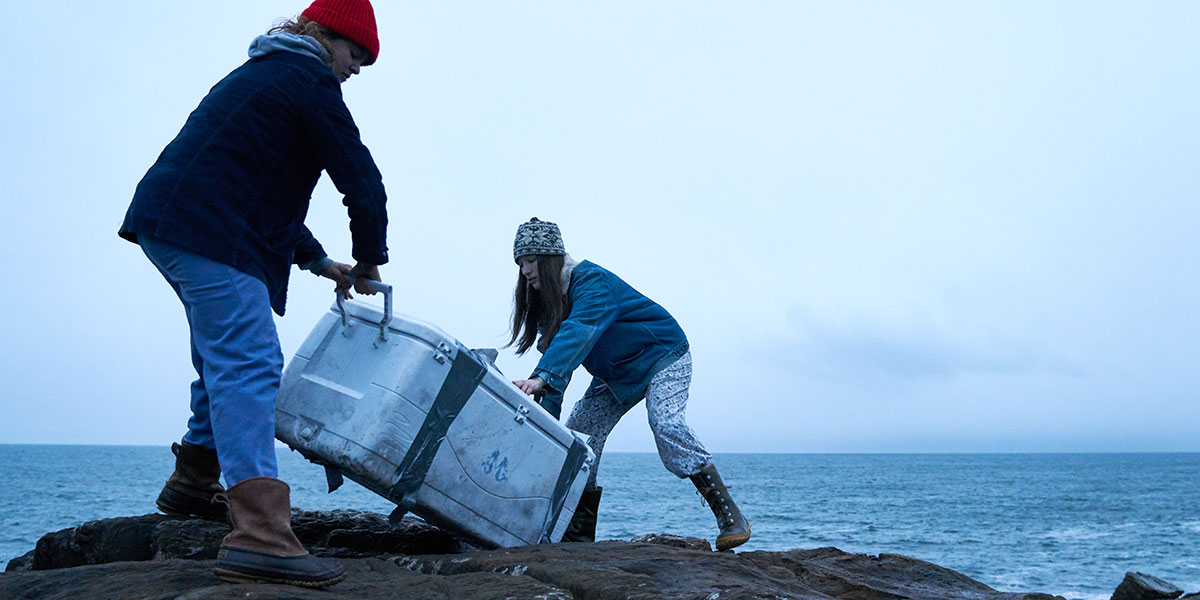
Anyway. For Mary Beth (Morgan Saylor) and Priscilla  (Sophie Lowe) Connolly it is indeed the day of their mother’s funeral. It feels like half the small village of Easter Cove in Maine shows up for it, paying tribute to a woman everyone seems to have loved. But it doesn’t exactly go seamlessly – clearly they don’t subscribe to Martha Stewart Funerals. The non-cheap flowers arrive late, there’s too much disgusting coleslaw, and oh yeah, they kill someone. Someone else. I mean, they never murdered their mother, she died of natural causes, more or less. I’m talking someone ELSE. A bad dude who we wouldn’t really feel too bad about killing except his death, and well, the concealment thereof, leads to the sisters uncovering some pretty shady stuff in their home town.

MV5BNTdkNTFlMzAtOTUxYi00ODVkLWIzYTItNTQ4YzVjNzMxOWIyXkEyXkFqcGdeQXVyMTkxNjUyNQ@@._V1_

Directors Bridget Savage Cole and Danielle Krudy delight in pulling up the respectable if threadbare rug to reveal not gleaming hard wood but black mould asbestos. Oh yes, there’s major rot to this picturesque little town, and behind every white picket fence is another secret being kept. Mary Beth and Priscilla have pulled a thread which threatens to unravel even the heaviest fisherman’s sweater.

This movie is oddly funny, in the blackest sense, establishing a real sense of atmosphere. Details are meted out like a sparse trail of breadcrumbs, each one a small but perfect moment, supported by a smart script and plenty of terrific performances.


Heartburn

Two people who refuse to ever marry again meet at a wedding, as you do. Rachel’s (Meryl Streep) a writer, Mark’s (Jack Nicholson) a writer, and they both know better when it comes to love. So of course they end up marrying, though not before Rachel keeps everyone at the wedding waiting for hours and hours as she tries to warm up her cold feet in the room next door. I mean honestly, what’s the max time you would spend at a wedding if the bride was refusing to walk down the aisle?

As if that was an inauspicious enough start to their marriage, the two embark immediately on a home renovation. Which, as we all know, is responsible for like 78% of all divorces and about 94% of matricides (when a wife kills her husband). But they get through it, even with the added pressure of a baby on the way who can’t possibly be born if the lace curtains aren’t hung. And Rachel, newly domesticated, is surprised to find how happy she is. And is totally devastated to find, during the waddliest waddle of her second pregnancy, that Mark is cheating on her.

What now? The Streep takes us up and down a whole xylophone of emotions, hitting every octave with masterful precision. Nicholson is the oboe to Streep’s xylophone, a little jauntier, but hitting complementary notes, pairing nicely. Plus his back hair catches pleasingly in the moonlight. But make no mistake: the xylophone is dominant.

Directed by Mike Nichols based on an autobiographical novel by Nora Ephron, the intimacy is authentic enough to make you feel like a voyeur but you need to decide in advance that you’re here for the performance, not the story. Because there isn’t much of one: love goes off the rails. It’s sad but it happens all the time. The minute Rachel shoves a key lime pie in Mark’s face, she’s every cliche we’ve seen before and none we haven’t.

10 Minutes Gone

Sometimes even our “Sucks Ass” rating seems too generous. This is one of those times.

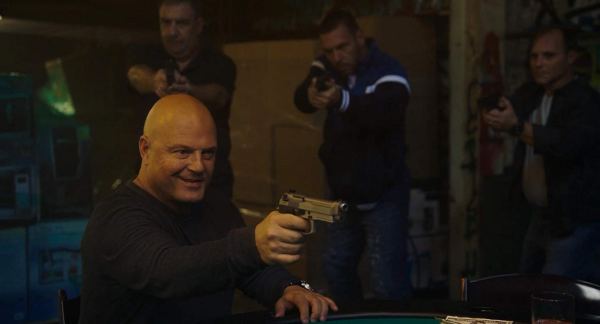
MV5BYTcwNjNkOGMtNmQ1MS00NzdmLWJmNDAtOWU4ZTFhZDgyODRiXkEyXkFqcGdeQXVyNzI1NzMxNzM@._V1_SX1777_CR0,0,1777,962_AL_Frank (Michael Chiklis) is the safe-cracking heart of a crew looking for a big score in Cincinnati, that will pay the crew $500,000. The opening credits make clear that Frank and his brother have spent a lot of time planning the heist using army men. Their crew is working for Rex (Bruce Willis), a big shot in a suit who’s overseeing the job from an empty floor in an office building. It’s supposed to be easy money but of course things go wrong. Frank gets knocked out during the chaos, and wakes up next to his brother’s dead body. The box they stole is also gone, and Frank is left to figure out who double-crossed them to keep the whole $500k for themselves.

You may remember a bad idea from a few years ago called MoviePass. The initial pitch was that for a set monthly fee you could see as many movies as you wanted. One small flaw in the scheme was that no movie theatres were participating, and in fact they actively spoke out against it. MoviePass pressed on anyway. The result was that MoviePass was buying tickets at full price from the theatre and giving them away for almost nothing (MoviePass’ monthly subscription fee was equal to one regular price ticket).

So after a while of giving away tickets while misleading their investors about their chances of making a profit (which were literally zero), MoviePass found itself millions and millions of dollars in debt. Not even changing the terms repeatedly without notice solved the problems caused by MoviePass’ horrible business model.

Most would have given up at that point, but not MoviePass. Its ace in the hole? Making its own movies and giving away tickets to them! 10 Minutes Gone was one of MoviePass’ first films, and it also happens to be the last.  That’s because MoviePass is now dead and gone, and it’s probably best if we agree to bury 10 Minutes Gone alongside it. Everything about this movie is awful. It is an abomination. It was probably MoviePass’ worst idea. And that’s saying a lot.


Luce

Luce is an athlete and a star student, respected by faculty and friends. He’s soon to be valedictorian of his class. His success is particularly celebrated because Luce was adopted from Eritrea at the age of 10. He seems to have made a miraculous transition, overcome his tragic past.

So it’s a little jarring to his adoptive parents Amy (Naomi Watts) and Peter (Tim Roth) when his teacher calls them in with some news. Ms. Wilson (Octavia Spencer) shows them an essay he wrote supporting violence as a necessary means for freeing colonized people. Considering his background (child soldier?), Ms. Wilson thinks it’s prudent to search his locker, and presents them with her findings: illegal fireworks. With school security being such a high priority, Ms. Wilson knows that if anyone else were to find these, Luce (Kelvin Harrison Jr.) would be in hot water. She hopes his parents can intervene at home. However, Amy and Peter are loathe to bring it up, wanting to preserve the trusting relationship that was built with such difficulty. This seems like a relatively small blip in an otherwise unblemished record. But Luce finds the evidence and isn’t happy about the doubt or the suspicions of either his parents or his teacher.

Things escalate from there of course. Ms. Wilson’s accusations accumulate, and their repercussions amplify. Ms. Wilson is unrelenting but other authority figures are unwilling to compromise Luce’s stellar reputation. It’s her world against his, Luce’s parents trapped somewhere in between, wanting to protect their son but also wondering if he’s truly escaped his past. What is the right move? And to whom are they obligated?

The film is disorienting and Harrison’s performance is sufficiently nuanced to leave us guessing: is he being profiled or is he capable of some very exacting vengeance? The film plays with stereotypes and symbols in a way that’s deliciously tangled, addressing racism in a way that reflects its complexity and inextricability. Luce excels at sustained tension and menace, leaving the audience without its footing.

This chilling drama will have you weighing the costs of conformity, considering the limits of parental responsibility, subverting the notion of assimilation. Luce is uncomfortable but essential.

After Everything

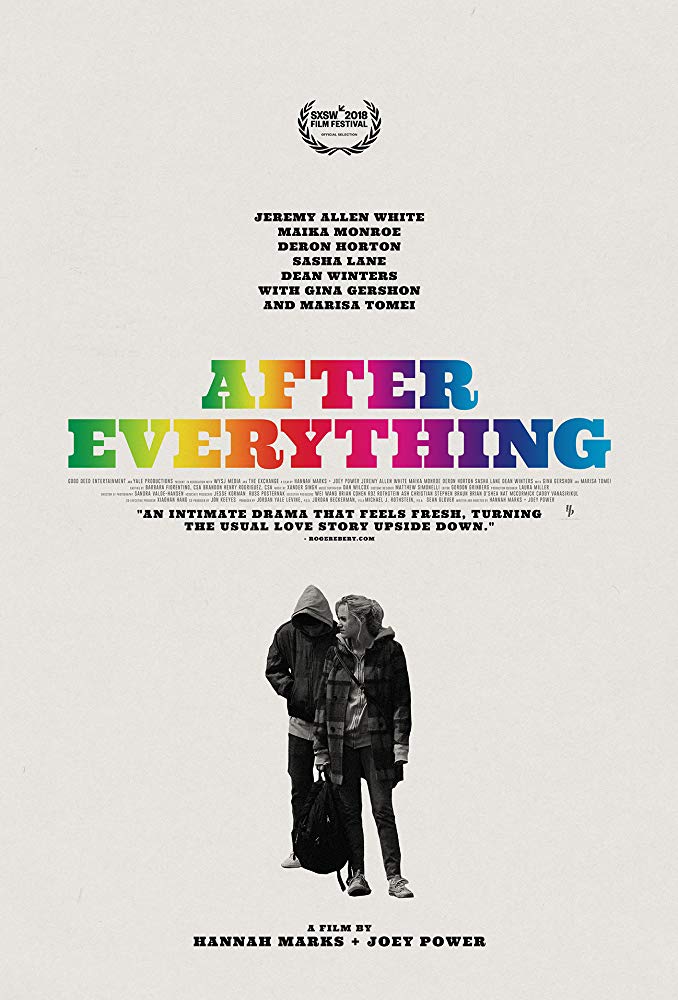
If Elliot hit on me the way he hit on Mia, he wouldn’t have gotten the time of day. Clearly Tinder has desensitized her – an unwanted intrusion and the implicit assumption that women somehow owe some kind of interaction to all men who ring the doorbell aren’t enough to dissuade her. She consents to a date, her roommates encouraging her to “get her dick wet” and he confesses: he was just diagnosed with cancer yesterday. It’s life threatening, and more importantly, sex threatening (ie, a tumor on his pubic bone, specifically Ewing’s sarcoma, if you’re the type who likes to Web MD that shit). With sex off the table, Elliot’s going to have to relearn how to talk to women!

So anyway, this puts kind of an awkward pressure on their relationship for a couple of kids in their early 20s who weren’t necessarily looking for anything serious. This pressure cooker means they get to know each other very intensely and soon they’re inseparable: chemo, radiation, surgery, and even a bucket list for broke 20somethings. The other people in his life get a little jealous that Mia’s monopolizing all his time, but they’re living like these might be his last days, because these might be his last days.

Jeremy Allen White and Mia Monroe are excellent as two people on this impossible trajectory. Either their love is doomed…or it’s doomed. Youth and passion may be enough to plow through the indignities of a medical crisis, but what happens outside those bounds? What will they even have to talk about if not tumors and ports and hair loss? Even if forever isn’t exactly a long time, it’s still further ahead than either of them has ever though. Cancer has launched them into a premature adulthood, which may be a flimsy premise for a love story. You think that illness is going to be the greatest test, but lots of mundane things topple relationships with deeper roots than theirs.

P.S.: it’s National Wear Red Day!

One Child Nation

China instituted its one-child policy in 1979. By 1982, it was locked into its constitution. The Chinese population had ballooned to a billion and officials knew that in order for the country to truly prosper, it would need to control its growing numbers. Western countries worried about China’s population for different reasons. Over here, population growth had slowly withered as our countries grew stronger economically. As families move away from agriculture, large families become less necessary. As health care improves, more children make it into adulthood, so having ‘spares’ feels less urgent. And in order to give children every economic advantage in this new world – each their own bedroom, perhaps, a swimming pool in the backyard, a ski vacation every winter, a college fund for everyone – families grew smaller. Here in Canada we rely on immigration to keep our population from shrinking. Sean and I both come from 4 kid families, big even in the 80s. But in each of our families, only half of the siblings chose to have children at all. Of the 4 siblings who do have kids, 3 families have 2 kids each and 1 family has 3. We aren’t even replacing ourselves. But there’s a big difference between choosing what feels right for your family considering all the pros and cons; it’s much different when your government had made a law about your uterus and what can be inside.

In 1982, ultrasounds were not sophisticated enough to discern gender but following centuries of tradition, most Chinese families still wanted and valued a son. It fell to village officials to enforce this impossible policy, taking possessions and destroying homes of people who refused to follow it, and forcing sterilization on women after their first child, sometimes even forcing abortion.

One village midwife has lost track of how many babies she’s birthed but knows she performed 40-50 000 sterilizations and abortions over 20 years. Women would be abducted from their homes by the government, tied up like pigs, and dragged onto her operating table. Now she’ll only treat infertility “to atone for my sins” she says, though it’s clear she was not exactly a willing participant, just one of many doing their jobs. And so many of them had suffered from starvation, had spent lives just struggling to survive, that this promise of a better life for their child had lots of appeal. But if anything, the one-child policy strengthened the Chinese preference for sons. Baby girls were abandoned in droves.

After leaving China for the U.S. and becoming a mother herself, Nanfu Wang wonders if her thoughts are truly her own, or the result of propaganda so finely ingrained in culture and daily life they were hardly noticed. It’s impossible to know how China would have fared without the policy and most citizens don’t want to broach the question honestly. They have sacrificed so much, but the values and ideas so deeply embedded they are impossible to separate. Nanfu Wang can’t help but ask herself why she has traded one country who seeks to legislate women’s wombs for another.

The one-child policy was finally repealed in 2015 (they can now have 2), China assuring us that the nation was stronger, the people more prosperous, and the world more peaceful. And that may be true. But there is a trail of heart break, human trafficking, and a heavy toll paid by broken families and exiled children.