
I was too young to know Jim and Tammy Bakker in their heyday. They were a perky husband and wife youth pastor team who used songs and puppets to reach out to Christian children in the hopes that their parents would soon follow. They espoused some new Christian values, mainly that you need not be poor to be pious. And the best and fastest way to get Christians to part with their cash was to beam into millions of homes at once: television!

At one point, they were popular, beloved, and rich, rich, rich, using “church” donations to fund a family compound, a Jesus in Jerusalem water and theme park, and furs for everyone. Everyone! And then the scandal hit: Jim Bakker wasn’t just skimming profits, he was shoveling them right into his own pockets. Plus, he’d been having a string of homosexual affairs – and one woman with whom things did not go well, and he paid off to keep it to herself that he couldn’t get off. Or up. By the time I knew about the Bakkers, the pastoring was behind them. Jim was in jail. Tammy Faye was a punchline. You may remember her as the woman who wore an entire tube of mascara every single day.
This movie is Tammy Faye’s biopic, the chance to finally get to know the woman behind the man, trying very hard to get in front of him.
I’ve enjoyed director Michael Showalter’s work (The Lovebirds, The Big Sick, Hello My Name Is Doris) in the past so I was excited to check this one out at TIFF.
Jessica Chastain plays Tammy Faye and let me assure you: enough said. She is phenomenal. She sings, she sobs, she stands up to the sexist pigs running the ministry. She’s a total firecracker, and incredibly infectious. Jim Bakker is played by Andrew Garfield, who isn’t bad, but inevitably pales in comparison. The film is a straight biopic, starting with Tammy’s childhood obsession with religion and hitting all the major hallmarks of her life. The film paints Tammy as a pure and nearly innocent soul, just a nice girl who loves God, and all His people, and Diet Coke, in that order.
I was completely entertained by this movie, but I did find Tammy’s depiction to be suspiciously and relentlessly positive. Even more of a problem was the film’s refusal to really dig into the story – into Tammy’s true role and culpability in defrauding her ‘people’ and into what this whole fiasco means to the church generally and televangelism especially. It feels like Showalter is so dedicated to reshaping her legacy that he isn’t willing to be critical of the actual facts. Still, Showalter’s brilliant casting saves him. Chastain is so charming and charismatic that it’s easy to overlook any superficiality. I’d watching this again, 10/10.
The Eyes of Tammy Faye is an official TIFF selection.

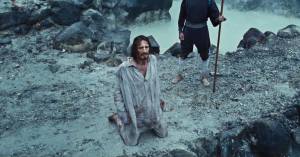 doesn’t kill me. Having read the book, I knew exactly what we were in for with the movie, and I warned anyone who would listen, but that doesn’t mean I didn’t want to see it. It’s Scorsese. I mean, that alone is enough. But I also know that Martin Scorsese has something to say about spirituality, and if he’s gotten away from it with his last few movies, this one is a major reinvigoration of his theme.
 that Rodrigues faces, or the hell that he’s in now. Even though the movie is relentlessly brutal, you’ll still be wowed by the images, the beauty lurking within the swamp.
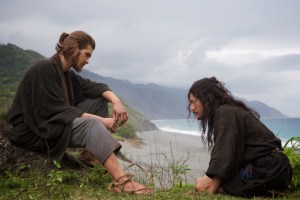 This Asshole Atheist really noticed the distinction between religion and faith – religion being something a government can choose to eradicate; faith, however, is much more difficult. Silence is really a question of belief, not just what you believe, but how strongly you believe it, how strongly you think others should believe it, how far you’re willing to go to impose those beliefs, how much pain you can endure before you abandon those beliefs. And if god himself can hide in silence, can belief dwell there also?
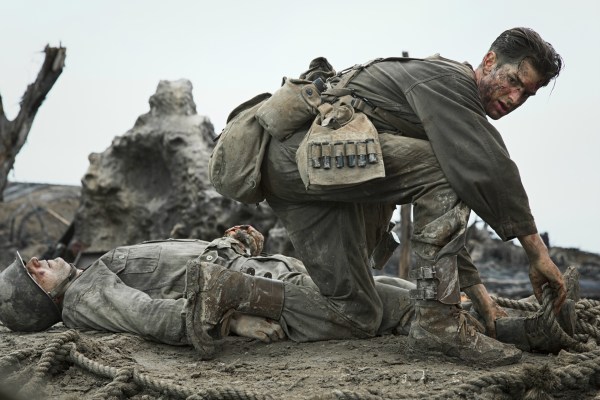 There are two main takeaways from Hacksaw Ridge: (1) even American acting jobs are now going overseas, as aside from Vince Vaughn every American soldier in this movie seems to be played by an Australian (included in that tally is Andrew Garfield, who I have since learned is British, not Australian, but still…); and (2) if the Japanese had just prayed harder they might have won the Second World War.
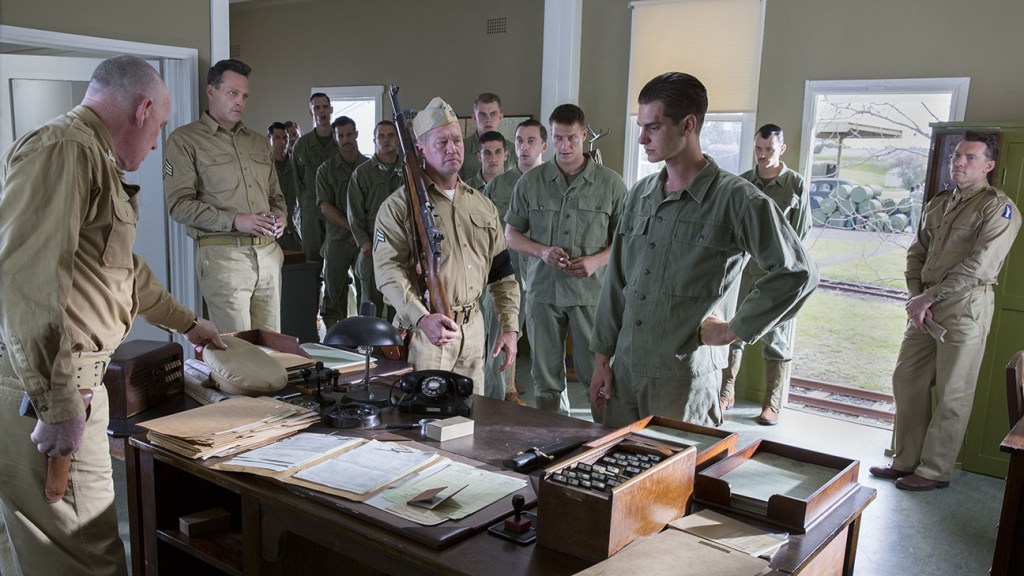 Incidentally, if the intent behind not putting Mel Gibson’s name up front in the marketing was to create some separation from those all-too-frequent racist comments in Mel’s past, it might also have been a good idea to cast at least one non-white guy. Just saying.
 he doesn’t hold a grudge, and hauls 75 of them off the Okinawa battlefield even after they made his life so rough.
 serious bank helping to make those foreclosures happen, then buying up those empty homes for real cheap and repackaging them for new buyers. The money is staggering. Dennis is dazzled by it. He’s never made this kind of cash before, and mid-recession, he’s not likely to find even a fraction of it anywhere else. But it means working for the bad guys and evicting people, nice people, just like him.
 doesn’t bail out the losers. America was built by bailing out winners. By rigging a nation of the winners, for the winners, by the winners.” Fucking ouch, eh?
 homes. In fact, when Andrew Garfield is pounding on people’s doors, those are, more often than not, real evictees answering them, often standing in their own foreclosed homes. Jason Reitman went for a similar effect in Up In the Air, interviewing real victims of downsizing on camera. Both these movies are symptoms of the same dirty disease, and it’s heartbreaking. And I can’t help but wonder if any of these homeless people are comforted by being portrayed, however compassionately, by Hollywood millionaires.
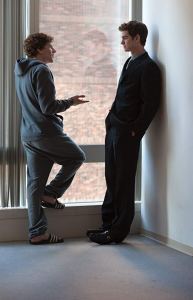 he’s got the most misogynistic piece of programming he can muster, and he shares it like wildfire. It attracts the attention of a couple of conceited, ambitious BMOCs – The Winklevoss twins (Armie Hammer), who have an idea of their own for an exclusive social network.
 ASSHOLES WATCHING MOVIES