
On Saturday we brought our sweet little nephews to the Capital Fair, where we watched a stunt dog show, rode rides, played games on the Midway, and visited a petting zoo where the kids and I hand-fed llamas. On Monday I watched a llama get shot, point blank.
Do not confuse The Zookeeper’s Wife with We Bought A Zoo. This is no light-hearted tale. It’s about real-life couple Antonina and Jan Zabinski, who used their posts at the Warsaw Zoo to save hundreds of Jews during the German invasion. Of course I’ve read both The  Zookeeper’s Wife, and We Bought A Zoo, and more recently I was reading another book about a woman who led an underground railroad of sorts to smuggle Jewish children out of the ghetto, wherein the zookeeper’s wife was specifically mentioned. It was an especially brutal place to be during the war. Terrible, unspeakable things happened every day, and it’s kind of a miracle to see\hear these stories about ordinary people who couldn’t live with what was happening, so they didn’t [it’s sort of awful that these words sound very applicable even today].
Glimmers of light do not eliminate all the darkness. The Zookeeper’s Wife is not an easy watch. The film makes the stakes clear, yes for the zookeepers taking enormous risks themselves (they would surely die if discovered), but especially for the people they are helping, who would otherwise be dead – or worse.
Jessica Chastain as the zookeeper’s wife is of course fantastic. There’s no CGI used int he film; those are real lion cubs she’s cuddling, with not a shred of hesitancy. Fitting, I suppose, when she’s sitting in the middle of a war where much scarier things are happening on the streets. WW2-era films always inspire a bout of siderodromophobia in me (the fear of trains).
This movie gets some things right, and some things wrong. In the end, I think it’s just not terrible enough, which I realize is a weird thing to say. What I mean is: it doesn’t have the power to haunt you the way Schindler’s List did (does). It feels a little cold, without the emotional gravitas you’d expect. I expected to cry. What does it mean that I didn’t? Perhaps what this movie needed was a meaningful connection to just one victim. Heroics are all well and good, but they’re only important because they’re necessary. Heroes are only half the equation: both must be compelling.
 book became this movie, though something was lost getting from A to B. The book pulls no punches. Her parents are complex characters, and their children have conflicted feelings toward them. The movie’s a little more pat, the trajectory a little more Hollywood. Someone decided to apply some spit shine to this story, a story that’s naturally very dark and brooding now has themes of hope and redemption that maybe don’t belong.
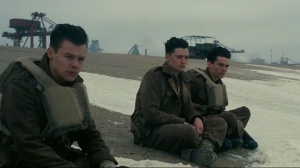 n and must have seemed impossible at the time. That’s more or less what Churchill said, after all: he is not describing a plan to win. He is describing a last-ditch effort to survive when the Nazis try to conquer Britain after they finish in France, and a cry for help to the New World to save the day in that bleak scenario (Canada was, of course, already part of the Allied forces at the time, but the U.S. would not be until
  Franco’s other half in this film. And Bennett gets left for another man, who happens to be God. Michael starts out curious about religion because some of the queer youth he advocates for have been spurned by parents and schools in the name of religious belief. But the more he studies, the more susceptible he becomes to some very old, out of date, uncompassionate teachings. And things twist around in his mind so much that he makes the decision to “stop” being gay. He becomes a pastor himself, the kind who will sit down in front of a vulnerable kid and tell him “gay doesn’t exist” and he’ll have to “choose heterosexuality in order to be with God.”
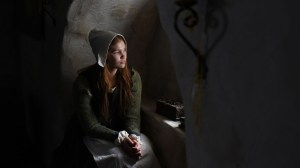 course his new and improved judicial system could use a steady stream of accused. Why not a good old-fashioned witch hunt (although to be fair, in 1600, it was simply just “the fashion”)?
 injustice, and people’s pain, and she decided to do something about it. She was threatened and abused because she was exposing some very dirty secrets covered up by some very powerful people. The only help she ever got was from the adoptees themselves, all of them different shades of broken, harbouring the wounded children within. The real Margaret was awarded the Medal of the Order of Australia in 1993, and Commander of the British Empire in 2011 for her work, but as this film can attest, life was not made easy for her.
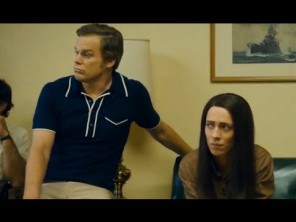 made of the fact that she (played by Rebecca Hall) was 30 and horrified of it, still a boyfriendless, childless virgin. I’m sort of offended on behalf of women everywhere that this is seen by anyone as the reason for her suicide. She was a troubled woman who’d struggled with depression and had left a job and life behind elsewhere in order to ‘rebuild.’ But this new place wasn’t going much better. A year in, she pined for the news anchor (Michael C. Hall) yet pushed him away when he got near. She yearned to do important investigative reporting but the station manager insisted on a “if it bleeds, it leads” policy. She couldn’t get promoted and wasn’t being taken seriously. She lived with her mother, sometimes happily, sometimes not.
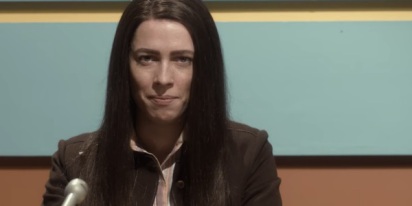 out the former since I’ve always found the circumstance of her death a little fishy. Before she put the gun to her head, she read out a brief statement, basically accusing the station of pushing her to do this drastic, bloody thing. She’d also prepared a statement for a colleague to read out afterward, though none did. In that, she described her actions as a “suicide attempt” and reported that she’d been taken to hospital alive but in serious condition. Had she not planned or wanted her suicide to be “successful”? We’ll never know.
 The Mother, Patsy Ramsey, seen by many as suspect #1 since the kidnapping note was determined to have been written on her stationary with her pen from inside the home. Was she jealous of her beauty queen daughter? Frustrated by another bed wetting episode? Did she accidentally kill her, then try to cover it up? Interviews with the press were defensive and unsympathetic. Do you identify with her grief or crucify her for her mistakes?
 there, she finds that he’s also helping the Palmach to smuggle Holocaust survivors into Palestine. This only makes her love him harder, but his reality is very different from hers, a drama student and theatre lover who is reluctant to give up a life of creativity. Her love is strong enough to make the necessary sacrifices, but the turbulent state of things in Israel means that love will not be enough to overcome all.
 ASSHOLES WATCHING MOVIES