
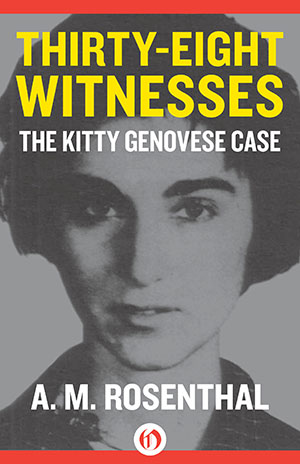
Bill Genovese was 16 years old when his big sister Kitty was stabbed to death in Queens, New York. Her 1964 murder shocked and scared the nation as news got out that 38 of Kitty’s neighbors watched and did nothing to intervene as the 28 year-old screamed for help and fought for her life.
It’s actually a horrifying image that has always stuck with me ever since I first read about it in Social Psych. How could 38 people watch from their apartment windows as their neighbor was in such immediate danger? This question inspired a new subfield of social psych research and was one of the main reasons why I continued to study (and pursue a career in) psychology. It inspired Bill Genovese to enlist in the Marines when the Vietnam War began because he vowed to never be the guy standing by and doing nothing. And I just found out that it’s a fucking lie.
Obviously and tragically, some of what I learned about Kitty Genovese in college was true. Yes, she was brutally murdered by a stranger outside her building as she screamed for help. Yes, police later interviewed 38 witnesses to the attack. But the claims that 38 people knew what was going on and (shockingly) even that no one tried to help her are erroneous products of some sensationalist and irresponsible journalism published in the New York Times.
The Witness follows Bill Genovese over a ten-year period as he attempts to separate fact from urban myth in the death of his sister. For forty years, the Genovese family believed the same fiction that I did. What that must have been like, to not only lose a daughter and sister to such a brutal attack but to believe that her own neighbors stood by and did nothing, I can only imagine. For a long time, the subject of Kitty’s death (even her life) was too painful for them to even talk about. Until one day Bill can’t take the silence anymore and starts looking for answers.
Sure, the Genovese case received national attention which may have brought about some real positive changes. And, no, that may not have happened had the story been reported as it actually happened. But The Witness makes a fairly strong case that the truth- in journalism as well as in healing from personal trauma- is always important. At some point while watching this documentary, you’ll probably start to wonder if Bill’s obsession with finding the truth is getting a little unhealthy. But by digging deeper into the details of his sister’s life and death, he’ll come to feel closer to her than ever and he honours her memory by reminding all who see it that Kitty was so much more than the last 30 minutes of her life.
.
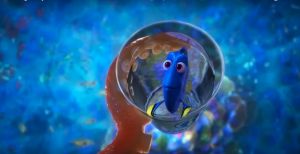 Writer\co-director Andrew Stanton had no desire to revisit Nemo’s world until he rewatched it in 3D and realized how many unanswered questions peppered Dory’s storyline. So good news, folks: those burning questions that have been keeping you awake the last dozen years finally get their time in sea – Why does Dory speak whale? How did she learn to read? And does her disability make for a lonely life?
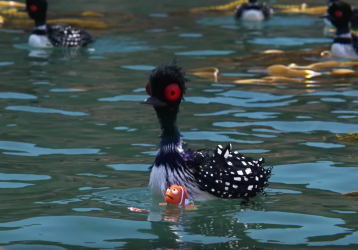
 the exhibits of an aquarium where she believes her parents live. Ty Burrell, who plays Ed’s son-in-law on Modern Family, voices a beluga whale with dubious echolocation abilities but a willingness to play “guide whale” for his visually impaired friend. In fact, the nice thing about this new world presented in Finding Dory is that the marine rescue centre in question rehabs sick fish – everyone’s got some sort of disability but they’ve got plenty of ability too, even Dory. Or especially Dory. My favourite new character is a bird named Becky, who, okay, maybe has some mental health issues, maybe is a little intellectually challenged, maybe isn’t as finely feathered as some, but MY GOD. The minute she was introduced I had a mini meltdown, wracked with laughter.
 it in laughs and heart. Last week on our
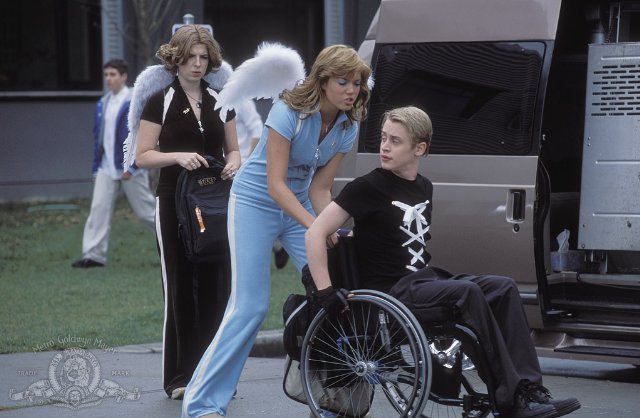
  can imagine, replacing Frank’s caregiver proves to be a Challenge with a capital C. Super awkward solution: bring foul-mouthed, 59 year old Frank on a road trip with a trio of recent high school grads. It’s the perfect plan to allow Laura to continue to suppress her grief, undermine Frank’s independence, and completely ruin what was supposed to be a fun and carefree vacation. Everyone’s thrilled.
 blockbuster-caliber acting. Brown deserves props but the young actresses (Rachel DiPillo, Hayley Kiyoko, Mary Kate Wiles) surprisingly don’t suck. Does that sound cynical? Well, I am. So when I come across fresh talent that actually IS talent, I’m chuffed. First-time feature director Dale Peterson is a little heavy-handed at times but otherwise keeps the actors’ chemistry in focus and lets the movie do its thing. And for a little icing on this cupcake of a film: the soundtrack is solid. Really solid.
 Lenny is a young man in his 20s who, not unlike his peers, is struggling to find himself. He’d like to find a girlfriend, preferably a very independent one, but he feels strongly that they’re all out of his league. There’s anguish here. Lenny will break your goddamned heart. Lenny is a smart guy in his way, and he’s aware. He’s aware of how much his differences have set him apart and all he wants is to be “normal.”
 woman with her own disabilities. Though not a classic love story, you can see how much love and care there is between them. His wife knows how to get him talking, and how to recognize his affection. It’s incredibly endearing.
 it’s embarrassing, but you start to think that they’ve got it right, because in recognizing their weaknesses, they’re actually working harder at overcoming them than a lot of the rest of us. Their communication is open and honest, even if it’s a bit of a trial. Everyone should be so lucky.
 exaggerated facial features on his favourite cartoon characters. One day Owen’s father is able to hold his first conversation with him in years simply by pretending to be Iago, the talking parrot from Aladdin.
 can express their love and see it reflected back, even if it’s a line originally quoted by Belle to the Beast. What I do know is that this film opens a lot of doors. This isn’t just a talking-head piece, we actually get to visit with Owen in his new situation, and his family as they continue to take on new challenges. We get to see autism in action, impacting a family and influencing a community. And we get to see that Owen is a guy with wants and needs like any other. He expresses them differently, and once you get the hang of his language, it’s not necessarily even worse, it’s just different.
 interesting and watchable is Owen himself, a very dynamic individual. He’s at his best at the helm of his Disney Club, where other learning-disabled young people gather to watch and discuss Disney animation. They may even run lines afterward, or play the score, and once in a while Jonathan Freeman, voice of Aladdin’s villain Jafar, drops in to lend a hand, and even Gilbert Gottfried, voice of Iago himself, has attended, but nobody knows the lines better than Owen himself.
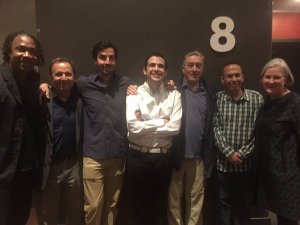
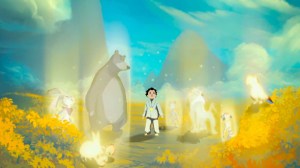 the lines. Many of the film’s crew were on hand, as well as the entire Suskind family, to launch this movie into orbit. There’s a lot of love and care gone into this work, and some of the best bits are when Owen’s own stories are beautifully animated (by Mac Guff). Owen identifies more with the sidekicks rather than the heroes of his beloved films, and he brings them to life in a very moving way.
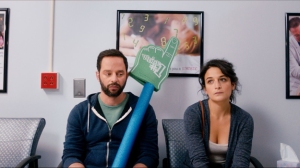 In 2001, Goodhart channeled these feelings into a script for a short film called My Blind Brother, starring Tony Hale, and it’s taken all this time to hustle that short into her first feature length, but here it is, in all its unflinching, unpolitically correct glory.
 , starring the ever fabulous Alan Cumming as Rudy, a down-on-his-luck

 , where Robert DeNiro plays a retired cop who strokes out during a crisis in his building. He’s too proud to leave his apartment after the resulting partial paralysis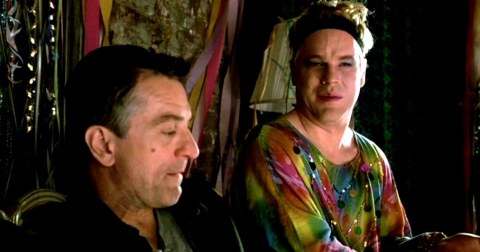




 ASSHOLES WATCHING MOVIES