
Citizenfour is a great documentary, maybe not in terms of movie making, but certainly in terms of the discussion it generates. If you’ve followed the case, then you’ve learned nothing new: Edward Snowden surreptitiously contacts Laura Poitras, the film’s director, and asks to meet. She flies to Hong Kong and films him over the course of 8 days, as Glenn Greenwald of The Guardian interviews him and breaks the story on the extent of NSA’s pervasive spying on its own citizens. If you’d like to learn more about this movie, please see fellow Asshole Matt’s review of the film. If you’ve seen it and would like more in-depth discussion, then keep reading.
Why you should care: One thing this movie does well is that it makes the case for why should 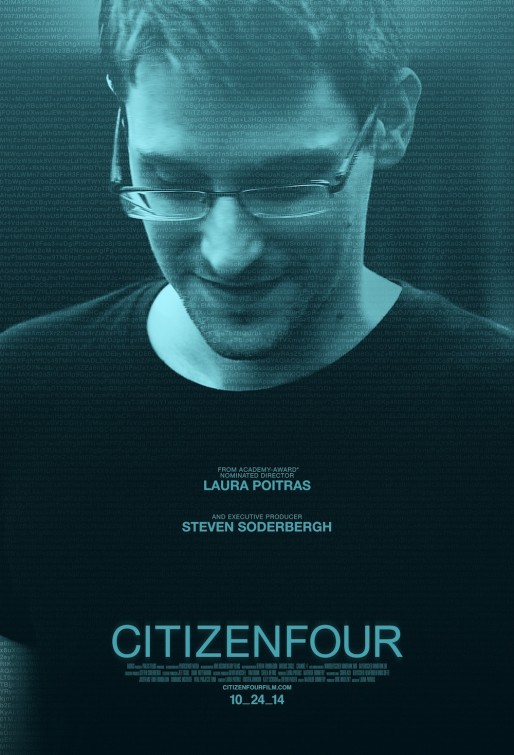 we all care. It’s easy enough to brush it aside, thinking that since we having nothing to hide, nothing nefarious in our texts or emails, then we’re “safe”, no one will be kicking in our doors. And that’s true. But it’s also true that every single day, these people are infringing upon your rights. They are looking over your shoulder at things we used to consider “private” – phone calls to our friends, emails to our mothers, messages from our doctors, banking we did online, books we’ve borrowed, movies we rented, things we bought, passwords we mistakenly believe are ‘secret’, every single thing we’ve ever searched for on Google. Think about that for a second. Our histories, our personal blueprints, are available for analysis. If this was a dystopian sci-fi flick, we’d be creeped out and outraged on behalf of the protagonist. But those scenarios are already happening. It’s already here. But since it’s illegal and since people might just be mad about it, the government does it in secret – and outright lies about it when called out. It uses all the technology developed for flushing out terrorists and uses it against YOU. It has turned spy against its own citizens, every last law-abiding one of them. You don’t need to be suspicious. You don’t need to have a record. You don’t need to have motive, or to associate with known criminals, or use words like “bomb” or “jihad” or “Ebola”.
What does privacy mean to you? Make no mistake, this data collection is a weapon and one that will be used to oppress you. Citizenfour and Glenn Greenwald in particular seek to impress us with this fact: PRIVACY IS FREEDOM. I think it’s important to think of it in terms of control: your own control over your privacy, and others’ ability to control you using obtained private information. There is no freedom without privacy. That’s why we vote by secret ballot. Privacy allows freedom of conscience and diversity of thought. Sure, the government has seriously abused this data yet, that we know of. But why should we be content to wait until that happens – and it will happen – it is being collected in order to be used, not for you, but against you.
Is Edward Snowden a hero or a traitor? Poitras doesn’t really touch on this, unfortunately. Her film is more a portrait of a man, but whether you call that man a whistleblower or a traitor tells a lot about you and about the world you think you live in. The truth is, he is responsible for one of, if not the, largest security breaches of American state secrecy. Why did he do it? The film paints him (and he paints himself) as self-sacrificing, conscience-directed, a do-gooder of the greater-good. He assured us he expected and was willing to be punished for his actions, but won’t return to US soil to stand trial. And for all his protestations, I felt he did court attention. He didn’t reveal the secrets himself, he sought out famous film and print journalists to bring “his” story to light. But he was an established (if closeted) libertarian for pretty much his whole life, believing that the government should defend its citizens, not encroach upon their rights. Few news stories, this documentary included, have been able to separate Edward Snowden, the personality, with the information he uncovered, and even though Poitras claims she was working on this film before Snowden contacted her, we see little evidence of this in its finished product. Those eight days in Hong Kong are the meat of the movie, but I was surprised that she merely recorded it passively rather than asking any questions. I was left wondering – is Snowden operating purely from an ethic of responsibility, or does he have other motives at play? And does it even matter, since the information is all true? Can you be held above the law if the information you leaked shows the corruption of the lawmakers themselves?
Has Citizenfour succeeded? Snowden tells us that what we can do at home to protect our privacy is to encrypt, to block our ISPs, to use personal clouds, to leave no trace. I’m not sure this is practical for every user of the web, and is it even enough? Citizenfour excelled at showing us just how seriously they took they spying. There’s an escalating sense of paranoia – from Snowden’s use of physical barriers to Greenwald’s reluctance to speak out loud – the camera focuses on his feverishly scrawled notes, methodically shredded. They take no chances but I do wonder – has the average viewer of the movie seen this as a call to arms? Have you changed the way you use the internet or cell phone?

