Tag Archives: documentaries

Weiner

“Good to see a bunch of political junkies like me,” quipped a beaming NHFF programmer as he introduced last week’s screening of Weiner. “You’d think most people have had enough of political scandals at this point. But not you”. The packed Music Hall Loft cheered in agreement.

I’ve been so busy feverishly reading everything I can find about the American election lately that I couldn’t help seeking out anything the festival had to offer on elections and the issues facing voters this year.

There’s nothing quite like a public meltdown. I’ve caught myself snickering out loud all morning just thinking about some of Trump’s most quotable sulking from last night’s debate. I didn’t know nearly as much about Anthony Weiner’s crash and burn so was looking forward to learning more with Josh Kriegman and Elyse Steinberg’s documentary Weiner.

Directors Kriegman and Steinberg were given seemingly unlimited behind the scenes access to Weiner’s 2013 campaign for Mayor of New York City, just two years after his resignation from Congress after his first sexting scandal. Amazingly, everything seems to be going just fine with the campaign until another embarrassing photo resurfaces. Kriegman and Steinberg’s cameras are there from day one to capture his staff’s attempts at damage control and some seriously uncomfortable moments between Weiner and wife Huma Abedin.

“So, yes, I did the thing,” Weiner admits at the very start of the film. “But I did a lot of other things too”. His self-destructive habits, of which his fits of public anger are as damaging as his possible sex addiction, make it hard to find anyone but himself to blame for his downfall. But as tempting as it is to laugh at him (the festival audience laughed, cheered, and jeered at he screen so much you’d think you were at a midnight genre screening), a nagging feeling  of weird sympathy for him may give you pause. There’s something almost unjust about seeing a charismatic politician fighting so passionately for his constituents brought down by such an embarrassing scandal. Sure, the story plays well on late night comedy shows and his last name- hilariously appropriate to the fourteen year-old boy in all of us- makes his mistakes impossible to forget. But he did other things too. And this documentary makes a strong case that his wiener isn’t the only thing he should be remembered for.

Holy crap. Never mind. I literally just read an article about him carrying on texting a 15 year-old girl. Fuck that guy.

So…. still. It’s worth watching for the voyeuristic pleasure of watching an ambitious and prideful man dig a hole for himself. And it might just make you ask some important questions about what really matters when deciding who to vote for and about the media’s obsession with scandal.


Command and Control

We Assholes were in the lovely town of Portsmouth, New Hampshire over the weekend for a film festival, but little did we know we’d be joined by a 4th on Saturday – the king of the assholes himself, Donald Trump. Don’t worry, we managed not to catch fleas or throw pies, and we did see plenty of great movies.

Command and Control was one of them, a super scary documentary about that one time in 1980 when American almost launched a nuclear weapon ON ITSELF. Well, scratch that: no “almost” about it – the bomb was in fact compromised, and it just luckily failed to obliterate humanity. This whole thing happened before I was born, when my mother was just a pixie-haired 19 year old – roughly the same age, incidentally, as the men charged with preventing the doom of civilization

Even the best-case scenario, which the military obviously deems adequate, sounds terrifying: the Titan II, a big-ass missile carrying the biggest warhead on the books, was bunkered in an underground silo manned by teenagers not skilled or disciplined enough to get a better posting. And why are we surprised that shit went down?

It was end of shift when two little words heard over the radio would change everything -“Uh oh!” – not words you want to hear when a weapon of mass untitled.pngdestruction is at stake. Some kid used a ratchet rather than a wrench, and an 8 pound socket was dropped. Picture, for a moment, what this giant missile really looked like: from the bottom, you couldn’t even see the warhead, which was at the top, 8 stories up. The boys, working somewhere in the middle, dropped a big hunk of metal which made 1 bad bounce, tearing a chunk into the side of the missile which immediately began spurting oil. Nobody really wanted to own up to this possibly extinction-level fuck-up, so a half hour went by before anyone with any authority knew what was going on. And this being a government operation, a further 8-10 hours went by before anything was done about it. So the bottom fuel compartment was emptying quickly, which meant the top part was about to collapse in on itself at any moment, likely causing a huge-ass explosion even not counting the fact that a MOTHER FUCKING WMD WAS SITTING ON TOP!

Since I’m writing this and you’re reading this, we didn’t get wiped off the face of the earth, but the thing that saved us was dumb luck. The bile will rise in your throat watching this, knowing how close we came. The lady behind me uttered “Oh Jesus” 17 times before I lost count. But Command and Control, based on Eric Shlosser’s book of the same name, tells about that ONE time in 1980 when everything almost went black. That one time. This documentary lets us know that in fact, there have been hundreds, maybe thousands of accidents involving nuclear missiles. Every single day that some dopey American doesn’t accidentally kill us all is a miracle, and that reliance on constant miracles doesn’t exactly sit well with me. People with an awful lot of medals on their uniforms refer to the nuclear program as a “seat of the pants operation”; then-secretary of defense Harold Brown says about safety “we probably didn’t worry about it enough.” Gulp.

Today, in 2016, the U.S. still has 7000 nuclear weapons just waiting for an accident to happen. And to make matters worse, they’re threatening to elect a buffoon named Donald to hover his dumb little fingers over the big red button. So here’s the thing: accidents happen all the time. Most are covered up. American nuclear weapons have taken American life. But the bigger the accident, the more loss of life. And if there’s a big accident, there’s a mushroom cloud and ten million dead instantly. Who’s going to tell Donald to stand down, that this is “friendly fire” and not a button-pushing incident? No one. That guy will be dead. His superiors will be dead. It’ll just be Donald and his excellent decision making between us and all-out global war. Oh sweet Jesus – if this film isn’t another in a long list of compelling reasons not to vote for this guy, I don’t know what is.

Justin Timberlake + The Tennessee Kids

I went to a Justin Timberlake concert once, sort of. I hadn’t meant to exactly, but he and Jay-Z were touring together for their Legends of Summer tour. 173784081-600x450They had songs in common off their respective The 20\20 Experience and Magna Carta Holy Grail albums, so it felt like a good fit to co-headline a tour that ended up playing to more than half a million fans over 14 sold-out dates in just under a month. It was a great show in Toronto’s Rogers Centre (where the Blue Jays play). Sean treated me to luxurious floor seats and I can’t think of any other show where I felt so wrapped up with love, with 53 000 happy people surrounding me. JT and Jay-Z had great chemistry and impressive collaboration, and although I hadn’t intended to see Timberlake, I was glad that I did. With great back and forth and no one-upmanship, the two ended the show on an exceptionally high but sad note: Young Forever dedicated to the memory of Trayvon Martin.

As soon as The Legends of Summer tour wrapped up, Justin embarked on a 2-year tour in support of his album. This film, directed by Jonathan Demme, is the culmination of all that hard work – the final show, January 2nd 2015 at the MGM Grand in Las Vegas.

With only brief introductions from the supporting members of his band and stage show, the movie launches into concert mode and stays there. There’s great camera work and Demme keeps the whole piece feeling energetic andjustin-timberlake-and-the-tennessee-kids-review.jpg gives you front-row access so you feel like not only are you there, you’ve got terrific seats. But apart from the brief before and after footage, there’s no real interviews or behind the scenes access. And since I’m only familiar with his radio hits, there are lots of songs that I find hard to get into. So if you’ve always wanted to see JT up close and personal without emptying Sean’s wallet, here’s your chance: it’s playing on Netflix, and it’s a great concert doc. But it’s no more and no less than that.
Peter And The Farm

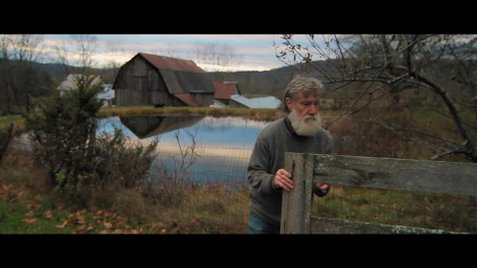
I saw 5 movies today at the New Hampshire Film Festival – Peter And The Farm was the first, and it’s the one I can’t stop thinking about. It isn’t a perfect film; the film makers are having a little too much fun experimenting with their fancy cameras, content to show you their prowess with focus/unfocus on a brightly lit night sky. But they get top marks for subject: A+++.

mv5bmty4odk0nzk4mv5bml5banbnxkftztgwmta2njc5ote-_v1_ux477_cr00477268_al_Peter Dunning, farmer, is the star of the documentary. He’s like no one you’ve ever met. He’s an artist who took up farming as way to sustain his art. But farming has overwhelmed his life. He fell in love with it, put it ahead of everything else, neglecting his art, his health, his numerous wives and children, who all have left him. Now it’s just him and the farm, a derelict little operation he has grown to loathe. And the memories that haunt him. And the alcohol that soothes him.

Rarely seen without a bottle of something in his hand, Peter is a legendary story-teller with a bottomless bag of tales to tell, grateful to finally have an audience again. He performs his farm work dutifully but grudgingly, the brutal realities of farm life a lonely cautionary tale. Sean and I agreed that Peter has a philosophical soul, and that that might just be his undoing. Alone on the land, he’s got nothing but quiet hours of drudgery for thinking, thinking, and more thinking. And most of his thoughts revolve around the pointlessness of existence in general, and his life’s work specifically. The only thing that gets him through the day is fantasizing about his suicide.

Peter is an endlessly fascinating character, but he’s a real, flesh and blood man with real demons. This is a documentary, and you can never forget that the stakes are real, and that the man selling you beets at the farmer’s market this Sunday might just be thinking of going home and putting a shotgun in his mouth. The honesty is beautiful but there’s a tormented soul on display, and that’s tougher to watch than the sheep gutting and the cow gynecology. Rural Vermont looks gorgeous but you get a very real sense that this one-time utopia has now turned into a prison and Peter, one way or another, is serving a life sentence.

13th

13th

(1) Neither slavery nor involuntary servitude, except as a punishment for crime whereof the party shall have been duly convicted, shall exist within the United States, or any place subject to their jurisdiction.

(2) Congress shall have power to enforce this article by appropriate legislation.

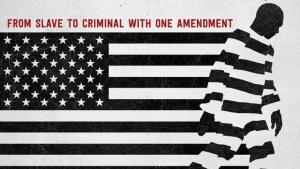
That’s the Thirteenth Amendment to the Constitution of the United States of America.  You may have seen a few movies dealing with it.  As a Canadian, I don’t know the ins and outs of the U.S. Constitution, so it’s always interesting to learn a little about how the U.S. system works.  Yesterday I learned that the U.S. system has an extremely dodgy concept of freedom from slavery.  13th is a documentary from Ava DuVernay that sheds some light on the systematic oppression of black people using the gigantic loophole in the middle of the Thirteenth Amendment.

The Thirteenth Amendment clearly states that slavery is allowed as punishment for crime.  Not coincidentally, once slavery became illegal, former slaves were rounded up, arrested for petty offences, and imprisoned.  As these methods slowly fell out of favour, the tactics to oppress former slaves became a little less obvious.  For example, Richard Nixon’s “law and order” methodology was designed to target black civil rights activists in order to gain white support in the south.  Guess what?  The plan worked exactly as intended, quelling the movement for equality by killing or imprisoning tons of black leaders.

Similar results were obtained through Ronald Reagan’s “war on drugs” (which imposed harsher penalties on crack than cocaine in powder form) and Bill Clinton’s 1994 “tough-on-crime” legislation (a crackdown on violent crime enacted during a period when such crime was decreasing).   Donald Trump perfectly illustrates how the same approach is alive and well today.

Since the abolition of slavery, it has been terrifyingly easy for politicians, backed by corporations, to continue to oppress an entire class of people.

Worse, continuing this oppression is economically advantageous and politically effective, because it keeps prisons stocked with cheap labour and earns votes from people who wish we could turn back the clock to simpler times.

Worst of all, the Constitution not only allows prisoners to be treated as slaves, it also permits prisoners to be permanently stripped of the right to vote.  That’s right: VOTING IS NOT AN INALIENABLE RIGHT IN THE UNITED STATES.  Living in the wrong state can cost you your vote, forever, because of a crime you committed and served time for.  That fundamental failure of democracy has occurred more than five million times over in the “land of the free” and, of course, disproportionately affects minorities because that’s who the system has targeted for imprisonment since the abolition of slavery.

Bottom line: the U.S.A. is broken.  Your elected officials aren’t interested in fixing the problem.  If anything, Corporate America is lobbying to worsen the divide.  Change must be demanded by the voters, and for that reason alone 13th is a must-watch.  It’s available on Netflix.  Add it to your list.

NHFF 2016 – You in?

We’ve still got a few straggly posts from the Toronto Film Festival and the Animation Festival, but we’re already looking ahead to our favourite trip of the year: Portsmouth. Portsmouth hosts the New Hampshire Film Festival and it’s about as scenic as it gets (and getting scenickier by the day, this time of year).

NHFF has just released a pretty stellar lineup of films, which you can peruse at your leisure here. I know I’m already looking forward to several:

Stray, about a Muslim refugee who befriends a stray dog.

The Eyes of My Mother, about a woman consumed by dark desires after a tragedy. I haven’t seen it yet, but I’ve certainly heard about it from fellow film fanatic, Film Grimoire. I’m just trying to work up the intestinal fortitude.

Things to Come: A philosophy teacher played by Isabelle Huppert soldiers through the pain of grief.

God Knows Where I Am: a heart-wrenching documentary that I’ve seen and can’t wait to show to Sean and Matt.

I’m not sure you can lose with all the great movies they’re screening (we didn’t see a single bad one last year) but I’m not just excited for the movies. Portsmouth is a town with character. It’s such a vivid and friendly place that I can’t wait to revisit. Also clam chowder.

Since so many of you commented last year that you didn’t know about this charming festival ahead of time, consider this your fair warning. We’ll be there for the duration and we hope to see you too. Who’s in?

Audrie & Daisy

Audrie & Daisy is a documentary on Netflix that provides an in-depth look at the effects of cyber-bullying on two teenaged girls in the aftermath of their sexual assaults.

We live in a fucked up world. I was sick, and sad watching this. Sick that this is the world we’ve made for teenagers today, and it’s goddamned horrible. These little girls (14, 15 years old), nearly comatose with alcohol poisoning, are being 8747a7dd79a1b69c9906f86148c4a53cnot only sexually assaulted by gangs of their peers, but that assault is being recorded. Welcome to the digital age. These photos and videos are widely and quickly disseminated and before the bell even rings on Monday morning, everyone knows. The public shame feels overwhelming, all-encompassing. It’s nearly impossible to convince such a young girl that in fact things won’t always be this way, won’t always feel this bad.

Hearing Audrie Pott’s story made me ask Sean – was this the Canadian case, the one out in Nova Scotia? It wasn’t. Her name was Rehtaeh Parsons but the case was strikingly similar: rape, pictures, bullying, suicide. How often has this pattern repeated? OFTEN. So, so often. Daisy faced not just bullying after her attack, but open disbelief and derision from a whole town when she attempted to face the perpetrator in court. The mayor of Maryville, Jim Fall, and sheriff Darren White will make you see red. It wasn’t their sons who committed this crime, but it could have been. These are the disgusting individuals raising young men to be so crass and so entitled that they will boast about rape and take pictures for evidence. And these are the men who turn their backs on the victim, and the law, when such a crime occurs.

I was livid watching this movie, and you will be too. Good. We need to get riled up about this. Because we are endangering our daughters and quite obviously 479832cdcef9699caec033974a50b507failing our sons in some very basic way. Two of them, sentenced to testify on camera for this documentary, have learned nothing. No remorse, no responsibility. One young man volunteers that the only thing he’s taken away from this is that “girls gossip.” And these boys are free – to graduate, attend college, rape again, whatever. Free, and alive, unlike Audrie, unlike Rehtaeh, unlike so, so many.

There is something broken in our culture if something like this is a trend. Directors Bonni Cohen and Jon Shenk don’t condemn the Internet, they sensibly promote it as a tool for these girls to band together, to realize they are not alone. But it clearly has far-reaching implications that we need to take more seriously. Sending or sharing a video of a 14 year old girl getting raped isn’t just taking part in the sexual assault, it’s disseminating child pornography. Penetration isn’t the only crime here. Social media is making all the looky-looks culpable. As Daisy so eloquently quotes in the film, the words of our enemies aren’t as hurtful as the silence of our friends. It takes a whole community to do the right thing. This isn’t just a bad apple scenario, it’s a blight on the whole damn orchard.

The 4%

“The next Kubrick, in no one’s mind, is a woman.” – Julie Delpy

TIFF has organized this short documentary and asked tonnes of industry professionals, including a glut of top female talent, why such an enormous gender disparity exists in film making (only 4% of directors are female).

5f75e13ac3a619390745379e3ae3057dThe talking head interviews are culled extensively from the guest list of the 2015 festival, and include the likes of Toni Colette, Michael Moore, Patricia Clarkson, Judd Apatow, Mimi Leder, Paul Feig, Catherine Hardwicke, Angelica Huston, Jill Soloway, Mira Nair, and so many more.

Even as females slowly break through in producing, writing, and starring roles, the director’s chair remains elusive. Directing is a boy’s club, is run by a patriarchy. We are conditioned to think male when we think director. And if a woman is holding the megaphone, she effectively neuters herself in order to be taken seriously.

The documentary also touches on females being hired exclusively for “female”stories when in fact they long to tell a breadth of stories just like their male counterparts. Directing takes vision, shamelessness, openness, patience, and discernment – these are abilities that women are capable of. What it does not actually require: a penis. So why then were there more female directors in 1929 than there are today?

This documentary made me think about a female director we saw at TIFF – Hope Dickson Leach (The Levelling). She co-founded the initiative Raising Films, a campaign to make the film industry more parent-friendly. It’s certainly not a women-only concern, but it is a barrier to get more women on a film crew.

Sarah Solemani, star of Bridget Jones’s Baby, took the campaign to the red 14199431_1403270093023633_6583121126926777920_n-188x300.jpgcarpet when she broke out a sign reading ‘Budget the Baby’. She says “As an actor I can claim a massage or a facial but I can’t claim childcare. Actors are the most pampered people on sets. It’s the crews — the electricians, catering, camera people — who are often on set at 4am.” Hope Dickson Leach is a mother of two herself; you can imagine what a grueling 20 hour day on the set can mean to a family with young children.

The 4% is a small commitment – just 30 minutes of your time to enlighten yourself on a topic we should ALL be concerned about. It’s not just women who benefit from a more inclusive work place. They have stories and perspectives and voices that are distinct and worthy, and they need to be told and seen and heard. Equally.


TIFF: Voyage of Time

Voyage of Time: The IMAX Experience is the 45 minute version of Voyage of Time: Life’s Journey, written and directed by Terrence Fucking Malick; a 30 year labour of love.

We watched the shorter version in the IMAX theatre where Sean watched Spider-Man 2 with a girl named Tall, Stupid Rebecca. Did you guys know Sean dated other women before me? How rude. But he did, apparently, when he used to live in the fine city of Toronto (and voyage-of-time-copertinaby the way, I also lived here at the time, and yet: Rebecca BitchFace. I’m sure she’s a lovely girl.) Where was  I? Oh yes.

It takes a special brand of masochism to attempt a Terrence Malick flick as your fourth film of the day, and yet there we were, sitting in the same seats where Sean once fumbled an “accidental” boob graze of another woman’s tit. I KNOW YOUR MOVES, SEAN. Ahem. I digress.

Voyage of Time is billed as an examination of “the origins of the universe, the birth of stars and galaxies, the beginning of life on Earth and the evolution of diverse species” but that’s COMPLETE HORSESHIT. Calling it a documentary at all feels like a stretch. Or, you know, a flat out lie. But it is the movie Terrence Malick was born to make. His feature films tend to be languorous, dreamy imagery interspersed with the vaguest tendrils of plot. Voyage of Time is all the imagery and none of the plot. It’s loaded up with his signature “sun flares through a leafy tree” but these alternate between CGI renderings of what Terrence Malick thinks the beginnings of life might have looked like. Terrence Malick is many things, but: astrophysicist? Nope. He’s definitely got some scientific advisers on tumblr_o9l8rnmwj61r5ixiao2_540board but the result isn’t science at all. It’s conceptual; more contemplative than comprehensive. No science teacher will ever show this in class – but a yoga teacher might. Getting the gist? It’s a thing of beauty, often thoughtful, but far from educational.

Brad Pitt narrates, often in such a way that you can hear the italics in his voice. It’s like he’s reciting poetry with his eyes closed (Cate Blanchett narrates the longer version, for some reason). I tried very hard not to snort because the director of photography was sitting directly behind me, and that’s a lot of pressure. I felt sometimes that I should sigh appreciatively just so that he didn’t get a complex. Or lean back for a high five every time there was a sun-dappled field or rays of sunshine peaking from between limbs of a majestic tree.

It’s obvious even from Malick’s narrative films that he has a thing for nature and philosophy and theology, for lack of a better word. The pace of the movie is soulful, at the rate of about 1 fact per 1-2 minutes of silent reflection.

Did I enjoy it? Well, fuck. It is an experience. Plus, making it to the end of any Malick movie is an accomplishment, almost equal with having climbed Everest. It’s definitely CV-able. And he did raise a question I’ll be chewing over for days to come. Most documentaries in the vicinity address life – what, where, when, why. But Terrence asked about death – when did death first appear? And you know what? Not only do I not know the answer, I didn’t even know to ask the question. We think of life and death as inseparable, but who’s to say?  Life’s first ambition is to go on living, and maybe that’s exactly what it did. Until. Until what? I don’t know. Neither does Malick, but at least he’s asking, and you know he’s asking in the most magical way he knows.


I’ll Sleep When I’m Dead

Steve Aoki is a world-famous EDM DJ. Mile for mile, he’s the most-traveled musician in the world (via his private jet, natch). He started a record label when he was 19 years old and turned it into a success, breaking Bloc Party among others. He parlayed that into a DJ gig, and attracted a cultural following. His energy kept driving him forward. Now he plays aoki_bulletin_voake_hiressel_1433as many shows per year as there are days, or more. He’s ambitious. He never stops. He helped transform EDM into a personality-based business. On any given night there are thousands of voices chanting his name. But it’s not enough. It’s never enough.

Steve’s dad was the guy who invented Benihana. Success runs in the family. But Steve’s dad was never impressed, and never supported him financially. Steve’s  dad is dead now, but Steve’s still trying to impress him.

This documentary forces Steve to sit still for maybe 6 minutes, total, in an attempt to be introspective for a damn minute. The film attempts tension and conflict, but there’s only so high-stakes you can make a dance music concert. Still, his family situation is sad and it’s clear that even as a man he’s still yearning for a validation that will never come. Can only come from himself, ultimately, but until he can sit down in earnest and look inward for it, he will be fated to repeat this pattern indefinitely.