Tag Archives: documentaries

Touching The Void (2003)

What a beautiful film! “Touching The Void” is about two mountaineers (Joe and Simon), who decide to live up to their great ambition of climbing the Siula Grande, a 20, 814 ft mountain located in the Peruvian Andes. What follows is a beautifully hellish story of 2 friends’ will to survive when Joe, an experienced climber, breaks his leg as the pair are starting to rappel down one of the world’s most treacherous mountains. I was left on the edge of my seat for the entire length of the film. Besides death, not much more could of gone wrong. It was nerve-racking, at times difficult to watch but ultimately one of the most rewarding and honest documentaries I’ve ever seen, and trust me, I’ve seen many.

Very rarely will I see a film where every word holds its weight, to the point where I paused the movie many times to simply reflect. I would ask myself what would I do in these situations? Would I be as mentally strong? Would I give up? Would I capitulate and accept death? Truth be told, I don’t think anyone can honestly answer these questions without experiencing the sheer nightmare these guys went through. Just when you think things can’t get any worse for Joe and Simon, nature will gladly prove you wrong. Thin air, snowstorms, freezing cold temperatures, nasty winds, crevasses and extreme ice are just the beginning of what Simpson & Yates will be forced to deal with. I don’t want to give away too much so I’ll just say this: If there’s ever a documentary I would recommend with confidence, this is it. Within the same breath it effortlessly explores life, death, hope and despair which makes for a powerful and unforgettable experience.

images

If any of you have seen this movie, I would love know what you thought of it.

Gideon’s Army

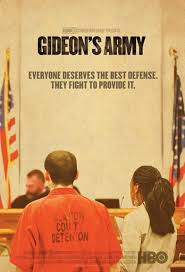
I set out to review Gideon’s Army last night with a quick comment on the best documentary Oscar race. My quick comment became a long comment as I got a little carried away thinking about what makes a documentary great. Should we hold theGideon's Army 1m to the same standards as we would fiction in terms of style or is it enough to just tell the truth about an important subject?

Gideon’s Army is a fantastic documentary no matter how you look at it. Screened mostly at film festivals in 2013 but now available on Netflix, it follows three young and hopelessly overextended public defenders working in poor areas in the southern US. Anyone who’s ever watched Law & Order knows the Miranda rights, probably by heart. “You have the right to an attorney. If you cannot afford an attorney, one will be appointed.” Everyone has a right to legal representation, even if your lawyer is taking on up to 180 clients at a time as Brandy Alexander (not even thirty years old yet) has to. A statistic at the beginning of the film states that there are 15, 000 public defenders working in the US right now and together they represent millions of defendants each year.

Gideon's army 2

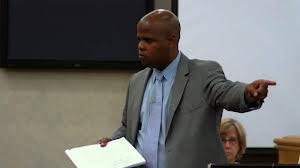
Gideon’s Army gets the statistics out of the way quick and then puts all its focus on people. The three lawyers that we get to know in the film have to defend both people that they firmly believe to be innocent and people that they know to be guilty and proud to be guilty of unspeakable crimes. They lose sleep over the cases that they are terrified to lose and the lives they are afraid of ruining. In Brandy’s case, she had to represent at least on person who threatened to kill her. The work is so stressful that they have a support group.

One lawyer described being regularly asked “How can you defend those people?”. This is not a popular subject for a doc. Lawyers don’t get much sympathy, especially criminal lawyers, and Gideon's army 3neither do defendants. The film makes a strong case that the system that claims “Innocent until proven guilty” is really stacked heavily against the accused, especially if the they don’t have money. The system puts tremendous pressure to take a plea bargain, not being able to afford to stay in prison while their house and job slip away as they await trial.

Gideon’s Army potrays those that do their best to keep burnout and pennilessness at bay to defend those that can’t afford to pay them as heroes. Director Dawn Porter’s admiration is understandable. As a social worker, I can cheer for anyone who will take the time to listen to and stand up for those that the rest of the world has seemed to have given up on. I highly recommend you check out this movie.

A comment on the Best Documentary Oscar race

I have only been able to find two of the Best Documentary nominees. I regret that I couldn’t see more but I’m not sure I’d be in a much better position to predict a winner if I had. After last year, where the undisputedly entertaining and interesting 20 Feet from Stardom won over the thought-provoking, troubling, and almost universally acclaimed The Act of Killing, I wondered what criteria voters were using to decide what the Best Documentary was.

The best thing about awards season is it gives us the chance to look back on our favourites of the year and talk about them, argue about them, and think about what makes a movie better than another. In this case, what makes a good documentary? citizenfour

All four of us here at Assholes Watching Movies have predicted a win this year for Citizenfour, one of the only two nominated docs that I’ve been able to see. My thinking was that, not only is it the subject matter important- which is a tough thing to measure against the other nominees- but one that the Acadamey is sure to endorse. We’re all feeling a little sensitive about our cyber security right now. Even Hollywood, with a major studio being hacked just a few months ago. Just as director Laura Poitras was lucky enough to be in the right place at the right time, this might be the right movie at the right time.

A great documentary, like any great movie, is about more than the topic. A great documentary has to be great, not just important. Poitras was fortunate enough to get footage of history as it happens, instead of just interviewing people about it later. Unfortunately, as I said when I reviewed Citizenfour last month, she didn’t get enough of this footage to fill a whole movie and seems to spend the rest of the movie struggling to fill it, without asking some of the tough questions that I would have liked to have seen asked.

Virunga, the other nominated doc that I watched, also got great footage and important subject matter; civil war in the Congo. Like in Citizenfour, the subjects and filmmakers take serious risks and in some cases mavirungake great personal sacrifices in their quest for justice. The difference is that director Orlando von Einsiedel knows how to use his great footage to tell a great story and edits it together to form a finished film with a genuine emotional impact. “I cried,” wrote fellow Asshole Jay. This is why am hoping that Virunga wins the Oscar, even if I predict that Citizenfour will.

Note: This started out as a review of a fantastic 2013 documentary called Gideon’s Army but I seemed to have gotten sidetracked. I’ll have to write that tomorrow.

What was your favourite documentary of 2014? Have you seen any of the other three nominees? What do you think makes a great documentary? We’d love to hear from you.

Virunga

I cried.

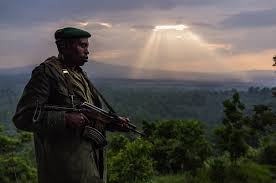
virunga3Virunga is a national conservation park in the Democratic Republic of Congo, which houses the world’s last mountain gorillas. The rangers who work there risk their lives to protect the park and its primates from poachers, war, and Big Oil.

Director Orlando von Einsiedel first travelled to the Congo in order to document the park’s positive impact on development and tourism, but within 3 weeks of arriving, M23 rebels were pushing into the area.

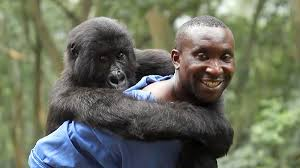
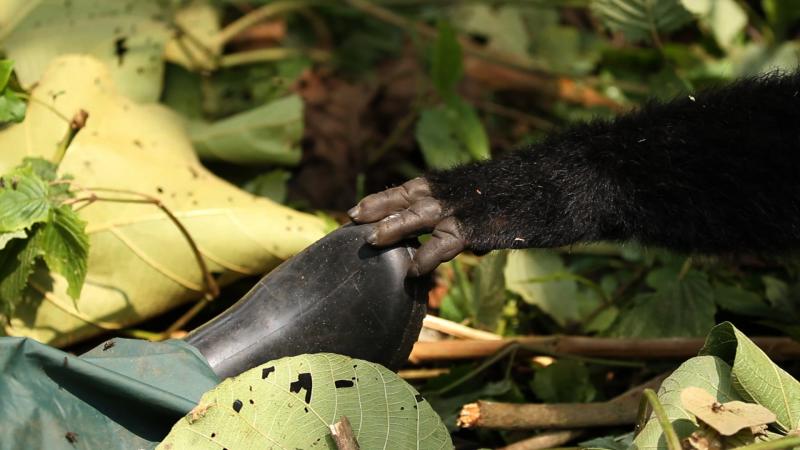
Within the park is a “gorilla orphanage”, two words I’d never put together before in my life, and 04_kabokowhich struck a really emotional core in me. One of the orphaned gorillas has only one hand; his stump is a reminder of the conflict in the region of which he has been victim. Am I so inured by images of war-wounded children that it now takes a maimed gorilla to give me pause?

One of the rangers talks about “une grand tristesse” – a great tragedy – of finding a pack of gorillas slaughtered in the jungle. It was thought that if there were no more gorillas, there’d be no more need for the park. But with so many threats to the park, who was the culprit? Soco International, a British oil company, certainly seems like a guilty party. But the rangers and villagers put aside the investigation to mourn the majestic creatures. If you’ve ever wondered how many pallbearers it takes to carry the corpse of a slain gorilla, this film has the answer.

virungaMeanwhile, it’s not just gorillas who are dying. 130 rangers have given their lives in the service of this park. To many, Virunga is a symbol of hope, a way to heal their “pays cassé”, their broken country, a positive contribution to a country’s questionable legacy. The four gorillas who live in the orphanage are given love, and a surrogate family. But when the rebel army moves closer and bombing can be heard, a gorilla curled up in the fetal position is such a pathetic sight, one that stands in for so many other images of tragedy, that you can’t help but be moved.

The film plays out urgently – the rebellion taking human lives as the Congolese army flees; Socovirunga1 bribing rangers to exploit a protected World Heritage Site, stealing yet more resources from an area that has nothing to spare. There is drama and tenderness in equal measure. I guess what got to me is that it shows quite starkly the best and worst of human nature, and it leaves it in our hands as to which side will ultimately win.


virunga4You can stream this Oscar-nominated documentary on Netflix. If you’d like to learn more about what you can do to help the park, please visit www.virungamovie.com.

Finding Vivian Maier

In 2007, real estate agent John Maloof acquired some negatives through the auction of an FindingVivianMaier1abandoned storage-locker. He was putting together a book on his Chicago neighbourhood and quickly realized these photos were irrelevant to his project, but he kept coming back to them because they were simply beautiful.

He has since bought up all of her work that he could, and attributed the photos to Vivian Maier, a woman almost impossible to nail down because that’s the way she wanted it. Intensely private, she spent her life working as a Nanny, faking a french accent, occasionally posing as a spy, and always, always, taking pictures. These pictures, over 100 000 went largely undeveloped and her work unknown. It wasn’t until after her death in 2009 that Maloof started soliciting attention for her photographs, and now she’s a street photography or significant interest.

vivian_maier_twinkle-twinkl_little-starThis documentary seeks out the personality behind the photos but finds that Vivian Maier may have prefered to remain anonymous. We get conflicting reports from the children she helped bring up, the parents she worked for, the neighbours she shunned, and the only thing that everyone agrees on is that she didn’t want to be known, and probably would have hated the very idea of this documentary.

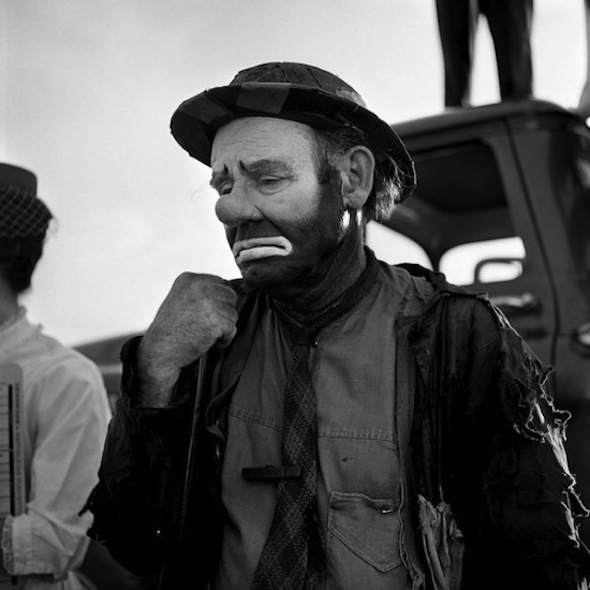
Her pictures are indeed worth all the fuss. Youvivianmaier get the sense that Maloof is profiting quite handsomely from them, and that makes you sad for the woman who apparently died in destitution. You wonder who would go to the trouble of taking so very many photos if she never intended to show them to anyone, but we never know the answer. Vivian Maier remains unfound.

The Best of Sundance 2015

The Sundance Film Festival has been crazy busy this year, and tonnes of great movies have already debuted (and many bought for distribution!). Here’s a short list of some of the most-talked-about and highly anticipated movies to come out of the festival so far.

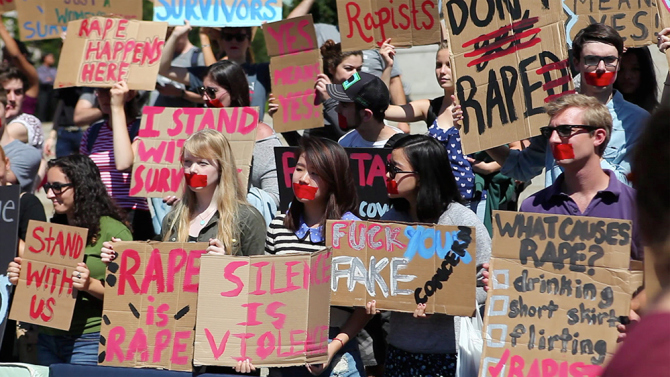
The Hunting Ground , a documentary by Kirby Dick who also did Invisible War a couple of years thehuntingground3ago. The Hunting Ground is a powerfully charged film about rape on college campuses, a timely topic (sadly) that had audiences gasping audibly at the mockery of universities’ investigations into sexual assault. The film takes a hard look at fraternity culture, and also serves as a warning to the NFL about Florida State quarterback Jameis Winston – accused of rape he has yet to be formally charged but his accuser speaks out publicly for the first time, and it’s chilling. This movie also features the most talked about song at Sundance this year, Lady Gaga’s “Til It Happens To You”, co-written by the esteemed and venerable Diane Warren. The Hunting Ground is slated for release March 20 and will air later this year on CNN.

Going Clear is another documentary of note this year, this one directed by Alex Gibney (who goingclearyou may remember from Taxi to the Dark Side). This one’s about Scientology and you can bet it’s ruffling plenty of feathers (HBO famously hired 160 lawyers to vet the thing). Gibney’s got lots of former scientologists on deck, including disillusioned former leaders, delivering first-hand accounts of what it’s really like behind closed doors. This doc lands bombshells about the torture of members in a prison known as “the hole”, the harassment of those who have left, and the intentional breaking up of Tom Cruise’s marriage to Nicole Kidman (and even wire-tapping her phones). Going Clear: Scientology and the Prison of Belief airs March 16 on HBO.

IFC Films laid out $3 million for the rights to Jack Black’s new comedy, The D Train, where he dtrainplays a loser who tries to save his high school reunion by recruiting the class’s favourite and most famous student (James Marsden), an actor in a successful Banana Boat commercial, to attend.


brooklynBrooklyn looks like another one to look out for – a romantic drama based on a best-selling book (by Colm Toibin) with a screenplay adaptation by Nick Hornby.  If memory serves correctly, it’s about a young woman who emigrates from Ireland to Brooklyn and faces homesickness and heartbreak as she chooses between 2 men and 2 countries. Something like that. 🙂


The End of The Tour sounds a little like Almost Famous but for book worms as opposed to endofthetourgroupies. It follows Rolling Stone writer David Lipsky (played by Jesse Eisenberg, who I’m a little wary of at this point) on a five-day road trip with David Foster Wallace (brought to the big screen by Jason Segel). Wallace committed suicide a few years back and apparently his family aren’t pleased about the movie, so it’s sure to create some chatter when released later this year.

Zachary_Quinto_James_Franco_I_Am_Michael_jpg_CROP_promovar-mediumlargeI am not sure, though, that anything will create quite as much controversy as James Franco’s new movie, I Am Michael, based on the life of gay activist Michael Glatze who co-founded an LGBT teen magazine only to renounce his sexuality and become a Christian pastor. Zachary Quinto and Emma Watson also star.


For those of you worried about having too much fun at the movies this year, here’s one that’s stockholmsure to be a downer: in Stockholm, Pennsylvania, Saoirse Ronan plays a young woman who was kidnapped as a young child and held captive for 17 years. Recently returned home to her family, she must now reconcile her haunting past with the reality of parents (Cynthia Nixon and David Warshofsky) who are pretty much strangers, and a world she didn’t know existed.

JonahHillJamesFrancoTrueStory1And if you’re in the mood for a couple of chuckle-heads turned dramatic, Jonah Hill slips on his serious glasses to play Michael Finkel, a disgraced journalist who learns an obsessive murderer (James Franco) captured in Mexico is stealing his identity. Finkel travels to interview the prisoner in hopes of restoring his integrity. True Story has a limited release set for April 10.


Which ones are you most excited to see?

Muscle Shoals

muscleshoalsThis documentary isn’t terribly structured but it does offer some brilliant insight into the making of some of the best records of all time: Percy Sledge, Aretha Franklin, Wilson Pickett, The Rolling Stones…and what do they all have in common? They were all produced and recorded in small town Muscle Shoals, Alabama. You may not know the studio, but you definitely know the music.

Everyone gives lively, reminiscent interviews, including Bono, who just loves to hear his own voice because in actual fact he never recorded there. But everyone who’s anyone has, and most showed up to praise the sound coming out of the south.wilsonpicket-4_3

What struck me the most was that, without any effort, just born out of one musician’s respect for another, more was done for race relations on vinyl in those studios than anywhere else. Black and white musicians worked together to make a cohesive sound that both describe as “funky.” This was rural Alabama in the 1960s but what was happening out there couldn’t mess with what was happening in the studio. It was magic.

Citizenfour – Discussion

Citizenfour is a great documentary, maybe not in terms of movie making, but certainly in terms of the discussion it generates. If you’ve followed the case, then you’ve learned nothing new: Edward Snowden surreptitiously contacts Laura Poitras, the film’s director, and asks to meet. She flies to Hong Kong and films him over the course of 8 days, as Glenn Greenwald of The Guardian interviews him and breaks the story on the extent of NSA’s pervasive spying on its own citizens. If you’d like to learn more about this movie, please see fellow Asshole Matt’s review of the film. If you’ve seen it and would like more in-depth discussion, then keep reading.

Why you should care: One thing this movie does well is that it makes the case for why should citizenfourwe all care. It’s easy enough to brush it aside, thinking that since we having nothing to hide, nothing nefarious in our texts or emails, then we’re “safe”, no one will be kicking in our doors. And that’s true. But it’s also true that every single day, these people are infringing upon your rights. They are looking over your shoulder at things we used to consider “private” – phone calls to our friends, emails to our mothers, messages from our doctors, banking we did online, books we’ve borrowed, movies we rented, things we bought, passwords we mistakenly believe are ‘secret’, every single thing we’ve ever searched for on Google. Think about that for a second. Our histories, our personal blueprints, are available for analysis. If this was a dystopian sci-fi flick, we’d be creeped out and outraged on behalf of the protagonist. But those scenarios are already happening. It’s already here. But since it’s illegal and since people might just be mad about it, the government does it in secret – and outright lies about it when called out. It uses all the technology developed for flushing out terrorists and uses it against YOU. It has turned spy against its own citizens, every last law-abiding one of them. You don’t need to be suspicious. You don’t need to have a record. You don’t need to have motive, or to associate with known criminals, or use words like “bomb” or “jihad” or “Ebola”.

What does privacy mean to you? Make no mistake, this data collection is a weapon and one that will be used to oppress you. Citizenfour and Glenn Greenwald in particular seek to impress us with this fact: PRIVACY IS FREEDOM. I think it’s important to think of it in terms of control: your own control over your privacy, and others’ ability to control you using obtained private information. There is no freedom without privacy. That’s why we vote by secret ballot. Privacy allows freedom of conscience and diversity of thought. Sure, the government has seriously abused this data yet, that we know of. But why should we be content to wait until that happens – and it will happen – it is being collected in order to be used, not for you, but against you.

Is Edward Snowden a hero or a traitor? Poitras doesn’t really touch on this, unfortunately. Her film is more a portrait of a man, but whether you call that man a whistleblower or a traitor tells a lot about you and about the world you think you live in. The truth is, he is responsible for one of, if not the, largest security breaches of American state secrecy. Why did he do it? The film paints him (and he paints himself) as self-sacrificing, conscience-directed, a do-gooder of the greater-good. He assured us he expected and was willing to be punished for his actions, but won’t return to US soil to stand trial. And for all his protestations, I felt he did court attention. He didn’t reveal the secrets himself, he sought out famous film and print journalists to bring “his” story to light. But he was an established (if closeted) libertarian for pretty much his whole life, believing that the government should defend its citizens, not encroach upon their rights. Few news stories, this documentary included, have been able to separate Edward Snowden, the personality, with the information he uncovered, and even though Poitras claims she was working on this film before Snowden contacted her, we see little evidence of this in its finished product. Those eight days in Hong Kong are the meat of the movie, but I was surprised that she merely recorded it passively rather than asking any questions. I was left wondering – is Snowden operating purely from an ethic of responsibility, or does he have other motives at play? And does it even matter, since the information is all true? Can you be held above the law if the information you leaked shows the corruption of the lawmakers themselves?

Has Citizenfour succeeded? Snowden tells us that what we can do at home to protect our privacy is to encrypt, to block our ISPs, to use personal clouds, to leave no trace. I’m not sure this is practical for every user of the web, and is it even enough? Citizenfour excelled at showing us just how seriously they took they spying. There’s an escalating sense of paranoia – from Snowden’s use of physical barriers to Greenwald’s reluctance to speak out loud – the camera focuses on his feverishly scrawled notes, methodically shredded. They take no chances but I do wonder – has the average viewer of the movie seen this as a call to arms? Have you changed the way you use the internet or cell phone?

Citizenfour

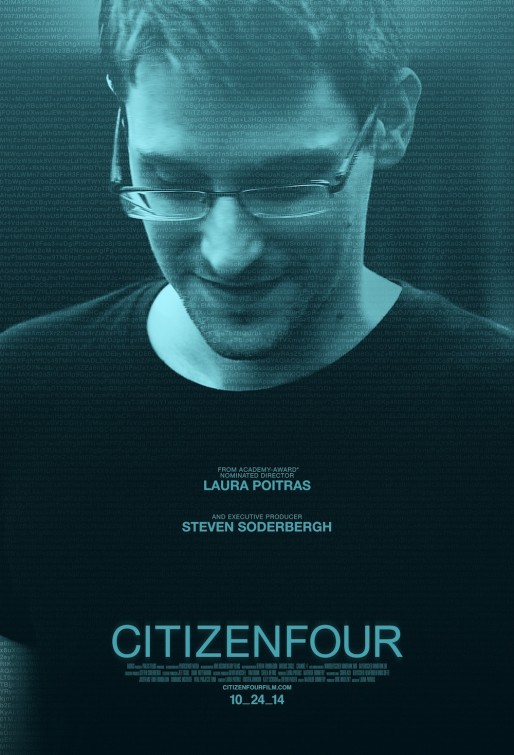
Filmmaker Laura Poitras’ documentary on the scope of NSA wiretapping and surveillance worldwide is the first of the Oscar-nominated documentaries that I’ve had the chance to see. (Thanks Bytowne for making it available). Poitras was already working on the film when she lucked out and got an encrypted e-mail from the mysterious Citizen Four, who we all know by his real name Edward Snowden. Snowden met with Poitras and journalists Glenn Greenwald citizenfourand Ewen MacAskill secretly in a hotel room in Hong Kong where he provided them with proof of the extent to which the NSA had been spying on its own citizens. Poitras’ footage of thiese meetings take up a large part of the film’s running time.

If you’re unfamiliar with Snowden or his revelations, this is definately a movie worth seeing. And if you have taken the time to follow this story as it happened, you probably care enough to wan to see this movie given that it gives you the rare opportunity to watch history as it happens. So, in short, it’s a movie I’d recommend for anyone.

“I’m not the story!” Snowden repeatedly insists. It’s hard to tell if Snowden’s desire to focus on the message instead of the messenger is admirable or self-serving (I’m leaning towards admirable). Either way, Poitras often ignores this and wisely puts the focus on Snowden and the parts where she does are the best parts of Citizenfour. These scenes offer a rare chance to get to see a little bit of who he is. We’re with him when he gets e-mails from his girlfriend about agents showing up at her door. We’re even with him as he prepares to come forward, watching him as he fixes his hair and kills time in his hotel room. He keeps saying that he’ knows and accepts that there will be consequences but his body language can’t lie. We can see that he’s scared.

Being at the right place at the right time is a big part of what makes a documentary and, by that standard, Citizenfour is a great documentary. Poitras was fortunate enough to have Snowden citizenfourcome to her and let her film him as he broke one of the biggest and most important news stories of 2013. It’s worth mentioning also that she was taking on some level of risk herself just by being involved.

I’m not so sure that Citizenfour is a great movie though. There’s not enough footage of Snowden to fill a full-length documentary and Poitras spends a lot of time scrambling to fill the rest. There are a lot of establishing shots, lots of text on the screen, and a few too many shots of Snowden sitting in his room watching tv. It feels like a missed opportunity, especially given that Americans are divided on whether Edward Snowden is a hero or a traitor. Poitras is leaning towards hero, maybe a little too heavily. She’s not wrong and documentaries certainly aren’t obligated to tell every side of the story. All I’m saying is, since Poitras had so much time to fill, maybe she could have filled some of it by asking him some questions.

For more on Citizenfour, read Jay’s discussion here.

Jodorowsky’s Dune

This documentary tells the story of arty film director Alejandro Jodorowsky’s inspired but ultimately doomed film adaptation of Frank Herbert’s sci-fi novel, Dune.Jodorowsky's_Dune_poster

To help realize the ambitious plans he had for this film, Jodorowsky recruited the very best talent available. He tapped Mick Jagger, Orson Welles, and Salvador Dali to star, Pink Floyd to do the music. A quarter of the budget was spent in pre-production, but the art and storyboards produced were stunningly surreal and top-notch. Maybe even a little too aspirational, because Hollywood studios balked at the high concept (and at the projected 14-hour runtime) and it never got made, despite having influenced countless sci-fi movies over the past four decades.

Jodorowsky is a great man to capture on film. Talking about his movie, it’s obvious that this was his passion project, his life’s work. Flipping through costume designs, camera angles and script changes, it’s astonishing and heartbreaking to see so much work and so much talent go to waste. Deflated over his Hollywood rejection, Jodorowsky stopped making movies. And it was with a heavy heart that he trudged to theatres in 1984 to see David Lynch’s Dune. He admits that if anyone could have done justice to his movie, it was Lynch, but he also gleefully tells us that his spirits soared when he realized the film was awful, a flop.

Jodorowsky speaks knowledgeably about the messiah complex that’s a running theme in the material without seeming to realize that he is the epitome of the expression. He admits that he “raped” the novel, albeit “with love” – it was rumoured that author Herbert was none too pleased. He took the story to places never imagined by the book itself, and perhaps it was this conceit, this unbowing grandiosity that was his undoing. Studio execs did not believe that this epic film, straying so far from the beloved source material, would ever find an audience. And maybe they were right. But between the conceptual art and the passionate storytelling of Jodorowsky, I wish that the choice had mine, had been ours, to see or not to see his masterpiece: Dune.