
Free hugs. Free hugs for everyone, because I regret to inform you: you’re absolutely going to need them.
The Father is unintentionally the perfect film to have released during a global pandemic which has meant many things to many people, but has put a particular emphasis and burden on caregivers. Sean lost his Granny last spring; though her death certificate doesn’t state COVID as the cause of death, hers is one of many likely hastened by mandatory isolation (not that she was alone: she received wonderful care at her residence, but these have been lonely times, and particularly hard on people living with dementia). My own grandparents moved into a nursing home for the first time not many months ago, my mother unable to cope as their sole carer any longer. My grandfather’s failing health has meant he’s in and out of the hospital quite frequently, and must always be quarantined upon his return. He’s in the hospital right now, in fact, unable to return to his residence which is suffering an outbreak of a variant. His hospital bed is not far from the one in which his younger brother died last week, yet he was unable to go to him for one last goodbye. But it’s his wife, my grandmother, who suffers from dementia, and my mother who has to tell and retell all this news to her, news of a constantly changing world and its new and evolving rules which many of us hardly keep pace with ourselves. My mother’s only break has been courtesy of her own mandatory quarantine, having also been exposed to the variant at their residence.

The Father is a duet between father and daughter; the experience of dementia from both the victim’s perspective, and the caregiver’s. It is impossible to say who suffers more. Anthony (Anthony Hopkins) is a charming and vibrant old guy who values his independence even though daughter Anne (Olivia Coleman) judges it no longer sustainable. Anthony is defiant in the face of the carers she presents, resents even their implication, though both the script and Florian Zeller’s direction make their necessity abundantly clear to us. Anthony confuses people, names, faces, conversations, places, time, reality, even his own identity.
The film is of course extremely empathetic to Anthony’s plight, but it allows us to truly know this character, and perhaps even the disease, by donning his slippers and showing the truth, warts and all. As his world tilts and blurs, Anthony reacts variously, sometimes sad and scared, sometimes angry and aggressive. We see him self-possessed one moment, asserting his role as homeowner and head of household, and completely depleted the next, sobbing and unsure. It’s heartbreaking, not just to see a man reduced to such disparate elements, but because so many of us can easily recognize our own loved ones in this man, in his simple needs, his volatile moods, his disappearing self. Anthony Hopkins is doing incredible work in this film. He’s no spring chicken himself, but he’s in complete command, a psychological/emotional contortionist. Give him all the awards.
Caregiver Anne is living in her own hell. Since her father can’t remember one conversation to the next, nor even parse one sentence after the other, reasoning with him and negotiating with him are completely off the table. Often unable to even recognize her, he’s certainly not able to appreciate that these tough decisions are for his own good, his safety, his well-being, and her peace of mind. She has clearly sacrificed much of herself to be his carer for as long as she has, and it is a mostly thankless job, Anthony’s twisted mind more likely to be suspicious or critical than to recognize the time and patience expended on his behalf. He is not a bad person, just a sick one, and his daughter is losing him bit by bit, disguising her grief even though it’s happening right in front of him, as he lives and breathes. Coleman is of course absolutely fantastic, a portrait of anguish under a mask of affection. But Anne isn’t a saint, she’s just doing her best under complex circumstances, and with less support than she deserves.
The film is as ruthless as the disease it describes; it will break your heart. It reminds us not just of dementia’s devastation, but of its humanity. The Father is a damn fine piece of cinema.
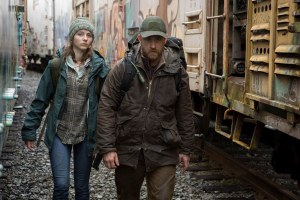
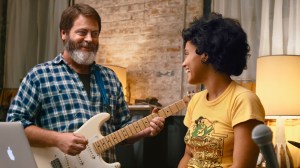 college, Frank is wondering who in the hell he is. His landlady (Toni Collette…oh, did I not mention that the phenomenal Toni Collette is in this?) is sympathetic, his barman\best friend Dave is sympathetic (Ted Danson…oh, did I not mention that Ted Danson is in this, and he’s tending bar???), but good intentions aren’t enough to set this wandering soul on the right path. What does help, enormously, is making music with his daughter. The only problem? He’s ready to start a band with her, and she’s still adamant that medical school is in her immediate future. And what kind of father doesn’t want his brainy daughter to pursue her doctor dreams?
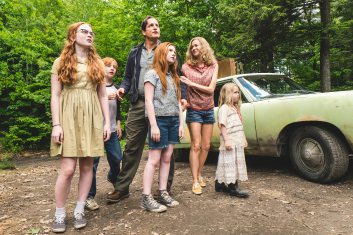 book became this movie, though something was lost getting from A to B. The book pulls no punches. Her parents are complex characters, and their children have conflicted feelings toward them. The movie’s a little more pat, the trajectory a little more Hollywood. Someone decided to apply some spit shine to this story, a story that’s naturally very dark and brooding now has themes of hope and redemption that maybe don’t belong.
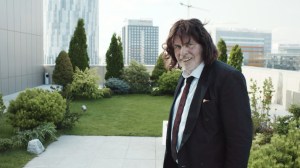 just showing up and being this weird alternate personality. He more or less stalks his daughter and endangers her career by showing up at her office and various work functions. If he was your father, you’d either die of embarrassment, or you’d kill him. No two people should survive a relationship like this.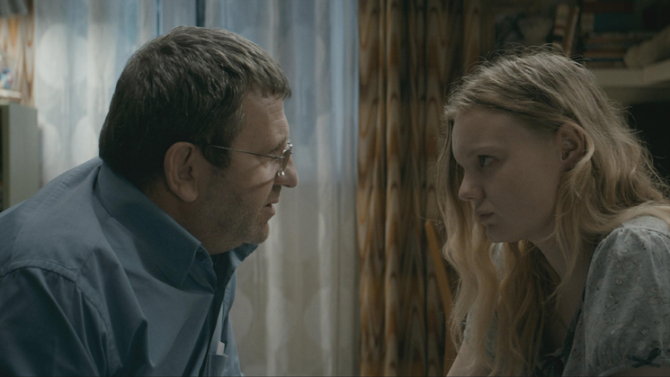
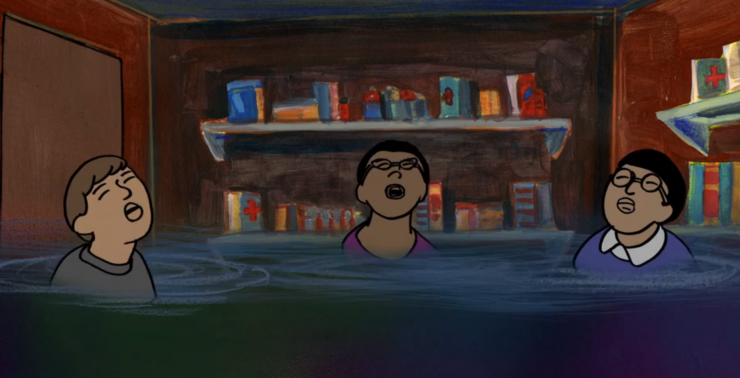
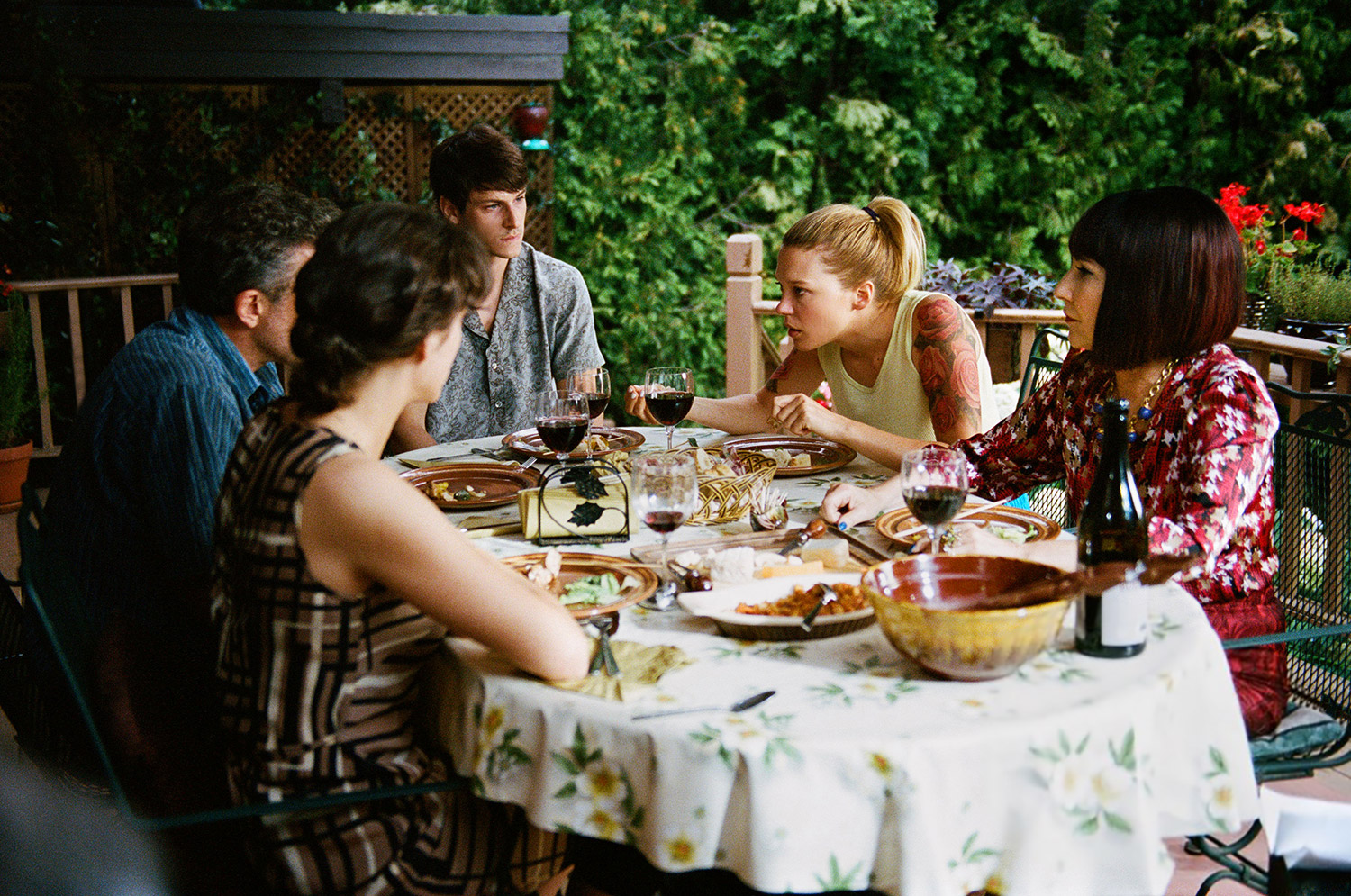
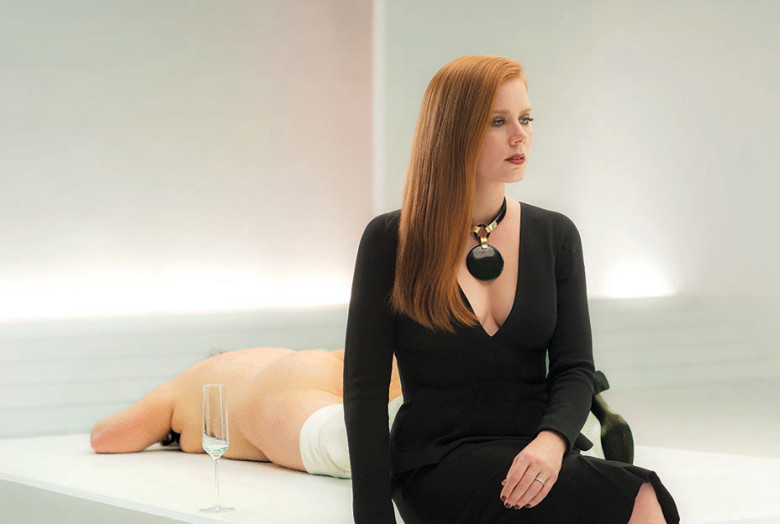
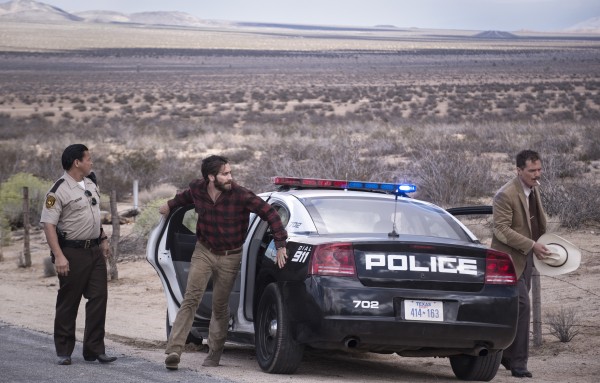
 father is working at keeping what’s left of the farm running. Clover, meanwhile, is trying to piece together what would make her young, whole-life-ahead-of-him, brother put a gun to his head. Neither is mourning in a conventional way, and they’re certainly not doing it together.
 When death is part of business, part of the lifestyle, part of every day, what toll does it take, and at what remove do they experience more personal brushes with mortality?
 Ewan McGregor makes his directorial debut with American Pastoral, an adaption of Philip Roth’s novel. As always, I haven’t read the book and Jay has. She reports the movie to be quite faithful to the book, even pared down to have a two hour run-time.
 and grow food, read meaty novels by campfire light, and train their bodies strenuously, sometimes dangerously. Each kid has a unique, made-up name so they’ll be the “one and only” in the world. It sounds heavenly or lonely, depending on your perspective. Not all the kids are happy. Not all the parents are happy either, although so far I’ve only mentioned Captain Dad. Mom, as it turns out, is off in a mental health facility, and has been away from the family for several months before they learn she’s committed suicide.
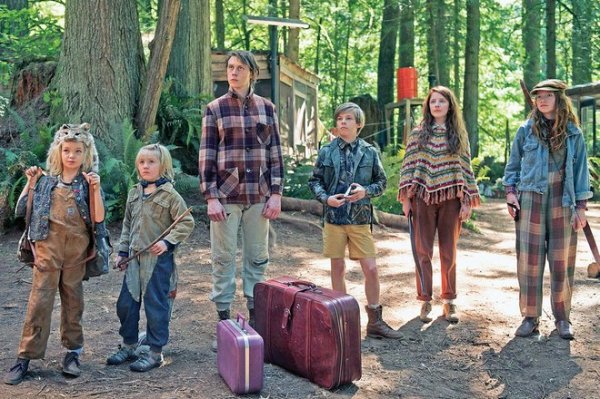 establishment values best addressed by dropping out of society? How much freedom is too much freedom for children? And what kind of risk is acceptable? And do children need to sometimes be shielded from difficult or painful concepts, or is complete honesty always the best policy?
 ASSHOLES WATCHING MOVIES