Tag Archives: father son movies

West of Sunshine

A deadbeat dad picks up his son to spend the day. Scratch that: the deadbeat dad forgets to pick up the son, gets an irate phone call from his ex, and son reluctantly goes with him with dad finally shows up.

Of course, this day which must now be spent with his young son is also the day on which Jim has promised to pay back a loan shark. Jim has problems with dogs and casinos and gambling all his family’s money away. He’s not a great guy. And now he’s got to watch 35654-west_of_sunshine_1____photo_credit_thom_neal-h_2017Alex while also evading violent criminals. Instead of getting his son to safety, he drags him into all kinds of terrible scenarios which they often escape by the skin of their teeth. The thing about crazy loan sharks is that they don’t really allow for excuses. They don’t make special allowances for a child. It’s pretty clear that Jim doesn’t really rearrange his life for his son either. So that’s awesome.

Things don’t go well, and Jim gets increasingly desperate. Of course, I believed that things still went better than he had any right for them to. I wanted to see this guy crushed. The script seems to believe Jim is undergoing some sort of growth but I was just so steaming mad at the risk he took with his kid, the constant harm he dangled him in front of, I just couldn’t do it. I couldn’t forgive the guy.

Little Alex seems to lean toward forgiveness, and that made me mad too. Mad on behalf of all the single mothers who work so hard to provide a loving and stable life for their kids only to have their deadbeat exes waltz in when it’s convenient for them and fuck shit up. Not all dads are crap, but far too many are. They act like they can also divorce their kids. And the kids will still want to adore their fathers, because he’s dad, and isn’t he awesome? Meanwhile mom gets all the flack. Because life isn’t fair. This movie doesn’t bother to really point any of this out, but it’s my honest reaction to it and I never warmed to the film, or to the dad who never redeemed himself in my eyes. I am slightly endeared by the fact that Jim is played by Damian Hill and Alex is played by his real-life stepson, Ty Perham, a really cute kid with apparently no prior acting experience. I hope they had more fun making the film than I did watching it.

Born To Dance

The ImagineNative Film Festival celebrates Canadian and international Indigenous filmmakers and artistic expressions. Tammy Davis is the film maker in question today. Of Maori descent, he identifies with Ngati Rangi and Atihaunui a Paparangi. The Maoris are the indigenous Polynesian people of New Zealand. They have a rich mythology, a knack for horticulture, a strong sense of warrior culture, and yes, a generous history with the performing arts.

Fitting then that Davis makes his feature-length directorial debut with Born 12620_00_wide_key_jpgTo Dance. The premise of Born To Dance is an overfamiliar coming of age tale. Tu is a young man born to dance. His disapproving father forbids it. Tu is perhaps a couple of years older than we’re used to in this role because instead of being threatened with military school, he’s threatened with the military, full stop. If Tu doesn’t get his act together during the summer post-high school graduation, the army awaits him. It occurs to me as I write this that Born To Dance might be Queen of Katwe in disguise, only replace the chess with hip hop, and the slums of Uganda for low-income housing in Auckland.

Where Born To Dance distinguishes itself, much like Queen of Katwe, is with its culture and setting. Tu is notably from the “wrong side of the tracks”, whether or not there are actual tracks in southern Auckland. Tu is played by first-time actor\championship dancer Tia-Taharoa Maipi, himself a young Maori man who danced his way out of a small town not unlike the character arc we see in the film. He helps give the film a flavour of authenticity. Compared to a well-off rival dance crew from the North Shore, Tu explains that “Dance is what they do; dance is who we are.”

In the expected dance-off at the end, where the two rival crews inevitably face 1233100_born-to-danceoff, director Davis gives the performers time and space to really show off their talent. This is a dance movie after all, and the moves are there to prove it. Choreographed by the legendary Parris Goebel, Born To Dance is the real deal. The movie’s smaller budget means there aren’t a lot of wires or camera tricks at play, just real dancers doing their thing. P-Money provides a stellar soundtrack with tracks that embody kiwi culture.
Like most of you, I’m familiar with New Zealand film because of Taika Waititi’s insane comedies, and the fringey-funny horrors the country is known for. Born to Dance presents another side of what New Zealand has to offer, and I’d like to see more like it, only next time without the insufferably clichéd bits. Just sayin.


This post first appeared at Cinema Axis.

Captain Fantastic

Captain Fantastic, the movie and the man, asks big questions, gives brutal answers, and leaves you with deep thoughts for analysis.

Captain Fantastic, played with vigour by Viggo Mortensen, is a man raising 6 kids in the woods like a pack of wild coyotes. They’re off the grid. They hunt web1_160715_edh_captfantastic_m-1024x682and grow food, read meaty novels by campfire light, and train their bodies strenuously, sometimes dangerously. Each kid has a unique, made-up name so they’ll be the “one and only” in the world. It sounds heavenly or lonely, depending on your perspective. Not all the kids are happy. Not all the parents are happy either, although so far I’ve only mentioned Captain Dad. Mom, as it turns out, is off in a mental health facility, and has been away from the family for several months before they learn she’s committed suicide.

Her death is the catalyst for the family returning to civilization to attend her funeral.

Viggo Mortensen is fantastic, although not always likeable. I’ve seen enough documentaries to know that raising a family off-grid, though idealistic, is not always so great for the kids. In Surf Wise, a doctor raises his kids on the beach, establishing a surf school. He turns out some great athletes, but the kids are otherwise totally unprepared for real life. Without education or even identification, it’s tough for them to rejoin the ‘real world.’ In The Wolfpack, a bunch of kids are kept pent up in a New York apartment. They develop rich inner lives and lots of art, but are totally unaware of what real life entails. In Captain Fantastic, the kids are book-smart but lacking in experience. They don’t know how to interact with the modern world, so unless all of them are prepared to continue subsistence living, and form an incestuous colony, it’s not really a sustainable lifestyle. And the kids are growing resentful.

Captain Fantastic raises a lot of interesting questions about parenting. Should a parent’s decisions always be respected? Are anti-capitalist, anti-movies_captainfantasticestablishment values best addressed by dropping out of society? How much freedom is too much freedom for children? And what kind of risk is acceptable? And do children need to sometimes be shielded from difficult or painful concepts, or is complete honesty always the best policy?

This film is quite funny in parts, and quite serious in others. And by serious I mean I cried a small ocean’s worth of salty tears. The kid actors are mercifully good, and Mortensen is generous with them in their shared scenes. Writer-director Matt Ross delivers some pretty satisfying emotional release, and a captivating twinning of joy and sorrow. Unfortunately the script dips a bit in its final acts, letting Captain Fantastic off a little easily, but it’s already a philosophical triumph by that point, a good movie that’s actually about something.


Jonathan

This German film by writer-director Piotr Lewandowski is beautifully shot with lush cinematography; you won’t believe it’s his first feature.

The theme is surprisingly mature as well. Jonathan (Jannis Niewöhner) is stuck at home working on the farm and caring for his dying father (Andre Hennicke). The relationship is jonathan-filmstrained. There are whiffs of resentment. Luckily Jonathan has his father’s beautiful young nurse (Julia Koschitz) to distract him, but as the film lurches shakily through its middle third, Jonathan realizes that time is running out for his father and if the family secrets are to be unlocked, it’s now or never.


This movie is slow, sometimes maddeningly so. And the men in question are fairly reticent, so there’s a lot of sun-dappled quiet reflection, and a few close-up shots of bugs for good measure. The visual richness can contrast nicely against the jagged and raw emotions. These are the best of times and worst of times for young Jonathan. He’s discovering himself while losing his father. His sexual energy burns up his grief. The camera lingers on his angular body. This is the sexiest movie about terminal cancer you’re ever likely to see.

Secrets are poisonous, and they leave a large wake of destruction. Cancer is perhaps not the most devastating thing to happen to Jonathan’s family. And despite him being the titular character, this story is not Jonathan’s alone. He and his father both have truths to tell – if only they can find the words, and the courage.


Tribeca: Dean

Demetri Martin is one of my all-time favourite comedians so when I saw his directorial debut, Dean, was premiering at Tribeca, of course I snatched up a couple of tickets, and it was only when that initial adrenaline rush had dissipated a bit that I started to wonder how the hell his comedy would possibly translate into film.

Demetri Martin is a comedic genius, but his stand-up is mostly one-liners, funny drawings, and some jokes set to an acoustic guitar, and sometimes his harmonica for good measure. Not remotely narrative. And this movie didn’t look much like a comedy anyway – the blurb mentioned death, grief, and existential angst.dean-original-1

Dean (Demetri Martin, of course) has recently lost his mother. He and his father (Kevin Kline) are grieving very differently, and growing slightly apart because of it. His dad is ready to sell the family home but Dean can’t imagine the loss of the place where his mother was last alive, and happy; it’s full of good memories for Dean, but sad memories for his dad. Naturally, instead of sticking around to help with the transition, Dean flees to L.A. ostensibly for business, but we know differently. And he finds lots of distractions in California but starts to learn that he’s not the only walking wounded.

Does Demetri Martin pull it off? Yes, he does. Surprisingly well, as both actor and director. Dean is an illustrator, so not only do Martin’s drawings fit in, they illuminate his inner thoughts. His trademark one-liners are there too but they never feel slotted in. They either feel organic or they’ve been left on the cutting room floor – if you know his stand-up at all, you can’t help but feel that Martin has wisely shown restraint here. And there are visual gags, very subtle, but they add a layer that knock down the seriousness just a tad (like you never doubt how genuinely bereft Kevin Kline is, but you keep a half-smile for his terrible dad jeans). For a movie primarily about loss, you’ll laugh out loud an awful lot.

The first and maybe only misstep I felt was when he arrives in L.A. and meets his love interest, played by Gillian Jacobs. Gillian Jacobs is not really a problem, except that I know her through the Judd Apatow-produced Netflix series, Love (in which she co-stars with Paul Rust, the dude who cowrote the new Pee-wee Herman movie). Sean and I watched the whole sea8244bc3f1c65436son even though we detested both leads. Not the actors, per se, but the characters are just awful human beings and it’s hard to forgive the actors for that. So I’m carrying around this chip on my shoulder for Gillian Jacobs and was not super happy to bump into her in this movie. But clever Demetri Martin won me over by writing a love interest for Dean who did not exist solely for his pursuit. She had back story. She had depth. She was a person. This sounds weird, I’ll grant you that, but so often in movies the love interest exists solely to be adored and consumed and nothing else. She has no job or apartment or opinions. Gillian Jacobs had scenes without Demetri Martin. She was independent of his lust. It was refreshing even if it did make me confront my hostility toward the bitch from Love.
Eventually Dean returns to New York, to his widowed (widowered?) father and the ghost of his mother. Demetri Martin lost his own father 20 years ago, so he knows grief, but he didn’t quite know how to approach the father-son relationship between two grown men. If he struggled with the relationship on paper, it doesn’t show on screen. The moments of  quiet reflection between them are some of the film’s most satisfying.

I enjoyed this film very much and it turns out I wasn’t the only one – it won Best Narrative Feature at Tribeca from a jury including Tangerine’s Mya Taylor and funny lady Jennifer Westfeldt, who commented: “We have had the great privilege of seeing ten accomplished and ambitious films over the last seven days here at Tribeca. But we all fell in love with this film. It manages the near impossible task of breathing new life into a well-worn genre, balancing humor and pathos with an incredibly deft touch, and offering a unique perspective on the way we process loss.” Even more excitingly, it was bought! CBS films picked it up, which means this little indie will soon be making its way to a theatre near you.


Over the Top

Strange things are happening lately.  Sylvester Stallone won a Golden Globe and is nominated for an Oscar.  I’ve made Jay return to George Lucas’ glory days and watch the original Star Wars trilogy for the first time, which is something she swore would never happen.  And since these sorts of things come in threes, I like my chances of convincing Jay to watch Over the Top, whiover the topch I just found out is on Netflix.  Especially because Jay is still on oxycontin recovering from her back surgery.
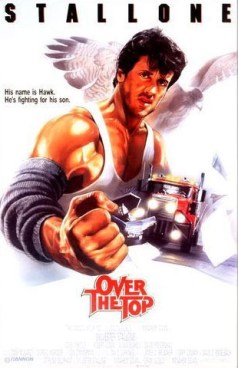
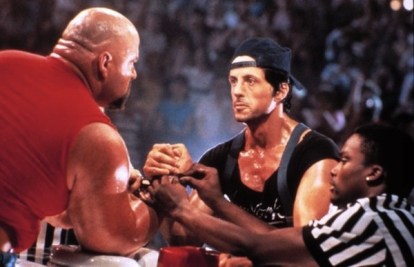
Over the Top is a hidden gem in the same way as a lump of coal.  It was a very 80s attempt to reboot Rocky: take Stallone, put him in another salt-of-the-earth role where his muscles do the talking, give him a wholesome never-quit attitude, and add in Robert Loggia as the villain for good measure.  The ingredients are all here but this movie is absolutely awful.  So awful I can’t help but love it.

First, Robert Loggia.  This is exactly how I feel when I see him in anything.

He was the best (RIP, Mr. Loggia) and he really chews the scenery here.  Which is fortunate because in Over the Top, Stallone shows absolutely no charisma, the arm-wrestling bad guy is the most boring villain you could think of, and the kid Stallone is fighting for is so annoying, spoiled and entitled that you think all the way through that Stallone would gladly take $500,000 to never have to see him again.

over-the-top-poster

Second, trying to get us to cheer for Stallone’s down-on-his-luck arm wrestler is so misguided it hurts.  Is there even such a thing as an up-on-his-luck arm wrestler?  Are any of these guys in good financial standing?  I don’t know how legitimate the World Armwrestling League is, but the champion only gets $20,000.  So that was probably like $10,000 in 1987 dollars.  If you’re driving a semi across the country like Stallone does in Over the Top, I guess you can save money by sleeping in the cab, but how much are you left with at the end of the day even if you are good/lucky enough to win?  Just one more reason you wonder why Stallone wouldn’t take the $500,000 [SPOILER ALERT] rather than selling his truck (HIS ONLY SOURCE OF INCOME) so he can pull a Pete Rose and bet on himself to win the contest [END SPOILERS].  See how much you are going to love this movie?

Third, the music is the worst thing imaginable.  Any song that was cheesy to make the cut for Rocky IV can probably be found on Over the Top’s soundtrack.  No Easy Way Out is literally too good a song to be in this movie.  I didn’t think that was even possible but it’s true.  The featured ballad is a Kenny Loggins wuss rock gem, and the soundtrack also features songs from Sammy Hagar, Eddie Money and Asia.  It is probably the perfect music to arm wrestle to, if you have the urge.  And after watching Stallone [SPOILER ALERT] rock his way to victory [END SPOILERS], I predict that you are going to have that urge.

I give Over the Top a score of one man against the world out of the world.  But since the one man is 2016 Golden Globe winner and 2016 Academy Award nominee Sylvester Stallone, that’s actually a very good score.


Danny Collins

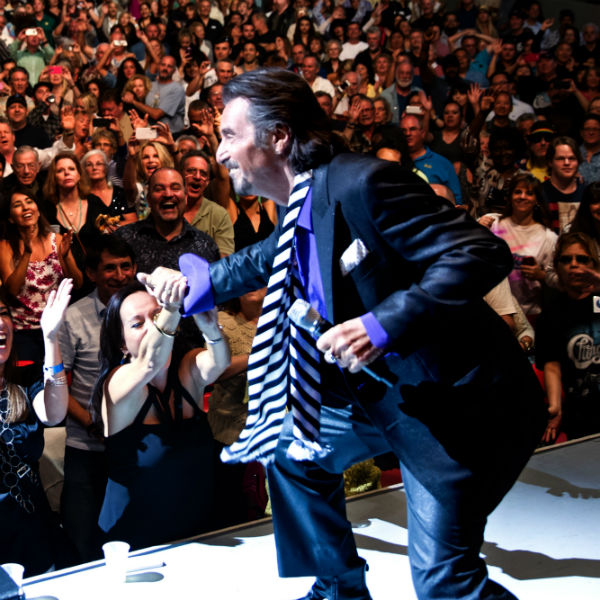
Danny Collins (Al Pacino) is a tired and aged pop singer, still swiveling his arthritic hips in the direction of the slutty octogenarians in the front row of his sold-out concerts. But in the quiet moments backstage it’s just him and his girdle, and it’s taking more and more coke to get him to Danny-Collinssing the saccharine lyrics of his greatest hits.

His best friend and manager (Christopher Plummer) is delighted to present him with a birthday gift – a letter to him from John Lennon that went undelivered for 40 years. The letter’s a great find but ultimately it makes Danny feel like shit. He knows he’s sold out. Now he also feels like he’s wasted his life, and his talent. So like any elderly rock star having a lightbulb moment, the takes off to New Jersey, where the grown son he never met lives (Bobby Canavale) and the hotel managers are oh-so-fine (Annette Bening).

The first trailer I saw for this movie made me want to give it a miss, but a second look caught my attention. The quips sounded smart. They had good patter. Turns out, it’s written and directed hero_DannyCollins_2015_1by Dan Fogelman, who wrote Crazy, Stupid Love, which wasn’t half bad. And neither is this.

The problem is, you know what’s going to happen. You know exactly what’s going to happen. You know not only the outcome, but the probable trajectory.  But thanks to a surprisingly stirring performance by Al Pacino, who’s backed up by a really solid supporting cast. This movie just worked for me. Al Pacino was ON. For years now he’s thrived on doing a bad SNL-type impersonation of himself, and it turned me al-pacino-and-bobby-cannavale-in-danny-collins_jpg_srz_616_412_75_22_0_50_1_20_0off, and away. But he IS Danny Collins. This movie isn’t as good as The Wrestler, or Birdman, but the casting reminded me of those movies, hooking up the perfect actor for a role that feels tailor-made for them. It was fun to watch him embrace the dirty old man. He lays it on thick and Annette Bening keeps scraping it off and flinging it back at him. But it’s earnest. It’s fun. Pacino and Bening charm each other, and us in the process. They are relaxed and easy. And so is the movie. It’s not fluff, exactly, but nor does it have the gravitas of The Wrestler. It’s just a really likeable film, and i think it may have just made Al Pacino a movie star again.


The Music Never Stopped

Henry & Helen hadn’t heard from their son Gabriel in 20 years until they get a phone call from the hospital – their son has a humongous brain tumour and even if the operation is successful, ???????????????????????????????????????????????????????????it’s already erased his short-term memory and a lot of cognitive function. There are two components to this story: the ongoing medical issue, which they try to resolve through the use of (and love of) music; the second, the family’s past issues, which is told through flashbacks.

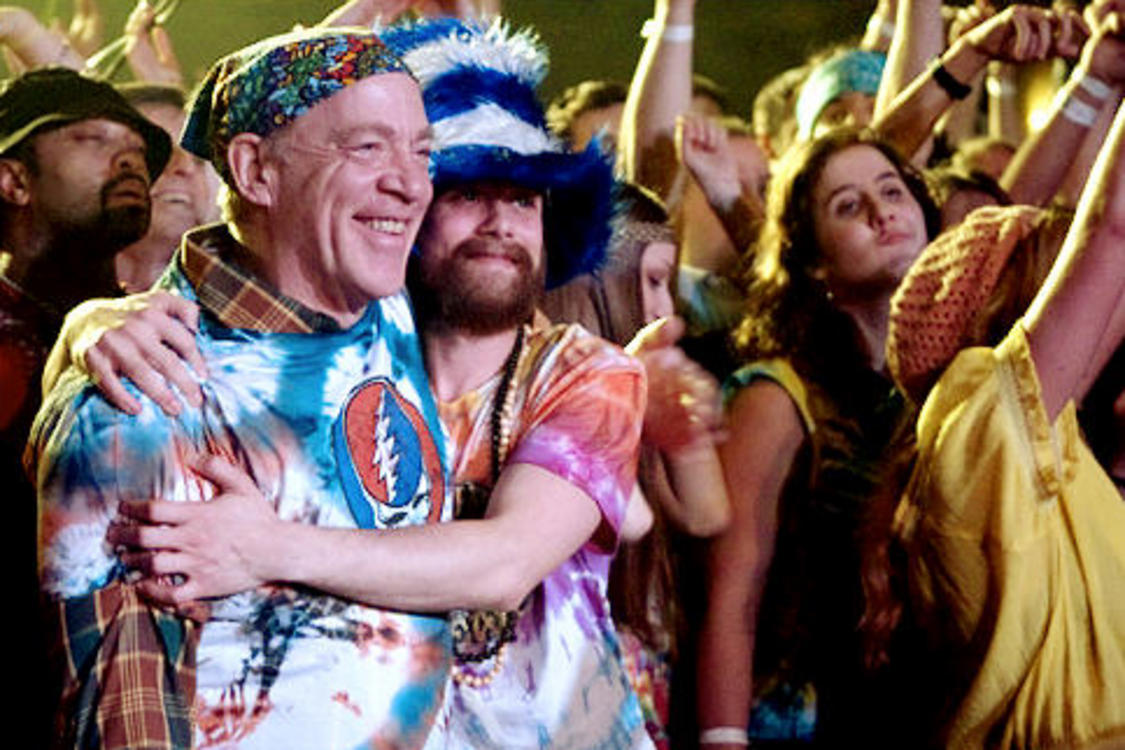
I picked this movie because of JK Simmons, and he’s the reason to watch it. The movie’s predictable and sentimental, but Simmons’ performance really rises above. He’s just a father trying to bridge the gap between himself and his son – the brain tumour is actually the least of it.

It’s actually based on a true story and had the potential to be more than it is, but the newbie director plays it safe, injecting very little in the way of artistry. And there are holes in the The%20Music%20Never%20Stoppednarrative: what have any of them been up to in the intervening 20 years? But I enjoyed this movie, and was moved by it, in the expected places but also along the edges. JK Simmons has been trying to tell us for ages now that he’s capable of so much more than Hollywood’s been handing him, and I’m glad he’s getting his due. Character actor my ass. I hope to see his name front and centre on the marquee for a long, long while.

Father-Son Movies

This week’s Thursday Movie Picks theme is father-son relationships. The challenge is to list 3 movies that highlight the theme. I didn’t have to think too hard because this theme seems to be explored exuberantly in so many intriguing ways, so here are 3 off the top of my head:

BEGINNERS-articleLargeBeginners – Matt has a strong and pervasive dislike of Ewan McGregor so I know he’s disapprove of this pick, but I can’t help it. After the death of his wife, an older man (Christopher Plummer) comes out as gay to his son. There is a real relationship here, a shakiness between dad and son that feels genuine. But the honesty seems to breed closeness and the two embark on a new relationship, late in life, one with understanding and humour. The story is told cleverly and shows a bravery we don’t often see on screen. It’s not necessarily about being gay, it’s about a father teaching his son about what is possible when you open your heart.

Catch Me If You Can – Christopher Walken is the shit. I just love the layered performance in this 002CMY_Leonardo_DiCaprio_013movie. Frank Abignale Sr. is obviously a huge influence on Frank Jr. Clearly this is where his charm comes from, but it’s also where he learns his seething resentment for the world. Even when his father makes for a rather pathetic picture, Frank Jr. idolizes him and chooses a life of crime not just to make his father proud, but restore his father to his former glory.

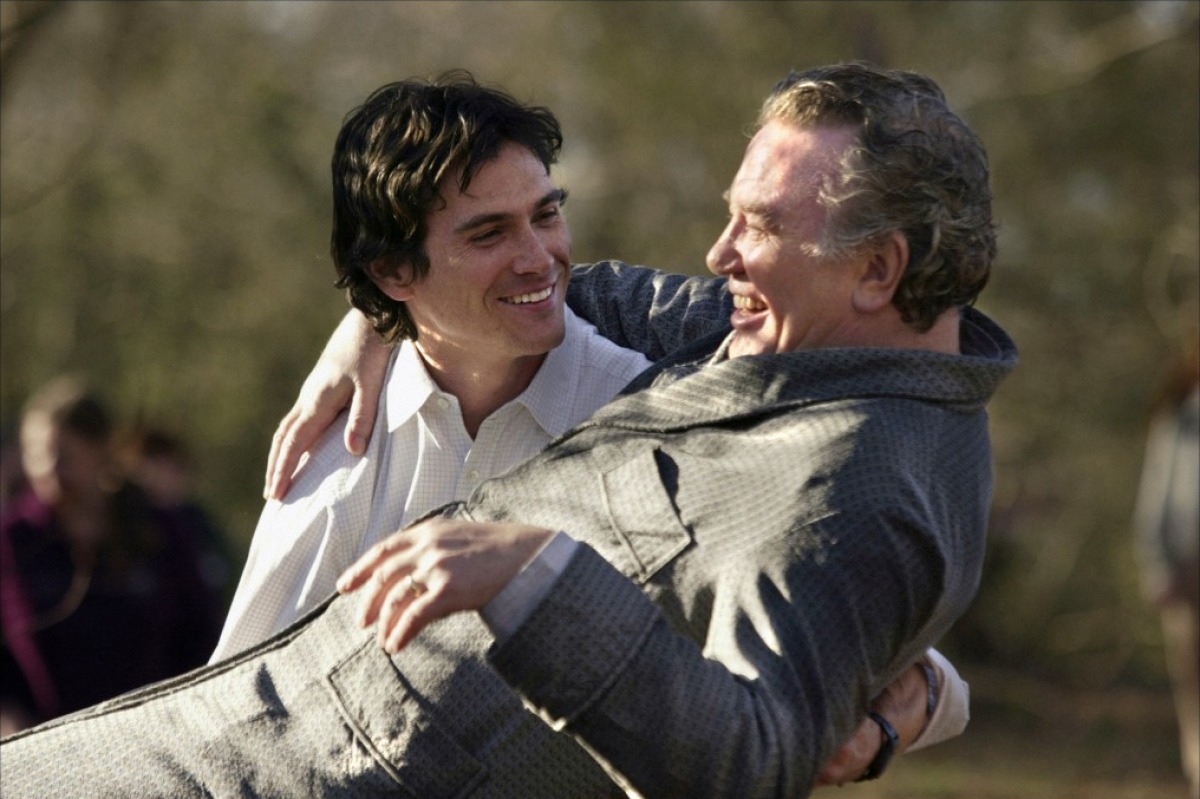
big-fish-2004-77-gBig Fish – This is one of my all-time favourite movies (sorry, Matt – how did Ewan McGregor end up here twice?). The relationship here is complex – a son is called to his estranged father’s deathbed. He wants to be able to say goodbye to him, but isn’t sure if he even knows him. His father has told grandiose tall-tales his entire life, and those stories have gotten in the way of their relationship. The son thinks they are lies that put distance between them, and the father feels they are essential truths meant to serve as legend. They are his legacy. As the stories are retold, the son (Billy Crudup) comes to understand that the exact facts are not the point. His father (Albert Finney) is a story-teller, each story is infused with heart and meaning, and it’s not what they tell so much as how they’re told, and to whom.

What are your favourites?

Rudderless

This movie has the production value of a Canadian television show, and you know that ain’t no compliment. It looks terrible. I stuck with it though, mainly on the strength of Luc’s recommendation, and I’m glad I did.

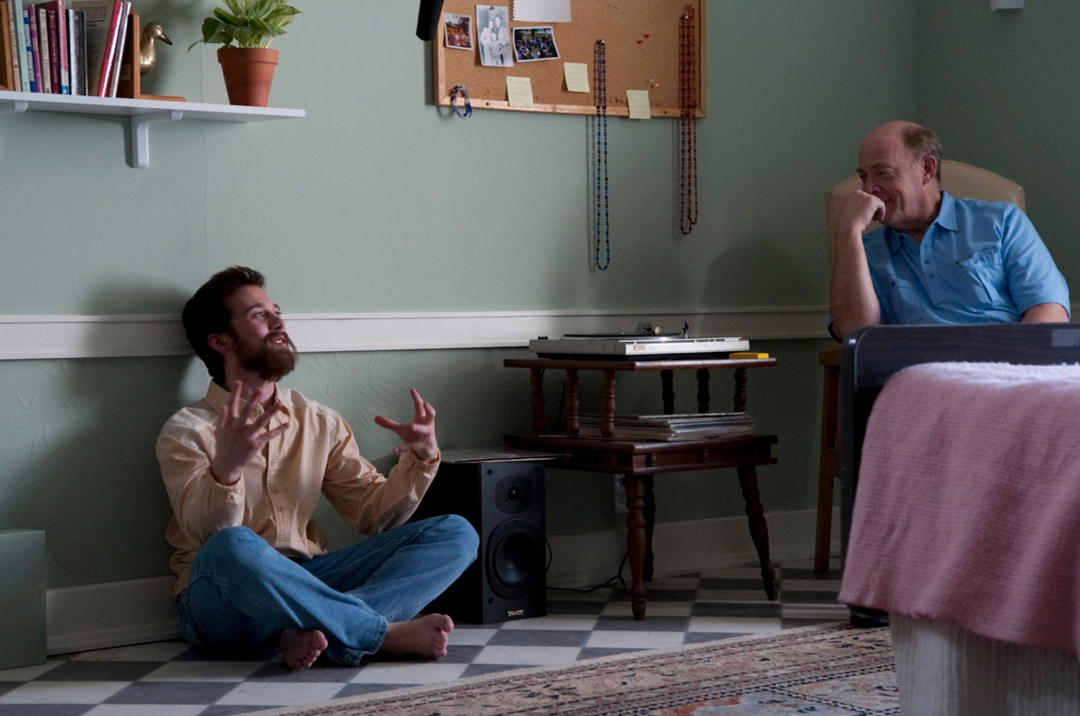
This is William H. Macy’s directorial debut and in it, we see a young college student working on songs, and doing some rough recording in his dorm room. Cut to: a father (Billy Crudup), stood up in a pub, catches news footage on TV of a school shooting. His son is dead. The grief is overwhelming.rudderless

Two years later, Sam\Crudup is hiding from his trouble, he’s lost his home and job and is fairly miserable, but when his ex-wife (Felicity Huffman) drops off a box of CDs, he has a new connection and new insight to the son who is lost to him, and it helps him work through his grief and loneliness and guilt. He starts playing the songs himself, and at an open mic night, he attracts the attention of Quentin (Anton Yelchin), who is needy for creative inspiration and collaboration. He hounds Sam until the two start working together on the music, and soon they have themselves a band, and a following.

The catch? Sam never tells Quentin that these songs belong to his dead son. So they forge a bond that looks and feels an awful lot like father-son but there’s a big, bad secret between them. Crudup does a really good job of showing both the yearning for a lost son and the desire for a new life. His heartache is there in silences and shadows. Yelchin, conversely, is a nervous energy, kinetic and wanting. I end up enjoying him in pretty much everything and I’m surprised he hasn’t really blown up yet. I don’t know if there’s another actor his age with anywhere near the range and depth and subtlety.

The real star of the movie is the music. If this is where the budget went, then it was worth it, and fuck the shitty look of the thing and the glaring anachronisms. The music is really that good. Credited to Simon Steadman, Charlton Steadman and Fink, the songs are ably performed and it makes you wish Macy lingered on the band’s success just a little longer. Crudup’s guitar does the (gentle?)  weeping for him, and it’s beautiful, though maybe not quite enough for the enormity of the grief.

The story bites off more than it can chew and we never get enough context to really appreciate all the layers that are happening here. The movie’s to concerned with the gotcha aspect and not concerned enough with our emotional payoff. Nevertheless, I enjoyed the two actors, I enjoyed that they seem to have done their own singing, I loved the music, and I liked that as the credits rolled I found myself wondering – how much can we really know someone through their art?