Tag Archives: female directors

Happiest Season

Someone literally accused it of being the hap-happiest season of all, but that’s not always the case, is it? Edward Pola and George Wyle wrote It’s The Most Wonderful Time of the Year specifically for Andy Williams to have something original to sing on the holiday episodes of his show. The song boasts hosting parties, spontaneous visits from friends, universal social gaiety, spending time with loved ones, sledding for children, and roasting marshmallows as prime causation of holiday happiness, but not only do these things not guarantee joy, rarely does a Christmas song mention the other side of Christmas reality. The dry turkey, the overspending, the cranky kids, the ubiquitous pine needles, the dangerous driving conditions, the kids table, the inevitable disappointment. While the happiest seasons are happy in the way described by Pola and Wyle, the worst seasons are distinctly terrible in their own ways. Happiest Season tells us about Abby’s.

Abby (Kristen Stewart) isn’t that into Christmas, but girlfriend Harper (Mackenzie Davis) is, so Abby makes the effort, pawning off her holiday pet-sitting duties to pal John (Daniel Levy), and spontaneously joining Harper on her trip home for the holidays. Abby’s never met Harper’s family, so this is a pretty big deal. Big enough that Abby plans to propose to Harper over Christmas dinner since the season means so much to her, making it the first of many happy holidays together. Except.

Except it turns out that Harper isn’t out to her family, and she’s been lying to Abby about it. Frantically confessed at the last possible moment, she implores Abby to keep her secret, and to lie about her own sexuality as well, because dad Ted (Victor Garber) is running for mayor in Homophobe, USA, and we wouldn’t want to hurt his campaign. Actually, it seems Harper’s sisters Sloane (Alison Brie) and Jane (Mary Holland) also govern their lives in order to best impress their parents. Ted and Tipper (Mary Steenburgen) make no bones about expecting perfection, playing favourites, and rewarding success with affection. When Harper arrives, mom Tipper literally says “You get more and more beautiful every time I see you. Did you bring concealer?” And Harper’s the favourite! It’s not a great situation to be walking into, but Abby reluctantly agrees with the fateful line “It’s 5 days – how bad can it be?”

You’ll have to tune in to Hulu on November 25, 2020 to find out just how bad it can be – and then be thrilled, surprised and titillated when it gets even worse.

Happiest Season is a comedy but as a rare LGBTQ holiday romance, it also tells a stark reality: that Christmas (and other obligatory family time) can be really hard on queer people whose families aren’t accepting. Kristen Stewart literally gets shoved back into a closet in this movie, which isn’t exactly an uncommon occurrence. Gay members of the family may be forced to suppress foundational facets of themselves, to deny lovers and celebrate separately from partners. And that’s the “lucky” ones who haven’t been outright rejected and ostracized. It isn’t a happy time for everyone, and it gets increasingly unhappy for Abby.

John is the unsung hero of Happiest Season, the friend Abby can call when things get emotionally turbulent, the friend who will always champion her happiness, the friend who will show up for her when things get tough. Daniel Levy, recently named one of People’s Sexiest Men Alive (and how!), is great in this, as he’s great in everything. But truly, this is an ensemble comedy and it succeeds on the backs of many fine performances. Mary Steenburgen plays Icy Snob to utter perfection, Mary Holland is lovably awkward and hopelessly clueless, Aubrey Plaza has a small but sweet part – even your favourite drag queens, Ben DeLaCreme and Jinkx Monsoon have a campy cameo. But most of all: Kristen Stewart. I do believe even Stewart’s harshest critics (and they are harsh) would have to admit she’s natural and lovely and relaxed in this role, but she’s also able to communicate with subtle signals that she’s going through more than she says. As a supportive girlfriend, she understands this is difficult for Harper, but as a woman with self-respect, she’s uncomfortable quashing her authentic self. While Harper and her competitive sisters are clashing in the kitchen, and at the mall, and right into the Christmas tree, Abby’s conflict is internal. And Harper’s dilemma might feel painfully familiar to some – whether to choose Abby, or her family – and the accompanying fear that in trying to have both she might lose both.

Director Clea DuVall wrote the script along with Mary Holland but they aren’t delivering some gay powder puff Hallmark movie. They haven’t shied away from the tough truths of queer Christmas, but they do manage to pull it all together into something that is as entertaining as it is festive.
I Am Woman

I am woman, hear me roar
In numbers too big to ignore
And I know too much to go back and pretend
Cause I’ve heard it all before
And I’ve been down there on the floor
No one’s ever gonna keep me down again

Oh yes, I am wise
But it’s wisdom born of pain
Yes, I’ve paid the price
But look how much I gained
If I have to, I can do anything
I am strong
I am invincible
I am woman

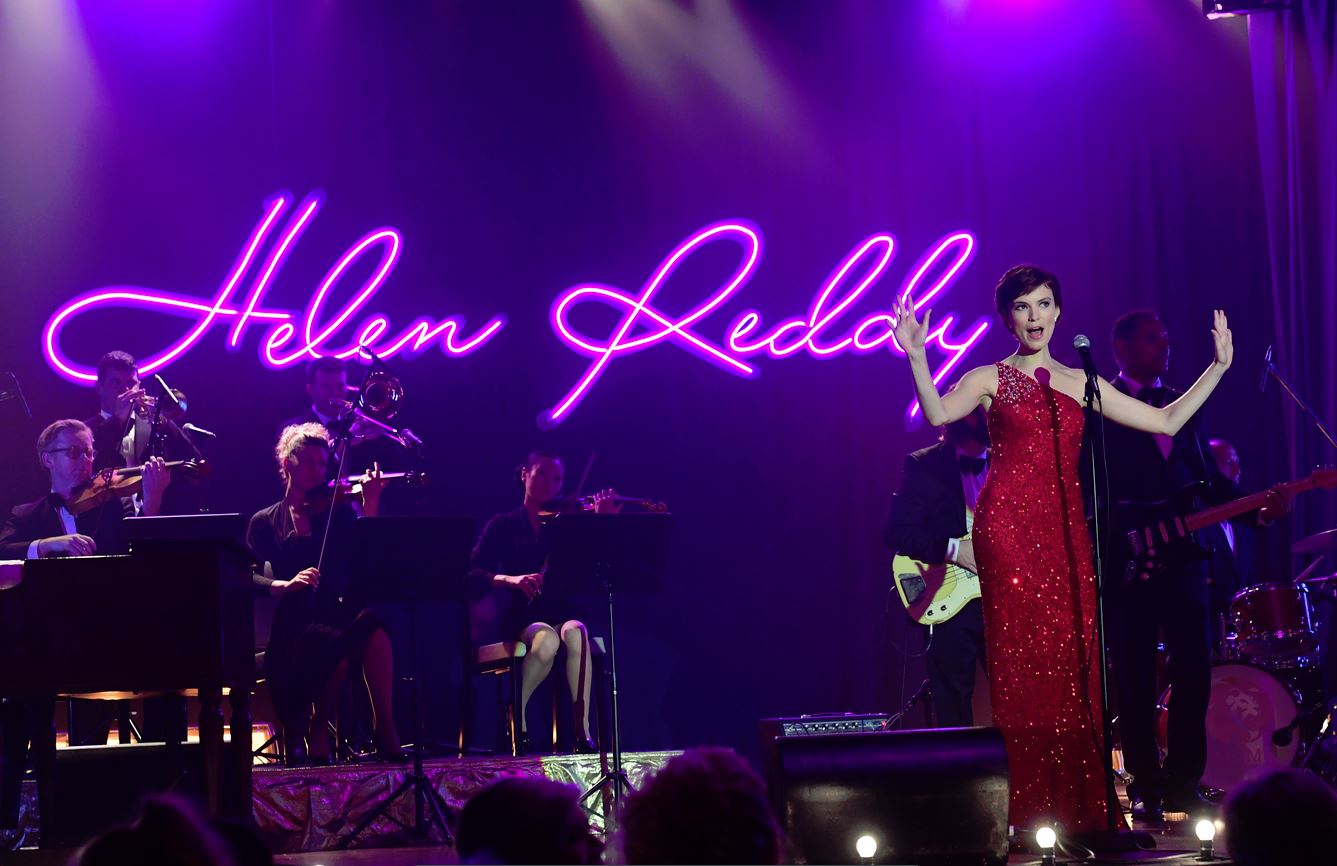
I grew up just knowing the lyrics to Helen Reddy’s I Am Woman, the way I just knew my own name. I grew up in a house of 4 sisters and 1 mother and there was nothing we liked better than putting on some Whitney Houston and singing/dancing along. But there were only two songs my mother ever sang unprompted, unconsciously, without a backing track: Amazing Grace, and I Am Woman (one of the many things she has in common with Barack Obama). At the time I didn’t think much of it. I knew the lyrics but it sure as heck wasn’t playing on MTV. And anyway, weren’t we already a female-led household of strong sisters doing it for ourselves? I didn’t think about why both my mother’s brothers went to university while she, even more intelligent and competent, was a high school drop out who got engaged to a trucker at 16, married at 18, and had me at 20, by which time she’d given up her “career” (hairdressing) to raise children at home – she had 4 of us by 26 and did it all alone, even when she was diagnosed with cancer. During divorce proceedings she gave up spousal support to keep our childhood home; as a single mother with no work experience or credit history of her own, she would have struggled to keep the 5 of us in a 2 bedroom apartment, and she failed to qualify for a loan to replace our rusted out van. Now I have to wonder: was my mother, a stay at home mother and perpetual caregiver, a secret feminist? All evidence points to yes, and not so secretly either. She taught us to “carry our own canoe” (that sounds like a particularly Canadian brand of feminism), to work hard enough to be able to support ourselves, to live with someone before committing to marriage. MY MOM WAS A FEMINIST? I grew up in the 90s, when feminist was a dirty word, but that didn’t mean the struggle for equality was dead, and clearly Helen Reddy’s 1971 song was still an anthem to women raising their own daughters now.

Helen Reddy wrote a feminist anthem in response to the sexism she encountered repeatedly in her life and career. It will not surprise you to know that the (male) record executives didn’t get the song and didn’t want to include it on her album. Or that her (male) husband stole all her money and put it up his nose.

Tilda Cobham-Hervey is absolute perfection as Helen Reddy; she’s the reason to watch. Director Unjoo Moon sticks pretty close to the usual biopic formula, but a magical spark from Cobham-Hervey is all this film needs to ignite not only a strong performance but a stunning musical performance as well.

Helen Reddy was the Katy Perry of her time. She was the first to make us roar. But while Perry’s pregnancy was announced to fanfare and unveiled rather dramatically in a music video, Reddy’s motherhood was considered a liability and proof she could never truly commit to her career. Fighting sexism has turned out to be a very long struggle and sometimes we need to look back in order to appreciate just how far we’ve come.

TIFF20: Underplayed

You may not be ready to hear this, but did you know men and women aren’t always treated equally? Turns out, that holds true in the music industry as well. In 2019, only 5 of the top 100 DJs list were female, and they made up only 3% of technical and production roles, which is pretty embarrassing, and I thought the days I was embarrassed by math were behind me.

Underplayed explores gender inequality through the lens of EDM. It’s basically the Hidden Figures of electronic music, only these women send concert-goers into ecstatic trances rather than rockets to the moon. Tomato, tomahto.

The EDM community likes to think of itself as rather inclusive, but it clearly falls prey to the same gender, ethnic, and sexual equality issues that virtually everything else does. Systemic bias: it’s the real deal. DJs might put out music under fake names and perform wearing face-covering helmets, but they still find a way to weed out the ladies. That’s pretty dedicated sexism, if you ask me.

Director Stacey Lee assembles the very best in female talent, including Alison Wonderland, Tygapaw, TOKiMONSTA, REZZ, NERVO, Louisahhh, and more (gosh they love their CAPS), but clearly this is an issue that transcends the music industry and affects literally every woman the world over. Lee makes a point of not just discussing the disparity, but exploring how it happens, and how it might change.

On The Rocks

Laura (Rashida Jones) has what looks like a perfect life: beautiful New York apartment, sweet little girls, a room of her own in which to write, a handsome and successful husband…and yet. And yet, something’s a little lacking. The early days of their marriage were of course full of passion and excitement but things have cooled off, perhaps in part due to kids, Laura’s waning self-confidence, and Dean’s (Marlon Wayans) busy work schedule and frequent travel. In fact, some recent events have Laura wondering whether Dean is perhaps seeing someone else. Luckily Laura’s got another thing going for her: a father with a sense of adventure and a propensity for romantic advice he has no real qualification to dispense.

Felix (Bill Murray) was a philanderer himself while married to Laura’s mom, so maybe he does have some valuable insight here. But he’s also just so happy to be spending time with his daughter, not to mention helping her out. They zip around the city in a cherry red convertible, playing spy, snacking on caviar, bonding and reminiscing, trying not to have too much fun over the extinction of Laura’s marriage.

Rashida Jones and Bill Murray are the father-daughter duo of our dreams, a pairing that will prove nearly impossible to beat. Jones is a natural sparkler, glowing and effervescent in everything she does, and yet she ably gives up some of her spotlight to the man playing her larger than life, playboy father. Felix is at the stage in his life where he’s indulging in his every whim, and it doesn’t exactly sound like he was ever a man who denied himself much. Murray, it seems, is getting better with age, so effortlessly charming, so completely endearing even while blemished with a hint of selfishness, tinged with a tendency toward flippancy.

Writer-director Sofia Coppola sets the stage with a gorgeous setting and a warm relationship, and then peppers On The Rocks with some profoundly entertaining navel-gazing. Felix is a fount of wisdom, not all of it equal in worth or sincerity, but every third or fourth quip, offered with Felix’s trademark insouciance, will disarm you with its bare naked authenticity. The premise seems to be about catching Dean’s infidelity red-handed, but it’s actually about an older man whose contemporaries are dying and he’s finding himself increasingly alone. After hurting her mother and leaving his family, Felix’s relationship with Laura is as much on the rocks as Dean’s is, and if he needs an excuse to spend quality time with her, he’s not afraid to use the end of her marriage to do it. Coppola’s script expertly stays away from saccharine expressions and simply allows us (and Laura) to see a love and deep affection sheepishly, self-consciously offered but genuinely felt.

TIFF20: Enemies of the State

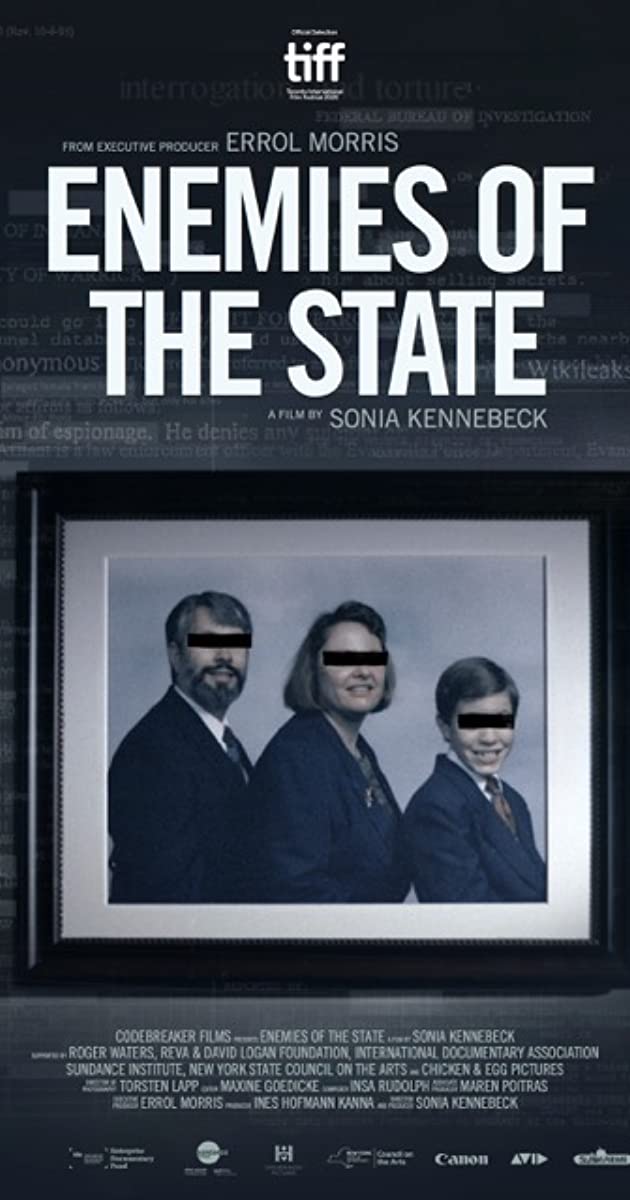
This was one of the best and most memorable films I saw at TIFF this year, an unexpected surprise that disarmed me and disoriented me, and since I want it to do the same for you, this is going to be a sparse and succinct review.

Sonia Kennebeck’s documentary is about Matt Dehart, who in 2009 was accused and charged by the FBI for possessing child pornography and soliciting minors for sex on the internet. Matt claims these accusations are fabricated to punish and distract from the truth. That Dehart, a former U.S. Air National Guard intelligence analyst, was involved with the Anonymous hacker group and WikiLeaks, and claimed to possess classified documents alleging serious misconduct by the CIA. Matt Dehart counters that his arrest was a ruse to discredit him and an easy way to seize and search his computers for the documents.

Matt’s parents, Paul and Leann, both former U.S. military themselves, come to believe their son, and the whole family becomes embroiled in this cat and mouse chase, from the border of Mexico to the border of Canada, where they sought refuge in Canada, claiming Matt had been tortured in prison upon his arrest.

This story is a delicious, irresistible true crime rabbit hole with so many twists and turns you’ll suffer whiplash from jerking your head in opposing directions so many times. Every new interview seems to contradict the last and the documentary thrives when it pits these two narratives against each other. Is Matt a pedophile or a martyr to espionage? Is this treason or whistleblowing or just a clever and convoluted defense strategy? You can try to be analytical about connecting Kennebeck’s dots, but there are red herrings all over the place, from anthrax to the mob, and that thing called ‘truth’ seems impossible to pin down.

We have a natural and insatiable appetite for conspiracy theories and Kennebeck knows what she has in this doc: an addicting, shocking, ambiguous array of breadcrumbs, and she’s very savvy about how she plants them. Enemies of the State is an excellent, absorbing reminder that we live in a time with access to so much information, but very few paths to the truth.

Misbehaviour

Sally Alexander (Keira Knightley) and Jo Robinson (Jessie Buckley) have little in common, and they even fail to bond over their mutual cause when they meet at a women’s meeting. But though they usually take a different path toward their ideals, they unite over the upcoming 1970 Miss World beauty competition which will be held right in their backyard – London.

It’s extremely upsetting that women have been protesting the sexism inherent in such a pageant for 50 years now, and yet they continue to happen, judging women on the height of their hair and the curves in their bikinis.

Okay, technically the women were still competing in one-piece bathing suits in 1970, but their measurements were recorded and announced during the broadcast, which leaves even less to the imagination than even the skimpiest swimsuit. Sally, Jo, and their cohorts plan to attend the live broadcast, and to disrupt it.

Meanwhile, feminism isn’t the only movement on the rise. Racism is too, and this year, for the first time, South Africa is impelled to send a woman of colour in addition to the ubiquitous white one, and Grenada sends a Black woman to compete as well. Sally et. al believe that a “family” show judging a woman based on appearance alone shouldn’t exist, but Miss Grenada, Jennifer Hosten (Gugu Mbatha-Raw) knows what her presence will say to little girls of colour all over the world. They both have a point, and unfortunately, this is a good illustration of how feminism has routinely left its sisters of colour behind. Misbehaviour isn’t about to shy away from that unpleasant fact, and it isn’t afraid to tackle difficult or unpopular topics.

Case in fact: Bob Hope. Legendary, beloved Bob Hope, fondly remembered for his numerous USO trips, on which Miss Universe would sometimes join him, the mere sight of her deemed a boost to morale. Bob Hope had hosted the Miss Universe pageant back in 1961 and was tapped to host again in 1970, to the disapproval of his wife, since in ’61 he’d started a 30 year long affair with the winner. Bob Hope (portrayed in the film by Greg Kinnear, his wife Dolores by Lesley Manville) was a more legendary womanizer than he was a comedian; he carried on more affairs than he could probably count. Knowing that “women’s libbers” were protesting the pageant, he thought it wise to work some extra misogyny into the pageant with remarks like “It is quite a cattle market here tonight and I’ve been back there checking calves.” Har har.

These different story lines help tell a fuller truth and give the events a proper context. The lesson here is a little complicated, but it’s told in an entertaining way by an extremely talented cast and I’m quite pleased if a little surprised to confirm that Misbehaviour strikes the right balance and delivers a movie you’ll actually be glad you saw.

Kajillionaire

Miranda July’s Kajillionaire is absurd, absurdly absurd, but the slightly off-kilter universe she concocts for her characters is eminently watchable and surprisingly endearing.

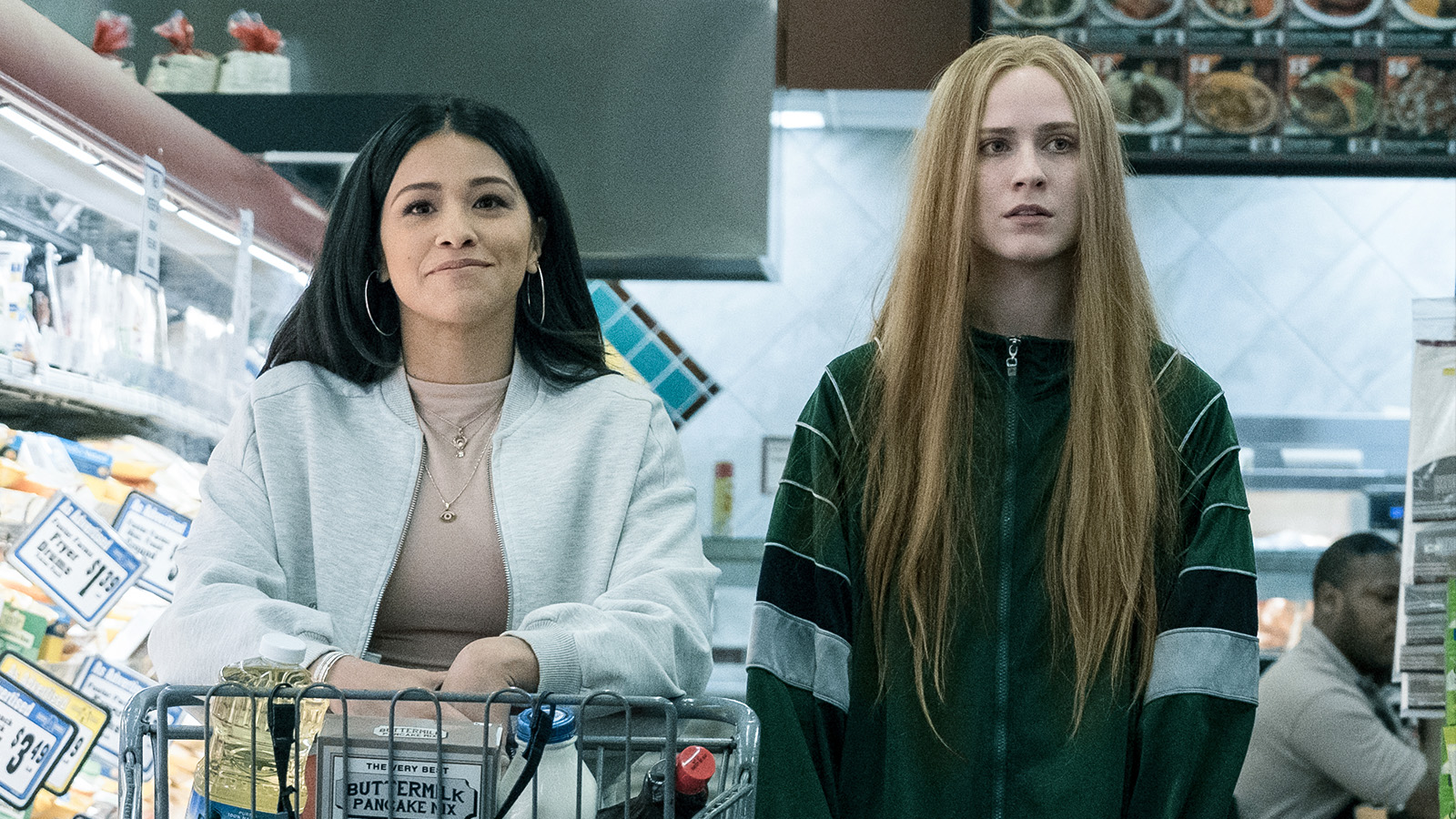
Old Dolio (Evan Rachel Wood) (yes that’s her name) (yes it’s horrible) was named after a homeless man who’d won the lottery. Her parents hoped this might get her into his will. It was the first scheme the family worked as a threesome, but not the last.

Living “off the grid” seems like it involves a reclusive shack, enough farm land for self-sufficiency, and possibly an underground bunker. Old Dolio and her family – mom Theresa (Debra Winger) and dad Robert (Richard Jenkins) – live in the city, but outside of society. Their home, if it can even be called such, is condemned office space that is flooded with bubbles on a daily basis. They are charged a nominal rent for these quarters but they can never seem to pay it. Many months are overdue. The family subsists on a series of scams, most of which feature Old Dolio on the front lines. Old Dolio, it goes without saying, is a strange young woman having had such an untraditional upbringing, and, it must be said, some pretty faulty parenting. Theresa and Robert aren’t exactly the loving, supporting types. Their family runs more like a business (an unsuccessful business) where expenses and profits are split 3 ways. Having never known anything else, Old Dolio doesn’t notice anything amiss in this arrangement before her parents meet and all but adopt another young woman, Melanie (Gina Rodriguez), who is quickly taken into the fold and absorbed into their schemes.

Miranda July has crafted some characters that are unique and interesting yet completely (hopefully) unrelatable. Still, she uses their unusual circumstances to speak toward larger themes of toxic relationships and learning to identify and fulfill one’s own needs, which are universal tenets of growing up. Old Dolio hasn’t had the opportunities, or even considered them, before now; only in comparing herself to Melanie does she begin to realize the iniquities she’s been suffering. We only know what we know.

With strong, engaging performances across the board, a knowing script, and a unique vision from writer-director Miranda July, Kajillionaire is must-see independent film and genuine oasis in the cinematic desert that is 2020.

The 40 Year Old Version

Radha was a promising playwright; she took home a 30 under 30 award, but she’s rounding the corner to 40 now, and instead of producing the play of her dreams, she’s teaching ambivalent students at a college and stalling out on all that promise. Welcome to Radha’s midlife crisis.

.

With that milestone birthday looming over her shoulder, Radha is desperate for a breakthrough and knows she has to shake things up to achieve it, but if it were that easy, she would have done it already. Exploring her contacts and the compromises it would take, she dabbles in hip hop, straddling the world of both hip hop and theatre to find her lost voice.

This movie succeeds on one woman alone: Radha Blank, who writes for and directs herself in a tour de force performance. Her writing is strong and incisive, she manages to be wild and free, fierce and determined, while also seeing her character’s evolution through some uncertain and confusing times. If Radha is a little mature for a coming of age, this is perhaps her second age, one in which her wisdom and lived experience have inspired her to create her own space and define the ways she fills it.

If Radha the character is finding her voice, Radha the multi-hyphenate talent responsible for the film has found hers, and found a bold, radical, brilliant way to display it.

Holler

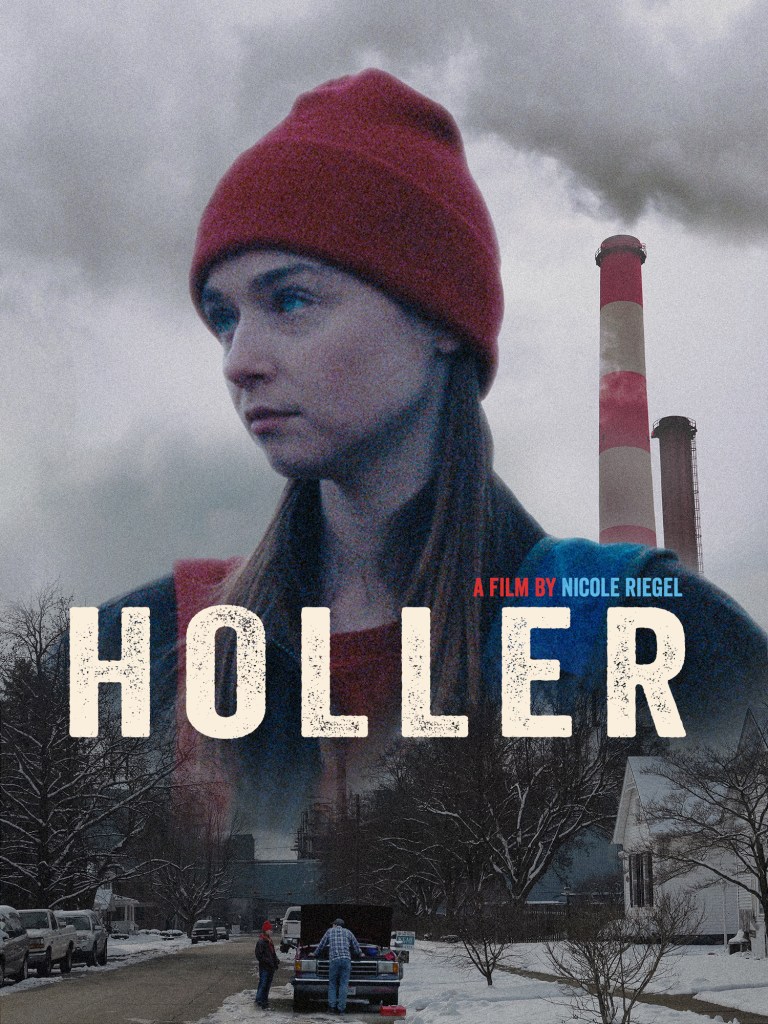
Ruth (Jessica Barden) is a smart young woman who, in different circumstances, might have had a bright future ahead of her. As it stands, the future is besides the point because the present is already so tenuous. She’s barely attending her last year of high school because she and older brother Blaze (Gus Halper) are working at a frozen food plant trying to keep their family home from sliding back into the hands of the bank while their junkie mother (a very unglam Pamela Adlon) gets sober in jail. The siblings strip scrap metal for spare change but when Ruth’s acceptance to college could mean real change for her, the pair get serious about making money and agree to a dangerous (not to mention illegal) scheme with shady dealer Hark (Austin Amelio).

It’s easy to mistake Ruth for a woman twice her age; she’s certainly got enough burdens to add some real curvature to the spine. She’s a minor but talks as though she’s already seen it all, and with only the vague sense of a surrogate mother in boss/neighbour Linda (Becky Ann Baker), who can only turn so many blind eyes, she doesn’t exactly have a lot of positive influences or role models in her life. She’s smart but not optimistic enough to be ambitious. Her small, forgotten town in southern Ohio has no opportunity yet acts as a vacuum to the people born there. This is no place for the young, but it’s hard going on impossible to leave. Meanwhile, everyone’s TV or radio has Trump making empty promises about the return of the manufacturing economy, which everyone but him seems to know is already dead.

Writer-director Nicole Riegel, a former U.S. Army soldier, expands her 2016 short of the same name, reflecting on the people and places she grew up with, returning to her own struggling Ohio hometown and shooting on gritty 16mm film to give the film an authentic feel. In fact, she casts non-professional actors in supporting roles to lend a blue collar credibility to the film, but the entire cast comports itself very well, and there isn’t a complain to be made about the acting.

The story, perhaps, is a little worn. There are decades worth of blue collar movies about working class struggles. There is little dignity in the tough choices to be made – there are no working class heroes here, only people who are tired, poor, and desperate. It’s a bleak outlook for a young woman, one that Barden wears well, and the movie reflects her competence, its strongest moments are in her hands. Though it may be a little well-tread, it is a strong first feature for Riegel, who surely has more stories to tell.

In Case of Emergency

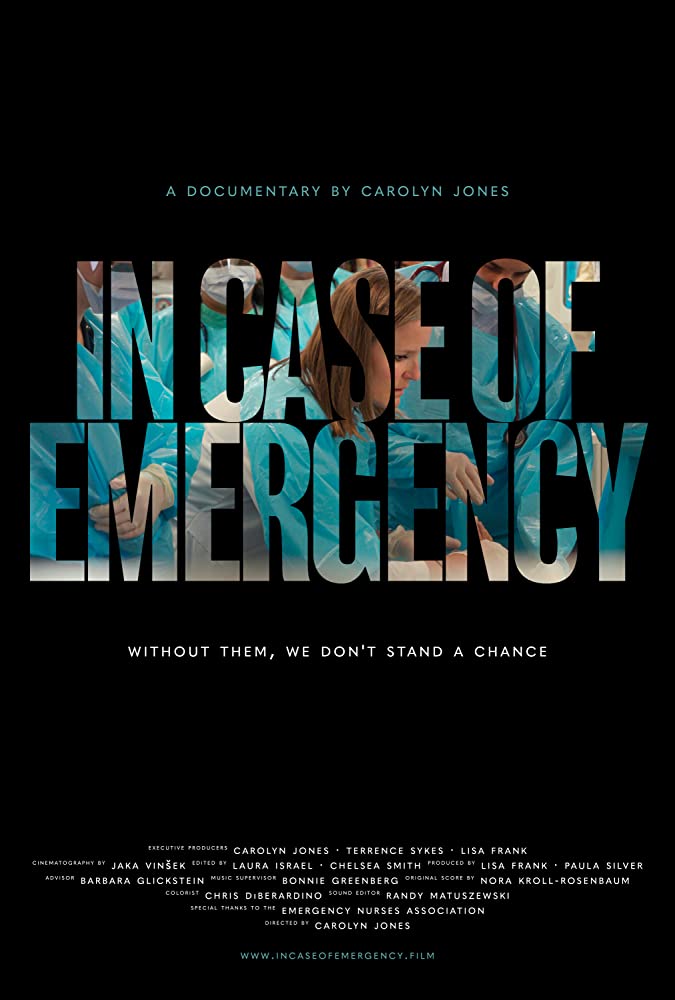
The first rule of ER nursing is: don’t call it an ER. They outgrew mere rooms long ago. They run emergency departments now, and they’re never not busy. They are the front line, meeting the needs of a community when they have nowhere else to turn. America lacks a socialized and humane approach to medicine; if an individual is lacking in insurance, or just can’t afford the co-pay, the emergency department is there as a catch-all, treating dental pain and heart attacks and overdoses and broken bones and colicky babies and psychiatric episodes. The emergency department isn’t necessarily the best place for any of those people, but sometimes they’re the only place.

Director Carolyn Jones also made American Nurse, a documentary I was compelled to check out during lockdown last spring when we were all feeling an even deeper appreciation of nurses and the hard work that they do. Nurses come in all kinds of shapes and sizes: some spend their days drawing blood, others sit and hold hands, some deliver meds and baths and kind words, and some guard the comatose bodies of post-surgical patients, coaxing them back to the land of the living. ED nurses are a different kind of beast. They live for trauma. They don’t wish it on you, but if and when you do go through it, they relish the opportunity to save your life and they will do everything in their power to do it.

Jones hears from nurses in seven different settings, but she gets some bonus content she never could have predicted. COVID-19 starts to overrun emergency departments around the world. Nurses are stretched to their maximum treating a virus that’s as bad as any they’ve ever seen. The toll is still being measured; the pandemic is still being fought.

For more documentaries about our response to COVID-19, join us here.