
Bob describes his new French manor home as a “humble pied a terre” while his wife Anne greets their VIP guests with barely contained self-satisfaction. Anne doesn’t know that Bob (Harvey Keitel) is concealing their looming bankruptcy – he has to sell a family heirloom just to keep things running but he still presents his wife new jewels ahead of the dinner party. Anne (Toni Colette) doesn’t bother to conceal that she isn’t pleased when Bob’s son Steven shows up at the last minute, upsetting the symmetry of her place settings. In a crunch, she invites her loyal maid Maria (Rossy de Palma) to dine with them, posing as a Spanish noblewoman, though Maria believes it’s a sin to tell a lie.
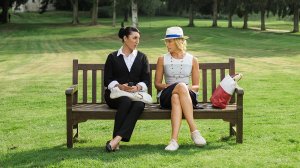 Oh boy. But you know what? Even with terrific advice like “be impossible” and “don’t talk like a maid,” it turns out the biggest risk is not that they’ll be found out, but that the lie will be too well accepted – a Brit described as a “dandy” falls for Maria, and pretty soon it’s Anne is in hot pursuit of her own maid, who’s being courted all over town.
The film itself looks sumptuous but feels rather light, rather flimsy. I don’t need much of an excuse to watch a Toni Collette movie, and even a not great Toni Collette movie is good enough for me. She’s such a joy to watch onscreen, even when she’s plotting and jealous and really kind of heinous. I could watch her nostrils flare with impatience all day long. Rossy De Palma proves a worthy adversary. Since Collette is the bad witch, De Palma is the good, the very good. All eyes on her. The truth is, this movie endeared itself to me the minute I saw Harvey Keitel bicycling in a jaunty scarf.
There’s more to this movie than it even knows itself. Anne and Bob are clearly struggling but don’t have the words for it, and maybe don’t care enough to try. So the thing with Maria is just a convenient escape, and the true reasons for Anne’s obsessive sabotage are many if not always obvious. The cast is talented enough to hint at things that perhaps the script was not strong enough to bring forth. For me this movie was still worth it – I could watch Toni Collette mow a lawn and be satisfied – and it was perhaps a bit of a stopgap between be knowing I should really be watching Hereditary but not yet having the courage to do it.
 doesn’t have a unique voice or anything that super sets it apart. It’s comfort food: the kind of mac and cheese you might bring to a potluck. Not gourmet. Not lobster mac. Not truffle mac. It probably doesn’t even have gouda. But it’s warm and creamy and just gooey enough to convince you you want it. Rom-coms are predicable almost by definition. We know they’re going to get together; the “fun” is in how they get together.
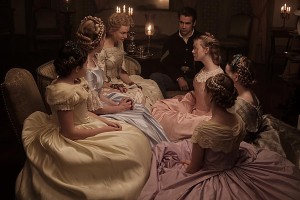 cute little ones. And every female throws herself at the soldier in their midst, despite the fact that he’s their sworn enemy and currently AWOL. And of course Johnny boy plays each and every one of them, and they faint into his greedy clutches like they don’t have a brain between them to see through his rather obvious machinations.
 in complex economic times that challenge her notions of propriety. She can’t pass a homeless person without contributing to their cup, which makes her privileged teenage daughter somehow feel deprived. There’s something really fascinating about Kate; she’s complex, and not afraid to have conflicting emotions. She has mastered the world in which she lives but while she isn’t comfortable holding the reins, she’s not a hypocrite, and she knows deep down she wouldn’t want it any other way. Meanwhile, the women next door, in less than ideal circumstances, provide a nice contrast to Kate’s guilty affluence.
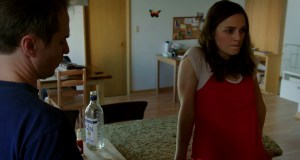 should be in mine as well. Laggies? An expression I was unfamiliar with, but could kind of understand with context. Urban Dictionary, bless its lack of soul, provides several helpful definitions, including 1. dragging along (which I believe Megan is doing) 2. someone who is stalkerish (which Megan borderline is) 3. a combination of both large + saggy, referring to boobs, as in “she’s got a nice rack, but she’s laggy” (which Megan most assuredly is NOT) 4. “the laggies” is a disease (well, a pretend one) caused by chronic masturbation (I’ll let you watch the movie to find out which characters may suffer from it).
 definitely die from blood loss. And again they choose wrong and head inland, where poor Andy has the unenviable task of keeping his family alive when every single other thing wants them dead.
 Youtube and make a scene wherever he landed. But one of his absolute greatest accomplishments is a musical that he wrote and produced himself. Biographical, and inspired by The Wizard of Oz, Straight Outta Oz is an all-original production that covers the yellow-brick road he followed from being gay in small-town Texas and the struggles and hurdles that led to fame and acceptance and being fabulously gay anywhere he goes, including but not limited to small-town Texas.
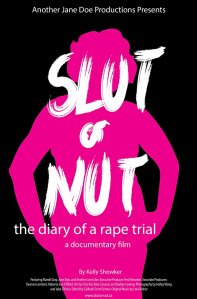 “unfounded” which seems to be a fancy word for the police not believing her, which is hard not to take personally when ‘unfounded’ is used exponentially more often in sex assault cases than for any other crime. If you’re a woman of colour, disabled, or a sex worker, your word is all but meaningless. But if you’re one of the small sliver of people not dissuaded yet, you may find, as Gray did, that your body is now a crime scene. A rape kit is a must for conviction, yet there aren’t enough rape kit nurses to go around. You’ll have to offer yourself, body and soul, as evidence, because for some reason it’s your responsibility to help catch the rapist. But the fun doesn’t stop there: next you’ll be revictimized in court in a discouraging, dehumanizing procedure that never grants any real justice because it’s the victim who seems to be on trial.
 based on conspicuous consumption. She held jobs that real life women were still dreaming about. She wasn’t saddled with kids. She drove her own car and owned her own home, independently, without the help of Ken, who was little more than another accessory. But no matter how many astronaut Barbies existed, she was still tall, blonde, blue-eyed, thin, with impossible, top-heavy measurements. Sleepover Barbie came with a scale permanently stuck at 110lbs and a diet book that simply said “Don’t eat.” Needless to say, real-life feminists could never quite embrace her, even as their own daughters flocked to toy stores to buy her up.
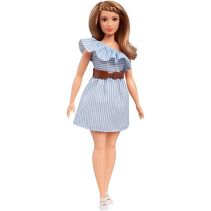 including tall, petite, and curvy. Curvy Barbie has a thicker waist and no thigh gap. It seems like a no-brainer now, but for the people working at Mattel, it was ulcer-inducing times. Would feminists finally be appeased? Would they be derided for waiting too long? Would children embrace a “fat” Barbie, one that didn’t fit into the outfits they might already own? They were anxious to steer the narrative but were wise enough to know that social media would own them – and that a Time cover story would largely dictate her early adoption or lack thereof.
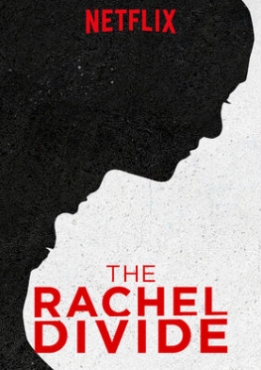 documentary. It was hard not to have a knee-jerk reaction to this thing that felt wrong, felt maybe even racist, though we couldn’t quite articulate why, other than the fact that it necessarily deals in stereotypes. But on paper, it’s harder not to see her point. And in practice, it’s impossible not to feel compassion for her children who are being punished for the sins of their mother.
 ASSHOLES WATCHING MOVIES