Tag Archives: female directors

TIFF: Soldiers. A Story from Ferentari

Ferentari is an impoverished ghetto of Bucharest. Adi, an anthropology student, moves there to work on his thesis on manele pop music. He soaks up the local culture at a seedy bar where he meets a guide, Alberto. Alberto is a colourful character, to put it politely, a gregarious man with a gambling addiction and 14 years of prison under his belt. Alberto knows how to work Adi, scheming for drinks and smokes on top of cash payment. He’s got the whole neighbourhood figured out.
The relationship between the two blossoms curiously; Soldiers is an exploration of the soldiers_story_from_ferentari_02tough and the tender, the blurring of the line between the two. Adi (Adrian Schiop) is a fish out of water, and Alberto (Vasile Pavel), rough as heck around the edges, provides interesting if skewed insight. Soon their companionable partnership turns into something sexual, quasi-romantic. It’s a quite modern gay love story from behind the poverty line and director Ivana Mladenovic’s lens is intimate and gritty.

Soldiers is Mladenovic’s feature length debut but her work is already assured and distinguished. Based on the fictionalized biography of screenwriter (and actor) Adrian Schiop, the story follows the two lovers as they move from friendship to lust to love, but it’s when things start to turn sour that the movie really has something to say. The cultural, ethnic, and economic power dynamics become unmistakable as we glimpse a side of Romania we don’t often consider.


The Zookeeper’s Wife

On Saturday we brought our sweet little nephews to the Capital Fair, where we watched a stunt dog show, rode rides, played games on the Midway, and visited a petting zoo where the kids and I hand-fed llamas. On Monday I watched a llama get shot, point blank.

Do not confuse The Zookeeper’s Wife with We Bought A Zoo. This is no light-hearted tale. It’s about real-life couple Antonina and Jan Zabinski, who used their posts at the Warsaw Zoo to save hundreds of Jews during the German invasion. Of course I’ve read both The a6oYy417yHHP01DGIDZUeEzH7JFZookeeper’s Wife, and We Bought A Zoo, and more recently I was reading another book about a woman who led an underground railroad of sorts to smuggle Jewish children out of the ghetto, wherein the zookeeper’s wife was specifically mentioned. It was an especially brutal place to be during the war. Terrible, unspeakable things happened every day, and it’s kind of a miracle to see\hear these stories about ordinary people who couldn’t live with what was happening, so they didn’t [it’s sort of awful that these words sound very applicable even today].
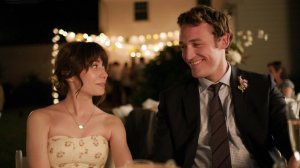
Glimmers of light do not eliminate all the darkness. The Zookeeper’s Wife is not an easy watch. The film makes the stakes clear, yes for the zookeepers taking enormous risks themselves (they would surely die if discovered), but especially for the people they are helping, who would otherwise be dead – or worse.

Jessica Chastain as the zookeeper’s wife is of course fantastic. There’s no CGI used int he film; those are real lion cubs she’s cuddling, with not a shred of hesitancy. Fitting, I suppose, when she’s sitting in the middle of a war where much scarier things are happening on the streets. WW2-era films always inspire a bout of siderodromophobia in me (the fear of trains).

This movie gets some things right, and some things wrong. In the end, I think it’s just not terrible enough, which I realize is a weird thing to say. What I mean is: it doesn’t have the power to haunt you the way Schindler’s List did (does). It feels a little cold, without the emotional gravitas you’d expect. I expected to cry. What does it mean that I didn’t? Perhaps what this movie needed was a meaningful connection to just one victim. Heroics are all well and good, but they’re only important because they’re necessary. Heroes are only half the equation: both must be compelling.

It Had To Be You

It Had To Be You is an interesting gender-role reversal. For once it’s the boyfriend who’s the serious one, ready to make a commitment and put a ring on it, and it’s the girlfriend who is reluctant to do the whole marriage thing. Unfortunately, Sonia (Cristin Milioti) and Chris (Dan Soder) haven’t really talked about their differences, so when he blindsides her with a romantic proposal, he’s pretty hurt when she balks and can’t accept.

She doesn’t exactly say no, but the ‘time to think’ required stretches on into infinity and MV5BNzg0NzE3ODUzOF5BMl5BanBnXkFtZTgwMjY5OTgyMDI@._V1_SY1000_CR0,0,1776,1000_AL_pretty soon Chris is fed up with waiting. In the wake of their inevitable breakup, Sonia is inspired by a fellow subway rider’s thong (no I am not making that up, thankyouverymuch) to fly to Italy to find herself, and by herself, I mean some Italian guy’s dick.

I won’t pretend this is a super great movie, but I gave it a try because I really like both Milioti and Soder (any other campers out there?) as comedians, and it turns out, worth the risk. The script is just clever enough to revive a genre that usually stinks like a four day old walleyed fish, and the two leads are un-actory and quirky enough to be likeable, relatable, and not quite predictable.

So there you have it: It Had To Be You is like a nice, refreshing glass of lemonade on a hot summer’s day. Sangria would have been better, but lemonade will do. 😉

Detroit

Detroit, 1967: a veritable race riot is boiling over the streets of the inner city. Buildings are on fire, stores are looted. Cops are on edge and are arresting any black person they see. The force is 93% white; 45% of those working in black neighbourhoods were considered to be “extremely anti-Negro” and an additional 34% were “prejudiced.” Charges of police brutality are abundant. Precincts overflow with black bodies.

On the night of July 25, police converge on the Algiers motel, allegedly because a sniper might be in or around the building. The motel’s 12 occupants are rounded up, interrogated, badly beaten, and humiliated by Detroit PD, Michigan State police, and the National Guard. At the end of the night, three black teenagers are left dead, killed by police.

Why? How?

Director Kathryn Bigelow presents a harrowing, claustrophobic rendition of these events, so tense and brutal that people walked out of the screening we attended. Other than Detroit being extremely difficult to watch, there are some problems with the film: 636345219515288776-detroit-3-rgb-2-Bigelow’s treatment of the subject is at a pretty cold remove, for example. And I for one felt it was just too long. The film could have ended when the last person leaves the motel, but instead it follows the white police officers who were charged with felonious assault, conspiracy, murder, and conspiracy to commit civil rights abuse. The courtroom scenes are a long, drawn-out denouement that don’t quite jibe with the first two thirds of the film. That said, I still feel like Detroit is an extremely effective film.
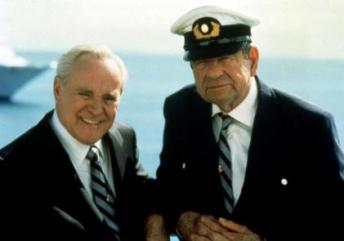
First, because it’s so timely. Watching those cops get off scot-free despite confessions, and then be congratulated for beating murder charges that were well-deserved, is infuriating, and familiar. This is not “history,” not when there are unarmed black children being gunned down by the people paid to protect them to this very day. It’s an uncomfortable reminder that in the past 50 years, we’ve done nothing to address the problem. Second, and maybe more importantly, is the way the movie made me feel. I’ve already said it was maybe a little void of emotion and that’s true; what I mean is how it made me evaluate my own filters. As sympathetic to the cause as I am, I’m still a white lady, and I experienced the film and the events depicted within it as a white person with all the privilege inherent in those words. The motel scenes are grueling and I had visceral reactions to them. Occasionally I caught myself frustrated with how the characters were responding to the cops, and I’d have to check myself. This is the fundamental takeaway of the film: my experience with police officers is essentially just very, very different. I wasn’t born with a historical fear of cops. My parents and grandparents didn’t raise me to be afraid of them. The colour of my skin protects me from the worst. My entitlement trusts in my human rights. My privilege demands that people in positions of authority will respect my unalienable civil liberties. The last interaction with a police officer I had was the guy directing pedestrians leaving a Cirque du Soleil show. The last time we were pulled over for speeding, there wasn’t so much as an apology uttered for being caught red-handed. These things don’t feel like privilege because they’re things we believe we’re owed, but it is privilege because not everyone gets to feel the same way.

Maybe it’s not perfect, but Detroit asks some difficult questions, which makes it an important film. It’s excruciating because it needs to be, and you need to watch it.

Out To Sea

Herb and Charlie are best friends and brothers-in-law. Herb is the responsible one, Charlie the scamp. So of course it’s Charlie’s idea to scam a free cruise by pretending to be a dance instructor, and to trick his recently widowed bud Herb into doing the same (though at least Herb’s got some legit moves).

Of course, Charlie’s hoping to do more than just dance on this cruise; he’s hoping to score himself a rich wife. Herb (Jack Lemmon), still in love with his deceased wife, is not ready lemmon-and-matthau.jpgfor the swinging bachelor existence Charlie has planned for them on board, but that’s only half his trouble. A snarky entertainment director is on to them and their little ruse could cost them thousands of dollars that neither can afford (hello, gambling my old friend!) if found out and no amount of Rue McClanahan flirtation can save them.
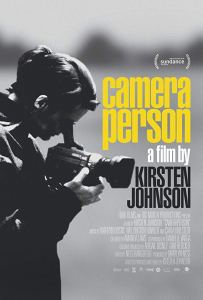
Matthau and Lemmon are of course good for some madcap hilarity. I’m struck by how physical Matthau’s comedy continues to be into his old age. This movie is pretty stupid plot-wise, but the chemistry between old pals Matthau and Lemmon is tonnes of fun and magical as ever. This is the 9th of their 10 collaborations and you never get tired of seeing them together. Does it make up for a weak script? Not really. But if you’re reaching all the way back to 1997, you’re doing it because these are beloved figures who crack you up doing their soft-shoe shtick, not because you’re expecting to uncover a hidden gem that’s somehow lain dormant for two decades. Jack and Walt were the OGs as far as Bromance is concerned. Matt and Ben have a long way to go before we’re willing to let them flirt so shamelessly with our grandmas.

Cameraperson

“For the past 25 years I’ve worked as a documentary cinematographer. I originally shot the following footage for other films, but here I ask you to see it as my memoir. These are the images that have marked me and leave me wondering still.”   – Kirsten Johnson

MV5BMDRhMjUwYjUtYzU3OC00NTQ4LTk4MTktOGI0ODU4NmYzZWU0XkEyXkFqcGdeQXVyNDk4NTEzMTc@._V1_SY1000_SX676_AL_Capturing a thunderstorm, the camera shakes as the cameraperson sneezes.

A baby is born in Nigeria and seems to stare, and smile, directly into the camera.

A lawyer in Texas prepares nightmarish evidence for trial.

In Uganda, dancers and musicians ham it up for the camera.

That opening quote says it all. This is a series of very short clips, strung together they make up a scapbook or photo album, a collection of the places she’s been and things she’s seen and work she’s done. Some are very personal (her own twins appear) and some are political and some are funny and some are just beautiful, a magical moment caught on film. She catches more than most.

The way they’re woven together, it’s almost like we’re seeing a highlight reel from her own memory. There are patterns and there are insights. Micro-stories are told in just a few frames. And sometimes we get to know a little about what it’s like to live behind the camera, to observe something without intervening, the struggle between objectivity and responsibility and compassion.

If you’re narrative-needy, Cameraperson is not for you. It’s fresh and inventive and it tells a story in a different kind of way, but it’s worth it. Which is not to say in requires a lot of effort because for the most part, it’s a laid back, easy ride that may feel more familiar to a generation who will stream a series of unrelated clips for hours on Youtube. Except this one will feed your soul.


To The Bone

The first image from the film is a trigger warning and believe me, take heed. To The Bone is a serious, unflinching look at eating disorders that will absolutely be upsetting to each and every one of us, but particularly to those suffering from or recovering from eating disorders themselves.

Lily Collins, herself a survivor of eating disorders, plays Ellen, a young woman still very much in the throes of anorexia. The film shows her getting treatment in a centre run by Keanu Reeves, which should tell you all you need to know about how inauthentically the healing is portrayed. In reality, treatment is heavily regimented, usually in a medical setting. Eating disorders are the most deadly of mental to-the-bone-sundance-e1495026297494illnesses, no one’s going to let an emaciated Lily Collins push a fish stick around her plate for dinner. And they’re also very difficult to treat because unlike drinking, you can’t simply give up food. You have to learn to eat in moderation. Eating disorders are often (but not always) about control. Often there is some type of childhood abuse that accounts for someone wanting very much to exert control over their bodies now.

This both is and isn’t the case with To The Bone, but the family dynamics are a strong point of the film. Ellen’s family situation is sad and disjointed. Family therapy does not go well. Her father is absent, her mother can’t deal anymore, so support is provided by a step-mother who maybe doesn’t have the closest of relationships with her husband’s tiring and trying daughter. Some of you may find this movie enlightening. Certainly I believe that Ellen and her disorder have been portrayed empathetically. But it’s a tough watch that could definitely be a hardship for some, and may glamourize a terrible disease for others. This is a film to be watched only with care, and preferably in the company of others.

Based on writer-director Marti Noxon’s own experiences with anorexia as a teen, the film forced Collins, in recovery for eating disorders, to lose 20lbs. She did so with the “help” of a nutritionist, but there’s nothing healthy about a young woman already on the brink of being too thin being asked to lose up to a fifth of her body weight. I hate that movies do that and I can’t imagine that graphic shots of protruding bones and skeletal characters is putting anything but negativity into the world. And it doesn’t help that none of the other characters are put into any kind of context. They help show that eating disorders are not just the stuff or rich white girls, but by keeping those characters one-dimensional, we do them a disservice. The thing is, even with good intentions, sharing stuff like this can be dangerous. Details about how to purge or count calories can come across as tips; Collins’ skin-and-bones frame can be seen as aspirational. And I suppose this is where we ask ourselves: is this film doing more harm than good? What is responsible film making? Without knowing the answers, I do know that I am not comfortable recommending this film without some heavy caveats.

Vegas Baby

Perhaps as many as 1 out of 6 couples faces some sort of fertility issue when trying to conceive a baby. To answer this need, science offers a smidgen of hope: the ability to harvest eggs, inseminate them, and plant the fertilized embryos in utero, giving conception a greater chance. Is it a perfect system? No it is not. The odds are likely still against you. But the numbers aren’t the only barrier to babies – so, too, is the cost. One fertility clinic therefore offers the chance to “win a baby” – really, just one course of in vitro fertilization. But this contest attracts many desperate people who make emotional appeals.

This is a really interesting documentary, and a heartbreaking one too. It addresses issues ranging from:

movieposter.jpga) Is it even ethical to “give away”  a baby as promotional material?

b) Is it exploitative to force fertility-challenged people to compete against one another?

c) What happens to all the “losers”?

d) Why are people willing to spend hundreds of thousands of dollars trying to conceive, but unwilling to adopt?

e) Why do some countries consider infertility to be a legitimate medical condition deserving of coverage and treatment while the U.S. leaves infertile men and women high and dry?

e) After bankrupting themselves financially and emotionally, what happens to a couple who still doesn’t have a baby?

f) What happens when your heart tells you to pursue baby-making by any means possible, but your religion expressly forbids it?

Director Amanda Micheli has fertility problems of her own, and used the baby contest as a provocative conversation starter in this documentary, a film that takes a look behind the curtain at the subject that is so rarely talked about. It’s a well-made film that is interesting and worth of your time. Kudos to all the people who shared their journey and their private pain; fertility and infertility are little understood, so shining a light on this issue is an important step in humanizing a subject that really hits us at the core of our personhood. We take our fertility for granted and losing control over something our bodies are supposed to do naturally seems to be a demoralizing process. The film is full of heartbreak. But there are little rays of hope too, and Micheli does a good job of balancing the rain and the sunshine.

Five Nights in Maine

Sherwin is reeling with the sudden loss of his beloved wife, Fiona. Out of sorts and in excruciating pain, he somehow consents to visit his estranged mother-in-law in Maine. Lucinda is also grieving her daughter, but their estrangement layers loss with guilt – and suspicion.

MV5BMTA0NjI1NzI1MDFeQTJeQWpwZ15BbWU4MDc1NjY1NzYx._V1_SX1777_CR0,0,1777,756_AL_Sherwin (David Oyelowo) and Lucinda (Dianne Wiest) knock about in her rural home with only her nurse Ann (Rosie Perez) between them. Lucinda is sick and in a lot of physical pain but she’s not too sick to still be kind of a bitch. The last time she saw her daughter they fought, as usual, and parted badly, both assuming for the last time, and of course it was, only it was daughter who died, and not the ailing mother.

Oyelowo and Wiest give great performances. Wiest is icily fantastic, full of venom and sharp edges. You kind of want to slap her across the face, even if she is a cancer-ridden old lady. But hiring a talented cast is about all this film gets right. I don’t mind some negative space but here the script is thin, the story plotless. It might have made an interesting character study if the dialogue wasn’t so sparse. We start out knowing very little but don’t attain a whole lot of clarity over the course of our Five Nights In Maine. I wish I had kinder words for a film that dares to tackle a dark subject, but this felt slow and sluggish and ultimately empty.

Rough Night

Rought Night is a rough watch. It’s aiming for somewhere between Bridesmaids and The Hangover, but winds up just a shade north of unwatchable. The cast is nimble enough (though I have no love to spare for Scarlett Johansson), but the script treats them abominably.

The premise, as you might have deduced from a trailer that’s not doing it any favours: ScarJo is getting married, and her friends treat her to a bachelorette party in Miami. But MV5BMjI4ODU0MTM3N15BMl5BanBnXkFtZTgwMjgzMzA2MjI@._V1_SY1000_CR0,0,1404,1000_AL_the fun gets spoiled when the stripper gets accidentally murdered, and the hen party suddenly has to hide the dead rooster. The situation is wildly implausible and uncomfortably phony. Some have complained that the script focuses more on comedy than on story, and while I agree that story was largely absent, so were the jokes. I don’t think I laughed once, and I love me some Kate McKinnon.

The thing is, the film tries to do this interesting gender swap, where the ladies are at some wild, drunken weekend of debauchery and the bachelor party is having a sweet and sensitive wine tasting, chaste and polite. And the poor groom is left behind, wondering if his honey is cheating on him, stressing about unreturned phone calls and unrequited love. But in actuality, all it really means is that both the plot and the subplot are disturbingly trite, pathetic, and thoughtless. Basically, it’s twice the suck. Suck squared. And my life just doesn’t need that much disappointment, ya know?

It’s not much of a feminist comedy if only 2 of the 5 main characters matter. It’s not much of a comedy period if the 2 characters who do matter are one-dimensional at best, and there aren’t enough laughs to make these cardboard cutouts any thicker. I didn’t have the time of day for this movie. I mean, it literally stole 101 minutes from me, and left a big empty hole where some belly laughs belonged.