Tag Archives: independent film

Scared Shitless: Alone or with a Group of Strangers?

So I finally saw the rest of Hardcore Henry. I completely stand by my review of the first 45 minutes and am only disappointed in myself that I gave this inexcusably boring failed experiment of an action movie a second chance.

Despite receiving some very generous reviews from some of our Honourary Assholes, Hardcore Henry didn’t quite draw the crowd that I was expecting. In fact, for the first time in my life, I found myself alone in a movie theater for a full 96 minutes.

Having the room to myself had its advantages. I didn’t have to glare at anyone for eating noisy nachos or checking their phone and could even feel comfortable to check my own phone whenever I wanted. I also got up and changed seats twice. I didn’t enjoy the Coming Attractions though.

Have you seen the preview for Lights Out?

It’s fucking scary!!!! Now imagine watching it in a big dark room all by yourself where the speakers are so loud that nobody outside would be able to hear you scream. I couldn’t help but look over my shoulder throughout the previews. They actually make these previews way too scary if you ask me. Here I am sitting down to watch a guilty pleasure action movie and am stuck watching terrifying clips of scary movies that I never would have consented to see.

This trailer didn’t have the same effect when I was forced to sit through it again, this time with twenty or so other people who came to see Green Room. There seems to be a feeling of strength in numbers when dealing with the paranormal. I didn’t know anyone else in the theater but I felt safer knowing that they were there.

That feeling of security didn’t last once Green Room started. If you haven’t heard of this (by my count) third feature from writer-director Jeremy Saulnier (Blue Ruin), it features a young punk band who barricade themselves in their dressing room after a controversial set to protect themselves against neo-Nazis. It’s the kind of movie that makes you fear your fellow man and wondering what the guy sitting behind you is capable of.

Saulnier takes his time at first to give us a chance to start to like this struggling touring band. As the story unfolds and the sense of danger continues to intensify, it becomes harder and harder to guess what’s coming next. Which isn’t to say that there is any real mystery or even any major twists. Saulnier isn’t nearly lazy enough for that. He just presents believable characters in a credible (at least credible for this genre) situation and dares to ask “Now what?”. It’s a violent film with terribly violent things happening to its characters on both sides of the door. Somehow, however, it never feels sadistic or exploitative. Every act of violence in Green Room is presented as a terrible thing and, for once, there isn’t a single character that seemed to want this situation to turn this bloody.

So, to sum up, see Green Room if you don’t mind a tense and occasionally punishing 95 minutes, don’t see Hardcore Henry, and don’t watch the trailer for Lights Out alone.

Jenny’s Wedding

This movie is awful in its way, trite and plodding. It’s a piece of antiquity, not in any charming retro way, but in a flat-out has no reason being in 2016 kind of way.

Jenny (Katharine Heigl) has been hiding a secret from her family, and it’s kind of a biggie. She’s gay. They might stop setting up with guys if only she’d tell them, but while they’re gently prodding her to settle down, she’s surreptitiously planning a wedding with her “roommate” Kitty (Alexis Bledel).

And it turns out she was right to keep this part of herself hidden because when the truth does come out, it doesn’t go well. I’ve never been so disappointed in Tom Wilkinson in my life. That’s not as out of the blue as it sounds – he plays her dad in the movie. And upon reflection, I have indeed been more disappointed in him.  Remember that train wreck Unfinished Business? That was a pretty dark period in our relationship.

Anyhow, back to the movie, which is already 20 years out of date before you even drive it off the Netflix lot. But the embarrassing truth is that this movie still made me cry. Twice. Because even though we should have moved on from this story by now, the reality is that not everyone is as cool with these kinds of revelations as they should be. It’s 2016 people: get with the program!

And there’s never an excuse for such a reductionist, trite piece of work. The lesson in tolerance is a little tone deaf. The script sounds like it came from a faded pamphlet shoved through the mail slot by one of their conservative church friends. It’s gross. It’s a washed out version of a movie that came and went at the turn of the century. This one is entirely missable.


The Bronze


In 2004, Hope Ann Greggory (Melissa Rauch) made her small Ohio town proud by bringing home the coveted Olympic Bronze Medal in women’s gymnastics. With her career cut short by a minor injury, Hope has been costing on that accomplishment ever since.

Rauch, who co-wrote this script with her husband, is best known for a show that I don’t watch. She insists though that Hope is a huge departure from her Big Bang Theory character and I’m willing to take her word for it. Unless CBS is willing to let her masturbate to footage of her glory days or say things like “absence makes the dick grow harder”, Chuck Lorre fans may be in for a side of the third most famous female BBT actress that they made not be ready for.

Hope is an obnoxious mess. Living with, mooching off of, and verbally abusing her sweet mailman dad (very well-played by Gary Cole), she makes a living off of stealing cash from his route. She also has a habit of going on a spoiled brat tirade of obscenities every time she hears something she doesn’t like, giving the sentenced-to-network-television actress a chance to do her best Melissa McCarthy (but somehow sounding a lot like Reese Witherspoon in Election).

Hope gets a second chance at life when her former coach dies and, for implausibly selfish reasons, she decides to take over coaching a promising sixteen year-old (Haley Lu Richardson) with dreams of Olympic gold. Richardson plays Maggie as naïve, hard-working, and loveable and Hope comes very close to ruining her. When Maggie beings to make the mistake of believing her own hype, The Bronze judges her way too harshly for the same attitude that it is so ready to forgive the 30 year-old Hope for.

The supporting cast of characters that Hope treats like shit- her dad, her pupil, and her sweet love interest (Tom Middleditch)- are all easy to like and make the film itself much more enjoyable to watch. The real problem is Rauch. As much fun as it must have been for her to unleash her inner Apatow, she’s more annoying than charmingly outspoken and her eventual redemption is too little-too late. And the ending, without giving too much away, is unforgiveable.

One Floor Below

This summer, I wrote a little about my appreciation for some harmless eavesdropping. Not in a creepy way. But if you’re having a conversation while I’m in earshot, I’m listening in. For instance, just a moment ago, I overheard one colleague saying to another “I brought soup for supper tonight but will go out to get some salad so I can get my vegetables too. Not that salad is vegetables”.

The comments from some of our readers could not have been more validating. Who would have thought that so many bloggers loved to watch out of the corner of their eye as strangers live their lives? I’ve never felt better about not minding my own business.

The response I got was a little surprising. It seems to contradict my favorite Morgan Freeman speech of all time, where he tells Brad Pitt “In any major city, minding your own business is a science”. This line from Se7en, despite being delivered with the conviction of a great actor in his prime, may seem a little strange given our obsession with office gossip and the private lives of celebrities. Of course, this isn’t what Freeman was talking about. What if the person you’re watching happens to need your help? Suddenly, it can be quite tempting to play the “Hey, this is none of my business” card.

So it goes with Patrascu in One Floor Below, a Romanian thriller from director Radu Muntean. Climbing the stairs to his apartment, Patrascu can’t help overhearing, especially since he stops for a moment to listen in, a scandalous argument between two lovers in an apartment one floor below. From the sounds of it, the heated discussion quickly escalates into a case of domestic violence, at which point the middle-aged husband and father decides “Hey, this is none of my business” and moves on. The next day, he learns that the young woman one floor below has been murdered.

Why introduce my review with three paragraphs of questionably relevant references to eavesdropping, salad, and Morgan Freeman? Well, I had to talk about SOMETHING! What do you say about a movie where nothing much happens? However thought-provoking Patrascu’s moral dilemma, Muntean makes his point in one or two short scenes, leaving very little to talk about for the rest of the movie. The ambitious director struggles to find drama in a murder case where the main character makes no effort either to investigate or find justice (in fact, he lies to the police to avoid getting involved).

Muntean asks some good questions and makes some unsettling observations in One Floor Below but there aren’t enough of them- and not nearly enough plot- to fill 93 minutes. I admire the restraint with which he tells a story that could have so easily given in to melodrama. I couldn’t help feeling like I really should be liking this movie. But it really couldn’t hold my attention. And this coming from a guy who is captivated by two colleagues talking about soup.

45 Years

When I first got married, I used to fantasize about a 40th wedding anniversary. As one character in 45 Years puts it, a good marriage is “so full of history”. I couldn’t wait to start living forty or more years of history with the woman I was marrying and to one day hopefully celebrate how we beat the odds and stood the test of time. We lasted a little more than four years.

I knew that marriage would be hard. Literally everyone I knew who had ever walked down an aisle warned me of this and I really did think I understood what they meant. But nothing could prepare me for the seemingly impossible choices and challenges that awaited me. If I, as keen and committed as I was, couldn’t last 5 years, what does it take to make it to 45? I’ve often thought about the kinds of compromises the couples that last would have to make, the things they’d need to talk about, and the things they’d need to avoid talking about.

45 Years looks at what happens when a happily married couple are faced with one of those subjects that they got along just fine without talking about just one week before their 45th anniversary party. Five years before he married Kate, Geoff (Tom Courtenay) lost his girlfriend in a tragic hiking accident. Fifty years later, he gets a letter telling him that her body has been found.

Initially, Kate (Charlotte Rampling) can’t understand why Geoff is so preoccupied with this development. Once she realizes how much he wants to talk about his memories of her, she tries her best to be supportive and starts to ask questions about her husband’s former lover. Although she seems genuinely curious at first, she starts to regret her questions when his answers make it more and more clear that her husband’s previous relationship may have been more serious than she’d been led to believe.

Kate’s jealousy of a woman that died fifty years ago is fascinating. She always knew that Geoff’s last relationship didn’t so much end as was cut tragically short but she seemed to always avoid asking herself the hard questions. Would he have married her had she lived? How often does he think of the life he could have had with her?

What makes a good marriage? 45 years seems to suggest it’s as full of little white lies as it is of history and explores whether a seemingly strong partnership can withstand being shaken up by a little truth. Of course, these are polite old British people in a British movie so the distance that begins to develop between husband and wife may not express itself explosively enough for some audiences. This is a restrained film with restrained performances where the drama comes as much from what is NOT said as from the dialogue itself. Luckily, Courtenay and Rampling are masters of subtlety. Oscar-nominee Rampling in particular is captivating both with the brave face she puts on and the unshakeable doubt that she occasionally shows us. She gives a performance that is way too honest and low-key to ever win her an Oscar. But she gets my vote.

Son of Saul

A few days ago, I wrote about my experience with the movie Mustang, Turkey’s submission for the Oscar for Best Foreign Language Film. I was a little disconcerted by the hearty laughter from the audience at our local Bytowne cinema at the battle of wits  between a little girl and her mean (and probably violent) uncle. Even though the film’s director takes a hopeful and sometimes humorous approach to some tough material, I was way too nervous for this girl to laugh. I was reminded that night how differently two people can experience the same film.

Competing with Mustang for the Oscar is a film that even the Bytowne crowd can’t (and didn’t) find funny. Son of Saul is set in a Concentration Camp but is unlike any Holocaust movie I’ve ever seen.

There’s so much going on around Saul as he navigates his way through the camp in search of a rabbi who can help him give his son a proper Jewish burial. But we rarely see any of it. First-time feature director Laszlo Nemes used the Academy aspect ratio of 1.375:1, which I’d be lying if I claimed to understand exactly what it means but I gather that it produces an unusually narrow field of vision. The camera is usually either right in his face or right over his shoulder so we can see the camp only from his point of view. We have only the off-camera cries of anguish to remind us of the atrocities in the background. Through the eyes of Saul, there are no Oskar Schindlers, no Roberto Benignis to pretend for us that this is all a game.

This is some bleak material that is expertly shot by Nemes. With a technical prowess that occasionally reminded me of Alfonso Cuarón, I would have expected Son of Saul to move me more than it did. Mustang, for example, may not have the same flawless attention to detail but still managed to elicit an emotional response from me that I just couldn’t seem to manage with son of Saul. I was more impressed with the filmmaking than I was captivated by the story.

Mustang

I saw Mustang, as I see most foreign language films, surrounded by baby boomers. In Ottawa, the Bytowne is really the only place to go for foreign, documentary, and most independent films. The other thing about the Bytowne: Old people love it, partly because it’s reasonably priced but also because they can ask each other “Who’s she again?” without fear of getting shushed because their neighbours were most likely wondering the same thing. So I wondered at some points whether the hearty laughter coming from the audience during this tale of female oppression was the reaction that the director was hoping for.

To be fair, I’m not at all confident that I know exactly what reaction Deniz Gamze Ergüven was going for with her debut feature. Mustang can shift tones pretty quickly and, for once, I don’t mean that as a criticism. We first meet Lale (Güneş Şensoy, who’s just wonderful) and her four sisters on their way home on the last day of school in their small Turkish village. When they run into a group of boys, it’s off to the beach to sit on their shoulders and splash each other. In a Hollywood movie, this would just be a throw-away scene for a Best Summer Ever montage but, in this time and place, it’s enough to set in motion a chain of events that are just plain infuriating. Word spreads fast about the sisters’ scandalous behavior and their livid uncle immediately pulls them out of school and keeps them home to learn to cook, clean, and be good future wives. Worried that their reputation as corrupted girls would get worse, he rushes to marry them off as soon as possible.

They’re just good kids who like to have good silly fun. To see them oppressed in the name of sexist religious fundamentalism is an outrage. Ergüven’s trick is that she has made a film that effectively captures the cruelty of the situation but is always watchable -sometimes even entertaining- and almost never unpleasant. She is as committed to portraying the girls’ resilience in the face of oppression as to the oppression itself.

There are occasional scenes of very broad comedy in which I’m sure the Bytowne crowd’s laughter was exactly what Ergüven was hoping for. In the ever-escalating battle of wits between Lale and her mean uncle, I can’t be sure. I couldn’t laugh at Lale’s increasingly clever plots to sneak out of the house. The cost to her freedom and, eventually, her safety once she’s inevitably caught made me way too nervous.

It’s a credit to Ergüven that she’s made a film that could affect audience members so differently. Mustang calls attention to gender inequality and injustice that is as hopeful as it is frustrating. Through her faith in one young girl’s fighting spirit. her feature debut is a worthy nominee for the Best Foreign Language Film Oscar.


Slow West

Slow West tells the story of a young Scot named Jay (Kodi Smit-McPhee doing his best Jay Baruchel impression) travelling across Colorado in search of his lost love Rose (Caren Pistorius).  Almost immediately, Jay is saved from bandits by Silas (Michael Fassbender) and from then on, it’s a western version of The Odd Couple, except writer/director John Maclean replaces much of the comedy with despair.  The wild west depicted in Slow West (which incidentally is New Zealand standing in for the midwestern plains) is the saddest, loneliest place imaginable.  Still, in spite of its melancholy, Slow West manages to be a very enjoyable movie, and even a surprisingly funny one at times.

Going into Slow West, I had one expectation: that the title would have some deep meaning to be revealed during the course of the movie.  I was let down in that regard but that was really the only disappointment I had coming out – I still don’t understand the title and feel like there’s something there to get.

Anyway, as far as the movie itself, Fassbender and Smit-McPhee make a very good pair, and that’s fortunate because we spend a lot of time with them as they make their way to Rose.  Fassbender gives us a convincing tough guy with a heart of gold silver tin.  Smit-McPhee is well cast as the naive, good-hearted foreigner.  Ben Mendelsohn, who really impressed me in Mississippi Grind, makes a quick appearance as a scummy outlaw and looks the part.  And yes, everything in this paragraph reads like a back-handed compliment, but it’s coming from a good place, I swear.

Slow West climaxes in a shootout.  I don’t
think I have to tag that as a spoiler,  do I?  You knew it was going to happen.  The way the shootout plays out, though, is well done and is much different than I expected.   It even includes a few surreal moments that worked really well (especially one involving a jar of salt).

Overall, Slow West is a solid, though sad, tale from the wild west.  Much like the story told by an old gang member, it entertained me throughout its 85 minute run time with its unusual mix of sadness and death with a hint of offbeat comedy.  It’s definitely worth tracking down, and I give it a score of eight wanted posters out of ten.


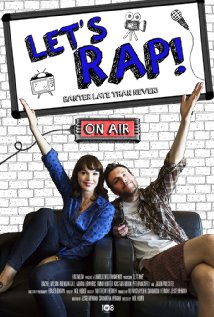
Let’s Rap

Like many young Canadians, my first experience of Ryan Gosling (apart from him occasionally

That's Rachel Wilson in the middle...and Ryan Gosling in the blue suede shoes.

That’s Rachel Wilson in the middle…and Ryan Gosling in the blue suede shoes.

living in my hometown) was not on the Mickey Mouse club but rather an embarrassing teen drama that seemed to only play late at night when anyone who knew better should be in bed. It was called Breaker High and for some reason it was about a high school that just happened to be on a cruise ship. Because that happens! The ship would dock at all kinds of amazing, exotic locations (okay, technically they were all shot in British Columbia) and the kids would get into inoffensive hijinks, like Saved By The Bell, only milder, if you can possibly imagine that (this was, after all, a Breaker-High-breaker-high-1282246-240-180polite Canadian production). It starred Ryan Gosling as a nerdy wannabe ladies’ man – not the heart-throb by any  means. And it also starred Rachel Wilson, an actress born right here in Ottawa (not to further the stereotype of all Canadians knowing each other – I’ve really never met her), who I was delighted to rediscover in a movie I just watched called Let’s Rap.

It took me a moment to place her, and I’m sure you know that feeling of…what’s she from? I recently had that very same feeling watching Jewel Staite in How To Plan an Orgy in a Small Town, which makes me think this may be a particularly Evvy-livelinks2Canadian experience, kind of like watching Lost for the first time and realizing Evangeline Lilly finally  made it big after a series of embarrassing dial-a-girlfriend commercials.

Anyway, it was nice to see Rachel Wilson all grown up and not playing the “quirky misfit” anymore.

Oh wait.

Well, okay, she may still be playing a bit of a quirky misfit, but in 2016, that’s a title we’re owning and embracing. If skinny Ryan Gosling can grow up to give Brad Pitt a run for his money, then Rachel Wilson will have an easier time of it, having been cute all along.

And in this movie, she proves she’s more than capable of keeping up with a fast-talking script that would wind Aaron Sorkin. Wilson plays opposite Brendan Gall as Melanie and Bo Schnurr, a MV5BMjA0OTI1OTYwMV5BMl5BanBnXkFtZTgwMjIxNDMzNzE@._V1_SY317_CR0,0,214,317_AL_brother and sister team who dream of taking their witticisms straight to the big time, carpeting their way to stardom with pop-culture landmines exploding left and right, making puddles out of their Beau’s beer (shout out to Vankleek Hill, hometown of Beau’s beer and my mother’s husband). I’m wary of any movie that credits itself with pop-culture banter, and yet this one won me over quickly. Wilson is too warm and the Schnurr charm proved irresistible – plus, hello, a well-timed Jason Priestly cameo (okay, fine, I admit it: Canada is its own small world).

One of the hands-down best things about this movie is the strong material it’s working with, and that’s a credit to the real-life brother-sister team who wrote it, Jesse and Samantha Herman, who were born and raised in the very city where this film was shot – Toronto.

I asked Samantha a few questions about what it was like to work on this film, and to collaborate with her brother, and she was kind enough to respond.

Jay: Do you think indie screenwriters have to effectively function as a producer in order to get their movie made?
Samantha: Yes, especially for first-time writers.  There are so many scripts out there looking for a home and without a proven track record it’s difficult to get other producers’ attention.  As your own producer, you also have more opportunity to preserve your material and be involved in the entire production, which is fantastic.

Jay: What would we be surprised to learn is part of your role as producer?
Samantha: I don’t know if you’d be surprised, but since I don’t cook in my real life, I was always shocked by the amount of decision-making, planning and time management pertaining to meals and snacktime. Basically, I learned I should never host a dinner party.

Jay: How did you manage to write this with your brother? Were you in the same room, or were you emailing back and forth from different cities?
Samantha: We started with ideas, jokes and concepts that we could share in person or over maxresdefaultemail. But when it came time to actually structure the script and write dialogue we always did that in person.  The style of our banter, which can be pretty fast-paced, is simply not conducive to an email exchange.  We had to capture the flow together.  Plus it’s just more fun that way.

Jay: What’s it like to give up control of your baby to a director?
Samantha: There was a bit of anxiety going into it because the director takes over the driver’s seat with the project.  But, we had extremely positive conversations with our director, Neil Huber, during pre-production so that alleviated all the concern.  Knowing his sensibility for our style and hearing his great ideas, I knew he would capture the comedy we wanted to achieve.  Since I have no aspiration to be a director myself, I was happy to entrust the job to Neil.

If you’re interested in checking this movie out, and you should be, the good news is: it’s available everywhere! It’s now online on iTunes, Amazon Video, Google Play, Vimeo & Xbox; here are a couple of the links-
https://itunes.apple.com/us/movie/lets-rap/id1056898946
https://vimeo.com/ondemand/letsrap

And because Samantha is a particular brand of sweetheart, she included a link to check out a delightful short film produced by the same team called Street Meet – for free:  https://vimeo.com/105094852


Melodrama… in 3D!: Part 2

Before Christmas, I questioned Gaspar Noe’s choice to film Love in 3D. While the gimmick of real sex in 3D managed to satisfy my moribid curiousity in a couple of scenes, the feeling that we could reach out and touch them couldn’t change the fact that the characters didn’t act or talk like real people.  Love was a dull, lifeless, depressing, and badly translated drama. But it had lots of sex.

Director Wim Wenders (whom I tend to like), also hit the 2015 festival circuit with an inexplicably 3D drama. Like Love, Every Thing Will Be Fine is dull, lifeless, depressing, and badly translated but doesn’t even have the decency to throw a little 3D ejaculate our way. What we DO get- and any Canadians out there might enjoy this- is Rachel McAdams doing a Quebec French accent. Despite the film being set in Montreal, why she would go out of her way to play Quebecoise, I have no idea. There are, after all, lots of English people living in the Canadian city. (I used to be one of them). Whatever her reasons, I’m willing to bet that the Screen Actors Guild did not see this movie or they would have never made the already questionable decision to nominate her for Best Supporting Actress in Spotlight.
Struggling writer Tomas’ (James Franco) relationship with Sara (McAdams) is already not going so great even before his life is changed forever by accidentally running over and killing a small boy with his car. The boy’s mother (Charlotte Gainsbourg) immediately makes it clear to Tomas that she doesn’t blame him but forgiving himself isn’t so easy for Tomas, even after he begins to profit from becoming a much more inspired and successful writer after the trauma.

My favourite Wim Wenders films (Wings of Desire and Paris, Texas) are understated and haunting but Every Thing Will Be Fine slows the pace down to a whole new level. Unsure of exactly, what the director’s looking for, Franco plays it safe by avoiding emoting at all costs. Probably aiming for restraint and subtlety (two qualities I admire most in an actor), he succeeds only at being wooden. He’s not burdened with an ill-advised accent but his performance is almost as embarrassing as McAdams’.

Gainsbourg and real-life Montrealer Marie-Josee Croze (The Barbarian Invasions, The Diving Bell and the Butterfly) don’t come out looking so bad but even they don’t have anything interesting to do. Wenders seems especially committed to losing our interest by constantly disrupting the narrative to jump ahead a year or two, or sometimes even more, whenever there’s even the smallest risk that someone in the theater may find themselves caring even a tiny bit. And the dialogue from Norwegian screenwriter Bjorn Olaf Johanessen feels badly translated into English and is already being compared to Tommy Wiseau’s The Room.

I was not able to catch a screening of Every Thing Will Be Fine in 3D so I have no idea exactly what Wenders was going for by shooting in 3D. I do know that I’ve seen 3D summer blockbusters that had more heart than Wenders’ painfully dull drama.