Tag Archives: Mark Ruffalo

Everybody’s got a Christmas Movie

Instead of skeletons in their closets, celebrities have Christmas movies.

I recently came across a real piece of work art called The 2nd Day of Christmas that I can only imagine keeps Mark Ruffalo up at night. It stars Mary Stuart Masterson as the aunt of an orphaned 7-year-old girl who she trains up as a pick-pocket. Their Oliver Twist act is pretty fruitful too, until they get caught by a department store security guard (Ruffalo) at Christmas. Holiday Movie Law applying, the owner fails to call the cops, or child services, and opts instead for his onthe2nddayofchristmas-02‘prisoners’ to be guarded by Ruffalo in his own home over the holidays. And guys – you totally won’t believe this, but they fall in love. I know! How can that happen? In 24 hours? While being forcibly imprisoned against your will? Hard to believe, and yet this is what Christmas schmaltz is all about.

The seconhappy-christmas-movie-poster2d movie I watched, called Happy Christmas, is apparently titled ironically. Also, it’s an indie movie, in every sense of the term: it looks bad, it sounds bad, and it costars Lena Dunham. It’s about the fuck up family member that everybody has – this time, Kevin’s little sister Jenny (Anna Kendrick) is moving into his basement and no one really knows why. Job? Breakup? Drinking problem? Kevin’s wife Kelly (Melanie Lynskey) is a stay-at-home mom who is both exasperated and enchanted by her irresponsible sister-in-law. Happy-Christmas-02Christmas only exists on the absolute periphery of this movie, and as long as you like your holiday classics with a fair bit of pot smoking and erotica, and almost a total absence of cheer or hope or merriment, this one’s for you.

TIFF 2015: Spotlight

spotlight

My Asshole compadres and I were enthusiastically discussing and comparing notes on all the wonderful films we’ve seen at TIFF over guacamole and cocktails when I raised the question of how difficult it can be to stay objective through TIFF-coloured glasses.

TIFF is exciting. I’d forgotten how exciting. The red carpets, the thrill of seeing eagerly anticipated movies before anyone else, and the frequent false alarm celebrity sightings (I could have sworn I saw Hillary Clinton last weekend outside TIFF Bell Lightbox but began to doubt myself when I heard her speak with a Ukranian accent) all make for as thrilling a trip to the cinema as you can get. Separating the quality of the film itself from the experience has been- I’m not going to lie- a challenge.

The anticipation I feel going into a TIFF screening and the focus I keep at all times at what’s happening onstage and onscreen made it particularly surprising that the couple sitting next to me at Monday’s international premiere of Spotlight, the true story of sexual abuse at the hands of Catholic priests, were making out through the beginning of the movie. That’s a TIFF first for me.

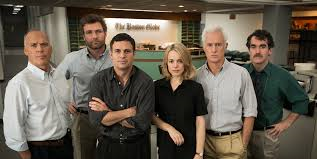
So you’ll excuse me- I hope- if I was a little distracted for a little while at the beginning. Luckily, the urgency of Spotlight soon caught even my neighbors’ attention and we could all sit back and enjoy the show. Well, maybe “enjoy” is the wrong word. Mark Ruffalo, Rachel McAdams, and Michael Keaton play real-life Boston Globe journalists who exposed the Catholic Church’s cover-up of sexual abuse at the hands of approximately 90 local priests. It’s not always an easy movie to watch. The interview scenes where survivors disclose the details of the abuse are harrowing and stomach-turning and the extent of the corruption on the part of the Church and so many others who turned a blind eye is infuriating.

Last week, I named All the President’s Men, The Insider, and Zodiac as my three favourite films about journalism. All three are based on real journalists and maintain suspense throughout while mostly avoiding melodrama. Spotlight works for many of the same reasons as those films did but doesn’t quite measure up to my favourites. It’s not always as tightly written as those  films and even drags a little in the middle but Keaton- who can’t seem to believe his luck getting great parts two years in a row– gives a passionate performance that always keeps things moving. He may get his second shot at Oscar with this film.

Infinitely Polar Bear

Jordan over at Epileptic Moondancer wrote about this great film he saw, and he made me want to see it too, only, it never came. Well, not quite never, since it’s here now, only it’s just playing at our local art-house theatre (shout out, Bytowne, we love you!) and as far as I can tell, didn’t get much in the way of a release.

And that’s too bad because Mark Ruffalo, whom I normally loathe, does a bang-up job of portraying a husband and father who struggles with the mental illness that is now known as bi-polar (not so much in the 70s, when this film is set). His wife (a strong Zoe Saldana) married him optimistically and learns about his disease the hard way. In the throes of a manic phase he’s erratic at best, and scares his wife and two young daughters. They lose him to a psychiatric ward, and a FIPHD1iOek65hl6LdUL2HQhalfway house, and to loads of mood-altering medications, and in his quest to come back to them, he agrees to care for his girls while his wife goes off to NYC to get a business degree and a real shot at a job. She’s putting an awful lot of faith in a man who, most days, doesn’t seem capable of caring even for himself, but this is what he needs, and what their family needs, and needs must.

It’s easy to applaud this intimate and sympathetic look at a challenging illness. Writer-director Maya Forbes cast her own daughter in the fictionalized version of herself, a young girl caught between a father she dearly loves and a disease she doesn’t fully understand. This is clearly a deeply personal movie, stemming from a deeply personal place. And if this is how she experienced her father’s mental illness, then good for her. The movie makes it seem more like a quirky inconvenience than the devastating illness I know it to be, but if you ever have the misfortune of this diagnosis, then I fully hope that you get the bi-polar that Forbes lived with, and not the one I did.

Coming out of the theatre, Sean asked what I thought. And I genuinely thought it was a brilliant kq-infinitely-polar-bear-videothumbmovie, so well-acted by all involved. I also think it makes bi-polar look kind of fun. And the thing is, like any mental illness, and like many illnesses period, I suppose, the symptoms and severity and experience will vary from person to person. So while some may enjoy riding bicycles in bathing suits as their low, when I lived with someone who was bi-polar, I spent long months in a sad, scary, violent, life-shattering space. It’s not always as fun as it looks in the movies.

But Mark Ruffalo does an excellent job of hitting both highs and lows with some subtlety, playing each note, finding the heartbreak. Saldana is vulnerable, and even though I never stopped asking myself how she could leave her kids alone with this man, I still felt warmth toward her for trying so hard to make bi-polar just another thing to live with. I’m still queasy about movies that romanticize mental illness, but I’m also blown away by some fantastic performances that thrive and come alive despite a saccharine script.

Avengers: Age of Ultron

Avengers: Age of Ultron is great! Not Oscar-great but blockbuster-great. No need to think or feel creeped out about A.I. like in Ex Machina, just enjoy the ride with moody Ultron as he carries out his plan to kill all humans. But fear not!  Earth’s Mightiest Heroes are on the case.

One of the things Age of Ultron does best is give us lots of new characters. That fits well with the revolving door that is the Avengers comic book roster. So we are introduced/reintroduced to many characters we know are, or will become, Avengers, like War Machine, Falcon, Scarlet Witch, Vision, and in unfortunate licencing loophole, Quicksilver. Jay found that super confusing having already seen a different Quicksilver, without an accent, in X-Men: Days of Future Past, and I agree. It shouldn’t have happened and it takes away from the movie. Still better to have him here, I think, because Scarlet Witch and Quicksilver are great together (this movie captured their relationship well) but it’s time for a deal with Fox. At least Marvel got Spider-Man back from Sony, but let’s get the rest of these movies working together too.

Seeing Vision pop up was an unexpected surprise for me. I liked that he made an appearance and thought he was used well, both as a source of conflict between the Avengers and then as a contrast to Ultron, though they share the same view on humanity’s likely future (i.e., not promising). Really, all the new characters were handled well and I feel like we are well on our way to the Infinity Gauntlet saga.

The disappointing thing is there are now four or five other Marvel movies on the way between now and Avengers 3. I’m excited for Captain America 3, especially with Spidey on board, but beyond that, it’s way too much. Especially when I use Vision’s introduction as a comparison; Ant-Man, Black Panther, and Dr. Strange could all be brought in as part of an Avengers movie, and I wish that’s what was being done. But since there’s money on the table we get separate movies for each. Let’s be honest, I will probably see all those, so you can expect to hear this same complaint every few months between now and the next Avengers movie.

I can’t hold that against this movie though. Avengers: Age of Ultron itself does things exactly right. I thoroughly enjoyed it and wouldn’t have changed a thing so it gets ten Infinity Gems out of ten.

Oscars 2015: Best Supporting Actor and Best Supporting Actress

In recent years, you can burn out on online Oscar debates before the nominees have even started writing their speeches yet but in 1995 all I had was Siskel and Ebert and Entertainment Tongith. I was 13 years old and hadn’t seen most of the movies but the way they talked about Oscar night, I wouldn’t have missed it for anything. I laughed through Letterman’s monolgue (probably pretending to get some of the jokes), had strong opinions on Pulp Fiction and Shawkshank Redemption without having seen either one, and celebrated when my two favourites (The Lion King and Speed) each took home two statues. Awards season has been like Christmas for me ever since.

Now, I watch all the movies or at least as many as I can. No category is too minor for me and have sat through more shiity movies than I can count just because they were nominated for best Costume Design or Makeup. I don’t always agree with the winners and have found myself yelling at the tv more than once but I’m back every year with a renewed- and delusional- hope that this time justice will be done.

Best Supporting Actor
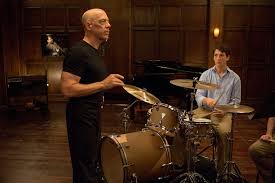
Robert Duvall- The JudgeWhiplash script
Ethan Hawke- Boyhood

Edward Norton- Birdman

Mark Ruffalo- Foxcatcher

J. K. Simmons- Whiplash

This category has been one of the surest bets of the night for years now. Recent winners include Javier Bardem for No Country for Old Men, Heath Ledger for The Dark Knight, Christoph Waltz for Inglourious Basterds, and Jared Leto for last year’s Dallas Buyers Club. Even before the nominations were announced, no one had a chance against any of these guys and with J. K. Simmons as an undisputed frontrunner, this year is no exception.

He deserves it too. I finally got around to seeing Whiplash a couple of days ago and was on edge almost every time Simmons was on screen. He’s intimidating even when he’s not being overtly mean and scary even when he’s making you laugh. Best of all, he’s unpredictable, which is more than I can say for the Best Supporting Actor race this year.

It’s not that his competition is completely unworthy. I’m not sure anyone in the world is more irritating to me than Ethan Hawke is but even I had to admit that he was likeable and believable as the still maturing father in Boyhood. He’s in most of my favourite scenes in the movie- my personal favourite being his awkward safe sex talk. And of course there’s Edward Norton, one of the better performances in one of the best acted films of the year.

How Mark Ruffalo was even considered for a nomination is a complete mystery to me and I’m still not sure I understand how it happened. Channing Tatum would have made more sense.

Finally, I have nothing bad to say about Robert Duvall. All other things being equal, he’s by far the best actor in this category but there’s only so much that even he could do to elevate the hokey writing and uninspired directing in The Judge.

J. K. Simmons wins. Anyone else would be a huge upset.

Best Supporting Actress

Lately this has been the Academy’s chance to show us how much it celebrates diversity, doing its best to make up for an obvious caucasian bias in the other acting categories. Recent winners include Penelope Cruz for Vicky Cristina Barcelona, Monique for Precious, Octavia Spencer for The Help, and Lupita Nyong’o for 12 Years a Slave.  The list of nominees this year are not nearly as diverse- or as interesting- as it had been in recent years.Patricia Arquette

Patricia Arquette- Boyhood

Laura Dern- Wild

Keira Knightley- The Imitation Game

Emma Stone- Birdman

Meryl Streep- Into the Woods

I think we could have done better.

Dern, for Wild, seemed to come out of nowhere. I’m not sure I heard even a hint of speculation that she’d be nominated. I don’t get it.

Neither Knightley or Stone are able to stand out in their own movies, let alone among the other nominees. Knightley plays an important part in The Imitation Game and we learn a lot about Alan Turing from his relationship with her character but the movie belongs to Benedict Cumberbatch and to give anyone else in it an acting award would be bizarre. As for Stone, I thought she seemed to struggle with the demands of all the dialogue that she had to memorize in Birdman. She mostly rises to the occasion and has some fantastic moments but she’s really not in the same league as Michael Keaton or Edward Norton.

Meryl Streep’s nomination makes sense. She can’t help being amazing in almost everything and has some of the best scenes in Into the Woods. But do we really want to see her up there again acting like she had no idea she was going to win? She’s already been honoured three times for better performances.

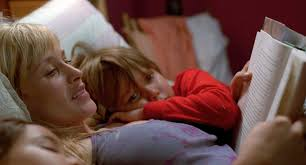
This leaves, by process of elimination, Patricia Arquette. I’d have no problem with a win for her and Boyhood was possibly my favourite movie of the year. I still struggle with the idea of calling this the best supporting performance of the year since Richard Linklater went to great lengths to try and make us forget that we were watching a performance. Her work in the film is still impressive and she’s likely to take home the Oscar.

For an asshole’s discussion on the parts available to women in Hollywood, click here.

Begin Again

Jay watched and reviewed this movie awhile ago and I can’t say that mine would look much different than hers so I won’t bother with a full review of Begin Again,  director John Carney’s somewhat disappointing attempt to relive the magic of Once. All I’ll say is that Keira Knightley and Mark Ruffalo do their best to replicate the improvised feel of Once but it really would have worked better with less recognizable faces.

Begin Again

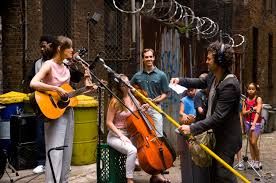
What I do want to comment on is the recent Oscar nomination for Gregg Alexander and Danielle Brisebois’ original song Lost Stars. The music really is the best part of the movie. Even when the songs don’t leave a lasting impression the way those in Once did, Carney films the recording sessions in a way that makes you want to pick up a guitar and jam with them. Carney has always been good at capturing the evolutions of songs as their written and continue to change each time that they’re played.

Begin Again 2

There are a lot of songs written for Begin Again and I’m not sure Lost Stars stood out for me. It is one of the better examples though of a song evolving over time with Adam Levine’s hilariously over-produced butchering of it alone making the song worthy of recognition.

It can’t win though. I had mostly forgotten about the song almost as quickly as I had forgotten about the movie itself and, when being forced to compete with a movie with the emotional impact of Selma and a song with the emotional impact of Glory, there’s really no contest.

Begin Again

A music producer\label owner (Mark Ruffalo) is disillusioned and displaced and drinking himself deeper into depression when he happens upon a waif in a bar (Keira Knightley) who is used to herself and her music taking second place to her cheating-asshole-ex-boyfriend’s (Adam Levine, very fittingly).

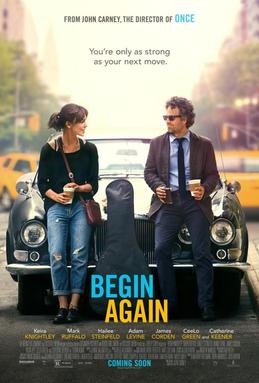
Begin Again is Once, with a budget. There are movie stars, and pop stars, and production values. And some artifice. And less heart.Begin_Again_film_poster_2014

Which is not to say it’s bad. Once is just so good. Sean and I were lucky enough to catch the Broadway musical on stage in NYC and it was incredible and inspiring, an amplification of the movie. We saw it again when it was in Ottawa, at the NAC, with all 4 Assholes in attendance, so safe to say it’s near and dear to our collective heart.

This movie doesn’t really start until about 48 minutes in, which is a long time to not start. And you already don’t trust it because Mark Ruffalo’s had this “epiphany” where he envisions instruments playing themselves to back up Knightley and her lonely guitar. It’s amateurish and should be beneath everyone involved. You could practically see the strings levitating the bows as they “magically” played themselves. Sheesh.

But I admit I kind of adored the whole record-an-album-on-the-fly thing this movie had going, a fuck you to the studio sound, and even better that it was set on the actual streets of New York. Nothing gives life and energy like New York City. Of course, you’re hyper aware, watching the movie, that what you’re seeing and hearing are two different things. Knightley’s character may strive for  “authenticity” but you know damn well these songs were recorded in a studio after she had months of voice lessons and that the actors are just lip-synching for the camera, and that the cab horns and kids playing stick ball (did that really happen?) are just sound effects added in. The conceit is obvious, and over-produced, and hard to forgive.

I did love that Mos Def was cast as The Man. Thank you, universe, for that. And Adam Levine sporting a beard that made him look like he wandered in from the set of TLC’s reality show “Breaking Amish” was a nice touch. Plus, the vintage Jag.

This movie profited from my low expectations. I enjoyed it more than I thought it would, and while not nearly as good, it’s at least less soul-crushing than Inside Llewyn Davis, which is the movie I’d rather you watch if you only have the stomach for one.

Foxcatcher

I’ve been eagerly awaiting the release of Foxcatcher all year. Director Bennett Miller (Capote, Moneyball) is doing what few can do better- a film inspired by a true story. But it was Steve Carell, playing millionaire schizophrenic John du Pont, that I was most excited to see. This isn’t the first time he’s tried to surprise us. I was completely caught off guard by the sincerity of his performance in Little Miss Sunshine and even more so in Seeking a Friend for the End of the World. The more risks someone takes, the more I root for them and I knew that pulling off something so dark would be his biggest yet.

On his against-type casting choice, Miller apparently said “I think all comedians are dark”. After the recent passing of Robin Williams, the cliche of the sad clown has been discussed online at length but it’s always been especially on the surface with Carell who, even in some of his most straight-up comedies (The Office and 40 Year-Old Virgin in particular), has never been afraid to let his dark side show. Michael Scott, the boss from hell on The Office, can be obnoxious and selfish but Carell rarely forgets to play the sadness and loneliness that’s behind his less likable traits.

As John du Pont, Steve Carell doesn’t disappoint. I didn’t know much about this story at the start of the film and only knew that all this was supposed to end in tragedy so du Pont’s creepy persona and erratic behaviour unnerved me every time he was on screen. Carell plays him as unpredictable (quite a feat given that his voice rarely raises above a mumble) and nearly impossible to read. It’s a performance that I found impossible to forget as I tried and failed to sleep later that night and I hope Oscar takes as much notice as the Golden Globes have.

As for the film itself, it’s never less than compelling and held my attention long after it was done as I tried to piece it together for the next few hours. Miller uses dialogue only when necessary and seems more interested in telling his story through haunting images and the looks on Channing Tatum and Steve Carell’s faces, resulting in a finished product that is exceptionally well shot and edited and easy to admire. But because both leads (Tatum and Carell) say so little and because Miller keeps his audience at such a distance, there’s not much to get emotionally involved in.

The Kids Are All Right

First of all, of course the kids are fine. Kids are resilient, not that having two loving parents has ever been a problem in the history of the world.

But it’s the parents we should be keeping our eyes on. Nic and Jules have been together a long, long time – since Nic (Annette Bening) treated Jules (Julianne Moore) in the ER for a sex injury. And that’s how their coupling goes: Nic is the serious, perhaps even controlling one, while Jules is free-spirited. In their years together, each has given birth using the same unknown sperm donor. Nic gave birth to Joni (Mia Wasikowska), who really takes after her (biological) mother, while Jules gave birth to Laser (Josh Hutcherson), who mostly takes after his. With Joni about to depart for college, Laser talks her in to searching for their biological father, the sperm donor. Enter Paul (Mark Ruffalo).

Now, Nic’s and Jules’ relationship has been stale for a while. Jules is in the middle of MV5BMTY2MDU4Mzg3N15BMl5BanBnXkFtZTcwMjQyNDk1Mw@@._V1_SX1759_CR0,0,1759,999_AL_starting up yet another business (landscape design) and Nic is barely tolerating the effort. But Paul’s arrival is completely destabilizing. Not only is their daughter moving away, they also feel like they’re losing their kids to a new, cool parent who has never had to discipline them or hurt their feelings. When Jules goes to work for Paul, it’s kind of the last straw. No wait: when Jules sleeps with Paul, that’s the very last straw.

Like any marriage,theirs has highs and lows. There are no histrionics; Nic is too staid, too reserved, too in control of her own emotions. Everyone is very, very sorry. So this is not about the drama, this is about who they are now, as people, as a couple. Julianne Moore and Annette Bening are such excellent actors that they can convey a 20 year marriage with an ease between the two of them that feels real and also effortless. Bening gets to show real range here, though her character plays things a little close to the chest. Moore is luminous as Jules and seems to really enjoy the freedom of playing someone so open and available.

Director Lisa Cholodenko is excellent at showing you a slice of life and making you feel like you’ve had the whole cake. An exceptional ensemble comes together to give this film emotional resonance. The couple is going through their own unique problems but their struggles of love, commitment, friendship, and family – those are universal. And in The Kids Are All Right, they’re memorably, endearingly executed.