
Ted Kaczynksi, more popularly known as The Unabomber, lived in isolation in a 10×12 cabin in the woods of Lincoln, Montana. Arguably that might be enough to have driven anyone crazy, but director Tony Stone puts together a more detailed and intimate portrait of one man’s descent from loner to terrorist.

Focusing primarily on the seven years before his arrest while Ted (Sharlto Copley) was living that hermit life off the grid in the middle of a forest, Ted K doesn’t provide much context or insight into who Ted was before he left society completely, or what might have driven him to do so. Filmed in the same woods where he lived and using the 25 000 pages of his coded diary as its basis, the film tries to remain impartial, merely eavesdropping on our subject while he mutters to himself, shakes his fist at planes overhead, begs family for money over collect calls made from a phone booth. He rails against the industrial system, sometimes generally, sometimes more specifically (leaf blowers, snow mobiles), the destruction of nature, the proliferation of technology, which he predicts will be our downfall.
Bomb making becomes just one of his daily tasks in his cramped cabin. More angry than evil, more sick than disturbed, Ted exists on the margins of society in more ways than one. As his mental health frays and unravels, he seeks to soothe his pain with vengeance. Unable to engage in any meaningful way, anonymously sending violence through the mail to imagined adversaries feels like such an on-the-nose characterization of Ted’s particular psychology that if it was fiction rather than fact, you wouldn’t quite believe it.
At times I felt alienated by the film, which does its job a little too well painting Ted K as an unknowable type, but Sharlto Copley’s performance kept drawing me back in. His exact recipe is known only to him, but its ingredients include neuroses, coiled anger, desperation, internal grand-standing, loneliness, disconnection, superiority, inferiority, and more. Yet Stone chooses to show him in mostly banal circumstances, even his terrorism reduced to ordinary little tasks performed in ramshackle shed by a solitary, mumbling man. The film is Copley’s alone; other people are mere footnotes and even his victims are spared little thought. He is the subject of the largest manhunt in FBI history, but of that we have no sense. The film has no sense of urgency or drama. Ted K is just a sad and lonely man going about his business. The movie asks for no mercy, no sympathy, it just tries to get inside his head, and sometimes even succeeds in doing so.
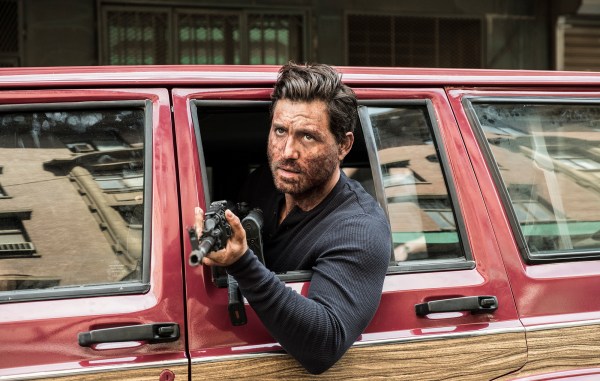


 Uh oh. “Luckily” Richard (Joel Edgerton) “knows a guy”, so they’re not going to pay the kidnappers so much as send in an “extractor” named Mitch (Sharlto Copley) who claims he’s out of the business, straight as an arrow. Right. But while Harold (David Oyelowo) is awaiting ransom or extraction or escape in Mexico, he gets into even more trouble in the form of drug cartels (notice the plural).
 little…sticky. And perhaps in the days before a serious surgery, The Hollars could use a little less hollering and a lot more making amends.
 to do is exchange the briefcase full of cash for the crates full of guns, and the deal is done. But they just rub each other the wrong way. Everyone’s got an unchecked ego, everyone wants to be the boss, and nobody’s going to make this easy. If arms dealers had HR ladies stashed away in some ficus-strewn office, all of this could have been resolved with a stress ball and some trust exercises. But arms dealers tend to offer very few benefits as employers, so instead it goes to hell.
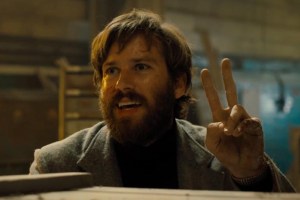 really embodies the pure fun and wackiness of this film. It’s madcap madness and I totally loved every minute of it. I didn’t know I could have so much fun at a Ben Wheatley film. A terrific script by Wheatley and Amy Jump is quotable, the cheeky dialogue rolling off the tongues of a delightful ensemble cast. The frenetic, non-stop energy sometimes makes it difficult to keep track of who is shooting who, and where, but once you realize that even the principal players are confused, it really takes the pressure off. The anarchy is entertaining and you can tell it was as gleefully acted and directed as it is consumed. No true hero ever distinguishes him or herself , which doesn’t mean you won’t find your own favourite to root for, only that’ it’s an even playing field where anything is possible.
 ASSHOLES WATCHING MOVIES