Tag Archives: Streaming on Netflix

Crip Camp

December 3rd is the International Day of Persons with Disabilities. You may have heard some rumbling about disabled representation in the movies lately – Anne Hathaway took some flak for her limb difference in The Witches, and Sia’s movie, Music, has been criticized for casting a non-autistic actor in the lead role. Representation matters, and while the Oscars LOVE disabled characters, they don’t show the same love for disabled actors, who are rarely cast to portray themselves on screen, and almost never cast to portray anyone else. Although 20% of us live with some sort of disability, less than 5% of movie and TV characters are disabled, and of those few who are, less than 3% are played by actually disabled actors. That math is abysmal. Are disabilities the last place of the civil rights movement?

To mark the International Day of Persons with Disabilities, we watched a documentary on Netflix called Crip Camp.
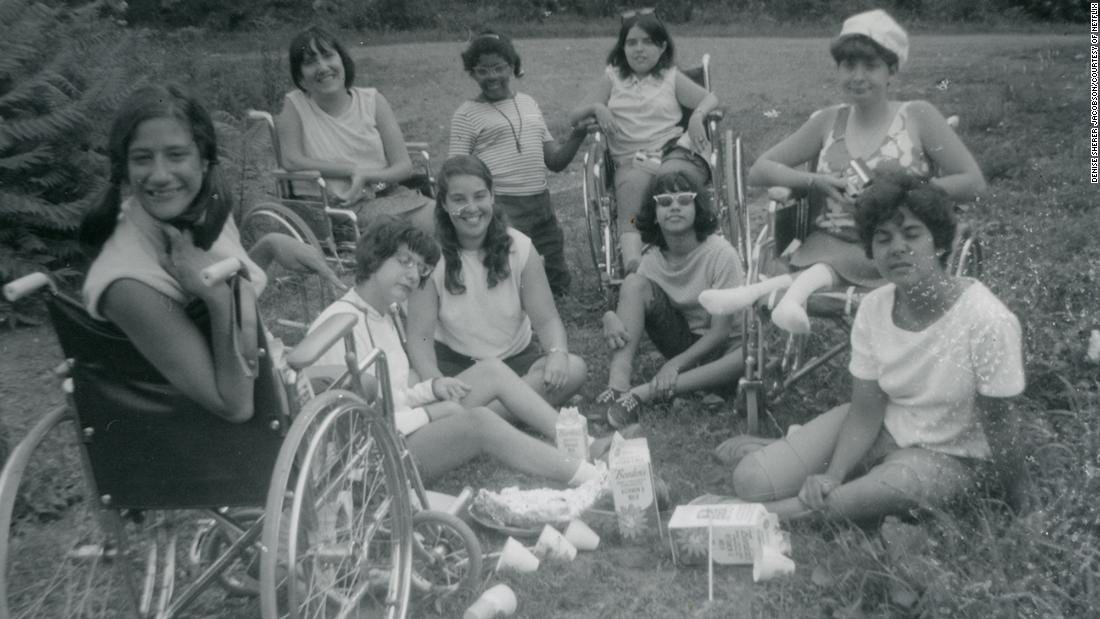
Camp Jened (its legal name), had actually been in existence for years, but in the early 1970s it was run by hippies who created an oasis of sorts for disabled teenagers. To anyone else, it would have looked like a run-down, ramshackle summer camp of nightmares, but to those who attended, it was practically utopia. In the 1970s, the world was not accommodating to those with disabilities. Most disabled persons lived in relative isolation, dependent on others, if not outright institutionalized. At Camp Jened, they were free. Not free of their disabilities, but free of the judgement and discrimination. In a camp where everyone was disabled, no one was; the disabilities virtually unnoticed, the campers were allowed to be defined by other things, perhaps feeling fulfilled as human beings for the first time. Like any teenager, they played sports, sang songs, smoked and made out – for many this was the only opportunity to “date.”

When they grew out of camp, this close-knit group stuck together, and started advocating and disrupting for disabled rights, inclusion, and accessibility.

Crip Camp is co-directed by filmmaker Nicole Newnham and former camper Jim LeBrecht, an overdue tribute to the place that ultimately changed the world for millions of disabled people.

Although the Americans with Disabilities Act was passed 30 years ago (in 1990: that is actually shamefully recent!), disabled people to this day are fighting just for the right to exist with dignity and anything resembling equality.

I myself live with several (mostly invisible) disabilities. 2020 has been a strange year for people with disabilities. On the one hand, the whole world has gotten a taste of what it’s like to be me. Because I am immuno-compromised, I’ve always battled against viruses, each one potentially very serious for me as I lack a basic immune system to fight them. With the pandemic, every Canadian across this country automatically got all of the accommodations I’ve had to fight to have at my own work: clean work stations, physical distancing, even the right to work at home, which seems a small ask when it’s potentially life saving. I’ve been in medical isolation at home since March. When restrictions were starting to ease up over the summer, many Canadians ventured out of their homes while I stayed in mine. Like many people with disabilities, it’s hard not to feel like life sometimes moves on without us, forgets the people still trapped in their homes. Now that the COVID numbers are increasing again, Canadian regulations have once again changed to reflect it, to protect the majority, while those of us in the minority try not to take it personally that our lives are not worth the same consideration.

Before COVID, I led a relatively normal life, at least to outside eyes. I went to work, I travelled, I spent time with family and friends. My life is permanently etched with pain, and my health is constantly compromised by every passing virus, but since I don’t have a choice, I deal with it. Sometimes I miss things. Sometimes I cancel. Sometimes I can’t get out of bed. But I lived. I made significant contributions to my field, I found joy, I was a presence in the lives of my niece and nephews, I hosted dinner parties and attended film festivals and fell in love. Every moment also in pain, sometimes unable to drive or walk or sleep, but doing my best, which was still pretty good. And now my life is on pause. It’s disconcerting, it’s unfair, but it’s not without its positives: 2020 was the first year I didn’t get pneumonia in at least a decade. How about that?

Because actual representation in film is so rare, this is a very short list of actors with disabilities excelling in film:

CJ Jones: he played Ansel Elgort’s disabled foster father in Baby Driver, stealing scenes and providing the film with warmth and heart. But for Jones, parts like these are almost unheard of. “It’s hard to find a black deaf role” although it looks like he’s found another in Avatar 2.

Kiera Allen: she recently played opposite Sarah Paulson in Hulu’s Run, a mother-daughter Munchausen by Proxy thriller. The role is extremely physically demanding, but Allen, who uses a wheelchair in real life, nailed the part and showed us all what she can do.

Adam Pearson: in Chained For Life, Pearson portrays an actor with facial deformities with whom his leading lady struggles to connect while working together. Pearson has neurofibromatosis, type 1 in real life and gives a formidable performance in this film.

Zach Gottsagen: he won hearts in The Peanut Butter Falcon, playing a young man with Downs Syndrome who escapes his care home to pursue his dreams of being a pro wrestler. Starring opposite Shia LaBeouf and Dakota Johnson, Gottsagen holds his own and proves himself more than capable.

Millicent Simmonds: who can forget the deaf actress’ stunning performance in A Quiet Place, a horror film in which monsters hunt what they hear, and one family survives thanks to their ability to communicate in sign language.

The Beast

We all have bad days at work. A client pushes your buttons or a colleague isn’t pulling their weight or a vital piece of equipment is on the fritz again, wasting your time and feeding your work monster. The Beast is about a bad day at work. Some guy wakes up, probably with a positive attitude and a spring in his step, but when he gets to work, things all fall apart. He thought kidnapping a little girl would be easy, and it was at first, but boy did he kidnap the wrong dude’s daughter. And no, her dad is not Liam Neeson.

Teresa’s (Giada Gagliardi) dad is The Beast. You can call him Riva (Fabrizio Gifuni), for now. Riva is a lone wolf veteran, estranged from his family ever since he returned from Afghanistan as only a shadow where a man used to be. Haunted by his combat experience, only little Teresa still loves him whole-heartedly. So when his growly teenage son reports her missing, Riva goes BEAST MODE to find her and bring her home. The cops whose actual job it is to find Teresa aren’t too happy about his rogue status and neither is Riva’s PTSD, which is being triggered rather wildly, incapacitating him with flashbacks to his time BEING TORTURED AS A PRISONER OF WAR. So there’s that.

Riva is not exactly a man with a very particular set of skills; I mean, I’m sure he’s no slouch what with his special forces training, but he’s not super-human either, merely a dedicated man with only one goal in his mind. The fights are not slick, over-choreographed affairs, they’re messy and savage and desperate, just a dad trying to survive long enough to get to the next door, behind which he may find and save his daughter. Or not. It’s a big city with a lot of doors, and a lot of bad guys standing menacingly in front of them.

Apparently this is not an Italian remake of Taken, or at least that’s what their legal team assures us, but it sure feels like it. Gifuni is a convincing anti-hero, always stalking the next dose of his meds, never sure which is the greater threat – the guy with the knife in front of him, or the guy with the knife in his memories. Probably not quite sure which is which either. He takes a lot of punishment, but when your daughter is Taken taken, the math goes wonky, the damage inflicted to damage sustained ratio ever malleable.

I didn’t dislike this movie, it’s well set-up even if it’s a premise we’ve definitely 100% seen before in a movie called Taken. The pacing of the third act is pretty screwy, the climax anti-climactic as it comes about 30 minutes too early in the movie. Or the movie goes on 30 minutes too long afterward (and it’s only 97 minutes). Still, if you’re looking for some gritty action, that’s exactly what you’ll get, and The Beast (La Belva) is streaming right now on Netflix.

Notes For My Son

When my dog Gertie started throwing clots in her lungs, we knew it was time to say goodbye. We held her in our arms, whispered in her ears about the lake at the cottage to inspire her dreams, and a shot given by her doctor send her off to a better place. We do for our dogs what many modern, advanced, and “civilized” countries still won’t do for its citizens.

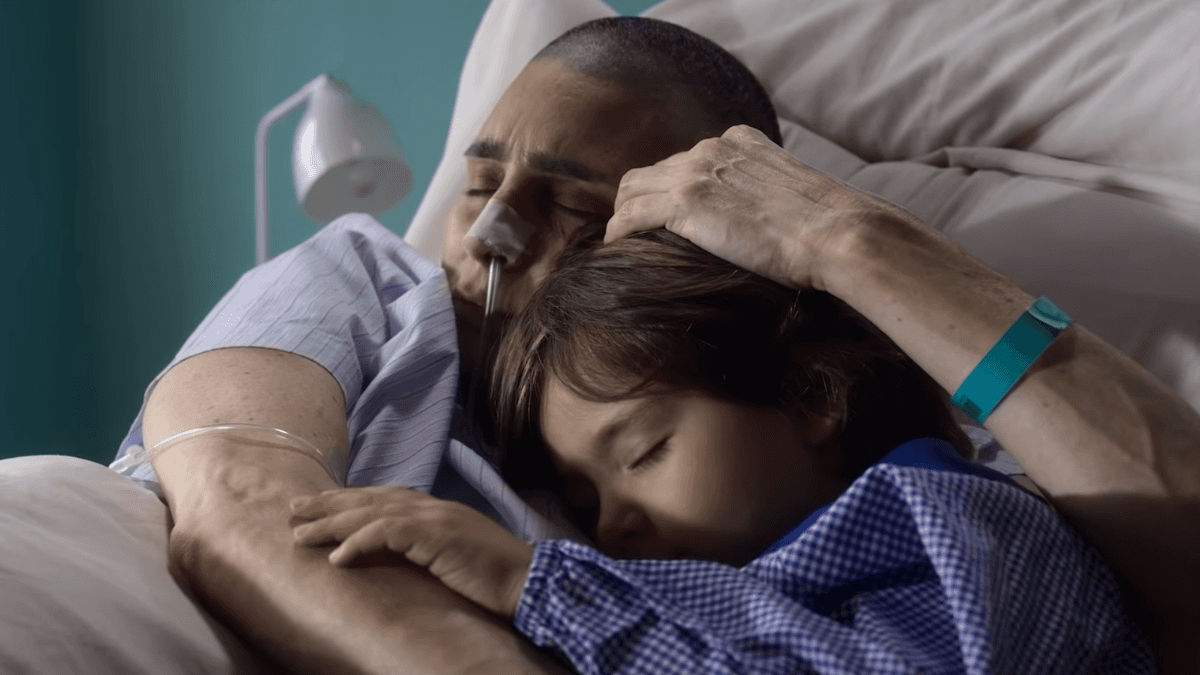
Marie (Valeria Bertuccelli) is dying. Cancer sucks. There’s nothing the doctors can do, including giving her the compassionate end she and her husband have decided on. Or, they could give it to her, but they’re hesitating. It’s much easier to waffle when you’re not the one writhing in mind-altering pain. Of course, Marie’s got a reason to hang on as long as she can: her 3 year old son, Tomy. Whatever time she may have left, she’ll use it to write a journal so that her son may know her even when she’s gone. In it, she’s funny and witty, imparting bits of wisdom, tenderness, and personality, and a few wishes for what his life might be. Meanwhile, on Twitter, she’s nearly the opposite – sarcastic and bold, attracting a keen audience who appreciate her honesty during an impossible time.

Bertuccelli has a tall order to deliver from a hospital bed. With a son, a husband, a bouquet of friends, and a social media following, she’s the hub for grief and the receptacle of medical disappointments. This is her end of life, yet she’s still trying to be so many things to so many people. The book for her son gives her last days meaning and purpose, the perfect metaphor for the importance of time and using it well. The film isn’t sugarcoating death, nor is it dramatizing it. It’s ugly, messy, sometimes joyous, sometimes desperate. It’s not glamourous but it’s also not an excruciating sob-fest. Loosely based on a true story, Carlos Sorin’s film is about treasuring what you have while you have it.

Ghosts of War

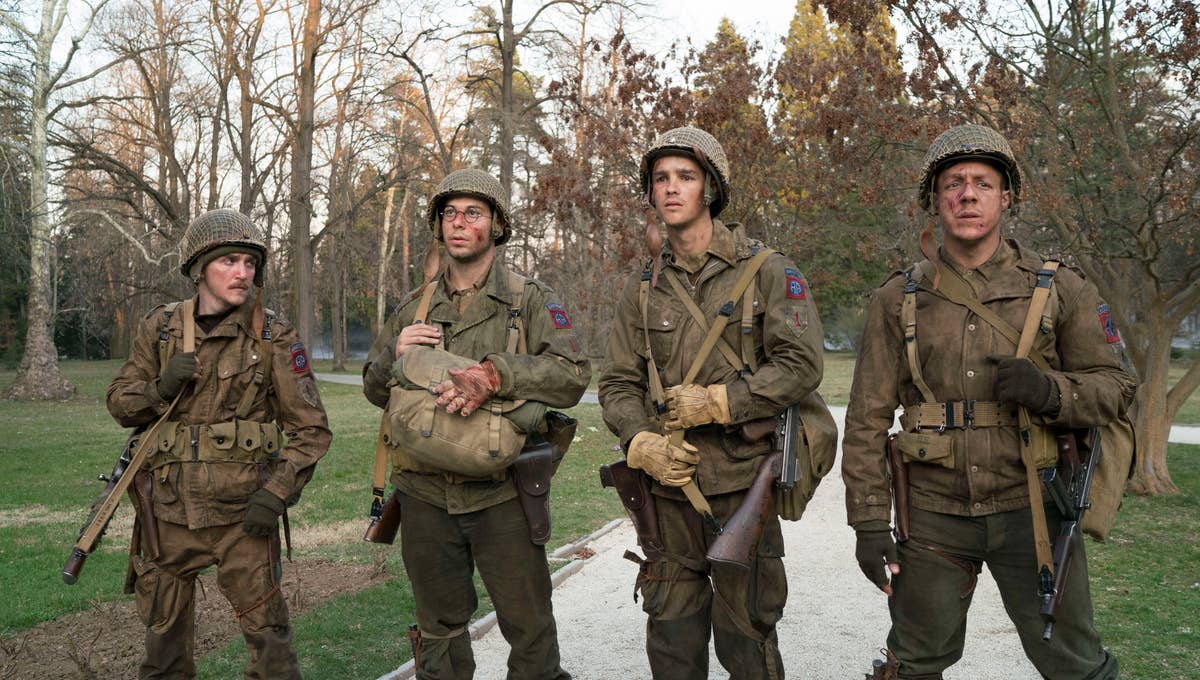
In 1944, a team of five allied soldiers are assigned to protect a French mansion that the Nazis recently vacated. They are late arriving to relieve the current watch, who are suspiciously eager to leave. Almost immediately after they do, weird things begin happening to each of the five as they split up and check out the mansion. Clearly, this house is haunted, and it’s no surprise since the Nazis seem to have ritual-killed the family who once lived there (the pentagram in the attic is not just decorative, it’s fully operational).

From the moment Billy Zane appears on screen, it is clear that Ghosts of War is not going to be a good movie, and is not even trying to be one. Its goal appears to be to make you jump in terror, with it settling for mild twitches of surprise. Which kind of works, in its way. The house is mysterious enough to keep your attention, and the weird things happening within are clearly not random. These patterns hint that there is a solution to be found somewhere in the house, and our five soldiers are focused on figuring it out.

But then, things go sideways in a hurry, and that is because Ghosts of War has one other secret goal, ripped directly from M. Night Shyamalan’s playbook. Namely, to blow your mind when the truth behind these strange events is revealed. And as in most Shyamalan films, Ghosts of War’s twist feels like a cheap gimmick. Not only does his particular twist make no sense, the movie would have been better if it had just been left out.

That ill-conceived twist turns this uniquely-set haunted house movie into something we have seen done many times before, and seen done better just as many times. Especially because Ghosts of War’s ending seems to have been misplaced, or else it disappeared into thin air. Where did it go? Perhaps Billy Zane can track it down, but until he does, what’s left is a movie that is both a half hour too long and 20 minutes too short.

Hillbilly Elegy

J.D. Vance has a story to tell – his own. Many would call it a rags to riches story, or perhaps a successful escape from an impoverished childhood; director Ron Howard and the movie studio went with “inspiring true story” but all of these seem slightly condescending. Vance himself went with “elegy,” a tribute to the place he came from and perhaps a lament to its end.

Older J.D. (Gabriel Basso) has overcome some rather humble beginnings to attend law school at Yale. It’s interview week, especially crucial to him because even with financial aid and 3 jobs he can’t afford next semester’s tuition without a summer internship. Meeting prospective employers over dinner, he’s overwhelmed by the trappings of etiquette and fine dining that seem to come so easily to others. It’s clear he doesn’t feel he belongs, and a phone call from back home only cements it. It’s his sister, Lindsay (Haley Bennett), calling to say that mom Bev (Amy Adams) is in the hospital. Again. A heroin overdose. His help is needed, urgently.

Over the next 24 hours of trying to install Bev in yet another rehab manage a facility despite Bev having let her insurance lapse, J.D. is flooded with difficult memories from his challenging childhood.

Critics have been plenty harsh about Hillbilly Elegy, and I can appreciate their concerns. It delivers heavily on the Oscar bait melodrama, and instead of inspiring important conversations about cultural and economic gaps, it’s got some pretty soft platitudes instead of real insight. Not that a Netflix movie was going to solve the wage gap or cure the generational impacts of trauma.

No one can deny that Glenn Close and Amy Adams give everything to their roles. Close manages a bark that bites, with just a nibble of vulnerability, a terrific performance that just doesn’t have anywhere to go, there’s no arc, it’s mostly just an act of observation. Amy Adams’ character, on the other hand, is more like a series of attacks. She gnarls and gnashes her teeth and we get small glimpses or what triggers her explosions, but it’s not enough to piece together something truly satisfying. The characters lack insight and we can only guess that this cycle will be very hard to break.

The Outpost

In northern Afghanistan circa 2006, the Americans had a series of outposts to promote counterinsurgency and “connect with locals”. Camp Keating was nestled in a valley surrounded by Hindu Kush mountains in an attempt to stop the flow of weapons and Taliban fighters from nearby Pakistan.

The camp is an exhausting place to be with near constant firefight. It’s also nearly indefensible, and what personnel survive quickly burn out. But this movie primarily covers the Battle of Kamdesh of October 3, 2009, one of the bloodiest for US forces in the war in Afghanistan. They were assaulted by hundreds of Taliban insurgents who breached the bases’s perimeter defenses in just 48 minutes and lit the outpost on fire. There had been a systematic failure to adequately support the base, but the the troops on the ground repulsed the attack “with conspicuous gallantry, courage and bravery.” Due to a lack of available aircraft and density of terrain, help was slow to reach them – most didn’t arrive until after the 14 hour battle was over. The small contingent of American troops lost 8 soldiers that day, with 27 more wounded; those that survived did so thanks to bombers arriving to coordinate airstrike.

If you like war movies, this one is well-made. If you’re prone to migraines, this one’s constant gunfire makes it a major trigger. Once the battle starts, it’s unrelenting, and it wasn’t exactly easy going before that either. The intensity is real, and the realism is ugly.

The movie thinks that SSG Clint Romesha (Scott Eastwood) is our hero, but he’s just the guy who wrote the book. Caleb Landry Jones, the much much better actor, as SPC Ty Carter, is the guy you can’t take your eyes off of. I dare you to try. Aside from Jones, I won’t say the acting impressed me much. The lesser roles are sprinkled with real-life soldiers, but they aren’t shouldering enough to ruin anything. It’s the Hollywood royalty who’s mucking things up, and I don’t just mean Scott Eastwood, though I definitely do put him first on my list. A smolder is not enough, Scott. A famous dad apparently is, and he clearly shares a tendency toward a certain kind of film as his old man. Milo Gibson is of course Mel’s son. James Jagger belongs to Mick. Will Attenborough is the grandson of Richard. Scott Alda Coffey is grandson to Alan Alda. And of course Orlando Bloom is Mr. Katy Perry. No one need win a role by merit here!

The unit from Combat Outpost Keating became the most decorated, though I doubt that’s much comfort: 27 soldiers were awarded the Purple Heart for wounds sustained in combat, 37 were awarded the Army Commendation Medal with “V” for valor, 3 soldiers were awarded the Bronze Star Medal, and 18 others the Bronze Star Medal with “V” device for valor. Nine soldiers were awarded the Silver Star for valor. Two were later upgraded to a Distinguished Service Cross. The Outpost is a fitting tribute to the kind of hard work and heroism that earn those medals. For me, it was too much. It was non-stop violence while I felt no emotional connection to any of the characters. But I’m confident that fans of the genre will find a lot to like here – a stunning, expertly and respectfully made modern war movie.

Hometown Holiday

Krista and Ashley are sisters who co-own a florist shop together in their tiny hometown of Rust Creek, but working around weddings and romance all the time hasn’t translated to luck in love for them. Krista (Sarah Troyer) has recently vowed to be more selective about who she dates while Ashley (Samantha Gracie) is pining over a guy she crushed on back in high school. It seems an almost hopeless situation until Ryan (Bradley Hamilton) comes to town.

Ostensibly Ryan is visiting his pregnant sister in Rust Creek but truthfully he’s also got his eye on a potential new client, a local widower turned viral country singing sensation. As an entertainment lawyer, he’s eager to sign Wes Gently (Kevin McGarry) to a big contract and has tracked him down at an event, but Wes is hesitant and will need some wooing. Luckily this gets Ryan into wooing mode so when a stunning local florist (it’s Krista!) working the event asks him to dance, he starts up a light flirtation and a medium-heavy get to know you with her, while routinely stepping on her toes. And wouldn’t you know it, this leaves just enough space for Ashley to swoop in on her high school beau…who just happens to be THE Wes Gently! Is it possible we’re about to have a double holiday romance?

Answer: yes, yes it is. But first we’ll have to suffer through a mild case of mistaken identity, slight interference by a kid, a couple of scenes from Dickens at a local play house, and like all good Christmas stories since the very first, a child is born.

These Christmas romance movies never overstay their 90 minute welcome (this one checks out at 84, and that includes the credits), so there isn’t a lot of time to divide between two blooming relationships, especially when there’s a break because someone’s worried about being used. And like the formula dictates, the physical side of romance is non-existent until perhaps a post-engagement, close-mouthed kiss, which is a crazy yet extremely strict and carefully followed rule. This movie will win no converts but will likely please fans of the genre.

True History of the Kelly Gang

The ‘true’ in the title is false of course, or debatable anyway, which I suppose means the ‘history’ part is too, although our story does take place in the past. Peter Carey’s vital and vigorous novel is a work of fiction, using many true aspects of the Kelly Gang story but inventing others as well. The film poses as Ned Kelly’s autobiography, mostly written and narrated by himself to an unborn child that Carey made up. But if Ned Kelly had had a pregnant wife, if she had half a brain she would have wondered if Ned would live to meet his daughter, and might have encouraged him to leave behind a written legacy, just in case.

The film is a departure not only in story but in tone and in telling, the violence crazed and stylized but the main concern more character than plot. You may already be familiar with the banks that were robbed and the cattle stolen, but this “true history” is more interested not in what they did but why they did it. The class struggle is palpable enough, the sense that there is no place for these young men, no future. There is real rage here, and a dangerous accumulation of testosterone with no constructive outlet.

Ned’s (George McKay) legacy has of course had a lasting impact on Australian culture; this film gives him a punk rock makeover for the 21st century and adds to the myth if not the man. With stunning cinematography, a gritty feel, and anarchic energy, there is much to be admired in Justin Kurzel’s film. Too bad I just didn’t like it. There was a lot of muck, a lot of exaggerated portrayals of machismo, and for me it was just too much crazy and not enough cohesiveness. But, if you’re looking for a western with a distinctly Aussie flavour, this one’s got that, plus lads in dresses, Russel Crowe, Charlie Hunnam, Thomasin McKenzie, and Nicholas Hoult, if you needed more convincing.

12 Gifts of Christmas

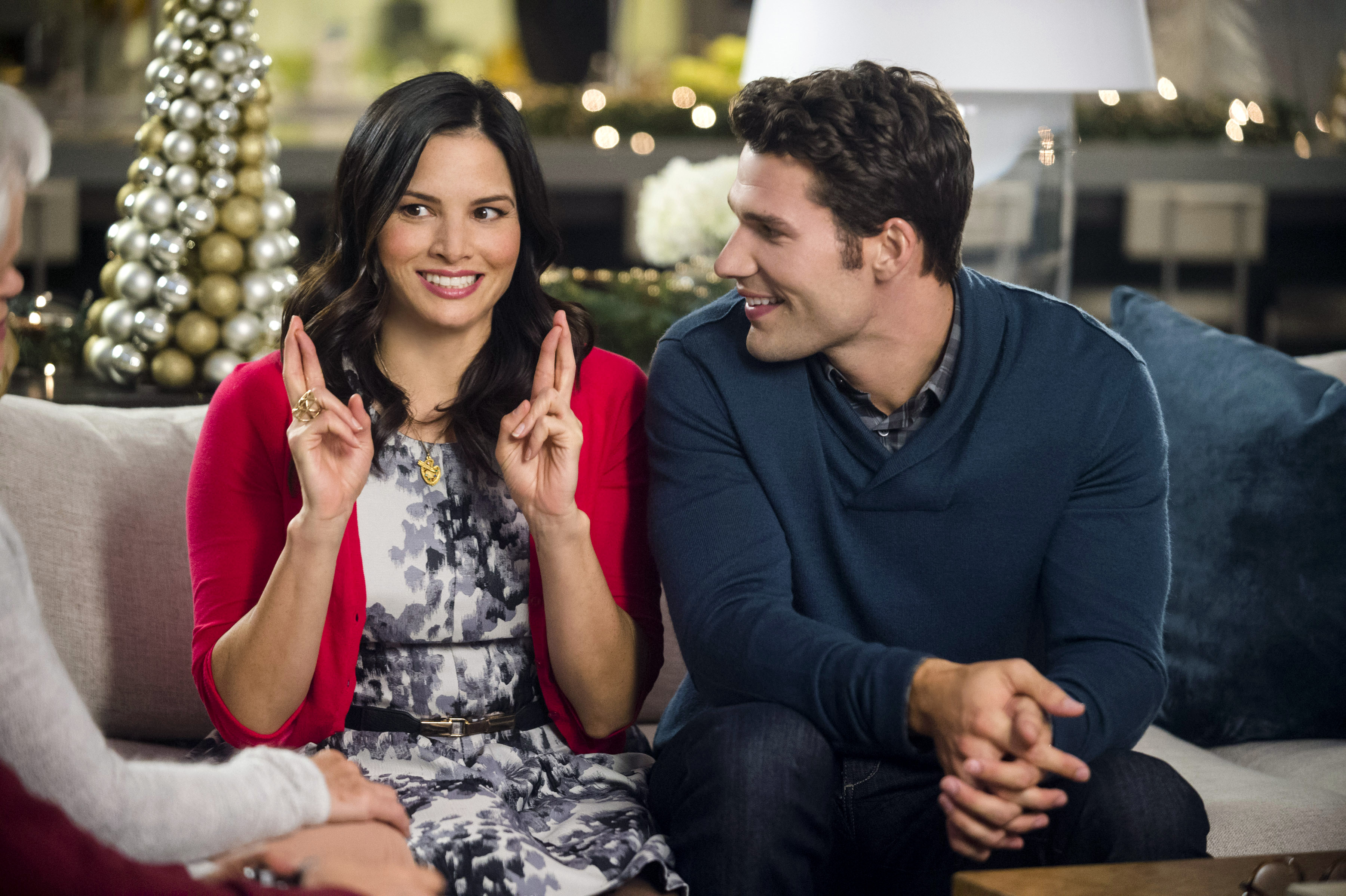
With only two weeks left until Christmas, struggling artist Anna Parisi (Katrina Law) decides to advertise as a holiday personal shopper. It is possible Anna does not have the sharpest business acumen but she also doesn’t have rent money, so she probably should have put a little hustle into her side hustle. Marc Rehnquist (Aaron O’Connell) is a busy ad exec who was supposed to have ordered corporate Christmas gifts for the 100 employees in his office, and apparently doesn’t realize that bulk orders this close to the holidays are practically impossible. Luckily they both patronize the same bakery where Anna’s recommendation of the secret menu cupcakes impresses Marc so much that he hires her to shop not only for his employees, but for his nearest and dearest as well – who apparently aren’t quite so near or so dear that he’s spared them a single thought before now. If it’s truly the thought that counts, Marc usually substitutes thought for expense, sending lavish gifts along with notes apologizing for his absence. But with thoughtful Anna crossing off his list, he’s going to learn a thing or two about priorities and the true value of his time.

12 Gifts of Christmas is about as complex and full-bodied as a bottle of Boone’s but the 2020 holiday season is fast approaching and concessions must be made. Some people are very serious about their Hallmark/LMN/Netflix romantic Christmas movie tradition/addiction, but in our house the annual viewing is a little more reluctant, and not without some grumbling, yet there are indeed some faithful traditions. Sean complaining about every movie set in New York starting off with trite stock footage: check. Then Jay rolls her eyes at the very light attempt at a will-they-or-won’t-they, and Sean’s belly growls at the third cookie baking montage, and Jay’s eyes glaze over at the sight of so many jewelry boxes, and Sean starts to sweat realizing that there are so far zero jewelry boxes under our tree, and we both agree that the only true Christmas miracle in this whole movie is finding street parking in “Manhattan” (Avid Hallmark fans will recognize Eva’s Bakery which has appeared in several Hallmark movies as a New York City location though it’s actually a real bakery in downtown Salt Lake City, Utah).

This movie earns no distinctions in acting or director or production or story. It follows the Hallmark formula loyally and steadfastly, so there are no surprises here, none whatsoever, but if you’re in the market for some banal, PG “romance,” Hallmark’s shelves are fully stocked and you can take your pick.

A New York Christmas Wedding

Jennifer loves David but her overbearing almost-mother-in-law is pushing them into a high-society Christmas Eve wedding in just a few months that Jennifer doesn’t really want. Having lost both her parents and her childhood best friend Gabby, the holidays have always been hard for Jennifer, and she’s worried her loneliness will be more pronounced. But never mind that: Jennifer (Nia Fairweather) is about to meet her fairy godfather (Cooper Koch) who sends her to an alternate universe to, you know, learn a lesson or whatever.

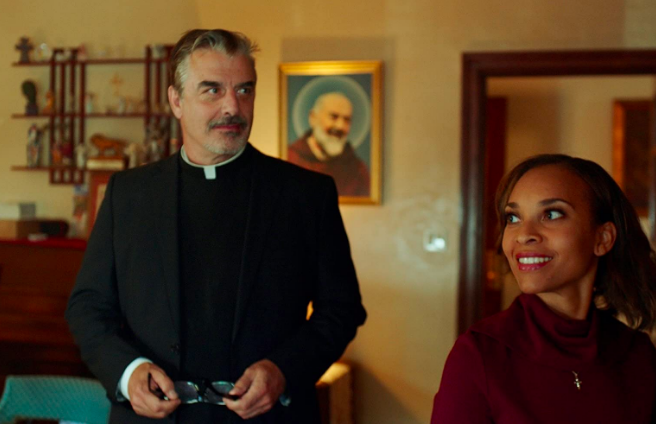
Alternate Jennifer is in a committed relationship with her dead childhood best friend Gabby (Adriana DeMeo), who is not dead in this version of reality, obviously. Neither is her father, which is nice. But instead of an overbearing mother-in-law ruining her impending wedding, they’re now dealing with a heartbreaking rejection from their catholic church. Father Kelly (Chris Noth) has been instrumental in their lives but his hands are tied – the church does not permit or approve of same sex marriage.

Full disclosure: there are no Christmas weddings in this movie. There is no Christmas, period. Writer-director Otoja Abit (he also plays David) seems to be trading on the romantic holiday theme to bring attention to his gay rights in the church movie. Which is a little dishonest, but I guess you gotta do what you gotta do.

It’s a timely film considering a documentary by Evgeny Afineevsky called Francesco that premiered at the Rome Film Festival a couple of weeks ago featured comments by Pope Francis that seemed to indicate his acceptance of same sex civil unions. Not of marriage in the church of course, and certainly not of “homosexual acts” which are of course still very very wrong and very sinful. But hey, if two dudes want to spend a committed life together, raise a family and share a marriage, that’s cool, they can put a ring on it and get the tax breaks as long as they promise to never have sex.

That Father Kelly even considers their request is a work of more fantasy and fiction than the godfather’s alternate universe in which it exists. I guess it’s nice to dream.

If it sounds interesting to you, A New York Christmas Wedding is a tolerable watch. It has that much in common with the romantic holiday movie it pretends to be: it’s low budget and medium quality but don’t mind the genre, then you won’t mind it’s production values. It’ll do.