50 years into the future, the sun is a dying star, and Earth will die along with it. We send a ship of astronauts to bomb the sun back into shining but the team goes awol somewhere out in the million miles of space. So we send another one, but this IS IT. Mankind’s last hope. We’ve officially mined all of Earth’s resources for this motherload. No pressure!
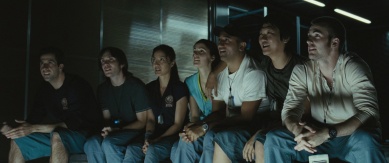 The new team includes Rose Byrne, Chris Evans, and Cillian Murphy. They’re clearly already under stress when we meet them several years into their trip to the sun, but shit’s about to get a whole lot messier. Just as they’re approaching the most dangerous part of the mission, they receive a signal. It’s a ping from the lost ship. It’s been 7 years since anyone’s heard from them…they can’t still be alive, can they?
The crew debates whether they should divert their mission to find out. But this is not a democracy, the captain reminds them. They’re scientists, and he gives the decision to the person most qualified to make it, the ship’s physicist, played by Cillian Murphy. No matter what he decides, he’s fucked. No matter what he decides, his crew will hold him responsible for the lives and the mission he’s risked. Classic lose-lose scenario. Fun!
Okay, fun is the wrong word. Writer Alex Garland and director Danny Boyle are reteamed after 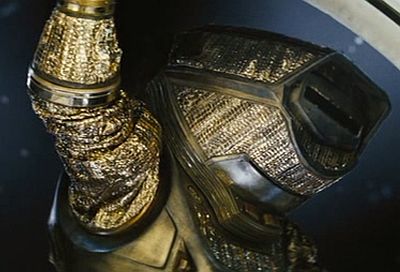 bring us The Beach and 28 Days Later. Danny Boyle has more recently done Slumdog Millionaire, 127 Hours, and Steve Jobs. Alex Garland wrote Ex Machina. These boys don’t do fun. They do: harrowing, intense, suspenseful. Sun-psychosis. The closer the ship gets to its goal, the more things fall apart. Fall apart literally and psychologically. And philosophically.
It starts out as an interesting, cerebral sci-fi adventure, on the lower end of the action scale, but not without daring stunts. But in Sunshine, getting closer to the sun is like getting closer to god. And reality unravels a bit like we’ve seen in Interstellar. Sunshine is ambitious. Boyle and Garland are asking us to consider some hot and heavy questions. Big Questions. Boyle manages to put story and character ahead of special effects, making this a very worthy, brainy, thoughtful entry into the sci-fi genre (and likely his last – he found this film to be extremely draining). The film makers actually want to make us understand what it’s like to get so close to our most glorious star. The increasingly fractured and subliminal scenes are almost reminiscent of some of the more hallucinogenic stuff from Boyle’s Trainspotting days, and the glimpses from inside 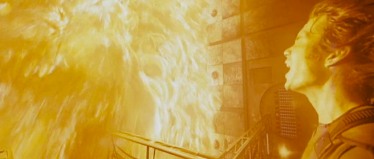 the helmets of the striking gold space suits clutch at your throat. I had some very real autonomic responses to this film and I swear I could feel the heat. Boyle wisely uses actors who can take the heat and radiate some of their own. He even more wisely stays away from the love triangle cliché and sticks to things that feel very real for a set of humans staring into the sun and seeing their own deaths. There’s fear and panic and bravery and resolve.
If this movie was American, it would doubtless be a bunch of American cowboys being sent up with fireworks and catch phrases, but Sunshine includes an appropriately global response, which helps to underline the fact that in space, with human extinction on the line, there is no race or culture. It’s about those decisions to make sacrifices, to act for the greater good, to reach beyond which you think yourself capable. Sunshine stumbles in its final act – things get so weighty it seems to buckle a bit, but this remains a movie that is criminally underrated. Many thanks to my fellow film bloggers who pointed me toward this, and I hope maybe I’ve done the same for some of you.

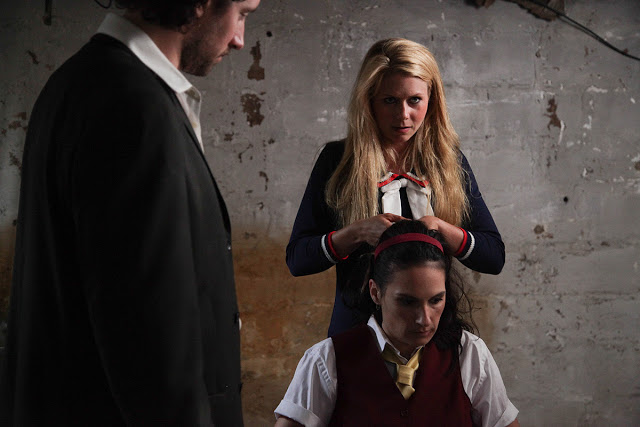 Hank Boyd is Dead is half narrative film, half pretend documentary, with characters giving talking head interviews about the deceased and the mysterious circumstances of his life and death. The production values are a little inconsistent, with the narrative pieces much stronger. The acting is quite good. The unknown cast really makes this work, with Stefanie Frame as Walsh being a particular standout.

 As you may remember, I had a great time last weekend watching a
  Which is not to say Assassination Classroom: Graduation is a bad movie. I mean, it’s not really a GOOD movie by any measure, but my post-screening research shows that it adheres quite closely to the source material (incidentally, this is a sequel to last year’s Assassination Classroom with each movie covering about half of the original manga’s story) and was a big box office hit in Japan. But this movie had no intention at any time of embracing the complete ridiculousness of its concept or the yellow squidlike teacher. Instead, Assassination Classroom: Graduation plays it almost completely straight, delivering life lesson after life lesson as the middle school class grows up and learns the ways of the assassin from a big yellow squid. How you can play that concept straight at all, I don’t even know.
 So back to those green tea Kit Kats. Apparently Kit Kats are a huge deal in Japan because the name sounds like “kitto katsu”, which means “you will surely win”. That nice sentiment has given rise to a whole host of ridiculous Kit Kat varieties being eaten up by the Japanese (and also at least two white Canadians), including Shinshu Apple, Edamame Soybean, Purple Sweet Potato, Hot Japanese Chili, and Wasabi, among others.
  There will always be a place in my heart reserved for ridiculous movies. Ones that know they are dumb and just go for it anyway. Terra Formars is one of those movies. It is everything that you’d expect from a Japanese sci-fi battle between giant humanoid cockroaches and criminals with bug powers who are being paid to destroy the roaches so that humans can live on Mars.
 Personal taste aside, Miike would be deserving of the lifetime achievement award based on productivity alone, as he has somehow screened 30 films at Fantasia during the festival’s 20 years of existence!
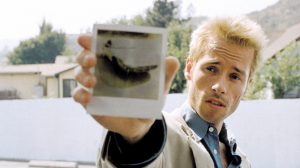 It’s the story of a man looking for his family, like Finding Dory only more murdery. Okay, it’s nothing like Finding Dory, but Leonard (Guy Pearce) genuinely can’t form new memories, and he’s not so much looking for his wife as looking for her murderer. The story is ingeniously (and frustratingly) told frontwards AND backwards, colour sequences alternating with black and white, creating a disorienting narrative that mimics the character’s confusion. The two story lines eventually meet, but this technique manages to build both momentum and tension in ways we hadn’t experienced in a good long while.
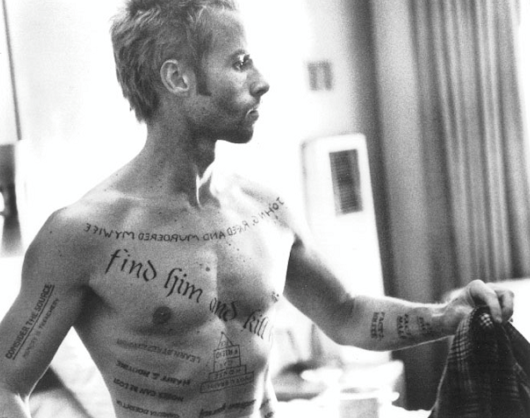 and certainly no Asshole if you don’t obsess over this movie at least semi-regularly.
 not at all a week overdue for a haircut, and my chubby little knees are definitely demurely covered by my yellow floral dress and not exposed because my dress is somehow bunched up around my hips AGAIN. Now I also need you to picture The Worst Thing Ever. Not the worst thing in a horror movie. It’s not chainsaws for hands or a chain-letter that kills your favourite aunt. It’s the Worst Thing Ever. The kind of thing that, when you go to prison for it, all the other prisoners think you’re a disgusting lowlife. Stealing your Grandma’s welfare cheques? Understandable. Dismembering your wife? The dirty whore deserved it. But this? This is bad. So now imagine that this Thing turns you into a monster. Literally. Like, not just morally a monster, but actually a monster.
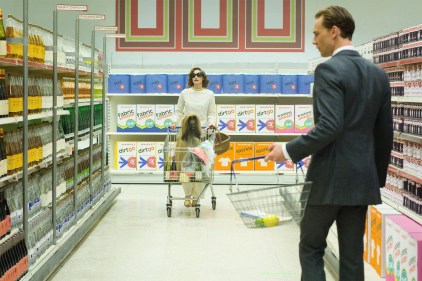 The film’s biggest problem is that it took 40 years to convert J.G. Ballard’s novel of the same name into a movie. In the meantime, Snowpiercer happened and was a way more awesome movie than High-Rise, or really anything else ever.
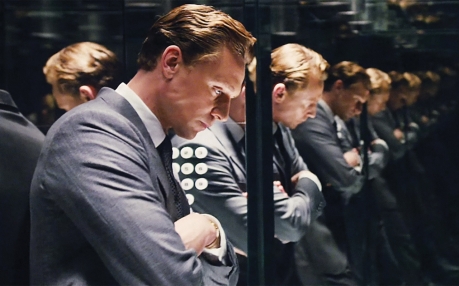 and garbage bags that line the halls, and scavenge for dog meat rather than drive to the nearest supermarket for hot dogs. That’s something that was impossible for me to swallow.
 take forever to make. Both The New World (2005) and The Tree of Life (2011) were based on scripts that he started back in the 70s. They also take forever to edit. He reportedly shot over a million feet of film for The New World, which of course had to be edited down to a concise 135 minutes. Knight of Cups, shot during the summer of 2012, spent nearly four years in post-production. Both Christian Bale and Natalie Portman have said that they spent more time recording their voiceovers than they did in front of the camera.


 ASSHOLES WATCHING MOVIES