Monthly Archives: October 2015

Halloween Thursdays: Creepy, Evil Kids

TMP

What can be creepier than evil, sadistic children? Sometimes scary things come in small packages, especially spooky because horrific deeds are creeping up from where we least expect. I find these movies so unnerving that I never watch them. But I have seen these three. Thanks again to Wandering Through the Shelves for hosting this chilling month of Thursday Movie Picks.

Rosemary's Baby

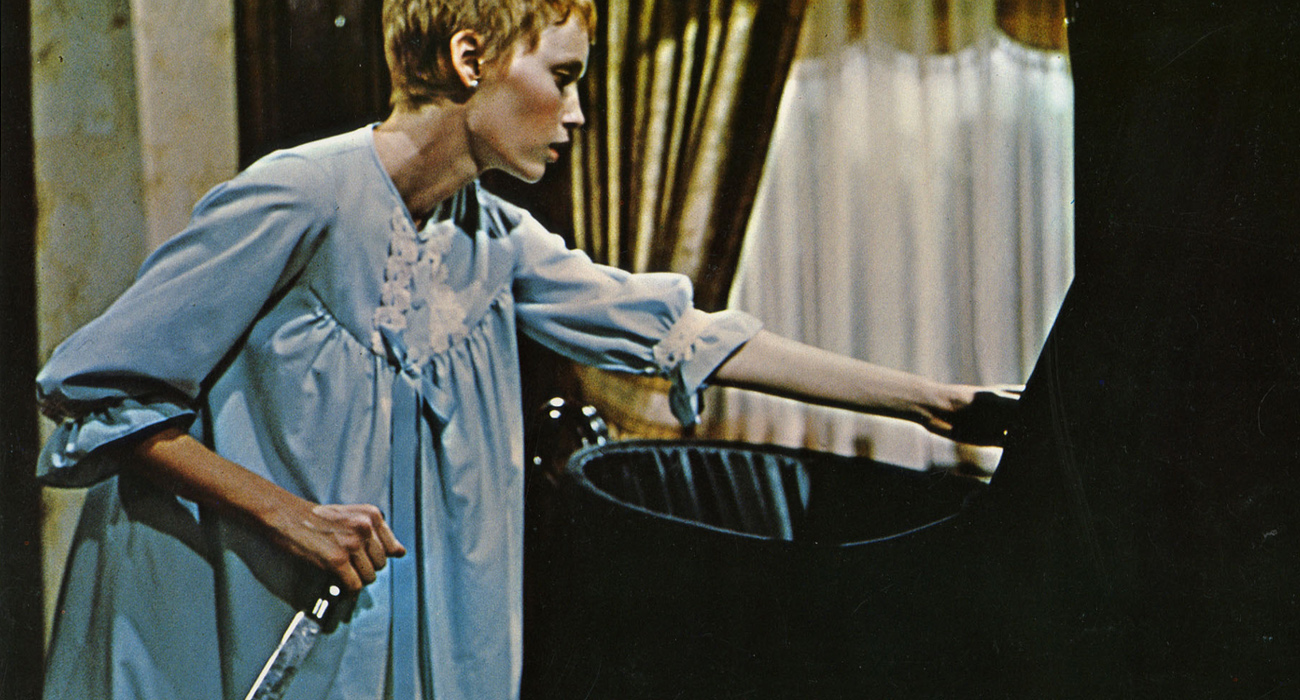
Rosemary’s Baby (1968)– At least here we don’t have to look evil in the face. The Spawn of Satan rests comfortably in the womb of the great Mia Farrow. Rosemary can’t shake the feeling that something’s wrong with her baby and is starting to think that she’s been getting some bad prenatal advice from sweet creepy old lady Ruth Gordon. It takes a sick mind to play on the anxieties of an expectant mother and Roman Polanski is just the guy for the job.

The Exorcist

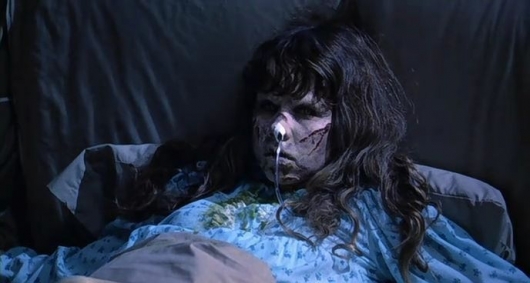
The Exorcist (1973)– It’s hard to blame a kid for the cruel things they say and the dastardly things they do when you know it’s just the demonic posession talking but Linda Blair and and the make-up crew make Regan a memorable villain. I don’t believe in possession or exorcism so I sleep just fine after watching it but Ellen Burstyn does such a great job as a mom who just wants to know what’s wrong with her daughter that the film holds up even today.

white ribbon

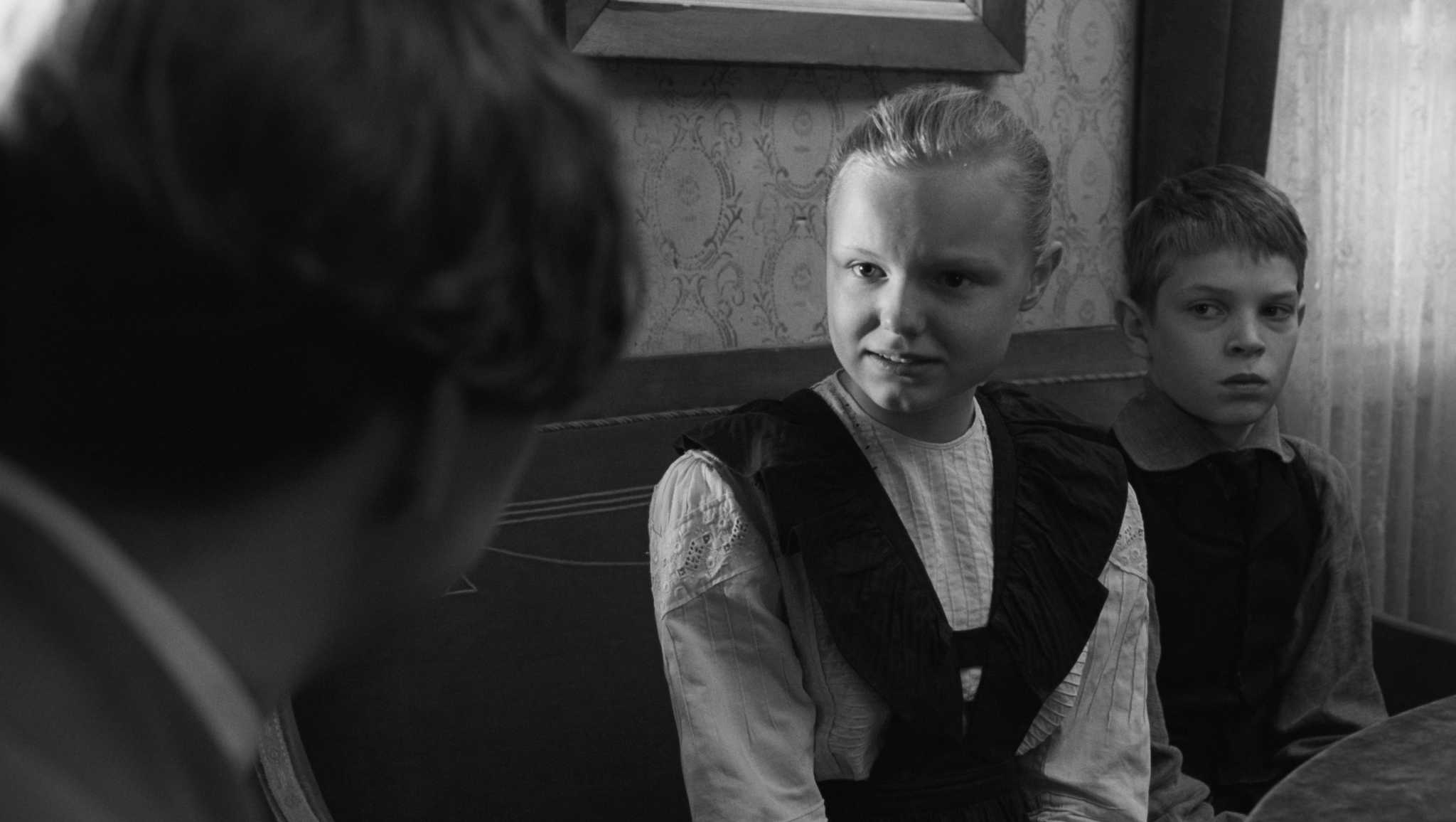
The White Ribbon (2009)– No need for demonic possession when you’re a future Nazi. In a small German village, suspicious “accidents” escalate into brutal assaults and the local children seem to be at the center of it. Like most Michael Haneke films, The White Ribbon is disturbing without technically being a horror movie. I’m not the only Asshole who’s struggled with this one.

Lily Tomlin puts the GRAND in Grandma

I would call this movie short and sweet, except it’s more like short and tart, tart, tart!

Lily Tomlin is no ordinary grandma.

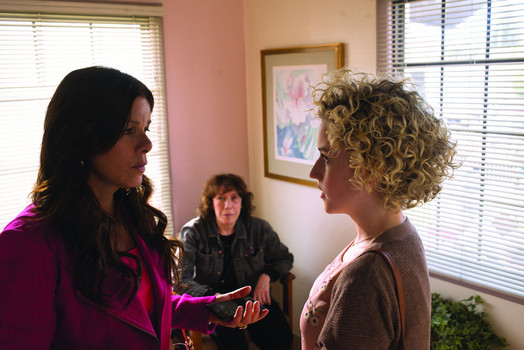
Sage (Julia Garner) is a sweet teenaged girl in need of an abortion. Or, more accurately, in need of $600 to get said abortion. Baby Daddy is a loser, so off to grandmother’s house we go to beg Grandma_web_1for termination money. Except grandma (Tomlin) has just broken up with her girlfriend (Judy Greer) (a mere “footnote” she calls her, bitingly), and has zero cash to spare. So the two embark on a weird road trip of sorts to collect on grandma’s various informal I.O.U.s from an interesting mix of characters (Sam Elliott, Laverne Cox, Elizabeth Pena) that dusts up some old secrets along the way.

I didn’t expect this movie to be so good. I think Lily Tomlin is an absolute goddess, and if we’re being honest, this, my friends, is what an Oscar-winning performance should look like. She’s both hilarious and heartbreaking.

Big congratulations to writer-director Paul Weitz who never gives in to the temptation to soften grandma Elle, and for casting Tomlin, who inhabits the skin so fully, practically licking her fingers because she knows the performance is that good.

E955d3fa8258843c3c46b41b509a6da02lle and Sage ride around in clunky, classic style in a 1955 Dodge Royal , a car that coughs and chokes and is as irascible as Tomlin herself (in fact, it’s Tomlin’s own car). Grandmother and granddaughter are bonding over their shared mission, but also in their mutual avoidance: mom. Marcia Gay Harden plays Elle’s estranged daughter and the character is written so smartly, and is so well-acted that we forget we’ve only just met her near the end. Even her absence has felt like a presence, and the three generations are a thing to behold.

While serving up a moving little character study, this movie also achieves a creeping, quiet feminism that just feels right. And the way it treats abortion – rather casually, in fact – is remarkable.

thumbnail_22301Oh Lily Tomlin, how do I love thee? It’s really hard to tell you about the gruffness, the toughness, the cranky acerbicness, and still convey how absolutely vulnerable a performance she gives in this. And it all feels so effortless that you may not think you’re seeing a performance at all.

It’s a really special thing to see three such meaty roles written for women. These characters are complicated and they jump off the page and out of the screen in a moving and intimate way. It’s a tiny movie but deserves a wide audience, so I hope I’ve convinced you to check it out.


Meanwhile: is there any possible way that you’d ever go to your own grandma for abortion money?


The Stanford Prison Experiment

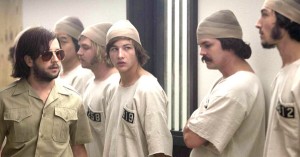
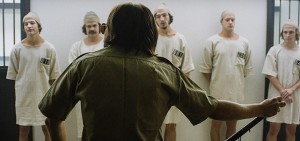
NEgmvND20hOojj_1_bIn 1971 at Stanford University, psychology professor Philip Zimbardo set up a 2 week experiment wherein Stanford students were recruited and paid $15 a day to either be a prisoner, or a prison guard. This ‘experiment’ was aimed to find whether inherent personality traits of prisoners or guards are the primary cause of the abusive behaviour that happens in prisons. The students were screened to exclude those with criminal backgrounds, questionable mental health, or medical problems. They were all deemed stable. Prisoners and guards were established by the flip of a coin.

Professor Zimbardo designed the experiment in order to maximize the depersonalization of participants – prisoners wore sac dresses and caps; guards wore uniforms and sunglasses. He imposed one rule: there was to be no physical assault of the prisoners. Very quickly, however, the participants’ behaviours exceeded beyond what Zimbardo could have imagined. Within hours, those in the role of guard were enforcing authoritarian rules to such an extent that some prisoners were subjected to psychological torture. The prisoners, disoriented, mostly passively accepted the abuse, and could be induced to taunt those that didn’t.

After just 36 hours, one ‘prisoner’ had to be released due to increasingly erratic behaviour. Fully stanford-movie-poster-919x517 a third of the ‘guards’ exhibited sadistic behaviour to the ‘prisoners’ who, keep in mind, were student volunteers just like themselves. They stripped them, degraded them, exerted them, bullied them, disturbed their sleep. It became an exercise in cruelty that the professor, reluctant to look away from his precious and costly little experiment, was forced to call off after just 6 days.
As a student of psychology, I poured over this data and watched a lot of the footage, fascinated and horrified. We don’t just study this in behavioural psychology, we also study it in ethics. Why? This ‘study’ would not pass muster today, not by a long shot, not by 87 prison yards stacked back to back. Zimbardo was not much of a scientist or researchers. The MOMENT his ‘experiment’ (and you see by my quotations how I long not to call it that) veered away from predicted boundaries and went straight towardSPX DANGEROUS situations, he should have hit the brakes. Instead, he put kids in psychologically damaging situations. Kids who were making $15 a day and didn’t fully understand that they could walk away. FIVE of eighteen had to be removed early because of emotional trauma – and I remind you this lasted only 6 of the 14 intended days.
Luckily a grad student convinced Zimbardo that not only was he passively allowing these unethical acts (and HELLO – as psychologists, we’re supposed to HEAL not damage!), but that he himself had become absorbed by his role as the “superintendent” of the prison. He had lost all objectivity. This whole experiment was a waste – because he could not remain neutral, any stanford-movie-poster-919x517observations that we can make are subjective and anecdotal at best (let alone impossible to reproduce!).

If this sounds too crazy to be true, well, I wish that was so. This wouldn’t be allowed to happen on a University campus anymore, but it sure as hell feels familiar if you look over what happened at Abu Ghraib with fresh eyes. If it sounds kind of like a movie, well, now it is.

It stars Billy Crudup (Big Fish) as the famed professor, Nelson Ellis (True Blood’s Lafayette) as an ex-con consultant, and a bunch of young men as the students: Ezra Miller (Trainwreck) as prisoner 8612, Tye Sheridan (The Tree of Life) as 819 and Thomas Mann (Me and Earl and the Dying Girl) as 416.

The movie, thankfully well-acted, is chilling, troubling, and thought-provoking. The cruelty is stanford-prison-experimentrelentlessly one-note, so if you watch it, you’re going to want to pencil in some debriefing\discussing\come-down time immediately after, because the saddest part about it is that 45 years later, it’s just as relevant.


The Walk

Film nerds will remember a documentary released some years ago called Man On Wire. A mix of footage, reenactment and present-day interviews painted the story of Philippe Petit’s 1974 high-wire walk between the twin towers. (I remember this film so vividly I described its Academy Award nomination as “a year or two ago” to Sean when it fact it won in 2008).

the-walk-2015-movieRobert Zemeckis has bravely adapted this story in The Walk, with Joseph Gordon-Levitt an inspired choice as Petit.

The achievement, the thing to see, is of course the walk itself. In dizzying IMAX 3D, the effects glorifying the height are so realistically rendered that audience members feel real vertigo. If you’re not big into heights, may I remind you that the World Trade centre stood 1,362 feet above the ground, and Petit made his walk without a net. This has induced nausea and even vomiting in some audience members, and while I felt fine in that respect, I did experience some spine-tingling anxiety when nearly the whole of the second half of the film is spent up in the clouds, perched extremely precariously, sometimes tauntingly so, upon a wire we know to be improperly installed.

Petit narrates the story to us from atop another of New York’s tallest destinations – the Statue of Liberty’s flaming torch. This narration lends a fairy-tale quality to the film that it didn’t need zz21or benefit from, and in fact it felt like an affectation. The first half of the film is slow-going. It takes an hour to get to the good part, but if you believe that things are worth waiting for, then you’re in for a treat.  I’ve had 3D fatigue for quite some time now, but here again is a movie that actually uses it (like Everest) not just to drive up ticket prices, but to stoke the feeling of soaring (or of falling, if you’re a pessimist) in the audience like no other image ever could. Dariusz Wolski’s cinematography is stunning and breath-taking in that very literal way of having stolen the wind right out of my lungs.

The walk itself, as Petit always delights in telling us, is completely illegal and planned in secret. This part of the story almost feels like a heist movie, between the planning and the recruitment of compatriots. But once Petit puts one foot to the Screen Shot 2015-09-30 at 10.05.24 AMwire, it becomes a work of art. Early morning commuters stop traffic to look up, look waaaaaaaaay up at these buildings newly erected, not yet a beloved part of the city’s skyline, and suddenly they’re injected with life and meaning.

Is this movie Zemeckis’ love letter to the twin towers? It’s quite a tribute, handled with love and respect. The movie may be uneven, and a little brainless, but it is without a doubt visionary, if only you dare not only to keep your eyes open, but to do what the wire walker must never do: to look down.


Anyone have a problem with heights? Has it stopped you watching certain movies before?

A Farewell to Helen Mirren’s Fabulous Tits

helen-mirren-looking-hot-with-breasts-showing-in-tight-corsetHelen Mirren, the 70-year-old British bombshell, has announced that her breasts have gone into retirement. No  more nude scenes, no more topless shots – “My pleasure pillows are purely for my husband now.”


Helen’s boobies first appeared to us in 1969’s Age of Consent and as recently as a 2010 (nude) photo shoot for New York magazine. helen_mirren_nudeThey were also featured in a 2011 SNL skit entitled “Helen Mirren’s Magical Bosom.”

“Well, I didn’t know my boobs were legendary, quite honestly, at that point,” she told Alan Cumming in a recent interview, seemingly halfway between flattered and embarrassed.

Now, as often as I might cringe when a woman takes her top off in the movies (because why? Is this really necessary? Is this even nice?), I have no problem imagining that every single time Helen did it, it was from a tumblr_mzz0ttsMmA1tr4owso1_500position of power. The woman, and her cleavage, are feminist icons.

In fact, you may note that she achieved Damehood from the Queen, in the Order of the British Empire for services to the performing arts in 2003, the same year she appeared topless in Calendar Girls. Coincidence?mirrencalendar

Helen Mirren is gorgeous at any age, but her confidence and sassiness in her 70-year-old skin is what makes her sexy, and damn is she sexy.

Screaming Bloody Murder

scream

The Wilhelm scream is, as you may know, a stock sound effect that’s been used in hundreds of movies, beginning in 1951 in the film Distant Drums when a soldier is bitten and then dragged underwater by an alligator. It is likely voiced by Sheb Wooley (best known for his one-hit wonder “The Purple People Eater”) and named after Private Wilhelm, a character in the 1953 western The Charge at Feather River who gets shot with an arrow (but this was already the 3rd movie to use the effect).

The Wilhelm was re-discovered by sound designer Ben Burtt (it was a reel labeled unforgettably as “Man being eaten by alligator”), who incorporated it into a little film he was working on called Star Wars. And then he kept on throwing it into all kinds of George Lucas and Steven Spielberg productions over the next decade until other sound designers picked it up and made it a tradition, or almost an in-joke among the industry. In fact when it appears in Indiana Jones and the Temple of Doom, it’s when a man is being eaten by an alligator. In-joke on an in-joke? Today it’s used religiously by Peter Jackson, Quentin Tarantino, and Tim Burton. You can hear it in Titanic, Inglorious Basterds, Spiderman, Planet of the Apes, Despicable Me, Sin City, and a hundred more.

Lesser known is the Howie scream, which made its debut in the 1980 film The Ninth Configuration but got its name from Howie Long’s death scene in the movie Broken Arrow. Its common labels Gut-wrenching scream, and Fall into distance give you some idea of how it’s popularly used.

Some of my favourite screams on film:

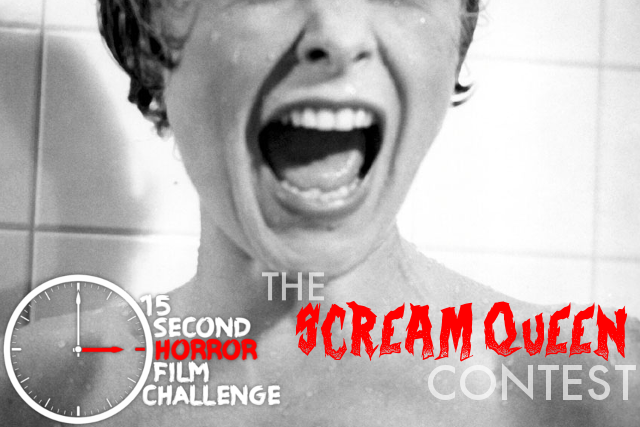
Janet Leigh in Psycho. Unforgettable.

Susan Backlinie in the opening sequence of Jaws. It’s gurgly and gasping and totally desperate.

Ronald Lacey in Raiders of the Lost Ark. There are lots of good Nazi screams in this movie, but Lacey’s final scream is classic. The burble at the end as he’s melting? Ooof. Brutal.

Margaret Hamilton as the wicked witch in The Wizard of Oz. I don’t know if it’s a scream so much as a shriek but it pierces the ear unlike any other before or since.

Donald Sutherland in Invasion of the Body Snatchers. Remember his last pod scream? Of course you do. Fuck.

Shelley Duvall in The Shining. That poor woman. Her scream is so visceral you might be led to believe she didn’t quite trust Jack Nicholson with that ax.

fay-wray-king-kong-1933Fay Wray is the scream queen for sure throughout the entirety of King Kong. Just watch her facial contortions and body language as she gives the alarm over and over again.

Now I’m not sure that you’re the equal of Fay Wray, but if you’re anywhere close, now’s your chance to prove it.

Andrew J.D. Robinson is a powerhouse director, producer, and all-round film-industry juggernaut to the city of Ottawa, and one of his many current projects is a Scream Queen contest as part of his 15 Seconds of Horror Film Challenge.

He’s looking for entries from one and all, so if you have a camera and a vocal cord (or two), you’re good to go. All you have to do is unleash your inner murder victim. One loud, terrorized, blood-curling scream, and you’re done. Andrew’s assembling them all into what I can only imagine will be the most alarming montage in movie history.

So do your best – or your worst – and send them to Andrew at workobeyfilms @ gmail.com by October 21st and be sure to include any social media of yours you’d like to be linked to. And then please god send it to us. Post them right here in the comments.

Healing Fest 2015

Matt and I decided to curate a little film festival for our coworkers. Our theme was Healing, and so we have put forth the following selections:

Good Will Hunting: Hey, remember Minnie Driver?

Ordinary People: See Donald Sutherland before he was old!

50/50:  Seth Rogen will teach you how to use cancer to your advantage when picking up girls in 50/50

Postcards From The Edge: Now with 20% more old lady thigh!

The Lookout: See Chris Pratt before he was famous and when he was played by Joseph Gordon-Levitt.

As Good As It Gets: Carol the waitress, meet Simon the fag.

Reign Over Me: 9/11 + Adam Sandler = do I have your attention?

The Diving Bell and the Butterfly: “A stroke of genius” says Matt.

Life As A House: “A movie more emotionally manipulative than my mother-in-law” says Jay.


What’s your pick?


50/50

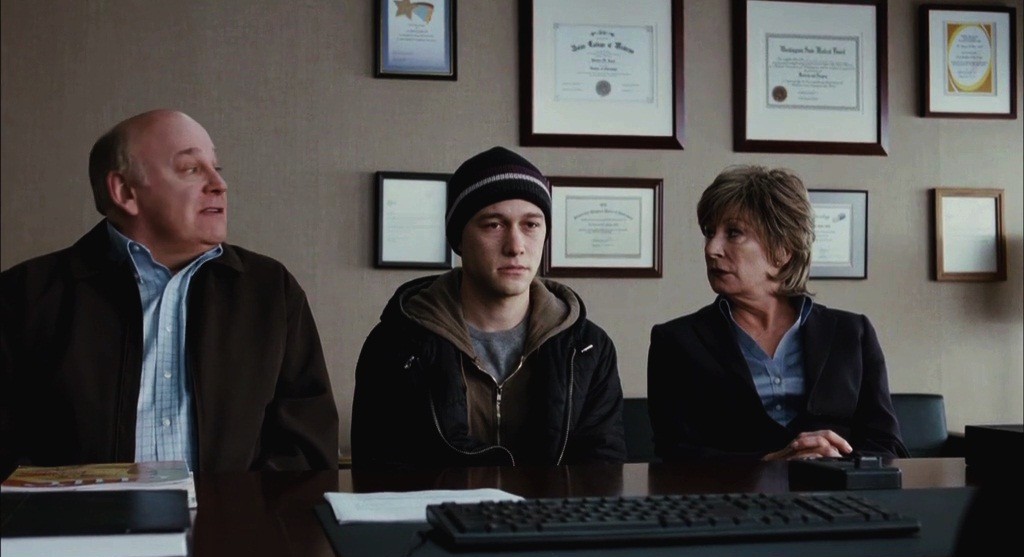
50-50-movieCancer, you bitch. She strikes again in this weirdo comedy about a young, prime-of-life dude (Joseph Gordon-Levitt) when he’s struck down by a big, bad tumor with an ugly face. Okay, I made up the part about the face.

Lucky for JGL, he has emotionally stunted pal Seth Rogen along for the ride, who’s there to tell him bald is a bad look on him, and that if he was a casino game, his 50/50 odds would actually sound pretty swell.

Adam (JGL) is a super cautious guy. He waits at the cross walk for the signal to turn. He refuses to drive because accidents are a leading cause of death (true, a couple of slots behind cancer, 50-50-movie_jpgd600but still). When the doctor tells him of his tumour, his knee-jerk response is  “That doesn’t make any sense though. I mean I don’t smoke, I don’t drink, I recycle… ” And we agree. It doesn’t make any sense. Cancer doesn’t play by any rules that we’re comfortable with.

Screen writer Will Reiser is using his own experience of cancer in his 20s to inform the script. His friend Seth Rogen was along for the ride and slips very comfortably into recreating the role. In real life, Rogen was apparently on the toilet when Reiser told him his diagnosis but that was deemed too gross to make the movie. They don’t pull many other punches, though: this isn’t your mother’s Terms of Endearment.

This is about a guy in his 20s 5050-007who gets very sick and faces his own mortality. Does he channel cancer sympathy to get himself laid? Sure he does. Does he consume lots of legal weed? You betcha. Does he have sex with hookers while skydiving? You’ll have to watch the movie to find out, but I will tell you this: it isn’t outside the realm of possibility.

This is a surprisingly grown-up script; it toggles between the drama and the laughs pretty seamlessly. It feels honest. Rogen is vulgar, but decent, and that begins to tug on you in quiet and unexpected ways. Director Jonathan Levine manages not to succumb to the usual morose 50-50_movie_screen_scene_40offerings of the genre and presents something touchingly humane. The excellence in casting extends to Bryce Dallas Howard as a girlfriend found wanting, Anjelica Huston gives a powerful turn as a fuss-budget mother, and Matt Frewer and Philip Baker Hall are welcome additions as co-cancer buddies. I’ll even magnanimously grant that Anna Kendrick is pretty funny as a newbie therapist trying real hard to walk the line. But it’s Joseph Gordon-Levitt who’s leading the pack with a really low-key, uncompromising performance.


Halloween Thursdays: Alfred Hitchcock Movies

TMP

Wandering Through the Shelves has us celebrating Halloween all month, representing a bit of a blindspot for me since I have a pretty low tolerance for being scared. So, when paying tribute to the Master of Suspense, I have selected three of my favourite (but not necessarily the scariest) of his films.

lifeboat

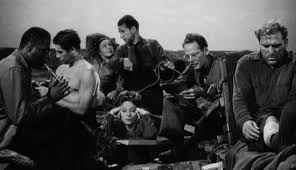
Lifeboat (1944)– I watched Lifeboat last night in a Greyhound bus station. It was the first time I’d seen it in over a decade and I couldn’t believe how well it holds up. Set entirely in a lifeboat, it’s staged and written like a play with some of the best dialogue in Hitchcock history.

Rear Window

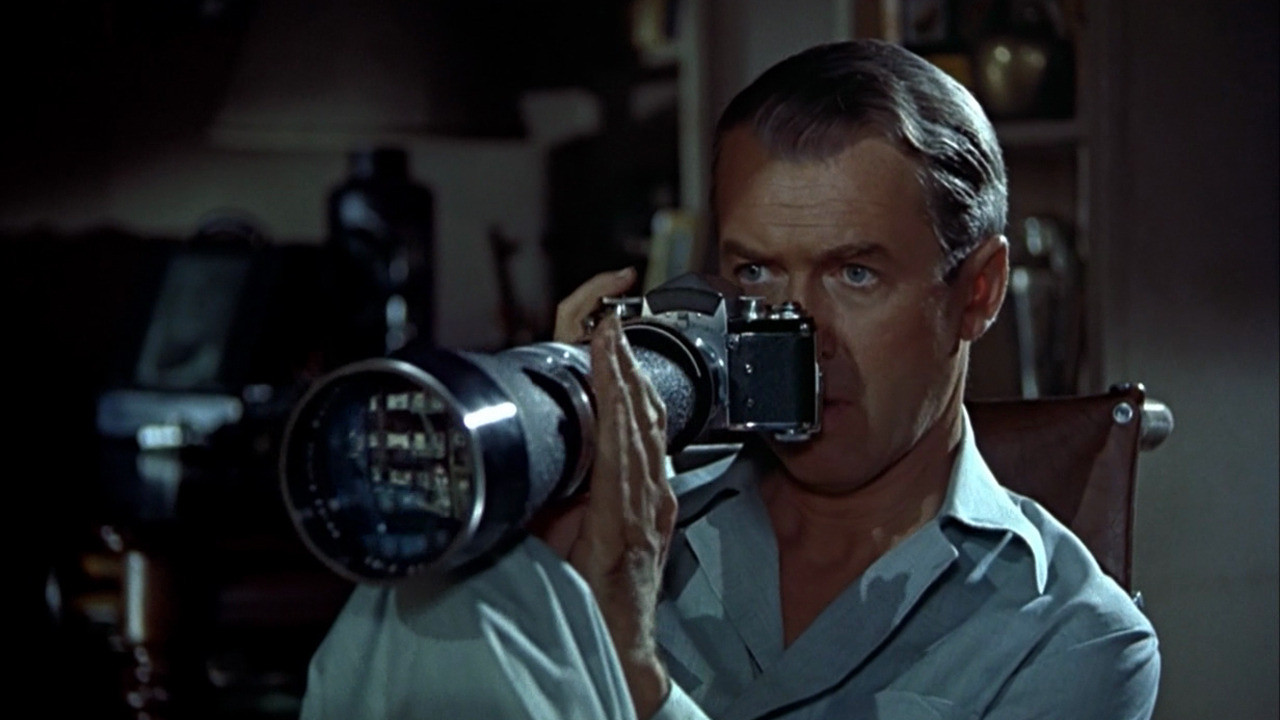
Rear Window (1954)– I’ve already written a full post about my weakness for characters that share my love of voyeurism. James Stewart and Grace Kelly find themselves wrapped up in a murder investigation when eavesdropping on their neighbors.

Vertigo-465

Vertigo (1958)– I’ve watched Vertigo several times but almost always skip the last scene. It just gets to me. Most of you will know this classic well but, if you haven’t seen it, the less you know going in the better so I will avoid giving much away. Just see it.