
For 16 glorious hours, Blue Jay was my favourite movie at TIFF. Then I watched La La Land and I was in cinematic, technicolour heaven. I’ll tell anyone who will listen every single day of my life that I’m a lucky, lucky girl. Getting to watch 2 astounding, knock-your-socks-off films? Frosting on my fucking cupcake.
Blue Jay is nearly an anti-La La Land. It’s a small, quiet, black and white film that’s not destined for the Oscars, or even really theatres (a small run in LA and NY, and then Netflix by the end of the year – lucky us!). But it is superb.
 It stars Mark Duplass and Sarah Paulson, almost exclusively. They play high school sweethearts who bump into each other 20 years later. Agony and ecstasy, right there on the screen. And heaping spoonfuls of awkwardness, don’t forget that. Because they were in luuuuurv. The real deal. And now they don’t even know each other. It reminded me of a friend who had recently posted on Facebook that it was her ex-husband’s birthday, a date she can’t help but remember even if she no longer even knows if he’s alive. Isn’t it weird that we can lose track of people who used to be our whole worlds?
For Jim and Amanda (Duplass and Paulson), once they get over their initial weirdness, it’s almost like no time has elapsed at all. They’ve both moved on, new cities, big jobs, other lovers. And yet they can pick up where they left off, the magic reappearing in an instant. It’s like opening up a dorky little hole into time and space, hurtling these two pushing-40-year-olds back to their glory days in high school, when things were light and fun, the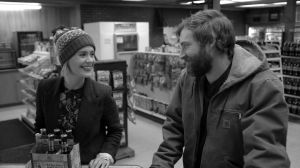 sex was hot and heavy, and Annie Lennox was everything. Jim and Amanda will take you down your own worm hole, and if you don’t end the movie thinking about your own First Love, then you my friend have a cold, cold heart.
I picked this movie on two words alone: Mark Duplass. But Sarah Paulson is luminous; she fucking shoots starlight out of her face. The two together have incredible chemistry, and it’s obvious they work-shopped their characters together to perfection – the nostalgic backstory, their lovable eccentricities, the subtle hints to what caused their demise. Duplass and Paulson each deliver career-best performances. No kidding.
If you have ever loved and lost, this movie is for you. If you didn’t marry your high school sweetheart, this movie is for you. If you married him and left him, this movie is for you. If you appreciate things like smart dialogue, meticulous observation, authentic and vulnerable performances, and little bursts of spontaneity that are pure joy on celluloid, this movie is for you.
Oh fer fuck’s sake, just see it. It’s for everybody. It’s perfect.

 It sounds promising on paper: a dystopian thriller meets sci-fi Groundhog Day. The protagonists, Renton and Hannah, keep waking up in bed when a bunch of bad guys burst in on them. Things don’t go well. But every time Renton gets shot in the face, they wake up in bed again, to do it all over, though not necessarily with better results.
 isn’t worth it. The dialogue put me off immediately. It has the look and feel of the kind of television show I would never watch. Even worse, it ends like it’s the pilot of a TV show that hopes to continue this mystery in vague and infuriating terms for the next 6 years. It isn’t, though. It genuinely believes itself to be a whole movie. Don’t believe it, not for a second: ARQ is to be avoided at all costs. Keep swiping left.
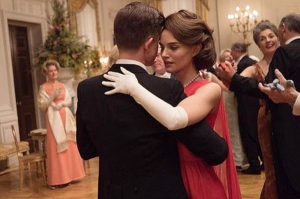 Larrain thought to himself, what if it was the other way around. What if he was sitting beside her? And in that thought was born a beautifully conceived film that puts its female character front and centre.
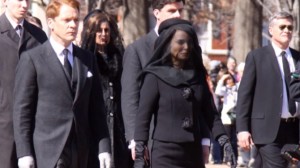 precise and offers up tantalizing looks behind the closed doors of Camelot.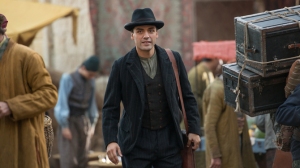
 viewer in an awkward position: in order to root for our two heroes to get together, Chris and Maral, who’ve done nothing wrong, will have to die. That seems excessive, doesn’t it?
 father is working at keeping what’s left of the farm running. Clover, meanwhile, is trying to piece together what would make her young, whole-life-ahead-of-him, brother put a gun to his head. Neither is mourning in a conventional way, and they’re certainly not doing it together.
 When death is part of business, part of the lifestyle, part of every day, what toll does it take, and at what remove do they experience more personal brushes with mortality?


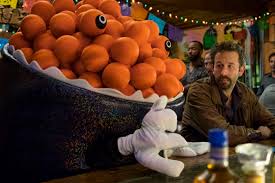 sincere than scathing, but no less amusing for its kindness. Christopher Guest’s body of work is so aligned with what I find funny that Mascots was my number 1 pick for TIFF, ahead of
  with total obsessiveness, and he shows us the incredible underbelly. It’s fascinating. Like a car wreck or a wonky boob job, you can’t help but stare.

 ASSHOLES WATCHING MOVIES