Author Archives: Jay

Three Identical Strangers

This might be the only time I steer you away from the page, but if you haven’t seen Three Identical Strangers, it’s best to go in cold. May I suggest you read instead about Damien Chazelle’s Oscar-front-runner First Man or Lynne Ramsay’s disturbing 2011 movie, We Need To Talk About Kevin?

If you have seen the movie, however, I’m sure you’re half-mad with wanting to talk MV5BMTc0NWM3ZGItMzlmZC00NDRmLWJlZmUtMjkzZjNlYmNhYTc1XkEyXkFqcGdeQXVyNzgxMzYzNjA@._V1_SY1000_SX675_AL_about it. It’s a documentary about two guys who discover, quite by accident, that they are twins, separated at birth. They were both adopted and had no idea they had a look-alike brother until mutual friends confused them when they both wound up at the same college, which is amazing enough. Their story goes national: it’s the feel-good story of the year, two 19 year old boys jubilantly reunited. And of the millions who catch sight of their front-page story is a third identical stranger. They are not twins, but triplets.

That feels like more than enough to have an engaging story, but in fact their story is only getting started, and it isn’t all as happy as their initial heady days together suggest.

This documentary is so well put-together that the intrigue stays with the film way beyond its first reveal. But this is not a piece of fiction. They’re real people who not only have their lives disrupted but find out they’ve been living with a painful absence. And then they find out worse things still. It drove me so crazy I was literally yelling at my TV (Three Identical Strangers has recently become available for rent).

I wrote recently about the above-mentioned We Need To Talk About Kevin, in which Lynne Ramsay gives us an awful lot to think about nature and nurture. Three Identical Strangers does it too in a way that’s utterly heart breaking. There are so many questions raised and injustices singled out and ethics breached that it’s aching, hard to catch your breath. But it’s must-watch material.
 

McQueen

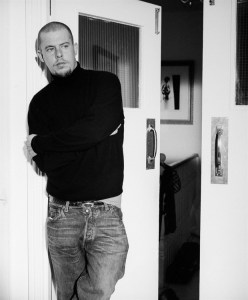
Lee Alexander McQueen was an unlikely fellow in the world of high fashion. His family was blue-collar, his life quite humble. But for some reason he couldn’t stop drawing dresses, and he started making those drawings into actual pieces of clothing, he found he was quite good. Unexpectedly, criminally good.

MV5BZjcwNzQxMGQtMzJkMy00M2QyLWE0Y2QtZTI0YWY3ZDhiMjFhXkEyXkFqcGdeQXVyNTc5OTMwOTQ@._V1_Lee’s flair for the dramatic meant he put on a damn good fashion show. Between his theatrical catwalks and his astonishing creations, he made a name for himself very quickly, very young. London loved to call him their own fashion bad boy, but he was nearly rejected by couture’s real epicentre, Paris, for being of the wrong cut. He was crass, he was lower class. He didn’t look the part or dress the part. Luckily fashion icon Isabella Blow discovered him, and through her, so did the world.
This documentary is extremely well done, each chapter reflects a new “season” or collection of clothing, which he centered around dark, brooding, often violent themes. And as the documentary shows, those themes often reflected his own frame of mind. He was troubled by what he’d experienced in life, and the way he used fashion to work out his mental health was revolutionary but not always appreciated.

The movie gives us a front-row seat to a brilliant but tormented soul who achieved everything he ever wanted but never got to be happy about it. The directors ( Ian Bonhôte and Peter Ettedgui) come at their subject from all angles and withsawqs2 impeccable sources to give us a full portrait of a man we previously only knew from headlines. This is more biography than fashion retrospective, but it’s as beautiful as it is well-crafted. Intimate, startling. The title cards alone would make McQueen proud.

Blame

A trio of high school girls. Already it sounds like trouble, doesn’t it?

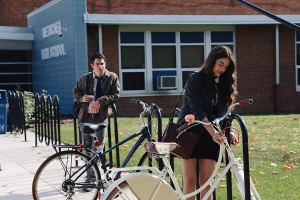
Bad girl Melissa (Nadia Alexander) arrives to disrupt the cozy duo of Ellie and Sophie. Melissa’s influence is immediate on Sophie – well, on both, since Ellie is quick to distance herself from Melissa’s cruelty. A fourth student’s arrival makes an even bigger stir. After a 6 month absence (psych ward stay, it’s rumoured), Abigail (Quinn Shephard) walks the halls, eyes downcast. Melissa senses prey, and the bullying is brutal and relentless. Slut or psycho, there’s no consensus, so both slurs are hurled her way on a regular basis.

Their drama class is studying The Crucible thanks to a new substitute teacher, Mr. Woods (Chris Messina). The parallels between the play and the plot of the film are hard to miss MV5BZjZiMjdiZGEtNTA5NS00NDBhLTlkZGEtMWY4ZGQ0NzEyNDNlXkEyXkFqcGdeQXVyMTYyMDk1MjU@._V1_SY1000_SX1500_AL_with the ostracizing and vilification of Abigail. Mr. Woods sees a lot of quiet talent in Abigail, and his singling her out for praise and attention only drives Melissa to more cruelty. But it’s ice to see Abigail being appreciated by someone, even if it’s her teacher. Until it’s her teacher’s, um, lips doing the appreciating, and that becomes problematic. Mostly for Melissa, oddly, who is insane with jealousy. To be clear, Melissa has every guy in school running after her, and she doesn’t want Mr. Woods. She just doesn’t want Abigail to have anything except Melissa-inflicted misery. And maybe she can’t stand to have anyone choose someone besides her. You’d have to invent a word above self-involved for the likes of Melissa.
Nadia Alexander is all kinds of hateful in this part. Melissa is perhaps not without her motivations, but Alexander is unwavering in her snarl and sadism. Quinn Shephard is also very confident and comfortable in Abigail’s skin, as she should be as she directs herself in a role she co-wrote.

Blame uses familiar high school movie tropes to construct a larger framework. Shephard uses the imagery and inspiration from The Crucible to build Blame to a heightened emotional intensity. We may not always know what it is, but it’s clear that danger lurks ahead. Abigail begins to identify more and more with her fictional counterpart, and it’s fascinating to watch her wardrobe transform as a result, her clothes reflecting both the puritanical and the temptress, and then to see the other girls’ outfits start to compete, heels getting higher, hemlines getting shorter. Only Ellie serves as a link to the audience and our growing discomfort. Chris Messina does an exceptional job with a tricky character. Mr. Woods clearly makes some bad decisions but Messina doesn’t brand him a predator. His girlfriend thinks he’s a loser so of course he puffs up under Abigail’s admiration and devotion. It makes him weak. And the girls, they perform, and I don’t just mean the Arthur Miller. I mean their sexuality is performative. Largely inexperienced, they project sophistication beyond their means, competing with one another for things they don’t fully understand yet, and may not even want. Placing The Crucible within hallowed high school halls makes it clear it belonged there all along.

TIFF18: Driven

Jim Hoffman is a family man and cocky arse whose greed has him punching just above his pay grade. One day this gets him into trouble – the plane he’s just used to pilot his family to Disney World is stuffed full of cocaine, and Jim (Jason Sudeikis) is busted as his wife (Judy Greer) and kids look on. But the FBI handler (Corey Stoll) gives him an out: if he’s willing to go undercover and help take down bigger fish than himself, he can avoid prison and maybe even keep his family in the lifestyle to which they’ve become accustomed.

He accepts and they get relocated, which means there’s almost a full minute before Jim is plotting again. Turns out, his new neighbour is none other than John DeLorean (Lee Pace) and Jim sees nothing but opportunity. Which is too bad because you get the sense that there may have been genuine friendship here if Jim wasn’t such a selfish ahole. So just as John is designing and funding and marketing the famous gull-winged “car of the future” that would bear his name, Jim was plotting to entrap him. With friends like these, you don’t need enemies.

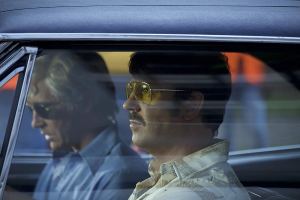
Lee Pace is wonderful of course. Even playing a quiet character, your eye naturally MV5BMTI5MzA3ZDEtNDk4Mi00OGQxLTgzMTYtYTczZDEyMTBmNjg1XkEyXkFqcGdeQXVyMTc4NDkxOA@@._V1_SY1000_SX1500_AL_gravitates to him as he steals every scene. DeLorean could turn it on when he needed to, and that charisma bleeds through Lee’s performance – it’s only thanks to Sudeikis’ presence that I remember this isn’t a documentary.

Nick Hamm’s Driven is about idealism and capitalism and what explosive, misinformed things can happen when the two are combined. It also makes you think about the nature of good and evil, and who the true heroes and villains of this (true) story are, if indeed there are any of either. But most of all it makes you think of what this movie would be like if it was better. Acting aside, this movie is just kind of meh. It describes itself as an ‘intense thriller’ but that’s a pile of baloney. It’s funny, if anything, but not quite a comedy. It’s not consistently anything. It suffers from a lack of identity. Possibly it only skates by because the story is interesting, but long enough ago that we’ve forgotten it, with an iconic piece of pop culture at its centre to orient us. For Lee Pace alone, Driven is worth checking out eventually, but this is one you can afford to skip at the theatre.

TIFF18: High Life

The interesting thing about High Life is the negative space – it’s all the stuff it cleverly carves out. At some point in the future, Earth is sending young, death-row convicts to outer space to “serve science” by allowing their bodies to be experimented upon. What kind of Earth is this? We never see it. What kind of crimes are we talking about? We’re never told.

Monte (Robert Pattinson) is one such prisoner. The film’s first scene shows him alone on a space craft save for a baby – his daughter? Cut to: an undisclosed time before, when he is just one of many prisoners under the scrutiny of Dr. Dibs (Juliette Binoche). Ostensibly they’re gathering information on black holes, but there’s also fertility experimentation being done – and what we know and they don’t is they’re never coming back from this mission. They were never meant to.

The male prisoners masturbate alone in a ‘fuck room’ and Dr. Dibs then fertilizes the female prisoners, which makes for near-constant space miscarriages. She herself A45FC0CD-D445-49D6-8783-5FC5F4E28DBA-thumb-860xauto-72637enjoys a solitary go at the fuck room, riding a contraption reminiscent of Burn After Reading’s dildo chair. She enjoys a little solo S&M, her white skin framed by the black walls, the room feeling as dark and blank as the space outside, though rarely glimpsed, must also be.

There’s a lot of silence in space; so too in Claire Denis’s High Life. It’s disorienting and confusing and filled me with dread. In contrast to Interstellar or Gravity or The Martian, High Life has very little in the way of special effects, and actually doesn’t bother much with what’s outside the walls of their ship. If you’re a fan of Claire Denis, don’t worry, she’s as inaccessible as ever – bleak, subversive, full of fleeting, nightmarish impressions.

There’s a lot of ritual in this movie but no purity – Claire Denis puts bodies through hell. Body horror? Sort of. A horrific degradation of bodies. Of consent. Of dignity. In Monte we find a different kind of prisoner, and a stubborn will to persist. There’s a special kind of stress, and madness, to be found in the voids but always Denis refers back to what these 9 represent: humanity? What does their treatment mean for the humans back on Earth, and how does it feel to be utterly forgotten and abandoned by society?


TIFF18: Hold The Dark

Three children have gone missing from a small, very small, very isolated community in Alaska, snatched by wolves. One of the grieving mothers, Medora (Riley Keough), hires wolf expert and writer Russell Core (Jeffrey Wright) to track and kill the wolf or wolves responsible.

But the wolves are not the villains of this story.

First, the Alaskan landscape. It’s frozen, much colder than what cold passes for MV5BODYwNTY5MDcxMl5BMl5BanBnXkFtZTgwNjAzNDQxNjM@._V1_SY1000_CR0,0,1487,1000_AL_anywhere else. It’s unforgiving. It’s unknowable. It’s remote. There are only 5 hours of daylight at midday. It’s a blank canvas, a blanket of white, relentless and renewing, where even your own footprints are quickly snowed in and covered over; one wrong step can mean the difference between life or death. It’s no place for a novice like Core, but he’s got some demons of his own that keep him from making better judgments.

Second, the village. Or rather the villagers. They’re an insular tribe and don’t take kindly to outsiders. The environment is hostile in every sense of the word. They don’t cooperate with the law.

Third, the grieving parents. Grief makes a person crazy. Some people were crazy to begin with. Medora was on her own when her son went missing, her husband Vernon (Alexander Skarsgard) away at war. Injured, he gets sent home to a probably-dead kid and a mentally disturbed wife. There aren’t a lot of times when war is the preferable scenario, the kinder one, but I think this it.

I read the novel upon which this is based (by author William Giraldi) but this screenplay is adapted by the twisted mind of Macon Blair, so I know I’m in some sort of trouble. He’s beefed up the part of Vernon for Skarsgard, sure, and he also makes sure every bit of violence is as graphically gory as possible. What else do we expect from a Jeremy Saulnier movie? The man loves to taunt us with threatening, ominous images and then leave us exposed to whatever chaos may come. It’s an exceptionally tense way to watch a film, but if Saulnier isn’t throwing you into minor cardiac arrhythmia, he feels you aren’t getting your money’s worth.

Saulnier is a master of making you shit your pants, and if anything, Hold The Dark is a little lighter on the anxiety-ridden dread. But while we buckle up for a movie about wolves and wilderness, it’s actually humanity who shows itself most vicious, and that’s all Saulnier. There are so many twists in the tundra it can be hard to keep them all straight, and you’re never quite sure just what kind of movie you’re watching, but it’s a bloody, vengeful rampage and it will not have a happy ending.

I Think We’re Alone Now

Everybody in the whole world dropped dead on Tuesday afternoon. They seem to have  died suddenly, no pain or suffering or foreknowledge, on the toilet or in front of the TV. Del (Peter Dinklage) was asleep when it happened. When he got up to work his night shift at the library, everyone else was dead. He is alone, utterly alone.

Del has spent the last however many months or years methodically cleaning out the houses in his town. He is respectfully burying all 1600 residents. He tidies their homes, scrounging commodities like batteries and gas, and empties their refrigerators. Entropy is why: one less case of chaos in the universe. Then he searches for unreturned library books, marks the house, and leaves it behind, unsentimentally, ready for the next one. Sure he’s alone but so, apparently, was he in his life before.

MV5BMTk4MjM3NDUyMV5BMl5BanBnXkFtZTgwNTU4MzgyNDM@._V1_SX1777_CR0,0,1777,744_AL_You’ll never guess what’s coming. Okay, I bet you already have, more or less. Grace. Grace (Elle Fanning) is coming. She careens into his town one night and refuses to leave. That he wants her to is interesting, isn’t it? They make a grudging peace, but his solitariness is destroyed, and Grace, of course, is a big ole blob of chaos herself. But she challenges him in unexpected ways. He’s been able to manage this post-apocalyptic world because he didn’t lose much. Grace has lost everything – family, friends, lovers. She thinks Del is cold.
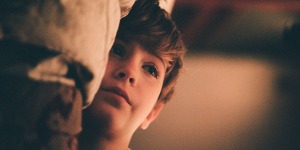
Of course, Grace is not as forthcoming as she’s presented herself. Who knew the end of the world could get so complicated? I wasn’t crazy about the tonal twist in the end and I’m not sure why the screenplay by Mike Makowsky veers off so dramatically when it’s been so low-key up until then. I like a script that has he space to leave some questions unanswered. And Peter Dinklage is very good at filling in the gaps. The opening scenes, largely dialogue-free, are not unreminiscent of a human version of Wall-E. But we get a sense of our solitary man, how comfortable he is with the routine. He’s alone, but he’s not lonely.

If I had some problems with the story, I had none with how I Think We’re Alone Now looks. Director Reed Morano, before she got her Emmy for directing The Handmaid’s Tale, was a cinematographer on films like Frozen River. She was the youngest person admitted to the American Society of Cinematographers and 1 of only 14 women (out of approximately 345, yuck). Morano’s the real deal, and so much of Del’s world looks incredible. I love what the camera will linger on, I love which colours are emphasized and when. I just wish the story delivered on the film’s promise.


TIFF18: The Death and Life of John F. Donovan

The Death and Life of John F. Donovan is a good movie in the shadow of a great one.

As a child, Rupert Turner was enamoured with a teen hearthrob, John F. Donovan, who was actually an adult playing a teenager on some soapy high school drama. A budding actor himself, Rupert (Jacob Tremblay) writes to Donovan (Kit Harington), telling him of his ambitions and desires – namely, to one day act alongside him. Surprisingly, Donovan writes back, and a beautiful friendship is forged, strictly as pen pals. But when that relationship is discovered, first by Rupert’s mother (Natalie Portman), then by the press, the friendship is misinterpreted and Donovan vilified. He dies before our two buddies can ever meet up.

john_f_donovanTen years later, a grown-up Rupert (Ben Schnetzer) is releasing a collection of their correspondence as a book, and a skeptical reporter (Thandie Newton) is interviewing him. The truth of their friendship is revealed through flashbacks, as is Donovan’s life, which of course was not all rainbows and lollipops.
Behind his privilege, Donovan had an absent father, a family that fauns over him and resents him in equal measure, an alcoholic mother (Susan Sarandon), an agent who is decidedly not his friend (Kathy Bates), and a girlfriend/childhood friend (Emily Hampshire) who is also his beard (unknowingly). He’s hiding a lot. He lives in a world filled with illusion. He’s pulled in a thousand directions and has no friends who aren’t on the payroll, and yeah, it is kind of sad that he unburdens his soul to a kid, but it’s also kind of understandable, which is sadder still.

Director Xavier Dolan is uniquely positioned to have something to say about child actors and the celebrity beast and I really enjoyed his attempts at profundity in this film. This is his first English-language film and while there are still traces of his typically auteur-ish style, The Death and Life of John F. Donovan is perhaps missing just a little of what normally makes a Dolan a Dolan. It also suffers a bit from bloat. Susan Sarandon’s performance is quite good, her character very interesting, but there isn’t a lot of room for her, as Dolan cut the movie down from 4 hours to just over 2 (and left Jessica Chastain completely on the cutting room floor). Kathy Bates’ part isn’t really a part at all, barely more than a cameo.

Dolan’s crime seems to have been starting out with too much to say and then having a hard time parting ways with any of it during editing. But I think John Donovan is a character worth getting to know. And the topic of celebrity death, and our cultural obsession with it, and possibly contribution to it, is ripe for harvesting.  I think the wording of the title has something to say about it all by itself. This movie isn’t all that it could be, and coming in to a Xavier Dolan film, I can’t help but bring high hopes and standards. But there’s something worthwhile here, and I hope it will be mined for the diamonds and not just the flaws.

Nappily Ever After

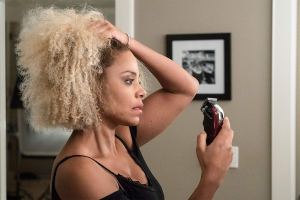
Violet sets her alarm extra early so she can sneak out of bed, fix her hair, and sneak back into bed so her boyfriend thinks she wakes up like this. She does not. An exacting mother made sure that Violent has spent her whole life hiding her true hair. But even with all the tools and chemicals and salon appointments in the world, Violet is still Cinderella waiting for the clock to strike midnight. When it rains, or is even humid, the magic disappears and her hair reverts back to its natural state. So her life revolves around monitoring the weather and keeping her boyfriend’s hands away from her head.

On her birthday, Violet’s hair is perfect (though not without some drama). She is MV5BOTNhMWM0ZDUtZDI0Ny00OTVjLTgzMDctZTk4NWQwZmM3YmFiXkEyXkFqcGdeQXVyODQzNTE3ODc@._V1_SY1000_CR0,0,1500,1000_AL_expecting a ring from her boyfriend of 2 years and instead gets a puppy. Boyfriend accuses her of being “too perfect” so a breakup tailspin ensues, including stops at ‘fuck you hair’ and ‘drunkenly buzzing it all off.’ But can Violet change her attitude and values to reflect her newly bald head?

So, okay. I’m white. Violet is black. I am not the best person to review this film. I mean, on some level, many if not most women will relate. So much of our identity is tied up in our hair. But it’s different for Violet, for women of colour. Black hair, for some unknowable reason, has been viewed as…inferior? Is that the right word? Even very young girls may feel that their hair is somehow ‘wrong.’ A black woman who wears her hair naturally may be viewed as unprofessional at work, unkempt at school, perhaps even viewed as her making a political statement to the world. Culturally, hair may serve as a bonding tool, a thing that unites black people (even black men – there’s a whole franchise of Barbershop movies) but it can be misunderstood outside the culture. Black women make up 70% of the hair care market, but the marketing always features white women with long, straight, glossy locks. As do TV shows and movies and magazine covers. So to attain white standards of beauty, black women blow through time, money, and PAIN to achieve the kind of hair that grows naturally out of white heads but not their own. They’ve felt the need to suppress the natural texture of their hair not just to look attractive but to be accepted at work and in the world. But it takes a toll. Viola Davis said in an interview recently how nice it was to wear her hair naturally in Widows (which had a black director, Steve McQueen). She’s used to wigs, weaves, and chemical relaxers just to present ‘the right kind of black’ to Hollywood and audiences. As you know, there’s still a huge gulf to be overcome in terms of media representing people of colour, but even when a film does hire a black actress, she will often arrive on set to find that the hair and makeup team have not thought through her particular needs. They may be unequipped, in terms of tools and experience, to deal with her hair. It is rare to see a black woman on screen rocking her own natural hair. And that’s okay if it’s a real choice. I don’t wear my hair natural either. But for me it’s a matter of style and personal preference. For a woman of colour it may not feel like any choice at all.

So yeah, Nappily Ever After is a romance, but it’s one tied into culture and identity and hair and femininity and acceptance. Sanaa Lathan is really terrific in it, and relatable too. Even though the script itself is very much about the black woman experience, there are universal themes of authenticity that anyone can appreciate. There’s something very powerful about having the courage to be yourself – but I think there’s something even more powerful about living in a world where that wouldn’t be discouraged in the first place, even if that doesn’t exist yet.


[Women of colour, feel free to correct me or to add to the conversation. And to anyone interested in the topic, Chris Rock (yes, THAT Chris Rock) has a cool documentary about it called Good Hair.]


Smallfoot

Shocking information of the day: Smallfoot is actually quite charming.

Also shocking:  I heard Milli Vanilli on the radio this morning. Unironic, unabashed Milli Vanilli from start to finish. Girl you know it’s true. I told Matt, of course, which obligated us to watch all their (3) videos and tumble down the rabbit hole of shoulder pads and dance moves. Which had us thinking about all our favourite cheesy 90s music, and that moment we discovered what sampling was (looking at you, Will Smith) and that embarrassing time in my life when I’d hear the opening beat and pray to Zeus that it was about to be Vanilla Ice and not that annoying song by Queen & Bowie. Can you imagine? Even being 6 doesn’t excuse that level of ignorance.

But back to the movie.

Migo is a BIGfoot, a happy-go-lucky guy, excited to be the next gong ringer in his bigfoot village above the clouds at the top of the mountain. They’re a rule-abiding, no-question-asking society until one day Migo (Channing Tatum) sees a plane crash (“flying thingie”) and a human (“smallfoot”) tumble out, and all the things he believed to be true were called into question. The Stonekeeper (Common) wears a robe that’s inscribed with all MV5BM2ZkM2MwYTQtYTNhNi00MWRjLThjMWItZDljNDg2ZjE5ZDFkXkEyXkFqcGdeQXVyNTc5OTMwOTQ@._V1_SX1777_CR0,0,1777,744_AL_the village laws, and the robe says Smallfoots don’t exist. For once in his life, Migo disobeys the stone laws and gets cast out of town for sticking to his guns. Only the village crackpots\conspiracy theorists believe him, but they turn out to have a beautiful leader, Meechee (Zendaya), so Migo is persuaded to jump either to his death or his edification on behalf of the Smallfoot Evidentiary Society, over the mountain and through the clouds. Down, down he goes. He falls so far he can’t sustain his scream; it falters so he can rest his voice.

Below, he finds the Smallfoot (James Corden) but would you believe that only gets him in a whole whack of trouble?

Smallfoot has some delightful animation. Dozens of Bigfoots mean millions of hairs to animate, but they add up to a metric fucktonne of cuteness. There are some pretty good songs too – the first two numbers are poppy and catchy, the numbers choreographed with maximum fun. They burst with happiness. And then a third song. The opening beat…sounds familiar. Wait, is this about to be Ice Ice Baby, or Under Pressure? You’re wrong either way. James Corden changes up the lyrics so that fans of both are equally appeased\disappointed. But even when the musical numbers dissipate, the action and the story hold up. Our no-nosed yeti friends are a lot of fun, even if they have to learn some hard lessons about truth and who exactly it protects.

Smallfoot makes us wait longer than usual for the requisite fart joke, and it has some beautiful messaging integral to its story. Common tells us “the only thing stronger than fear is curiosity.” Once that curiosity is unleashed, the Bigfoots learn to put a dicey past behind them and overcome their fear to take care of each other despite their differences. I had no expectations for the movie Smallfoot which perhaps made it even sweeter when it turned out to be cute and funny and nearly everything you’d want from a kids movie – plus or minus a few pooping yak jokes.