
Roman Israel is part of a two-man law firm: he does the research and the writing, while his partner makes the court appearances. But when his partner is suddenly taken out by a heart attack, it becomes clear that the firm isn’t financially solvent, and that Roman (Denzel Washington) is ill-suited to work both sides of his cases. When a large firm comes to swallow him up, headed by George (Colin Farrell), it looks bleak for Roman’s future.
But the interesting thing about Roman is that he uses the law for social justice. He’s been working on a case for years, maybe decades, that he believes could reform the system.  He is well-respected by activists and has collected clients simply by treating people like human beings. George decides to keep him around, thinking it might be good for his firm to do a little pro-bono for once. This is weird timing for Roman, who has just decided that he’s tired of working for ingrates and wouldn’t mind making a little money for once. And that’s the frame of mind he’s in when he makes a terrible, unethical, life-changing decision that could ruin or cost him his life.
There is no doubt that Denzel Washington turns in a stirring performance. Roman Israel is conflicted but he asks a lot of interesting philosophical questions. However, the performance does not make the movie. Everything else is a mess. I never fully understood what the movie was telling us: is Roman autistic? Why is he so bad with people, so out of touch, so obsessive? And it turns out that this was the least confusing part of the movie, because once it branches out from character study to mild intrigue it really spirals out of control. There’s no focus. For a film that seems poised to preach about morality, my biggest concern was whether I could write a review for a movie I walked out on.
Roman is a little too quirky and the script is a lot too unbelievable. Nothing came together for me and I was not entertained or even interested. Pass.
 great choice. He can pull off the sadness and the savage humour, playing it straight, breaking the fourth wall, talking directly to us, talking to himself. Doug Kenney was the Harvard editor of the Lampoon, and he had such an epically good time just fucking around with his good buddy Henry (Domhnall Gleeson) he decided to just keep it going and took their little humour magazine national. And as if the phenomenal success of the National Lampoon wasn’t enough, they expanded into radio shows, during which they enlisted the talents of Chevy Chase, Harold Ramis, Christopher Guest, and Gilda Radner. And then they started writing movies like Animal House and Caddyshack. And while some might feel content with having their dreams come true and writing the most successful comedy movie EVER, Kenney never can be. He tries to fill the hole in his heart by shooting stuff up his nose. It’s a circuitous route that doesn’t work very well, but not for lack of trying.
 but Ferdinand has never aspired to such fame. He’s a gentle soul, really, a pacifist. The other bulls are quite judgmental about his lack of fight but Ferdinand stays true to himself.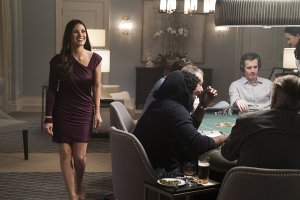
 (slaves? I think maybe yes – employees are much less likely to put up with the flogging and being locked in cellars and such) about, and eyes are everywhere. Sebastian, a new groom, catches Katherine’s attention, and as they ignite a passionate affair, she actually seems to come alive for the first time. But then her father in law returns and everything goes to hell. You might guess the nature of this hell by the name the film (and the novel on which it is based) is given. Lady Macbeth will stop at nothing to get what she wants.



 unlikeable kid, and Grace-Moretz simply gets assigned the not-fully-realized female costar who heals his sadness by touching his penis. It’s not remotely their fault but November Criminals is maybe the most undercooked movie I’ve ever seen – like, on a scale from rare to well-done, it’s a bloody, oozy, thoroughly blue kind of undercooked that’s bound to give you worms. I’ve read the novel upon which it is based and half-remember it, and even that half-memory is more fulsome than the script for this thing, which feels like it’s missing about 75% of its content and 100% of what would make it understandable or good. The film offers up a small slice of the story, with an inadequate beginning and hardly any end, and such an abbreviated middle you’ll wonder if perhaps we’re still in the opening credits. But while the movie needs at least another two hours in order to tell its story, the mere thought of having to sit through a single moment more than its 85 minute run time is upsetting. This film never justifies any reason for its existence and wastes every frame of its film.
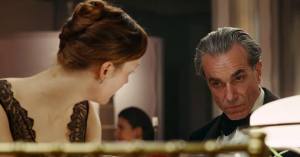 and he turns out perfection in taffeta and the finest silk. His sister Cyril (Lesley Manville) runs his business and his home. Neither tolerate the slightest deviance from their prescribed lifestyle. BUT then a lovely young woman causes a disruption. Alma (Vicky Krieps) turns out to not be the meek muse that Woodcock first took her for, and his world is soon turned more inside out than the discarded gowns on a dressing room floor.
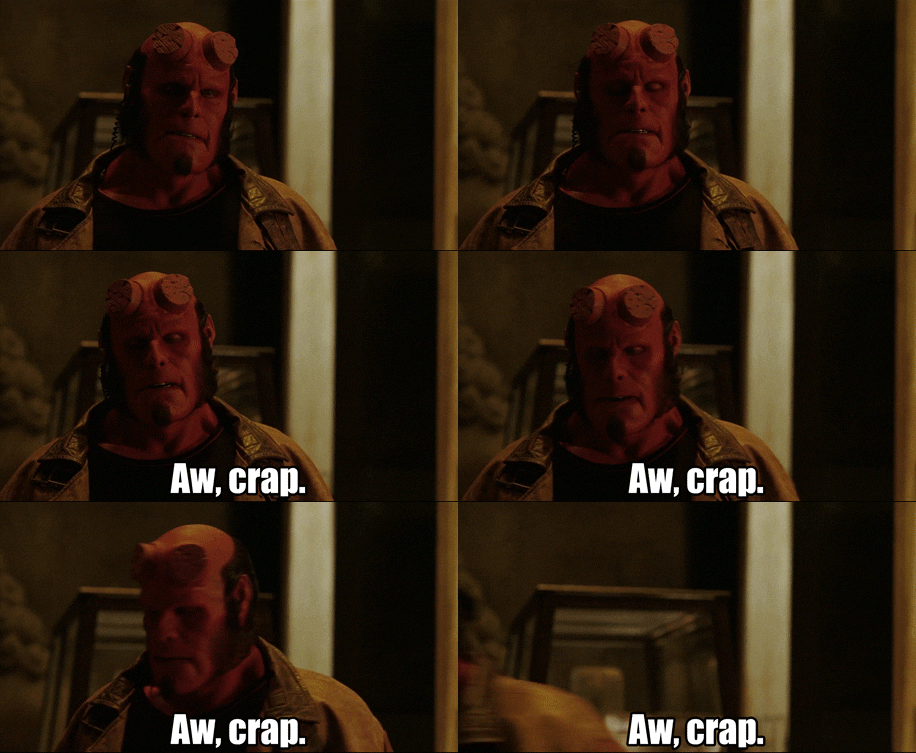 Of course, no one would make a movie about a guy just doing his part to make the world a safer place – not one called Hellboy, anyway. Those Nazi fucks are back, and their aim is to recruit Hellboy back to the dark side, where he belongs.
 have been tampered with. What I thought might be an appeal to our inner 80s kid turns out to be just an extended pony play on words. The song plays as Twilight Sparkle, the Princess of Friendship (the horse community has a stunningly high proportion of royalty vs subjects), is preparing Equestria for a festival of friendship when the party’s invaded by a dark force, led by Tempest Shadow and The Storm King, who encase the upper pony echelons in rock and prepare to do some evil, conquery thing to the happy go lucky ponies.
