Author Archives: Jay

Kong: (Bored Out of My) Skull Island

There are so many interesting components to this film that I find it unnatural and surprising how much it still sucked.

Basically: John Goodman convinces some government types that there’s this mysterious, vaguely-skull shaped island and the USA needs to LOCK THAT SHIT DOWN, like, be the first to “conquer” it and claim it as their own. So he hires crack photographer Brie Larson (for some reason), and master tracker Tom Hiddleston (for some reason) to accompany MV5BYzU4Y2VjN2ItZDA4Yy00MTBkLWI0ZGMtODcwZWY5ZDJlYTg1XkEyXkFqcGdeQXVyNjEwNTM2Mzc@._V1_SY1000_CR0,0,1500,1000_AL_him and the army led by Sam Jackson to the island that everyone knows is a no good, horrible, very bad idea. You may have noticed that the only thing more useless on this trip than the photographer is the tracker, except the little surprise that John Goodman has been keeping under his hat is: fuck surveying the island, he’s there to bring down the GIANT FUCKING BEAST, Y’ALL! Daaaaamn.

Except fuck you, John Goodman. King Kong is the least of your worries if you’re playing tourist on Skull Island. There’s much MUCH worse. But even though there’s a bevy of monsters and a bunch of a-list actors, none of them are remotely interesting. So that’s too bad. The movie is over-cast, and I’m not sure that I’ve ever said that before. But it’s just too crowded with famous faces and not one of them has a damn thing to do. And if any of them got any ideas about doing some acting or even just reciting a line that wasn’t entirely forgettable\unnecessary, Samuel L. Jackson was there to be a vacuum of talent, where his overacting is wildly disproportionate to the entire tone of the movie, thus hogging 110% of our energy, attention, and frankly, consternation, sucking up literally any sparks that anyone else was throwing off.

The only thing that I even wanted to like was Kong himself, but the movie couldn’t keep his size straight and that made me dizzy with rage (as did Brie Larson’s amazing, never ending roll of film). Kong is supposed to be big, and he is, but how big? Director Jordan Vogt-Roberts hopes you never ask that question, because he certain hasn’t. The answer is that it varies greatly from scene to scene and if you’re the kind of person who’s okay with glaring errors of continuity that don’t even take you seriously as a human being who can appreciate the difference between a station wagon, a sky-scraper, and a mid-range mountain.

Kong: Skull Island has an A-movie budget but a B-movie feel.
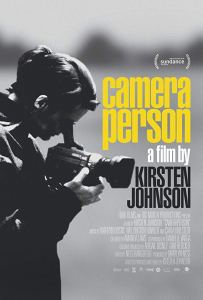
 

Cameraperson

“For the past 25 years I’ve worked as a documentary cinematographer. I originally shot the following footage for other films, but here I ask you to see it as my memoir. These are the images that have marked me and leave me wondering still.”   – Kirsten Johnson

MV5BMDRhMjUwYjUtYzU3OC00NTQ4LTk4MTktOGI0ODU4NmYzZWU0XkEyXkFqcGdeQXVyNDk4NTEzMTc@._V1_SY1000_SX676_AL_Capturing a thunderstorm, the camera shakes as the cameraperson sneezes.

A baby is born in Nigeria and seems to stare, and smile, directly into the camera.

A lawyer in Texas prepares nightmarish evidence for trial.

In Uganda, dancers and musicians ham it up for the camera.

That opening quote says it all. This is a series of very short clips, strung together they make up a scapbook or photo album, a collection of the places she’s been and things she’s seen and work she’s done. Some are very personal (her own twins appear) and some are political and some are funny and some are just beautiful, a magical moment caught on film. She catches more than most.

The way they’re woven together, it’s almost like we’re seeing a highlight reel from her own memory. There are patterns and there are insights. Micro-stories are told in just a few frames. And sometimes we get to know a little about what it’s like to live behind the camera, to observe something without intervening, the struggle between objectivity and responsibility and compassion.

If you’re narrative-needy, Cameraperson is not for you. It’s fresh and inventive and it tells a story in a different kind of way, but it’s worth it. Which is not to say in requires a lot of effort because for the most part, it’s a laid back, easy ride that may feel more familiar to a generation who will stream a series of unrelated clips for hours on Youtube. Except this one will feed your soul.


Personal Shopper

Kristen Stewart, I’m sorry honey, I didn’t really know you could act. You seemed up until now to have two settings: eyebrows and lip biting. Yet here you are, quietly impressing me.

Maureen (Stewart) is indeed a personal shopper. She picks up the glamourous clothes and accessories her celebrity client can’t be bothered to. Maureen despises Kyra but the MV5BOGFiY2U2ZTYtOTRmMS00MTY2LWE1OGEtZDUyNTI4N2I4YWUwXkEyXkFqcGdeQXVyNjcwNzI4MzE@._V1_money’s good enough to pay the rent in Paris, which is important to her. She’s in the city and won’t leave until she hears from her brother. Her dearly departed brother. Which is an obstacle of course. But she and her recently deceased twin brother are\were both mediums with a genetic heart defect, and they’d promised each other that whoever died first would signal the other from beyond, if such a thing existed.

But when contact IS made, how sure can Maureen really be that it’s her brother and not some creep? Or some other ghost? She wants SO badly for it to be him, but her skeptical nature can’t help but vacillate. This makes Personal Shopper a film that’s hard to pin down. It approaches grief in a way we’re unaccustomed to, but it’s also part ghost story, part coming of age, part mystery, part spiritual discovery.

Personal Shopper compels even though it’s largely about mournful solitude. Director Olivier Assayas, who previously got an excellent performance out of Stewart in Clouds of Sils Maria, creates an ambiance that pulls you in as much as it creeps you out. But he doesn’t overdose on the ghost story stuff, he knows it’s scarier and more effective to dole it out in small measures.

It probably helps that Assayas wrote Maureen specifically for Kristen Stewart; she’s actually meant to be taciturn and moody. But the character ultimately lacks depth, which is pure laziness since we spend pretty much the entire movie with her. It’s still a good movie though, with an atmosphere that won’t quit and a solution that begs to be found, even if we think we already know it.

Free and Easy

To be honest, it took me a while to adapt to the pace of this movie. It is slow, deliberate, and very measured. There’s no getting ahead of yourself. But the unusual story and glimmers of humour hooked me and I was glad I stuck it out. Free and Easy is genuinely something that feels new and unique.

It’s about a “soap salesman” who never sells a single bar but does encourage people to sniff his product (“a different scent on all 4 sides!”) because doing so induces loss of consciousness. Once his would-be customers are asleep on the ground, he frisks them for money and valuables. So he’s really a thief, posing as a salesman.

1_22_free-and-easy1-676x450Director Geng Jun shows us a side of China rarely seen: crumbling, bleak, all but abandoned. This cold, deserted, post-industrial town in northeastern China is dotted with rural characters, and they’re all as shady as the salesman.
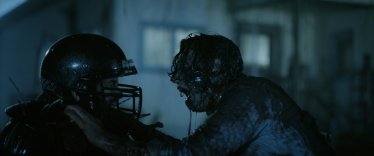
It almost watches like loosely connected vignettes, a series of petty crimes where corruption and lawlessness is the new normal. But whenever these criminals encounter each other, you can’t help but laugh. The humour is deadpan but it landed surprisingly well for a movie that runs the risk of being lost in translation. There’s some slap stick, which I suppose is universal, but really it’s just the contrast between this totally depressing setting and the buffoons that populate it that just works.

The film is minimalist but that doesn’t mean there isn’t a lot of attention to detail poured into each shot. Out-of-focus details often sharpen into the butt of the joke. You have to stay alert to small gifts planted by the director along the way. Sure the subtext of the film is a little depressing, but it’s delivered in such an obliquely funny way, the message presented by sliding it in sideways, that you’ll laugh appreciatively at things that aren’t even overtly funny. In a film full of grifters, it’s the cops who are the dirtiest  of them all. That’s the lens through which contemporary, provincial China is explored in (ironically titled) Free and Easy, and the film stays remarkably on-brand.

Dead Shack

Dead Shack is that rare comedy-horror hybrid that actually works on both counts. It was yet another surprise from Fantasia’s lineup and I really have to stop being surprised because the truth is the programming is quite excellent even if the movies tend to do be a little wheelhouse-busting.

[I mean, what the hell is a wheelhouse anyway? Well, okay, I know what a wheel house is, it’s the little shack on a fishing boat where the wheel goes. If something’s in your wheel house, then you’re capable of doing it. And it’s not that I’m incompetent or unable MV5BZTgzODJjNDUtNGVhNC00NmUxLWJmYWUtMWU0ZTRiMGZmMzMxXkEyXkFqcGdeQXVyNjEwNTM2Mzc@._V1_SX1777_CR0,0,1777,743_AL_to watch genre films, it’s just that I’m rather chicken and often shy away. But here I am, grabbing the ole wheel by its…spokes? And I’m loving it.]
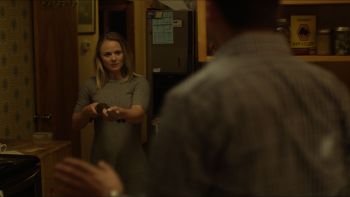
Dead Shack is about a family who goes on a budget camping trip to a rundown cabin in the middle of some bug-infested hellhole, and if I stopped writing right there, well, that’s horrific enough for me. But no. While on the trip, Dad and Dad’s new girlfriend immediately set to partying (euphemism for heavy drinking). His teenage Son and Daughter and their Ambiguous Friend knock about in the creepy surrounding woods and stumble upon a neighbour who looks like a Volvo-driving soccer Mom until she puts her armor on and brings home human prey for her undead family to feast upon.

For a movie about cannibalism, it’s actually quite funny. A lot of the fun comes from Dad, who is earnest and geeky and trying just a little too hard to be Cool Weekend Dad. But then it’s his kids who have to come to the rescue with their improvised armaments and slapped-together weapons. Death Shack kind of has the feel of an 80s movie – picture a Goonies-Evil Dead mashup. And there’s still plenty of gore and tense framing and a pretty heart-pounding soundtrack to satisfy the sickest of you souls. Bon appetit.


War For The Planet of the Apes

This review is late because it’s taken me all this time to decide how to tell you that Sean and I went to see this at the drive-in but I got so baked I have no idea what the movie is about or if I enjoyed it. After days and days of deliberation I think I’ll go with “Ehh, another movie about a talking monkey, who gives a shit” That’s pretty smooth camouflage, right?

I mean, those are probably my true honest feelings because I’ve never been into this franchise. I checked out the moment a trailer showed me an ape riding a horse and I am physically incapable of checking back in. But all my lovely review compatriots have been talking this one up like crazy, like it’s an actual, honest-to-Heston good movie. And I believe them, sort of.

Here’s what Sean and I were able to cobble together over lobster BLTs on the patio:

  1. Caesar, the leader of the apes, has decided to move his congregation to a nicer locale because presumably real estate just got too damn expensive in San Francisco.
  2. He sends the majority through the desert (?) toward ape shangri-la, but he and a few trusty sidekicks stay behind to confront the Evil Colonel and settle a personal vendetta.
  3. The Colonel (Woody Harrelson) really hates the apes, and is really afraid of turning into them. He’s gone rogue though.
  4. The real army hates the Colonel as much as the Colonel hates apes. The Colonel has enslaved some apes to build a wall that doesn’t help him all that much come Go Time.

Is that about it? I’ve got the gist, right? The story didn’t connect with me whatsoever but even in my distracted state I thought the CGI was crazy-good. I usually hate movies like The Jungle Book where I know I’m just watching a cartoon but I didn’t really feel that way in this movie. The motion-capture technology is pretty stellar and Andy Serkis is doing top-notch work. The Special Achievement Oscar was given out from 1973-1995 in recognition of achievements that made exceptional contributions to the motion picture for which they were created, but for which there was no annual award. The last year it was given it went to John Lasseter for his leadership of the Pixar team that birthed Toy Story. Maybe it’s time to dust that award off for the work that Serkis in particular has done with performance capture.

That’s all well and good but I think we can all agree that these pretty words are just frosting meant to cover up the fact that I forgot to bake the cake. If you really need to know more about War For the Planet of the Apes, please follow these links to people who paid better attention than I did:


The Film Blog calls it “a hugely satisfying round off to a superlative trilogy.”

Movie Man Jackson calls it “emotional-drama first, action-blockbuster second.”

The Craggus saw it and called it his “new favourite Apes movie and the benchmark by which I’ll be measuring the rest of 2017’s offerings.”

Jason called it a “sheer cinematic achievement in film.”

Bad Bloke Bob called it a “a tonal masterclass.”

Steve J Donahue reluctantly admits it’s “a crowd pleaser” but actually pleases me with his faint praise.

Polar Bears insist “this apes trilogy isn’t just a good blockbuster trilogy; it’s damn good filmmaking overall.”

Sarah finds “much to like about this film.”

Society Reviews called it “uninspiring” and had the same problem with the wall that I did. So ha!

Keith Loves Movies found influences from “The Revenant, Saving Private Ryan, The Shawshank Redemption, and Silence.”

Nerd Feed calls Caesar “one of the greatest cinematic characters we’ve ever seen.”

Andy gives it 5 “damn dirty apes!” out of 10.

Adam found it “wonderfully charming” but noted an “exaggerated runtime.”

Poor Agnes

Men murder whores; women murder their babies. Where the fuck does that leave Agnes? Sure she’s a serial killer but she’s alarmingly adept not just at murder but at slow, meticulous torture. She surveys a therapy group that meets about their hostage experiences, and takes notes.

Her most recent victim is chained up in her basement right now. Mike (Robert Notman) is a private detective who ironically came asking after a former victim from a decade ago. Now he’s in chains, starving to death while she plays games with him. Agnes sees beauty in other people’s pain.

This movie is fucked up, totally, totally fucked up. But if you have the stomach for it, the writing is exceptionally good for this genre of film. Lora Burke, as Agnes, is perfectly cast. fantasia2017-Poor_AgnesAgnes is a psychopath but Burke never overplays her. She’s deeply disturbed but can come off perfectly sane and reasonable. Even more astonishing, she can say the most distressing things so pleasantly it takes a moment before your ears truly catch up to what they’re hearing.

Over time, Agnes and Mike form a bond that defies categorization. The film zings between victimization, sadism, cruelty, and remorselessness. Abu Ghraib’s got nothing on Agnes. She does abuse and mind-control like nobody’s business. But it’s not as brutal to watch as you might think; the one scene that made me GOL (gasp out loud) involved off-brand processed cheese, and believe me, that’s enough.

The most interesting thing about this movie is your reaction to it. Burke’s performance is so measured, it’s a struggle not to root for the bad guy. And she’s a very bad guy.


To The Bone

The first image from the film is a trigger warning and believe me, take heed. To The Bone is a serious, unflinching look at eating disorders that will absolutely be upsetting to each and every one of us, but particularly to those suffering from or recovering from eating disorders themselves.

Lily Collins, herself a survivor of eating disorders, plays Ellen, a young woman still very much in the throes of anorexia. The film shows her getting treatment in a centre run by Keanu Reeves, which should tell you all you need to know about how inauthentically the healing is portrayed. In reality, treatment is heavily regimented, usually in a medical setting. Eating disorders are the most deadly of mental to-the-bone-sundance-e1495026297494illnesses, no one’s going to let an emaciated Lily Collins push a fish stick around her plate for dinner. And they’re also very difficult to treat because unlike drinking, you can’t simply give up food. You have to learn to eat in moderation. Eating disorders are often (but not always) about control. Often there is some type of childhood abuse that accounts for someone wanting very much to exert control over their bodies now.

This both is and isn’t the case with To The Bone, but the family dynamics are a strong point of the film. Ellen’s family situation is sad and disjointed. Family therapy does not go well. Her father is absent, her mother can’t deal anymore, so support is provided by a step-mother who maybe doesn’t have the closest of relationships with her husband’s tiring and trying daughter. Some of you may find this movie enlightening. Certainly I believe that Ellen and her disorder have been portrayed empathetically. But it’s a tough watch that could definitely be a hardship for some, and may glamourize a terrible disease for others. This is a film to be watched only with care, and preferably in the company of others.

Based on writer-director Marti Noxon’s own experiences with anorexia as a teen, the film forced Collins, in recovery for eating disorders, to lose 20lbs. She did so with the “help” of a nutritionist, but there’s nothing healthy about a young woman already on the brink of being too thin being asked to lose up to a fifth of her body weight. I hate that movies do that and I can’t imagine that graphic shots of protruding bones and skeletal characters is putting anything but negativity into the world. And it doesn’t help that none of the other characters are put into any kind of context. They help show that eating disorders are not just the stuff or rich white girls, but by keeping those characters one-dimensional, we do them a disservice. The thing is, even with good intentions, sharing stuff like this can be dangerous. Details about how to purge or count calories can come across as tips; Collins’ skin-and-bones frame can be seen as aspirational. And I suppose this is where we ask ourselves: is this film doing more harm than good? What is responsible film making? Without knowing the answers, I do know that I am not comfortable recommending this film without some heavy caveats.

Chasing Coral

The ocean only has to warm about two degrees for coral to die, and guess what? The ocean is warming and the coral is dying. Much of it is dead already. It’s not just sad because we’re losing a beautiful animal; coral is vital to our ocean’s ecosystems, and when coral dies, so do many other species in the ocean, and it’s only a matter of time before we ourselves feel dire repercussions. Coral are the trees of the ocean, and their extinction en masse cannot and will not go unnoticed. The question is: will we notice before it’s too late?

One diver, Richard Vevers, realizes the ocean has a bit of an advertising issue: it’s out of sight, and largely out of mind. But if he could find a way to show us at home what’s going on beneath the waves, might we pay attention? Inspired by the film Chasing Ice, which captured the receding glaciers through years of time-lapse, Richard thought the same MV5BODA5ODAyNjk5M15BMl5BanBnXkFtZTgwNzQ3NTE5MDI@._V1_SX1777_CR0,0,1777,785_AL_technique could be applied to the reefs, so he called up director Jeff Orlowski, and an idea was born.

Underwater time lapse meant nothing short of a new invention was necessary. A whole team built special cameras that could exist in salt water for months a time, in the cold, under great depth and pressure, subject to storms, and needing not only to be wiped clean regularly, but to host a router that would send the images back. This is how they meet Zackery Rago, who’s part of the camera building team but also has a secret passion for coral. They position their cameras in the reefs of Hawaii, the Bahamas, and Bermuda, but nature and technology conspire against them. In the end, it’s necessary for them to go down and record this massive bleaching event themselves.

Another lesson learned: watching a beautiful animal die is hard. Watching them practically go extinct is wrenching. 2016 was a bad year for coral. 29% of the Great Barrier Reef died in 2016 alone. In 30 years, we could lose it all. White coral is a shock, of course. The white is the coral’s exposed skeleton. Death is imminent. Dead coral is even sadder, devoid of any life or colour.  While the time lapse originally meant that they could observe this happening from a distance, the modified plan of divers capturing the footage themselves means they are confronted with this death and dying in person, and they find that quite devastating. I think you will too and I think you should watch anyway.

Kristen Bell recorded a song specifically for use in the film. She feels strongly about the film’s message, but I think the hope is that we all will, and feel galvanized into action. You can start with Vever’s The Ocean Agency and suggestions found at Chasing Coral. But I think just not turning away from this is the important thing.


Museum

Detective Hisashi Sawamura (Shun Oguri) of the Tokyo Metropolitan Police is having a rough go. He’s tired. His overworking, long a point of contention in his marriage, has finally culminating in his wife and young son leaving him. And now he’s got a serial killer on his hands.

A few things about this serial killer, because he’s unlike anything you’ve seen in film GAGA_C&C_A4_frontbefore, and yet draws from many familiar sources. The serial killer only works in the rain. He plans elaborate, gruesome kills that seem to be some sort of punishment to his victims. And – how do I put this – he also appears to be a man with a frog head. There. I said it. Moving on…technically, the source material here is the manga, Museum: The Serial Killer Is Laughing In The Rain. But you’ll find the movie remind you of Seven, Saw, and maybe even Oldboy. I can’t say that Museum is that caliber of film, but it’s plenty bloody.

The first half works much better than the second does. Once the serial killer is “unmasked,” for lack of a better word, a lot of the fun and the sizzle leeched out of the movie for me.  I worried that the frog head would seem cartoonish and silly but I did find it rather sinister and regretted it when we lost it. Some of the acting, though, veered toward cartoonish, and that’s particularly hard on North American audiences who are more used to subtlety.

Still, the Assholes managed to enjoy this one, more or less. It has a frenetic energy to it thanks to manic editing. And if you just give in to the weirdness, the slight foreignness, it’s a little fun to watch the whole thing go down. Montreal’s Fantasia Film Festival focuses on “genre” selections, which means you always get something special. We get exposed to titles we’d otherwise struggle to find, and it’s honestly a lot of fun to be pushed out of our comfort zone once in a while.