Author Archives: Jay

The Boxtrolls

The Boxtrolls really seizes the opportunity to create a universe unlike any we’ve either seen. It’s a bit more macabre than we’re used to in a children’s movie, dark and gritty, but immersive and satisfying in its stop-motion animation.boxtrolls

In the town of Cheesebridge, an evil exterminator vows to kill off every boxtroll, spreading lies and ugly myths about them to win public approval (“Hide your delicious babies!”). The boxtrolls live underground, basically in hiding, clothed (or disguised?) in cardboard boxes, where they use pilfered materials to build all sorts of magical things. They only come out at night to snatch unused, unwanted things, but to do so is to put themselves in peril of being caught. Their number dwindles steadily until a young boxtroll named Eggs discovers you can go out into the light, and he must try to rally the timid boxtrolls into standing up for themselves.

The boxtrolls don’t speak, but that doesn’t stop them from each having a unique character (not unlike the Minions, come to think of it), or from communicating what they feel. The humans in the story are a sorry lot – sure Mr. Snatcher, the dastardly exterminator, is evil, but the others aren’t much better.  The troll “monsters” are eminently easier to root for in their sweetness and earnestness. There is also real sorrow here, and stabs at profundity. One human wonders if the boxtrolls “understand the duality of good and evil” while murking up the concept himself.

We have come to expect big things from the animators at Laika (think Coraline) and this film looks just as cool, and even more textured. And I love seeing an animated film where the little girl is not sexed up, and isn’t even crazy skinny. She has little girl proportions! Disney, you’re totally busted: turns out it IS possible to make a girl who looks like a girl. And if you stick around after the credits, you’re in for a treat: there’s a bit of existential animation that’s enlightening and entertaining.

A little slow to start, it’s still a solid movie that will capture children, especially those inclined to gross-out jokes (so, pretty much all). But this was a competitive year in terms of animation, which is great. Everyone’s bringing their A game. It’s just that movies like Big Hero 6 and The Lego Movie earned an A+.
Golden Globes – Best Original Song in a Motion Picture

Hollywood’s biggest party-slash-awards ceremony is happening this Sunday, January 11th 2015 at the Beverley Hilton in Beverly Hills and as usual, Matt and Jay are cramming like crazy in order to bring you their predictions, hopes, and outrage, but mostly to just compete between ourselves.

globesThe Golden Globes are handed out by the Hollywood Foreign Press, “journalists” who report on American film and television to other countries. Why they felt qualified and entitled to start up their own award system I’ll never know, but the Golden Globes are an excuse for the industry to come out and party. Everyone’s eating dinner and drinking heavily, which often leads to more interesting acceptance speeches (and also more absences due to bathroom breaks). The Golden Globes celebrate both film and television but these Assholes will be concentrating on the movie side of things. The tricky thing with the Globes is that they’re handed out quite early in the award season, before general audiences have really had the chance to see all of the nominated films because wide release hasn’t happened yet. So, bear with us. We’re trying our best.

There are 5 films nominated for best original song, a new song written and recorded specifically for a movie. The award goes to whoever wrote the song, not who performed it. This year, however, the nominees are all known to the music industry and to your radios.

For the film Noah: Mercy Is, by Patti Smith & Lenny Kaye

For the film Annie: Opportunity, by Sia, Greg Kurstin & Will Gluck

For the film The Hunger Games Mockingbird:  Yellow Flicker Beat, by Lorde

For the film Big Eyes: Big Eyes, by Lana Del Rey

For the film Selma: Glory, by John Legend & Common

The Patti Smith one is more of a sweeping theme along more traditional movie music. It’s beautiful and solemn enough for the film but it’s kind of forgettable and the truth is, I just can’t bring myself to predict even a hypothetical win for the movie Noah.

The Lorde song is kind of good, and she’s certainly a darling at the moment. It’s cool to have a song written by a strong young woman for a movie about a strong young woman. The lyrics are good, and appropriate (“the fires found a home in me”) but the sound just doesn’t seem to match the mood of the movie.

Lana Del Rey wrote a very suitable piece for her movie, Big Eyes. It’s haunting and ethereal, much like most of the stuff she does on her own time. It’s not much of a departure for her and frankly, it’s just not that interesting to listen to as a stand-alone song.

That leaves my top two contenders, the song from Annie and the song from Selma, about as different as two songs can get. Annie is of course a musical, but anything used in the first movie can’t be nominated, so they’ve written new material to keep the movie feeling fresh and to be eligible for accolades, which they just might receive. Sia is already a decorated song writer who has a whole catalogue of hits to her credibility. This one probably wouldn’t get a lot of play on the radio but does manage to incorporate all the best bits of the movie, all while being believably sung by a little girl with great pipes. It’s sweet and mildly catchy and a good representation of the movie. My favourite, and my vote, for what it’s worth, go to John Legend and Common for Selma. It’s a great song, strong lyricism (“Freedom is like religious to us’), catchy beat, radio-worthy. It’s quite powerful and with reference to Ferguson, it ties the historical to the present and makes the song not just good, but relevant.

Score one for Selma. But do I think the Globes will agree? I’m not sure. But they should.


Wild

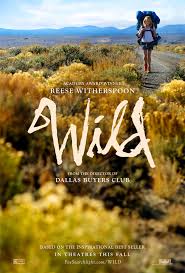
At the risk of sounding like a broken record, I read this book way back when it was first published and didn’t overly love it. I’m wondering right now whether I hold books to an even higher standard than I do movies and believe that this is probably so. The book was written by Cheryl Strayed wildherself – an account of her time spent solo-hiking the Pacific Crest Trail in order to slam the brakes on her self-destruction. I don’t think I liked the voice of Strayed, didn’t like her haughtiness, didn’t connect with her unapologetic ways. Luckily, this movie has undergone the Nick Hornby treatment and as a result, Strayed is a little more tolerable and the story a little more cohesive.

Reese Witherspoon plays the title character. She’s good. She’s good but she’s not great. It doesn’t feel like an overly-challenging role. As she hikes along, some loose association will jar her memory and we’ll receive another piece of the puzzle via flashback. She’s entirely believable in every scene, it’s just that no scene is particularly gripping. I enjoyed seeing her bare face exposed to us (did anyone else feel she looks like an Olsen twin without makeup?) but I didn’t really feel like it translated enough to an emotional vulnerability that seemed necessary in telling such a story. In fact, the “Nick Hornby treatment” that I started out being grateful for began to seem just a little too trite. The puzzle pieces fit together just a little too snugly. No one’s life path is that linear, and I felt that Witherspoon struggled with the script’s limitations.

Perhaps so did the director, because neither did I feel a connection with the vast and probably very beautiful landscapes. We never dwelled on them. They only existed as backdrop. The terrain was rough, certainly, but we never get a sense of it because the camera is always maddeningly smooth. None of the 1000 miles she treks through seem to be all that “Wild” but the thing about this movie is that the land should be Reese’s costar. Richard Brody, reviewer for The New Yorker, put it about as well as anyone could: “they don’t give Oscars for Best Mountains.” True. And after last year’s success with Dallas Buyer’s Club, it certainly feels like Jean-Marc Vallée is gunning for the Oscar by any means necessary.

I criticized the book for being too smug and the movie for being too glib. And maybe I’m just hard to please but there was a lot of story here, a lot of layers and potential depth but for some reason we stayed safely near the surface, and while I’d still place this film in the top 20% of 2014, I think it failed itself because it had all the ingredients to be much much better and wasn’t.

Muppets Most Wanted

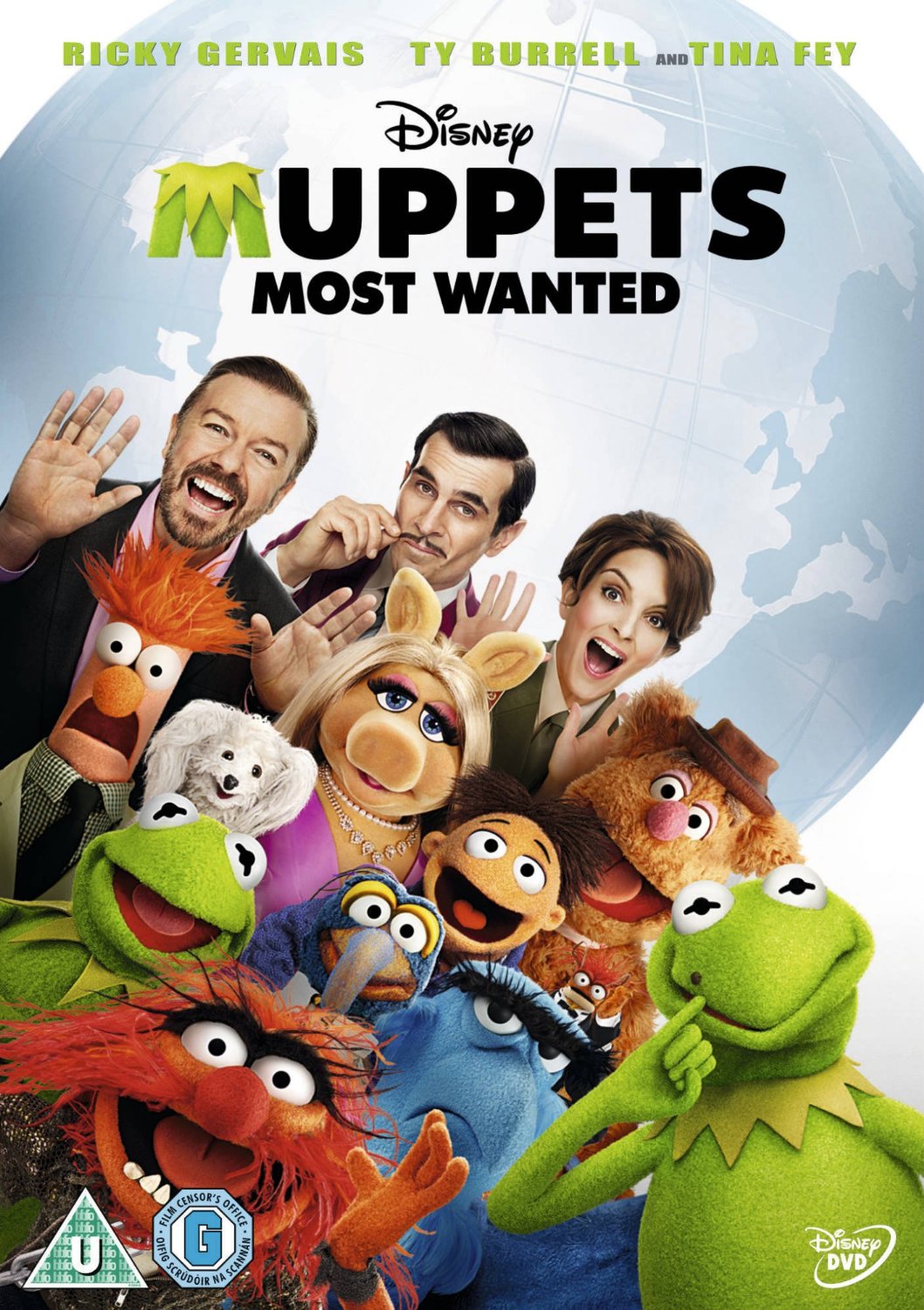
muppetsThis movie picks up exactly where the last one left off, with a rousing musical number about how this is a sequel, and as we all know, the sequel’s never quite as good.

The gang is lured into a world tour by Ricky Gervais playing Mr. Badguy, an agent who’ll give them everything they want, but is secretly the number two to Constantine: world’s most dangerous frog (!). Constantine and Badguy are on a crime spree and are using the Muppets as a front, except for poor Kermit who’s been sent to a Russian gulag as a stand-in for his look-alike, Constantine. Jean Pierre Napoleon (Ty Burrell) and Mr. Eagle are on the case (Interpol, CIA), and as soon as Napoleon’s leisurely European 6 hour lunch break is over, they might actually solve it and save the day.

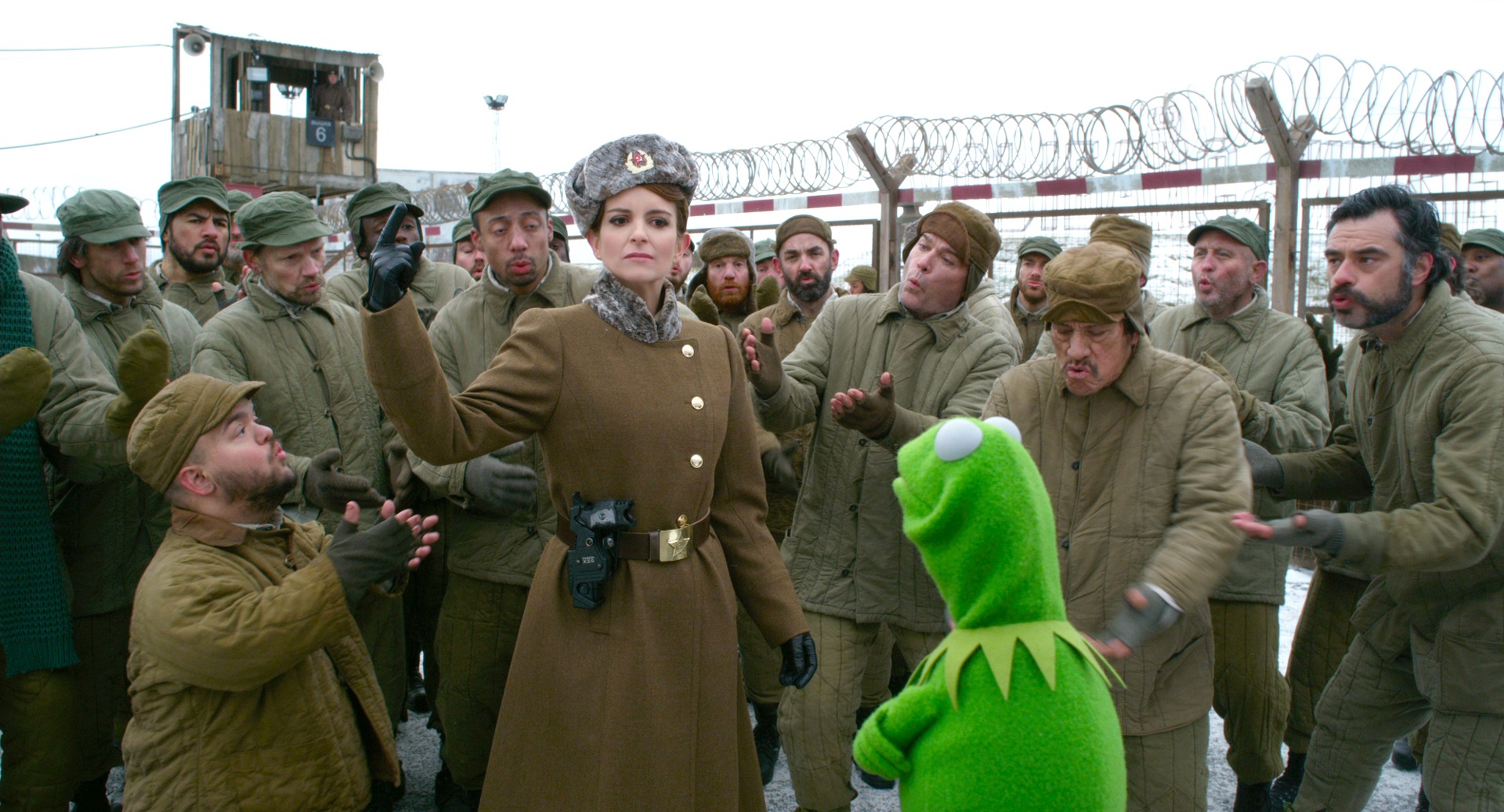
Gervais looks like his appearance in this film is court-mandated. He’s not having any fun and he tysucks the life out of all the scenes he’s in. Burrell is made for this stuff, and has actual chemistry with a big blue eagle. Tina Fey, playing the gulag’s strict warden, is the stand-out. The moment Kermit is rolled into the prison wearing a Hannibal Lecter mask, you know the Siberian scenes will be your favourite. Fey’s number “In the Big House” seals the deal; it’s the best of the bunch. And the fact that she’s backed up by doo-wopping prisoners played by Danny Trejo, Ray Liotta and Jemaine Clement wearing a crown of sporks just cements it. In fact, seeing Ray Liotta with wagging knees and jazz hands just might make the movie. The only problem with that is that these most cherished scenes are virtually muppet-MUPPETS MOST WANTEDfree, and if muppets are upstaged by humans in a Muppet movie, you’re sunk.

Bret McKenzie, (the other half of Clement’s Flight of the Conchords) is back again after winning the Oscar for his work on the first film (“Man or Muppet”, best original song), but the music has lost its lustre. It’s a lustreless film in general. Maybe we’re just missing the magic that Jason Segel brought, his fandom really breathed life into the franchise and nostalgia played high for us all.

Muppets Most Wanted is just as chock-full of cameos as the its predecessor. Blink and you’ll miss them: Tony Bennett, James McAvoy, the dude from Downton Abbey, Christoph Waltz dancing the waltz, Salma Hayek, Stanely Tucci, Zach Galifinakis, Puff Daddy. And the list continues! It feels a little like more time was spent on lining up cameos than thinking up plot, and that’s too bad, because on paper this film had all the potential of the 2011’s The Muppets, but this is a sequel, and as we all know, the sequel’s never quite as good.


Edge of Tomorrow

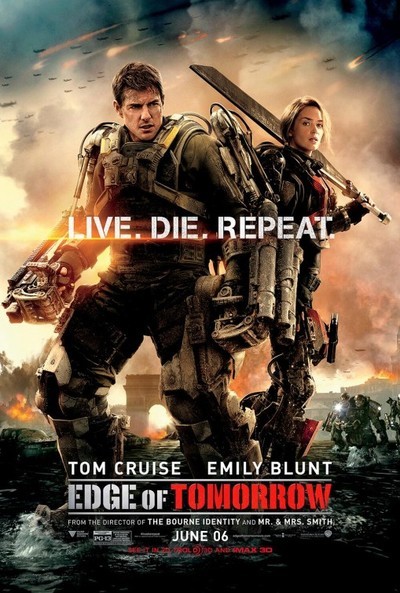
Tom Cruise plays Major William Cage, an officer used to in front of a camera rather than in the front lines. He is forced to join in combat against the invading alien race and is killed in the mission, though he “wakes up” to find himself in a time loop, repeating the battle in which he dies over and over again. It’s a military, sci-fi Groundhog Day with fewer jokes but buffer bodies. Cage teams up with Special Forces warrior Rita Vrataski (Emily Blunt) to improve his fighting skills so that he may live long enough on battle day to defeat the alien invaders. edge

I liked this so much more than I was supposed to. It’s an action-y-science-fiction-y movie that should appeal to Assholes like Sean, not Assholes like me. But it did. Probably because Emily Blunt is so fantastic, beautiful and feminine and tough as hell and totally believable as a feted warrior. And because for once, Cruise portrays this inept guy who has to be trained and guided by a woman in order to become the soldier they need him to be. It’s probably the most feminist action flick made in years. Or ever.

The movie is really cool to watch. The special effects contribute to a video game feel (and now that I mention it, I guess the constant re-levelling of the characters might have something to do with that too). The editing is pretty brilliant: the battle scene is overwhelming and unrelenting and although Cruise and Blunt relive it many times, it never feels as repetitive as it should. Actually, I felt moved and heartbroken by how much of their lives were spent on a mission no one would ever credit them for.

I mentioned earlier that this movie had fewer jokes than Groundhog day, and I stand by that statement, but this movie is not without its own brand of (dark) humour. And maybe we’re also slightly laughing at Tom Cruise, perma-action-hero, who in this one, has to take the back seat. It’s a war action movie that doesn’t glorify war. It’s got more storyline than weaponry. It feels like effort has been made, and for me, someone who doesn’t appreciate “cool” explosions for no apparent reason, this was a clever gem in the genre. It made me remember why Tom Cruise is a movie star and realize that Emily Blunt is just at the start of an amazing career.

Foxcatcher

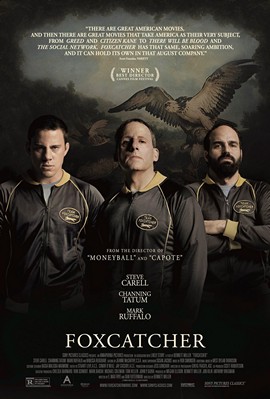
In the sprawling Du Pont family home, there is a room referred to as the trophy room. Its walls are lined with ribbons and medals and a bounty of trophies featuring gleaming silver horses. “Horses are stupid” says John Du Pont (Steve Carrell), who prefers wrestling, though his dear, ultra-wealthy mother considers it a “low sport.” It’s funny he has such a disdain for horses since he seems to treat his own pet wrestler no better than a dog.fox

Mark Schultz (Channing Tatum) is an Olympic gold medal winner but has lived his life in the shadow of his older brother, Dave (Mark Ruffalo), also an Olympian, and arguably the better wrestler. Mark’s living the unglamorous life of an amateur athlete, surviving on one $20 cheque at a time when Du Pont swoops in to offer him not just sponsorship, but mentorship. Desperate, Mark accepts.

Steve Carrell is nearly unrecognizable as Du Pont, and I don’t mean the prosthetic nose. I mean he walks Du Pont and talks Du Pont and hunches his shoulders and has this stillness and almost emptiness about him that’s kind of chilling and really restrained and very well done. Matt played the Oscar card in his review and I can’t help but agree. Every time he’s on screen, he’s giving out a vibe that makes you uncomfortable but prohibits you from looking away. Du Pont is basically soulless and he attempts to buy himself a biography with cash. He’s got an interest in sports but no qualifications – luckily, as long as you embroider ‘coach’ on your jacket, no one second guesses you when you’ve got millions in the bank. Carrell and Tatum both spend much of the movie in silence, so much so that a coked-up scene on a helicopter where the two repeat polysyllabic words is one of the “funnest” scenes in the movie. For the most part, it’s slow and mumbly and dark, dark, dark.

I actually think Tatum was the perfect choice to play the physically strong but emotionally stunted athlete. He comes alive in the gym, on the mat, but seems subdued and uncomfortable in almost any other setting. We see him as vulnerable and feel that somehow Du Pont has taken advantage of him, even though it’s clear he’s an adult. The movie relies on what’s not said between these two, because Du Pont is socially inept and Schultz is a dull bulb. But wordy or not, I needed something more from this movie. We never know the true nature of the relationship between Du Pont and his protégé. There’s a lot of tension and creepiness and stuff we don’t feel good about, even some erratic behaviour from Du Pont, but nothing that can really explain the drastic event at the end. I mean, what the hell? It’s not fair to spring that on us, you need to earn it, even if we knew all along we were in for some violent end.

The movie works best as a commentary on America and on social inequity than as a true-crime caper. Director Bennett Miller makes his movie as if he’s a journalist, not a story-teller. We are presented with facts; emotions are observed but not delved into. The whole thing is cold. And when shit hits the fan, we knew it was coming, but we still don’t know why.


The F Word

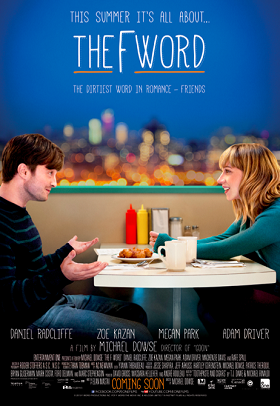
If you are browsing Canadian shelves, you’ll find this movie under ‘The F Word’ but if your Netflix is an American account, you might try ‘What If’ instead because even not saying Fuck will still earn you an R rating in the good old USofA.The_F_Word_theatrical_poster

Daniel Radcliffe is Wallace, a med school drop out, burned in love, who meets Chantry (Zoe Kazan) at a party in Toronto one night. They click over magnetic poetry, exchange witty banter and phone numbers, until she casually mentions — a boyfriend. So the two become friends, the kind of close, opposite-sex friends who hang out all the time, tell each other their secrets, lean on each other for support, flirt outrageously, see each other naked, but are JUST FRIENDS. You know.

The chemistry and dialogue between them is fun and fresh. You may not be used to seeing Daniel Radcliffe in a role where he can wear jeans and acknowledge that he’s had sex, but he leaps into the character quite convincingly. He’s a very good, and very handsome actor.

Unfortunately, it’s a formulaic rom-com in a trendy package. The plotting is precisely predictable and the whole thing starts to feel like an exercise in the obvious. Their exchanges are fairly entertaining but eventually you just want them to do what they’re going to do. And they do. The end.

The Giver

I read this book so enthusiastically, savouring each word, until the last few pages dumped me abruptly at the end feeling like I’d been robbed, liked Lowry simply hadn’t known how to deal with her little utopia, and so hadn’t.

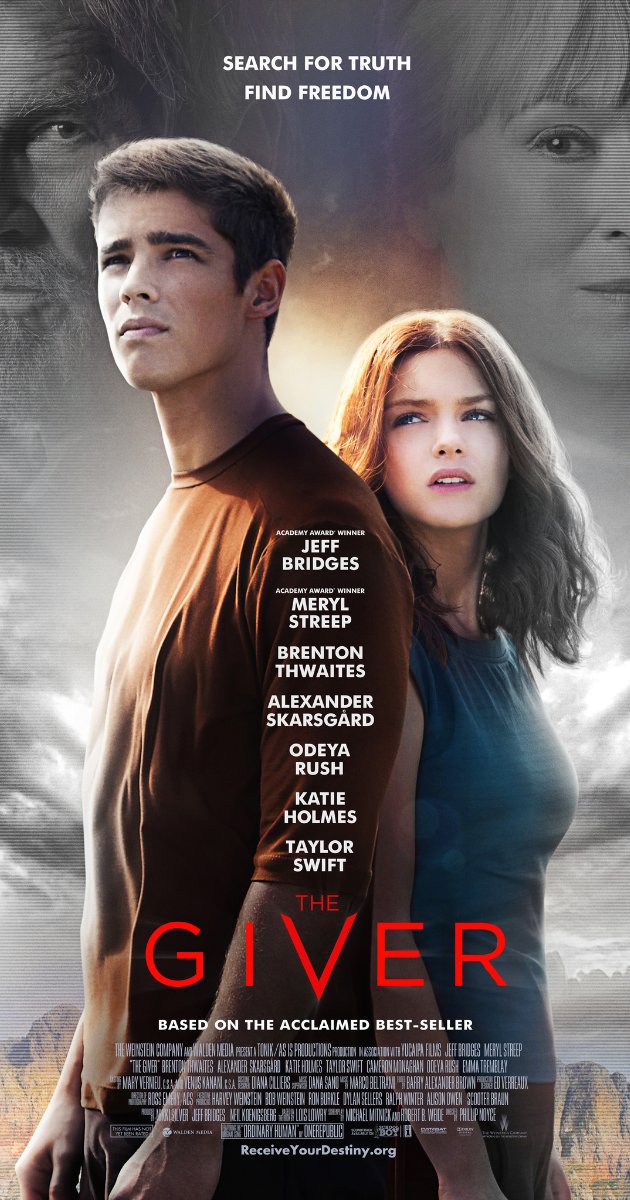
When I saw that a movie was being released based on her novel, I was intrigued (Jeff Bridges! Meryl Streep!) but wary.giver

We follow Jonas (Brenton Thwaites) in his 12fth and 13th years. He lives in a community rebuilt after “the ruins” with a goal toward sameness. People’s memory of the past has been erased. They feel no pain but also no emotion.  Everyone is equal. Their lives are governed by strict rules that dictate everything from mealtime and career to partnership and procreation. When it’s Jonas’ turn to be assigned a role by the Chief Elder (Meryl Streep), he is selected to be the Receiver of Memories. Jeff Bridges is the Giver of Memories, and his job is to bear the weight of all mankind’s memories for his community, the good and the bad, and then pass them along to the next generation’s Receiver for safekeeping. The process is intoxicating to young Jonas, who has never felt snow, or known song, or seen joy. The Giver must take things slow, however, because more complex memories like war and vengeance and hatred must also be passed along, and the last time he tried to do this was to his own daughter (stunt-casting goes to: Taylor Swift) and she wasn’t up to the task.

Jonas starts to feel that it isn’t right keeping back all these memories but this is their way of life, and even his own friends and family are not easily convinced.

I find myself attracted to utopian-dystopian fantasy fiction. The Handmaid’s Tale by Margaret Atwood is one of my all-time favourite anythings. The Giver, however, starts out promising only to disappoint, and the movie is no different – well, maybe it’s worse. Meryl Streep seems to be at half strength in this movie, no back story or motivation to give us a clue. Jeff Bridges mumbles through his part. The kids are uninteresting, including the so-called hero. Alexander Skarsgard seems a strange choice as Jonas’ father, doing unspeakable things unquestioningly. Taylor Swift pops up for a minute or two, cringingly, seemingly only as a great white hope to bring tween interest to the movie since it’s unclear who else to market to. Only Katie Holmes is well-cast as an empty, robotic stepford wife

Did I enjoy this movie at all? I apologize. I did not.


The Imitation Game

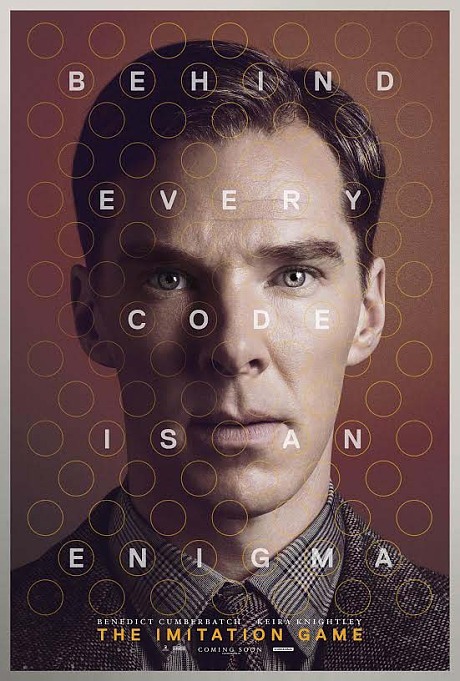
Benedict Cumberbatch stars in The Avengers for math nerds. As Alan Turing, he assembles a crack team called Hut 8 who will secretly try to break the unbreakable German code machine, Enigma, to win the war, while pretending to be regular schmos putting in time at a radio factory.game

Turns out, pretending to be regular is probably the bigger of the challenges for Turing. He’s a genius, but he’s also probably autistic. He’s horrid with people, often laughably so in the film (Cumberbatch portrays him lovingly, with sensitivity, grace in his gracelessness, and touches of clueless humour). Turing is also gay, and closeted, necessarily. Churchill credited him with the single largest contribution by an individual to the war effort; his work probably shortened the second world war by at least two years. He was an expert in his field, the father of computer science, and a war hero and yet he struggled just to make a friend.

The film flips between different time periods: his boyhood at school where he had his first love, a post-war break-in of his home that leads to him being interrogated by police, and the time he spent at Bletchley Park deciphering Nazi codes. Both book-ending periods paint us, the audience, a picture of the things he’s keeping secret. The film does an excellent job of presenting his world as a series of codes: as a boy he confesses that for him, conversation is a code. People are an enigma. The wallpaper in his home looks like morse code, dashes and dots. The production design is upscale period all the way.

For a movie about math and cryptology, it’s surprisingly gripping. Reels of news footage help give us a sense  of their urgency. They aren’t battling Germans, they’re fighting a clock. Their countrymen are dying in tunnels during air raids (as Keira Knightley already did, in Atonement), or simply wasting away of starvation. The movie isn’t 100% historically accurate, but I think it’s faithful to the time and place and people, and if the computer itself is given the Hollywood treatment, looking much more impressive than it ever did in real life, where’s the harm? Perhaps it will inspire people to go home and look it up.

I think the film’s strength is its moral question. Once the code is cracked, how and when can that information be used? How many civilialns and soldiers would you sacrifice to keep a secret that could win the war? The movie does a great job of personalizing the question and we start to feel that as awful and tense as it was in the not knowing, it was a lot more bearable than the responsibility we’re faced with when we do know. The weakness is in having painted Turing as the unblemished hero. The truth is , he was probably unknowable, and without ever having known him, I’m betting that no one could be as spotless as he’s implied to be in the film. Turing, the actual man, was mistreated by his ungrateful government, who kept his war records sealed while he was prosecuted for simply being a gay man at a time when it was illegal to be so (or at least to act on it – “gross indecency” they called it, hypocritically), and then sentenced him to chemical castration, robbing a nation, and the world, of a great mind.

Into the Woods

woodsBased on the Stephen Sondheim musical, Into the Woods tells the story of a childless baker and his wife, cursed by a wicked witch to be barren forever but granted the chance to reverse the spell, if only they go into the woods to retrieve some special items for her. Their story intersects with the familiar Grimm Brothers’  tales of Little Red Riding Hood, Cinderella, Jack and the Beanstalk, and Rapunzel.

Meryl Streep plays the witch and plays her beautifully. Director Rob Marshall knows she’s the linchpin and grants her the most spectacular entrances and exits. But it’s Emily Blunt in the role of the baker’s wife who feels like the heart bakerof the movie and Blunt really shines. She can make any line sound so natural, and her voice can only surprise you in the best way possible. She was nominated for a Golden Globe and deserves to be, possibly even more so that Streep (!). Anna Kendrick as Cinderella is comparatively disappointing. It’s always difficult for this reviewer to see past her donkey dentures, but her voice is up to the challenge, even I can admit that. But Cinderella just isn’t that exciting to watch (this problem was likely compounded by the inclusion of a preview for the new live-action Cinderella movie to be released in 2015 – my sister and I wrongly imagined some of those scenes as scenes from Into the Woods).

chris

“I was raised to be charming, not sincere.”

There is a lot to recommend in this movie. The ensemble cast is spectacular. After their opening number, “Into the Woods” I felt like I should applaud.  And if you had doubts that Chris Pine could sing, let me assure you that he’s learned more than just a thing or two from Shatner along the way. Actually, our group quite enjoyed the scene between Pine’s Prince Charming (recycling his smug asshole look from Horrible Bosses 2) and Rapunzel’s Prince (Billy Magnussen, leatherclad) – the two men are singing about their respective woman-induced “Agony”, splashing about homoerotically in a waterfall, trying to out-macho each other, crotch-thursting, popping buttons to reveal increasingly deep vees of smooth, tanned chests, reminding us more of a duet between George Michael and Freddie Mercury than your typical fairy-tale princes. Delightfully tongue-in-cheek, you almost wished more of the movie could feel this way.

wolf

“Scrumptious carnality”

The sets are gorgeous, and no matter how many times our characters go into the woods, it never feels like they’re passing the same 5 trees, it’s a truly enchanted forest that creates a storybook look that’s fun to get lost in. And the fabulous Colleen Atwood heightens the visual gorging with a stunning array of costumes, including a suit that transforms a man into a mister wolf. Johnny Depp, playing the wolf, is lurking inside those woods, looking lupine and oily, putting out vibes that should warn us away. Although top-billed, Depp’s in the movie for maybe 5 minutes, but that’s more than enough to turn things pretty sour. How do I say this…I felt like I picked up on certain nuances in his song that I was uncomfortable with. As in: sexual innuendo. As in: the wolf would like to “eat” Little Red Riding Hood in more than one way. He’s an absolute creepster with a real pedophile’s mustache and his singing “Hello, Little Girl” will send shivers up your spine. He tells us there’s a “scrumptious carnality” about to be had, and maybe that works in the Broadway production, but it feels grossly inappropriate in this toned-down Disney version where the actress playing Red is indeed a little girl, much too young to be on the receiving end of this lascivious song. And when she starts responding that what they’re doing is new and scary but also kind of exciting, well…I wanted to slam on the brakes.

The characters wrap up their traditional story lines around the 80 minute mark – but wait! These poor schmucks don’t get their happily-ever-afters. The story continues. And I’m glad that the movie doesn’t end on Cinderella’s wedding day because I would have felt cheated. But 80 minutes of singing and skipping through the woods was about as much as I wanted. So the remaining third of the movie, which gets a hell of a lot darker, felt entirely too much. Streep delivers another great song but I was fed up with the inundation of special effects, my patience was waning, and it just felt like filler. My sister felt that since all the characters start (or continue) making selfish, morally ambiguous choices, she didn’t have anyone to pull for. She’s not wrong. My husband felt that the songs were not particularly catchy or memorable, and he’s not wrong either. I enjoyed the movie, enjoyed it quite a bit, it would be impossible not to given the sheer amount of talent (although I am wondering why all of that talent had to be white), but I’m not feeling it for Best Picture this year. Of course, I’m sure I said the same about Rob Marshall’s Chicago and we all know how that went.