Author Archives: Jay

TIFF20: New Order (Nuevo orden)

Marianne (Naian González Norvind) is resplendent in a crimson suit, about to marry her sweetheart at a swanky, high-society affair at her parents’ home, if only the judge would hurry up and get there. At the gate, an old family employee is begging for money. The timing is bad, but his wife will die without surgery, and he needs cash now. Marianne’s parents have offered some but he needs more and need makes him persistent. Marianne takes pity, and since the judge isn’t there yet anyway, she has another employee, Cristian (Fernando Cuautle), drive her to the sick woman so she can get her to a hospital.
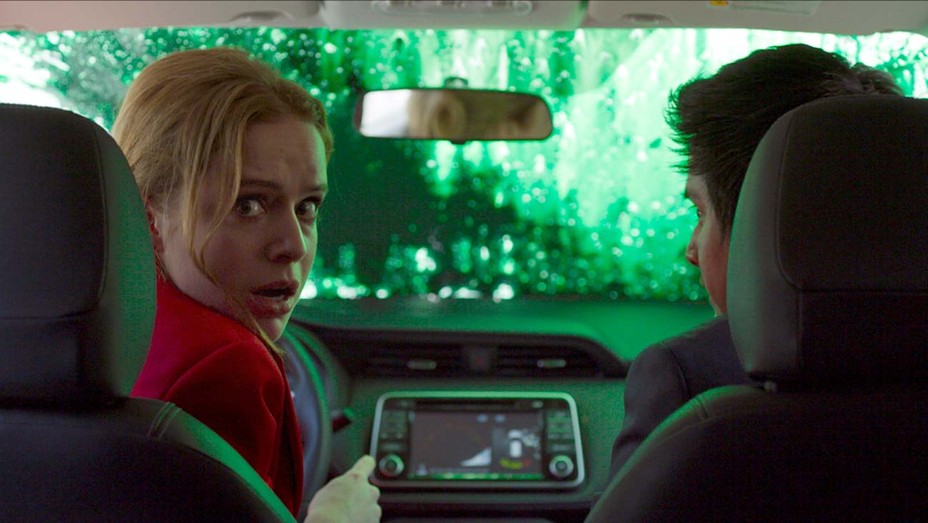
Outside the gates of her lavish family home, there is unrest. Wedding guests and their cars have been showing up bearing traces of green paint – the protester’s signature colour. The rumble of rebellion grows louder, the streets chaotic. Back home, the estate walls have been breached, the wedding overwhelmed with “uninvited guests.”* Guests are stripped of their valuables, the house is trashed, the safe cracked. The Have Nots have risen up against the Haves, forcing guests to wire vast sums of money, shooting the ones who won’t. Wealth is being redistributed. For Marianne, things are even worse. The army has “intervened,” meaning they’ve identified high-resource targets like her and including her to be held captive with dozens, hundreds, thousands more who are tortured and held for ransom, all while blaming it on the protesters.

Unapologetically and brutally violent, not to mention unrelentingly bleak, Michel Franco explores what it means when the bottom 99% decide they’ve had enough. It’s a very literal interpretation of class warfare. There are no heroes here, just multiple levels of corruption.

Franco’s film is tough to watch. It starts out boisterous. demanding, pulsating with life and its many needs. His civil uprising is sudden, visceral, vicious. But with little context and no attachment to its characters, the second half loses its way amid the chaos. Franco is more focused on making shocking statements than stories, but even the ability to shock is blunted when it’s overused.

This is the kind of movie that you hope is dystopian rather than prophetic. Although, with the kind of 2020 we’ve been having, this is not a possibility we can afford to rule out entirely. New Order has a heightened capacity to disturb because it feels possible. By keeping the details vague, you could almost imagine any industrialized nation in its place; Franco is issuing a warning for anyone brave enough to see it through. It’s Parasite meets The Purge, weighted a little more toward horror than satire, where the civil war doesn’t so much bring new order as no order, and everyone is vulnerable.

The film, which took home the Silver Lion Grand Jury Prize from the Venice Film Festival, is more about awe than answers. Like an electrified cattle prod to the privates, it won’t be for everyone, but at the very least, it should serve as a wake-up call.

*Recently nominated for euphemism of the year.
TIFF20: MLK/FBI

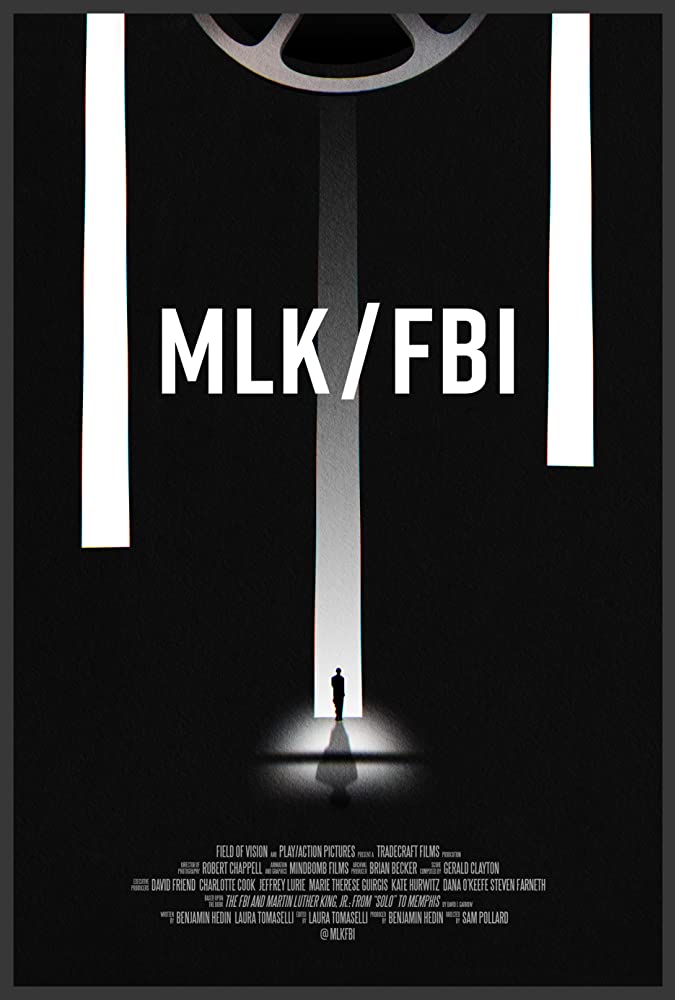
In the 1960s, Hoover and the FBI surveilled Martin Luther King Jr hoping to expose secrets to humiliate him publicly and weaken his authority.

That intelligence has just now been declassified, and Sam Pollard’s is the first film to confront their surveillance and harassment of the man they labelled “the most dangerous negro in America.”

With interviews from Andrew Yong, Clarence Jones, James Comey, and more, the documentary is more factual than entertaining but it does invite you to wonder about the surveillance tapes themselves, due to be unsealed in 2027, and how they may affect a great man’s legacy.

Nothing altogether shocking is revealed in the documentary, but we do get a fuller picture of the complexity of the emotional toll on King knowing the FBI was threatening to discredit him. We also get a staggering sense of just how many resources were devoted to suppressing a single dissent who advocated for nothing but peaceful protest. Not only that, Pollard navigates the government’s continued targeting of not just King but other Black activists as well. Their failure to provide King with adequate protection seems, in context, to not only be egregiously neglectful but a strategic and convenient choice.

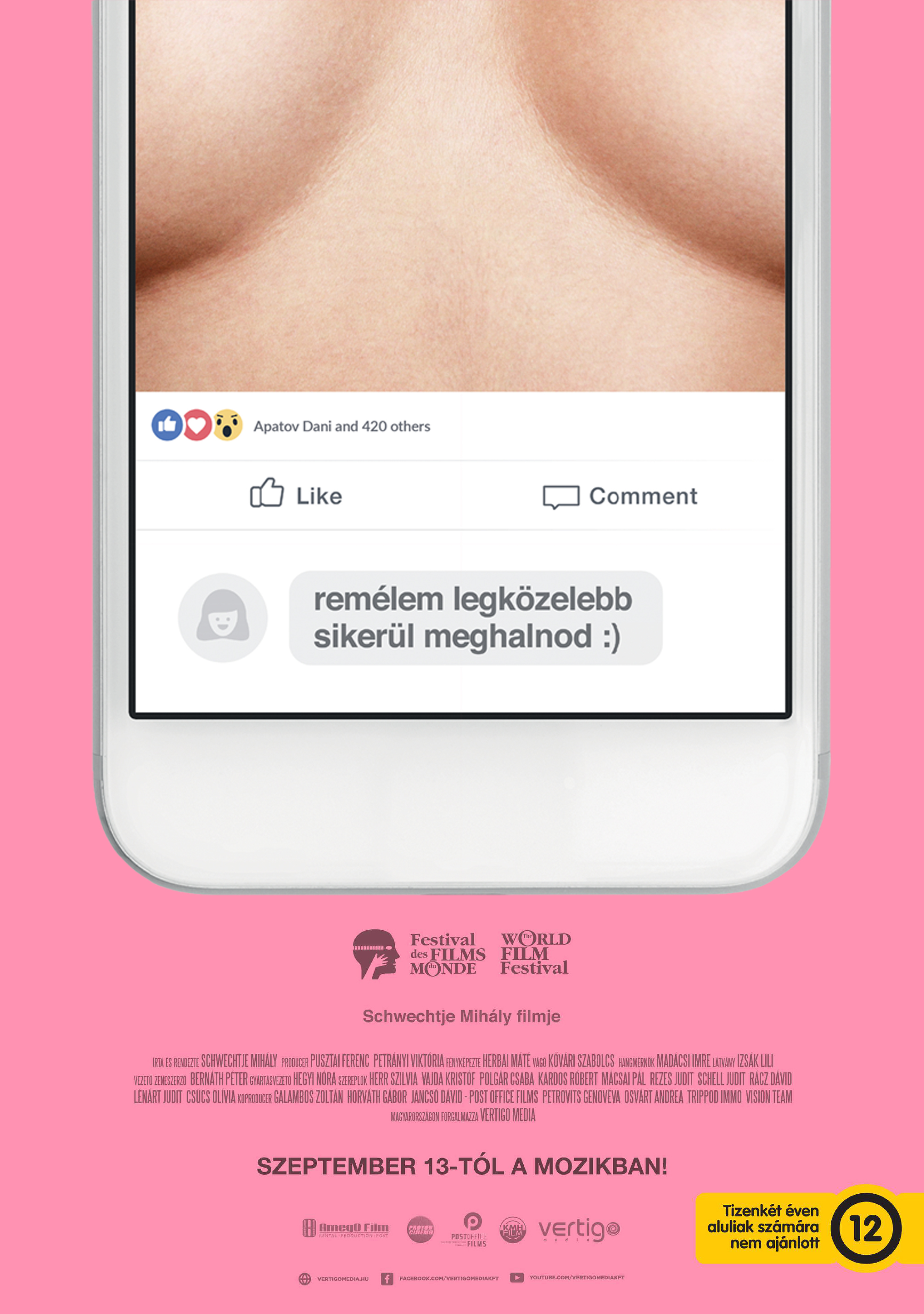
I Hope You’ll Die Next Time :)

In light of the recent suicide prevention day, I would love to talk about a Hungarian movie that I think is definitely worth watching. I Hope You’ll Die Next Time 🙂 was released exactly 2 years ago, in September 2018 and I can tell you that I’ve watched it quite a few times since its initial release – especially now that it’s also available on Netflix!

Now, the title of the movie is pretty shocking on its own – who on earth would put a smiley face at the end of such a sentence? Well, I’ll not tell you the exact reason why it is there as I really do not want to drop a major spoiler but all I can say is that the smiley’s there for a good reason: this is a movie about teenagers living in Budapest, the Hungarian capital and just like any other teenagers in the world, they normally use emoticons while texting each other.

So, what is the movie is about? You may have already guessed from the title that it’s about suicide. But it also talks about other problems of teenage life such as cyberbullying, relationships with friends and parents, love and sex. And well, they’re pretty interesting topics, aren’t they?

Synopsis

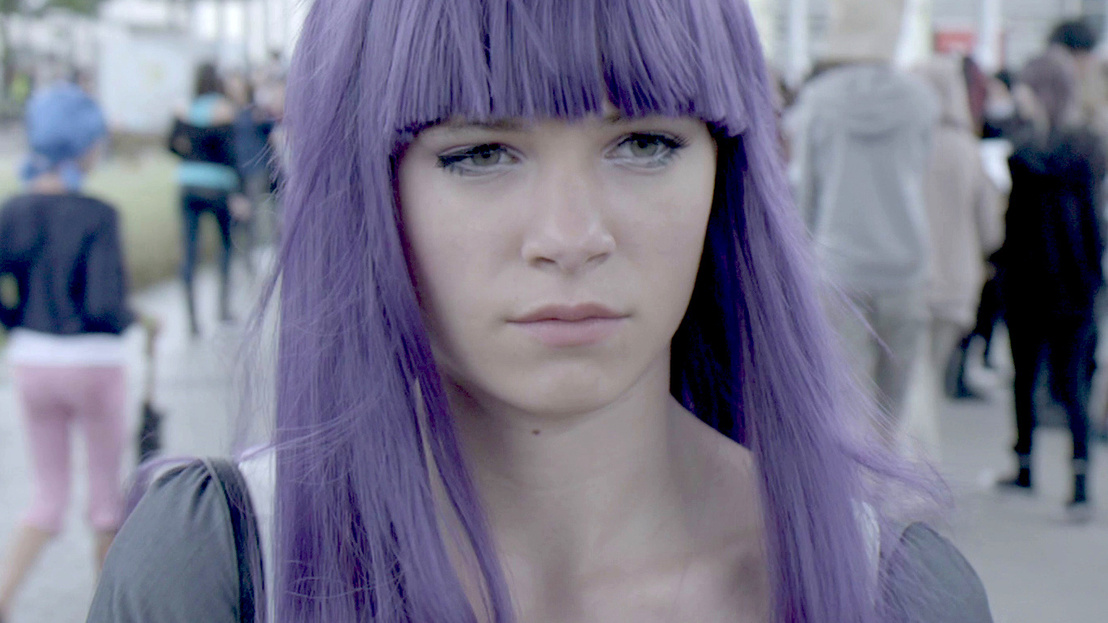
I Hope You’ll Die Next Time  tells the story of a Hungarian high school girl, Eszter, who is just like any other teenage girls – she loves manga, does cosplay and she has a crush on her English teacher – okay, I am not entirely sure whether having a crush on one’s English teacher is considered to be average but I guess it’s happened to some of us in our high school years. I mean, I too had a crush on one of my teachers.

I know it may sound pretty much like a Hollywood romcom. But it’s not. Eszter’s life seems to be pretty happy but obviously something bad needs to happen. And in her case, things will start to take turn for the worse when her English teacher (Csababá) announces that he’ll leave the country for a foreign job.

Will Eszter forget him? Of course, she won’t. And I guess it will not be a major spoiler if I tell you that our teenage protagonist starts a sexting relationship with her ex-English teacher – who’s actually married by the way – and that’s when things really start going out of control.

Well, I will not carry on with the story but I think it’s pretty obvious that this whole situation will not end well. And by the end of the movie, you’ll also learn why the movie’s title is “I Hope You’ll Die Next Time”.

Oh and I think I should also mention about the beautiful visuals of the movie and about its great pastel colours (just love the atmosphere!). And another thing that I loved was that it includes video calls, text messages which make the whole thing look more realistic.

And at the end of the day, the most important thing is the message of this movie. The characters have a seemingly perfect life, living in one of the prominent Budapest neighborhoods but this doesn’t mean that they do not have their own problems such as bullying, self-esteem issues and other mental health problems. And parents often realize that there’s a problem when it’s already too late….

Where To Watch?

The movie is available on Neflix and also on HBO Go – but as far as I know, their catalog varies greatly depending on your region.

Guest post by Mark Wester. Mark is a 27 years old guy from Central Europe who has suffered from OCD (Obsessive Compulsive Disorder) for most of his life and thought sharing stories and personal experiences could help people living with the same condition. Visit him at his blog, Overcoming OCD.

TIFF20 Penguin Bloom

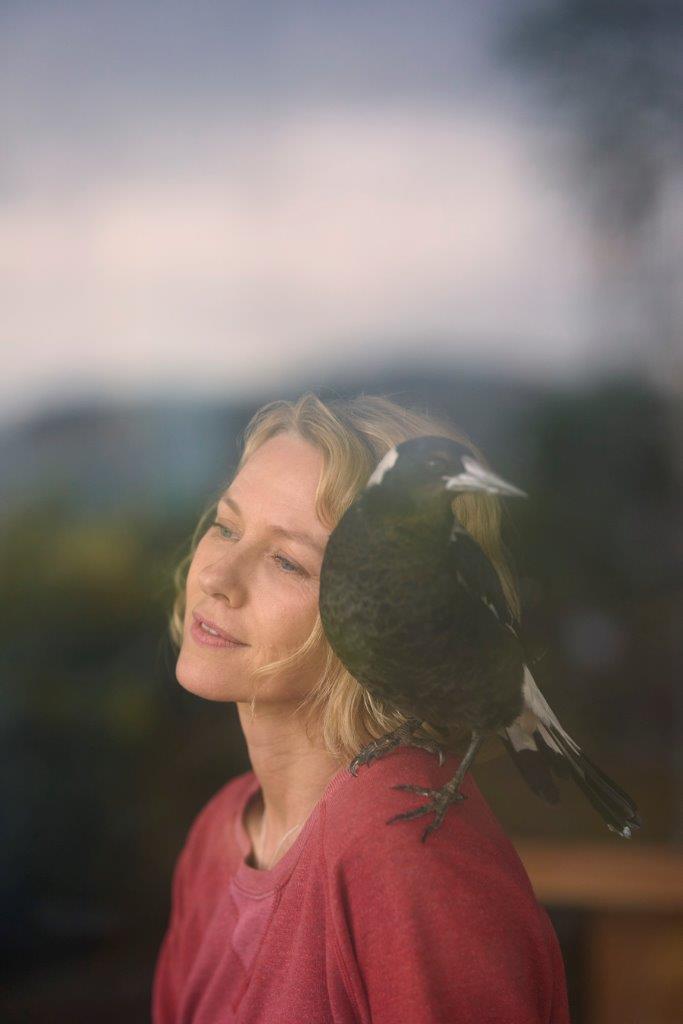
The Blooms are a happy Australian family on vacation in Thailand when life changes forever. A broken rail on a rooftop lookout is nearly deadly, leaving Mom Sam (Naomi Watts) paralyzed and when eventually back home, terribly depressed. Both ailments keeping her confined to bed, husband Cameron (Andrew Lincoln) is basically a single father, barely handling life with 3 rambunctious boys, at least one of whom blames himself for his mother’s life-altering injury. Sam’s mother Jan’s (Jacki Weaver) support is of questionable value and Sam sinks deeper and deeper into an identity crisis told deftly between flashbacks to her active part in life and motherhood, and disturbing dream sequences that illustrate the yawning gulf between Sam Now and Sam Then.

Would you believe me if I told you that a magpie named Penguin is what healed her? Well, a wounded bird named Penguin AND a human woman named Gaye (Rachel House) who got Sam out of her chair and into a kayak. The kayak gave her freedom of movement and some independence; Penguin gave her hope.

It sounds like Oscar bait because it IS Oscar bait. Do I say that like it’s a bad thing? Maybe just a little. I hope Penguin won’t take this the wrong way, but you know that old saying, birds of a feather flock together? Well, so do movies about people overcoming catastrophic injury. There are a LOT of them.

This isn’t a bad one, and surprisingly, not an overly sappy one (note: I said overly). Sam is privately bitter and sometimes selfish. Son Noah (Griffin Murray-Johnston) is harbouring secret guilt and putting way too many eggs into one penguin’s basket. But the emotional trajectory is trending upward since that little magpie first chirps with only a few unconvincing, by-the-book pauses along the way. Watts is terrific. The magpie is terrific, if just a little too cute to be entirely believed. Director Glendyn Ivin isn’t doing a darn thing wrong, he’s just another guy telling an inspiring, heart-warming story about churning anger into triumph through the redeeming values, of hope, faith, and family.

Maybe you’re in the market for an uplifting movie with lots of heart and some solid performances. Maybe you’ve got a surplus of tissues and are looking for any excuse to cry. Maybe you just always thought it would be cool to see a bird wear underwear on its head. For me this was too pat and predictable. I always hope for something a little meatier from a world-renown film festival (no offense, Penguin, poultry is fine too), but a bird with a broken wing is just about as ham-fisted (or should I saw chicken-winged) a metaphor as you can get.

Check out Penguin Bloom on Youtube – now with 100% more bird poop!

TIFF20: Nomadland

Fern (Frances McDormand), an unemployed widow living in a ghost town so deserted its zip code has been discontinued, makes the very hard decision to pull up stakes and hit the road. In this economic climate, that’s all it takes to become a nomad: lack of opportunity + too broke to retire = living in a van. She heads to where there’s seasonal work, a large Amazon distribution centre that pays your camping fees while you ship goods to online shoppers over the holidays and then kicks them out when the shopping season’s over (a sadly real employment strategy called the CamperForce program).

This is an actual way of life for many people nearing or having achieved senior citizenship with a subpar pension and no social safety net. This is not our finest hour.

Director Chloé Zhao takes us on a quintessentially American road trip through 7 states over a four month shoot. She adapts Jessica Bruder’s book for the screen but lets stunning cinematography tell its own story, and allows real life nomads Linda May, Swankie, and Bob Wells to their stories from the fringes of society. Brilliant, brilliant McDormand feels like a fixture rather than a tourist in the landscape.

Zhao has an incredible aesthetic, her scenes like vintage postcards, but ultimately lets them be the backdrop to the stories lived and told by hardscrabble people. Zhao’s edits are generous, allowing the camera to linger over both the power and the pain of “having nothing in your way.”

These modern day nomads speak of rejecting the dollar, the 9-5 mentality, the conventional way of life, but between their words is a choking sense of loneliness and a sense that it is life that has rejected them, or perhaps capitalism has, or the American dream. There is solace in connecting with the earth, of living without encumbrance, but all are tied by the same tug of longing and belonging. Fern herself is an internal balance of grief and resiliency. This life isn’t one that she chose, exactly, it’s a compromise that she made, a way to go on when there was nothing left for her.

Frances McDormand has nothing left to prove. There is a quiet strength to her performance, indeed Zhao seems to have elicited nothing but, even from an amateur cast. There is strength and value in authenticity, even when the truth isn’t pretty.

TIFF20: One Night In Miami

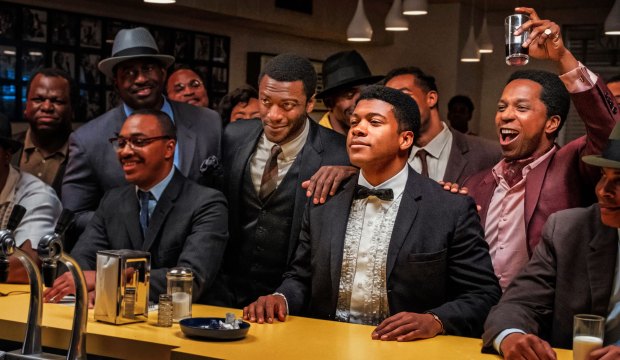
One night in Miami, Cassius Clay, not yet Muhammad Ali, is celebrating his heavyweight world boxing title rather quietly, in a seedy motel room, with a few of his friends. This is a fictional account, the way screenwriter Kemp Powers (who adapts it from his own play) imagined it, of one remarkable night where four Black icons – Clay (Eli Goree), soul man Sam Cooke (Leslie Odom Jr.), NFL star turned movie star Jim Brown (Aldis Hodge), and Malcolm X (Kingsley Ben-Adir) got together and inevitably discussed their roles in the civil rights movement, what they did or did not owe their people, the cost of their success, and the general cultural upheaval of the 1960s.

Of course, Malcolm X’s idea of a good time is vanilla ice cream and a lecture. He wants and expects his friends to be weapons in the cause. His expectations are sky high and everyone around him invariable feel as though they aren’t measuring up. They were young, black, famous, and unapologetic, but they had one thing that Malcolm X felt they took for granted, that he wanted for all his people, not just a few lucky exceptions: power. Black power.

One Night In Miami does an exceptional job of putting us in the mind frame of Malcolm X shortly he was martyred for his cause. His idea of brotherhood was strong if unconventional, and he was willing to push the Black compatriots who were positioned to effect change just as much as he was challenging the white people invested in keeping them down. This was not the time for people to sit on the fence, he believed, not with Black folks dying in the street. And with so simple a phrase, screenwriter Powers reminds us how timely this movement still is, even 60 years later.

Regina King choose this as her feature-length directorial debut, and what a time and place for her to come out swinging. Making full use of Malcolm X’s last days and last words, she pins us to the moment while tethering us to the movement at large, to its consequences and to the work still to be done. King and company reframe was at the time attributed to “militance” to passion, urgency, and prescience.

Regina King describes her film as “a love letter to the Black man’s experience in America.” Four cultural icons who may not be living the average Black experience, but who are open and vulnerable with each other, expressing fears and concerns. Knowing her film had a valuable contribution to make in the current conversation, King pushed herself to get the film made despite this year’s many obstacles, and made history on Monday night as the first African American woman to have her film be selected by the Venice Film Festival, notorious for its lack of diversity and gender parity. Her film is pushing more than one needle in the right direction, and TIFF audiences should be grateful to participate.

Cuties (Mignonnes)

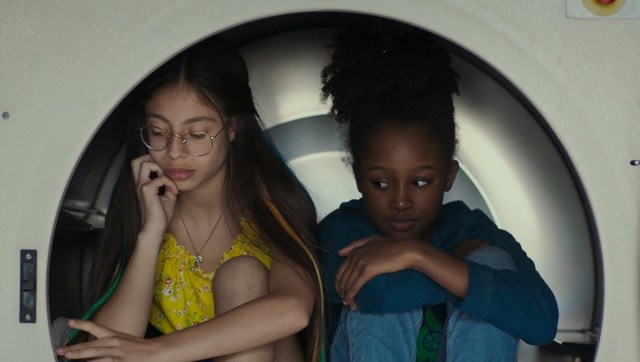
Amy is an 11-year-old Senegalese immigrant living in a Parisian apartment with a conservative mother, a strict auntie, and several siblings who await their father’s return with a second wife in tow. Her life is so different compared to the other girls at school, so seemingly easy with their bodies, dancing freely, hardly a care in the world. In Amy’s home, money is scarce, modesty is valued, and things are complicated.

Like pretty much every kid ever, Amy just wants to fit in. “The cuties” are a dance troupe at school that she’d very much like to belong to. They’re the cool kids of course, with maybe just a smidge of mean girls. They’re irresistible. Amy (Fathia Youssouf) is so desperate to belong she does whatever it takes: her baby brother’s tshirt is a crop top on her. A stolen cell phone becomes her portal to a world of gyrating, scantily clad girls, simulating sex and calling it dancing. She learns from them, in secret. And when the cuties have a sudden opening, she’s more than ready to step in.

You may have heard that Netflix has caught some major heat over this film, mostly from people who hadn’t seen it. They’ve called for Netflix to remove the title from its streaming platform, and threatened mass unsubscribing if they don’t. Their complaint: the movie hyper-sexualizes young girls. Is it valid?

Sure it is. But this is exactly the point film maker Maïmouna Doucouré is trying to make. Her film is a social commentary about the pressure young girls face not just from social media, but absolutely from social media, which they are exposed to from very young ages. And we are all in some way contributing to a culture that only finds value in females that can be sexualized, treating all others as if they’re invisible. If a girl wants to be seen, and has access to a tablet or a smartphone or peers, she won’t have failed to notice what her (lack of) options are.

Is it fair or necessary to sexualize these young actresses in order to prove a point? To be honest, I sort of hate putting kids in show business altogether. No matter how carefully a director isolates mature themes from the children on set, kids are notorious sponges and almost always absorb more than we think. Child actor turned director Sarah Polley was in the news this week reflecting on having to kiss a man twice her age on the set of a TV show when she was 13. A show Canada prided itself on for its wholesome family viewing. It’s a valid concern, even if it doesn’t have an easy answer.

If her film has inspired conversation, then Maïmouna Doucouré has done her job. You can’t move the needle if you don’t ask the hard questions. So I don’t think that muzzling Netflix or forcing censorship on an emerging female director flexing her voice for the first time is the answer. I know that Doucouré hasn’t included these scenes to entertain us; they are there to provoke discomfort. So let that be the starting point for the discussion that needs to be had. Let’s talk about why this makes us uncomfortable, and what we can do so this isn’t Amy’s story anymore. So the next time someone writes a movie about a girl like Amy, it won’t be about how the only currency she has is her body.

TIFF20: Get The Hell Out

Technically, this film does have a premise and a plot. I mean, it totally and legitimately does. But as a Taiwanese comedy-horror that mixes zombies, martial arts, and politics, it probably didn’t have to go to the trouble. As part of TIFF’s legendary Midnight Madness program, it’s not just a case of fitting in, but establishing a new bar for the kind of oddities the best of genre cinema can offer.

Hsiung Ying-ying (Megan Lai) is so mad the government wants to tear down her father’s house to build a new chemical plant, she gets herself elected to parliament to actually do something about it. But opponent MP Li Kuo-chung (Chung-wang Wang) is a veteran politician and isn’t about to just back down and let her have it. In fact, he instigates a brawl that riles Ying-ying into busting out some badass kung-fu moves, including her signature huracanrana, and then calls for her resignation, having successfully baited her. Bumbling security guard Wang You-wei (Bruce Hung) is the one who broke up the fight, and his corresponding rise in popularity has both camps thinking they can use his seat for their own purposes. But You-wei only has eyes for Ying-ying, so on the appointed day and time of the power plant vote, he shows up to Taiwan’s parliamentary chambers ready for a fight, but not the kind that actually goes down.

Turns out, the Prime Minister himself has contracted a virus and the minute he starts rabidly biting into people’s flesh, hell breaks loose and the building goes on lockdown. A measure normally used to protect the Prime Minister from outside threats, this time it’s trapped his colleagues in chambers with him, and he’s turning fellow politicians into crazed zombies faster than Donald Trump can spout lies to the press. In fact, he’s going through victims quicker than if he was a wood chipper, while his bored security detail looks on, seemingly unperturbed – they’re there to protect him, not protect others from him. Don’t question it, it’s the kind of magical “logic” politicians rely on every day.

As Ying-ying watches from the safety of the press pit, her rival, her protege/love interest, and her father (Tsung-Hua To) all fight for their lives. The blood spatter is voluminous, exuberant. Luckily Taiwanese politicians are exceptionally well-dressed, battle lines drawn vividly between fuchsia and tangerine. Director I.-Fan Wang’s larger than life, cartoonish violence reminds me a little of Edgar Wright circa Scott Pilgrim vs. The World. It’s a monstrous spectacle, but you can’t deny its vigor. I dare you to pass up the opportunity to see someone wield the person they’re giving the Heimlich to as a weapon. Where else on earth are you going to see that?

The comedy is broad, the violence gleeful and gruesome, and the satire unsubtle. Even as they wield axes and nail clippers, anything that might help them get the hell out, they continue to wheel and deal, consummate politicians, the vote never quite forgotten. If their political criticism is to be believed, cowriters Wang and Wan-Ju Yang don’t have a lot of respect for Taiwan’s actual legislative fights. They do, however have a lot of fun lampooning them. It may not be pretty, but Get The Hell Out is loud and exhilarating, and in a guilty pleasure kind of way, it’s actually pretty fun.

TIFF20: David Byrne’s American Utopia

Talking Heads frontman David Byrne is undoubtedly brilliant. Eccentric. Thoughtful. Electrifying. It would be incredible to crack that skull open and have a poke around inside. And amazingly, without quite comprehending what we’ve done to deserve it, we’ve somehow been allowed to just that, thanks to his 2019 Broadway show, American Utopia. And for those of us who didn’t catch it live, in what I can only assume is divine intervention, Byrne has collaborated with Mr. Spike Lee.

Yeah. This is a Spike Lee Joint.

Based on a recent tour and album of the same name, David Byrne mounts what I can only describe as a fantastic beast, a hybrid part performance, part performance art. It’s a concert, a reflection, a celebration. It starts off thoughtful, contemplative, an intellectual exercise that just happens to be sung. But then he’s joined on stage by a small group of dizzying dancers and intoxicating musicians that inject the stage with a punch of vibrancy and energy that I will take the time to name them all since Byrne did much the same: Jacquelene Acevedo, Gustavo Di Dalva, Daniel Freedman, Chris Giarmo, Tim Keiper, Tendayi Kuumba, Karl Mansfield, Mauro Refosco, Stéphane San Juan, Angie Swan, Bobby Wooten III. All dressed in the same uniform, an unremarkable grey suit, their bare feet pounding the stage, a visceral representation of their grounded exuberance.

Stripped down to just humans and instruments, Spike Lee gives us all the angles – the up highs and the down lows, his camera becoming part of the mesmerizing choreography, part of the show.

It often feels like Spike Lee films are prescient in some way; they always hit the exact right note for today despite having been made yesterday. Byrne manages to strike the same vein with American Utopia, urging us to reevaluate our connections before anyone had seen a global pandemic heading our way. And the way he nudges us toward reckoning with the company we keep, the views we fail to challenge, and the work we still need to do is brought to a head when he borrows from Janelle Monáe for a dynamic, blistering rendition of Hell You Talmbout which asks the audience to say their names – the names of people dead at the hands of racial injustice – which becomes a chant, a memorial, and a plea for change.

Byrne’s show, at times angry, or impassioned, is not a passive experience. Audience members are on their feet, responding to his energy, creating a living, breathing reflection of the moment that Spike Lee seamlessly absorbs and becomes. Fans of David Byrne will no doubt be pleased by the show, but the real testament to its power is that it remains accessible to even complete novices. American Utopia is no mere concert documentary; Spike Lee has managed to take something beautiful and alive and mount it, pinned with loving precision, practically still breathing, for all to admire.

The Babysitter: Killer Queen

Cole is a junior in high school who meets with his school nurse Big Carl to discuss his delusions. I mean, Cole (Judah Lewis) is adamant they’re not delusions: two years ago, a blood cult really DID try to kill him and if there’s no evidence to support that, well, it hardly means he’s crazy, right? Big Carl (Carl McDowell) disagrees. So does the student body, who know about his outlandish claims, and they’re not shy to label him. Even his parents (Leslie Bibb, Ken Marino) are about to kidnap him away to some school-hospital hybrid for psychotic teenagers. But Cole catches wind of this and so he absconds with his only friend Melanie (Emily Alyn Lind) and they hit up “the lake” for “some fun.” Melanie has a boyfriend (who’s coming), but she’s a girl and she’s been polite to him, so of course Cole thinks he might get to fuck her. But he’s wrong. Dead wrong.

As Cole should have guessed, the lake is code for murder town. I mean seriously, if you narrowly survive a blood cult, the LEAST you could do is start boning up on horror movies and, you know, get a clue. Lucky for him, the mysterious new girl who he only just met that morning, Phoebe (Jenna Ortega), is also at the lake to “have some alone time” despite the crowded beach party. A very inconsiderate second round of blood cult is about to go down, so they’ll get plenty of alone time to put his freshly purchased Magnum XL’s to good use while literally also running for their lives. Trust me, I know that math does not add up, but that’s called “movie magic” and the first rule of movie magic is you never fucking question it.

This horror film newly available on Netflix is a sequel to 2017’s apparent hit, The Babysitter, as astute readers will have guessed from my casual use of “two years ago” up in the first paragraph, which you can now appreciate for having been deeply meaningful. I never saw the first one and you won’t have to either because the sequel makes heavy use of flashbacks, but honestly, it’s also just pretty darn shallow. Blood, knife, run. You know the drill. It’s a classic teen slasher flick and by god there will be slashing. This movie is not big on actual horror, it’s not scary, it’s not even tense, but it is gory and rather graphic. It takes perverse pleasure in ripping bodies apart at the seams and showing every stringy inch of it.

I should mention here that the movie is directed by McG. Not that anyone else is fool enough to start calling himself McG, but yes, that McG, the McG who directed all those crazy annoying earworm 90s music videos you’re still having PTSD about: Smashmouth’s All Star AND Walking on the Sun, Offspring’s Pretty Fly (For A White Guy) and Why Don’t You Get A Job, Fastball’s The Way, Sugar Ray’s Fly, Barenaked Ladies’ One Week, and yes I could go on but I won’t because ew. But maybe just remember this is how he got his start, so that if, just for random example, this horror movie has a quick music video sidebar in the middle of it, you won’t be too surprised. He also directed Terminator Salvation, but don’t worry, you needn’t remember that because this movie references it HEAVILY.

We recently reviewed Get Duked!, an actually funny horror-comedy. This one isn’t a horror-comedy but it IS unintentionally funny. It doesn’t take itself seriously though, it embraces the absurd with open arms, it’s an odd kind of film and it knows it. For that reason alone, perhaps, I couldn’t hate it. I didn’t think it was good, but it was definitely having fun and I guess it rubbed off. Plus, if you liked the first, you’ll likely be pleased with the second. Are you in it for Robbie Amell’s random absence of a shirt? Done. Want to see if Bella Thorne finds a way to top her self-compliments? Go for it. This movie takes a lot of weird turns, plays a lot of unexpected tunes, and really keeps you guessing. Not in terms of plot or anything, you know how it’s going to end, you’ll just be pretty surprised at some of the pit stops they take in getting there.

If this sounds remotely interesting, it’s on Netflix so the risk is low. So’s the first one if you’re curious, but believe me, you can easily treat these as stand alone movies. Just don’t get attached to anyone. Or their heads.