Author Archives: Jay

Sonic The Hedgehog

Does the world need movies based on video game characters? Not really. But a good story can spring up from anywhere, except perhaps from the minds of screenwriters Josh Miller and Patrick Casey whose credits are so sparse they literally feature “community television” and yet Sonic The Hedgehog will still not make their highlight real.

Sonic The Hedgehog isn’t bad but it is speeding in the exact opposite direction of good, leaving only lightning farts and a blue blur in its wake. Is Sonic allergic to not sucking? Okay, so it’s kind of bad. The script is bland and overly familiar and exceedingly safe. There’s nothing new or exciting here, just a paint-by-numbers that any idiot could have written, and in the case of Sonic, we got two. I mean: someone got paid for this. Miller and Casey literally cashed a cheque for writing the line “Let’s go do some ROCK-conaissance!” and Jim Carrey got a much, much bigger one to say it.
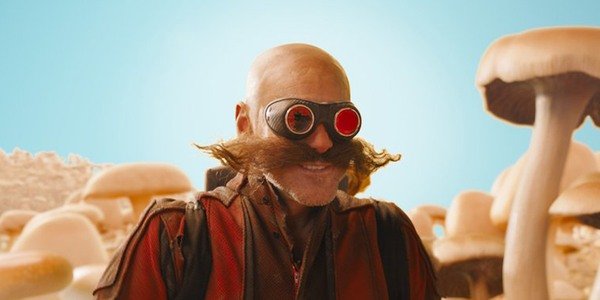
And ugh: Jim Carrey. I was fine with him having disappeared off the face of the earth. I was never a fan of his annoying, rubber-faced schtick, the over-the-topness of his obnoxious expressions and over-enunciation. NOT. HERE. FOR. IT. I very kindly tolerate him when a director keeps a tight leash on him (Truman Show, Eternal Sunshine of the Spotless Mind) but Jeff Fowler is not that director. Not only is Carrey unleashed, it’s pretty clear he’s a very bad dog who’s probably pissing on Fowler’s shoes. Fowler, whose credits are no more impressive than Miller’s or Casey’s (ie, he’s never made a movie before), is quite content to simply point his camera in the right direction.

James Marsden, charming and inoffensive, is relegated to saying things like “Good grief!” which is not a thing for grown men to say, or anyone outside of Charlie Brown’s inner circle, really. Tika Sumptner, playing his wife, is given even less to do. Ben Schwartz voices Sonic, and though Schwartz is known for rather larger than life characters, you could go the whole movie without placing his voice, generic white guy à la Zach Braff.
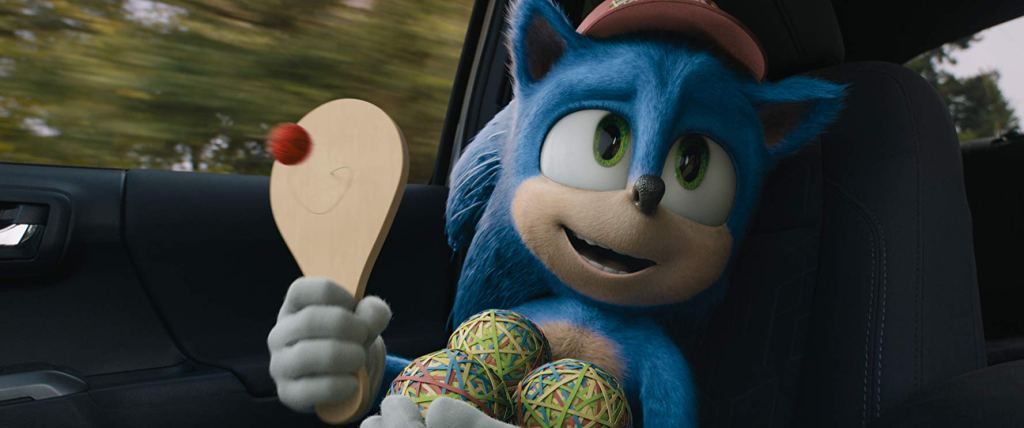
Sonic The Hedgehog is the film equivalent of an oatmeal raisin cookie. Kids might reach for it simply because it is a cookie, but if chocolate or peanut butter or even plain old shortbread were on offer, it would be no question. But it’s just 6 weeks into this new year and it’s virtually the only family-friendly movie in theatres. This is how oatmeal raisin thrives: a complete dearth of options.

 

Thunder Road

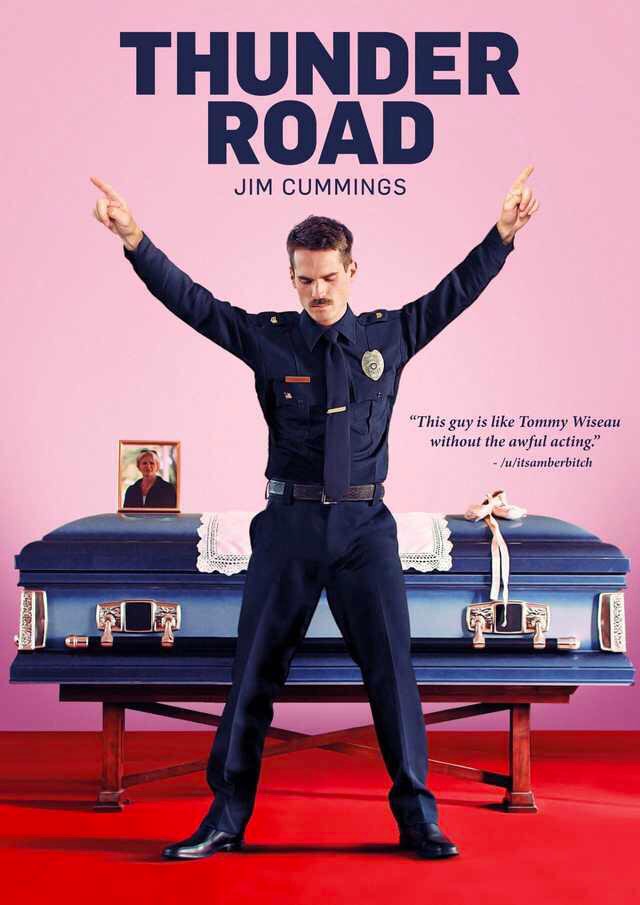
Officer Jim Arnaud is having a personal crisis and a public meltdown. Recently separated and having just lost his mother, he’s perhaps got some excuses for his erratic behaviour and yet he’s so consistently obnoxious and unreliable that it’s hard to imagine this behaviour is entirely new. In fact, it’s hard to believe that he was ever a good cop or a good husband. He runs his mouth constantly and doesn’t know when to walk away. It seems he must have always been a lousy police officer and a lousy husband, but only recently have his wife and boss agreed.

Still, it’s hard to watch him flounder. And Jim Cummings, who wrote and directed this starring role himself, really, really allows us to wallow in his eccentricities. When he breaks out into an interpretive, music-less dance at his mother’s funeral, the scene goes on for an agonizingly long time – and the dance portion is only the final chapter to a nonsensical and often ranting eulogy. Some of you have a high tolerance for watching people embarrass themselves on screen, but I have an unusually low tolerance for that. And I know I can’t be the only one to feel Arnaud’s energy is just too much.

The guy just has a continual, disjointed stream of consciousness, his entire life is one run-on sentence that never ends. Not only does he never shut up, he never finishes a though, one sentence just trailing off into another random thought, leaving a frustrating trail of loose ends. I found him so irritating that I could never muster any sympathy or empathy for him. Cummings is absolutely committed to this character but personally I just kept trying to manifest a cement truck to come and cave his skull in.

How a man with zero impulse control was ever granted a gun is beyond me, but perhaps this film wasn’t meant to be logical or even likable, maybe it just serves as a performance showcase for Cummings, and as a director he certainly indulges in every actor predilection. I had to watch this movie over 4 nights. It’s only 90 minutes long but I just couldn’t sit with his energy for very long. It’s not so much aggressive as just needy and relentless. He’s the kind of toxic personality all the self-help books warn you to cut from your life, and if you shouldn’t tolerate this from friends or family, I’m not sure why I should take it from a fictional character. I stuck with this film because it has received awards and acclaim but its excruciating long takes and raw-nerve tragi-comedy just weren’t for me.

To All The Boys: P.S. I Still Love You

Lara Jean and Peter are officially girlfriend and boyfriend.

You may recall in the first film, Lara Jean’s little sister sent out a bunch of love letters that she’d been writing to her crushes to release some of your tortured young passion. The love letters were personal and confessional and never meant to be read by anyone, but most of all not by the people to whom they were addressed. And yet they were.

Which brought Lara Jean (Lana Condor) and Peter (Noah Centineo) together, superficially at first. They pretended to date because they each had certain needs their high school hearts could justify but you might guess that they eventually found themselves falling in love. Cue the sequel!

Everything is right with the world, except for the fact that Lara Jean can’t quite forget Peter’s ex and jealousy doesn’t exactly become her. But there are worse things to come. One of the other love letter recipients finally resurfaces: John Ambrose (Jordan Fisher) and man is he cute. In fact, he and Lara Jean end up volunteering together and circumstances are perfect for dying embers to reignite.

There’s a sweet innocence to these movies that holds some sort of universal appeal – perhaps because we’ve all had a first love and not only can we relate, but it’s sort of fun to revisit. But we also get wrapped up in Lara Jean and Peter’s romance because it’s a lived fairy tale. How does Peter have money to take dates to 5-star restaurants and why does Lara Jean have a series of cocktail dresses? They’re babies. They should be going on awkward group dates to the movies, getting dropped off by whomever’s mom had the biggest mini van, or hanging out in each other’s living rooms with their siblings not only watching but actively trying to humiliate.

Anyway, I’m finding it impossible not to be charmed by this franchise. The leads are exceedingly likable and the whole thing goes down as easily as a box of chocolates on Valentine’s day, so why resist? To All The Boys is one indulgence I’m not going to feel guilty about.


Top 5 Netflix movies to watch on Valentine’s Day.

15 quirky romance movies that don’t suck.

Valentine’s movies for single people.


Luce

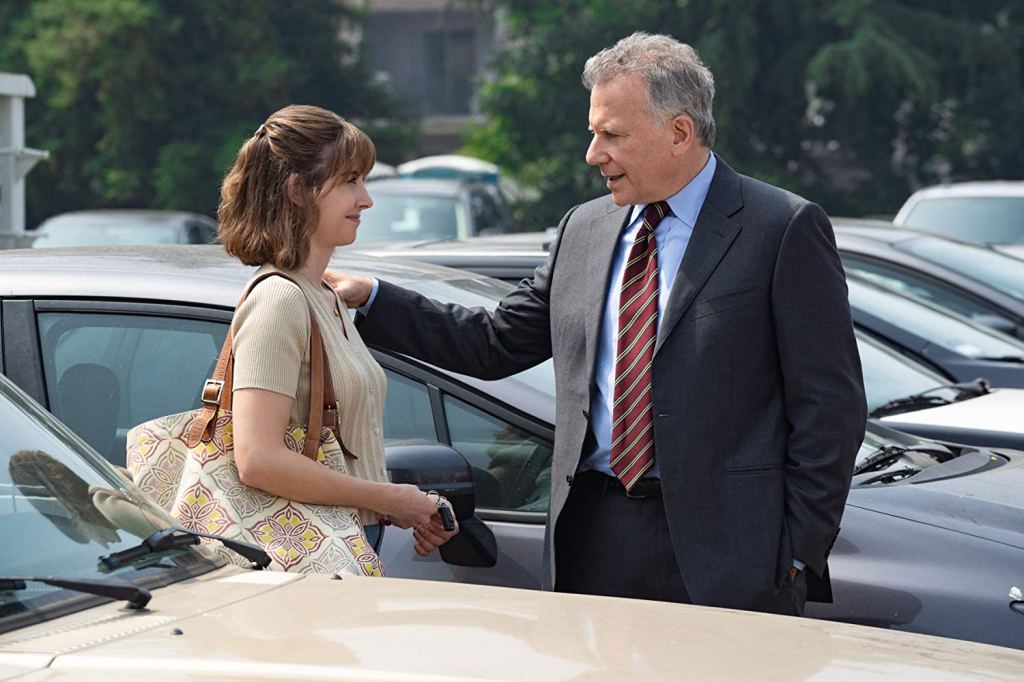
Luce is an athlete and a star student, respected by faculty and friends. He’s soon to be valedictorian of his class. His success is particularly celebrated because Luce was adopted from Eritrea at the age of 10. He seems to have made a miraculous transition, overcome his tragic past.

So it’s a little jarring to his adoptive parents Amy (Naomi Watts) and Peter (Tim Roth) when his teacher calls them in with some news. Ms. Wilson (Octavia Spencer) shows them an essay he wrote supporting violence as a necessary means for freeing colonized people. Considering his background (child soldier?), Ms. Wilson thinks it’s prudent to search his locker, and presents them with her findings: illegal fireworks. With school security being such a high priority, Ms. Wilson knows that if anyone else were to find these, Luce (Kelvin Harrison Jr.) would be in hot water. She hopes his parents can intervene at home. However, Amy and Peter are loathe to bring it up, wanting to preserve the trusting relationship that was built with such difficulty. This seems like a relatively small blip in an otherwise unblemished record. But Luce finds the evidence and isn’t happy about the doubt or the suspicions of either his parents or his teacher.

Things escalate from there of course. Ms. Wilson’s accusations accumulate, and their repercussions amplify. Ms. Wilson is unrelenting but other authority figures are unwilling to compromise Luce’s stellar reputation. It’s her world against his, Luce’s parents trapped somewhere in between, wanting to protect their son but also wondering if he’s truly escaped his past. What is the right move? And to whom are they obligated?

The film is disorienting and Harrison’s performance is sufficiently nuanced to leave us guessing: is he being profiled or is he capable of some very exacting vengeance? The film plays with stereotypes and symbols in a way that’s deliciously tangled, addressing racism in a way that reflects its complexity and inextricability. Luce excels at sustained tension and menace, leaving the audience without its footing.

This chilling drama will have you weighing the costs of conformity, considering the limits of parental responsibility, subverting the notion of assimilation. Luce is uncomfortable but essential.

Birds Of Prey

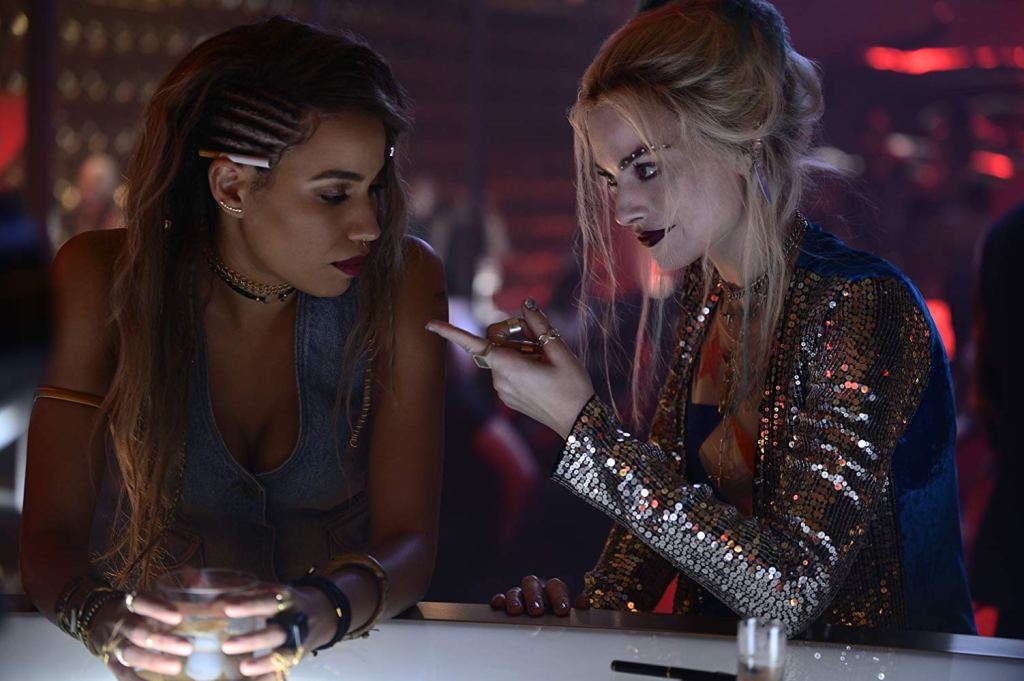
This is the Harley Quinn that Margot Robbie deserves. That we all deserve, really, away from the male gaze and into the capable hands of director Cathy Yan, writer Christina Hodson, and with Robbie herself producing.

Harley to Black Canary: “Do you know what a harlequin is? A harlequin’s role is to serve. It’s nothing without a master. No one gives two shits who we are, beyond that.” Harley Quinn has broken up with her on-again-off-again longtime love, the Joker, this time for good. Without him as an anchor, she knows she’s vulnerable. Under his protection, no one could touch her, but it turns out she’s accumulated quite a few enemies, and now that she’s untethered, they’re gunning for her. Number one on her tail: a guy who calls himself the Black Mask (Ewan McGregor), who seems to think of himself as a rival to the Joker, though he styles himself more like a Miami Vice drug lord. He does have a bit of a fetish for peeling people’s faces off, though, so don’t go underestimating him. The only way Harley can keep her keister safe is to find the missing diamond he and literally every bad guy in Gotham would like to get their greedy paws on.

In Harley’s sparkly shoes, Robbie proves she can make this role her own, and without her emo boyfriend in tow, Harley Quinn is actually an interesting character in her own right. Her origin is glossed over with a couple of smartly and quickly tossed lines; the rest of the film is devoted to amped up action sequences. Yan doesn’t just have some tricks up her sleeve, she’s got entire confetti cannons up there, glitter bombs and rainbow grenades. Her violence is slick and beautiful, set to a perfect array of pop tunes you’ll be stomping your feet to even as someone one screen’s getting their skull caved in.

I’ve seen far too many reviews mention ‘female empowerment’ (of course in a derogatory manner, eye roll) and I can only assume those people are a) men and b) morons. Did anyone refer to the Avengers movies as ‘male empowerment”? No? Yeah, didn’t think so. Birds of Prey is better than 99% of the other DC movies released in the last decade, and if it happens to star women, well, so be it. This is not about female empowerment, it’s about empowered females, women with their own agency, women who can save themselves and best their male antagonists. The only thing being fetishized here is a breakfast sandwich. Feel threatened by that? Maybe you could do with a little male empowerment yourself. I believe the Batman franchise was built on the theory of overcompensation.

Meanwhile, Robbie has built herself a fearsome army: Jurnee Smollett-Bell, Mary Elizabeth Winstead, Rosie Perez, and even young Ella Jay Basco. And none of them are rolling around on the ground crying about mommy Martha.

Can’t get enough? We’ve got more thoughts on Birds of Prey here.

Horse Girl

Sarah (Alison Brie) is a socially awkward woman who never really grew out of her girlhood horse phase. It’s clear to everyone but her that she’s not really welcome at the stables anymore, but she visits her old horse Willow even more diligently than she visits her childhood friend who was injured in a riding accident.

But horses are the least of Sarah’s problems. She’s a sleepwalker and she’s finding that her troubling lucid dreams are starting to leak into her waking life. She’s losing time, finding her body bruised, and since she’s a big fan of supernatural shows, she’s prone to those kinds of explanations. Is she a clone? An alien abductee?

And what’s really interesting is when she meets a guy and he had to decide if he’s horny enough to put up with her crazy. Because it’s clear that her mental health is deteriorating. Whereas before she seemed quirky if cringy, now her behaviour is getting harder to ignore or excuse. Her boss Joan (Molly Shannon) hardly knows how to help her but she doesn’t have many other non-equine friends.

As things fall apart, so does the narrative structure of the film. It’s clear Sarah has been an unreliable narrator, but for how long? What’s real? We doubt ourselves and her story far more than she does.

The very talented Alison Brie produces and is co-writer as well; she owns this story because she has created it, crafted it. Sarah slides down a slippery slope, and the descent is gives Brie a chance to show a muscularity in her performance that we haven’t seen before.

I wish the film were a little more sure of itself. Director Jeff Baena is reluctant to come down on one side or the other but the ambiguity starts to wear thin and push the bounds of credibility. It was thoughtfulness and sensitivity that pulled us in, and we lose a bit of that toward the end. Horse Girl is for an audience comfortable with oddball films and open endings.

Timmy Failure: Mistakes Were Made

Timmy Failure has a misleading name, because he’s anything but. He may be young (11), but he’s the best detective in town (Portland). He and his partner, an imaginary 1500lb polar bear named Total, run the agency, called Total Failures, together. This may have been Timmy’s first mistake. Total is not the diligent and responsible polar bear he first appeared to be.

Timmy (Winslow Fegley), easily identified by his mullet and his red scarf (if not by his polar bear partner), roams the mean streets of Portland on the failure mobile, which looks suspiciously like a segway. But his case of the missing backpack is usurped by the case of the missing segway (eep!) which is in turn usurped by just trying to survive the 5th grade, his mom’s new boyfriend, his school’s rigid anti-bear policy, and the Russian spies overtaking his city. Gulp.

Winslow Fegley is a delightfully odd kid who pulls off charming and quirky in equal measure, exactly the kind of weirdo who’s a pleasure to watch. The whole cast, largely unknown, and largely children, are surprisingly talented and likable. It’s a good fit for a script that excels at being offbeat. Even the polar bear sidekick looks terrific, a visual witticism crashing about on screen. Timmy Failure: Mistakes Were Made is almost like a Wes Anderson starter movie, tonally odd but in a way I quickly became addicted to. I imagine this is the kind of movie the whole family can actually enjoy, its clever moments more than enough to keep adults entertained and the protagonist’s wacky antics enthralling for all ages.

Timmy Failure is a great piece of original programming for Disney+ and I wouldn’t mind a bit if there was more just like it (sequel?) on the way.

After Everything

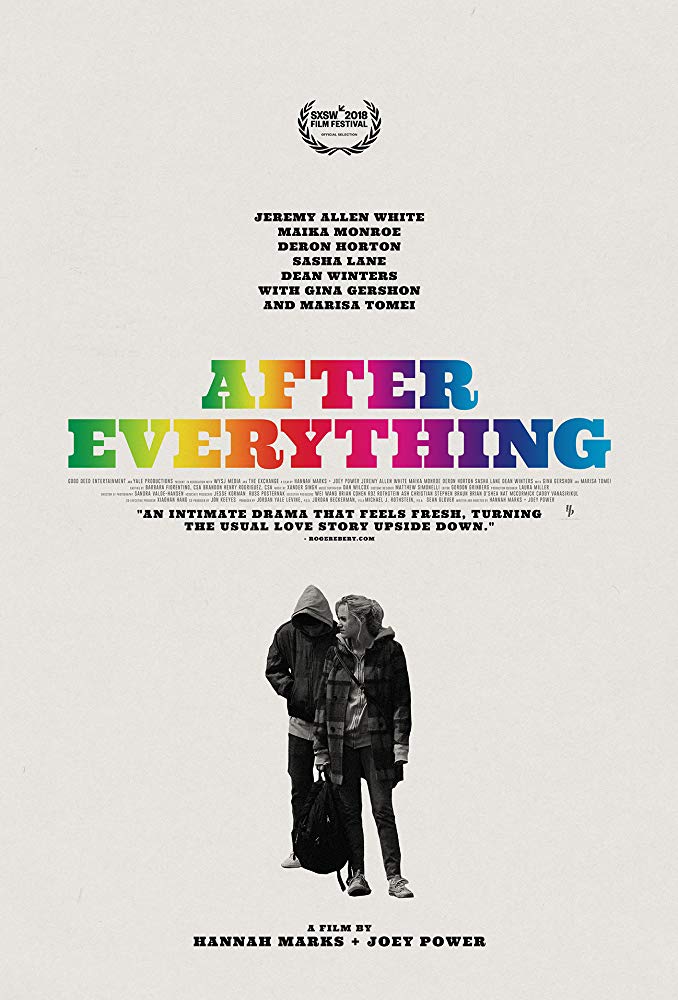
If Elliot hit on me the way he hit on Mia, he wouldn’t have gotten the time of day. Clearly Tinder has desensitized her – an unwanted intrusion and the implicit assumption that women somehow owe some kind of interaction to all men who ring the doorbell aren’t enough to dissuade her. She consents to a date, her roommates encouraging her to “get her dick wet” and he confesses: he was just diagnosed with cancer yesterday. It’s life threatening, and more importantly, sex threatening (ie, a tumor on his pubic bone, specifically Ewing’s sarcoma, if you’re the type who likes to Web MD that shit). With sex off the table, Elliot’s going to have to relearn how to talk to women!

So anyway, this puts kind of an awkward pressure on their relationship for a couple of kids in their early 20s who weren’t necessarily looking for anything serious. This pressure cooker means they get to know each other very intensely and soon they’re inseparable: chemo, radiation, surgery, and even a bucket list for broke 20somethings. The other people in his life get a little jealous that Mia’s monopolizing all his time, but they’re living like these might be his last days, because these might be his last days.

Jeremy Allen White and Mia Monroe are excellent as two people on this impossible trajectory. Either their love is doomed…or it’s doomed. Youth and passion may be enough to plow through the indignities of a medical crisis, but what happens outside those bounds? What will they even have to talk about if not tumors and ports and hair loss? Even if forever isn’t exactly a long time, it’s still further ahead than either of them has ever though. Cancer has launched them into a premature adulthood, which may be a flimsy premise for a love story. You think that illness is going to be the greatest test, but lots of mundane things topple relationships with deeper roots than theirs.

P.S.: it’s National Wear Red Day!

Miss Americana

In many ways, this Taylor Swift documentary is like all the other musician documentaries recently released. It’s a flare shot urgently if shakily to fans that says: I’m human. And perhaps more than that: I’m a human who has recently done some growing up.

Specifically, Swift’s revelations seem to orbit around 1. untangling her self-worth from the “good girl” public persona 2. a political awakening 3. her own lawsuit over a groping case and how it inspired her to stand up for human rights more generally. All good and noble things.

There’s not a lot of dirt. Nothing about feuds, no Katy Perry, only a little about Kanye. Not much about love. Nothing about the Scooter Braun fiasco, and that feels like a big one to have left out. Basically, the label Swift signed to as a 15 year old owned the rights to all the masters of her recordings. They sold the label to Braun without offering her the chance to buy her own music back and so now all her old albums are owned by Braun, who manages Kanye and Justin Bieber among others, and who, according to Swift, was responsible for bullying and an attempt to dismantle her career. She severed ties with that label, but when she walked, she had to leave all her old music behind for someone else’s profit, painful I’m sure. So it’s strange to have left it out entirely.

Personally, though, the only part of these documentaries that I’m ever interested in is in the creation of the music. And we do get some great takes of her with various collaborators trying to turn something she’s been humming to herself into a song with notes and words and instruments. It’s cool to watch it all come together, and as Swift is actually a very accomplished musician, playing piano and guitar, her fingerprints are all over the creative process.

I’m not sure if this documentary is really meant to appeal to anyone but her fans, but there are enough of those to make this film successful on their own. It’s backstage access to a major star during some formative years of self-discovery and transformation. The Swifties will be proud.

One Child Nation

China instituted its one-child policy in 1979. By 1982, it was locked into its constitution. The Chinese population had ballooned to a billion and officials knew that in order for the country to truly prosper, it would need to control its growing numbers. Western countries worried about China’s population for different reasons. Over here, population growth had slowly withered as our countries grew stronger economically. As families move away from agriculture, large families become less necessary. As health care improves, more children make it into adulthood, so having ‘spares’ feels less urgent. And in order to give children every economic advantage in this new world – each their own bedroom, perhaps, a swimming pool in the backyard, a ski vacation every winter, a college fund for everyone – families grew smaller. Here in Canada we rely on immigration to keep our population from shrinking. Sean and I both come from 4 kid families, big even in the 80s. But in each of our families, only half of the siblings chose to have children at all. Of the 4 siblings who do have kids, 3 families have 2 kids each and 1 family has 3. We aren’t even replacing ourselves. But there’s a big difference between choosing what feels right for your family considering all the pros and cons; it’s much different when your government had made a law about your uterus and what can be inside.

In 1982, ultrasounds were not sophisticated enough to discern gender but following centuries of tradition, most Chinese families still wanted and valued a son. It fell to village officials to enforce this impossible policy, taking possessions and destroying homes of people who refused to follow it, and forcing sterilization on women after their first child, sometimes even forcing abortion.

One village midwife has lost track of how many babies she’s birthed but knows she performed 40-50 000 sterilizations and abortions over 20 years. Women would be abducted from their homes by the government, tied up like pigs, and dragged onto her operating table. Now she’ll only treat infertility “to atone for my sins” she says, though it’s clear she was not exactly a willing participant, just one of many doing their jobs. And so many of them had suffered from starvation, had spent lives just struggling to survive, that this promise of a better life for their child had lots of appeal. But if anything, the one-child policy strengthened the Chinese preference for sons. Baby girls were abandoned in droves.

After leaving China for the U.S. and becoming a mother herself, Nanfu Wang wonders if her thoughts are truly her own, or the result of propaganda so finely ingrained in culture and daily life they were hardly noticed. It’s impossible to know how China would have fared without the policy and most citizens don’t want to broach the question honestly. They have sacrificed so much, but the values and ideas so deeply embedded they are impossible to separate. Nanfu Wang can’t help but ask herself why she has traded one country who seeks to legislate women’s wombs for another.

The one-child policy was finally repealed in 2015 (they can now have 2), China assuring us that the nation was stronger, the people more prosperous, and the world more peaceful. And that may be true. But there is a trail of heart break, human trafficking, and a heavy toll paid by broken families and exiled children.