My favourite thing about sitting down to watch a short film is having no idea what to expect. I rarely watch a feature film without having seen a trailer or at least having read something about it. When I watch a collection of shorts, I am pretty much ready for anything.
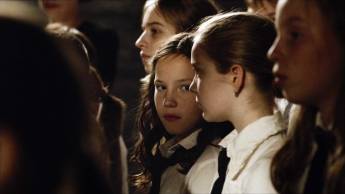 Mindenki (Sing). Everyone who wants to is welcome to sing in choir, promises the principal at Zsófi’s new school. The truth, she will soon discover, is more complicated. Zsófi is an enthusiastic student until her spirit is crushed when Miss Erika, who thinks they may have a real shot at the championship this year, takes her aside and asks her to stop singing out loud.
Mindenki has a lot going on in just 25 minutes. Watching a 10 or 11 year-old being told by her favourite teacher that she simply isn’t good enough and that she should just “mouth the words” while the others sing is pretty much as heartbreaking as it sounds. It says a lot about the ways some students can get left behind and the ways that a careless teacher can demoralize a child and stifle creativity.
 Likeable actors, terrific editing, and a timely story go a long way in elevating the imperfect but nonetheless effective Silent Nights. Mostly a love story set against the backdrop of the immigration and refugee controversy in Western Europe, Silent Nights follows a brief affair between a Danish girl volunteering in a shelter and a homeless man from Ghana.
Silent Nights packs a lot of story into 30 minutes and it features a much clearer beginning, middle, and end than I’m used to seeing in short films. It’s actually structured like a min feature film complete with subplots that lead nowhere. The script is ocassionally a little too sentimental but it earns big points for introducing us to two complex characters that we can care about.
With just 15 minutes, Timecode is the shortest of the five nominated shorts. It’s also potentially the most confusing. Luna is a parking lot attendant who discovers that her colleague Diego has left a surpri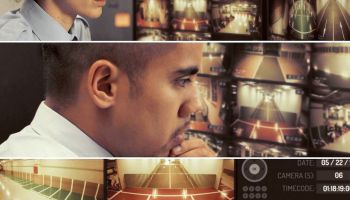 se for her. He has danced his heart out in front of the security cameras for her amusement. I have to admit though that it took me awhile to recognize it as dancing. I thought at first that he was fighting off an invisible assailant. So begins their unusual shift exchange ritual.
Timecode has already picked up several awards including the Palmes d’Or at Cannes and more importantly Best International Shortfilm at the Whistler Film Festival so its got a serious shot at the Oscar. It’s cute, well-made (even if not always well-danced but hey we forgave La La Land), and is probably the least pretentious of the five nominees. I just simply didn’t enjoy it as much as I enjoyed the others.
Ennemis Interieurs (Enemies Within) is the more disciplined of the two Europeans Can Be Racist shorts (see Silent Nights above). Enemies Within is mostly just two people in a room talking but holy shit is it tense. A citizenship interview slowly morphs into a full-on national security interrogation.
Ennemis Interieurs can sort of feel like just a really good scene from the glory days of Homeland but the acting and directing are superb and it says a lot in a short time about institutional racism and self-fulfilling prophecies.
La Femme et le TGV is my favourite of the five. And not just because it has trains. An aging woman discovers that her daily ritual of waving at passing trains hasn’t gotten unnoticed or unappreciated. The train’s conductor decides to write her a thank you note and their pen palling reignites her passion for li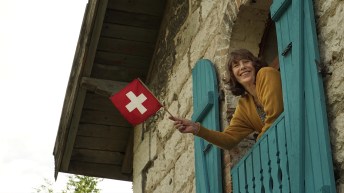 fe.
fe.
I’ve read one reviewer accuse La Femme et le TGV of stealing its tone from Amelie. While I agree that Amelie would give you a pretty good idea of what you can expect, I would argue that my favourite live-action short of 2016 takes some of what worked best from Amelie to deliver something funny, touching, and lovely.

 standing right over me until he chose this moment to cut me off. “I just saw that,” he complained. “It was terrible“.
 Summer- is a 7 year-old math prodigy named Mary. Mary (Mckenna Grace) has been doing just fine being home schooled by her uncle Frank (a bearded Chris Evans) and hanging out with their neighbour (Octavia Spencer) until Frank decides she needs friends her own age and sends her to public school. It doesn’t take long for her first-grade teacher (Jenny Slate) to discover that she’s a genius and word travels fast to Mary’s estranged but suddenly very interested British grandmother Evelyn (Lindsay Duncan).
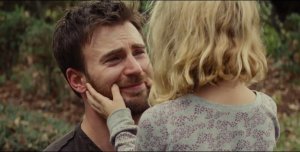 Screenwriter Tom Flynn doesn’t handle complex problems quite as well as Mary does. Because the question of how best to raise any child, never mind such an unusual one, can’t be as easy as his script seems to think. The drama unfolds at a tense custody battle between Frank (who just wants Mary to have a normal childhood) and Evelyn (who wants her to go to some fancy school and dedicate herself to reaching her full potential). There are interesting questions to be had here but Flynn comes up with enough sneaky screenwriting tricks and twists to get out of having to have any of them.
 So, Harriet (Shirley MacLaine) likes things done a certain way. She gets so impatient with those who can’t follow her instructions that she often winds up having to do everything herself as she frequently pushes her gardener, cook, and hairdresser aside. So it should come as not surprise that she would want final say on her own obituary.
 In the right hands, a dramedy featuring the 82 year-old MacLaine playing an unlikely host of a radio show for hipsters could be a lot of fun, which The Last Word generally isn’t. More importantly though, making this subplot the actual plot might have given the movie some much-needed focus. Because for a movie about making every moment count, The Last Word has an astonishing number of throwaway scenes and uninspired subplots.

 Imagine being stranded on a deserted island. Would you wish for company, even though you knew that that person would then be stranded too? What if you discovered that you had the power to make that dream come true?
 2016 Golden Globe nominee Jessica Chastain plays Elizabeth Sloane, a notorious Washington anti-regulation lobbyist taking on the biggest challenge of her career when she’s asked to help take on the powerful gun lobby.
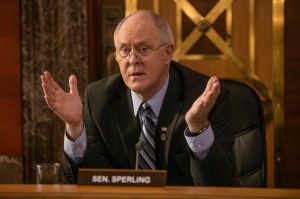 And maybe this is supposed to be the point. The only problem is that and Miss Sloane (the movie) seems to love the thrill of the chase as much as it claims to be outraged by her methods. For awhile, this behind-the-scenes look at what it takes to pass a bill in Washington (or keep one from passing) is almost fascinating and thought-provoking but the endless double crosses and Sloane’s nearly superhuman foresight make it harder and harder to take any of this seriously.
 we get into her character comes more from her performance than Jonathan Perera’s script. But even she occasionally fails to convince during some scenes where she seems to be acting more for the trailer than the actual film. I can only assume director John Madden is to blame for this given that Miss Sloane also showcases inexplicable overacting from the likes of Michael Stuhlbarg, Sam Waterston, and Mark Strong that I can’t believe made the final cut. You’d think a director of a Best Picture winner (Shakespeare in Love but still) would have done a better job of reining them in.
 has made a fantastic film about family, grief, and how easy it is to push people away when we’re hurting. It’s one of 2016’s best films not because it has any particularly new ideas or innovative style but simply because it’s refreshingly honest.
 the 2016 American Election’s worst-case scenario. Misogyny and xenophobia seem to have its place in American political discourse after all- the Oval Office on weekdays and Trump Tower on the weekends. A lot of people have said a lot of things to try to make me feel better. “Geez, give him a chance. If he succeeds, we succeed,” they say. “He’s not going to do any of the things he said,” seems like a popular response, which even if true seems to miss the point. One person even made the bizarre claim “Don’t worry. Orange people never do anything”.
 “Sure, he’s unprepared and easily distracted but give him time,” would makes more sense if the world was a simple place where nothing all that important or complex were going on. Zero Days, the new documentary from Alex Gibney and the film I’m using as an excuse to talk about the feelings I can’t shake since the election, paints a scary picture of the complexity of the security threats that face the United States and the world. Specifically, Zero Days is focused on cyber security and the story of the Stuxnet virus.
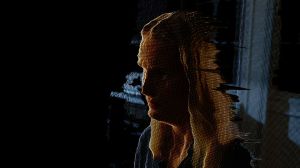 Gibney (Taxi to the Dark Side, The Armstrong Lie, Going Clear) takes his subject seriously, his documentary can’t help feeling like a Hollywood thriller and the twists can feel pretty exciting until you remember that this is real life. The director is wise to play up the suspense given that all this talk of worms and centrifuges can get a little technical and continually reminding us how high the stakes are is an excellent motivator to pay attention to all the tech talk. The interviews with the security company that discovered Stuxnet, the politicians who can neither confirm nor deny anything, and the NSA whistleblowers are all gripping.
 . Really, really good.
 I struggle to communicate what it is that works so well about American Honey. My writer’s block was so bad that I went to see it a second time, quite a commitment with its 163-minute running time. All I’ve really learnt from two sittings is that writer-director Andre Arnold creates a believable world around these characters and makes it easy for the audience to feel like they’re a part of it. (Well, maybe I should just speak for myself. At my first screening, the film had lost over half its audience by the end).
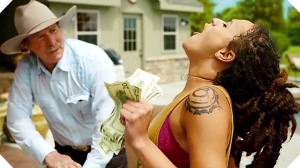 any number of traditions and rituals that are often somehow both unsettling and charming. Their favourite songs, games, and chants serve the film well in helping create a subculture that we can believe and relate to. Beautifully naturalistic performances from an exceptionally well-chosen cast, great choice of music, and some terrific (though sometimes elf-indulgent) cinematography help bring their world to life.
 ASSHOLES WATCHING MOVIES