Category Archives: Kick-ass!

Alone

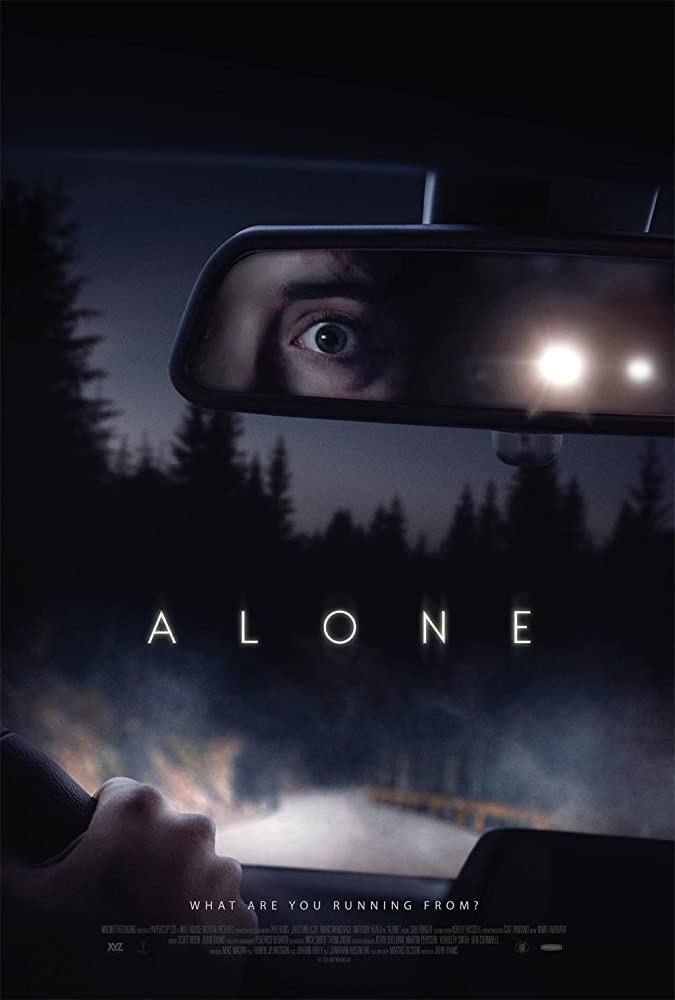
Jessica (Jules Wilcox) is driving alone on the highway at night. If you’re a woman, that alone is enough to send chills down your spine. We’ve all had to confront that fear, that feeling of eerie vulnerability. Should you get a flat tire, or your engine quit, or a patch of black ice send you careening into a shoulder of snow that won’t let go – you’ll be a sitting duck. It’s sad when a horror movie doesn’t have to introduce any other element before this scenario, just a woman driving at night, is already creepy.

But since this is a horror movie, Jules will not stay alone for long. In broad daylight, a slow-moving Jeep impedes her progress so she ignores the double solid yellow lines and undertakes a pass – which is when a) the Jeep of course suddenly decides to speed up, and b) a tractor trailer comes barreling toward her. With a thumping heart and shaky hands, she barely swerves back into her lane on time. She’s still shaking that evening as she speaks to her mother on the phone at a rest stop. She is disconcerted to find both the Jeep and its driver (Marc Menchaca) are there as well. This is only the first time she realizes he’s been following her, but not the last. Eventually she will wake up hog tied in his basement. But that’s not the worst of it. The worst is when she makes a break for it – high tails it out of his cabin only to find herself alone and barefoot in the woods. She’s at a huge disadvantage, her pursuer is relentless, and now she’s got two things to battle and survive: the man, and the elements.
I am kind of a wuss about horror movies (haha, “kind of”), but every summer I make an exception for the Fantasia Film Festival which brings together an exceptional lineup of genre cinema that is so weird and wonderful I simply cannot resist. Director John Hyams takes full advantage of my generosity by crafting a film that feels like a personal affront: pretty much everything I’ve ever lost sleep about is in this movie.

Since the pandemic has dried up our main source of movies (ie, cinemas), I’ve actually been watching a greater number of horror movies lately, and I can’t believe I’m going to say this, but my main complaint has been that they’re not scary enough. As a well-established chicken, if I can sit through your film comfortably, you have failed as a horror director. Hang up your hockey mask and go. But Hyams has managed not only to bring the dread, but to sustain it throughout the entire 90+ minutes of the film. The tension is uninterrupted and it is serious.

The film is almost entirely a two-hander, with both Wilcox and Menchaca well cast and believable. Earlier that day I’d been reading an article for actors which said that one of the most important things you can do for yourself is know your type. Solicit opinions from trusted directors and colleagues and have them assess which type you best fulfill – which may be hard to hear, but is essential to succeeding in your career. So watching Alone, I couldn’t help but send mental kudos to the person who looked Menchaca dead in the eye and said “pervert.” It takes guts to tell someone they have a future in playing perps: abductors, rapists, all around creeps.To his credit, Menchaca grew the obligatory mustache and has clearly embraced the trope. There is some freedom in playing a man so detached from morals and social order and Menchaca clearly thrives in that pocket. But Wilcox is more than merely prey. Some of us are paralyzed by fear, but Jessica remains engaged, and willing to take risks. This is why it’s appropriate to give props to the screenwriter, Mattias Olsson, who subverts our assumptions about victim and offender and really puts his own spin on our expectations. Everyone involved in the film is pushing hard, which is what elevates Alone from being just another girl-being-chased thriller on the shelf to something I think genre fans should actually seek out.
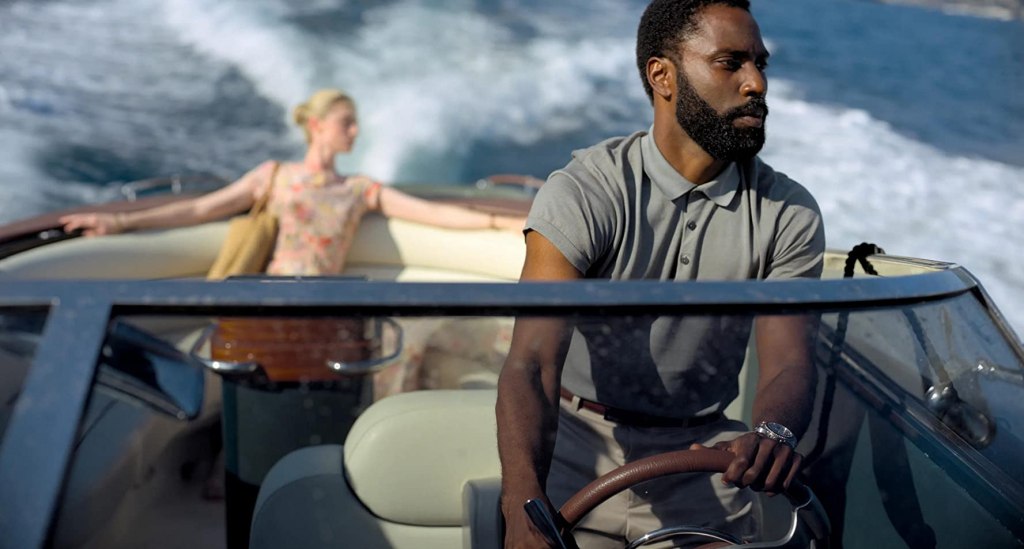

Tenet

No worries, no spoilers.

I’m an insomniac, emphasis on the niac. As in: not sleeping turns you into a complete and utter maniac. As in: not many good words end in niac. Egomaniac. Pyromaniac. Kleptomaniac. Megalomaniac, for maniacs with positive self regard. But while the word insomniac focuses on that which I do not have (ie, sleep), it fails to account for the many things I’ve gained, (ie, time). Time to stew on thoughts and do deep dives probing insecurities and trying new anxieties on for size, sure, of course, but also time to read. There is a special kind of reading that takes place in the middle of the night, when everyone else is sleeping. Once you’ve reached at least the 36th hour of nonstop awakeness, your brain unveils a secret capacity, a wormhole of clarity, almost, wherein all things are possible. I do read a fair amount of trash, but every now and again I like to throw in a hefty tome or two, just in case I’m secretly a genius with untapped potential, should I ever come across it. And it was on one such night, June 6, 2018 in fact, in a feverish sleepless state, that I was reading a book about string theory and understanding it. By morning, the ghost of string theory was still with me, and as long as I didn’t attempt to look at it straight in the face, it was there, a light dusting of dew on my brain that I worried would evaporate with the sun. Or rather, with sleep. Anyway, I am to this day not a world-renowned particle physicist, so it wasn’t permanent or complete enlightenment. But this wasn’t the first time I’d experienced such insight. In March of 2003, I was making my way through James Joyce’s Finnegans Wake. Ugh. That Joyce is a straight up dick. Finnegans Wake is the single most obtuse piece of literature to ever darken the Dewey decimal system. If you hate readers so much, why on earth did you become a writer? Idioglossia my ass, this man’s just straight up making shit up as he goes along all stream of consciousness like he’s never met a piece of punctuation he didn’t want to flick to the ground and grind it like it’s the stub of a cigarette and we’re the ones getting smoked. But for a minute there, a glorious minute, I was getting it. I was getting it! I was lost in the rhythm of Joyce’s unique syntax, I was beyond comprehension, I was feeling the meaning, and the subtext. I was absorbing it into my skin like Joyce and his opaque one-hundred-letter-words were nothing but aloe.

This might feel like kind of a digression, but first let me remind you that in order to digress, you have to have first introduced the topic from which to digress, and I haven’t done that, so consider the above paragraph bonus content. Now I will tell you that I am writing a review of Christopher Nolan’s Tenet, the saviour of the summer blockbuster. Except it’s now been released at the very end of August, and even as desperate as people are for a good movie and a return to some normalcy, Tenet is not some trashy beach read, accessible and easily digested. It is most definitely a Finnegans Wake, and it’s unlikely to save cinema no matter what the hype may have you believe.

After a brush with insomnia over the weekend, I got some medically-induced sleep earlier this week and am feeling fresh of brain and body. But Christopher Nolan knows how to hypnotize his audience. We feel, if not incapacitated, then intoxicated. Nolan builds the kinds of worlds we might encounter in dreams. Inception taught us to challenge everything. Interstellar taught us to think outside the box. Tenet merely kicks us in the teeth.

The good thing about not understanding a movie is that you can’t possibly spoil it. And yes, yes there were times when I thought I was getting it. I was a smug little shit, untangling the plot like it’s a delicate, thoroughly knotted rose gold pendant that I’m desperate to dangle above my cleavage at dinner, the diamond shining just a little brighter for having worked for it. But no. No.

John David Washington is simply The Protagonist, an operative with a global assignment to stop a renegade Russian oligarch from destroying the world. To do so, he’ll have to master time inversion because sometimes the only way out is through.

Parallel universes are for pussies. Christopher Nolan’s played with time and space before. This time he’s fucking with it, and with us.

In the deepest, deepest layers of Inception, it was difficult to judge just how many layers down we’d gone, and therefore it was easy to lose track of which reality was actual reality. When Leo spins that top and the screen goes black before we know whether it will topple over, that’s basic math. Like, ultra basic. Not even addition, just straight counting. Tenet is like abstract algebra, necessitating the contemplation of infinite dimensions. Plus number theory, the properties of and relationships between integers and integer-valued functions. Nolan may be one heck of a professor and Tenet the most sublime power point presentation, but this shit is hard and for most of us, a little out of reach. Way too many times during the film I could smell the smoke coming from my brain as it attempted to calculate and process too many things at once. I am way too linear a thinker to feel comfortable when Tenet hits its stride, which is frustrating because those are objectively the very most interesting bits!

You know those pricks who back into a parking spot just because they can? Like it was totally unnecessary so they’re basically just showing off? Nolan is that prick. Tenet is his oversized pickup truck. IT DOESN’T HAVE TO BE THIS HARD! But since it is, a few tricks:

  1. Pay attention to everything. Because everything is something, nothing is nothing, the more nothing it seems, the more something it is.
  2. You’re going to want to watch it again. Even if you hate the movie and how it makes you feel (cough*inadequate*cough), you’ll want to see it again. You need to watch it with the knowledge you can only gain by watching it hopelessly and helplessly the first time. And you’re definitely going to want to discuss it.
  3. The title is a clue.
  4. The movie poster is a clue.
  5. Even my goddamned digression is an accidental clue.
  6. Everything is important, okay? And it’s all happening all the time, and especially when it’s not. So don’t let your guard down.

Hope Frozen: A Quest To Live Twice

Matrix wanted a younger sibling and was thrilled when little sister Einz was born. Einz means love, and she certainly was. But brain cancer ravaged her little body, spreading faster than her father, Dr. Sahatorn Naovaratpong, a Buddhist scientist, could research the disease that was robbing him of his beloved toddler. That’s why he and wife Nareerat chose what they did: cryo-preservation. Moments after she died, before even her third birthday, a team was there in her home to start the freezing process, and her preserved brain was sent to America for as long as it might take to find both a cure for her cancer and a way to regenerate her body.

Let me be clear: this is a documentary. This is a real family from Bangkok. You may already be familiar with their story, because at the time little Einz was the youngest person in the world to undergo cryogenics. Their story made international headlines and scandal wasn’t far behind – some angered that they’d taken the place of god, others worried for her soul, worried she’d be unable to find peace, and others still wondering what her life would be like should she wake up some vague time in the future when everyone she once knew, even if she remembered them at all, would be dead.

Sahatorn knows that the science will not catch up to him in his lifetime, so he’s bequeathed this rather large burden to his son, Matrix, in the hopes that he will continue down the scientific rabbit hole of bringing his baby sister back to life.

I’m not going to judge these people because obviously the pain of losing a child is unbearable yet must, sometimes, be borne. And I do understand, all too well, the yearning, the need, to have someone back.

Director Pailin Wedel does a great job of rounding up experts, from those that believe death is merely a problem to be solved, to those who see it as an ascension to the afterlife, but the heart of the film is with the family as they grieve a little girl who, to them, is not quite dead.

The Sleepover

Kevin’s having a bad day. First his teacher, the humourless Mrs. W, busts him for fabricating his family history for an oral presentation (hint: pick something less obvious than best-selling novel The Martian), then he gets caught on camera by the school bully dancing his pants off in the boys’ washroom, and then he gets saved by his mommy/lunch lady in front of the whole cafeteria. Could his day get any worse?

Yes. Yes it can. While Kevin (Maxwell Simkins) and nerdy friend Lewis (Lucas Jaye) are having a sleepover in the backyard, and big sister Clancy (Sadie Stanley) and her friend Mim (Cree Cicchino) are trying to sneak out to a party, their parents Margot (Malin Akerman) and Ron (Ken Marino) are abducted by what witness Lewis can only describe as “ninjas.” But the fact that Margot has left them a series of clues hints at another sort of life, one her family knows nothing about, but these intrepid kids are going to follow them into the city and a whole heap of trouble, all in the name of rescuing their parents.

The Sleepover plays like a kid version of National Treasure or The Da Vinci Code; director Trish Sie serves up some decent action sequences, but the tone and the humour do much to dilute the sense of peril and remains appropriate for family viewing. Ken Marino offers up his particular brand of wimpy wit, but it’s the kids who hog the spotlight. Maxwell Simkins is an especially wonderful addition; his bathroom dance is so charming and well-executed it’s hard to believe he’s bullied for it rather than praised – especially in the age of Tiktok, where this kind of thing would likely turn him into an overnight sensation. Actually, it sort of does anyway: the video posted to tease him goes viral, which is sort of what gets them into this mess.

Casting the right kids is imperative for a movie like this, but The Sleepover gets it right. It’s way too easy for a movie like this to go sideways, falling prey to either inauthentic child performances or an overly trite script, but Sie and screenwriter Sarah Rothschild manage a delicate balance of broad humour and credible adventure in crafting a fun ride fit for the whole family.

The One and Only Ivan

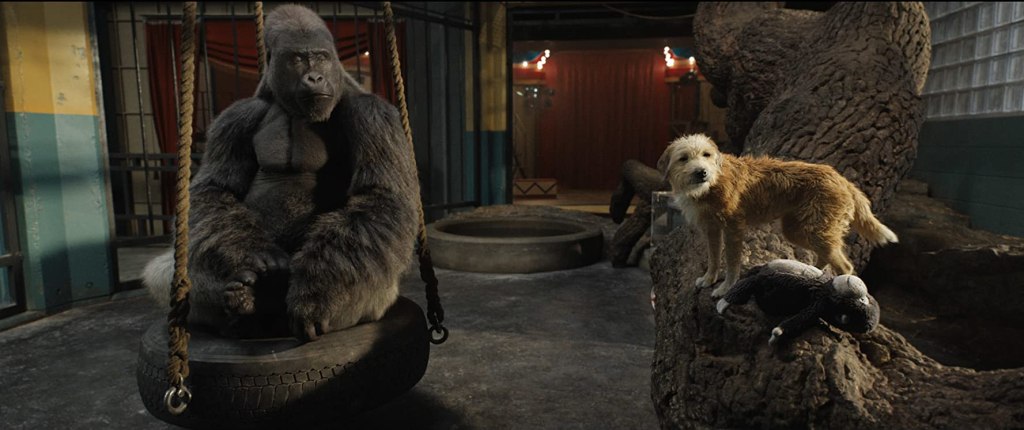
At the big top mall and video arcade at exit 8, Mack (Bryan Cranston) is the ringleader of a tiny circus inside a shopping mall. Home to animals including elephant Stella (voiced by Angelina Jolie), poodle Snickers (Helen Mirren), baseball-playing chicken Henrietta (Chaka Khan), mangy mutt Bob (Danny DeVito), Murphy the firetruck-driving bunny (Ron Funches), a neurotic seal named and most impressively, the headlining silverback gorilla, the one and only Ivan (Sam Rockwell). But the truth is, both the mall and the circus within it have fallen upon hard times. The crowds aren’t filling the seats anymore, and the circus is barely making enough money to keep the animals fed.

Mack brings in a baby elephant named Ruby (Brooklynn Prince) to reinvigorate the show, but even though she radiates cuteness, she’s not enoujgh to save the circus. That role, as ever, belongs to Ivan. But for the first time in his life, he’s wondering if maybe circus captivity isn’t the best or only option. He’s not concerned for himself so much as for baby Ruby, who deserves to be in the wild, a concept he can hardly recall or imagine.

This movie is based on the children’s novel by K.A. Applegate, which in turn is based on the true story of Ivan, a western lowland gorilla who spent 27 years living inside a mall enclosure in Tacoma, Washington, never setting foot outdoors. You don’t have to be good at math to figure how emotional this one’s going to be.

A live action/animation hybrid, this movie looks slick, and seamless enough not to detract from its sweet but simple story. The movie, directed by Thea Sharrock based on a script by Mike White (the very one who produced scripts as varied as Beatriz at Dinner and The Emoji Movie), isn’t quite sure where to take its darker themes but it draws some very sympathetic characters and a heartwarming tale about family and home. Cranston seems to be morphing into Ian McKellan before our very eyes, but it’s little Ariana Greenblatt who steals the show and all her scenes as Julia, the arty and intrepid zookeeper’s daughter who just wants her friends to be happy. The One and Only Ivan stole my heart and quite a few tears – a small price to pay for a solid, family friendly option new to Disney+.

Howard

You probably can’t even imagine a world in which Howard Ashman had never existed, and yet you probably don’t even know his name. He’s been dead nearly 30 years but you’re still singing his songs. Along with frequent collaborator Alan Menken, he wrote some of your favourite songs from The Little Mermaid, Beauty and the Beast, Aladdin – and those are just his Disney creds.

The night they won the Oscar for their work on The Little Mermaid, Howard whispered in Menken’s ear that they should sit down and talk once they were back in New York. He revealed that he’d been diagnosed with HIV a couple of years earlier, when they were deep into production on The Little Mermaid. His health was failing. He’d be dead just a year later. But he spent that year putting whatever energy and time he had left into making Beauty and the Beast into one of if not the most memorable and beloved Disney fairytales of all time. The studio flew Disney animators out to his home in upstate New York to suit his schedule but his illness was largely kept secret – many in the crew assumed they were dealing the diva temperament of someone with an Oscar-shaped hunk of gold on the mantle. They put up with it because he was a genius, because the team of Ashman & Menken were basically unbeatable.

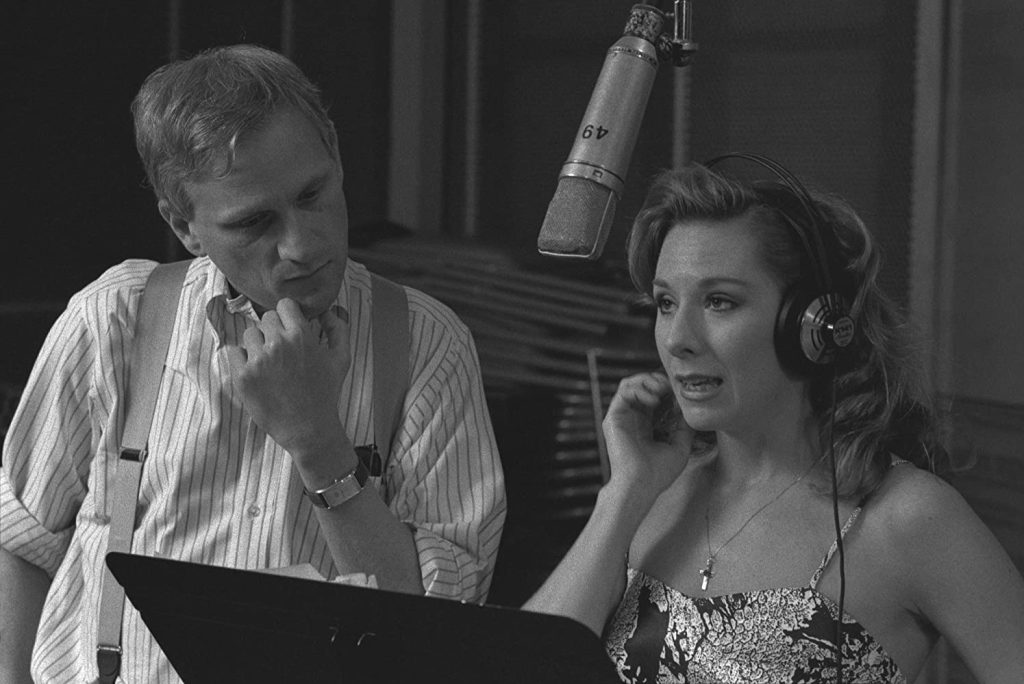
In this documentary, lots of his close friends and colleagues reminisce about how easily story-telling came to him, especially in song form. Lyrics spilled out of him, getting the story to where it needed to be. We also see him in archival footage, at the Beauty & The Beast recording session, for an example, where an orchestra played along to Angela Lansbury and Jerry Orbach laying down the track to that most famous of songs. Meanwhile, a separate team of animators already hard at work on Aladdin were picking his brain. He died before Belle ever set foot in a theatre, let alone Jasmine, but producer Don Hahn visited him in hospital after a particularly glowing test screening. Menken was down to 80lbs, was blind, and could hardly speak. This the man whose voice first sang the songs that princesses would later make famous. He died 4 days later. When Beauty & The Beast hit theatres later that year, it was dedicated to “our dear friend Howard, who gave a mermaid her voice and a beast his soul, we will be forever grateful.” Posthumously he would earn another four Academy Award nominations and rack up another win, but his legacy is much more than mere accolades. He was the voice of a generation, and his contributions are so timeless that they are rediscovered by each subsequent generation.

Howard’s friend, colleague, and Beauty & the Beast producer Don Hahn directs this documentary to say thanks to a man who is gone but clearly not forgotten.

I Used To Go Here

Kate’s new novel isn’t doing very well. The book tour’s cancelled and as she’s posing between the three enormous baby bellies of her three best friends, she simply holding a book, she’s realizing that maybe her baby was better off aborted.

But then her old professor calls, asking her to do a reading at her alma matter, and maybe things are a bit redeemed? Kate (Gillian Jacobs) returns to her former stomping grounds, 15 years later. Is it a triumphant return? Well, besides the fact that no one’s read the book and professor David (Jemaine Clement) isn’t quite as welcoming as she’d hoped and the B&B lady might be slightly psychotic and she accidentally wore the same blazer to the reading as she’s wearing on the book jacket. Apart from that, sure?

But her feelings of inadequacy and malaise seems to have her untethered, and instead of heading back home to Chicago, she hangs out maybe a little bit longer than she should. She drops by her old frat house and makes friends with the kids she finds there. They were in kindergarden when she herself was in college, but what’s a little age difference? Their problems seem so trivial compared to hers. They are young and full of promise, with their whole lives ahead of them. They haven’t compromised their dreams yet, their hopes haven’t been dulled by the brunt force of survival, they haven’t experienced the steady sucking of one’s soul. But this is a temporary balm at best, a bit of respite maybe, but eventually Kate will need to confront and make peace with reality vs. expectation, surely?

Writer-director Kris Rey has a playful style, but well-observed. I was pleasantly surprised to find Gillian Jacobs not resorting to an insufferable whininess that could have easily made this comedy boorish. Instead we find a lovely little character arc and a tidy if light comedy about a second coming of age.

Project Power

911 is being flooded with calls of very, very strange occurrences. People are having some very unusual reactions to a new drug they call Power. Everyone reacts differently to it, and some very badly. Police aren’t just powerless to stop it – some people can out-run cop cars on foot while taking it, others become bullet-resistant. Basically, you get some kind of super power, but it’s temporary, you don’t get to choose it, and sometimes it just kills you dead. As they say: results may vary.

Today this drug is toppling police precincts, tomorrow: governments. So one local cop, Frank, operates a little outside the bounds of his badge with a young drug dealer named Robin to get it off the street before it’s too late. Which may or may not line up with the intentions of a man named Art, an ex-military man who is rather single-mindedly looking for his daughter who is somehow mixed up in all of this.

Discerning individuals may already think this premise sounds interesting, and you wouldn’t be wrong. Perhaps you don’t need any further convincing, so this is just icing on the cake: Joseph Gordon-Levitt. It seems like not very long ago we were lamenting his rather lengthy sabbatical from Hollywood, but he’s following up his return to film in 7500 with a far different turn as a dedicated but unorthodox New Orleans police officer. Once he teams up with super stubborn soldier dad Art (Jamie Foxx), you’ve got a combo you can’t take your eyes off of. But you will, because the third member rounding out their trio, Robin (Dominique Fishback), may have rap dreams, a sick mom, and unfinished math homework, but she holds her own between these fiercely driven men. This is a star-making role for Fishback, whose talents help set this film apart.

Directors Henry Joost and Ariel Schulman serve up an adrenalized sci-fi action film that’s got some pretty slick and nearly non-stop violence binges. It hardly leaves room to catch your breath, let alone contemplate these characters and who they might be when they’re not chasing down Dr.Evil. Project Power is thrilling and engaging but it’s no Marvel: not everyone can afford the many phases and chapters of a cinematic universe. Most films, this one included, have just under 2 hours to tell a complete story. Project Power can only hint at themes like what is power, and who should wield it. Most of the time, Joost and Schulman choose action over narrative, and you can hardly blame them for it, given the tempting material. I do, however, blame them just a bit (and screenwriter Mattson Tomlin) for an embarrassing lack of imagination. Not one of their super powers is original; you will find each one has already been dreamed up by comic book writers 50 years ago. Which doesn’t mean it’s not a lot of fun to watch someone ignite like a real-life human torch. I just wish we knew enough about the guy (Machine Gun Kelly, ugh) to appreciate what in his DNA or his personality is self-selecting this particular power and how finely it straddles the line between weaponized flame thrower and self-immolation.

An American Pickle

Imagine for a moment, if you will, that one day the hospital calls and tells you to come pick up your great-grandfather. The one that’s been dead for a hundred years. Yeah, that one. Herschel. It’s a Rip Van Winkle/Encino Man kind of thing. Just trust that the science is sound and poor Herschel’s been perfectly preserved in pickle juice this whole time, and has just now awoken. Enter his only living relative, Ben, who gamely picks him up and introduces him to 2020. The movie never pauses over the fact that Ben asks no questions, makes no deliberations, just makes room in his life and his home for a complete stranger who looks nearly identical to him, is his same exact age, but is from another time and place.

Herschel has a deep-rooted fear of Cossacks and his highest aspiration is to one day try seltzer water. Ben is an insecure app developer who just happens to own a soda stream. Both men are played by Seth Rogen. This is very much the Seth Rogen show. All of Herschel’s friends are dead, and Ben appears to be a loner. It’s double Seth and little else. Not that that’s a bad thing. In fact, it gives Rogen a chance to flex. When both characters are on screen, you can appreciate how fully he has created two separate and distinct portraits. It’s kind of impressive, actually.

The story uses the dual perspectives to weigh values like religion, duty, family, and legacy. Herschel has the can-do work ethic that, as an immigrant in search of a better life for his family, helps him pursue the American dream. Ben, Brooklyn born and bred, has lost touch with his roots and is apathetic toward his religion and ethnicity. Sometimes we marvel that our ancestors were bold enough to relocate to foreign lands, leaving behind family, familiarity, culture, language, memories and possessions, with no guarantee that anything would ever be better. And sometimes we wonder if those ancestors who risked life traveling over rough seas and blazed actual paths through unyielding lands did it so that we could stay in bed all day binge-watching Bravo. This is probably not the future they envisioned when they risked it all. But while you and I may have a vague feeling that the past would be disappointed by the present, Ben is confronted with that feeling very, very viscerally. His name is Herschel, and he gives zero fucks.

The Last Full Measure

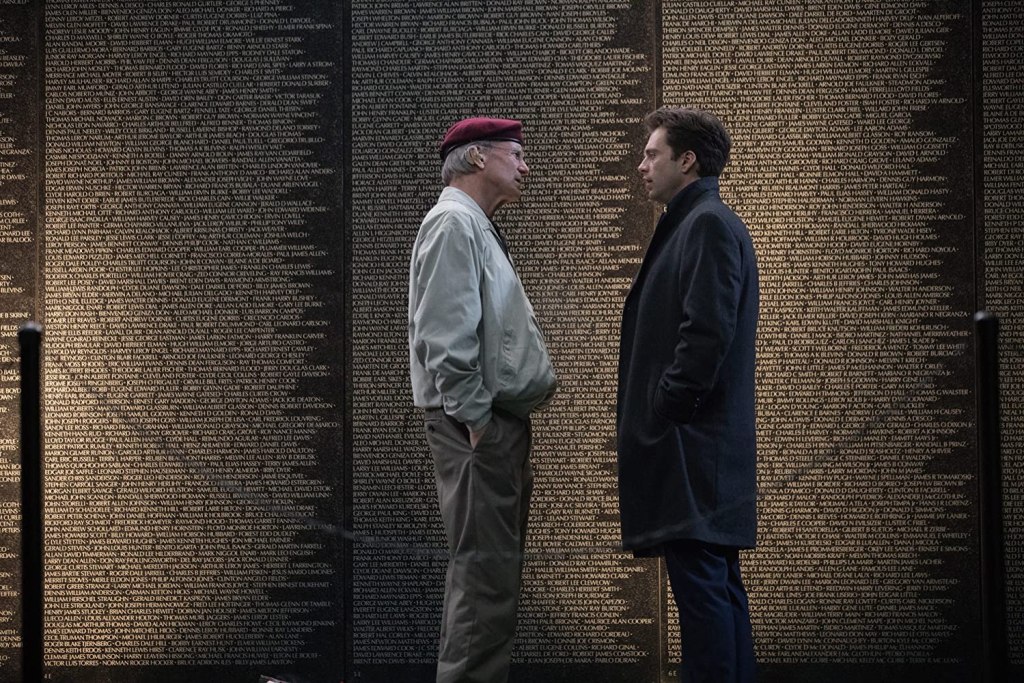
Retired Master Sergeant Thomas Tully (William Hurt) picks a bad day to visit Scott (Sebastian Stan) at his office. Scott’s boss has just quit unexpectedly, and with an election looming, it’s likely that Scott will soon be out of a job. So yes, Scott’s been shuffling Tully’s paperwork around on his desk for months now, but today wasn’t super ideal in terms of bringing it to his attention. Tully gets the brush off, has been getting it in some form or another for more than 30 years.

Tully fought in the Vietnam war, and he’s asking for a decorations review, an upgrade from the Cross to a Medal of Honor, not for himself, but for a comrade who didn’t come back, a young man named Pitsenbarger, known as Pits. On a particularly bloody day of the war, Operation Abilene, one company was used pretty much as bait, and before the sun set they’d taken 80% casualties all on that single day. And the only reason the other 20% survived was because of Pits, a man who didn’t need to be there, and wasn’t part of the operation. He was Air Force, part of pararescue. He and his unit were hovering in their helicopter trying to evacuate soldiers when he assessed the situation and acted. He went down. We went down because the company had already lost their medic and were taking an awful lot of fire. There were wounded everywhere. It was a miracle that he survived the descent, but what he did on land was even more remarkable.

Except his actions had only posthumously been awarded a Cross when the grateful survivors had put him up for an MOH. They were still pursuing it this many years later, hoping to commemorate all he had done for men he didn’t even know.

Scott’s in a tricky position career-wise and gets sent to check out this story. He interviews the survivors, many of them reluctant, all of them haunted (including Samuel L. Jackson, Peter Fonda, and Ed Harris). And he visits the Pitsenbarger family, finding parents (Christopher Plummer, Diane Ladd) still grieving their son. This assignment may have started as a way to run out the clock on his former position, but as he begins to comprehend the black hole of bureaucracy that this simple request has suffered, he becomes more committed to seeing in through. It’s about more than acknowledging the sacrifice made by The Pitsenbarger family, it’s a balm on the psychic wounds of the people he saved. The Vietnam war in particular offered so little to its returning vets that this was really their last avenue for healing their emotional scars.

Writer-director Todd Robinson’s film is earnest, safe, and sensitive. It’s also true. It very carefully toes the tricky path of celebrating the contributions of those who served without condoning the war itself. But more than that, it serves as a reminder of a war that may have fallen away from public consciousness but is still serving aftershocks to those who narrowly survived and to the families of those who did not.