Category Archives: Kick-ass!

The highest honour we can bestow on a film. Anyrhing in this category is a must-see.

Nico, 1988

nico-1988-trine-dyrholmYou may not know Nico by name, but I bet you have heard of some of her friends, people like Andy Warhol and Lou Reed. Nico, born Christa Päffgen, was part of the Velvet Underground for their first album (getting co-billing in fact) and, as a musician, that would seem to overshadow anything else one might do from then on. Nico, 1988 joins Christa in 1986 as she tours in support of her latest solo album. Understandably, Christa would prefer to keep the focus on her new music, but the press keeps asking about her past.

Nico, 1988 makes the viewer feel the weight of that past. This film gives a revealing and honest look at Christa’s life, stitched together from memories of those who knew her, including her son. It feels like a documentary, in large part due to a great performance by Trine Durholm in the lead role. Durholm shines both offstage as well as onstage, handling vocal duties herself.

The music is the beating heart of Nico, 1988, which is entirely appropriate for a biopic about an avant garde innovator whose music Rolling Stone called “a really worthwhile venture into musical infinity”, music that others have described as desolate, terrifying and unlistenable.

Judging from the soundtrack in Nico, 1988, all those descriptions are accurate. Sometimes, Christa sounds horrible, but once in a while, it’s magic. One ill-fated concert in Prague shows the heights that Christa can hit. Her energy and the crowd’s mesh perfectly and draw the viewer into the front row. Not coincidentally, that’s the only performance in the film that Christa delivers drug-free. Christa’s struggles with addiction are part of her story, and they feature in this film just as they did in her life.

For music lovers in particular, Nico, 1988 is essential viewing. It provides a behind the scenes look at the life of a true artist, a musician’s musician who cast a shadow too large for herself to escape from. Catch it if you can!

The Shape of Water

What did we ever do to deserve Guillermo Del Toro? The man is willing to crack his head open and allow his most beautiful dreams to spill out, onto the big screen, for our viewing pleasure. The Shape of Water, a delicious period piece with fantasy elements, is just about as sumptuous and satisfying as it gets at the movies.

Sally Hawkins, an inspiring casting choice, plays Eliza, a mute woman working as a cleaner at a top secret government facility. She and her cleaning partner Zelda (Octavia Spencer in a role she was born to play, because between Hidden Figures and The Help, MV5BZDU0NmU1NDUtNjMyNi00YTMyLTgwNWUtNTVmMzQ3NzJjNTJmXkEyXkFqcGdeQXVyNTk1MzcwNTI@._V1_she already has) stumble upon agent Strickland’s (Michael Shannon) latest capture, a humanoid sea creature reportedly worshiped as a god by the Amazonians. Set against the Cold War era, the Americans hope this scaly curiosity will give them a leg up against the Ruskies are and prepared to torture the secrets out of their prisoner – and worse. But sweet Eliza spots the creature’s humanity and her kind heart urges her to save him. She enlists a scientist at the facility (Michael Stuhlbarg) and her neighbour Giles (Richard Jenkins) in her daring escape plan, but Strickland isn’t going to let this career-defining prize slip through his rotting fingers.
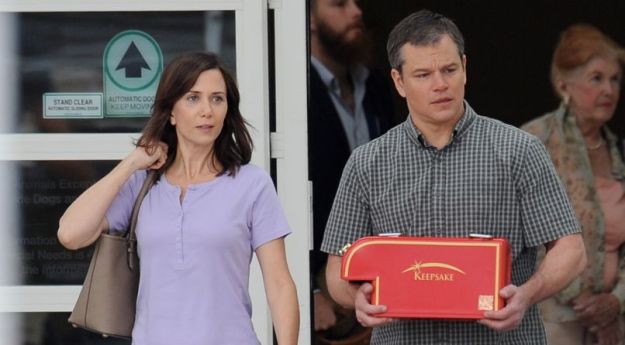
The Shape of Water is poetic and beautifully stylized. I fell in love during the opening shot, an ethereal scene that establishes the fairy-tale quality of the story. The whole film is richly textured; it feels like a story book you’ll want to step inside. Full credit to production design and art direction for creating a living, breathing piece of art that feels grounded in reality but often has this other-wordly, heightened reality feel to it that you just don’t find in your average film. The script, a Guillermo-Vanessa Taylor hybrid, is a phenom. It so smartly sets up all that is to come with careful, quiet nods. This is a movie with many small pleasures, many delights to savour. Because our heroine is non-speaking, the score plays a major role, and composer Alexandre Desplat is more than equal to the task. Del Toro weaves magic into threads of monster movie – love story – musical – spy thriller – comedy. I’m not sure which of these is more surprising, but all are very welcome. You may hear from others that this is Del Toro’s best since Pan’s Labyrinth, but they’re lying. I believe this is his best, full stop.

The Shape of Water wouldn’t be nearly so special without Sally Hawkins’ grace and measured precision. She’s wonderful, full of light, communicating much with little. Eliza is a woman of small parameters. Her life is ordered and banal. She’s suffering in her loneliness when she meets her merman, and her outsider status allows her to view him not as a monster but as a kindred spirit. Richard Jenkins meanwhile is restrained as the starving artist next door. Michael Shannon is anything but as the man who gets the job done at any cost – unless his vanity gets in the way. He’s awfully fond of the trappings of success. You might be starting to get an idea of what makes this script so lush: all the characters are brought fully to life. This is the clown car of movies, a film filled to the gills with interesting ideas and perfect little moments and scene-stealing details.

You don’t just watch a movie like The Shape of Water, you feel it, you experience it. We saw its world premiere at the Venice Film Festival this week but it’s coming to a cinema near you this December, and you won’t want to miss it. Hawkins’s name will be on the Oscar ballot and I’m guessing Del Toro’s will be too – maybe even twice.

Downsizing

downsizingThe world is overpopulated and in the very near future it will become untenably crowded: fact. We don’t have enough space to comfortably house all these people, we don’t have the ecosystem to support them, or enough resources to fund the lifestyles to which we have become accustomed. The rate at which these 7 + billion people consume means we are making waste and pollution like there’s no tomorrow – and if we continue doing so, there won’t be.
Luckily for fictional Matt Damon, a Norwegian scientist will come up with a revolutionary bit of science that’s going to sound nutty at first, but hear me out. He calls it downsizing. A medical procedure will taking a willing human being and shrink him down, to about 5 inches. These small people will live in small towns – dollhouses, practically, taking up little space, generating little waste. A typical person might liquidate all his assets, pay off all his debts, and find that the $150 000 he’s left with is equivalent to about $12 million in the small world. Live like a millionaire by becoming a fraction of your former self!

Occupational therapist Paul (Matt Damon) and his wife Audrey (Kristen Wiig) are the kind of people to whom this kind of deal appeals. They work but never seem to get ahead. Sure this downsizing is billed as a way to save the earth, but it’s also a way to personally wipe the slate clean, and live the life you could only dream of as a normally-sized person.

As you can imagine, being only 5 inches tall comes with perks, but also some drawbacks. As writer-director Alexander Payne imagines it, there are social and economic impacts to all these people retiring from “normal” society. Illegal immigration and terrorism are facilitated. Downsizing can be used as punishment, against someone’s will. And even if you’re one of those people living in luxury, you’re suddenly vulnerable to insects, birds, even high winds.

Downsizing is a well-timed satire, science-fiction that manages not to feel too fictiony. Credit Payne’s wit for packing as much detail as he does, and if sci-fi feels a little outside the wheelhouse of the guy who did Sideways and Nebraska, he actually manages it with a lot of humour and humanity. Though the film is at times unabashedly absurdist, it stays away from easy sight gags. This is a thinking film that abounds with ideas – you’ll need to digest afterward. It’s an indictment of the American dream, people so disenfranchised that they’re willing to undergo a risky procedure just to find fulfillment. But miniaturization isn’t really the answer it’s cracked up to be, with people’s problems seeming shrinking down to follow them.

Matt Damon is perfectly cast as a nice guy who’s just a bit of a loser. But for Sean, it was Christoph Waltz as his playboy neighbour who really stole the show. He plays a Serbian sleazeball who figures that what the small community needs is a small black market, and he’s there to profit. I, on the other hand, was blown away by Hong Chau as his cleaner, Gong Jiang, a one-legged Vietnamese dissident who shows Paul there’s more to life than just keeping up with the Jason Sudeikises (he’s the classmate at his high school reunion who inspired Paul to go for the Big Shrink). When Oscar season starts heating up, I hope her name is mentioned.

Downsizing is a unique film with a lot of style. Despite being the opening night film here at the Venice Film Festival, it likely won’t be a best-picture contender for me, but it’s a film full of ideas that I found immensely enjoyable.

Logan Lucky

Jay-Z announced his retirement from the rap game in 2003 with his Black Album. He was back three years later. Barbara Streisand retired from public performance in 2000 but has since toured the world not once but twice. Clint Eastwood declared his intention to retire from acting after 2008’s Gran Torino “You always want to quit while you are ahead” — then appeared in the forgettable 2012 movie Trouble With the Curve. Alec Baldwin wrote “Goodbye, public life” in New York Magazine but made three movies the following year. Shia LaBeouf infamous marked his 2014 retirement with his “I’m not famous anymore” campaign, then signed up for a movie role 3 weeks later. Cher embarked on a 3-year farewell tour, then signed up for Las Vegas residency as soon as it ended. Michael Jordan retired from basketball, played a little baseball, then went back to basketball. Point being: fools keep retiring, then unretiring. Director Steven Soderbergh belongs on the list, after telling everyone in 2013 that he’d lost his passion for film making, and that was it for him. Logan Lucky is the movie that brought him out of “retirement” – was it worth it?

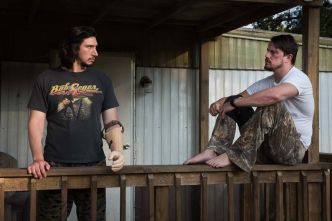
loganluckybros.0Having directed Ocean’s Eleven, Twelve AND Thirteen (and producing the upcoming Eight), Soderbergh is no stranger to heist movies, but considers this one to be their “anti-glam” cousin. Logan Lucky’s characters are gritty, the setting low-rent, the heist a lot less slick – but not uninteresting.

The Logan family consists of brothers Jimmy (Channing Tatum) and Clyde (Adam Driver), and little sister Mellie (Riley Keough). They’re known locally for the Logan family curse; Clyde believes the bad luck sets in just as things start to pick up for them. He recently lost an arm just as his deployment was ending in Iraq. Jimmy, meanwhile, has just lost his job at the mines where he uncovered a bunch of tubes that blast cash money from a NASCAR speedway to an underground bank vault. You can practically see the light bulb go BING! above his head. Soon he’s plotting an elaborate sting that will reverse the family’s fortunes. The one little hitch in is plan is that the heist requires the expertise of Joe Bang, bomb maker (Daniel Craig). And it just so happens that Joe Bang’s in prison. Which means to pull of the heist, they first have to break Joe out of (and then back into) prison.

The caper’s afoot! Logan Lucky has a fun ensemble cast that keep things spicy. The film works because Soderbergh reaches for his familiar bag of tricks: a zippy pace, an almost zany plot. These characters are perhaps not the cleverest, they’re reaching above their pay grade. Half the fun is watching things go wonky. Instead of plot twists, Logan Lucky is peppered with…shall we call them mishaps? Small calamities that keep you groaning, and guessing. It’s almost farcical, and to that end, it’s well-cast. The movie doesn’t take itself too seriously, and Daniel Craig is its shining, absurd beacon, stealing all the scenes he’s in and making you anticipate his next one when we’re following someone else.

Unfortunately, the movie really loses steam during its last act. Introducing Hilary Swank as the detective pursuing the case feels both rushed and drawn-out at the same time, somehow. Plus she’s kind of awful. But you know what? The film’s final 10 seconds save the whole damn thing, the cinematic equivalent of a smirk and a wink, and I fell for it.

Welcome back, Mr. Soderbergh.


Detroit

Detroit, 1967: a veritable race riot is boiling over the streets of the inner city. Buildings are on fire, stores are looted. Cops are on edge and are arresting any black person they see. The force is 93% white; 45% of those working in black neighbourhoods were considered to be “extremely anti-Negro” and an additional 34% were “prejudiced.” Charges of police brutality are abundant. Precincts overflow with black bodies.

On the night of July 25, police converge on the Algiers motel, allegedly because a sniper might be in or around the building. The motel’s 12 occupants are rounded up, interrogated, badly beaten, and humiliated by Detroit PD, Michigan State police, and the National Guard. At the end of the night, three black teenagers are left dead, killed by police.

Why? How?

Director Kathryn Bigelow presents a harrowing, claustrophobic rendition of these events, so tense and brutal that people walked out of the screening we attended. Other than Detroit being extremely difficult to watch, there are some problems with the film: 636345219515288776-detroit-3-rgb-2-Bigelow’s treatment of the subject is at a pretty cold remove, for example. And I for one felt it was just too long. The film could have ended when the last person leaves the motel, but instead it follows the white police officers who were charged with felonious assault, conspiracy, murder, and conspiracy to commit civil rights abuse. The courtroom scenes are a long, drawn-out denouement that don’t quite jibe with the first two thirds of the film. That said, I still feel like Detroit is an extremely effective film.
First, because it’s so timely. Watching those cops get off scot-free despite confessions, and then be congratulated for beating murder charges that were well-deserved, is infuriating, and familiar. This is not “history,” not when there are unarmed black children being gunned down by the people paid to protect them to this very day. It’s an uncomfortable reminder that in the past 50 years, we’ve done nothing to address the problem. Second, and maybe more importantly, is the way the movie made me feel. I’ve already said it was maybe a little void of emotion and that’s true; what I mean is how it made me evaluate my own filters. As sympathetic to the cause as I am, I’m still a white lady, and I experienced the film and the events depicted within it as a white person with all the privilege inherent in those words. The motel scenes are grueling and I had visceral reactions to them. Occasionally I caught myself frustrated with how the characters were responding to the cops, and I’d have to check myself. This is the fundamental takeaway of the film: my experience with police officers is essentially just very, very different. I wasn’t born with a historical fear of cops. My parents and grandparents didn’t raise me to be afraid of them. The colour of my skin protects me from the worst. My entitlement trusts in my human rights. My privilege demands that people in positions of authority will respect my unalienable civil liberties. The last interaction with a police officer I had was the guy directing pedestrians leaving a Cirque du Soleil show. The last time we were pulled over for speeding, there wasn’t so much as an apology uttered for being caught red-handed. These things don’t feel like privilege because they’re things we believe we’re owed, but it is privilege because not everyone gets to feel the same way.

Maybe it’s not perfect, but Detroit asks some difficult questions, which makes it an important film. It’s excruciating because it needs to be, and you need to watch it.

Groundhog Day

Groundhog Day has recently been resurrected as a Broadway musical, and Bill Murray went to see it on Tuesday. And Bill Murray went to see it on Wednesday. Is Bill Murray fucking with us?

By all accounts he enjoyed the show, laughing and pumping his fist during musical numbers. Not all of us are destined for NYC this summer, but the good news is, you can catch Groundhog Day pretty much any old time, and here are but a few reasons why you should revisit this classic over and over again.

  1. Director Harold Ramis originally wanted Tom Hanks for the role but realized Hanks was “too nice” and went knocking elsewhere. Michael Keaton turned it down. Steve Martin, Chevy Chase, Alec Baldwin, Howie Mandel, Billy Crystal, Robin Williams, Kevin Kline, Harrison Ford, Mel Gibson, Kevin Costner and John Travolta were also considered before Bill Murray was cast.
  2. Harold Ramis has a cameo in the film as Phil’s neurologist. Also appearing, if you shannon-groundhog-day.jpgwatch dedicatedly enough: Michael Shannon in his big screen debut – he’s Fred, one of half of the young couple who’s supposed to get married that day.
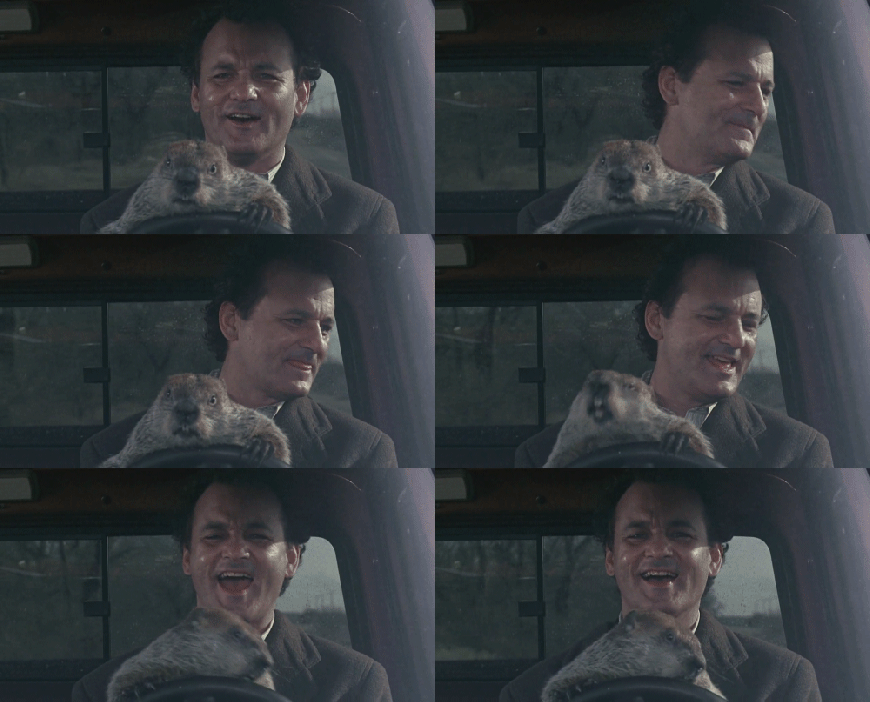
  3. Although a family of groundhogs was raised specifically for this movie, when Bill Murray was severely bitten not once, but twice, he had to receive rabies treatment, which are rather painful injections.
  4. Although set in Punxsutawney, Pennsylvania, the film was actually filmed in Woodstock, Illinois, just 50 miles from Murray’s hometown, Wilmette. Tourism in Punxsutawney spiked after the film’s release, but it’s in Wilmette where you’ll find a small plaque that reads “Bill Murray stepped here” on the curb where Phil continually steps in a puddle, and another marked “Ned’s Corner” where Phil perpetually meets Ned the insurance salesman (Stephen Tobolowsky).
  5. There are 38 days depicted partially or in full in the movie. Ramis said originally he wanted about 10 000 years worth of days and ended up with what he considers to be a decade’s worth which is still a really, really, sad, lonely long time to be reliving the same day.
  6. Bill Murray was offered a “spit bucket” for the scene in which he gorges on pastries. That was a terrifically bad idea on his part…guess who got a tummy ache?
  7. In one scene, Phil throws the alarm clock, destroying it. In real life, Murray’s throw did little to damage the thing so the crew took baseball bats to it to smash it up. And yes, it really did keep playing that stupid song, just like in the movie.
  8. Murray was going through a divorce at the time and compensated by becoming obsessed with the movie, calling up Ramis with all kinds of questions. Ramis tired of it and sent the writer (Danny Rubin) to sit down with him and iron out all the wrinkles. This caused a rift in their friendship – Murray didn’t speak to Ramis for many years.
  9. When Phil is at the piano teacher’s house, it’s actually Bill Murray playing. He can’t read music but plays by ear, and learned that passage by heart to play it in the movie. [It’s Sergei Rachmaninoff’s Rhapsody on a Theme by Paginini, fyi]
  10. Harold Ramis, Bill Murray, and Stephen Tobolowsky have all served as honourary Grand Marshals in Punxsutawney, Pennsylvania.
  11. In Swedish, the movie’s title is translated as “Monday Every Day” – although in 1993, when the movie came out, Groundhog Day was on a Tuesday. The specific day of the week is not mentioned in the film.
  12. In once scene, Phil throws himself from a bell tower. The building is actually the opera house in Woodstock, Illinois, where local legend has it that the ghost of a young girl haunts the building ever since she fell off a balcony section and died.
  13. uxyA34o.gifThe famous line “Don’t drive angry!” was improvised by Murray when the groundhog in his lap was aggressively trying to escape by climbing over the steering wheel. [Yes, this was one of the times when Bill got bit]


  14. In the final shot, we see Phil carry Rita over the gate before climbing over it himself. This may seem romantic but was unscripted: in real life, the gate was simply frozen shut.

Genocidal Organ

In the near future, a devastating terrorist attack in Sarajevo shocks the world. The governments of most industrialized countries use the widespread panic to justify an increase in surveillance of their own citizens. While the developed world is safer than ever before, the third world- without the means to conduct such widespread surveillance- descends into chaos and mass murder.

Captain Clavis Shepherd  is one of the few Americans unfortunate enough to have to navigate this chaos. As a covert intelligence agent, Shepherd conducts bloody and dangerous missions around the world while his superiors monitor his vitals from Washington to make sure he’s not feeling too much compassion. His latest mission is to track down the mysterious John Paul, the architect of so many genocides around the world.

Genocidal Organ is not always easy to follow but will reward those who try to try to keep up. It took me about twenty minutes, given that this is a Japanese film with Japanese animation and Japanese voice actors speaking Japanese, to realize that most of these characters are supposed to be American. It feels weird at first. This must be how Russian people feel watching Eastern Promises. Once you’ve figured out who everyone is though, it’s easy enough to settle in and just enjoy the movie.

Visually, Genocidal Organ is an impressive film. The animators create a believable setting and the shootouts have better choreography than most live-action films do. As I’ve said before, I’m no good at describing animations so here are some stills to give you an idea.

genocidal organ 1

genocidal organ 5

genocidal organ 4

genocidal organ 3

As a story, it’s an engaging spy thriller that tricks you into having fun because it looks so good. At its heart though, Genocidal Organ is hopelessly bleak. It’s a movie that, like John Paul (who is quite fond of monologuing), has a lot to say. While the script probably has a couple of speeches too many, its musings on linguistics, psychology, American foreign policy, and freedom are always interesting and often troubling. Be prepared to sit and think about this one for a few days after you see it.

The Incredible Jessica James

Two broken hearts on the rebound: Jessica (Jessica Williams) is an aspiring playwright full of youthful energy and self-confidence; Boone (Chris O’Dowd) is recently divorced and somewhat bewildered by the dating scene.

When we first meet Jessica, I was a little repelled. She comes off brash and self-serving – not the kind of person you’d want to go on a blind date with, not the kind of person I’d really care to watch onscreen for an hour and a half. But by the opening credits, she’d MV5BMTA1NDM0ODY2MDdeQTJeQWpwZ15BbWU4MDc2NTgxOTAy._V1_SY1000_CR0,0,1596,1000_AL_grown on me. She dances around her apartment so unselfconsciously I couldn’t help but see myself in her. By the film’s half way point, I quite agreed with the title: incredible indeed.

Jessica insists that the friendship between herself and Boone will be based on honesty, and this pact pulls no punches. They bond over their mutual obsession with their exes. They make brutal self-disclosures. As you can imagine, the intimacy grows between them and their relationship morphs more quickly than either of them are really ready for. But Jessica James isn’t just about boys, she’s a fully realized woman with a lot more going on. She doggedly applies to any theatre program that might accept her plays, she teaches theatre to children, she pursues her passions while supporting those of her friends.

Writer-director Jim Strouse wrote The Incredible Jessica James specifically for Jessica Williams, and I sincerely hope it’s a star-making role for her. She’s infectious and luminous and I want her to be in all the things. This movie is a rom-com for 2017: it is what it says it is. It doesn’t just pay lipservice to #feminism, it gives its leading lady a wide range of interests so that she doesn’t have to find fulfillment through love, she’s already got a lot going on. Williams and O’Dowd have a sparky kind of energy that’s gorgeous to watch and I LOVE me some Chris O’Dowd, so the fact that I was equally happy when he was offscreen says a lot about the kind of movie this is, and the star power that Williams shines upon us.

You don’t have to take my word for it: The Incredible Jessica James is streaming on Netflix right this very minute. It took me about 5-10 minutes to ease into it but I went from charmed to smitten pretty quick and here’s hoping that you do too.

The Town

Ben Affleck branded Charlestown the “bank robbery capital” of America in his movie about the neighbourhood, The Town. Neither cops nor statistics actually bear that statement out, but he certainly painted a picture of a rough neighbourhood where its inhabitants (“townies”) scowl at outsiders and steal everything that’s not nailed down. Sean and I have been to Boston a few times so I can’t quite recall which time we ventured out to “the town” for some dinner but I do recall deliberating whether we should. Sure the internet was calling this Moroccan restaurant one of Boston’s best, but did we feel safe?

hero_EB20100915REVIEWS100919991ARClearly things have changed since Ben Affleck last spent the night in Charlestown. When we visited, it was gentrified as hell, Beamers parked up and down the street. It’s also been a while since we last watched the film, so without the benefit of bellydancers or couscous, we gave it a re-watch.

Ben Affleck came on board as director only after someone else bowed out. His original cut of the movie was 4 hours long, and if you’re interested, it’s available to watch on the Blu-Ray. The studio convinced him to cut it down to 2 hours, 8 minutes for our sake, still a lengthy movie, but one that just flies by. Affleck’s character assembles a team of ruffians who brazenly rob banks and armoured trucks. He’s wanting to get out of this life, but neither his friends nor his enemies are willing to let him go. So that’s a complication. Another little wrinkle: the woman he’s currently in a relationship with is a former hostage of his, only she doesn’t know it. So that’s awkward.

You can tell Affleck is an actor-director; the action scenes are electric but the editing slows way down during character-driven scenes. He lingers over them. And he knows a great performance when he sees one. In The Town, the scene stealer was Jeremy Renner, who Casey Affleck recommended when Ben couldn’t get Mark Walhberg. Affleck has since said that Renner’s performance was so strong that he could literally save a scene by cutting to Renner looking down at a napkin.

Anyway, whether or not The Town is an accurate portrayal of the people and criminals who live there, it’s an excellent film, slick and well-paced, and it definitely benefits from great on-location shooting. The Boston on screen no longer exists, if it ever did, but it’s a great cinematic accomplishment for a hometown boy.

Personal Shopper

Kristen Stewart, I’m sorry honey, I didn’t really know you could act. You seemed up until now to have two settings: eyebrows and lip biting. Yet here you are, quietly impressing me.

Maureen (Stewart) is indeed a personal shopper. She picks up the glamourous clothes and accessories her celebrity client can’t be bothered to. Maureen despises Kyra but the MV5BOGFiY2U2ZTYtOTRmMS00MTY2LWE1OGEtZDUyNTI4N2I4YWUwXkEyXkFqcGdeQXVyNjcwNzI4MzE@._V1_money’s good enough to pay the rent in Paris, which is important to her. She’s in the city and won’t leave until she hears from her brother. Her dearly departed brother. Which is an obstacle of course. But she and her recently deceased twin brother are\were both mediums with a genetic heart defect, and they’d promised each other that whoever died first would signal the other from beyond, if such a thing existed.

But when contact IS made, how sure can Maureen really be that it’s her brother and not some creep? Or some other ghost? She wants SO badly for it to be him, but her skeptical nature can’t help but vacillate. This makes Personal Shopper a film that’s hard to pin down. It approaches grief in a way we’re unaccustomed to, but it’s also part ghost story, part coming of age, part mystery, part spiritual discovery.

Personal Shopper compels even though it’s largely about mournful solitude. Director Olivier Assayas, who previously got an excellent performance out of Stewart in Clouds of Sils Maria, creates an ambiance that pulls you in as much as it creeps you out. But he doesn’t overdose on the ghost story stuff, he knows it’s scarier and more effective to dole it out in small measures.

It probably helps that Assayas wrote Maureen specifically for Kristen Stewart; she’s actually meant to be taciturn and moody. But the character ultimately lacks depth, which is pure laziness since we spend pretty much the entire movie with her. It’s still a good movie though, with an atmosphere that won’t quit and a solution that begs to be found, even if we think we already know it.