
A widow moves across the country to be with her only daughter. It sounds trite and cliched and we’re only one sentence in. Hold up. Does it help if I tell you that Susan Sarandon and Rose Byrne play the mother and daughter? It should. Keep reading.
In fact, The Meddler may very well be tale as old as time. After her husband’s death,  Marnie has a little bit of money and an awful lot of time, so she packs up her New Jersey home and finds herself a condo in L.A. where her daughter Lori writes for television. Marnie’s California awakening is intoxicating. She loves all the things that most of us hate about L.A. But shopping at The Grove and volunteering only fill up so many hours. The rest are spent calling or visiting her daughter. Her daughter is not impressed.
Marnie calls Lori when a new Beyonce song comes on the radio. She calls her when she hears about a serial killer roughly in the area. She calls her when Lori hasn’t called her back, and she calls her again when that one isn’t returned either. Then she texts. Then she knocks on the door with bagels. Or doesn’t knock but just comes in.
Small cracks in Marnie’s Positive Polly act surface: she’s grieving and trying hard not to show it. And she’s achingly lonely. So when Lori suggests that her therapist has 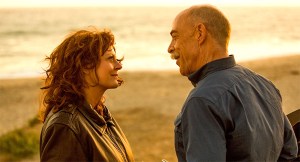 encouraged her to set boundaries with her mother, Marnie sees the therapist herself. And when that doesn’t go as expected, she finds other people to mother, like the ‘genius’ she overuses at the Apple store, and a friend of her daughter’s who’s more receptive to advice and well-intended intrusiveness.
None of these really get to the heart of her pain though; her meddling is just a bandaid on her very wounded heart. She isn’t prepared to be alone so early in her golden years. She feels guilty about an inheritance that feels like blood money. And the only person who understands her grief is the daughter who’s pushing her away. Marnie wants to hold Lori close because her daughter is a piece of the husband she’s missing, but Lori needs distance from the mother who only reminds her of her father’s absence. The disparity is heart-breaking.
The Meddler is a very interesting meditation on grief and the various ways it’s expressed. The movie is marketed as far fluffier than it is, however with Susan Sarandon in the lead, there’s a lot of joy and laughter mixed in with everything else. She gracefully navigates between the bubbles of emotion as they rise to the surface. The writing is stronger as a drama than as a comedy but Sarandon is talented with any material, and lights the way with her stunning luminescence.
 The talking head interviews are culled extensively from the guest list of the 2015 festival, and include the likes of Toni Colette, Michael Moore, Patricia Clarkson, Judd Apatow, Mimi Leder, Paul Feig, Catherine Hardwicke, Angelica Huston, Jill Soloway, Mira Nair, and so many more.
 carpet when she broke out a sign reading ‘Budget the Baby’. She says “As an actor I can claim a massage or a facial but I can’t claim childcare. Actors are the most pampered people on sets. It’s the crews — the electricians, catering, camera people — who are often on set at 4am.” Hope Dickson Leach is a mother of two herself; you can imagine what a grueling 20 hour day on the set can mean to a family with young children.
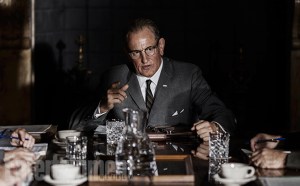 Rob Reiner, a venerable talent who hasn’t directed anything of note in a couple of decades. As he introduced this film to the TIFF audience, however, it was clear that this movie really meant something to him. He talked of being a young man during LBJ’s time in office, and hating him because he was the man who could send you to your death in Vietnam. Only with time, age, and political engagement could he look back at Johnson as something more. He was the president who had to shoulder the burden and responsibility of John Kennedy’s legacy. He took over lots of the civil rights work that JFK had begun, and LBJ is the one who pushed it through, though history sometimes forgets to give him credit for this.
 the way Jackie does. That said, I still found it to be quite enjoyable. The film neglects to give us a complete picture of the man, but does focus interestingly on LBJ’s rivalry with JFK, allowing Harrelson to swing between cockiness and shame and a whole presidential gamut in between – it’s refreshing to watch him flexing so readily after a string of second-banana performances. He’s playful bordering on hammy, showing us wit, vulgarity, searing intelligence, and frustrated ambition.
 father is working at keeping what’s left of the farm running. Clover, meanwhile, is trying to piece together what would make her young, whole-life-ahead-of-him, brother put a gun to his head. Neither is mourning in a conventional way, and they’re certainly not doing it together.
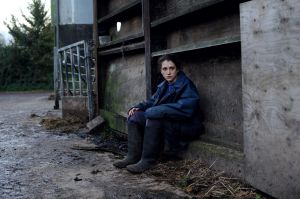 When death is part of business, part of the lifestyle, part of every day, what toll does it take, and at what remove do they experience more personal brushes with mortality?
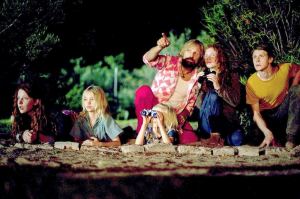 and grow food, read meaty novels by campfire light, and train their bodies strenuously, sometimes dangerously. Each kid has a unique, made-up name so they’ll be the “one and only” in the world. It sounds heavenly or lonely, depending on your perspective. Not all the kids are happy. Not all the parents are happy either, although so far I’ve only mentioned Captain Dad. Mom, as it turns out, is off in a mental health facility, and has been away from the family for several months before they learn she’s committed suicide.
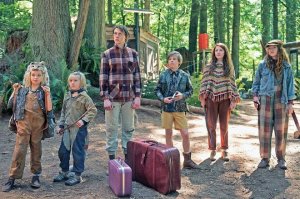 establishment values best addressed by dropping out of society? How much freedom is too much freedom for children? And what kind of risk is acceptable? And do children need to sometimes be shielded from difficult or painful concepts, or is complete honesty always the best policy?



 ASSHOLES WATCHING MOVIES