Category Archives: Jay

Sundance 2021: The World to Come

Picture it: mid-19th century American East Coast frontier. Life is hard; it’s round the clock, back breaking work just to stay alive. It’s dirty, full of drudgery, isolating, dark, and monotonous.

Dyer (Casey Affleck) is a poor farmer who will toil his whole life away and never have anything to show for it. His wife Abigail (Katherine Waterston) works just as hard at even more menial tasks. Their relationship is predicated on hard work and common sense. Their life is colourless, hard-scrabble, and bereft after the loss of their only child. When another couple appears in the “neighbourhood” (which is to say, another isolated cabin miles and miles away), their dreary lives are cheered just a little bit by the ability to see another face once in a while. Abigail becomes particular friends with the wife, Tallie (Vanessa Kirby), though Tallie’s husband Finney (Christopher Abbott) is a real stick in the mud, another burden to be borne, but worth the price of seeing Tallie.

If Dyer notices that Abigail and Tallie are growing closer by the day, he’s hardly the type to say anything, but Finney is much more jealous, and perhaps this isn’t the first time his wife has wandered over to someone else’s homestead. Abigail and Tallie relieve their loneliness and ignite something in each other’s company. Their relationship turns intimate, and physical, a balm on their otherwise psychologically taxing existence.

The World To Come is based on Jim Shepard’s lyrical story of the same name, which is fine for a piece of literature but translated less well on screen. Katherine Waterston provides a poetic voice-over that grows tiresome very quickly, not to mention suspicious. Dyer, who eats potatoes for every meal of every day of his sad little life, hardly seems the type to have said that “contentment is a friend who rarely visits” although the sentiment, at least, rings true, the biggest excitement in his life provided by a molasses enema when he gets the flu.

Waterston and Kirby are wonderful together, and the setting is absolute perfection. The sense of longing and emptiness are well conveyed, and Waterston does a fine job embodying both Abigail’s stoic reticence and the private, flowery language of her journal. The World to Come has plenty of isolated aspects to admire but they amounted to a boring film and a frigid love story that I didn’t need to see (again: this is hardly the first of its kind). Mona Fastvold is an excellent director who picked a crummy script and failed to breathe enough life into the story to justify it or indeed to hold any emotional heft. This one left me cold.

 The World To Come will be released via video on demand on March 2, 2021.

To All The Boys: Always and Forever

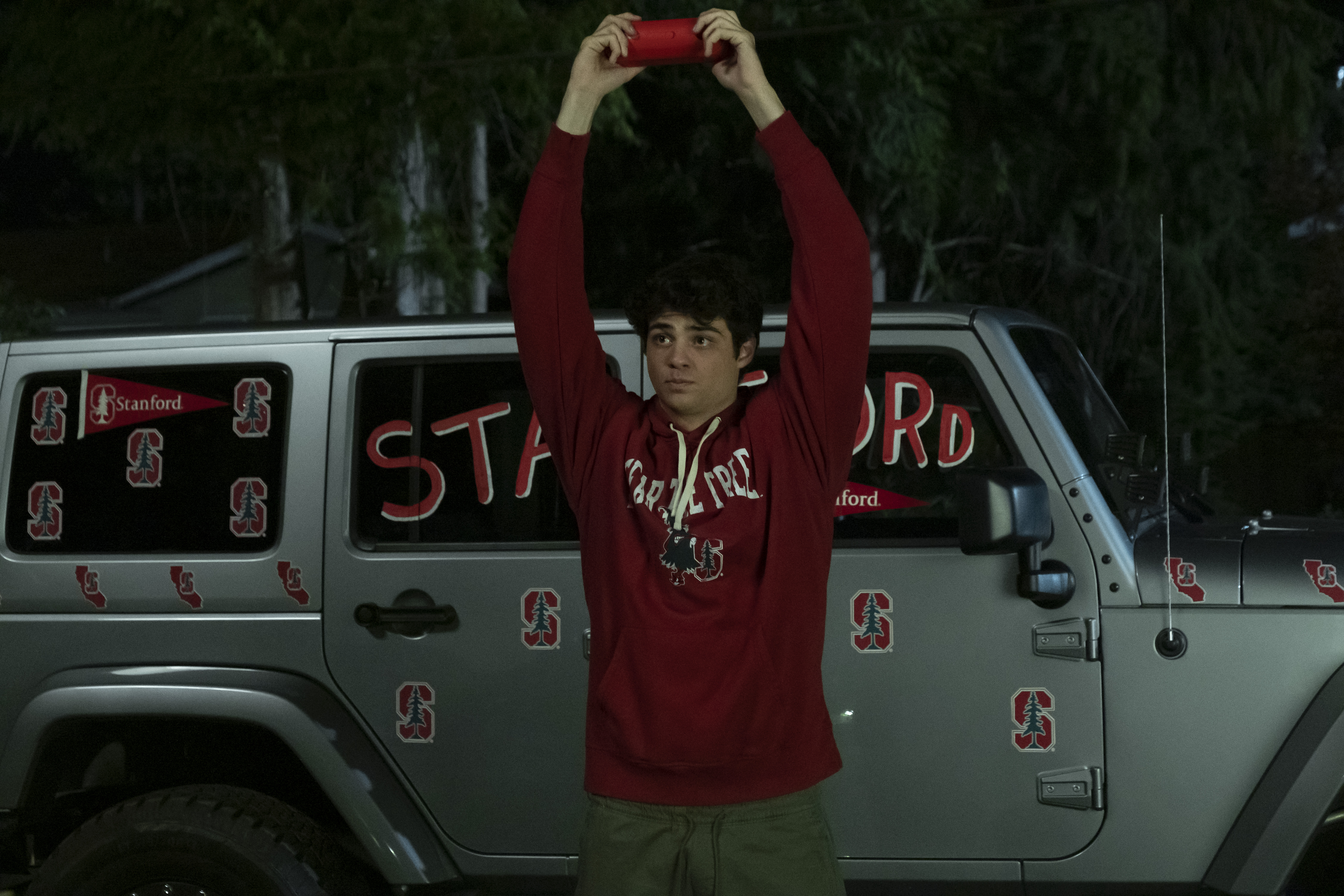
Prepare your tender hearts for possible breakage: this is the third (and final) installment in the To All The Boys series and in it we’ll bid adieu to our favourite young couple, Lara Jean and Peter. They’ve come a long way from merely posing as a couple in the first film to being threatened by charming rival suitors in the second. Seniors in high school, they’re about to graduate and go to Stanford together – or are they?

Back from a spring break in Seoul, Lara Jean learns she hasn’t been accepted to Stanford and suddenly the entire future she and Peter have envisioned together is in flux. With a class trip to New York City, prom, and graduation on the horizon, these milestones might have to be borne solo. If Lara Jean and Peter aren’t going to college together, they may as well just go through with the inevitable break up now and get it over with.

After three movies worth of emotional investment, it’s hard to say goodbye to Lara Jean and Peter, but first loves aren’t necessarily forever, and it’s sort of sweet to see Lara Jean finding happiness on her own terms, with or without Peter. In the first two movies she wondered who she loved but now she’s wondering what else she values and who else she is. Now this is growing up.

Director Michael Fimognari called this movie “an unintentional love letter” and he’s got a point; filmed back to back with the second one, this movie didn’t predict that the class of 2021 would be disrupted by a global pandemic, so this movie’s graduating class is perhaps the only one that will get to slow dance at prom and don caps and gowns without social distancing. Most of their real-life contemporaries have given up so much so in a sense we’re all living vicariously through Lara Jean and Peter.

It’s heartbreaking to say goodbye to these two high school sweethearts but all good things must come to an end and all things considered, this is a pretty fitting farewell for our two star-crossed lovers.

Red Dot

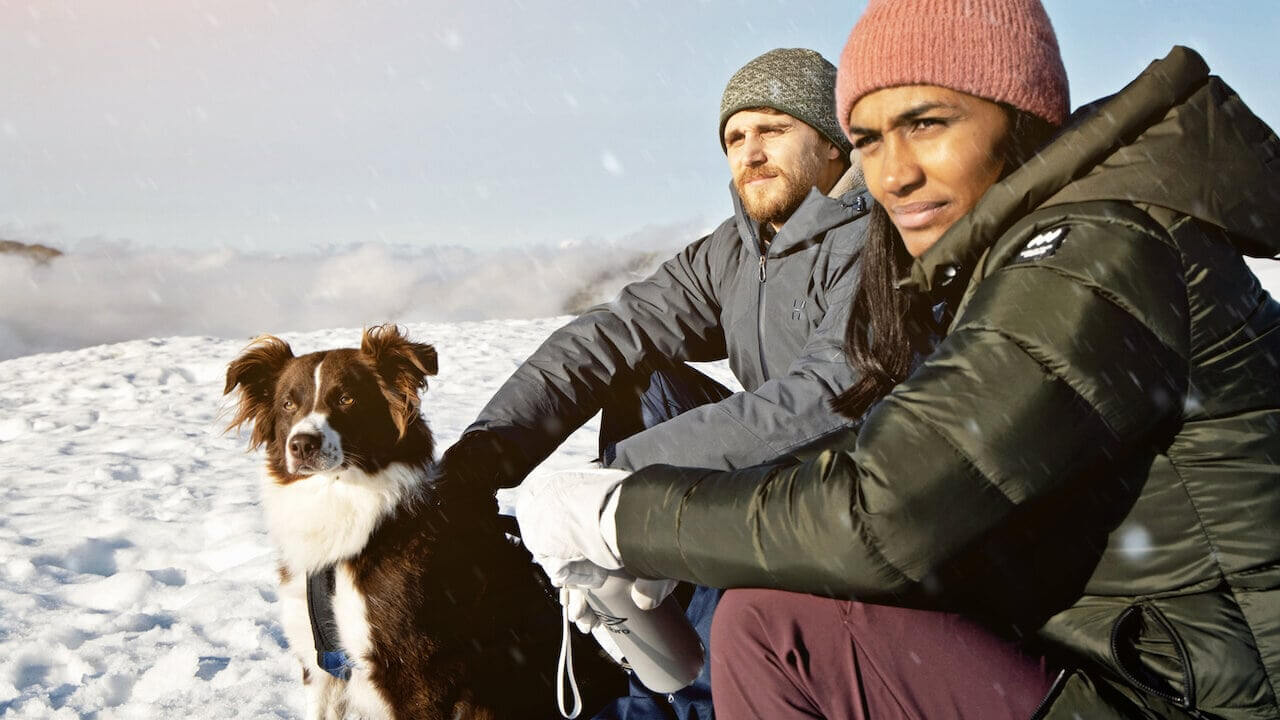
Engaged and pregnant, Nadja (Nanna Blondell) and David (Anastasios Soulis) travel to the north of Sweden for a hiking trip to hopefully check out the northern lights. A little parking lot scuffle involving scratched cars, racism, and dead deer turns into something much more sinister, turning their romance under the stars into a real nightmare.

Sleeping in their tent wayyyyyy out in the middle of the snowy nowhere and “keeping warm,” they suddenly notice lights on the horizon that aren’t northern. Outside the tent, a red dot appears in the middle of Nadja’s chest, and then David’s head. They can’t see anything, but a red dot would make anyone nervous. Trying to get back to their car, the gunshots start. The first to fall is their dog, Boris. Poor, innocent Boris. But no time for mourning! Unknown psychotic gunmen are out there, apparently very upset about some cosmetic bumper damage. Cold and increasingly wounded, Nadja and David are chased out into the frozen wilderness where crazed shooters are only a portion of their worries. Survival becomes all-consuming and increasingly unlikely.

Director Alain Darborg’s movie really has nowhere to go but deeper and deeper into the fray and we go limping along with it. If you’re in the mood for a harrowing movie about constantly almost dying, this might be right up your alley, or across your frozen tundra or what have you. The pursuit is relentless and after a while, borderline monotonous. And then there’s a twisty ending that’s kind of infuriating because it comes out of absolutely nowhere and is kind of unfair and totally unearned. But there it is. If you’re in it just for the action I bet you can overlook it but if you were hoping for a good, satisfying movie, keep moving, it’s best to look elsewhere.

Bliss

Greg (Owen Wilson) is having a very bad day: he’s getting divorced, estranged from his kids, living in a motel, and now he’s getting fired. And now he’s accidentally killing his boss while getting fired! And how he’s hiding the body and fleeing the building! A very bad day indeed. In the bar across the street (note: not the wisest place to hide out), he meets Isabel (Salma Hayek), who tells him not to sweat it. Why? Good question. Because this whole world is fake, she tells him, a mere simulation of her own creation. She and Greg are real (in fact they’re “together”) but nearly everyone else is essentially an NPC, just a simulated person able to walk around and interact, but nothing more than a character in a very sleek video game. And there’s proof: Greg and Isabel have powers! They can make the fake characters do things with their minds. How about that?

Greg and Isabel go on a bit of a bender, Greg intoxicated by his newfound powers, happy to forget the woes of his other life and to reap the benefits of a new partner in crime. But there’s more. This world, remember, is a mere simulation. In the real world, Greg and Isabel are scientists, and this is Isabel’s research, and her creation. When they exit the simulation, Greg finds himself in a utopia, a world made perfect by science and technology. A little too perfect, actually; because you need bad in order to appreciate good, the utopia has become less and less satisfying, hence Isabel’s creation – a world in which you can live a rough life in order to better appreciate the perfection back home. Except Greg and Isabel have exited the simulation too abruptly and now both worlds are starting to bleed into each other and they’ll need to risk going back and getting stuck in order to correct it.

Or.

Or there’s another way to watch and interpret this movie. Perhaps Greg’s addiction to painkillers takes a turn for the worse when he loses his job and his home. Maybe Isabel is just a schizophrenic addict and they’re sharing a common hallucination in order to escape their life on the streets.

Bliss is purposely ambiguous and this movie is going to be very divisive because of it. Sean hated it because he made up his mind very early on and felt the whole exercise was pointless once he’d “figured it out.” I felt differently, having embraced the dichotomous possibilities. Writer-director Mike Cahill is careful to scrub the film of any telling language. No one says drugs. No one says addict. Yet there remains evidence for both sides of the coin. Greg has a grown daughter who never gives up looking for him. Isabel is adamant that Emily (Nesta Cooper) is just another fake character, but if that’s the case, why does the story sometimes get told from Emily’s point of view? That would seem to indicate that she’s real. Which goes double for Isabel, who might be just a figment of Greg’s imagination (or a side effect of his high), but she, too, is seen working independently in the movie. Sean insists that Greg is an addict, case closed, but this easy interpretation doesn’t account for the fact that we glitches in the matrix very early on. His wallet, for example, suffers a glitch, unobserved by Greg, seen only by us. Why would Cahill go out of his way to show us this if he wasn’t planting seeds of doubt? Of course there’s a third possibility here, that neither of these worlds is the “real” world and we haven’t seen the end of the simulations. Of course, you’ll have to watch the movie to find out where on the spectrum your belief lays. Some will see this in black and white and others will rejoice in the grays. But I believe there’s some hidden pink, and a very careful watch may uncover it still.

If you’re interested in taking on this puzzle, you can find it on Amazon Prime – but do promise to come back and let us know what you think, because Bliss is only 90% a movie. The other 10% depends on what you bring to the table.

Sundance 2021: Prisoners of the Ghostland

Prisoners of the Ghostland is a collaboration between America’s most bonkers actor, Nicolas Cage, and Japanese auteur Sion Sono, known for grotesque violence, extreme eroticism, and surreal imagery. I’m not the biggest fan of Nic Cage’s recent reincarnation as a b-movie cartoon, but I thought this combination was made in movie heaven and couldn’t wait to check it out at the Sundance Film Festival.

But you know what? It wasn’t that great. It was okay, but I expected some pretty bananas action from these two knuckleheads and instead Cage seems to be playing it straight, giving us a film that’s far more conventional than I ever would have guessed. Had they embraced the subversive, unhinged kind of film I was expecting/hoping for, Prisoners of the Ghostland could have been an instant cult classic, instead I’m left feeling disappointed after having been promised “the wildest movie I’ve ever made” by Cage himself, which is patently untrue.

Cage plays Hero, a notorious bank robber who’s released from prison in the savage, post-apocalyptic frontier city of Samurai Town in order to rescue the wealthy warlord Governor’s granddaughter, Bernice. The Governor (Bill Moseley) will guarantee Hero’s freedom in exchange for Bernice’s swift return, but straps him into a leather suit programmed to self-destruct in just a few days as a little extra incentive. And while we’re at it, the suit is also loaded with explosives should Hero raise a hand against a woman, and more explosives in the crotch region should Hero pop a boner for Bernice (Sofia Boutella).

Hero does indeed find Bernice, by accident, and I do mean accident – he immediately crashes his car and is rescued by the people in Ghostland, where Bernice is being held. Ghostland is under some mysterious curse that prevents anyone from leaving and is guarded by the “survivors” of a prisoner transport bus crash who were turned into monsters thanks to radiation. The people of Ghostland are obsessed with time, and they’re not even the ones strapped into leather jumpsuits charged with deadly explosives. The town is peppered with crumbling mannequins that house prisoners inside them; Bernice is broken out of her shell but is still voiceless, and not much help against the curse, the cult, the gunslingers, the ghosts, the samurai, or the irradiated convicts.

Prisoners of the Ghostland isn’t a complete wash. There are some crazy-cool visuals, a western-spoof vibe, an interesting soundtrack, and plenty of dirty neon lighting up our Hero’s path. And there’s Chekhov’s gun, of course: if in the first act you have rigged a suit with ball-sac bombs, then in the following one they should explode. And indeed they do. But I wanted more than just scrotal thrills, I wanted a whole anatomy of weird and wonderful, I wanted a rainbow parade of the absurd, I wanted Nic Cage at his best worst most demented, I wanted Cage and Sono to make a movie that would get banned in 17 countries and give me a nosebleed and an ice cream headache and leave me out of breath and intellectually bedazzled. Okay, that’s asking a lot, but I dared to dream big, and what I got was a strange, supernatural cinematic question mark that’s not half as nuts as anything else Cage has made in the last decade.

Sundance 2021: Pleasure

I mentioned in my Sundance review of Violation that I’d watched several R-rated horror movies and yet none until Violation had asked me to confirm my birthdate. The difference? Not blood or guts or skinned animals or severed limbs or gouged eyeballs; the difference was a mere erection. Erect penises are apparently more horrific than mass murder or treating body parts like fire wood. Pleasure, too, has asked me to “prove” I’m legal, and in some respect, the erections here are indeed horrific.

Twenty year old Linnéa Bella Cherry (Sofia Kappel) leaves small town Sweden for Los Angeles with aims to become the world’s next big porn star. This road is indeed paved with many, many erections, and Bella’s over the top, completely fake reactions to them. She knows how to play the game, but the path to superstardom isn’t quite as straight forward as she’d imagined. To get noticed, she agrees to increasingly more toxic situations and ends up getting fucked.

Director Ninja Thyberg has clearly spent a long time immersed in the culture of pornography to present such a grounded and evocative picture of its reality. Deconstructing its inherent misogyny and the ubiquitous privilege of male positions in all aspects of the business, Thyberg tells her story with equal parts humour and humiliation, all of it raw and unfiltered. It’s no surprise to anyone that the porn industry is predatory, yet Thyberg strives to share a perspective that represents sex work in a positive way. The script doesn’t judge Bella for her choices or their consequences, understanding that viewers will bring enough judgment of their own, making the viewing experience dependent on each person’s own prejudices and expectations.

Ninja Thyberg casts actress Sofia Kappel as the beautiful blank slate, allowing us to use her as a human Rorschach test, but she meta-casts the rest of the film with porn insiders. Giving Pleasure a sense of realism are Chris Cock (Thrilla in Vanilla 8, Facesitting Tales 4), Dana DeArmond (Semen Sippers 7, Ass Eaters Unanimous 15), John Strong (Double Stuffed 6, Cum Fart Cocktails 6), Charlotte Cross (Cum Fiesta, Electrosluts), Xander Corvus (Foot Worship, Turbo Sluts 2), Evelyn Claire (My First Interracial 11, Lesbian Strap-on Bosses 4), Kendra Spade (Creampie My Bush!, Giant Dicks in Asian Chicks 3), Axel Braun (Busty Hotwives, Squirt Class 2) and more. So many more. Pleasure doesn’t lack for authenticity.

Arriving at LAX, a customs agent asks Bella whether she’s in the country for business or pleasure – you can guess at the answer she gives with a smirk – but the film itself refuses to see these terms in black or white. Certainly Thyberg makes clear that Pleasure isn’t here for our pleasure, it brilliantly and almost magically avoids sexualizing Kappel even while hauling her through scenes of double anal and rape-adjacent threesomes. In this film, the camera gives Bella a certain power that most porn starlets will never have: agency. It’s actually a story you’ve seen a million times before: a young ingenue climbing her way to the top. If you fail to recognize it, it’s only because you haven’t seen it wearing a strap-on before.  Oscar Wilde once apparently said “Everything in the world is about sex, except sex. Sex is about power.” And in this film, those words have never been more true.

Sundance 2021: Cusp

Isabel Bethencourt and Parker Hill debuted their brilliant documentary, Cusp, at the 2021 Sundance Film Festival.

In a Texas military town, three teenage girls go about their summer break as if no one’s watching. Drinks, drugs, guns, and toxic masculinity – a terrible combination mostly shrugged off by the girls who don’t know any better way to be. Autumn, Brittney, and Aaloni are so cavalier about their perceived helplessness that it’ll make you sick to your stomach. And yet these girls are representative of so many more that it’s both illuminating and deeply disturbing to hear their thoughts on freedom, consent, and ubiquitous sexual violence.

With a vérité approach, Bethencourt and Hill chronicle the lives of 15 year old girls with sensitivity and truth. Mimicking their lazy, unstructured lives, the camera is merely a witness to the intimate moments within their family homes and their social circles. In some ways Autumn, Brittney, and Aalani are dealing with more adult problems than I encountered in my own youth, yet they seem so much less mature, less equipped to survive these formative years on the cusp of adulthood.

Bethencourt and Hill manage to observe unobtrusively while eliciting organic, surprisingly nonchalant confessions from their subjects. It’s an eye-opening documentary that all parents should see, and take away at least one valuable lesson: to teach your daughters to say no, and your sons to hear and respect it.

The Little Things

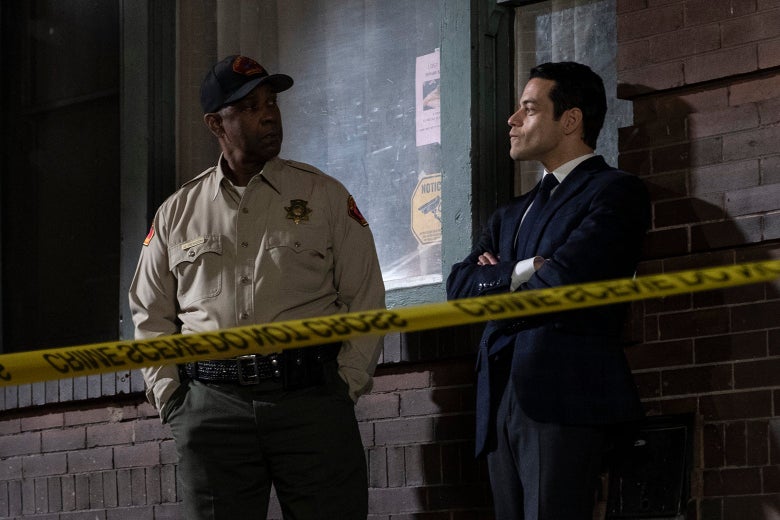
Deke (Denzel Washington) is in L.A. from up north on some menial task, evidence transport or some such. He used to be on the force here, but no longer; his former colleagues don’t have great things to say about him, and they’re not shy about filling in the new guy, Baxter (Rami Malek) on all the ways Deke was found wanting. Mainly that he worked a case too hard, was so obsessed that he jeopardized his career, failed his marriage, and risked his health. Baxter, however, has some sympathy for Deke. He doesn’t know it yet, but he’s a lot like him. He’s about to get a case that will haunt him in a very familiar way, and as Deke says – these are the ones that stay with you.

Deke has the opportunity to say this to Baxter because for some reason Deke sticks around to work the case with him. Totally unsanctioned of course – the dude has to sneakily take vacation from his real job to pursue this one totally against the rules. And Baxter lets him. Together they pursue an elusive serial killer, which leads them straight to Jared Leto. I mean, to Sparma, played by Jared Leto. And Jared Leto’s long greasy hair, distinguished gut, and totally unnecessary hitch in his giddyup – he literally walks around like he just got off an 8 hour horse ride over very rough terrain, only this is L.A. and even creeps like Sparma have a car. Anyway, Deke and Baxter agree that this guy is a Super Creep and that he’s guilty by virtue of just being so obviously a Super Creep. And honestly, Jared Leto so devotedly gives this guy every serial killer accessory he can think of that we openly despise him too, and don’t care much whether or not he’s actually guilty.

Anyway, as Deke likes to say, it’s the little things that add up, which is ironic because director John Lee Hancock, who also wrote those words, can’t even get the big things right. Hancock started writing this movie 30 years ago and it feels like any number of movies that have come out since, many of them much better, and all of them more original by default. But even if it wasn’t overly familiar, it would still lack suspense, or indeed any momentum. It’s a lot of moping around. You’ve perhaps come to see a trio of ostensibly talented Oscar-winning actors doing their thing but what you get is a solid performance by Denzel trapped in a shitty movie that has one of the most disappointing, anticlimactic third acts in cinematic history. The Little Things is available to stream, but why would you? This movie fails to satisfy in any way. You’ve got no places to go, no people to see, but you still have your dignity, and even during lockdown, time is precious.

Saint Maud

Saint Maud is one of those films that will confound you and disturb you while you’re watching, and then haunt you before you even have time to get cocky enough to congratulate yourself for surviving. It is not the kind of horror film that’s going to frighten you. There are no cheap jump scares, no triggering gore. It is simply chilling.

Maud (Morfydd Clark) is a fervently if newly pious woman whose belief bleeds into her work as a hospice nurse. New client Amanda (Jessica Ehle) is a former dancer currently dying of cancer. For the most part they get along but visits from Amanda’s lover Carol have Maud fearing for Amanda’s very soul (which is a matter of some urgency, if it’s not too crude to say). Maud has only recently turned devout (some trauma is vaguely hinted at), and is now of the certain belief that humanity is amoral, lustful, and terribly wicked and needs very badly to be saved. And since God has ever so kindly and every so explicitly told her that He has very special plans for her, Maud connects the dots and finds that perhaps she is meant to be its saviour.

What’s the difference between religious fanaticism and mental illness? Maud’s zealotry is depicted as a compulsion, indeed an obsession. She feels it necessary and right, but there is a gulf between what she believes and what others believe – Amanda specifically, though clearly not solely. However, writer-director Rose Glass leaves a little wiggle room for doubt. Is it possible, is it just the slightest bit possible that God really is speaking to Maud?

Part horror, part psychological thriller, part character-driven drama, Saint Maud can be read in a variety of ways and this expert ambiguity is the film’s coup de grace. Glass has the temerity to respect Maud either way; this dignity, this refusal to dismiss her, is bold and singular. Whether miracle or mental breakdown, Maud is entitled to compassion, which makes Glass’s film all the more deliciously vexatious.

Clark gives a stunning, visceral performance. The story is told almost entirely from her perspective, so where one might see delusion or psychosis, Maud sees only signs from her God, and burning bushes. It’s convincing and disorienting yet Glass always plays it both ways, like that picture of the animal that’s either a rabbit or a duck, depending on how you’re looking at it at any given time. While the intention may be shrouded, Saint Maud is still a deeply satisfying not to mention profoundly atmospheric piece of cinema that’s either supernatural or a psychotic break, and I don’t even care which. It is fascinating, carefully crafted, thematically complex, and fantastically unsettling.

Saint Maud will be available digitally and on demand in North America February 12 2021.

Wander Darkly

Well this was unexpected.

Adrienne (Sienna Miller) and Matteo (Diego Luna) are new parents on their first night out post baby, half giddy, half drunk on the mere thought of that first drink, half on edge because things have been tense, half fighting before they even reach the party. Mathematically that’s too (two) many halves, so let’s just say it’s not the fun and fancy free night out they’d envisioned, and that’s before they get in that brutal car wreck that half kills them both.

I’m only half being cheeky. The thing is, Adrienne wakes up dead, or believes herself to be dead, despite assurances from others that she isn’t, which leaves the couple in a rather, erm, surreal situation. Together they revisit the highlights and lowlights of their troubled relationship, trying to piece together a version of their life where it all makes sense, is all worth while. Whether your soul is actually in limbo or you’re simply experiencing a psychotic break due to trauma, taking such a stark account of one’s life is always a harrowing and naked experience. Interestingly, we get to see the major milestones of their relationship from both sides. There is no impartial witness in a relationship, no official accounting of who is right and who is wrong. But in tallying up their love and their losses, the grief and the guilt, the score actually seems besides the point.

I often have a low tolerance for movies (and stories generally) that go out of their way to be obtuse but this one managed to keep my interest, and harder still, my positive regard. Wander Darkly is effective and enticing, drawing us in to a mystery but always keeping enough momentum that we’re never bogged down in the not-knowing. The film is introspective, ruminative, poetic, experimental. Its sliding timelines isn’t always easy to keep track of, but magnetic performances from Miller and Luna smooth the ugly transitions. Miller mines for emotional gold and finds lots of gems along the way. Luna, meanwhile, runs the whole spectrum from good guy to bad and back again.

A romance crossed with a supernatural thriller, Wander Darkly is unpredictable and uneven, but writer-director Tara Miele has something to add about the complexity of relationships, and even this startling story line has plenty to relate to.