Category Archives: Jay

The Red Sea Diving Resort

In the 1970s, Captain America went to Africa disguised as Captain Israel, where he assembled a crack team of Super Jews, including a harpoon-wielding Hawkeye and a Black Widow with feathered bangs.

Well, okay, that’s not exactly how it happened, and it DID mostly happen.

Ethiopian Jews were being slaughtered in their homes in the late 70s and early 80s, so Mossad agents led families on a 1000km walk to Sudan where, if they survived the journey, they became refugees waiting to be taken to Jerusalem, which was the tricky part. Sudan was receiving a stipend from the UN for each refugee they took in. The refugees starved, but the Sudanese government was not interested in losing easy money. In order to smuggle them out, the Mossad agents posed as hoteliers, actually running a resort, to remove Ethiopians by sea, toward a waiting Israeli Navy Seal ship.

The crew is run by Ari (a bearded Chris Evans), a reckless agent known for running into danger without a plan for getting out. Always by his side, the very courageous local Kabede (Michael Kenneth Williams), for whom this is not a mission but very simply life.
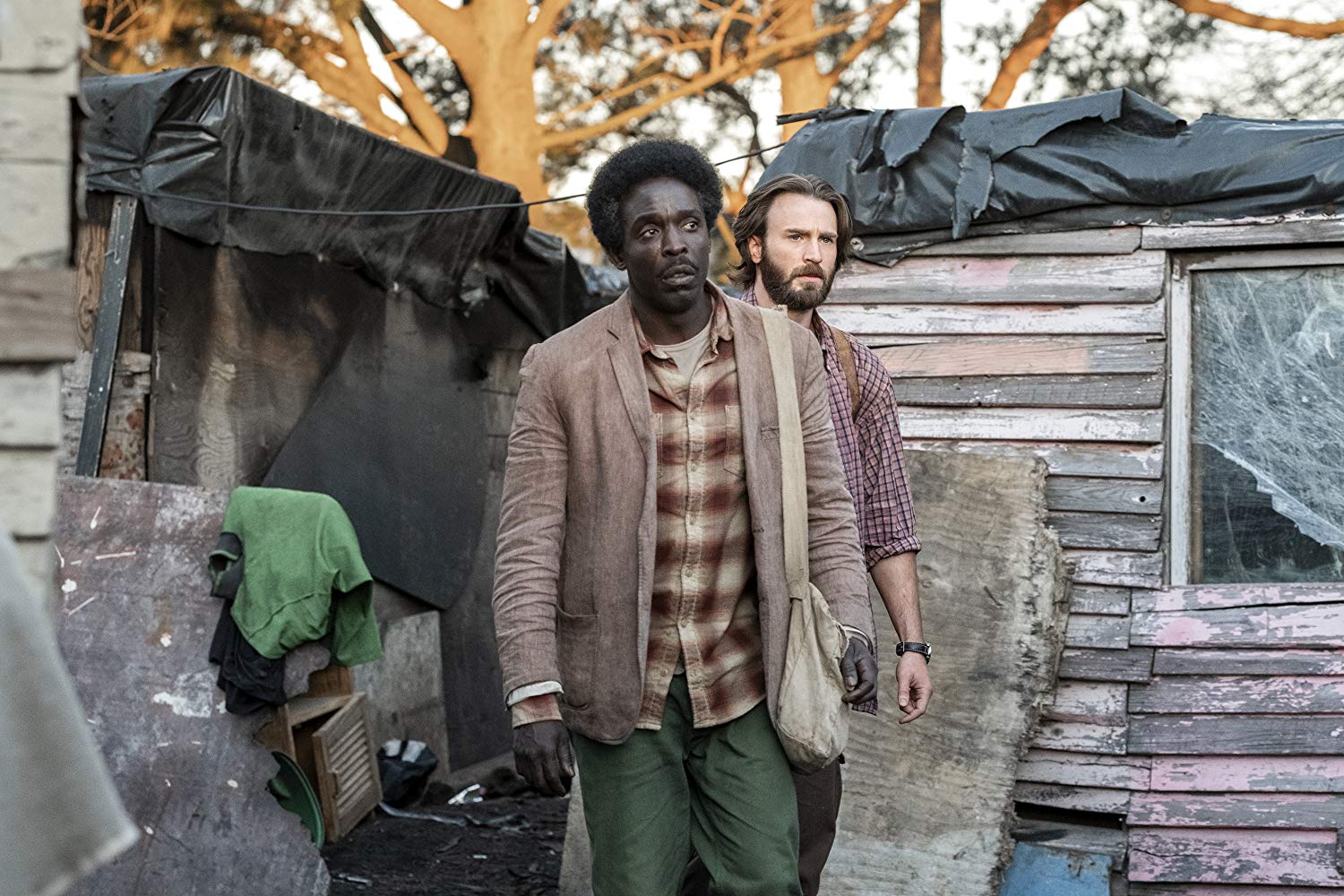
Anyway, I callously poked fun at the casting of Captain America in this film, but it is a genuine problem. Not Chris Evans per se – he’s fine. He’s just too identifiably heroic, and the camera knows it. The story is infatuated with the idea of this rescue mission and it pumps up the hero aspect to 11 while disregarding their humanity. We know the group’s Black Widow (ie, only female component, played by Haley Bennett) is a mother and that she has left her child(ren?) behind for months or years in order to help save strangers but literally nothing is made of it. Who is she? How does she cope? How do the kids? Where are the kids? Ari is also a father, with an ex-wife who is already tired of his bullshit before this story even begins. His backstory is almost as empty as Black Widow’s, but his guilt is exculpated by a crayon drawing that implies his daughter forgives him for his repeated abandonment. What I’m saying is: the Avengers are super heroes who are just doing their jobs. In this case, the Mossad agents are real people with real loved ones and lives back home that they’ve sacrificed in order to save people, not from Loki or Ultron or Thanos, but from genocide, a less-glamourous, real-world problem that most people look away from. But the movie takes the one thing that it’s got going for it and ignores it almost completely.

Okay, scrub that: the film had 2 potential things going for it – the heroes, sure, but also the victims. Because these Ethiopian refugees are perhaps the true heroes of this story, and maybe any story. I’ve always thought that, as bloated as End Game was, the only story I was really interested in is the one they never told – that of normal people on Earth, those left behind by the snap, and those who disappeared because of it. What is their experience? Such a global, world-shifting event deserves some story-telling but never got any (they failed to even really touch on it in Spiderman Far From Home, disappointingly). But in this case, the Ethiopians escape with little else besides their lives, and know they are lucky to have that much. Many are missing children and spouses and parents. Many will lose more along the arduous journey, only to end up in a crowded, unhygienic camp where their bodies are worth money to their captors, so they are given just barely the means to stay alive. And that’s only half the trip: next they’re going to smuggled past armed check points, onto rubber rafts, and raced through the choppy waves of the Red Sea onto vessels that will sail them into a new life, one so different as to be unimaginable from their straw hut lives in Ethiopia. Now that’s a story. But by all means let’s eschew that for more of Michiel Huisman in a speedo.

So yeah, The Red Sea Diving Resort fails to overcome the same tired old tropes. It feels like a compilation of other movies you’ve already seen, but not a best-of compilation, more like a cross-section of the just-okay bits. Which is a weird compilation, I’ll grant you that. Who’d want to watch it? Not me. Not really. Not even for a bearded Chris Evans, still very much in Captain America mode.
UglyDolls

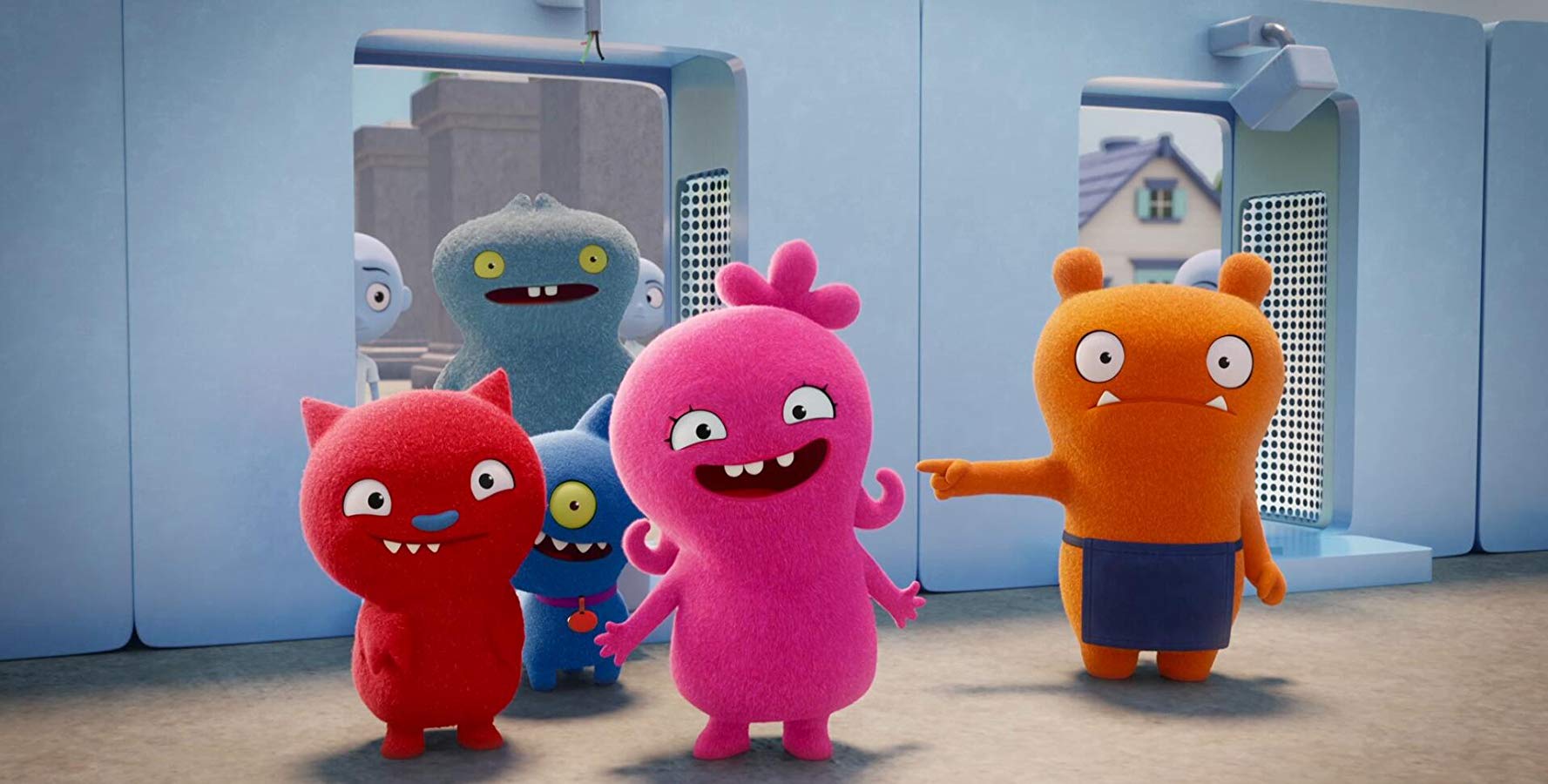
Uglyville is home to some fairly upbeat if misshapen dolls – they’re missing eyes or teeth or limbs – but most seem content. All but one doll, Moxy (Kelly Clarkson), who dreams of going to the “big world” and living with a child who will love her. She gets together a band of misfits (truly the only kind of band that CAN be assembled on this island of misfit toys by any other name), including Lucky Bat (Leehom Wang), Wage (Wanda Sykes), Babo (Gabriel Iglesias) and Uglydog (Pitbull), and together they stumble upon the Institute of Perfection, the last stop between the best dolls and their forever homes.

The Institute of Perfection is run by Lou (Nick Jonas), an alarmingly blonde-haired, blue eyed bastion of excellence. He gets all the beautiful dolls ready to run the gauntlet, the final hurdle to be cleared before being placed in a home. Moxy and gang find these perfect dolls to be outwardly pretty but inwardly ugly – they soundly and definitively and in many cases quite cruelly reject Moxy and friends for looking different.

From the very first frame, you know where this film is headed. We’re teaching kids to embrace differences and to accept imperfections. Sounds nice. But this movie takes an uncomfortably long time getting there and goes through too many catchy songs about the importance of beauty on the way. It makes you really start to sweat all the Hitler references.

In the end, the Uglydolls meet a perfect doll named Mandy (Janelle Monae) who (you may want to sit down for this) wears glasses. And through that hideous physical defect they’re able to bond and together they realize that not only is being weird okay, maybe it’s even possible for a kid to love you that way, in all your freaky glory.

UglyDolls plays like a watered down Toy Story, appealing to only the very youngest of children (my 5 year old and 7 year old nephews preferred to pick up live-action Dumbo over this for a recent car trip, but it was Sean’s recommendation of Shazam that really impressed, which meant we just spent 10 days sequestered in a cottage with kids who couldn’t go more than 5 minutes without singing “Lightning with my hands! Lightning with my hands!” and requesting this new band they’ve just been introduced to through the movie – Queen). Its fuzzy feltness and bouquet of primary colours should serve as a warning that this movie is nothing but saccharine and if you have any other requirements from a film then this one is not for you.


The Hitchhiker’s Guide to the Galaxy

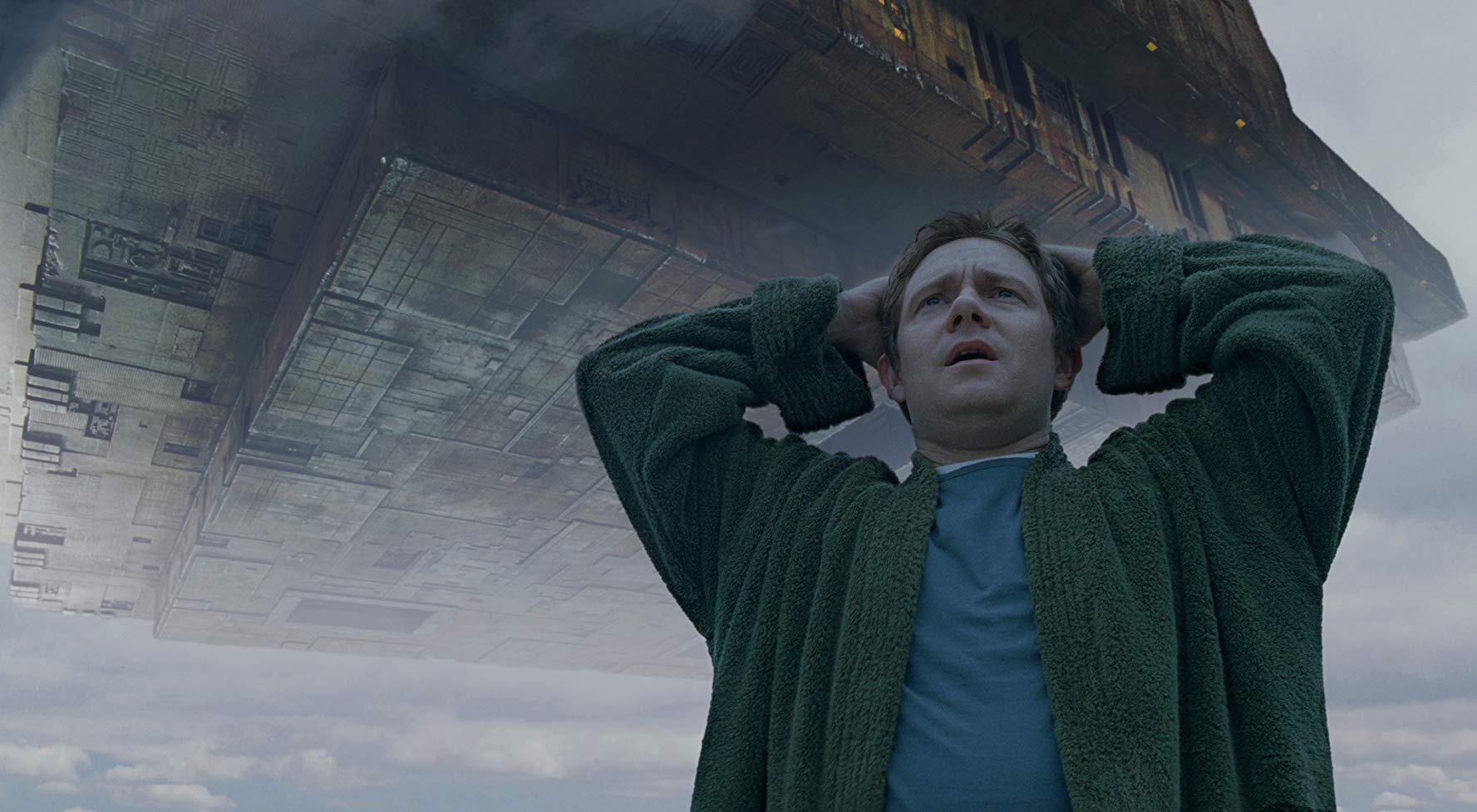
In Canada we have only two seasons: winter, and construction. We are right in the middle of steaming, stinking construction season here in Ottawa, and we’re facing a weekend where the 417, a major highway and our main east-west artery, will shut down entirely. This after a flood season has left our infrastructure crippled and our commutes doubled. Which sort of makes the opening scene of Hitchhiker’s seem a little more likely. In order to make way for an intergalactic superhighway, a little lowly planet called Earth has to be demolished. We meet our hero Arthur Dent (Martin Freeman) just minutes before the Earth’s destruction. He learns that his good pal and towel enthusiast Ford Prefect (Yasiin Bey, then billed as Mos Def) is in fact an alien who can call in a favour to save his friend, but erm, nothing else of human history (don’t worry, the dolphins have already defected – so long, and thanks for all the fish).

They meet up with a clinically depressed robot, Marvin (Alan Rickman), an egomaniacal president, Zaphod Beeblebrox (Sam Rockwell), and most improbably, Arthur’s Earthling crush, Trillian (Zooey Deschanel). Together they’re going to zing around the universe, searching for the Ultimate Question, the meaning of life, a single solitary spot of tea, new chapters for an ambitious encyclopedia, and any remaining shreds of life as they knew it.

Director Garth Jennings bit off more than he could chew trying to adapt Douglas Adams’ influential and beloved work, but you can hardly blame him for trying. Is the movie always coherent? Of course not. If you aren’t familiar with the book, you might find it hard to keep up. If you are familiar with it, there are no doubt bits and bobs that you’ll miss. It is not so much a faithful adaptation as an ode to it, with Adams’ blessing, and mostly by his own invention (such as the sneeze religion helmed by John Malkovich – achoo!). But if it’s a little sloppy, well, what else can you expect from a movie with an improbability drive?

Ivan Reitman and friends actually optioned the film as far back as 1982, thinking it might make an interesting vehicle for Dan Aykroyd and Bill Murray (this is no doubt true). But then Ghostbusters came calling and they were off on a tagent, and Hitchhiker’s languished in development hell, at one point with Hugh Laurie and Jim Carrey slated to appear (I’m less thrilled with that pairing, personally). Douglas Adams wanted Hugh Grant for Dent but I’m so, so glad it went to Freeman instead, who plays the everyman so perfectly he is often overlooked.

In 2005’s finished product, Sam Rockwell steals the show as Zaphod Beeblebrox, basing the character on likely unequal dashes of Bill Clinton, Elvis, and Vince Vaughn. Personally, watching it in 2019, I saw all kinds of his George W. Bush in the role and it gave me a whole new appreciation for a performance I already loved.

Anyway, it’s inevitable that a film adapted from such a great book would fail to live up to it, but I actually give it a lot of credit and find it highly watchable and highly entertaining. So many of the little jokes really do work on the screen, and everyone involved is clearly relishing the opportunity to be involved. It’s hard not to find joy where so much exists.


Stockholm

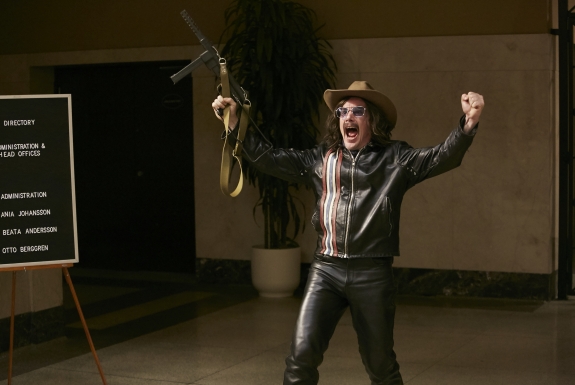
An American cowboy criminal flies to Sweden to host their first hostage situation. I mean, I don’t think he’s particularly interested in setting precedents, which is funny, because as you might have gleaned from the title, he’s about to create a situation that’ll become famous enough to named after it.

Lars Nystrom (Ethan Hawke) holds up a bank in Stockholm, but he doesn’t rob it. Instead, he uses it as leverage to have old buddy Gunnar Sorenson (Mark Strong) released from prison. On a roll, he throws in some extras, like a million dollars cash, bullet-proof vests, and a getaway car – standard bank robber demands. The dude doesn’t have an original bone in his body. He’s also not a planner: he asks specifically for a Mustang, and as someone who has not one but two of them in the driveway, I can tell you, you aren’t fitting hostages in that backseat. It’s a two-door car. When you’re running from the law, you don’t have precious minutes to waste trying to fold up grown-ups into a non-existent backseat.

But anyway. Lars has taken a couple of lovely ladies hostage, which is the kind he prefers. And also a dude, who hid rather than evacuated.

Stockholm syndrome is a condition which causes hostages to develop a psychological alliance with their captors during captivity. Sure it’s strictly irrational, but fear and stress and tension do create a rather specific kind of intimacy. Hostages and hostage-takers may feel like they’ve been through something together. It’s a form of bonding, in a weird way. It doesn’t make sense, but trauma does fucked up things sometimes. Stockholm syndrome is a fucked up thing.

Why would bank teller, wife, and mother Bianca (Noomi Rapace) bond with her captor? Perhaps partly because the cops seem inept. They’re not doing enough to save her and the others. The Prime Minister is not allowing the robbers to leave with hostages, and so they stay, festering in the bank.

Ethan Hawke and Noomi Rapace give terrific performances, but they’re stunted by a script that fails to do justice to the real events it portrays. Egregiously, it fails to sell the syndrome that gives it its title. I never felt a strong bond between captor and captives, certainly not one that would justify the three hostages not only refusing to testify, but fundraising for the dude’s defense. I rarely felt connected to anyone, or moved by anyone and I never felt any definitive chemistry between the characters either. This is not merely a missed opportunity, but supposedly the whole point of the movie, and it’s delivered so weakly it may as well not exist. I will not and cannot recommend what was ultimately a disappointment.

Stoke

Jane (Caitlin Holcombe) is a heartbroken Los Angeles attorney craving something big to shake her out of her depression. She sets her sights on Hawaii, but not necessarily the one seen on postcards. She’s going to chase lava, so she goes to the Big Island and hires two wannabe tour guides in the shadows of erupting Kilauea.

Locals Po (Randall Galius Jr.) and Dusty (Ka’uhane Lopes) are actually cleaners with tourism-dollar aspirations, but that won’t stop them from tricking Jane into their van, and ultimately their lives as the trio sets out on a Big Island road trip with distinct Hawaiin vibes.

Hawaii itself is the epic fourth character, asserting itself in nearly every scene, from its lush landscapes and hypnotic music, to the spirit of its people and the cadence of the natives’ speech.

Sean and I were lucky enough to visit Hawaii just a few years ago and were unprepared for but completely swept away by the natural beauty of the land and the welcoming hospitality of its people. We toured several of the islands, Big Island included, so it was a real treat to see some familiar sights in this film. But more than that, Stoke (a lava drama) shows us the side of the island little seen by visitors. It’s a reminder that volcanoes don’t perform for tourists, and an eruption has real-life devastating consequences for the people who live there year-round.

Stoke is a bit of a wild ride, embracing its independent roots by taking inventive chances and boldly charting its own course. In a strong cast of actually-Hawaiian Hawaiians (we’re looking at you, Aloha), Galius Jr is a stand-out for his unforgettable smile and screen presence. Directors Phillips Payson and Zoe Eisenberg have put together a thoughtful piece about the healing properties of America’s most beautiful state.

The Best of Enemies

Picture it: Durham, North Carolina. 1971. Ann Atwater (Taraji P. Henson) is a civil rights activist. C.P. Ellis (Sam Rockwell) is the Exalted Cyclops of the KKK (the KKK should clearly not be allowed to make up their own titles). The two are about to clash over school integration.

City council is far from unbiased. Some will physically turn their backs on a person of colour, others will call on their friends in the klan to bolster their numbers. It’s not exactly the kind of town ripe for integration, and it likely wouldn’t have occurred to them had the black school not burned down, forcing some drastic decisions. Bill Riddick (Babou Ceesay) is given the unenviable, perhaps insurmountable task of mediating the two sides to negotiate a compromise, one city council will abide. A charrette, he calls it, though no one’s ever heard of the thing. or a collaborative, intensive community planning session. Riddick is a black man who has the magical ability to earn concessions from either side, but the “sides” aren’t exactly fairly drawn. If black vs white is enough to make your skin crawl, imagine black vs racists, men in hoods who won’t even concede that people of colour are people, who would wish the people sitting beside them dead, and in fact have taken shots at them.

1971 isn’t that long ago. It’s during Henson’s lifetime, and Rockwell’s.

The costume and makeup department have had a whole job of de-sexualizing Taraji P. Henson for this role. Her face is unadorned, her boobs are down to her belt. But her strength and presence are as keenly felt as ever.

The charrette ends up being a fascinating glimpse into a community – in 1971, as an attempt at a solution, and in 2019 as a reflection of the time. It’s a great reminder that it’s much harder to hate people you know. Humanizing the other side is always an eye-opener. These select community representatives spent a week together, discussing the issue, but also eating lunch side by side and taking field trips, sitting knee to knee on a yellow bus.

As interesting as I find the topic, the film itself is a little uneven, and thus, a little difficult to like without reservation. Writer-director Robin Bissell sympathizes with KKK president Ellis enough to give him a full backstory: a disabled son, a struggling business, an ambivalent wife. Meanwhile, Atwater, a real-life grassroots activist who fought the war on poverty, is given much, much less. Still, the two become…friends? Perhaps too strong a word. But familiarity reduces contempt. They are no longer just stereotypes to each other. And the fact is: perhaps this de-segregation thing is better for poor white folks than city council wants them to know.

This is how barriers are broken: regular people just listening to each other as best they can. That’s a lesson that still needs learning. That we have the power to influence each other, not by arguing, but by trying to understand. Sure it takes courage to stand up to your enemies, but it takes far more to stand up to your friends when you see that they are wrong.

The Great Hack

We love the internet so much, we sold our souls to keep it growing. There is literally no such thing as privacy online, but we like Facebook and Youtube and Instagram so much, we just kind of shrug our shoulders as we tick those ‘I’ve read the terms & conditions’ boxes without so much as scrolling through. But even if we read all that fine print, and knew exactly how invasively these companies were mining your personal information, we’d still grant that permission because we’re so dependent on social media platforms and apps that walking away at this point feels hardly plausible.

The Great Hack is a documentary that looks specifically at Cambridge Analytica, which is a company that makes its money by gathering and weaponizing your Facebook likes. Data is the most valuable asset on Earth – more valuable than oil. YOU are the commodity and Big Data is doing everything it can to know you, intimately, without you even realizing.

Cambridge Analytica has 5000 data points on every American voter. Think about that. Could you even say 5000 different things about yourself? This company can. It has scanned your private messages, your profiles, your preferences. They know what you watch, what you turn off halfway through, what you share, what you save, what you click on, what you scroll by. We all know that this data has been used for several years to make ads tailored to us. If I’ve been looking into dehumidifiers, suddenly my feed is suspiciously full of ads for dehumidifiers. But Big Data is doing something much more sinister than that. It is using your information to subvert democracy. During Trump’s run for president, his campaign spent one million dollars per day PER DAY on Facebook ads. They knew what you needed to hear in order to consider Trump. They also knew how to turn you against Hilary. They targeted you. They made videos just for you. They made sure you only saw what they wanted you to see. Cambridge Analytica is a full-service propaganda machine, and you don’t get a choice in the matter because they find you wherever you are – in your emails, your online shopping, your dating profile, your mother’s Facebook account.

Facebook Facebook Facebook. You’ve heard that a lot already, and for good reason. Much of this deviousness is happening on Facebook. All these personality quizzes? Data mining. Questionnaires? Data mining. I left Facebook a while ago because I knew I just couldn’t trust it. I try to be smart about my online consumption, but the truth is, it doesn’t matter how smart you are. If a friend of yours does all those personality tests, you’re fucked. Because they give the app permission not just to look into their own profiles, but those of all their friends. And often we know who these people are. I’ll give you a hint: it’s my mother. Just 3 days ago, she shared yet another, one in which she shared answers to questions like # of marriage, of divorces, of children, of pets, of vacations, etc etc etc. Thanks Mom! Facebook OWNS our data, our pictures, every single bit of info we’ve ever shared on there. They own the quizzes you take and the videos you watch. They own my mother’s travel iternaries, and the pictures she posts of her grandkids. They know where she works, where she went to school, who her classmates were, who her neighbours are, where she eats dinner on a Friday night. Because she tells them. She volunteers the information and Facebook allows companies like Cambridge Analytica, which refers to ITSELF as a behaviour change agency, to come in and scrape every last little valuable detail from people’s profiles. And they’re using that information for GLOBAL POLITICAL MANIPULATION. Facebook is DESIGNED to get you to give up your info, it CREATED tools to help companies target you, it made BILLIONS of dollars selling your data to the highest bidder – nay – to every bidder – without your true, informed consent.

Your data is being used against you. It’s being used to shape world politics. It’s being used to stoke fear. And it’s happening in the same place where you share recipes and baby news and dog pictures.

Cambridge Analytica was partly owned by the family of Robert Mercer, an American hedge fund manager who supports conservative causes. STEVE BANNON was their VP. They did work for Ted Cruz, Donald Trump, and Brexit. Through paid advertising on Facebook, it received clicks from 270 000 users. But those 270 000 Facebook users gave the app permission to also mine the data of everyone in their Friends network. From those 270K users, Cambridge Analytica then had access to 87 MILLION people. Are you confident you aren’t one of them? Or do you maybe have a mom like mine, or an aunt who overshares, or a friend who always tags you? Chances are, someone you know loves to do quizzes: What % Billie Eilish are you? Can we guess your age based on your Disney movie preferences? Are you more Miley Cyrus or Hannah Montana?

Anyway. The Great Hack is streaming on Netflix right now, which also knows an unsettling amount about you, if we’re being honest. So it’s important that we start thinking about ways to protect ourselves, personally, collectively, nationally, globally. By the time my mom’s grandkids are adults, they’ll have 70 THOUSAND data points about themselves, and if things continue as they are, absolutely NO rights to them. We can try to stop our data leaks, limit the info we share, but as citizens of the 21st century, there is no way to live completely outside the matrix. So our information continues to be sold, and we continue to be manipulated. What are we going to do about it?

The Art of Self-Defense

Casey (Jesse Eisenberg) is a meek man. He gets bullied at work by the very clique he wishes most to belong to. He photocopies their favourite tittie magazine in black and white xerox to study it, and by doing so, completely misses the point.

One night, coming home with dog food, he is attacked by a motorcycle gang and beaten within an inch of his life. He survives and decides to make some changes. He signs up for karate lessons at a dojo where we encounter toxic masculinity at its most pungent. He learns punches and kicks, but more importantly, how to be a MAN, a manly MAN: to listen to metal, to learn German rather than French, to replace his beloved wiener dog with a more aggressive variety. He’s also encouraged to beat people as severely as he was beaten. These changes do in fact make him more confident. And also a dick.

Nothing in this film is played for laughs. In fact, it’s delivered largely in deadpan monotone, a stylistic choice applied fairly evenly throughout the cast. It takes a minute to get used to this, or get over it maybe, but it’s also an important clue that we’re investing in satire and critique, and if the film seems a little outrageous, a little over the top, well, that’s the point.

Casey is quickly swept up by the dojo’s charismatic instructor, Sensei (Alessandro Nivola), and hardcore brown belt but second class citizen Anna (Imogen Poots). If it sounds like a cult, good. It is not not a cult. But it’s also kind of karate, a homoerotic, needlessly violent, testament to testosterone. But when Casey gets promoted to Sensei’s mysterious night classes, it’s a whole new world of brotherhood, brutality and a special brand of hyper-masculinity that requires constant proving.

The humour is dry and dark as hell; in this script, a well-chosen word can wound as much as hand or foot. Or gun, though guns are for the weak. Eisenberg is well-suited for the role; he channels nascent neuroses as well as the yearning to be more. Writer-director Riley Stearns is perhaps a little inconsistent, but is brave in his stinging skewering of American masculinity, economic with words but generous with derision. It’s a little hard to take at times, but patience will be rewarded.

Tig

Tig Notaro is one of my favourite comedians. Although always an amazing, deadpan comedian, she hit the popularity rocket when she did a ground-breaking set the day after she was diagnosed with cancer. She just stood on the stage and bravely free-associated her new reality, and people were floored. Floored.

I mean, if you know her story at all, cancer was just the cherry on top. Weeks before, she’d been in the hospital in crazy pain with a life-threatening diagnosis of C-Diff. She got out of the hospital just in time to make her mother’s funeral, who’d died suddenly after a freak accident, falling in her own living room and hitting her head, a seemingly benign incident that killed her 24 hours later. Then Tig went through a break up, though moments before they’d been considering starting a family. And then: breast cancer. So it was a tumultuous few weeks, and you can only imagine her frame of mind when she wandered on stage that famous night. Although, technically you don’t have to: Louis C.K. was in the audience that night, and helped her put out an album of that set, which for obvious reasons could never be recreated.

So in the wake of her having a double mastectomy, she was suddenly very famous and a very sought-after comedian, one who now had no material since she could never re-perform the cancer bit. Crazy. Tig (the documentary) is a clever reflection upon that crazy time in her life, with the help of similarly funny, famous friends like Bill Burr and Sarah Silverman.

I love stand-up comedy. Like, LOVE love. I love how accessible comedy has become thanks in part to Netflix, but also satellite radio and Spotify – I listen to lots of podcasts in my car these days. Tig is among my favourites, and Sean and I meant to see her at Just For Laughs last year, only she cancelled her set at the last minute, but we saw other favourites of mine, like Maria Bamford, Fortune Feimster, and Carmen Esposito. This year we’re seeing Marc Maron and Fred Armisen. But as much fun as it is to see a live set, it’s such an exciting time to be able to supplement those with bonuses, of which I’d say that this documentary is most definitely one. It’s an incredible story either way, but she’s also a comedian that you just need to get into. She has a very watchable, very bingeable show as well, called One Mississippi. Maria Bamford had one called Lady Dynamite. Jim Gaffigan had one less inventively titled The Jim Gaffigan Show (do you suppose men just reflexively have to slap their names all over things?). Anyway, it tickles me to no end when comedians pop up in things, and I will continue to seek them out, because to my mind, comedy is the absolute hardest thing to get right. Comedies are largely underappreciated and downright ignored by critics and award-givers, but that’s absurd. When humour works, it unites us all in such a base, instinctual way. It’s glorious. But as you know, a lot of humour comes from pain. It takes a special talent to extract the funniness from a horrible situation.

And maybe that’s what makes Tig so special. That she was willing to use her own personal hell, her own heartbreak, not only to entertain us, but to make us whole. Comedy is healing. Laughing is medicinal. Give yourself a Tig injection; it keeps the doctor away.

The Lion King (2019)

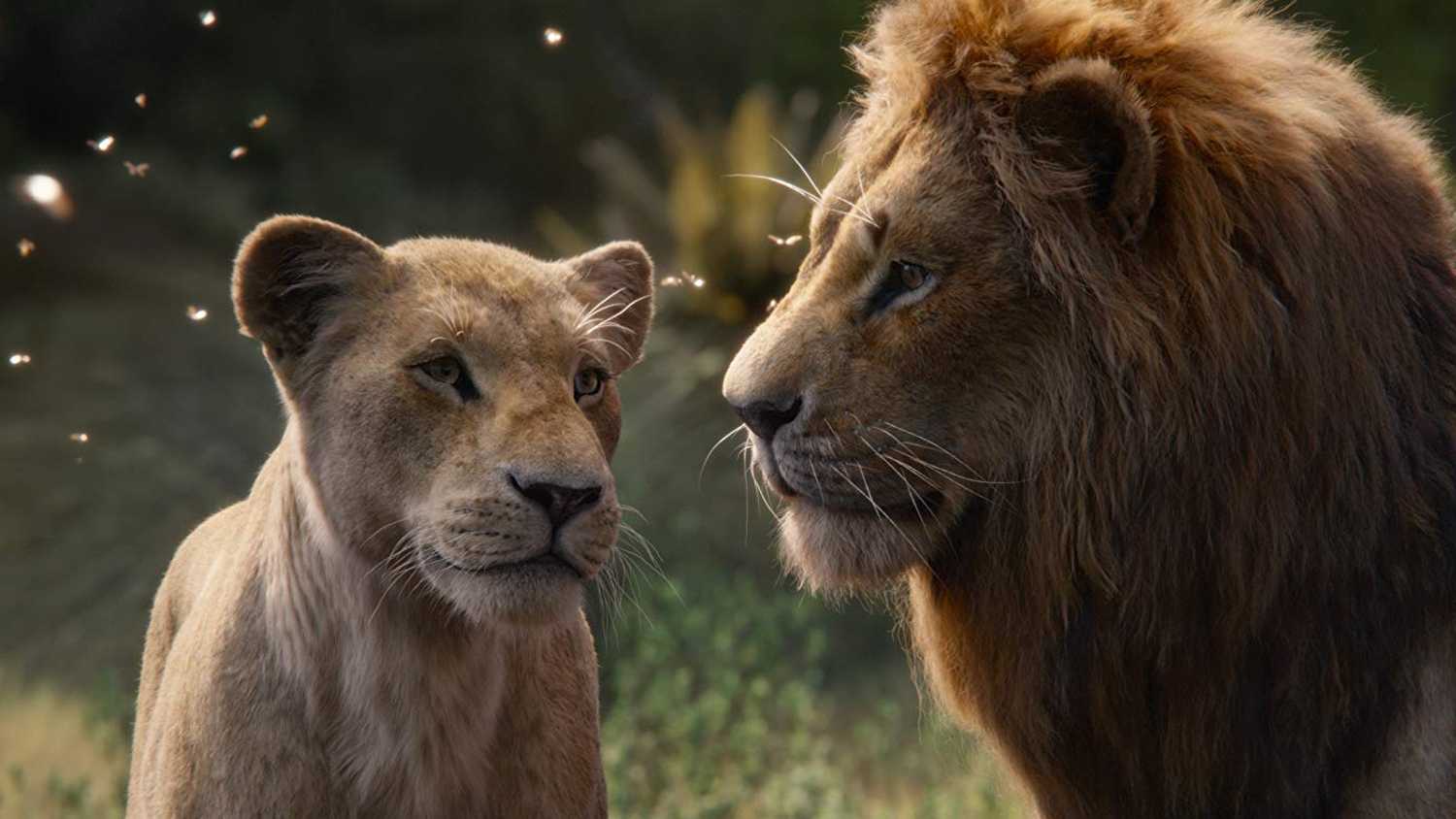
I’m still unconvinced by all these Disney remakes, and I’m particularly skeptical about “live action” remakes that aren’t actually live action at all, but just fancier animation. That said, I didn’t hate The Lion King (2019), and that’s head and shoulders (or can I say mane and tails) ahead of where I thought we’d be. I was fully prepared to hate this but instead the CGI animation’s beauty and realism swept me away. But while that sounds like a strength, it’s also the movie’s weakness.

The thing about traditional animation, like the original The Lion King (1994), is that literally ANYTHING can happen in a cartoon. They’re not constrained by any limitations. Your heart can awooooooga out of your chest when you’re in love, your feet can pedal a car, you can literally levitate off the ground in sheer happiness. And yes, a cross section of jungle animals can come together in perfect harmony.

The problem with this gorgeous, accurate, and photo-real animation is that these lions, who look exactly like the ones you see on National Geographic (minus the buttholes and genitals, Sean wants you to know), are still being made to talk. And sing. But not dance. That would be crazy. So director Jon Favreau and company are asking you to embrace the realism of Scar, who has none of his cartoony presence, but suspend your disbelief enough to invests in his sibling rivalry and Hamlet-style ambition, but then not be too disappointed when they drastically cut his big musical number.

Recently, while reviewing the earlier Toy Story movies, I noted, with some wonder, that Woody has 229 animation points of movement in his face. But while The Lion King’s animation WILL astonish you down to the dew drops in a spider’s web, the animals’ faces remain nearly blank. Their mouths move minimally, to indicate that they are speaking, but there’s not a lot of expression going on there, and I can’t help but feel that this gets in the way of my investing in them emotionally. The original Simba cried when his father died. He was a mere cartoon character, but I felt for him. When I re-screened the movie recently, that scene nearly broke me, reminding me of my nephew and his relationship with his dad. The new movie just couldn’t move me in the same ways.

And it’s not just the emotion that’s lacking, it’s the joy. I Just Can’t Wait To Be King is one of my all-time favourite Disney songs, but it’s not quite the same because in “real life,” ostriches don’t allow lions to ride them. So I’ve heard. And it’s hard to get zebras and giraffes and hippos to agree on choreography. So the song still sounds great, but there’s a little less pizzazz to the musical number.

Speaking of songs: you may have heard Beyonce is on board, voicing the grown-up Nala, and contributing an Oscar-eligible brand new song to the film’s soundtrack. I sort of thought I might miss some the iconic voice work from the original film: Matthew Broderick, Nathan Lane, Jeremy Irons. But in fact, the 2019 film does an excellent job of filling those roles. It’s different, but it works. Donald Glover, Chiwetel Ejiofor, John Oliver, Alfre Woodard, Keegan-Michael Key, Seth Rogen, Billy Eichner: it’s a tall list, packed with talent, and everyone’s working at peak capacity. But I will say: it’s actually really great to have James Earl Jones return in his role as Mufasa. First, it seems impossible to replace him, and harder still to find someone with balls enough to try those step into those paws. But mostly it feels like he is passing the baton; he’s a link from the old to the new (it’s been 25 years!) and it is comforting as heck to hear that voice again.

Most of The Lion King 2019 edition is a toned-down recreation of the original, but there are a few new scenes, expanded roles for Timon & Pumbaa, and especially for some of the female members of the pride, drawing inspiration from the Broadway musical where Nala and Sarabi are featured more prominently. I mean, if you get Beyonce, you use her, ya know?

I suppose if you’ve never known another Lion King, this one has a lot to recommend it. For fans of the original, this one won’t really compare. But if you’ve got room in your heart for two Lion Kings, you might just feel the love (tonight).