Have you met Moomintroll? Inspired by the stories of Tove Jansson, Moomintroll brings his adventures off the pages of popular children’s books and onto the big screen – it’s available on DVD and VOD right now.
With an all-star voice cast and music composed by Moomins’ biggest fan, Bjork, this little movie is hitting plenty of high points.
With the help of his father, Moominpappa (Stellan Skarsgård), Moomintroll (Alexander Skarsgård) and his worried friends embark on a journey to the observatory to find out why everything in their valley is covered in thick grey dust and the sky continues to get redder by the day. They discover a comet is heading straight for them, but can they make it back to Moominhouse to get everyone to safety in time?
The Moomins are the world’s favourite troll family, and they’re brought to life with the help and voice work of Max von Sydow (The Exorcist, Star Wars: Episode VII – The Force Awakens),Alexander Skarsgård(True Blood, The Diary of a Teenage Girl), Stellan Skarsgård (Good Will Hunting, The Avengers), Mads Mikkelsen (Hannibal, Casino Royale), Peter Stormare (Fargo, 22 Jump Street), andHelena Mattsson (Iron Man 2, American Horror Story: Hotel). Do you think this gang can work together and overcome obstacles to beat the comet and save everyone from disaster? Skarsgårds to the rescue!
Will the Moomins win over North America? Only time will tell.
If you’ve seen this movie or know the books, let us know what you think!!
In Rebel Without a Cause, James Dean used an Ace Comb and suddenly every cool teenaged boy in American had to have one, which meant a huge bump in sales for the company. Product placements in movies are way more effective than traditional advertising because when placed within the context of a storyline, we become emotionally invested in the image. Plus, you won’t fast-forward through the movie like you would over a commercial.
Man of Steel made $160 million dollars before it was ever released in theatres because there were A HUNDRED products either scattered throughout the film or tied-in afterward. Did you catch them all? Nikon, Budweiser, Sears, 7-Eleven! The producers were all over free money like it was Star Jones’s wedding.
Not all product placements are so cringe-inducing. In Steven Spielberg’s E.T., Reese’s Pieces were actually part of the plot. In the original script, it was M&Ms Elliott used to bribe E.T., but Mars wouldn’t allow their candy in the film if they couldn’t see the final script, so Reese’s Pieces stepped up and made history. Hershey didn’t pay a cent, but they did provide the movie with 1 million dollars worth of free tie-in advertising. Worth it? They saw a 65% increase in sales during the film’s run, so I’d say yes.
The James Bond movies have always been a potpourri of product placements, from fancy-schmancy BMWs and Omega watches to elaborate vacation destinations. But Heineken trumps them all: they paid a reported $45 million dollars to be in Skyfall. And it would be worth a pretty penny to see James, renowned for preferring a martini, to be caught drinking a beer. It’s a sad day when film makers are willing to forgo characterization, history, tradition, and story for the all-mighty dollar, but it’s not just one dollar, it is after all 45 million of them. How many cars can you smash up for 45 million? They destroyed about $34M worth in Spectre.
Speaking of cars, let’s segue to The Italian Job and their iconic use of the Mini Cooper, which became the star of the movie. BMW provided 30 Minis to be used in the film and they saw a 22% rise in sales that year – not bad for a feature-length car commercial. I even rode an Italian Job roller coaster once where the cars were in fact little Minis. The movie made people reconsider the Mini Cooper – what was once thought to be a ‘girly’ car was no rebranded as sporty, speedy, and cool.
Cool is always being sold in the movies. In 1983, Ray-Ban was thinking about cancelling their Wayfarer line when it suddenly got a big bump thanks to Tom Cruise in Risky Business. He made the sunglasses cool again, and the brand attributes the sale of 360 000 pairs to the movie. So you can bet that 3 years later they were only too happy to enter into partnership with Top Gun, which this time high-lighted their Aviator line, which gave them a nice 40% increase.
There’s a battle in Hollywood for King of Product Placement: will it go to director Michael Bay, or to Adam Sandler? Michael Bay is notorious for cramming his movies full of products for sale so they look more like fast-moving catalogues that films. Adam, on the other hand, is much more frank about his brands. And that’s because, embarrassingly, the products in his movies are usually there because he loves them, not because he makes money off of them. “Sandler Marketing” is the shining beacon of product placement, because it’s not a blink-and-you’ll-miss-it can of Diet Pepsi, it’s a blatant shout-out. In Happy Gilmore, it’s actually a plot point that the golfer becomes a spokesman for his favourite sandwich shop, Subway – he’s seen eating a sub while wearing a Subway t-shirt and SHOOTING AN ENTIRE SUBWAY COMMERCIAL. It’s unclear whether Subway paid a dime for this, but that movie was also responsible for increased ratings for The Price is Right, so anything is possible.
Michael Bay, on the other hand, goes another route. You may consider that his Transformers franchise is already advertising since the series was created to sell toys. But that’s not enough anymore. Transformers #4 was nicknamed Advertising In Disguise for the sheer amount of branding jammed into its bloated corpse. The use of GM cars for all the Autobots is obvious enough, but Bay doesn’t have time for subtlety. What he does have time for: a transforming Xbox, Mountain Dew vending machine, and Nokia cellphone.
This stuff is so rampant that there’s actually an awards ceremony to pat people on the back for managing to stuff brands into movies: the Brandcameo product placement awards. Age of Extinction of course took home the trophy the year it was released (ironically it was still sued by a Chinese company for failing to include their logo), with Gone Girl a close second. Apple took home a special prize for overall product placement, having appeared in The Lego Movie, Captain America: The Winter Soldier, and in fact in 9 of the 35 highest-grossing films last year. The Theory of Everything also took home an award for marrying an Oscar-bait biopic with product placement (remember the bit about Tide? It wasn’t Tide in the original script.) These awards are always held on Oscars Eve, and this year it wasn’t Apple but Mercedes taking home the overall prize, having appeared in Furious 7, Jurassic World, Spy, 50 Shades of Grey, Focus, and Spectre. Meanwhile Apple managed a paltry Daddy’s Home, Sisters, Our Brand is Crisis, The Last Witch Hunter and The Intern. Achievement in Shameless Product Placement, a title I can’t help but love didn’t go to a movie this year, it went to a person: Mark Wahlberg. He appeared in the movie Entourage as himself, wearing a hat advertising the bottled water he’s invested in, and a t-shirt advertising his own line of body building supplements which he launched in conjunction with his body building movie, Pain and Gain. Meanwhile his other movie, Daddy’s Home, had a whole subplot about Indian motorcycle, for which he is a paid spokesperson, and which sells a “Mark Wahlberg line.”
And the Lifetime Achievement Award went to Pepsi for a veritable orgy of product placement. Last year it appeared in the likes of Tomorrowland, San Andreas, Ant-Man, and Jurassic World. It’s been in Twilight, Moneyball, 127 Hours, Fight Club, Gone in 60 Seconds, Tron, Salt, The Spice Girls Movie, Steve Jobs, Basic Instinct, Election, American Gangster, X-Men: Days of Future Past, Snakes on a Plane, The Blindside, Twister, World War Z. In Home Alone, it garnered a “Fuller, go easy on the Pepsi.” In Big, Tom Hanks’ man-child installed a Pepsi vending machine in his apartment. Pepsi vending machines have taken beatings in several Terminator movies. It’s also been beyond some meta-product placement, like the Doritos (owned by PepsiCo) breaking of the 4th wall in Wayne’s World, and the same basic gag being done by George Clooney in Return of the Killer Tomatoes. But are either of these half as memorable as Joe Manganiello’s stripper routine in Magic Mike’s XXL gas station scene? Didn’t think so. Touché, Pepsi. I raise my glass to you.
Today is a momentous day at Assholes Watching Movies because we’re giving out a prestigious award to the two most hard-working guys in Hollywood, Mark and Jay Duplass. These two have so much hustle that there’s hardly a corner in all of dusty Los Angeles that they haven’t conquered, so when we called up Queen Bey herself to crown them with all the glory implicated in this event, she didn’t hesitate to say yes. To be fair, Rihanna and Katy Perry also accepted but those girls are so confused they couldn’t stop crowning themselves. So, Jay & Mark, in the name of Beyoncé, with the power invested by her entire Beyhive, I now pronounce you Most Industrious Assholes.
Just who are these indefatigable guys? Jay you may know from the show Transparent, while Mark’s claim to fame was The League. Then they both appeared on the show they wrote and directed themselves, Togetherness. But that’s just what they do in their spare time. They’re also writing or producing or directing or micro-financing movies pretty much round the clock. Movies are either their passion, or their death wish.
“I consistently go to therapy and work on this one issue. … ‘How do I be a workaholic, do what we love to do, and not die of a heart attack, destroy myself and my family, and keep my friends?’” – a commendable insight from Mark.
The Duplass brothers have been at heart of the Mumblecore movement for a long time. Mumblecore movies are a subgenre of indies that are known by their incredibly small budgets, their “natural” (read: amateur) acting, with an emphasis on dialogue over plot, lots of which may be improvised.
Together they’ve written and directed The Puffy Chair (it debuted at SXSW, which is where the Mumblecore genre was first identified in 2005), Baghead, Cyrus, Jeff, Who Lives at Home, and The Do-Deca Pentathlon. They’ve also produced or executive produced Adult Beginners, Creep, Tangerine, Safety Not Guaranteed, The Skeleton Twins, The Overnight, and half a bazillion more (or less). These dudes are busy. And if the days start growing magical 25th and 26th hours, they’ve also got production deals with both HBO and Netflix, plus they’ve got a book deal at Random House so they can school us in the art of collaboration, which is a rarity in the ego-driven business of Hollywood.
Talented, busy, and honourable: now that their names have bank, their production company isn’t just about churning out Duplass stuff. They’re also bringing up lots of their friends along with them. They’ve got enough pull to make pretty much whatever they please, but they’re sticking close to their humble beginnings. The brothers are famous for bottom lines of less than a million dollars, and they always come in under budget. With their success and auteur status they’ve recently been asked to helm a real popcorn movie (shh – a superhero one!) and of course they turned it down, unwilling to make the kind of compromises that would entail. “We’re not making that level of money [of directing a blockbuster franchise],” Jay says. “But we don’t need that level of money because we lived like starving artists for 15 frickin’ years. It’s like, we don’t need things. We just like to make things.”
Jay and Mark aren’t just running their own little empire, they’re changing the industry as a whole. “There’s no excuse not to make movies on the weekend with your friends” says Mark, and you know he really, truly means it.
Is cynicism a sub-genre yet? Because it kind of should be. American Psycho. The Wolf of Wall Street. Network. Fight Club. I assume that Kill Your Friends was hoping to rub shoulders with these Kinds of Nihilism, except it isn’t quite clever enough to be admitted to the club.
It’s about the music business in London, circa 1997. Certainly a heady time to be an A&R man, which is exactly what Steven Stelfox (Nicholas Hoult) is. It’s the height of Britpop, and business is booming. If you find the next Oasis, or hell, the next Spice Girls, you’re made. But one misstep can also mean career suicide. It’s a super competitive industry, and both the screenwriter (John Niven) and the director (Owen Harris) have decided to bonk you over the head with this fact. And when, after the first 10 minutes or so, you’ve been completely bludgeoned with this theme, they yank open your jaw and force-feed it to you for 90 minutes more until you’re veritably choking on it.
Hoult is fun to watch. He’s doing the heavy lifting in this movie, out-acting the material he’s given. But his character is one-note, and it’s the exact same note as the movie in its entirety, so nothing sticks out. The bitterness is unending. Kill Your Friends aims to be the blackest of comedies, but when everyone is horrible all the time it really dulls your senses. It’s a grueling film to slog through without a single redeeming character so you can’t emotionally invest. Stelfox is pushed to further and further extremes but you won’t care an iota because nobody deserves to get out of this with their dignity intact.
To their credit, they spared zero expense on the soundtrack: Blur, Prodigy, Radiohead, The Chemical Brothers, Oasis. It reminds you what a good time it was to be alive in the late 90s. It also makes you angry that they’ve failed to live up to these bands. Almost certainly there’s an interesting tale here to tell. Kill Your Friends has no idea what it is though, and hopes you’ll be impressed with blood and cursing instead, which is almost the same as story, right?
When it comes to sports movies in general, and cheer leading ones in particular, we’ve seen the gamut: we’ve seen big, decisive wins, tragic near misses, hard-earned second places, and undeserved firsts. Canadian-born director Christy Garland shows us the side rarely seen in movies but always there in real life; she shows us the losers.
In Cheer Up, we meet Finland’s second-worst cheer leading squad. On the heels of a humiliating loss, Garland explores what it takes to keep going in the face of defeat. Where will the girls find motivation? The documentary follows three of the women in particular – coach Miia, and team members Patu and Aino. We soon realize that their struggles and failures are not just confined to the gym. Miia’s personal life is on the rocks, Patu is grieving her mother while her father impregnates a new girlfriend, and Ainu follows the highs and lows of first love, and all the teenage angst that comes with it.
Actual cheer leading is quite minimal in the film, but team practices tend to be full of tears, tumbles, and bloodshed. Miia travels to the cheer leading mecca of the world, Texas, to seek inspiration but finds that their aggressive, winner-takes-all spirit just doesn’t translate back home.
The sum of all these parts is a stark look at the emotional toll of constant failure. Cheer Up isn’t just a title, it’s an admonition. These girls are the bleakest, saddest, most serious cheer leaders you’ve ever seen. Smiles are a scarce commodity. Despite their lack of success, Garland never loses respect for her subjects. The young women are shown to be complex, thoughtful, and strong – a big stretch from the sport’s usual Texas-sized cliches of empty pep and ponytails. It’s refreshing to remember that not everyone goes home with a trophy. For these women, and many others, success will have to be defined elsewhere.
This movie premiered at the Hot Docs film festival in Toronto; this review first appeared at Cinema Axis, home of many more excellent Hot Docs reviews.
In this version of the future, your feelings are genetically “turned off” in the womb. People are no longer subject to their moods, their intuitions, their base emotions. Everything is pleasantly flat. Nothing bothers them. But some are subject to a disorder in which those feelings are somehow switched back on. This disease is fatal – if you aren’t driven to suicide, you’ll be euthanatized, because being the only sensitive person in a void of flat affect is simply too much to bear.
Silas (Nicholas Hoult) contracts the disease. He’s given medication to try to suppress his feelings and is told to hope for a cure, but he knows that by stage 4, he’ll be given a painless death and that’s it. This world without emotion feels rather cold and lonely to us, the viewers, but the people living it don’t seem to notice until they come down with the disease, which sets them even further apart from their peers. But the one good thing is that Silas can see that his work mate Nia (Kristen Stewart) must also be infected. She hides her disease from others but cannot escape his awakened intuition. The two inevitably fall in love, though “coupling” is distinctly prohibited. The only way they can be together is to leave society and head for the outside world, where primitive humans still exist.
The film is well-realized and quite stylish. The best part is the acting. I hate to admit it, but this is Kristen Stewart’s least lip-biting role yet. She and Hoult have tangible chemistry, and for a couple of kids who are experiencing sexual urges for the first time, the film is surprisingly sexy. Guy Pearce and Jacki Weaver lend a lot of credibility in their supporting roles, their performances add urgency and intensity to the proceedings.
The problem, however, is with the story. The truth is, it just feels recycled. It feels like you’ve seen this before. It’s like every second Margaret Atwood novel and does little to distinguish itself from other movies in the genre. What it doesn’t borrow from Atwood it steals from Shakespeare and it never really does its own thing. Equals is a highly-polished piece from a second-hand store. It’s not trash but it could never compete with the real thing. If you’re the kind of person who’s comfortable buying a couch off Kijiji, then maybe this one’s for you.
Directors Jedd and Todd Wider know how to create suspense, even from an old news item that probably raised too few eyebrows at the time. The facts are these: unwilling to take her medication or receive any treatment for a mental illness she didn’t believe she had, Linda Bishop was discharged unconditionally from New Hampshire Hospital. To protect patient privacy, her family was not notified. With no support, no housing, and no access to money, Linda wandered until she chose an abandoned farm house in which to hole up. Over the brutal winter months, Linda slowly starved to death, mere feet away from help if she wanted it, without her sister or daughter ever being aware that she was missing.
Wider and Wider have used Bishop’s case to exemplify the broader problem of how mental illness is addressed both in medical and justice settings, but also take the time to ask intelligent questions regarding individual rights. Because Linda Bishop was in fact an individual: a mother, a sister, a gardener, a knitter, a reader. She died tragically, needlessly, but in life, when she was well, she was vibrant and engaging. Wider and Wider treat her with dignity, and are able to do so in large part because of detailed journal entries she left behind at the time of her death.
While interviews with her closest friends and family members are illuminating and home movie footage sheds insight on happier times, it is her own ghostly words that prove invaluable to uncovering the truth about what happened to her alone in that farmhouse. Did Linda intend to die? Did she give up hope? Did she wait for rescue? Question her choices? Acknowledge her disease?
While Lori Singer gives voice to Bishop’s words, Jedd and Todd Wider paint us a picture of what her last days would have looked like with truly stunning, poetical cinematography rare in a documentary. Hopelessness and beauty intermingle, making for some stirring if haunting images. Did I sometimes find it a little pretentious? Sure I did. But even an Asshole like me can admit and admire when a documentary is trying to elevate itself. Combined with her journal entries read aloud, these images make her story all the more personal. God Knows Where I Am is both an intimate portrait and a rousing call to action.
This movie was screened at the Hot Docs festival in Toronto; this review first appeared at Cinema Axis, home to many more excellent Hot Docs reviews.
Demetri Martin is one of my all-time favourite comedians so when I saw his directorial debut, Dean, was premiering at Tribeca, of course I snatched up a couple of tickets, and it was only when that initial adrenaline rush had dissipated a bit that I started to wonder how the hell his comedy would possibly translate into film.
Demetri Martin is a comedic genius, but his stand-up is mostly one-liners, funny drawings, and some jokes set to an acoustic guitar, and sometimes his harmonica for good measure. Not remotely narrative. And this movie didn’t look much like a comedy anyway – the blurb mentioned death, grief, and existential angst.
Dean (Demetri Martin, of course) has recently lost his mother. He and his father (Kevin Kline) are grieving very differently, and growing slightly apart because of it. His dad is ready to sell the family home but Dean can’t imagine the loss of the place where his mother was last alive, and happy; it’s full of good memories for Dean, but sad memories for his dad. Naturally, instead of sticking around to help with the transition, Dean flees to L.A. ostensibly for business, but we know differently. And he finds lots of distractions in California but starts to learn that he’s not the only walking wounded.
Does Demetri Martin pull it off? Yes, he does. Surprisingly well, as both actor and director. Dean is an illustrator, so not only do Martin’s drawings fit in, they illuminate his inner thoughts. His trademark one-liners are there too but they never feel slotted in. They either feel organic or they’ve been left on the cutting room floor – if you know his stand-up at all, you can’t help but feel that Martin has wisely shown restraint here. And there are visual gags, very subtle, but they add a layer that knock down the seriousness just a tad (like you never doubt how genuinely bereft Kevin Kline is, but you keep a half-smile for his terrible dad jeans). For a movie primarily about loss, you’ll laugh out loud an awful lot.
The first and maybe only misstep I felt was when he arrives in L.A. and meets his love interest, played by Gillian Jacobs. Gillian Jacobs is not really a problem, except that I know her through the Judd Apatow-produced Netflix series, Love (in which she co-stars with Paul Rust, the dude who cowrote the new Pee-wee Herman movie). Sean and I watched the whole season even though we detested both leads. Not the actors, per se, but the characters are just awful human beings and it’s hard to forgive the actors for that. So I’m carrying around this chip on my shoulder for Gillian Jacobs and was not super happy to bump into her in this movie. But clever Demetri Martin won me over by writing a love interest for Dean who did not exist solely for his pursuit. She had back story. She had depth. She was a person. This sounds weird, I’ll grant you that, but so often in movies the love interest exists solely to be adored and consumed and nothing else. She has no job or apartment or opinions. Gillian Jacobs had scenes without Demetri Martin. She was independent of his lust. It was refreshing even if it did make me confront my hostility toward the bitch from Love.
Eventually Dean returns to New York, to his widowed (widowered?) father and the ghost of his mother. Demetri Martin lost his own father 20 years ago, so he knows grief, but he didn’t quite know how to approach the father-son relationship between two grown men. If he struggled with the relationship on paper, it doesn’t show on screen. The moments of quiet reflection between them are some of the film’s most satisfying.
I enjoyed this film very much and it turns out I wasn’t the only one – it won Best Narrative Feature at Tribeca from a jury including Tangerine’s Mya Taylor and funny lady Jennifer Westfeldt, who commented: “We have had the great privilege of seeing ten accomplished and ambitious films over the last seven days here at Tribeca. But we all fell in love with this film. It manages the near impossible task of breathing new life into a well-worn genre, balancing humor and pathos with an incredibly deft touch, and offering a unique perspective on the way we process loss.” Even more excitingly, it was bought! CBS films picked it up, which means this little indie will soon be making its way to a theatre near you.
I have been on the Dave Eggers train since A Heartbreaking Work of Staggering Genius (it’s exactly that – you should read it) but over the years he’s proven he writes fiction just as well as non, and so of course this book was immediately on my nightstand and then devoured into my brain and then shelved politely to await its fate. Little did it, or I, know that just a few years later it would be turned into a movie, prompting Sean to finally give it a read as well (don’t judge him too harshly, he’s mostly literate).
A Hologram for the King tells the story of Alan, a washed-up American businessman in Saudi Arabia trying to make a pitch to the king. This contract will save him from untold embarrassment; back home he has debt everywhere, a resume full of failures, and an oblivious daughter in an expensive college, with tuition due. But the king’s not biting. In fact, the king’s not even around, and this supercity he’s building is languishing in the desert. And poor Alan has nothing better to do, and no choice really, but to sit around and wait.
When Sean was done reading it, I decided to give it a re-read myself, because we both struggled to picture Hanks as Alan Clay. Alan is a loser. He’s beaten down by life, but not in Hanks’s usual sad-sack way. He was too pathetic. But Tom Hanks is not only starring, he’s producing, which means he really likes this project, and he knew what he was getting into.
Tom Tykwer wrote the screenplay and directed the movie, and he made some disappointing choices (he’s also responsible for both Cloud Atlas and Run Lola Run, so you decide whether the man’s a genius or a sadist). I’m too fond of the source material, and every time the film swerved away from it, I grimaced. And some of those edits were undoubtedly good. I just couldn’t give it a fair shake. Would I have enjoyed the movie more had I not read the book?
Tom Hanks is lovely here. This is maybe not as complex a character as his best work usually involves, and that’s kind of true of the movie as a whole: it’s just a little superficial. He plays an everyman – except Alan is actually supposed to be more of a tragic hero a la Death of a Salesman; this version of Alan feels watered down. And he’s supposed to be a fish out of water – not just the cliched culture clash crap of an American abroad, but of an aging salesman with an old bag of tricks in a newfangled world of young, tech-minded colleagues. The world is shrinking, and moving quickly, and Alan is getting left behind. Movie Alan has more verve than Book Alan, which sounds like a strange thing to complain about, but the truth is, the world already had enough of these Alans. For a movie that could have been refreshingly unHollywood, it sure made some safe choices and went for the audience-friendly ending that smacks of missed opportunity.
Verdict: See it for Hanks, eventually, but you can probably skip the cinema.
It’s National Canadian Film Day! I’m sadly spending it watching American movies in New York City, but not to worry, I celebrated a bit early before I left, and I’ve got just the thing for this fantastic day in cinema (which for some reason is commemorated on 4\20…stupid Canada.)
Canadian cinema will never compete with Hollywood, in part because we don’t have the people or the resources, but also largely because L.A. is already 80% Canadian. Even Matt’s brother lives there! (Hi, Mark). Well, okay, that figure’s a bit high, but all the talented ones are Canadian. Deadpool is Canadian. Seth Rogan. Ryan Gosling. Rachel McAdams. Shatner. Michael Cera. Ellen Page. Jay Baruchel. Catherine O’Hara. Eugene Levy. The Sutherlands. Will Arnett. Victor Garber. Michael J. Fox. All the funny people from SNL. There are talented Canadians in the director’s chair as well: Cronenberg. Cameron. Atom Egoyan. Norman Jewison. The Reitmans. Sarah Polley. Patricia Rozema.
To celebrate more specifically, here are some little gems of Canadian cinema that I think you’ll enjoy no matter what nationality you are.
Xavier Dolan’s Mommy: Before Dolan was directing Adele, Jessica Chastain, Kathy Bates, and Susan Sarandon, he was just a young Quebec boy with a lot of ambition. His movies have been increasingly polished and mature, culminating with Mommy, a disturbing movie about a complex mother-son relationship.
Denys Arcand’s Jésus de Montréal: Although best known for his Oscar-nominated Les invasion barbares (The Barbarian Invasions), an older work in his catalogue, Jesus of Montreal, is quite a trip. A group of actors are hired to put on the passion of the Christ in Montreal. Jesus is interpreted a little differently than usual and the church is not happy. The movie works on its literal level and also as a biblical allegory, so you can watch and rewatch this one and always come away with something new.
Denis Villeneuve’s Incendies: He’s now known for Prisoners and Sicario (and the upcoming Blade Runner sequel) but shortly after Polytechnique, he directed one of Canada’s best films of this millennium. The story follows twins as they follow they unwind the mystery of their immigrant mother’s life after her sudden death. The film is haunting, sharp, and will make you put your head down and weep.
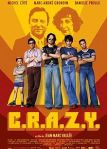
Jean-Marc Vallée’s C.R.A.Z.Y.: You may know Vallée from Dallas Buyer’s Club or Demolition, but Canadians got to know the filmmaker long ago, with solid movies like C.R.A.Z.Y, the story of a young gay man growing up in his conservative father’s household along with 4 brothers in Quebec during the 1960s and 70s. The soundtrack’s spot on, the writing is honest, and the acting is top-notch.
Guy Maddin’s My Winnipeg: Described by Maddin as a “docu-fantasia” and by perplexed critics as a surrealist mockumentary, nobody knows exactly what the hell this is, but it IS both an experiment and an experience in cinema. Maddin casts someone else as Maddin and then paints a mythologized, metafictional tribute to his beloved town of Winnipeg. If you love movies, you have to check this out. You’ll feel it in your toes.
Being fairly well-versed in national cinema, Matt, Sean and I also watched a movie by a local filmmaker by the name of Vincent Valentino. We met him briefly at the Monster Pool Horror Anthology and have wanted to see more of his work since. He just happened to have a little ditty about washed up porn stars that starred lots of familiar-to-Ottawa faces, plus the always-arousing presence of Ron Jeremy. And how better to celebrate Canadian Film Day by having a laugh with your friends.

 With an all-star voice cast and music composed by Moomins’ biggest fan, Bjork, this little movie is hitting plenty of high points.
 Royale), Peter Stormare (Fargo, 22 Jump Street), and Helena Mattsson (Iron Man 2, American Horror Story: Hotel). Do you think this gang can work together and overcome obstacles to beat the comet and save everyone from disaster? Skarsgårds to the rescue!
 Reese’s Pieces were actually part of the plot. In the original script, it was M&Ms Elliott used to bribe E.T., but Mars wouldn’t allow their candy in the film if they couldn’t see the final script, so Reese’s Pieces stepped up and made history. Hershey didn’t pay a cent, but they did provide the movie with 1 million dollars worth of free tie-in advertising. Worth it? They saw a 65% increase in sales during the film’s run, so I’d say yes.
 renowned for preferring a martini, to be caught drinking a beer. It’s a sad day when film makers are willing to forgo characterization, history, tradition, and story for the all-mighty dollar, but it’s not just one dollar, it is after all 45 million of them. How many cars can you smash up for 45 million? They destroyed about $34M worth in Spectre.
 Cooper, which became the star of the movie. BMW provided 30 Minis to be used in the film and they saw a 22% rise in sales that year – not bad for a feature-length car commercial. I even rode an Italian Job roller coaster once where the cars were in fact little Minis. The movie made people reconsider the Mini Cooper – what was once thought to be a ‘girly’ car was no rebranded as sporty, speedy, and cool.
 cancelling their Wayfarer line when it suddenly got a big bump thanks to Tom Cruise in Risky Business. He made the sunglasses cool again, and the brand attributes the sale of 360 000 pairs to the
  movie. So you can bet that 3 years later they were only too happy to enter into partnership with Top Gun, which this time high-lighted their Aviator line, which gave them a nice 40% increase.
 it’s actually a plot point that the golfer becomes a spokesman for his favourite sandwich shop, Subway – he’s seen eating a sub while wearing a Subway t-shirt and SHOOTING AN ENTIRE SUBWAY COMMERCIAL. It’s unclear whether Subway paid a dime for this, but that movie was also responsible for increased ratings for The Price is Right, so anything is possible.
 These two have so much hustle that there’s hardly a corner in all of dusty Los Angeles that they haven’t conquered, so when we called up Queen Bey herself to crown them with all the glory implicated in this event, she didn’t hesitate to say yes. To be fair, Rihanna and Katy Perry also accepted but those girls are so confused they couldn’t stop crowning themselves. So, Jay & Mark, in the name of Beyoncé, with the power invested by her entire Beyhive, I now pronounce you Most Industrious Assholes.
 while Mark’s claim to fame was The League. Then they both appeared on the show they wrote and directed themselves, Togetherness. But that’s just what they do in their spare time. They’re also writing or producing or directing or micro-financing movies pretty much round the clock. Movies are either their passion, or their death wish.
 workaholic, do what we love to do, and not die of a heart attack, destroy myself and my family, and keep my friends?’” – a commendable insight from Mark.
 The Duplass brothers have been at heart of the Mumblecore movement for a long time. Mumblecore movies are a subgenre of indies that are known by their incredibly small budgets, their “natural” (read: amateur) acting, with an emphasis on dialogue over plot, lots of which may be improvised.
 Beginners
 company isn’t just about churning out Duplass stuff. They’re also bringing up lots of their friends along with them. They’ve got enough pull to make pretty much whatever they please, but they’re sticking close to their humble beginnings. The brothers are famous for bottom lines of less than a million dollars, and they always come in under budget. With their success and auteur status they’ve recently been asked to helm a real popcorn movie (shh – a superhero one!) and of course they turned it down, unwilling to make the kind of compromises
 that would entail. “We’re not making that level of money [of directing a blockbuster franchise],” Jay says. “But we don’t need that level of money because we lived like starving artists for 15 frickin’ years. It’s like, we don’t need things. We just like to make things.”
 Jay and Mark aren’t just running their own little empire, they’re changing the industry as a whole. “There’s no excuse not to make movies on the weekend with your friends” says Mark, and you know he really, truly means it.
 man, which is exactly what Steven Stelfox (Nicholas Hoult) is. It’s the height of Britpop, and business is booming. If you find the next Oasis, or hell, the next Spice Girls, you’re made. But one misstep can also mean career suicide. It’s a super competitive industry, and both the screenwriter (John Niven) and the director (Owen Harris) have decided to bonk you over the head with this fact. And when, after the first 10 minutes or so, you’ve been completely bludgeoned with this theme, they yank open your jaw and force-feed it to you for 90 minutes more until you’re veritably choking on it.
 entirety, so nothing sticks out. The bitterness is unending. Kill Your Friends aims to be the blackest of comedies, but when everyone is horrible all the time it really dulls your senses. It’s a grueling film to slog through without a single redeeming character so you can’t emotionally invest. Stelfox is pushed to further and further extremes but you won’t care an iota because nobody deserves to get out of this with their dignity intact.
 To their credit, they spared zero expense on the soundtrack: Blur, Prodigy, Radiohead, The Chemical Brothers, Oasis. It reminds you what a good time it was to be alive in the late 90s. It also makes you angry that they’ve failed to live up to these bands. Almost certainly there’s an interesting tale here to tell. Kill Your Friends has no idea what it is though, and hopes you’ll be impressed with blood and cursing instead, which is almost the same as story, right?
 In Cheer Up, we meet Finland’s second-worst cheer leading squad. On the heels of a humiliating loss, Garland explores what it takes to keep going in the face of defeat. Where will the girls find motivation? The documentary follows three of the women in particular – coach Miia, and team members Patu and Aino. We soon realize that their struggles and failures are not just confined to the gym. Miia’s personal life is on the rocks, Patu is grieving her mother while her father impregnates a new girlfriend, and Ainu follows the highs and lows of first love, and all the teenage angst that comes with it.
 tears, tumbles, and bloodshed. Miia travels to the cheer leading mecca of the world, Texas, to seek inspiration but finds that their aggressive, winner-takes-all spirit just doesn’t translate back home.
 pep and ponytails. It’s refreshing to remember that not everyone goes home with a trophy. For these women, and many others, success will have to be defined elsewhere.
 emotions. Everything is pleasantly flat. Nothing bothers them. But some are subject to a disorder in which those feelings are somehow switched back on. This disease is fatal – if you aren’t driven to suicide, you’ll be euthanatized, because being the only sensitive person in a void of flat affect is simply too much to bear.
 feels rather cold and lonely to us, the viewers, but the people living it don’t seem to notice until they come down with the disease, which sets them even further apart from their peers. But the one good thing is that Silas can see that his work mate Nia (Kristen Stewart) must also be infected. She hides her disease from others but cannot escape his awakened intuition. The two inevitably fall in love, though “coupling” is distinctly prohibited. The only way they can be together is to leave society and head for the outside world, where primitive humans still exist.
 The problem, however, is with the story. The truth is, it just feels recycled. It feels like you’ve seen this before. It’s like every second Margaret Atwood novel and does little to distinguish itself from other movies in the genre. What it doesn’t borrow from Atwood it steals from Shakespeare and it never really does its own thing. Equals is a highly-polished piece from a second-hand store. It’s not trash but it could never compete with the real thing. If you’re the kind of person who’s comfortable buying a couch off Kijiji, then maybe this one’s for you.
 Wider and Wider have used Bishop’s case to exemplify the broader problem of how mental illness is addressed both in medical and justice settings, but also take the time to ask intelligent questions regarding individual rights. Because Linda Bishop was in fact an individual: a mother, a sister, a gardener, a knitter, a reader. She died tragically, needlessly, but in life, when she was well, she was vibrant and engaging. Wider and Wider treat her with dignity, and are able to do so in large part because of detailed journal entries she left behind at the time of her death.
 what her last days would have looked like with truly stunning, poetical cinematography rare in a documentary. Hopelessness and beauty intermingle, making for some stirring if haunting images. Did I sometimes find it a little pretentious? Sure I did. But even an Asshole like me can admit and admire when a documentary is trying to elevate itself. Combined with her journal entries read aloud, these images make her story all the more personal. God Knows Where I Am is both an intimate portrait and a rousing call to action.
 son even though we detested both leads. Not the actors, per se, but the characters are just awful human beings and it’s hard to forgive the actors for that. So I’m carrying around this chip on my shoulder for Gillian Jacobs and was not super happy to bump into her in this movie. But clever Demetri Martin won me over by writing a love interest for Dean who did not exist solely for his pursuit. She had back story. She had depth. She was a person. This sounds weird, I’ll grant you that, but so often in movies the love interest exists solely to be adored and consumed and nothing else. She has no job or apartment or opinions. Gillian Jacobs had scenes without Demetri Martin. She was independent of his lust. It was refreshing even if it did make me confront my hostility toward the bitch from Love.
 nd so of course this book was immediately on my nightstand and then devoured into my brain and then shelved politely to await its fate. Little did it, or I, know that just a few years later it would be turned into a movie, prompting Sean to finally give it a read as well (don’t judge him too harshly, he’s mostly literate).
 struggled to picture Hanks as Alan Clay. Alan is a loser. He’s beaten down by life, but not in Hanks’s usual sad-sack way. He was too pathetic. But Tom Hanks is not only starring, he’s producing, which means he really likes this project, and he knew what he was getting into.
 to be a fish out of water – not just the cliched culture clash crap of an American abroad, but of an aging salesman with an old bag of tricks in a newfangled world of young, tech-minded colleagues. The world is shrinking, and moving quickly, and Alan is getting left behind. Movie Alan has more verve than Book Alan, which sounds like a strange thing to complain about, but the truth is, the world already had enough of these Alans. For a movie that could have been refreshingly unHollywood, it sure made some safe choices and went for the audience-friendly ending that smacks of missed opportunity.
 It’s National
  Shatner. Michael Cera. Ellen Page. Jay Baruchel. Catherine O’Hara. Eugene Levy. The Sutherlands. Will Arnett. Victor Garber. Michael J. Fox. All the funny people from SNL. There are talented Canadians in the director’s chair as well: Cronenberg. Cameron. Atom Egoyan. Norman Jewison. The Reitmans. Sarah Polley. Patricia Rozema.
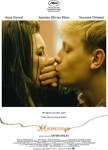 Xavier Dolan’s Mommy: Before Dolan was directing
 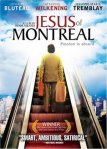 nominated Les invasion barbares (The Barbarian Invasions), an older work in his catalogue, Jesus of Montreal, is quite a trip. A group of actors are hired to put on the passion of the Christ in Montreal. Jesus is interpreted a little differently than usual and the church is not happy. The movie works on its literal level and also as a biblical allegory, so you can watch and rewatch this one and always come away with something new.
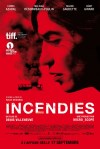 Denis Villeneuve’s Incendies: He’s now known for Prisoners and
  or
or 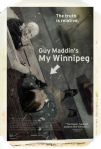 Guy Maddin’s My Winnipeg: Described by Maddin as a “docu-fantasia” and by perplexed critics as a surrealist mockumentary, nobody knows exactly what the hell this is, but it IS both an experiment and an experience in cinema. Maddin casts someone else as Maddin and then paints a mythologized, metafictional tribute to his beloved town of Winnipeg. If you love movies, you have to check this out. You’ll feel it in your toes.
 Vincent Valentino. We met him briefly at the
  ASSHOLES WATCHING MOVIES