Category Archives: Half-assed

Films in this category have something to offer but also have one or more flaws that detract from the experience. Still, these movies are probably better than most of the shit on Netflix.

3022

In 2190, four American astronauts are taking their turn peopling a refueling station halfway between Earth and a moon of Jupiter where an outpost is being built. It’s a long shift: 10 whole years. Jackie (Kate Walsh) says goodbye to her daughter and joins captain John (Omar Epps), Richard (Angus Macfadyen), and Lisa (Miranda Cosgrove) aboard their space station, all of them in it for a very long haul.

The first year goes smoothly – the nobility of their calling, the novelty of outer space, yadda yadda yadda. The second one is fine: they dance, they play soccer, they hop beds. By the third year, the veneer has worn off and the mission is sprouting cavities. John in particular is having difficulty, experiencing night terrors that are increasingly violent and problematic. They don’t even make it halfway before the doctor on board, Richard, decides John is unfit for duty and they should pull the plug on the mission and return home. No one is happy with this decision, but in either case it gets taken out of their hands when something even more concerning happens. Experienced on board as a flash, Earth seems to have disappeared, had an extinction-level event, or at least that’s what happened to the best of their knowledge now that communication’s been cut. And if you thought they were going a little nutty before they were the last four humans in existence, guess what’s coming down the comet!

The movie takes places entirely aboard this refuelling station so we don’t get any outside knowledge, outside context, or any backstory on any of these characters. They’re astronauts, that’s all you’re going to get, and the qualification for astronauting seems to have diminished quite a bit somewhere in the next 150 years. I wish we had known them better, known their grief, known their motivation, known how a mother could leave her daughter to be raised by someone else.

Although there are some plot holes (inevitable in sci-fi, probably), director John Suits does a good job of cultivating tension. And you can’t deny the premise is a good one. It’s just a little wasted in this movie. They start rationing food and life support, but for what? There’s no one to save, nowhere to go. At what point is life not worth preserving? To be fair, the film does take a stab or two at fear of death versus fear of dying alone, and that theme is its own black hole. Bobbing around out in space, rational decisions already on short supply, nothing retains the same value. And yet some will always struggle to live on.

This isn’t the worst thing on Netflix. It isn’t great, but it may satisfy a craving for science fiction. Just know that some details will niggle and learn to let go. Or bring a calculator and prepare to double check some math.

Check out our review on Youtube.
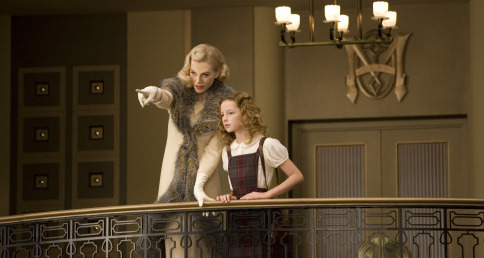
The Golden Compass

I watched this back in 2007 because I adored the book(s) (by Philip Pullman) and was optimistic. Oh 2007, the days of wild optimism.

The movie is…not good. It’s not rotten, there are some attempts at goodness, especially from Nicole Kidman and the visual effects department. But it’s like someone put The Golden Compass through a strainer to sift out all the best bits and made a movie with the wrong bowl.

Yes, movie studios were desperate to recreate that Harry Potter magic, but Pullman’s His Dark Materials trilogy was always a little more cumbersome than its wizarding counterpart; Pullman’s work was not specifically meant for young audiences. But some intrepid readers found him anyway, and loved the way he combined physics, philosophy, and theology but made them accessible via a young protagonist. Those are not exactly movie-friendly themes, and the trilogy’s criticism of religion was of course controversial. When the film got released, christians boycotted it for its anti-religion reputation but secularists balked at this theme’s dilution (and some would say absence).

The film shows the adventures of Lyra Belacqua (Dakota Blue Richards), an orphan living in a parallel universe where a dogmatic ruling power called the Magisterium opposes free inquiry and every person has their inner spirit manifested as an animal, which they call a daemon. Before settling into a single shape in adulthood, the deamons of young children tend to shape shift quite a lot. Which is not much use when children are being kidnapped by an unknown group called the Gobblers who are supported by the Magisterium. Lyra joins a tribe of seafarers on a trip to the far North, the land of the armoured polar bears, in search of the missing children.

MV5BMTc4MzIwNTM0Nl5BMl5BanBnXkFtZTYwOTAzNzc4._V1_

There’s more to it than that, a lot more to it. It’s not so bad when you’ve got the book in your hands. You can take a break when you need to think on things, or digest others. You can flip back a few pages, read with new insight and understanding. But movie audiences have to take what you’re given, and if a director foolishly tries to stuff too much detail into too thin a story, it’s not just overwhelming but it turns what should be a fun entertainment or a version of escapism into an exercise in fact sorting and memory retention.

There are some dazzling effects and I’m not going to lie: armoured polar bears are kinda the best. Which is why so many of us rooted so hard for the movie. But the movie was too self-important, too busy setting up the next in the series that it forgot to give us a satisfying experience in the present. Which, as you know, not only resulted in its poor performance at the box office, but it ground production on the next two to a complete and final halt. No one will reattempt this for another quarter century. Which is really too bad, because if you’ve read the book(s), you know there’s a compelling story in there, and it shouldn’t be this hard to tease it out.

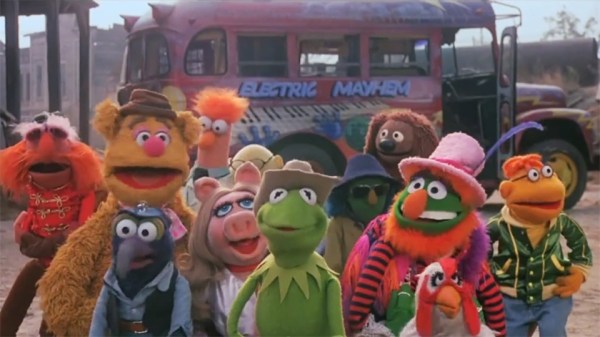
The Muppet Movie (1979)

Is it fair to say that the best use of the Muppet Movie (1979) may be as palate cleanser?  We found it on Disney+ while in need of something easy, after slogging through The Platform.  Instead of three Care Bears seasons, as recommended by Dr. Jay, we opted for one dose of classic Muppets silliness. The medicine worked well enough; it just tasted a little stale.2004_WC_TheMuppets

The Muppet Movie (1979) tells the origin story of the Muppets, though Kermit the Frog readily admits at the outset that some liberties have been taken. Kermit is discovered singing in a swamp (The Rainbow Connection, naturally) by a big Hollywood agent (Dom DeLuise) who has rowed the wrong way.  Turns out, Hollywood is in dire need of frog talent. After a few seconds of deep thought, Kermit decides to move right along to the West Coast to try his luck at stardom, but Doc Hopper (Charles Durning), a local purveyor of frog legs, is set on having Kermit be the face of his restaurant chain, dead or alive. As he tries to stay one step ahead of Hopper, Kermit happens upon all your favourite Muppets, who join up with Kermit on his journey, and ultimately make it big enough in Hollywood to star in the very biopic you’re watching.

I am sure the long list of celebrity cameos was top-notch in 1979, as the Muppets have always excelled at drawing other stars into their orbit, and any movie that includes Bob Hope, Richard Pryor and Steve Martin is doing something right. But most of the faces were not familiar to me, and I know they were expected to be (I certainly recognized most of the names once the credits rolled). Admittedly, I am only a few years older than this film, so your mileage may vary, but the Muppets Movie (1979) felt dated for me because so many of the cameos went over my head.

Still, the Muppets have lots to offer on their own, sight gags, silly banter, and especially a great soundtrack that literally propels them on their journey (I dare you to find me a more aptly titled song than Movin’ Right Along). The Muppets Movie (1979) remains an entertaining kids’ movie, but it has lost some of its lustre with age.

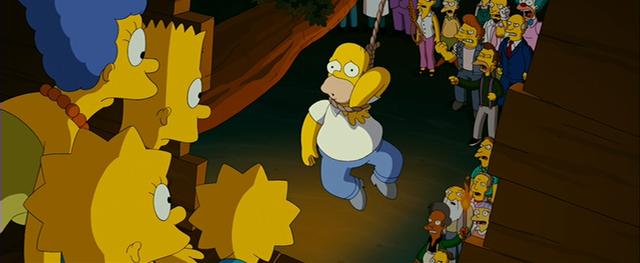
The Simpsons Movie

They’re mumbling about a sequel – well, I should say, a second movie – so the time seems ripe to review this one, right? We’re quarantined and we’ve been binging The Simpsons since the day Disney+came out (do you know how many seasons those guys have???). Like most episodes, the movies are meant to be stand-alone and self-contained, meaning little if anything that happens during them will affect the series as a whole. Poor Maude Flanders: hers is one of the few deaths that actually took. The characters have remained the same age though more than 30 years have passed since they were introduced. They used to be older than me and now I’m older than Homer and Marge. How did that happen?

At the end of each 22 minute episode or 90 minute movie, everything resets…well, almost everything. Now that we’re catching up on the decade’s worth of shows we missed, we’ve seen Spider Pig pop up more than once – and he’s from the movie!

As you might have guessed (or likely know, this movie being more than a decade old – I had a different husband when we saw it in theatres!), the movie plays much like an episode, with all of the same characters and gags, a little more saltiness than network television usually permits, and a slightly more involved plot.

Basically, Homer adopts a pig and he shovels the pig’s droppings into the local water reservoir, raising Springfield’s pollution level to near-extinction. In response, the EPA lowers a giant dome over the town and leaves the residents to rot. Of course, the Simpsons have managed to escape, and the fugitives flee to Alaska to start over/ lie low. Except then Marge hears that all their friends, neighbours, pets, and Grandpa (!) have been domed and intends to…do something…while Homer plans to do nothing. So she leaves him.

Anyway, if you like the show, you like the movie. It doesn’t do anything differently at all. No risks, no stretches even, just the same old, tripled. It doesn’t astonish and it doesn’t aim to. It’s pretty comfortable with the status quo, and after 3 decades on the air, so is its audience.

Charlie’s Angels (2019)

Old Bosley (Patrick Stewart) out, new Bosley (Elizabeth Banks) in; turns out, Bosley wasn’t a name, it was a rank.

Sabina (Kristen Stewart) and Elena (Naomi Scott) are fellow Angels and kind of frenemies but not only are they going to need to get along for this next mission, they’ll also be training a newbie on the fly as mild-mannered, law-abiding layperson Jane (Ella Balinska) gets swept up into the fray.

Jane is a systems engineer who blows the whistle on a piece of tech that sounds revolutionary and life-changing but also dangerous and possibly weaponized. So of course the Angels are called upon to make sure it doesn’t fall into the wrong hands, and believe me, several grubby, evil little hands are doing the “gimme gimme” gesture in its direction. The Angels are willing to risk their lives to save us all, but they more they uncover the more their own agency seems compromised and nobody knows who to trust.

The movie got off to a rocky start for me because it was a little too “girl power!” And obviously I’m all about strong, capable women but let’s just show rather than tell. We don’t always need banners and slogans. But the movie seemed to get that stuff out of the way pretty early on, and then we hurtle through action sequences like it’s against the law to slow down.

The movie isn’t as bad as you likely heard from early reviews, but it never quite manages to be all that you want it to be either. If you’re remaking this particular movie in 2019, maybe make it subversive? Maybe challenge the status quo? Definitely justify its existence by updating some of the more dated concepts and definitely, definitely have fun with it. That’s its biggest problem: a lack of identity. It’s never really sure where on the spectrum of action movies it wants to fall and it never dazzles us with any distinguishing features. When the Angels’ closets are revealed, containing a to-die-for wardrobe, heavy weaponry, and a plethora of beautiful bobbles and accessories all hiding James Bond-type gadgets, there’s no zeal. I wanted pageantry. I wanted at least as much fun as the boys in the Kingsman movies, combined with the snappy chemistry between Melissa McCarthy and Miranda Hart in Spy.

Kirsten Stewart appears to enjoy showing off but otherwise there’s little fizz on the screen. It feels like work for them, and indeed I admit that I don’t appear to be having fun at my job either, and it would also make for a rather boring movie. But if you’re bothering to make this a movie, then I want glamour and I want fun. I want you to either embrace the silliness and really go for it, or I want you to skewer the concept and serve it on a silver platter with so much garnish I don’t know what to do with it. I do not want you to take the well-traveled, extremely trampled middle path of been there, done that.

Go Karts (aka, Go!)

It’s called Go Karts on Neflix Canada, it may be called Go! on yours, but either way it’s a movie you can see this weekend from the corona virus-free comfort of your living room couch (presumably – sorry to those of you who may be self-isolating at home with symptoms; get well soon!).

Go Karts is an Australian film about, well, go karting. Yeah, I’m not sure where they came up with the name either, but I bet they spent OODLES of time on it. Oodles should totally be a measurement of time, and not just noodles.

Anyway.

Jack (William Lodder) and his single mother (Frances O’Connor) move to a small town in Western Australia where there’s literally nothing to do other than go karting. Which is convenient because a lot of Jack’s memories of his dead father are tangled up in driving and/or racing. So not only will go karting confront his grief, it’ll teach him to control his recklessness as well.

Oh, and did I mention that Jack is a cute boy and the “chief engineer” of his go karting team is a pretty girl? So Jack’s got the talent and Mandy (Anastasia Bampos) has the technical know-how and best friend Colin (Darius Amarfio-Jefferson) says dumb stuff and/or falls over things, hopefully providing a laugh or two (it never really works out that way, so Amarfio-Jefferson’s presumed talents are wasted). Oh and the tortured go kart track owner Patrick (Richard Roxburgh) sprinkles his grizzled wisdom throughout. It’s like every sports movie you’ve ever seen, only lamer because it’s go karts. In fact, it’s like a sad live-action Cars but not affiliated with Pixar in any way, lest they cast their litigious little eyes this way.

Anyway, Jack is going to overcome “all the odds” and defeat “ruthless racer Dean” who, to be clear, is another teenager who’s also a little too into go karting. And Patrick is going to Mr. Miyagi him all the way. I bet you can’t guess how it turns out.

But now that I’ve been sarcastially dismissive of this movie, I will say that the kids have kind of a natural charm, and director Owen Trevor sort of shines during the “action” sequences (again: go karts). If you’re looking for a warm-hearted movie to share with your kids this weekend, you could do worse than Go Karts.


Thank You For Your Service

A trio of buddies and U.S. soldiers return home from the war in Iraq. Their group used to be bigger but one guy went home early with a couple of inches missing from his brain, and another didn’t return at all. His wife (Amy Schumer) accosts Adam (Miles Teller) as soon as his feet hit the tarmac, begging to know how her husband died. Adam’s wife Saskia is upset that his welcome home is ruined, but she doesn’t know yet that nothing about his return home will go as she planned.

Adam, Tausolo (Beulah Koale), and Billy (Joe Cole) are all having trouble adjusting. Haunted by the things they’ve seen and the things they did to survive, they are shamed for seeking help from the army and their brave persistence only means their names are on a 6-9 month waiting list. Twenty two veterans a day are killing themselves and Billy is soon one of them. His mother knew he needed help beyond what the army was providing and had arranged a treatment facility out of pocket. Since he’s no longer around to take it, there’s one spot open, and two remaining friends. In a game of “who needs it the most” there truly is no winner.

Adam and Tausolo are both putting their families at risk reliving the war in real time; their dead comrades not just visiting their dreams but their waking life as well. This is hallmark PTSD but veteran’s affairs are backlogged and useless. Of course there is no cure. The only way forward is to talk through all of the things they’d rather forget, and learn to manage the pain. Even people with ‘Support our troops’ magnets on their cars forget them as soon as they return to American soul, but in truth that’s when their own personal war begins.

Based on Adam Schumann’s memoirs, Thank You For Your Service is an incomplete picture since thankfully Schumann was still alive to tell it. But it paints a very sobering portrait of a complete lack of support for warriors turned civilians. The film retreads some familiar ground and if anything, director Jason Hall deprives the movie of some well-deserved righteous anger.

The Young Victoria

It’s very easy to forget that the monarchy is made up with real, living, breathing people. Extremely privileged people of course, who are often very out of touch with the real world and therefore the people they are meant to represent as well. But people nonetheless. Victoria (Emily Blunt) reminds us that even palaces can be prisons.

By the age of 11 she is made aware of her precarious and burdensome lot in love; the only living heir to King William IV’s throne. Victoria’s teenage years are dominated by her possessive mother, the Duchess of Kent (Miranda Richardson) and the Duchess’ consort, John Conroy (Mark Strong), who imposes all kinds of rules on Victoria. Despite the pressure, Victoria refuses to allow them the power to act as her regent, and she finally takes the crown at the age of 18.

In fact, this only means that even more people seek to control and influence her, including her cousin Albert (Rupert Friend), with whom it is hoped she will fall in love for political reasons. Having only just left the clutches of her mother, she isn’t quick to attach herself to someone else, but instead falls under the influnce of Prime Minister Melbourne (Paul Bettany), whom she trusts implicitly, even to the point of constitutional crisis.

Emily Blunt does a masterful job of portraying the young queen – her confidence, her missteps, her optimism, her suspicion, her inexperience and her willingness. Most 18 year olds aren’t ready for such weighty responsibilities but when your birth decrees it, there is nothing to do but step up. She is the sun around which so many orbit, on whom so many depend. A power struggle is inevitable.

The Young Victoria is romantic but lumbering, never quite hitting the right balance of tension and story. There’s a lot of wistfully reading letters aloud while sitting on various tufted couches. But if you’re looking for a Victorian drama, there are plenty of petticoats around, the scenery is terribly opulent. Blunt and Friend have a sizzling chemistry and you almost wish the movie had started rather than ended there.

The Island

Lincoln Six Echo (Ewan McGregor) lives in a futuristic community where life is prescribed for him: meals, wardrobe, job, friend, all are decided for him and none are negotiable. It’s to keep them safe. There’s been an extinction-level event “outside” in the world, and the survivors survive only because of the safety provided by the colony, and by following the rules. There are two bright spots in Lincoln’s life. The first is Jordan Two Delta (Scarlett Johansson), a woman who seems to breeze through life unscathed and unoppressed by the sterility and rigidity of her surroundings. Unfortunately, proximity rules keep them apart both literally and figuratively. The second bright spot is the lottery, wherein random colonists are selected to go to The Island, a tropical oasis of peace and tranquility, a sun-drenched retirement highly anticipated by all in the last uncontaminated paradise on earth.

Except lately Lincoln is plagued by nightmares. He has memories of life before the colony. He’s starting to question things.

Unfortunately, what might have been an interesting piece of science fiction turns to shit in the hands of director Michael Bay, who prioritizes explody things over plot and character at literally every turn. Every time there’s a plot hole, he fills it with flames or a car crash or both, like hanging a poster over all the cracks in the wall. Unfortunately, the posters do very little when the whole house comes crashing down, and Michael Bay hasn’t laid a foundation in years. If all you’re after is mindless action (and it’s okay if you are, there’s a time and a place for everything), this is a pretty flashy poster, probably the equivalent of a chick in a bikini straddling a motorcycle. It’s just too bad that he ruined a pretty good concept when he could have left this in someone else’s more capable hands and just filmed another Big Dumb Man Drives Recklessly While Shouting Slogans And Grabbing His Crotch And Saluting The American Flag script instead.

After The Wedding

Isabel (Michelle Williams) helps manage an orphanage in India that is very strapped for cash. There’s a possibility of funding, but the investor stipulates that Isabel must come to New York in person, and Isabel isn’t keen to leave her little oasis or the children she loves dearly. But with serious money on the line and so many more children in need, she also can’t resist.

Her posh NYC accommodations are a stark contrast to the life she’s lived in India. Uncomfortable, she’s eager to get back, but the investor, Theresa (Julianne Moore), is adamant that she extend her stay. She even invites Isabel to her daughter’s wedding. Having promised not to return without “a suitcase full of money,” Isabel doesn’t want to disappoint her host, but it’s starting to feel as though Theresa has ulterior motives.

She does.

This is an American remake of a very good 2006 Danish film by Susanne Bier starring Mads Mikkelsen. This one isn’t bad, but it naturally suffers by comparison. This film, directed by Moore’s husband Bart Freundlich, swaps the genders of the leads and breaths a little bit of new life into the script because of it, but the only true reason to see this one at all is for restrained performances by its two formidable leading ladies (Billy Crudup, rounding out the cast, is at a disadvantage).

After the wedding is a very slight meditation on loss and regret but doesn’t quite pack the emotional punch of its predecessor. It’s definitely a quiet film about inner conflict, Williams suffering in near silence, Moore indulging in quite a fantastic display. If you watch it, watch it for them. But this film didn’t need to be remade. The first was so achingly perfect and less neatly resolved, its frayed edges lending it an authenticity that this highly-polished one lacks.