Category Archives: Half-assed

Films in this category have something to offer but also have one or more flaws that detract from the experience. Still, these movies are probably better than most of the shit on Netflix.

The Dig

Edith Pretty has always supposed there may be gold in them there hills. Or artifacts, anyway, something of historical value. And so widowed Mrs. Pretty (Carey Mulligan) engages a disgruntled excavator away from a museum that undervalues him and underpays him. Basil Brown (Ralph Fiennes) digs right in, but what he finds is of far more significance than anyone had dared imagine.
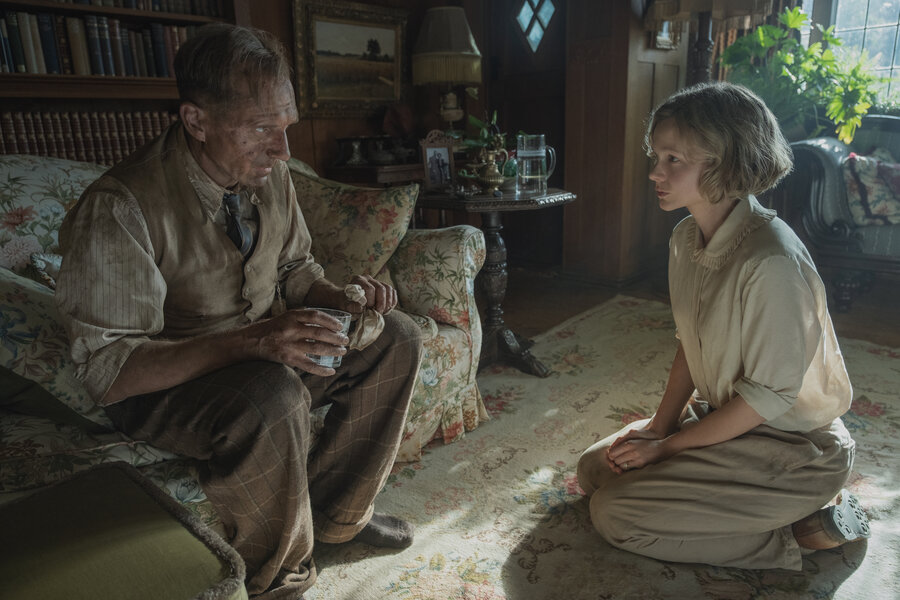
Vexingly, the minute the dig turns up anything of real value, the British Museum and “the man” come sniffing, looking to take credit and ownership. They also take over the dig although no one wanted anything to do with it when it was just a housewife with a hilly backyard; Edith has up until now been self-financing the work.

The 1938 excavation of Sutton Hoo was of course historically significant and netted many revelatory precious artifacts. But for the real people involved, it was a time of personal significance as well. A war is looming. A young boy is without a father. A young woman learns she is not in love with her husband. An old man bonds with a child who isn’t his. A mother learns she will leave her son an orphan. And everyone fights to protect “their” treasure = from the air raids, and the thieves, and the damn greedy bastards. Though history won’t recognize them, Netflix will, assembling a first-rate cast with stand-out performances from Mulligan, Fiennes, and Lily James.

Director Simon Stone’s pacing is exquisite, unfurling a film that is languorous and poetic, unhurried and revealing, with just a tinge of melancholy lingering about the beautiful English countryside. The Dig made me think a lot about legacy – how the people who buried this ship and its treasures left a remarkable historical record for us to find, and in finding it, Edith Pretty et. al became a part of that record too. In some ways, even this film becomes part of this record, dating all the way back to the 6th Century. Of course, our own culture is so materialistic we’d never leave buried anything of great value. If the future isn’t digital, we won’t have left much of an impression, just piles of Chinese plastic. This is why we have such a fascination with archeology; we want to understand our ancestors, to know from whence we come. We’re less adept at telling who we are, and we collectively lack the ability to understand that we, too, might someday be reduced to a few artifacts in a museum. Hubris. It’s a condition of humanity, I suppose, and a film like this, though pretty and competently made, is hardly an adequate defense. In fact, while I found plenty to like about The Dig, it fell short of love, never quite stirring sentiment in the way it clearly expected it would.

Sightless

After being attacked in a parking garage, Ellen (Madelaine Petsch) wakes up without her sight. The nurse at her bedside tells her the damage to her eyes is irreversible. Unable to see, she is now dependent on her caretaker Clayton (Alexander Koch), whose main job is to help Ellen adjust to her new reality. Clayton spends a fair amount of time with Ellen at her apartment, and when he is not around, Ellen is occasionally visited by the detective investigating her attack as well as her two next-door neighbours, one who is abused and one who is the abuser.

But even without her sight, Ellen sees that something about this situation is….off. She can’t figure out what exactly is wrong but as she pulls at loose threads, her whole world starts unravelling.

Writer/director Cooper Karl establishes early on that the viewer’s eyes cannot be trusted, and it’s a recurring theme on which Sightless’ twists rely. While that approach likely was intended to match Ellen’s experience of being Sightless, it left me feeling disconnected from the film since I kept being reminded that I couldn’t believe what I was seeing. That disconnect neuters every one of this film’s attempts to shock, surprise and thrill, since nothing on screen can be trusted.

With Sightless lacking any edge due to its structure, you’re better off seeing what else Netflix has on offer.

Death Of Me

I like to call it vacation mode; sticking your toes into the hot sand of some exotic beach just sort of does something to you. You sleep late, drink early, fuck lazily, then murder your wife a little and toss her body in a shallow grave.

Last week I was saying that if you missed travel, why not escape to Iceland through the movies? This week let me tell you, if you miss travel, this movie right here will cure you of that notion right quick.

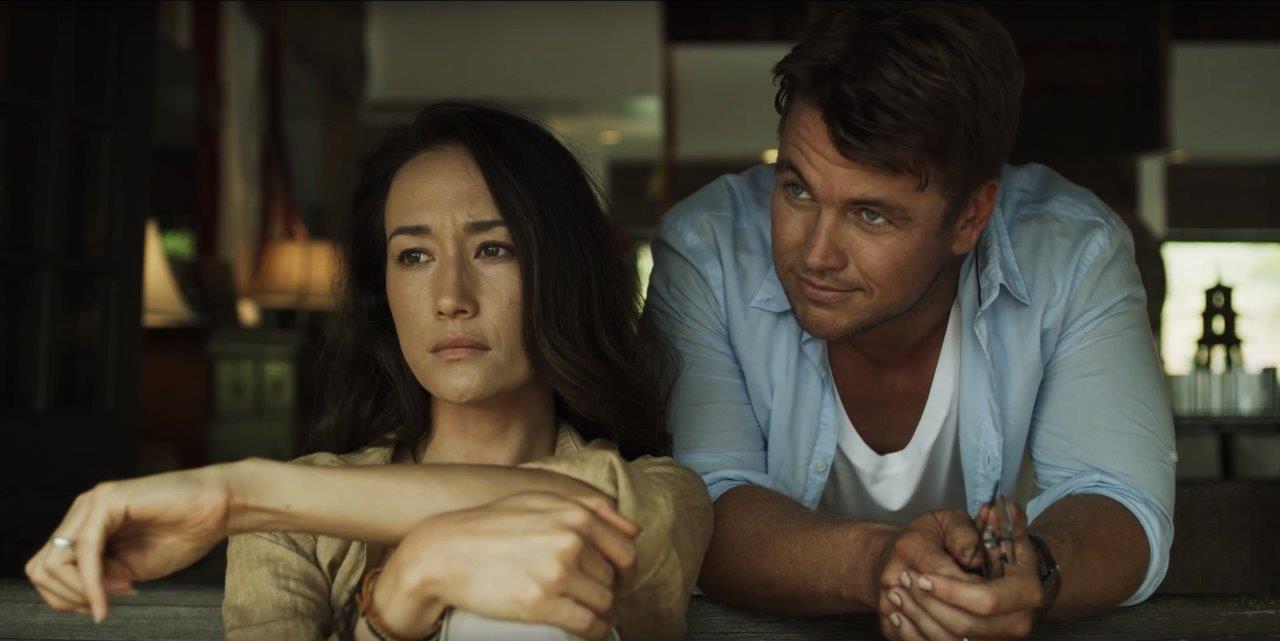
Christine (Maggie Q) and Neil (Luke Hemsworth) wake up on the morning of their last day in Thailand hungover, dirty, and confused. With no clear memory of how they came to be this way, they flip through photos on Neil’s camera and are surprised to find a two hour video detailing events neither has any memory of, ending in some pretty rough sex, and what appears to be strangulation. And not, like, a little light strangulation, but it appears that Neil kills his wife, digs a shallow grave, and dumps her body into it quite unceremoniously. Of course, that can’t be what happened, because Neil and Christine are both right here, watching the movie together, although with increasing dread and panic, in slightly unequal amounts. Come to think of it, Neil’s got dirt under his fingernails and Christine’s got a ring of bruises around her neck. When she starts vomiting earth, well, what the hell?

Attempting to reconstruct the night’s events uncovers deeper and darker secrets. They get sucked into the island’s veil of mystery, black magic, and murder; the next 24 hours before a ferry can be boarded are going to be extra, extra long, and pretty darn arduous. Paradise turns into a nightmare, but while this movie believes itself to be a horror, it’s a little lacking in execution, spoiling a promising premise. There are a few decent jump scares but clichés just don’t have the same power to scare you, and this movie relies on them pretty heavily – they’re the meat AND the potatoes. You’ll spend so much time trying to figure out what the heck is going on, you’ll not have time to be entertained by the film, let alone delightfully horrified by it. It’s a bit of a missed opportunity, but it’s rare for a murdered woman to be investigating her own murder while being pursued by murderers, so perhaps that’s reason enough for you to watch.

Outside The Wire

Robot soldiers fight alongside human ones in the near future – and against them, robots on either side of this conflict, a storm of bullets raining down. Two men are hit, and their commanding officer makes plans to pull them to safety, but an ocean away, in the middle of the Nevada desert, a young drone pilot named Harp (Damson Idris) eats gummy bears and disobeys orders, launching a strike that kills the two in order to save the other 38. Harp is court-martialed and sent to the demilitarized zone for a reminder of the human cost of his lethal button pushing.

There he meets Captain Leo (Anthony Mackie), an A.I. enhanced cyborg soldier who’s selected him for a mission outside the wire. Leo’s biotech is extremely convincing (he can even feel pain) but make no mistake – he’s a military machine. A military weapon, in fact, a supersoldier who’s excellent in close combat and whose A.I. is so advanced it can follow the threads of these conflicts in ways that no human leaders ever have. Which is what he needs Harp for, a man he turns out to have hand-chosen because of his ability to think outside the box. They’re going to dodge robot soldiers and angry insurgents to chase a warlord hellbent on securing himself some neglected nukes. Leo can’t pursue this one his own; he’s got built-in fail-safes to prevent that, but where his investigation would constitute a flaw in his programming, Harp is free to do so based solely on a human hunch.

I enjoyed this movie for a couple of reasons. First among them is the Asimov angle, the king of sci-fi who wrote all those clever rules of robotics, and whose every thesis went something like: beware artificial intelligence, because it will inevitably figure out that humans need to be protected from themselves, and we won’t like the measures they take to do so. Except in Outside The Wire’s case, what Leo establishes fairly quickly is that the real enemy is the U.S. military, even though he’s technically meant to be fighting on its side.

Robots, it turns out, aren’t as blindly patriotic as we might like. Lee sees things from both points of view, and he comes to some conclusions that the American government might not appreciate. It’s a little sad that it takes a robot to consider the the socio-political aspect, to put himself in someone else’s shoes and examine other perspectives, but there you have it. It’s what we’ve come to. Asimov is always right. A.I. will always find us lacking. Is this the movie that’s going to help heal America after this most divisive period in its history? Highly doubtful. Most people will just be watching or the action sequences, and that’s fine too.

The truth, however, is that Outside The Wire isn’t a terrific movie. It’s not the blockbuster stuff you’ve been craving. Leo can’t reveal his master plan to Harp all at once, so it’s hidden from us as well, making for an occasionally confusing and scattershot plot. It feels like it takes us through a series of switchbacks that aren’t entirely earned. What it’s really counting on is that you’ll be so pleased by the Transformer-like Gumps (the scary robot soldiers) that you’ll only be paying half attention to the story.

Still, the action is decent, and so is the relationship between Leo and Harp, like Training Day if Denzel was also the Terminator. That kind of thing. It’s kind of fun to watch Mackie play a cyborg soldier since we’ve seen him be a flesh and blood soldier in Hurt Locker, and an enhanced super hero in the Marvel universe. This character kind of melds those roles together, a robot pretending to be human with his own thoughts and feelings about this war and what its outcome should be. Of course, a global conflict is tough for a single robot to take on alone – though now that I think about it, I suppose we’ve seen A.I. do much more, and much worse, so I think it’s fair to say: fasten your seatbelts, it’s going to be a bumpy night.

Crack: Cocaine, Corruption & Conspiracy

I doubt anyone needs to be reminded that crack is a very bad, no good idea. However, you might appreciate a documentary that explores the ways in which the American government used a drug to exploit and manipulate a population.

Though the government itself was responsible for importing this insidious substance, it had no problem with the hypocrisy involved in blaming the victim and criminalizing a disease. Addicts were shown no mercy. In fact, these were, not coincidentally, the days of mandatory minimums, where (Black) people were being thrown in jail for decades over piddling amounts of drugs. Racial bias you say? Absofuckinglutely.

This documentary probably tries to cover too much ground and talk to too many people, not all of whom agree on all of the facts, so there are inconsistencies that might niggle at you, but that’s life. This is a complex issue and we’re still trying to follow all the threads. The constant, though, is the destruction it brought down upon a community that is still reeling and trying to recuperate.

Is Crack: Cocaine, Corruption & Conspiracy a perfect documentary? It is not. Perhaps a narrower focus might have improved the view. Still, it’s a worthy effort and an important subject, especially with the benefit of hindsight that allows us to take a look in the rearview and really appreciate how much it altered a culture and left an indelible stain on a country that would rather sweep these contradictions under the nearest supermax prison.

The Croods: A New Age

So the last time we met the Croods, back in 2013, Grug (Nicolas Cage), the overprotective patriarch of a caveman family, was struggling to adapt to his teenage daughter Eep’s (Emma Stone) new modern friend Guy (Ryan Reynolds). Guy has new ideas, new inventions, and Grug senses that his position as leader of the hunt is threatened by this little punk. But out of pure necessity they agreed to work together, Grug searching for safety for his pack, and Guy seeking the ever elusive “tomorrow.” Eventually Grug is forced to admit that Guy’s modern thinking is in fact better for their survival, and he must have been right because the family’s still intact for a sequel.

They’re all still following the light toward “tomorrow,” but Eep and Guy are starting to think of starting their own pack, which Grug takes rather hard. Any plans for splitting up are put on hold when it seems they may have found tomorrow: huzzah! In fact, it’s a gated community, a lush oasis, an exotic land of safety and plenty. Its inhabitants, and in fact creators, are Hope (Leslie Mann) and Phil (Peter Dinklage) Betterman, and their teenage daughter Dawn (Kelly Marie Tran), who are actually family friends from Guy’s childhood. The Bettermans are beyond ecstatic to be reunited with Guy, who would make the perfect mate for their daughter (not that there are any other options), and to show off their better way of living. Indeed, their treehouse is the absolute zenith in modern living, with every convenience, every comfort, and best of all, loads of food. Grug doesn’t necessarily appreciate its “privacy” or Phil’s emphasis on individualism, but wife Ugga (Catherine Keener) and the rest of the family seem awfully keen – even Eep, who is rather happy to have her first female friend, at least until she starts to see Dawn as competition for the one and only teenage boy in the vicinity. And after all, Guy is a modern human like them; what could he see in a cavegirl like her?

There’s lots of adventure to be had in A New Age, new lands to discover, new characters to sneer at, and plenty of wacky, zany stuff, like land sharks and punch monkeys, which may make tough critics like my nephews, who will not appreciate the teenage romance aspects, feel a little more forgiving. And while parents won’t be as keen to watch this as, say, Soul, which is hardly fair comparison, I’m sure we can all relate to fearing change, especially when it comes to family. There is a balance between the modern and the traditional that every generation must find for itself, and according to Dreamworks, that’s been true since before humans walked fully upright.

We Can Be Heroes

Robert Rodriguez has two very different speeds when it comes to making movies: ultra violent, and children’s action-adventure. These may seem fairly disparate, but I think Rodriguez has just tapped into the truth that grown men and small children want pretty much the same things when it comes to movies, though one demographic wants a generous side of boob a little more than the other. The Adventures of Shark Boy and Lava Girl 3-D was my first Robert Rodriguez movie; imagine my surprise when years later I discovered his oeuvre wasn’t all spy kids and junior super heroes.

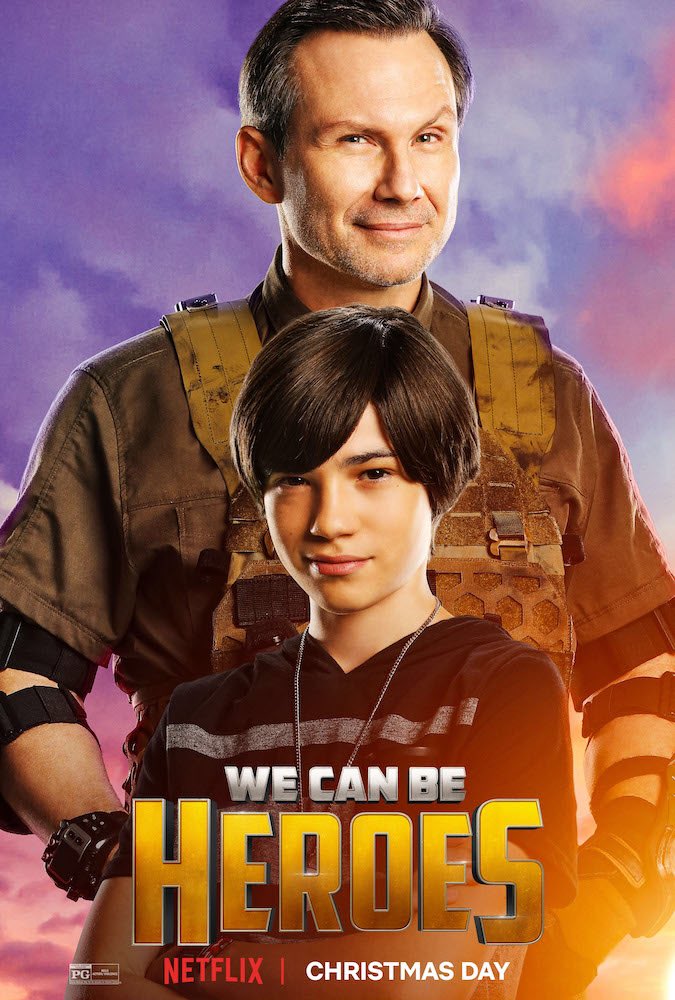
We Can Be Heroes is Rodriguez’s newest film, a family-friendly one for Netflix. It’s not about super heroes, though it does have plenty of them in it, including Rodriguez’s old friends, Lavagirl and Sharkboy, who are now all grown up (the original Lavagirl Taylor Dooley returns, but Taylor Lautner is replaced by JJ Dashnaw) and fighting as part of the Heroics team, which includes Miracle Man (Boyd Holbrook) and Tech-no (Christian Slater, for some reason), and is led by Marcus (Pedro Pascal) from his office. Marcus doesn’t fight anymore, a promise he made to his daughter Missy (YaYa Gosselin) due to his single-father status. But when aliens invade, the first thing they do is round up and neutralize all the super heroes, leaving behind only their children, who take it upon themselves to save the day. Missy is the rare super hero offspring who seems to have no powers of her own, but is a natural born leader – a challenge to Wild Card (Nathan Blair) who is technically able to assume any power but lacks the focus to do so reliably. Also in their little gang: Noodles (Lyon Daniels), a tween who can stretch his limbs to Elastigirl limits; Wheels (Andy Walken), a kid in a wheel with a predictable nickname who’s actually as strong as he is smart; Ojo (Hala Finley), a girl whose strange drawings seem to predict the near-future; twins Rewind (Isaiah Russell-Bailey) and Fast Forward (Akira Akbar) who can do with time exactly as their names suggest; Facemaker (Andrew Diaz), who can rearrange his features a la Mr. Potato Head; Slo-Mo (Dylan Henry Lau), whose super questionable skill is doing everything very slowly; A Capella (Lotus Blossom), whose song notes can make things levitate; and little Guppy (Vivien Blair), the adorable offspring of Sharkboy and Lavagirl, who can move and manipulate water.

Their parents, the real super-heroes, were captured because they failed to work together. Their squabbles broke the team up and left them vulnerable. Their kids will have to learn to do better, to make their special skills complement each other’s if there’s to be any chance of saving the earth from alien domination. To make matters worse, Heroics HQ is headed by Ms. Granada (Priyanka Chopra Jonas), whose motivations are questionable. Who can they trust and how will they save the world? And how will they manage to carry out such an important mission on their very first? You’ll have to watch to find out, but suffice to say, kids in the audience will likely be pleased. Adults not so much. The kid acting is nothing to write home about. Missy, the lead, is inconsistent, and A Capella, the singer, is downright annoying, a smug little shit who can’t stop hogging the spotlight. Noodles and Guppy are quite watchable though, with Guppy especially cute when she goes into “shark frenzy” when she loses her temper.

I applaud the attempt to come up with some half-way original super powers as most grown up movies don’t even do that. They’re not all winners, but everyone gets at least one moment in the sun. And there’s a training montage that I know is going to be a huge hit for at least four boys that I know, two of whom just got obstacle course stuff (like slack lines) so they can do ‘ninja warrior’ training at home, and two of whom already have a course or two set up thanks to their intrepid grandfather who grants all kinds of adventure wishes. This movie makes their super hero fantasies a reality, and it validates their contributions, present and future, to society. When so many forces tell them they’ll have to wait to grow up, this movie tells them they’re valuable, resourceful, and capable right now – and that’s the kind of soul food that nourishes their dreams, even if the packaging seems kind of corny and uninspired to you and I. So while We Can Be Heroes isn’t a great movie, it’s destined to be kid-approved, and might even inform their play and pretend for the rest of their holidays, which means less work for you! That’s what we call a win-win.

Don’t Let Go

Jack Radcliff (David Oyelowo) is a detective who’s about to stumble upon the biggest case of his career and you’re not going to believe how he solves it.

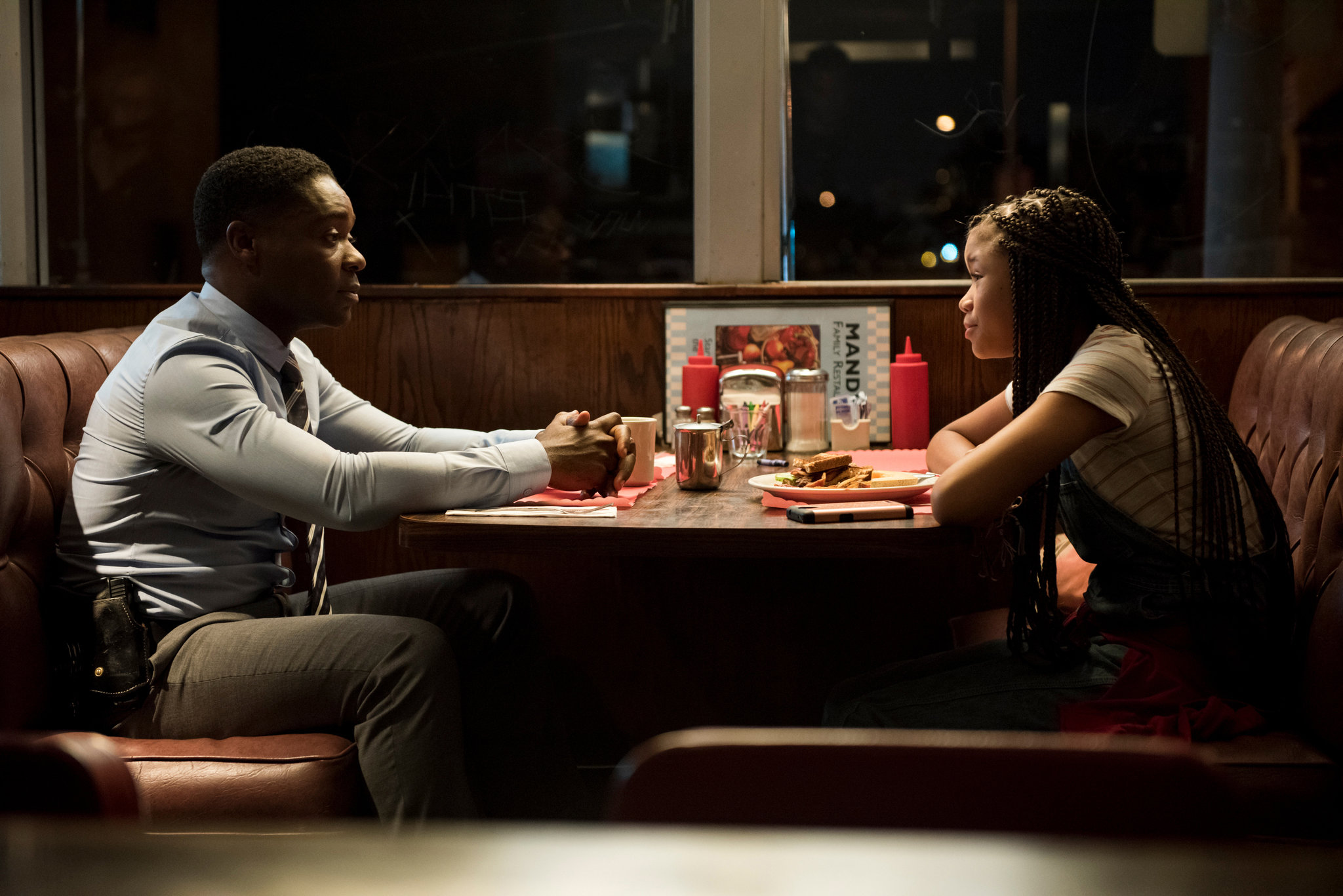
A simple visit to his brother’s home reveals 3 corpses – those of his brutally murdered brother, his brother’s wife, and his brother’s daughter. The house is soaked with blood and reeks of violence, but what happened here, and how did things get this bad without Jack noticing? He’s racked with grief and guilt, utterly devastated to have failed the only family he had, and feeling acutely alone in the world when he gets a call from his niece, Ashley (Storm Reid). His dead niece Ashley, the one who was just murdered along with her parents. Ashley and uncle Jack have always been close, but this is ridiculous. Is it a ghost, a rip in time…or is Jack just losing his mind? You’ll have your theories, and the cops at Jack’s station will have theirs as well. What to do with a detective who won’t let go of his own brother’s case, who’s working something with a conflict of interest so big and so bold that no one knows how to tell him to stop? Crazy or not, Jack’s determined to work with the evidence he has, even if it’s coming from a dead girl – but is he trying to solve a crime, or stop it from happening in the first place?

Obviously you’re going to have to deal with a certain paranormal aspect to this film that doesn’t make much straight-up sense. Before you stream, ask yourself this: can I let go? Can you deal with something non-linear and non-logical? If not, there’s no shame in just walking away. There are other movies for you. But if you think you might be interested in a detective with a ghost sidekick and a magic smart phone that receives calls from the dead, then the good news is, Don’t Let Go‘s on Netflix, where you can give it a try, risk-free. If you can let go, this movie is not half bad. It’s not great, it’s a bit uneven and writer-director Jacob Aaron Estes doesn’t have the technical prowess to shoot it in a more interesting way, but the cast, including Brian Tyree Henry, Alfred Molina, and Mykelti Williamson, is talented, and they sell the mystery, the urgency, and the thrill. The big, philosophical questions remain unanswered – this is a murder mystery at its heart, not science fiction, but it does manage to combine different genres into an enjoyable and compelling watch.

Songbird

It’s 2024 and the pandemic has continued to rage, ravage, and mutate around the world. We’re on COVID-23 now, and everyone is living under martial law. Only the immune identified by a bright yellow bracelet can leave their homes; the bracelets are highly coveted but maybe not so great to get, because if you choose to live on the outside (probably for work), you have to live completely alone, isolated, in designated areas. It’s much worse to be sick, though, or to have lived with someone who became infected – those people are taken forcibly to the “Q-zone” which sounds pretty terrible. And while that would certainly be an interesting movie, this movie is focusing on just a handful of people as they try to avoid it.

Nico (KJ Apa) is a courier, one of those essential services we learned were pretty priceless while we locked down last winter. In 2024, couriers like him are basically the ones keeping the world turning. He’s deeply in love with Sara (Sofia Carson), who is not immune, hence the fact that they’ve never been in the same room. Their relationship is conducted through closed doors and over video chat, with no end in sight. She lives with her grandmother, and every day their phone beeps, giving them five minutes to complete mandatory virus checks.

William (Bradley Whitford) and Piper (Demi Moore) try to conduct their business from home while protecting their immuno-suppressed daughter from outside threats. Plus, you know, if a non-immune person tries to leave their home, they’ll be shot on sight. There’s also that. William has a yellow bracelet (though not necessarily the immunity that goes with it), and risks the outside to visit sex worker May (Alexandra Daddario) who struts in her stuff in lingerie and bedazzled face shield.

Lester (Craig Robinson) sits in he safety of his lair, conducting Nico and other couriers around the city as Dozer (Paul Walter Hauser) provides support via drone.

And Emmett Harland (Peter Stormare) is the dirt bag Department of Sanitation head who seems to enjoy hunting people down for government-sanctioned murder. An unlikely appointee, Emmett got to his position by watching everyone above him die of the virus, and now he’s enjoying every privilege his immunity can steal for him.

These are the people meeting their destinies in Songbird, which as you can imagine, was conceived, written, and filmed during our own (ongoing – stay home, be safe) pandemic.

I understand the temptation to be among the first to be telling stories about our global crisis, but you can kind of tell this movie was thrown together quickly, and worse still, that it doesn’t have much to say about it, or know what the take-away should be. If you remove the COVID gimmick, it’s a pretty half-baked movie. It relies on dangerous, ugly fear-mongering, pushing conspiracy theorists’ buttons and fueling the fire of anxiety in an already uneasy time.

Rose Island

In 1968, there were dreamers, and Giorgio Rosa wasn’t the only one, but he’s the man we’re going follow today, all the way to Rose Island.

Actually, in 1968 there was no Rose Island as Giorgio (Elio Germano) hadn’t built it yet. But he’s about to. He’s an engineer, a creator, and a thinker. And one day he gets to thinking: wouldn’t it be nice to build an island out in international waters? All to his own?

Rose Island tells the “incredible true story!” of how Rosa solved the problem of how to build an island, but more importantly, how it captured people’s imaginations, drew crowds, and was eventually declared its own nation. Built off Italy’s Rimini coast, it looked a lot like a party barge but also embodied ideals of independence, anarchy, challenging the status quo, and living life off grid, and without rules. Rosa and his acolytes believed their island could change the world, and the first step was establishing it as its own sovereign nation. Of course, that’s also what attracts the attention of the Italian government, who declares Rosa and his island an enemy. Founding your own island nation is fun and games until someone aims their cannons at you.

Rose Island is a fun movie for dreamers and disruptors but the truth is, not a lot actually happens. Between construction and war, there’s just a lot of sitting around and drinking sangria, with the occasional cut to Italian government officials wondering what they should do, who they should tell, pushing around bits of paper, and probably wishing they could jet out to the island themselves for some anonymous debauchery.

I admit that the story definitely deserves to be told and there’s definitely a vitality to rebellion and revolution. I didn’t love the movie, its on-again, off-again momentum was a bit frustrating, but I was glad to hear this little bit of history that I’d never known before.