Category Archives: Kick-ass!

The highest honour we can bestow on a film. Anyrhing in this category is a must-see.

The Power of the Dog

Rose (Kirsten Dunst) is a widow running a dusty little restaurant in the middle of nowhere, Montana, 1925. She has a gangly, sensitive son named Pete (Kodi Smit-McPhee) with an interest in medicine and a fondness for flowers. One night, a bunch of crude and rowdy cowboys come in for supper. Their bosses, ranch owners Phil and George Burbank, are brothers you’d swear were from different mothers. George (Jesse Plemons), the more mild-mannered of the two, wears a literal white hat. Phil (Benedict Cumberbatch), is the mean one, the man with the sharp edge, who eggs on the cowhands as they verbally abuse Pete as he waits on them. Pete dissolves into nervous ticks, his mother dissolves into tears. Tender-hearted George checks in on them and one thing leads to another – pretty soon he’s confessing to brother Phil that he and Rose are married.
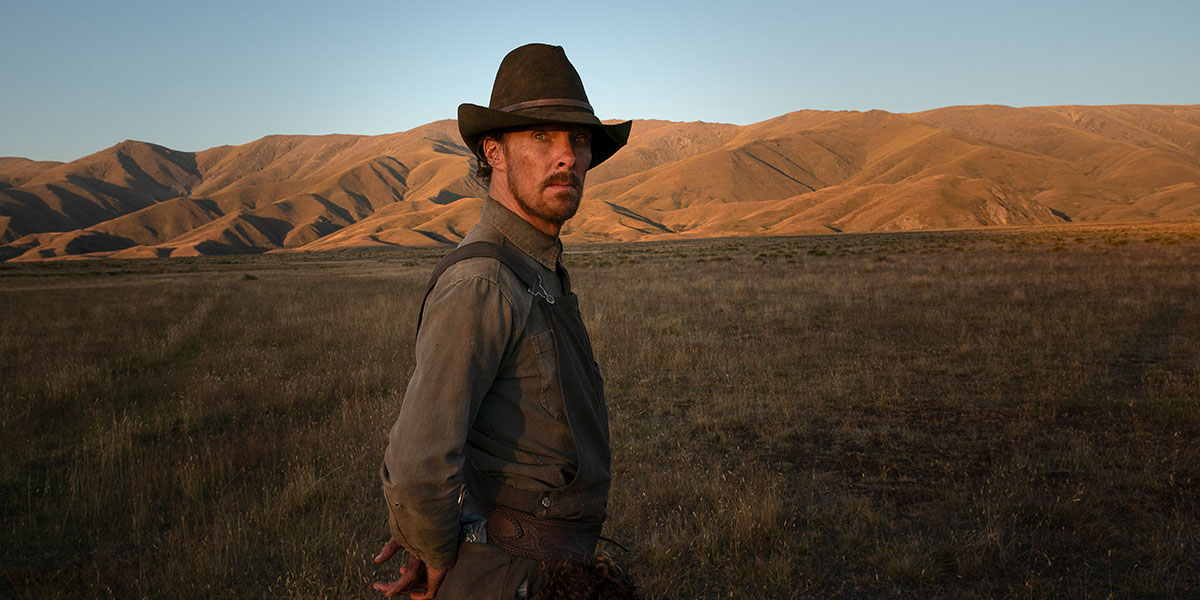
Rose’s life at the ranch isn’t a happy one. Phil is determined to make her life miserable, and Rose wilts and regresses under his misathropy and mistreatment. Husband George, clueless when it comes to women, tries to cheer her up with a piano she can’t play, and social engagements that are more of a burden. The Burbanks are gentleman farmers, which George embraces, well-dressed in bowties, hands kept clean, nothing but gentility for him. Phil, meanwhile, has no time for baths because he’s too busy riding the land, castrating the bulls, and bullying everyone in his vicinity. With Rose turning to bourbon to escape her unhappiness, tensions are about to get even worse with Pete about to join for his summer break from med school. His delicacy makes for an easy target on the ranch, and seems to bring out a particular cruelty in Phil.

Writer-director Jane Campion may not seem like the obvious choice for a film about toxic masculinity, but trust that she is a master story-teller and will get the job done. The Power of the Dog may be a little slow to start, but the tension Campion builds is powerful, even uncomfortable. From the moment Cumberbatch punches a horse in the face, you know without a doubt that something terrible (well, more terrible) is going to happen. There’s a certain fatalism about it; with every character that’s hiding something, repressing or sublimating something, we feel that tension tightly coiled and ready to spring like a predator on its prey.

Campion digs deep into their psyches, and a talented cast goes a long way in helping her establish bits of torture and trouble roiling beneath, but it’s never what you expect. Though Phil despises weakness, it can sometimes be an asset, hiding things in plain sight. This is also a metaphor for the film, the way it creeps up on you, even though you’re expecting it, even though you see it coming, it will still surprise you.

Dunst and Plemons are very good in this, their real-life romance lending authenticity to their quiet, couply moments. The film, however, comes down to the strange, complicated, and antagonistic relationship between Peter and Phil. Peter brings out the worst in Phil, he triggers something in Phil that he seems powerless to ignore. Smit-McPhee plays Peter meekly, deferring and often cowering to Phil, but also seeming to understand something essential about Phil that no one else can see. And although this is not the kind of role Cumberbatch is known for, he finds so many nooks and crannies in Phil that he makes him a truly compelling, almost charming, character. He’s educated, and cultured, but he prefers to walk around in stinking chaps, with testicle juice caked around his fingernails. His misanthropy seems automatic, his cruelty instinctual, and yet when no one else is around, we see a softer side of Phil, a side he takes great pains to keep secret. Yet somehow Cumberbatch can take those two sides of the character and make them feel both at home in the man who always remains a bit of a mystery, perhaps even to himself.

The Power of the Dog implies that everyone has a tormentor, and Campion delights in dangling them with astonishing talent and assured mastery. I can’t wait to see it again.

The Power of the Dog is an official selection of TIFF 2021.

It is scheduled to be released in an Oscar-qualifying, limited theatrical release on November 17, 2021, and then heads straight for Netflix on December 1. It is already a Best Picture front-runner so catch it any way you can.
Memory Box: Echoes of 9/11

I know I don’t need to tell you what today is. 20 years. Everyone remembers.

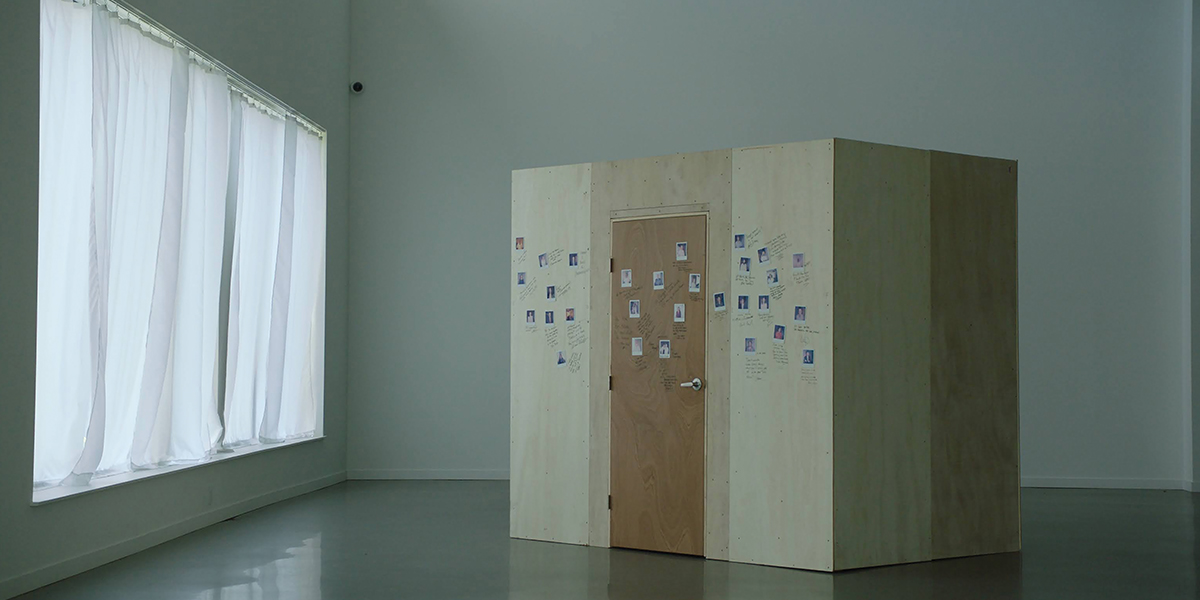
In 2002, artist Ruth Sergel set up a plywood video booth, inviting people, including eye witnesses of the attacks, from New York City, Washington, D.C., and Shanksville, PA to share their experiences. It wasn’t an interview; people stepped into the booth, hit a button, and shared whatever was in their hearts, as much as they could. Directors Bjørn Johnson and David Belton sifted through that raw footage and cobbled together an emotional tribute to that horrible, fateful day, telling the story from personal, intimate accounts of what it was like to survive that day, to lose on that day, to live through that day. As Johnson puts it: “the human story behind the tragedy.”

“Enjoy” is not the right word, but I did appreciate the film. It’s rather affecting to hear people speak from such a raw place, the wound not yet scabbed over. But for Memory Box: Echoes of 9/11, the filmmakers go one step further, building a new box but asking back the same people, people will revisit those wounds 20 years later and find them, if not exactly healed, then scarred at least. The tragedy is not so immediate, the emotions not so high. The people – survivors/victims/witnesses – have had time to reflect. To grow as people, to move on as casualties.

The box itself evokes the confessional, and inside, people admitted to guilt, grief, rage and resilience. We sit with them – the grieving parents, the young widower, the first responder, etc – and we hear their unfiltered stories. There are plenty of gruesome images in the media of that day; this documentary focuses not on what people saw that day, but what they felt. Like One World Trade Center (Freedom Tower) now standing in lower Manhattan, these testimonials form a de facto memorial, a living memorial, not just to people and places, but to the way the world used to be.

Memory Box: Echoes of 9/11 is an official selection of TIFF21.

Look for it on NBC/Peacock.

If you’d like some way to mark the occasion without dredging up so many painful memories, Apple TV has Come From Away, an uplifting Broadway musical about the best of humanity on that tragic day.

Violet

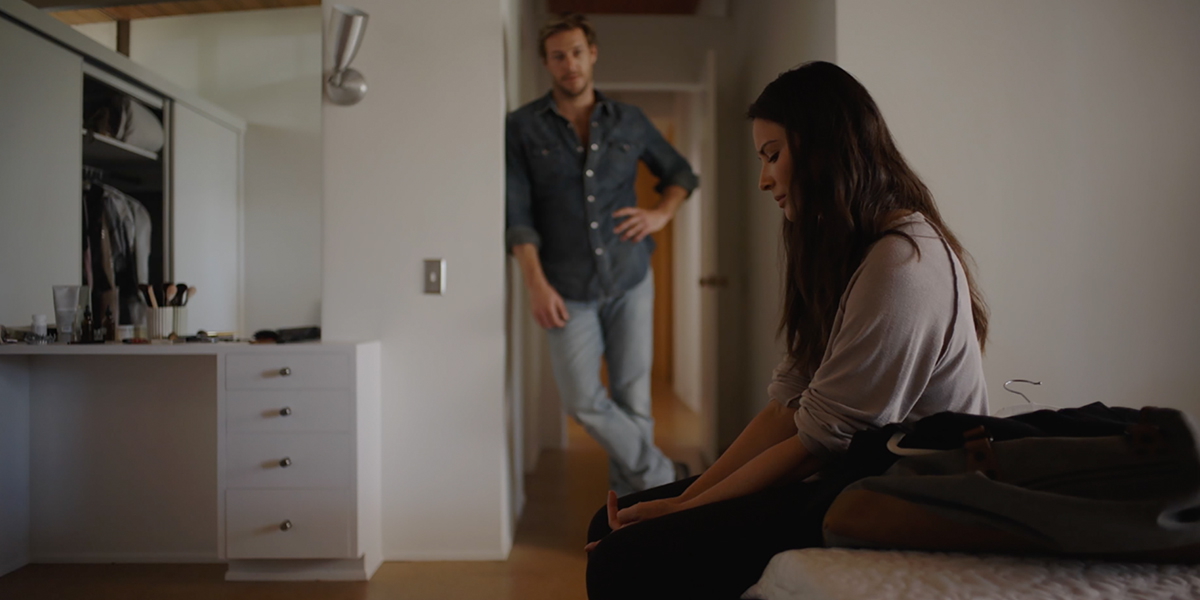
By outward appearances, Violet (Olivia Munn) is very successful. Her career is thriving, her beautiful home is under renovation to become even more beautiful, and everyone who knows her is largely jealous. But Violet has become crippled with self-doubt. Those nasty voices in her head (she calls them The Committee) have become highly critical and belligerent. She’s been allowing her inner fears to choose for her, guided not by what she wants, but what she should want.

Writer-director Justine Bateman insists that the most important character in the movie is you – YOU, the audience member. I suppose that she means that how we relate to Violet (or not) will inevitably colour our experience of the film.

The Committee is voiced by Justin Theroux: we literally hear her anxiety, always nagging, always insisting that she’s less capable, less valuable, less desirable, less worthy. Her innermost thoughts, the ones where she allows herself to be vulnerable and honest, to express her needs and wants, go unvoiced, never even whispered. We’re made aware of them only by writing on the screen. So we see the push-pull between what she truly wants, what her self-doubt thinks she deserves, and then the path she actually chooses, rarely the one she actually wants. We see her long for comfort and company even as she pushes someone away, and that inner conflict resonates so deeply that it almost takes your breath away.

Bateman has actually captured the essence of the human spirit. Negative thoughts are loud and cyclical, difficult to ignore because they voice our darkest fears. The heart’s private desires are so much harder to express; we fear their rejection so wholly that we’d rather not give them voice at all. But how are we to find happiness while repressing so much of our true selves? That’s not just Violet’s quest, it’s all of ours. To live openly and authentically is to be exposed. Violet is a grown woman, some would say in the prime of her life, yet she’s still grappling with this basic, foundational notion of self-image.

Violet is part of the Toronto International Film Festival’s lineup this year, and anyone who’s attended TIFF with any kind of regularity knows that by day two, audiences are intimately acquainted with the commercials aired before each film (often audiences will have perhaps even spontaneously developed call-and-answer reactions to each, which will haunt us all for the duration of the festival). This year, one of TIFF’s regular sponsors, L’Oréal, has a commercial starring Viola Davis about self-worth, about how it’s not a destination but a journey. I almost cannot believe that a commercial from the beauty industry feels like a companion piece to this thoughtful film, but there you have it. Quashing negative thoughts takes a lifetime of diligence and practice. First we have to learn to identify them, which is where Violet’s at when we meet her. The Committee has become aggressive, but she’s on to them. Next we’ll have to actively challenge them, which is much harder, especially for women who are conditioned to be deferential, and to expect less. Violet is fighting her fight, forging identity, worth, and satisfaction, essential tasks of adulthood. Between a lovely cursive font and Justin Theroux, we’re aware of her fight, but also subtly conscious that the other characters in the film must also be experiencing something similar, battling their own self-doubts, dousing their own anxieties. And so must we all. And learning that is perhaps the greatest lesson of all. It’s called empathy.

Kate

For a hot minute, Mary Elizabeth Winstead was everyone’s indie crush, appearing in quirky movies where she flexed her acting chops. But she’s always had this other side to her, the ability to flex muscle as well as chops, appearing in the Die Hard franchise among other movies consisting mainly of running and shooting, up to and including her most recent credit in Birds of Prey as The Huntress. Perhaps this duality is inevitable; reigning indie queen Florence Pugh has recently made the leap into the MCU as Yelena in Black Widow (and I’m guessing beyond). Winstead isn’t the first to trend this way, but she’s certainly an excellent example, believably tough and resilient, yet adding dimension to her characters with a humanity and vulnerability that many action movies don’t make time for.

In Kate, she plays an assassin who has 24 hours to find and punish her murderer. Yes you read that right. Someone wanted her to suffer; she knows she’s going to die, and it becomes increasingly and wincingly apparent throughout the film. But as she methodically machetes her way through Tokyo, she finds herself bonding with and pairing with the daughter of one of her previous victims, Ani (Miku Patricia Martineau). It’s a uniquely interesting relationship that allows Kate the time to atone for some of her sins, but also to come to terms with the cost of her life’s choices. She’s leaving chaos and violence in her wake, and she’s determined to make a little more before she goes.

Kate’s heart bleeds vengeance. Her eyes bleed blood. She drags her broken body through the garish neon lights of Tokyo fueled by her thirst for revenge and motivated by the only sort of legacy she can leave. Winstead plays Kate with a lot of grit; she is ruthless yet compassionate. She is a woman forced to reckon with her transgressions in the hours before her death, even as she adds to them. Winstead makes sure that Kate is a surprisingly complex character as she crawls toward her doom, destruction in her wake, and possibly her own soul, determined to finish one last job for her handler (Woody Harrelson), the only family she’s ever known.

Kate more than earns its R-rating in bloody violence; fight scenes are tautly directed by
Cedric Nicolas-Troyan (The Ring), and even though there’s a strong narrative component, the action is so relentless there’s hardly room to breathe. Kate drops on Netflix this Friday, September 10th, and I think you’ll find it unusually hard to be disappointed.

Cinderella

Did the world really need another remake of a classic, oft-told fairy tale? Apparently we did. I didn’t know it until I saw it, but I did. This one offers up convincing reasons for its existence, fitting itself into a uniquely shaped niche we didn’t know how desperately we wanted filled.

What is it: Live action but not Disney.

Who’s in it? Camila Cabello stars as Cinderella, but the entire cast is stacked: Idina Menzel as the wicked step mother; Pierce Brosnan as the King and Minnie Driver as his Queen; James Corden as the voice of one of Ella’s mouse friends; the venerable Billy Porter as the extra fabulous fairy godmother; and then there’s the lesser known but equally talented Nicholas Galitzine as the Prince. Well done all round.

What does it look like? While the exact time period is hard to pin down, costumer Ellen Mirojnick embraces the sumptuous silhouettes of the roughly Victoria era using rich fabrics and a bejeweled colour palette but she isn’t boxed in by them. Short hemlines and asymmetrical necklines are clearly anachronistic but who cares, everyone looks great, the mood is magical, the gowns sparkle, the choreography is light but on point. What’s not to love?

What does it sound like? Divine. Of course there’s the obligatory radio bop, an original song for the Cinderella soundtrack called Million To One, which we revisit if not repeatedly, then at least frequently. And there’s a couple of songs sung by the town crier that have to be written for the movie as they’re far too specific, referencing not just movie plot points but also random crowd activities. But many of the songs you’ll not only know, but I’m quite certain you’ll sing along to: the Eurythmics’ Sweet Dreams, Janet Jackson’s Rhythm Nation, and perhaps the greatest needle drop in a decade, Salt-n-Pepa’s Whatta Man. Practically perfect in every way.

Who had the balls to make this thing? Kay Cannon of course, as both writer and director. This is only her second film (after Blockers), but she does have some bona fides producing the Pitch Perfect movies. She’s got an eye for style, a keen ear for talent, and she writes a script that actually makes Cinderella relevant again. This Cinderella is going to be content being a wife and princess. She wants more. She wants a career. She wants fulfillment. She wants more comfortable shoes.

Should you watch it? Absolutely, without reservations. This isn’t a major piece of cinema or a must-see blockbuster. It’s just a well-executed musical that’ll put a little lightness in your heart. And who doesn’t need that?

`The Peanut Butter Falcon

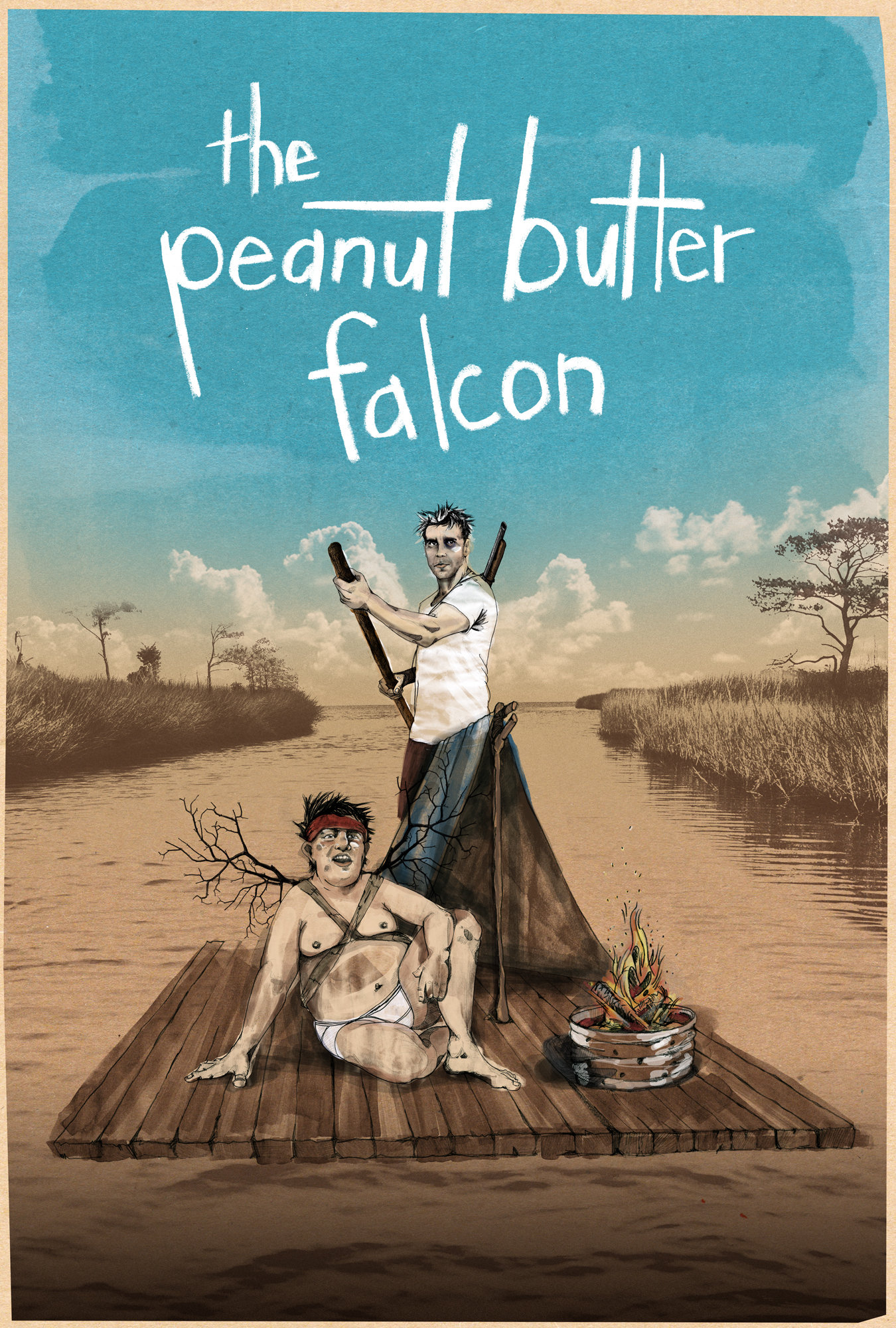
 Zack Gottsagen is an exceptional young man who happens to have Down Syndrome. At a camp for both disabled and non-disabled people, his exuberant energy was attention grabbing. He told people he intended to be a movie star. Two other campers, Tyler Nilson and Michael Schwartz, decided to write him a starring vehicle for their new friend, so they did. Directed it too. Called it The Peanut Butter Falcon.

In it, Zack plays a guy named Zak. Zak has no family, so he lives in a nursing home where he is well cared for but surrounded by old folks, as you can imagine. He runs away not because he’s unhappy or mistreated, but because he dreams of being a wrestler, and meeting his idol, Salt Water Redneck. Zak’s not helpless but there’s a reason he lives in a care home, and without a carer, things go badly for him. Eleanor (Dakota Johnson), a social worker from the home who’s quite close to Zak, sets out to find him. But first, Zak finds Tyler (Shia LaBeouf), a pretty wayward guy used to being alone and rootless in the world, not exactly the prime suspect for becoming a vagabond caregiver, yet here we are.

The Peanut Butter Falcon is often described as a modern day Adventures of Huckleberry Finn – I suppose the raft alone makes this comparison inevitable. This, however, is a different animal. Sweet and heart-warming, it reminds us that we all need goals and human connection to thrive. We need to matter. Wrestling may be the destination, but friendship is the journey.

Beyond the Infinite Two Minutes

You’ve seen time loop movies before, but you haven’t seen one like this. An official selection of the Fantasia Film Festival 2021.

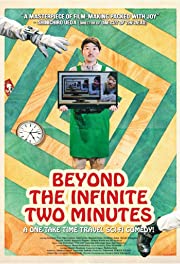
The Premise: Cafe owner Kato (Kazunori Tosa) returns home after a long day at work via a very short commute as he lives just above it. His apartment is just as he left it but contains a surprise: a message from himself, delivered “live” from the cafe downstairs. Weird, right? Turns out the monitors in his home and his cafe are linked, and the one in the cafe is suddenly broadcasting from two minutes in the future. By racing up and down the stairs, Kato can leave a message and then hear it, or deliver a message he knows he’s already heard. Things get interesting when his friends get involved, tinkering with the system in order to see deeper into the future, and using it to procure money, money that actually belongs to some gangsters because of course it does. Too bad they didn’t see that coming.

The Verdict: The film has an immediacy that distinguishes it from other movies in the genre. Kato’s ability to tamper with it and interact with it directly is also a refreshing addition to genre rules that are perhaps growing stale. But best of all, not to mention rather daringly, director Junta Yamaguchi pulls this off in a single 70 minute long take. One single take! It’s seamless, never gimmicky, infusing energy and urgency in a movie that’s surprisingly full of fun and a bubbling levity despite growing threats and intensity. It’s high-concept without being alienating, an inventive twist inspiring real creativity within the cast and crew. They keep things simple, the film bare bones in order to emphasize its moving parts. The characters are uncomplicated but surprisingly fully-formed, which adds to the intimacy of a time loop with such limited scope. Haunted by potential paradoxes, this madcap mini adventure shows us how anxiety drives us to recreate the past rather than pursuing the future. This movie is a testament to hard work both behind and in front of the screen; the crew pulls it off with an ease that only comes from serious rehearsal. I’m not sure when it happened exactly, but Beyond The Infinite Two Minutes quietly became my favourite film at the festival.

Glasshouse

I am a fan of a post-apocalyptic/dystopian nightmare done well, and I wasn’t sure that’s what Glasshouse promised, but boy did it deliver. Glasshouse is an official selection of the Fantasia Film Festival 2021.

The Premise: Living in a glasshouse in total isolation, a matriarch helps her family survive The Shred, a dementia-like virus that steals memory. They take turns standing guard, growing food, maintaining the home, educating each other, and comforting themselves with ritual. It’s survival and subsistence, but with a certain peace that very few others would have encountered in this new world. The tenuous peace is inevitably shattered by the arrival of a Stranger, the first in a long time that they haven’t immediately dispatched. His presence stirs up an uncomfortable past, and it seems perhaps there are worse fates than forgetting.

The Verdict: Director Kelsey Egan takes her time introducing us to the unique social ecosystem of the glasshouse in which our family lives. A dangerous toxin in the air means there are no live animals and edible plants need to be treated with the same care and attention as human lungs. It’s a precarious way to live yet we are given to understand that they are the lucky ones, and have stayed that way thanks to vigilance, ritual, and an armed guard. Yet they allow a stranger to enter, and to stay. True, two of the sisters are young women, and quickly seduced by the only man who isn’t their brother. But it turns out their relative peace was a carefully balanced construct and the Stranger has shifted the dynamic simply by infiltrating it. It’s always juicy and fascinating to imagine how someone would survive the end of the world, and this particular family makes great a host for the apocalypse. Writers Egan and Emma Lungiswa De Wet make a convincing and absorbing case for their take, creating a world that’s innately creepy and inspires suspicion. Families are of course always a bounty for a story-teller; they are unique partnerships built upon jealousies, secrets, and competition, yet they are bound to each other with ties only they, and sometimes not even they, can understand. A fantastic young cast including Jessica Alexander, Anja Taljaard, and Hilton Pelser make us believe in the frailty of their survival, and warn us that the last one to succumb isn’t exactly the winner. While oblivion is bliss, remembering is a burden.

Vivo

Huzzah! Netflix has a new animated film out this weekend, and it’s perfect for a family movie night.

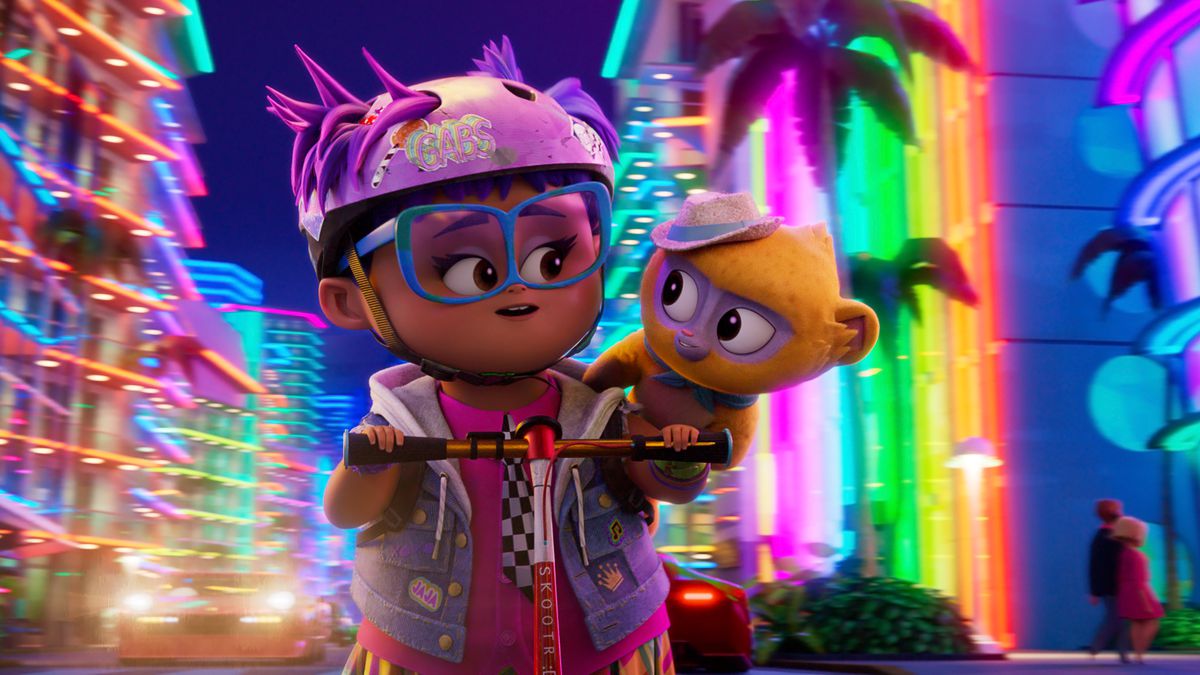
The Premise: An old man named Andrés gets a second chance at love when his old flame reaches out to him in Cuba, inviting him to her final show in Miami for a lovers’ reunion. Andrés is touched, and has just the thing: a love song he wrote for her when they parted ways years ago. Unable to deliver it to her himself, his new partner (in life and in business, but not in love), a singing monkey named Vivo (voiced by Lin-Manuel Miranda), takes it upon himself, with a the help of a little girl named Gabi (Ynairaly Simo), to make Andrés’ last wish come true.

The Verdict: I don’t expect much from Netflix animation, but clearly I need to revise my bias as the last few examples have proven me wrong. I hoped Vivo might be good, but I was delighted to find myself loving it. The animation was quite pleasant, and the songs were nearly first-rate – some of them may even live lives outside of streaming. I even learned a little something: the monkey Vivo isn’t a monkey at all. He’s actually a kinkajou, also known as a rainforest honey bear, a nocturnal, fruit-eating tree-dweller more related to raccoons than to monkeys. They’re also surprisingly good singers and look quite dashing in small hats and foulards. Enjoy.

Jungle Cruise

The Premise: Based on a beloved ride at Disney that’s 20% water ride and 80% dad jokes (now with less racism!), the film adaptation introduces us to Dr. Lily Houghton (Emily Blunt), thwarted at every turn because of her gender, but dedicated enough to scientific pursuit to follow it all the way to the Amazon where she engages irascible skipper Frank Wolff (Dwayne Johnson) to deliver her to the jungle.

The Verdict: While it achieves no great heights, it’s a decent action-adventure the whole family can enjoy. It relies heavily on the charm and chemistry between Blunt and Johnson, who are quite apparently enjoying themselves on screen. Emily Blunt is gorgeous, even in pants, Johnson is formidable wrestling a cheetah, Jack Whiteall stuns in a series of dinner jackets, Paul Giamatti looks like he was born to sport a gold tooth, and Jesse Plemons delivers a memorably villainous accent. A cross between Disney’s successful ride-based franchise, Pirates of the Caribbean, and the more recent Dora the Explorer effort, Jungle Cruise is just fun enough, funny enough, interesting enough, and exciting enough, but with the excessive charisma oozing from our two leads, this is a worthwhile watch – in theatres, or on Disney Plus.