Category Archives: Movie Reviews

Our reviews and thoughts on the latest releases, classics, and nostalgic favourites. Things we loved, things we hated, and worst of all, things we were ambivalent about.

Justin Timberlake + The Tennessee Kids

I went to a Justin Timberlake concert once, sort of. I hadn’t meant to exactly, but he and Jay-Z were touring together for their Legends of Summer tour. 173784081-600x450They had songs in common off their respective The 20\20 Experience and Magna Carta Holy Grail albums, so it felt like a good fit to co-headline a tour that ended up playing to more than half a million fans over 14 sold-out dates in just under a month. It was a great show in Toronto’s Rogers Centre (where the Blue Jays play). Sean treated me to luxurious floor seats and I can’t think of any other show where I felt so wrapped up with love, with 53 000 happy people surrounding me. JT and Jay-Z had great chemistry and impressive collaboration, and although I hadn’t intended to see Timberlake, I was glad that I did. With great back and forth and no one-upmanship, the two ended the show on an exceptionally high but sad note: Young Forever dedicated to the memory of Trayvon Martin.

As soon as The Legends of Summer tour wrapped up, Justin embarked on a 2-year tour in support of his album. This film, directed by Jonathan Demme, is the culmination of all that hard work – the final show, January 2nd 2015 at the MGM Grand in Las Vegas.

With only brief introductions from the supporting members of his band and stage show, the movie launches into concert mode and stays there. There’s great camera work and Demme keeps the whole piece feeling energetic andjustin-timberlake-and-the-tennessee-kids-review.jpg gives you front-row access so you feel like not only are you there, you’ve got terrific seats. But apart from the brief before and after footage, there’s no real interviews or behind the scenes access. And since I’m only familiar with his radio hits, there are lots of songs that I find hard to get into. So if you’ve always wanted to see JT up close and personal without emptying Sean’s wallet, here’s your chance: it’s playing on Netflix, and it’s a great concert doc. But it’s no more and no less than that.

The Free World

Mo (Boyd Holbrook) is recently released from prison where he served hard time for a crime he didn’t commit. Reintegration to the outside world is hard on him, and the local cops are even harder. His only friend is his boss at the animal shelter (Octavia Spencer), but she is at a loss to explain to him how this outside world has so few rules that a man can beat his dog to death without consequences.

thumbnail_24895One night he finds a woman (Elisabeth Moss) in the shelter, covered in blood. It turns out the two have a lot in common; an abusive marriage can feel an awful lot lot like jail. To keep her safe, he risks his own freedom to hide her, but his crappy apartment makes for a terrible hideout, and the two have to go on the run to stay ahead of the law. And you know what? It’s a pretty sucky world out there.


There’s a lot of comparisons to be drawn from the movie – the shelter’s cages like prison cells for bad dogs; Moss a puppy frightened of her owner. And it’s painful to admit that the ‘free world’ isn’t what it’s cracked up to be, that prisoners may be more predictable than random citizens.

Jason Lew’s screenplay is interesting because it leaves much unsaid and really forces the viewer to question what’s important. But leaving us in the dark is a bit alienating, and we don’t always engage with the characters as we should. The acting’s not the problem here, but the direction might be. The Free World sometimes feels like two different movies – strongest in the quiet parts, and tonally uneven in the more actiony sequences. I really liked how the movie started out, I liked this portrait of a man not knowing his place outside of a prison cell, not knowing who he is outside of the system, and not really being allowed the room to breathe and discover. The Free World is cynical. More cynical than a wrongly convicted born-again-Muslim who sleeps best in the confines of a closet. It’s a toughie.

Peter And The Farm

I saw 5 movies today at the New Hampshire Film Festival – Peter And The Farm was the first, and it’s the one I can’t stop thinking about. It isn’t a perfect film; the film makers are having a little too much fun experimenting with their fancy cameras, content to show you their prowess with focus/unfocus on a brightly lit night sky. But they get top marks for subject: A+++.

mv5bmty4odk0nzk4mv5bml5banbnxkftztgwmta2njc5ote-_v1_ux477_cr00477268_al_Peter Dunning, farmer, is the star of the documentary. He’s like no one you’ve ever met. He’s an artist who took up farming as way to sustain his art. But farming has overwhelmed his life. He fell in love with it, put it ahead of everything else, neglecting his art, his health, his numerous wives and children, who all have left him. Now it’s just him and the farm, a derelict little operation he has grown to loathe. And the memories that haunt him. And the alcohol that soothes him.

Rarely seen without a bottle of something in his hand, Peter is a legendary story-teller with a bottomless bag of tales to tell, grateful to finally have an audience again. He performs his farm work dutifully but grudgingly, the brutal realities of farm life a lonely cautionary tale. Sean and I agreed that Peter has a philosophical soul, and that that might just be his undoing. Alone on the land, he’s got nothing but quiet hours of drudgery for thinking, thinking, and more thinking. And most of his thoughts revolve around the pointlessness of existence in general, and his life’s work specifically. The only thing that gets him through the day is fantasizing about his suicide.

Peter is an endlessly fascinating character, but he’s a real, flesh and blood man with real demons. This is a documentary, and you can never forget that the stakes are real, and that the man selling you beets at the farmer’s market this Sunday might just be thinking of going home and putting a shotgun in his mouth. The honesty is beautiful but there’s a tormented soul on display, and that’s tougher to watch than the sheep gutting and the cow gynecology. Rural Vermont looks gorgeous but you get a very real sense that this one-time utopia has now turned into a prison and Peter, one way or another, is serving a life sentence.

Masterminds

Not everyone loved Napoleon Dynamite, but you can’t deny that it was an unprecedented success. Its director, first-timer Jared Hess, hit it out of the park, the movie absorbed into popular culture. He’s been unwilling to accept that he may be a one-hit wonder (same goes for Napoleon star Jon Heder) – the two keep making films at a dwindling rate, each more lavishly terrible than the last.

Jared Hess’s latest failure is called Masterminds, and he convinced a long list of famous names to go down in flames along with him: Zach Galifianakis as la-et-mn-ca-sneaks-masterminds-kate-mckinnon-20150426.jpgthe witless driver of an armoured money truck whose terrible relationship with fiancée Kate McKinnon makes it all too easy for him to fall for coworker Kristen Wiig who manipulates him into working with her confederate, Owen Wilson, who thinks a heist is in order. Galifianakis will do all of the work under the guise of love but will receive little to no reward if Wilson has anything to do with it – he’s got contract killer Jason Sudeikis after him and only the law (Leslie Jones) has any chance of intervening.

It’s “based on a true story” which means that someone once stole money somewhere and that’s excuse enough for this atrocity. With 3\4 of the Ghostbusters assembled, there’s no denying that this is a powerhouse cast, but the trouble is they’ve been given a crumpled up tissue of a story and no one knows in which direction to sneeze. I truthfully confessed to Sean that I zachonly laughed once the entire movie – and it was post-credits, in the blooper reel, not even at a joke that got edited out, but at Zach Galifianakis accidentally hitting his head on a swing set (I console myself that it made Kate McKinnon laugh too, before she checked that he was okay). Only babies laugh at people getting bonked on the head, but I had been in a comedy desert for the past hour and a half and I was parched for laughter.

It’s just shameless and lowbrow and it almost makes you feel bad for the dumb criminals it’s styled after. I have a low tolerance for stupid slapstick and this movie didn’t have a single other trick up its sleeve. Some of the scenes literally feel like an SNL sketch gone on too long, and those are the good ones. I have zero forgiveness in my heart for a movie this bad, and I’ll be expecting some dark chocolate truffles and a bottle of Dom with a heartfelt card signed by all the cast by way of apology soon. But not soon enough.

The Accountant

What if Batman was a bean counter? Okay, that’s not exactly what The Accountant is trying to do, but it’s close, closer probably than it intended.

Ben Affleck plays Christian Wolff (not his real name: alter ego), a mild-mannered, socially awkward accountant. And when he whips his glasses off, he becomes a vigilante crime fighter. Sort of. Okay, what actually happens is he keeps his glasses on in order to “uncook” the books for various crime syndicates. Like, for the worst and dirtiest people. But if they break his moral code, he either calls in the commissioner – excuse me – treasury agent (played ben-affleck-first-look-at-the-accountant-socialby JK Simmons, who will indeed play Commissioner Gordon in Affleck’s upcoming The Batman) or goes ballistic on their ass. But not crazy ballistic: he remains very cold and very calm in order to diligently murder everyone in his path. So autism becomes a super power and The Accountant is just Batman without a cowl. Although admittedly when I saw Ben Affleck marking up a window, I immediately though of the role as a little more Good Will Hunting meets Jason Bourne – Matt Damon’s territory, in other words.
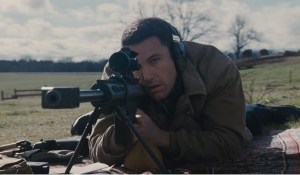
In order to play autistic, Ben goes affectless and Affleckless. He turns off the charm and the smirk and the simmering rage but doesn’t quite know what he’s left with. It doesn’t help that The Accountant suffers from its own identity crisis, sometimes darting into the phone booth as an action flick b3dd1dc8b235f1a14730dc81f5cffdfba6e4eae050f66447637fa4e75242f350complete with stalky sniper Jon Bernthal (from Daredevil, just not THAT Daredevil) as the villain, only to emerge as a drama or worse yet, a quirkie indie romance with Anna Kendrick as the Mary Jane, I mean, the damsel in distress\love interest. And if this all sounds like a lot to keep track of, don’t worry, there’s a portion in the middle that’s perfect for taking a 20 minute nap and waking up feeling like you’ve missed nothing at all.
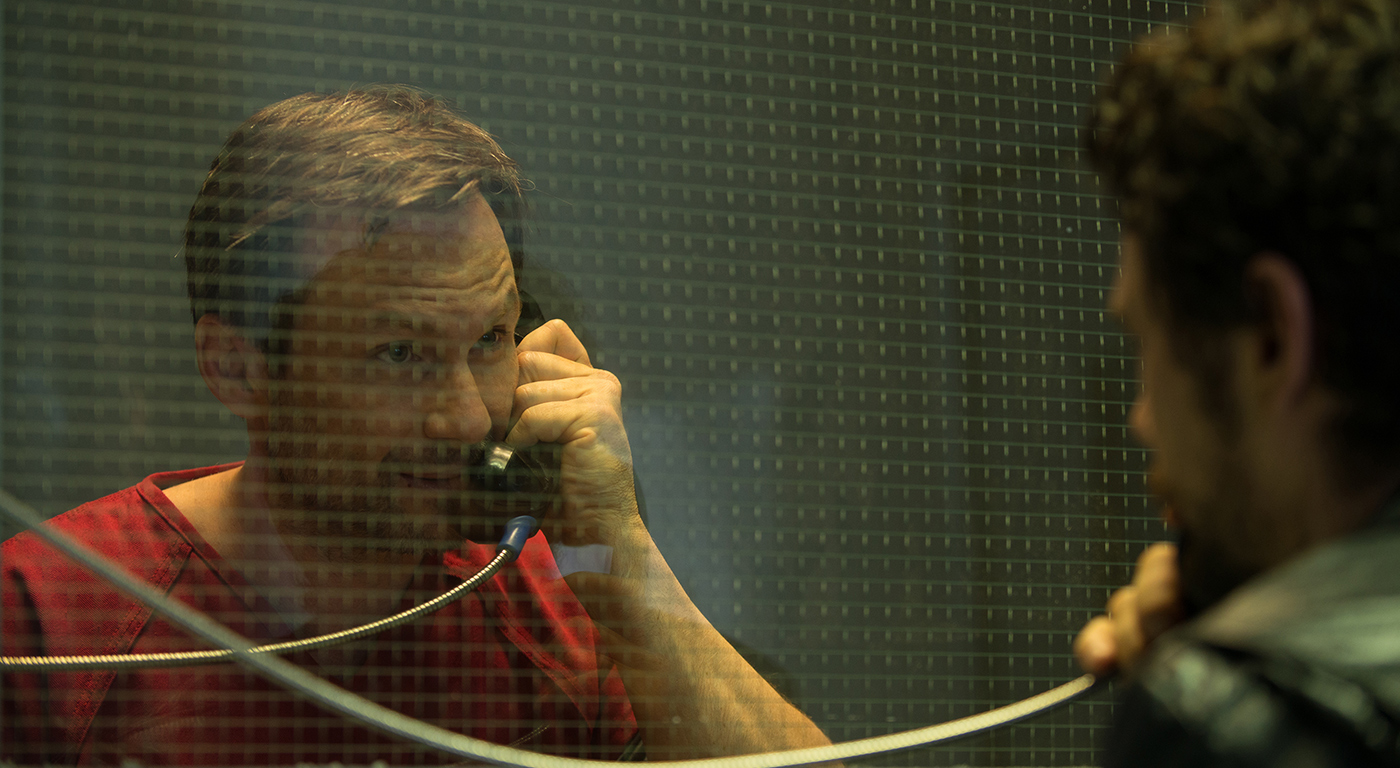
But for all that, I enjoyed The Accountant. It’s not going to make my top 10 this year, and maybe not even my top 10 this week (that’s not a hard knock, I’m just on my way to a film festival), but it was entertaining and fun, even if Gavin O’Connor’s direction is a bit uninspired. Plus, it’s kind of great to see autism as an asset rather than a setback. Affleck manages not to overplay his cards although the story does require us to equate a neurodevelopmental disorder with superior morality – superior even to the law, which has Viola Davis’s voice ringing in my ears – what if the next Superman is an accountant?


The Adderall Diaries

If you dial your memory reel back a few years, you may remember the controversy surrounding James Frey’s “autobiography” A Million Little Pieces. Oprah, having endorsed the book, came down particularly hard on him for fabricating many of the juiciest bits of the book.

Stephen Elliott is a lesser-known memoirist with a similar fate: one night at a reading for his book in which he details the death of his mother, his father’s abuse, the group homes and addictions, living on the streets, and ultimately his father’s death as well, his father stands up from the crowd and declares himself alive.

adderall-diariesHm. Okay. Elliott’s publisher and agent are not terribly impressed. Book deals crumble. His integrity’s in shambles. And so he falls down a deep dark hole called writer’s block.

Before we move on, let me just state: all of this may or may not be true of the real Stephen Elliott. Elliott’s a real guy who sold the rights to The Adderall Diaries to James Franco for a good heap of money, but has since said that the material is so altered it seems strange, and dishonest, that they still call the character by his name.

Elliott’s father did heckle him at a book reading though. And he left a nasty trail of Amazon reviews to Elliott’s books. Their relationship is certainly strained, and now matter how you slice the cake, the dude has been through some shit. Writing has helped him cope, acting as a release valve for all the hurt and anger he carries around.

When faced with a bad case of writer’s block, Elliott dealt with it by a) taking Adderall, a drug for people with ADHD and b) attending the murder trial of Hans Reiser, who used a “nerd defense” to no effect and was convicted of murdering his wife. The book is subtitled A Memoir of Moods, Masochism, and Murder, and all three are are intertwined messily in the film.

Lots of famous faces lined up to take part in The Adderall Diaries: Franco as Elliott of course;adderall-diaries-1 Amber Heard as his girlfriend; Cynthia Nixon as his agent; Ed Harris as his father; Christian Slater as the accused murderer. Unfortunately, the “story”, such as it were, is a jumbled mess, and you can’t make much sense of the conflicting plot lines. And James Franco just wants to swagger through it all, convinced it’s his chance to play a badass in a leather jacket when actually he’s supposed to be playing a man stunted with pain.

The film, Pamela Romanowsky’s directorial debut, neglects to make much of an impact, though it does have some interesting stuff to say about trauma’s effect on memory. But on true crime, family, forgiveness, and addiction it widely misses the mark. It’s too bad. I think there was a better film in there somewhere, between the daddy issues and the flouncy flashbacks. But it just feels ironic that a book about “retrieving memories and reordering information” gets a movie treatment that illustrates how slippery truth can be by obscuring the most basic of facts.

You can watch The Adderall Diaries on Netflix, and judge for yourself, but be warned: the only thing more subjective than truth is art.

Charlie Wilson’s War

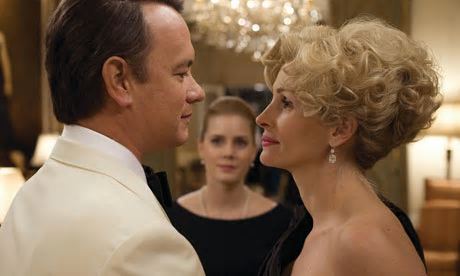
Charlie Wilson (Tom Hanks) was a Texas congressman, a jolly womanizer but otherwise fairly low-level until his good friend former beauty queen Joanne (Julia Roberts) convinces him to take time away from his hot tub shenanigans to make a little trip to help the Afghan people.

In the early 80s he visits the Pakistani president who is frustrated with inadequate American support in opposing the Soviet Union. Pakistan is flooded with Afghan refugees (a fifth of them!), but thousands of others have been slain. They send Wilson to a refugee camp and he can’t help charliebut be moved by what he sees there. Going home a changed man in his heart, he rallies around the cause. His personal life, though is still a shambles: US Attorney Rudy Giuliani is leading an investigation against him for allegations of cocaine use.

Philip Seymour Hoffman provides brilliant support as a maverick CIA guy who is leading the covert US effort in Afghanistan. Wilson ultimately multiplies the American contribution by a hundred fold, and it becomes a huge part of the foreign policy of the time, but there aren’t exactly a lot of easy answers here and Hoffman’s crazy windmilling arms tell us a lot about the near-impossibility of his job.

Julia Roberts is of course poised as hell, the perfect choice for a controlled, smart, beautiful woman who knows what she wants, and how to manipulate men to get it. The few scenes she shares with Amy Adams, playing Wilson’s administrative assistant, are quite punchy, their rivalry crackling. Emily Blunt makes a brief appearance in her underwear as well, which means I didn’t know who Emily Blunt was back in 2007 when I would have seen this for the first time.

Tom Hanks is commanding as always, but I have to wonder whether he was the right man for the role. Some of the juiciest material of this “true story” seems to have all but disappeared, his drug use played down (have we ever seen Hanks snort cocaine?), his DUI unmentioned, and his worry about what happens when the US inevitably disengages from Afghanistan only vaguely alluded to.

The truth is, there were unintended consequences to this involvement. When Afghanistan lay in ruins, the US pulled out, washed their hands of death and destruction they had funded, and this left a vacuum for Osama bin Laden to emerge as a power player. I have read from multiple sources that Tom Hanks couldn’t deal with the 9-11 implications, so they were largely written out, with just the identifiable sound of a plane flying over Washington hinting at what was to come. The film is quite good, almost great, but I do wonder if someone else was bringing it to life, could it have maybe been a Dr. Strangelove for a new generation? I guess we’ll never know.

Side Effects

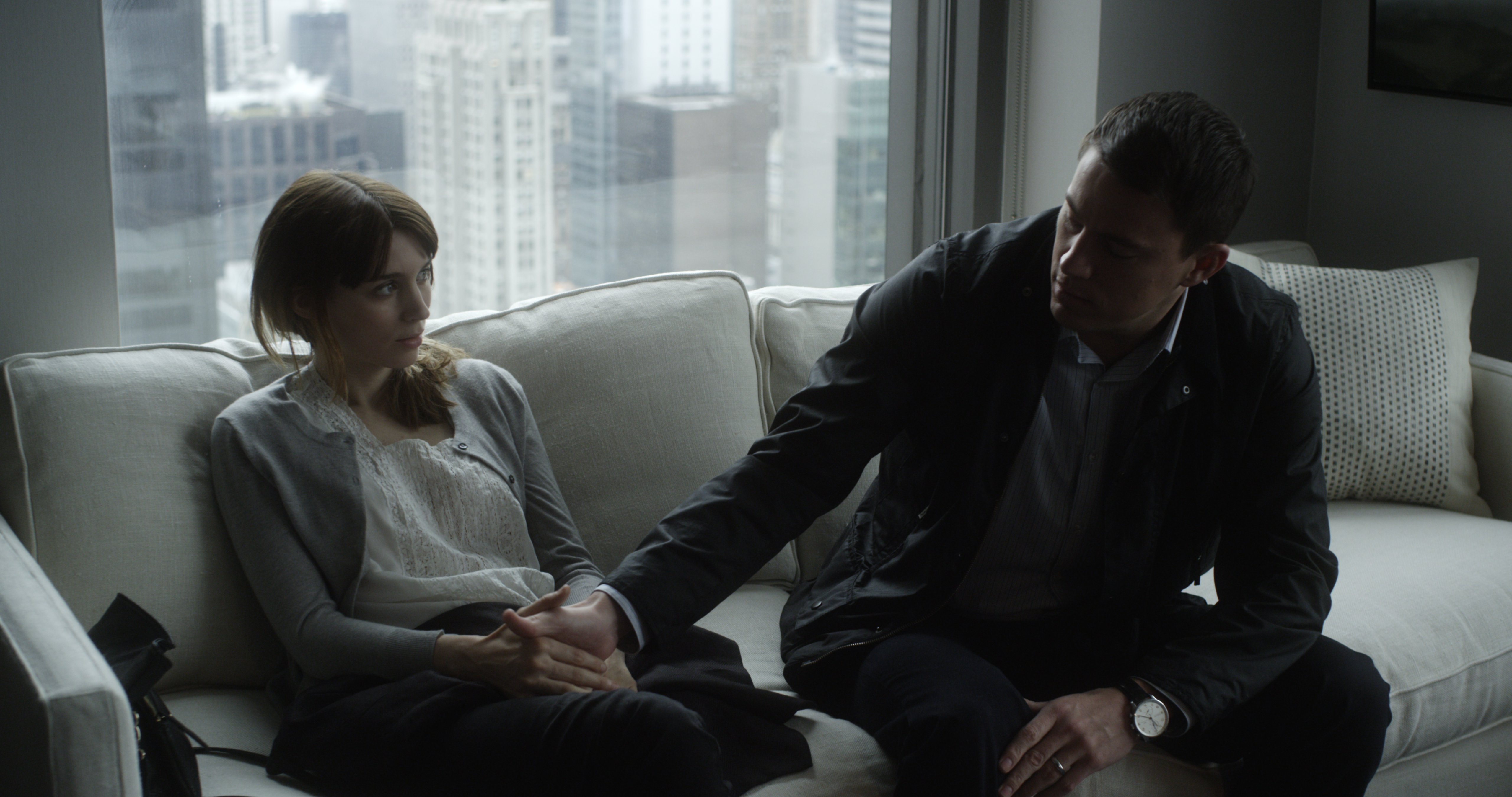
Emily Taylor (Rooney Mara) is trying very hard to be happy. Her husband (Channing Tatum) is newly released from prison and they can resume their lives together. But happiness isn’t coming easy: Emily is depressed, and suicidal. She begins seeing a new doctor side-effects-A032_C011_0101LT_rgb1(Jude Law) who prescribes an anti-depressant called Ablixa. Ablixa’s causing some strange side effects though. Worrisome side effects. Violent side effects.

Side Effects is a smart, well-crafted thriller by Steven Soderbergh. He’s heavily influenced by Adrian Lyne’s Fatal Attraction and hits all the right marks for a taut, twisty little thing. He’s not big on making a statement about pharmaceuticals or psychiatry or mental illness, any of which might have been appropriate.

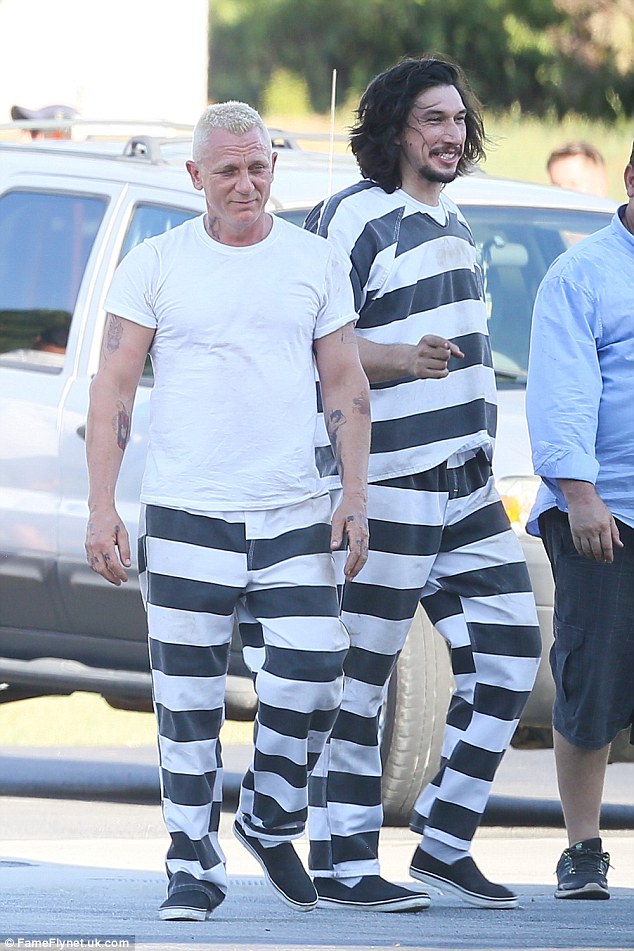
I forgot how much I liked this movie. It was supposedly Soderbergh’s last, 37B68FB400000578-3766104-image-a-41_1472601500752and it seemed one he could be proud to go out on. TV stuff notwithstanding. But now, at the ripe old age of 53, he’s “come out of retirement” to do Logan Lucky, the new Daniel Craig\Sebastian Stan\Channing Tatum\Katherine Heigl\Adam Driver\Hilary Swank Nascar-heist movie.

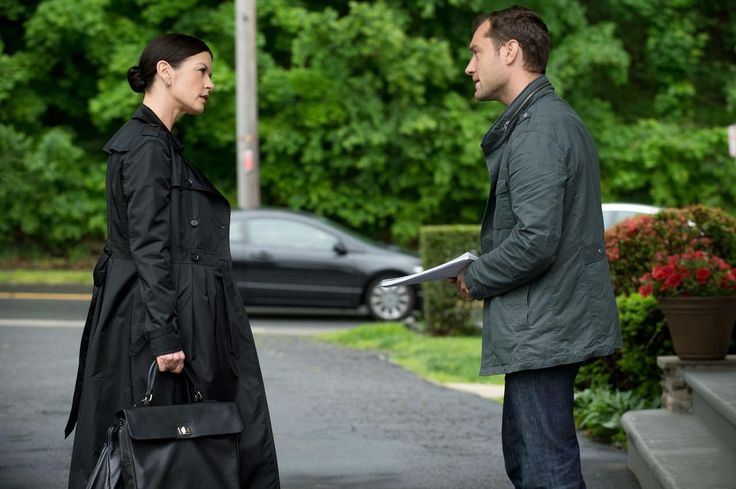
But back to Side Effects. The first half is about guilt and mental health: how they interact in a doctor’s office, and in a court of law. The second half is a little more Alfred Hitchcock than Adrian Lyne. Things come unglued. The second half is less successful than the first but a fun, b4b4cec15c78289caf1c4442df99b616engrossing watch. The anxiety is ratcheted up expertly, with Soderbergh always in control. Rooney Mara is a terrific actress and she coasts ably over any rough terrain. Catherine Zeta-Jones and Jude Law keep up. Soderbergh stays at the top of his game as well – true, he circumnavigates truth and exploration in favour of entertainment, but it’s forgivable. It’s always forgivable when it’s this fun to watch.

13th

13th

(1) Neither slavery nor involuntary servitude, except as a punishment for crime whereof the party shall have been duly convicted, shall exist within the United States, or any place subject to their jurisdiction.

(2) Congress shall have power to enforce this article by appropriate legislation.

That’s the Thirteenth Amendment to the Constitution of the United States of America.  You may have seen a few movies dealing with it.  As a Canadian, I don’t know the ins and outs of the U.S. Constitution, so it’s always interesting to learn a little about how the U.S. system works.  Yesterday I learned that the U.S. system has an extremely dodgy concept of freedom from slavery.  13th is a documentary from Ava DuVernay that sheds some light on the systematic oppression of black people using the gigantic loophole in the middle of the Thirteenth Amendment.

The Thirteenth Amendment clearly states that slavery is allowed as punishment for crime.  Not coincidentally, once slavery became illegal, former slaves were rounded up, arrested for petty offences, and imprisoned.  As these methods slowly fell out of favour, the tactics to oppress former slaves became a little less obvious.  For example, Richard Nixon’s “law and order” methodology was designed to target black civil rights activists in order to gain white support in the south.  Guess what?  The plan worked exactly as intended, quelling the movement for equality by killing or imprisoning tons of black leaders.

Similar results were obtained through Ronald Reagan’s “war on drugs” (which imposed harsher penalties on crack than cocaine in powder form) and Bill Clinton’s 1994 “tough-on-crime” legislation (a crackdown on violent crime enacted during a period when such crime was decreasing).   Donald Trump perfectly illustrates how the same approach is alive and well today.

Since the abolition of slavery, it has been terrifyingly easy for politicians, backed by corporations, to continue to oppress an entire class of people.

Worse, continuing this oppression is economically advantageous and politically effective, because it keeps prisons stocked with cheap labour and earns votes from people who wish we could turn back the clock to simpler times.

Worst of all, the Constitution not only allows prisoners to be treated as slaves, it also permits prisoners to be permanently stripped of the right to vote.  That’s right: VOTING IS NOT AN INALIENABLE RIGHT IN THE UNITED STATES.  Living in the wrong state can cost you your vote, forever, because of a crime you committed and served time for.  That fundamental failure of democracy has occurred more than five million times over in the “land of the free” and, of course, disproportionately affects minorities because that’s who the system has targeted for imprisonment since the abolition of slavery.

Bottom line: the U.S.A. is broken.  Your elected officials aren’t interested in fixing the problem.  If anything, Corporate America is lobbying to worsen the divide.  Change must be demanded by the voters, and for that reason alone 13th is a must-watch.  It’s available on Netflix.  Add it to your list.

The Ex

Is this movie worth watching for Paul Rudd’s douchey earring?

Jason Bateman plays a dick very well. Unfortunately, Zach Braff plays a dick very naturally himself. Like, even when he’s not supposed to. Even when he’s supposed to be the sympathetic character. Does anyone actually like Zach Braff?

Tom (Braff) is a NYC cook who loses his job on the very day his wife Sofia (Amanda Peet) gives birth. As punishment, they move to Ohio where Tom mv5bmtkyodq0njk4of5bml5banbnxkftztcwnzc2ndywna__v1_cr025266150_al_ux477_cr00477268_al_will work with Sofia’s dad at some new-agey ad agency while she stays home to care for the baby. Tom is mentored at work by Chip, the son his father in law never had, and incidentally Sofia’s ex-boyfriend. Chip (Jason Bateman) is a grade A ass but for some reason only Tom (and we) see it, possibly because Chip is in a wheelchair and kind of milks that for all it’s worth. But as hard as Bateman tries to steal the scenes with smug, smarmy schtick, he just can’t keep this stinker afloat.

The Ex has been disowned by nearly everyone who made it. The credited screenwriters, David Guion and Michael Handelman, insist that most of what you see isn’t really their material, nor the director’s, come to think of it. “It was unfortunate because the director, Jesse Peretz, is great and very talented, but the movie was ultimately taken out of his hands.” I’m not sure if that’s true – certainly there’s not a lot of evidence of capable direction in the film. It feels half-cooked, sitcomy, and oddly truncated, like someone was just washing their hands of it rather than actually finishing it. And yet it’s been presented to audiences like it’s a real film that you should watch. And it just isn’t (despite the fact that I’ve seen it twice now). Viewer beware.