Our reviews and thoughts on the latest releases, classics, and nostalgic favourites. Things we loved, things we hated, and worst of all, things we were ambivalent about.
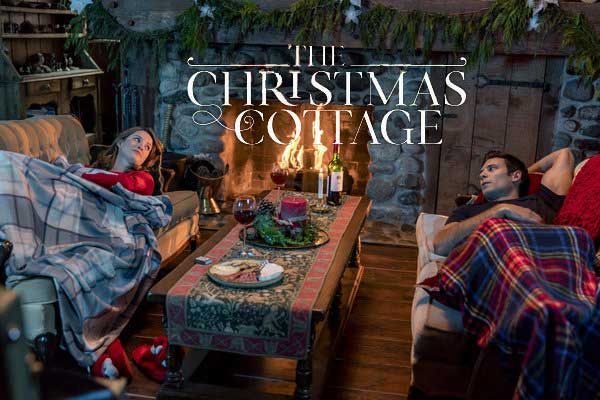
Lacey (Merritt Patterson) doesn’t necessarily believe in the same superstitions that her best friend Ava does, but since Ava’s the bride and Lacey the maid of honour, she’s going to decorate the heck out of the Christmas Cottage for Ava’s wedding night. Ava’s family have believed for generations that any couple who spends the night in the Christmas Cottage together will enjoy love everlasting – and they’ve got the long and happy marriages to prove it!
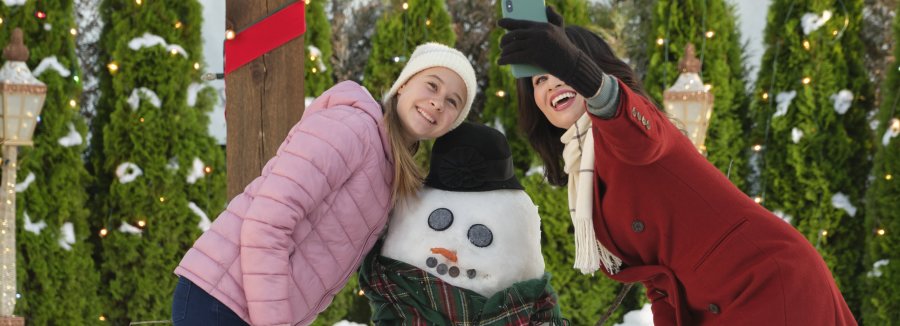
It’s not a great time to drop everything and devote an entire weekend to a wedding – the design firm Lacey co-owns with boyfriend Roger has a really big client on the hook but their proposal needs some last minute tweaks. Lacey is a workaholic so instead of taking the weekend off, she decides to juggle both, not counting on two very important factors. First, the best man, Ean (Steve Lund), who is both Ava’s brother and Lacey’s ex. And second, the blizzard that snows them in while they’re dutifully decorating the honeymoon suite as ordered. Imagine snow in Oregon at Christmas! It sure takes both Lacey and Ean by surprise, who are then forced to spend the night together in – yes that’s right! – the Christmas Cottage, the very one that forces people to love each other eternally against their will!
There’s no hanky panky in a Hallmark movie, unless you count tenderly draping afghans over each other when one inevitably falls asleep before the other after confessing their true heart’s desire without the benefit of a single drop of alcohol. It’s the magic of Hallmark. Meanwhile, the magic of Christmas may just be working its way into the hearts of Lacey and Ean, despite their rocky past. But aren’t they just too different to work? And doesn’t Lacey still have a boyfriend, not to mention a work thing?
All of these burning issues and more will be resolved before the film’s end, should you care to indulge.
December 3rd is the International Day of Persons with Disabilities. You may have heard some rumbling about disabled representation in the movies lately – Anne Hathaway took some flak for her limb difference in The Witches, and Sia’s movie, Music, has been criticized for casting a non-autistic actor in the lead role. Representation matters, and while the Oscars LOVE disabled characters, they don’t show the same love for disabled actors, who are rarely cast to portray themselves on screen, and almost never cast to portray anyone else. Although 20% of us live with some sort of disability, less than 5% of movie and TV characters are disabled, and of those few who are, less than 3% are played by actually disabled actors. That math is abysmal. Are disabilities the last place of the civil rights movement?
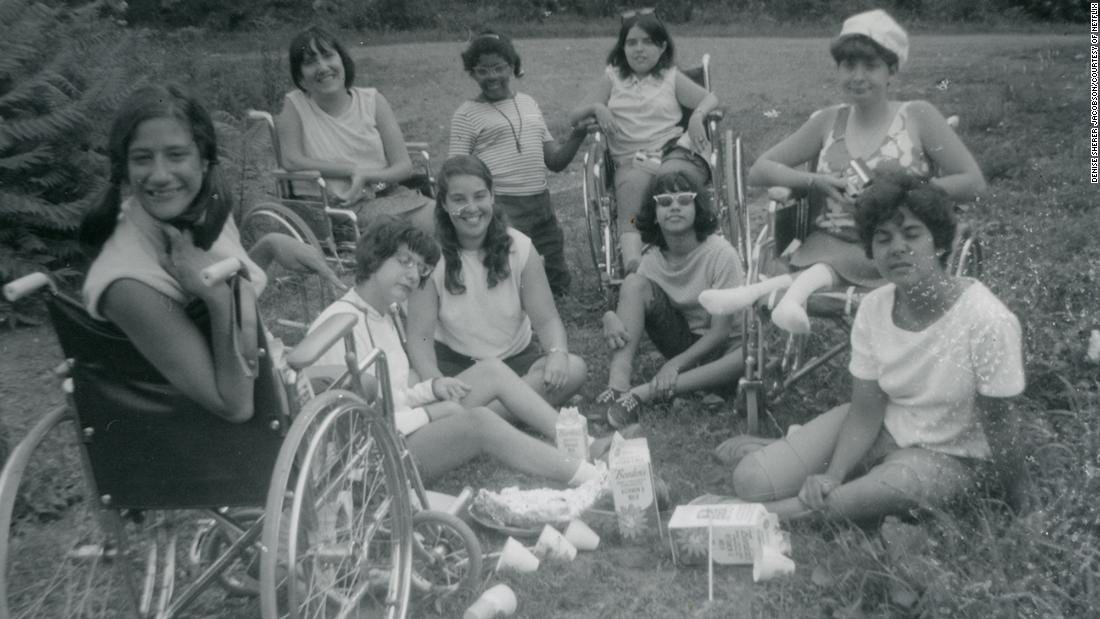
Camp Jened (its legal name), had actually been in existence for years, but in the early 1970s it was run by hippies who created an oasis of sorts for disabled teenagers. To anyone else, it would have looked like a run-down, ramshackle summer camp of nightmares, but to those who attended, it was practically utopia. In the 1970s, the world was not accommodating to those with disabilities. Most disabled persons lived in relative isolation, dependent on others, if not outright institutionalized. At Camp Jened, they were free. Not free of their disabilities, but free of the judgement and discrimination. In a camp where everyone was disabled, no one was; the disabilities virtually unnoticed, the campers were allowed to be defined by other things, perhaps feeling fulfilled as human beings for the first time. Like any teenager, they played sports, sang songs, smoked and made out – for many this was the only opportunity to “date.”
When they grew out of camp, this close-knit group stuck together, and started advocating and disrupting for disabled rights, inclusion, and accessibility.
Crip Camp is co-directed by filmmaker Nicole Newnham and former camper Jim LeBrecht, an overdue tribute to the place that ultimately changed the world for millions of disabled people.
Although the Americans with Disabilities Act was passed 30 years ago (in 1990: that is actually shamefully recent!), disabled people to this day are fighting just for the right to exist with dignity and anything resembling equality.
I myself live with several (mostly invisible) disabilities. 2020 has been a strange year for people with disabilities. On the one hand, the whole world has gotten a taste of what it’s like to be me. Because I am immuno-compromised, I’ve always battled against viruses, each one potentially very serious for me as I lack a basic immune system to fight them. With the pandemic, every Canadian across this country automatically got all of the accommodations I’ve had to fight to have at my own work: clean work stations, physical distancing, even the right to work at home, which seems a small ask when it’s potentially life saving. I’ve been in medical isolation at home since March. When restrictions were starting to ease up over the summer, many Canadians ventured out of their homes while I stayed in mine. Like many people with disabilities, it’s hard not to feel like life sometimes moves on without us, forgets the people still trapped in their homes. Now that the COVID numbers are increasing again, Canadian regulations have once again changed to reflect it, to protect the majority, while those of us in the minority try not to take it personally that our lives are not worth the same consideration.
Before COVID, I led a relatively normal life, at least to outside eyes. I went to work, I travelled, I spent time with family and friends. My life is permanently etched with pain, and my health is constantly compromised by every passing virus, but since I don’t have a choice, I deal with it. Sometimes I miss things. Sometimes I cancel. Sometimes I can’t get out of bed. But I lived. I made significant contributions to my field, I found joy, I was a presence in the lives of my niece and nephews, I hosted dinner parties and attended film festivals and fell in love. Every moment also in pain, sometimes unable to drive or walk or sleep, but doing my best, which was still pretty good. And now my life is on pause. It’s disconcerting, it’s unfair, but it’s not without its positives: 2020 was the first year I didn’t get pneumonia in at least a decade. How about that?
Because actual representation in film is so rare, this is a very short list of actors with disabilities excelling in film:
CJ Jones: he played Ansel Elgort’s disabled foster father in Baby Driver, stealing scenes and providing the film with warmth and heart. But for Jones, parts like these are almost unheard of. “It’s hard to find a black deaf role” although it looks like he’s found another in Avatar 2.
Kiera Allen: she recently played opposite Sarah Paulson in Hulu’s Run, a mother-daughter Munchausen by Proxy thriller. The role is extremely physically demanding, but Allen, who uses a wheelchair in real life, nailed the part and showed us all what she can do.
Adam Pearson: in Chained For Life, Pearson portrays an actor with facial deformities with whom his leading lady struggles to connect while working together. Pearson has neurofibromatosis, type 1 in real life and gives a formidable performance in this film.
Zach Gottsagen: he won hearts in The Peanut Butter Falcon, playing a young man with Downs Syndrome who escapes his care home to pursue his dreams of being a pro wrestler. Starring opposite Shia LaBeouf and Dakota Johnson, Gottsagen holds his own and proves himself more than capable.
Millicent Simmonds: who can forget the deaf actress’ stunning performance in A Quiet Place, a horror film in which monsters hunt what they hear, and one family survives thanks to their ability to communicate in sign language.
Is this the most ludicrous and offensive Hallmark movie plot ever? Check this and vote: two adult females, educated, employed school teachers, are so embroiled in a petty rivalry, one they’ve apparently nurtured since childhood, that when they’re both attracted to the same man, they turn a winter festival that’s supposed to be about the kids into their own bet-settling, bake-off showdown.
Although both these women sound equally pathetic, the script clearly plays favourites. Christie (Erin Krakow) is the one we’re supposed to root for. And the man she’s chasing, James (David Haydn-Jones), is the father of a new student in her class. Is that not…professionally if not morally unethical? Conflict of interest? Asking for trouble? A fireable offense? Penny (Miranda Frigon) teaches literally across the hall from her, so even their class raffle ticket sales become contentious, and may I just point out that they teach the SECOND GRADE. Anyway, Hallmark scripts are way too prim and proper to come out and say this, so I will for them: Penny is a real bitch.
I don’t know what’s so great about James, but Christie and Penny both throw themselves at him, and when that doesn’t result in any immediate, clear-cut winner, the bake-off scheme somehow becomes their method of settling things. The only problem is, Penny is a good baker and Christie doesn’t bake at all. She’s got only a couple of days to learn, to develop her own recipes, and to win not one but four different events, each of them judged by Alan Thicke. Or, well, Alan Thicke playing local restaurateur Chef Kroeger, who takes the daintiest bites of cookie you’ve ever seen, and still feels fit to judge the thing based on mere crumbs. A marriage is at stake here, Alan!
The rules of Hallmark clearly state that leading ladies are always fully covered, throat to knees (calves preferred, ankles optional); the clothes are ultra conservative, and usually topped with a cardigan, topped with a Christmas broach. Even Penny plays by these rules, but she does wear (the same) pair of 6 inch heels throughout the movie – yes, even while teaching. Six inch heels are clearly Hallmark for slut. Christie wears heels also, like a good little lady, but hers are at a modest height befitting a marriageable young woman of good breeding and virtue. Added bonus: they’re all the better for dramatically ripping off stupid whore garland from the Christmas tree when it fails to nail down a husband (Hallmark logic!), garland of course being the 6 inch heels of Christmas trees.
A movie like this probably sets feminism back at least a baker’s dozen years, and worse still, it sullies the good name of cookies, which, I assure you, are merely the innocent bystanders of this train wreck.
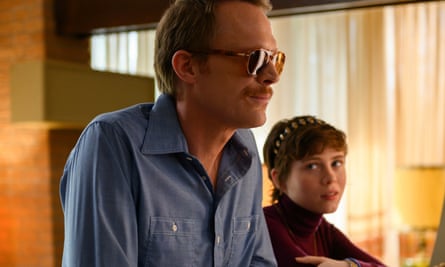
Growing up in Creekville, South Carolina in the 1970s, Beth (Sophia Lillis) has always felt like an outsider, even especially in her own family. The only relative to whom she relates is Uncle Frank (Paul Bettany), who seldom attends the various family functions meant to bring them all together. She feels surrounded by small minds and limited experience, and she’s not wrong. Which is why she eagerly follows in Uncle Frank’s foot steps to Manhattan as soon as she graduates.
Between college and the big city, Beth is growing up and expanding her world view, but nothing hits home like finding out that Uncle Frank is gay and that his roommate Wally (Peter Macdissi) is his lover and partner of many years. She’s never known anyone gay before. No; she never knew she knew anyone gay before. As if this wasn’t milestone enough, Frank’s father (and Beth’s grandfather) Daddy Mac (Stephen Root) has died, leaving uncle and niece to get reacquainted in the context of this new information during their road trip home for the funeral. On the one hand, it’s kind of a nice opportunity to meet each other’s authentic selves, but on other hand, they’re driving toward utter disaster and they don’t even know it.
South Carolina wasn’t the happiest place to be a gay kid growing up, and if Frank isn’t exactly choked up by his father’s death, going home does stir up quite a few traumatic memories, threatening his sobriety, his relationship, and even his life. Uncle Frank is both a coming out story of sorts for Frank, and a coming of age for Beth, two misfits from the same people and place finding out whether you can go home again or if you should have stayed in NYC where you belong. Writer-director Alan Ball seasons the script with achingly realistic family dysfunction, layers of hatred as well as opportunities for healing. Young Sophia Lillis has really hit the ground running in her career, starting out already on top with several leading lady roles in a row. She’s fantastic in this, but this movie belongs to Uncle Frank, and it’s Paul Bethany’s stoic and grounded performances that really see us through. Frank has navigated his life with careful precision but his father’s death is the one iceberg he couldn’t avoid. It feels like we’d tread uncomfortably close to melodrama, but Bettany’s performance is quiet, calm, and convincing, with not one shred of over-acting in a career-defining turn.
Uncle Frank has something to say about how things were in the past, but it also implies a lot about us now, 50 years in the future, and yet somehow still living in a world full of prejudice, where in some places and for some people, Frank’s experience is still the norm. For an unspoken statement, it’s pretty profound.
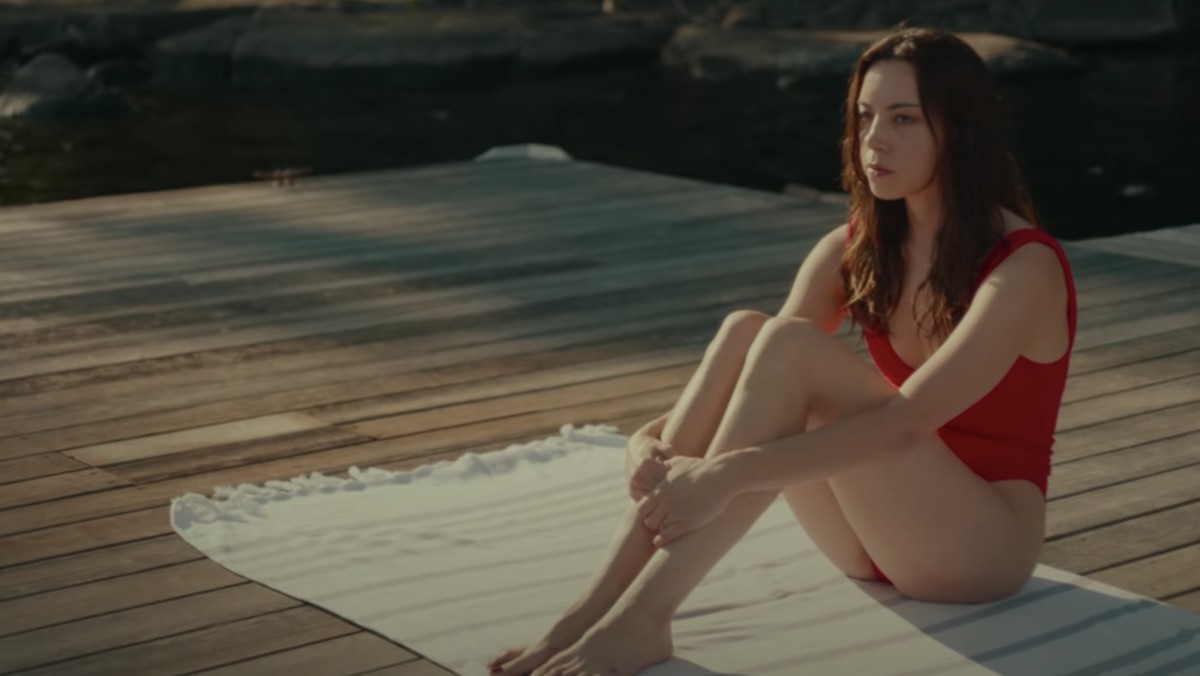
Allison (Aubrey Plaza) is a filmmaker who’s treating her writer’s block to a remote lake house retreat. There she finds a young, pregnant couple who have perhaps been living in isolation a little too long. Gabe (Christopher Abbott), a musician, and Blair (Sarah Gadon), a former dancer, seem to actively loathe each other; it’s an awkward situation I would never choose to take part in but Allison doesn’t just stay, she picks at the scabs. She even gets in a few fresh jabs herself. These frustrated artists release on each other with pretentious arguments. It’s awful for Gabe and Blair’s relationship but apparently that’s a sacrifice Allison’s willing to make, baby on the way or no.
That’s where Allison’s little game of muse-inducing desire and jealousy takes a turn for the decidedly meta. Blurring the line between autobiography and invention, the film divides itself between two chapters – perhaps both the inspiration and its result. Clearly the bears in the woods have dark companions.
Watching this film is like getting to peek behind the curtain at the Wizard of Oz manipulating all his levers and pulleys. It basically deconstructs itself right in front of us and we get to decide how much of it is fact or fiction, and where exactly it turns into a work of imagination. It is certainly an act of ringing art out of pain, telling the story in a brain-teasing sort of way. Writer-director Lawrence Michael Levine enjoys playing with us, and I admit, the game is addictive.
Props to Aubrey Plaza, who has transformed herself from prime time cable sitcom star to veritable art house indie queen. She has sought out many brilliant, risky, offbeat roles over the years, but this is one suits her and stretches her in new and fascinating ways. Her dark and caustic seems tailor-made for the part, which is actually at least two parts, subtly defined, and maybe more. Black Bear is a bit of a mind-bender, definitely not straight-forward story-telling, perhaps not to the taste of all, but a near-perfect morsel for true cinema lovers.
Available in select Canadian theatres as well as On Demand and Digital on Friday December 4th, 2020.
Canadian theatre openings on Dec 4th: Kingston, ON – The Screening Room Sudbury, ON – Sudbury Indie Cinemas Ottawa, ON – Mayfair Theatre Calgary, AB – Canyon Meadows Cinemas Leduc, AB – Leduc Cinemas Wetaskiwin, AB – Wetaskiwin Cinemas
Do you know how many times I’ve fallen into a man’s arms in my life? None. Nunzo. I’ve fallen plenty. In fact, I just fell on Saturday night. Got punched in the face, took a split second to realize I was badly hurt and pretty stunned, then just started stumbling backward until I ended up on my ass. I fell away from Sean’s arms. Away. As he rather unromantically uttered “Holy shit!” But that’s how falling goes in real life. It’s rarely cute or dainty or half-graceful or utterly feminine or charmingly endearing like it is in the movies. It’s mostly just a failure of limbs and a surplus of embarrassment.
That’s not the only thing Christmas in Vienna gets wrong. It also goes out of the way to shame the leading man about his gift-giving disability: socks and gift certificates??? But also on Saturday night: Sean was gifted both socks and gift certificates by my mother. And you know what? Both were extremely well-received. The socks were an easy sell; they came attractively packaged like they were a pizza, and if there’s anything Sean likes better than warm toes, it’s pizza. So much so that he’ll probably sacrifice the warm toes (or, you know, wear some of his previously owned socks) just to keep the socks looking like pizza. Because he really, really thinks it’s fun. The gift certificate, however, is definitely going to get used. It isn’t just a “get yourself something nice” gift certificate (although that might be perfectly acceptable, particularly for teenagers and young adults who need and want nothing like they need and want cash), it’s for a specific, COVID-safe, Christmas-themed event that we’ll attend with pleasure. It’s thoughtful. Gift certificate and socks. Not quite the punchline Christmas in Vienna makes it out to be.
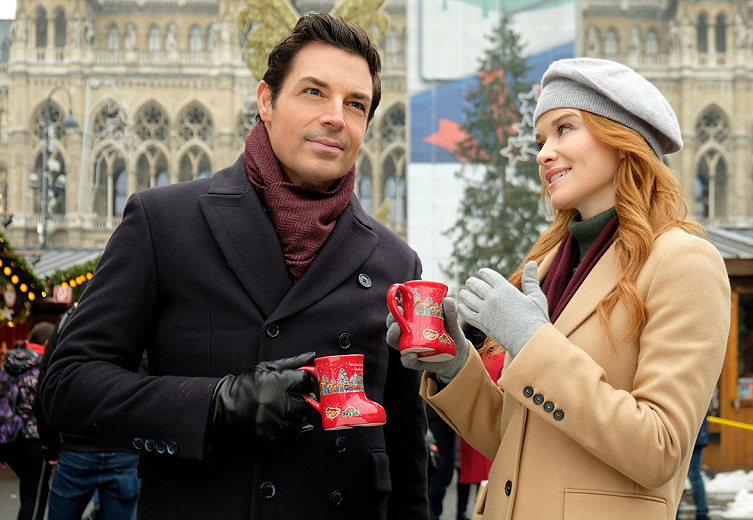
And yet, and this WILL shock you, so please sit down: Christmas in Vienna may be my favourite Hallmark Christmas movie of 2020 so far. Okay, so yes, there are a few trademark Hallmark clichés. Hallmark probably wouldn’t buy a script that didn’t have them, and the writer (Joie Botkin) has some experience in what Hallmark is buying. But she’s also snuck in a Gremlins reference, a Sound of Music homage, some actually-funny jokes (so rare in a Hallmark movie that you can count them all here, in this one single movie), and perhaps best of all, her script has inspired production to actually film in Vienna. Most Hallmark Christmas movies are filmed in Vancouver or Salt Lake City (though none are actually set there), so an actual European destination is a welcome change, and Vienna is one of the Christmasiest cities in the world. It sparkles with festive spirit, a real boon at the end of a year where no one’s been allowed to travel.
Concert violinist Jess (Sarah Drew) is in Vienna to perform her last professional show. She’s at the top of her game but has lost her passion for music and is ready to retire. While in town, she contentedly soaks up the sights and reconnects with her college roommate Tori (Alina Fritsch) who lives there, and helps her widowed cousin Mark (Brennan Elliott) care for his three kids. He’s a diplomat, and the moving around a lot that comes with the job has helped him stay one step ahead of his heartbreak, but his kids are wary and looking for roots. Is Jess the one to thaw his heart? And what if she stays in Vienna only to have Mark transfer again? Second loves are complicated.
Hallmark movies will always be a niche market and while I definitely don’t want anyone to feel an ounce of shame for their Hallmark game, I also don’t blame anyone who’d really rather not. But if you’re at all in the market, Christmas in Vienna is a notch above the rest.
We all have bad days at work. A client pushes your buttons or a colleague isn’t pulling their weight or a vital piece of equipment is on the fritz again, wasting your time and feeding your work monster. The Beast is about a bad day at work. Some guy wakes up, probably with a positive attitude and a spring in his step, but when he gets to work, things all fall apart. He thought kidnapping a little girl would be easy, and it was at first, but boy did he kidnap the wrong dude’s daughter. And no, her dad is not Liam Neeson.
Teresa’s (Giada Gagliardi) dad is The Beast. You can call him Riva (Fabrizio Gifuni), for now. Riva is a lone wolf veteran, estranged from his family ever since he returned from Afghanistan as only a shadow where a man used to be. Haunted by his combat experience, only little Teresa still loves him whole-heartedly. So when his growly teenage son reports her missing, Riva goes BEAST MODE to find her and bring her home. The cops whose actual job it is to find Teresa aren’t too happy about his rogue status and neither is Riva’s PTSD, which is being triggered rather wildly, incapacitating him with flashbacks to his time BEING TORTURED AS A PRISONER OF WAR. So there’s that.
Riva is not exactly a man with a very particular set of skills; I mean, I’m sure he’s no slouch what with his special forces training, but he’s not super-human either, merely a dedicated man with only one goal in his mind. The fights are not slick, over-choreographed affairs, they’re messy and savage and desperate, just a dad trying to survive long enough to get to the next door, behind which he may find and save his daughter. Or not. It’s a big city with a lot of doors, and a lot of bad guys standing menacingly in front of them.
Apparently this is not an Italian remake of Taken, or at least that’s what their legal team assures us, but it sure feels like it. Gifuni is a convincing anti-hero, always stalking the next dose of his meds, never sure which is the greater threat – the guy with the knife in front of him, or the guy with the knife in his memories. Probably not quite sure which is which either. He takes a lot of punishment, but when your daughter is Taken taken, the math goes wonky, the damage inflicted to damage sustained ratio ever malleable.
I didn’t dislike this movie, it’s well set-up even if it’s a premise we’ve definitely 100% seen before in a movie called Taken. The pacing of the third act is pretty screwy, the climax anti-climactic as it comes about 30 minutes too early in the movie. Or the movie goes on 30 minutes too long afterward (and it’s only 97 minutes). Still, if you’re looking for some gritty action, that’s exactly what you’ll get, and The Beast (La Belva) is streaming right now on Netflix.
Jessica Lew (Katrina Law) is just about the best executive assistant the Darlington corporation has ever seen, though she’ll soon be one of their best lawyers instead. However, before she makes her career switch official, she resolves to do one last task for boss Charles, and it’s a big one. His orphaned nieces and nephew are coming to live with him, but he’ll be in Europe over the Christmas holidays. Rather than sending them off to boarding school, she decides to take them in herself. It’s a pretty selfless act, but no one’s all that surprised – Jess is a giver, she’s always liked helping people. The big surprise, though, is that Charles’ little brother Max (Carlo Marks) returns home to help out. His life is mostly one long ski vacation, and he’s rarely seen at home or at the family business.
Turns out, uncle Max contains multitudes, or, you know, the 3 basic facets of any Hallmark Christmas movie man: generosity, warmth, and consideration. Sure he was an après-ski playboy last night; today, he’s family-oriented, charming, and kind. Plus, his back story is tinged with just enough tragedy to firmly erase the scuffs and stains of his past.
I love this Hallmark concept that every “most eligible bachelor” is just waiting to step into a ready-made family if one should present itself. Turns out, he was secretly intelligent and ambitious all along, he was just saving his best self so that when the perfect woman crossed his path, he’d be able to surprise her with his top secret suitability. Seven days or less: that’s all it takes for a Hallmark couple to fall in love, and when I say fall in love, I mean, marry, adopt children, drastically alter their personal lives, and commit to spending their eternal lives together, starting with this one deeply meaningful Christmas ornament they picked up at this little greeting card store in the mall.
Also, not for nothing, but god I’d love to walk through the Hallmark wardrobe department. It must house dozens, probably hundreds, of perfect pea coats in the most Christmassy shades of red. In Hallmark movies, everyone is always dressed like they’re about to pose for a Christmas card photo, but the leading lady does it best, and always has an elegant red coat, with perfect, cute but not too cute accessories, everything coordinated and merry, and likely pulled together with a Christmas-themed broach. Hallmark ladies love Christmas so much they start dressing like Mrs. Claus in their 20s, and their handsome, rich suitors always find it eerily fetching. There is a power to those red coats, it cannot be understated.
When my dog Gertie started throwing clots in her lungs, we knew it was time to say goodbye. We held her in our arms, whispered in her ears about the lake at the cottage to inspire her dreams, and a shot given by her doctor send her off to a better place. We do for our dogs what many modern, advanced, and “civilized” countries still won’t do for its citizens.
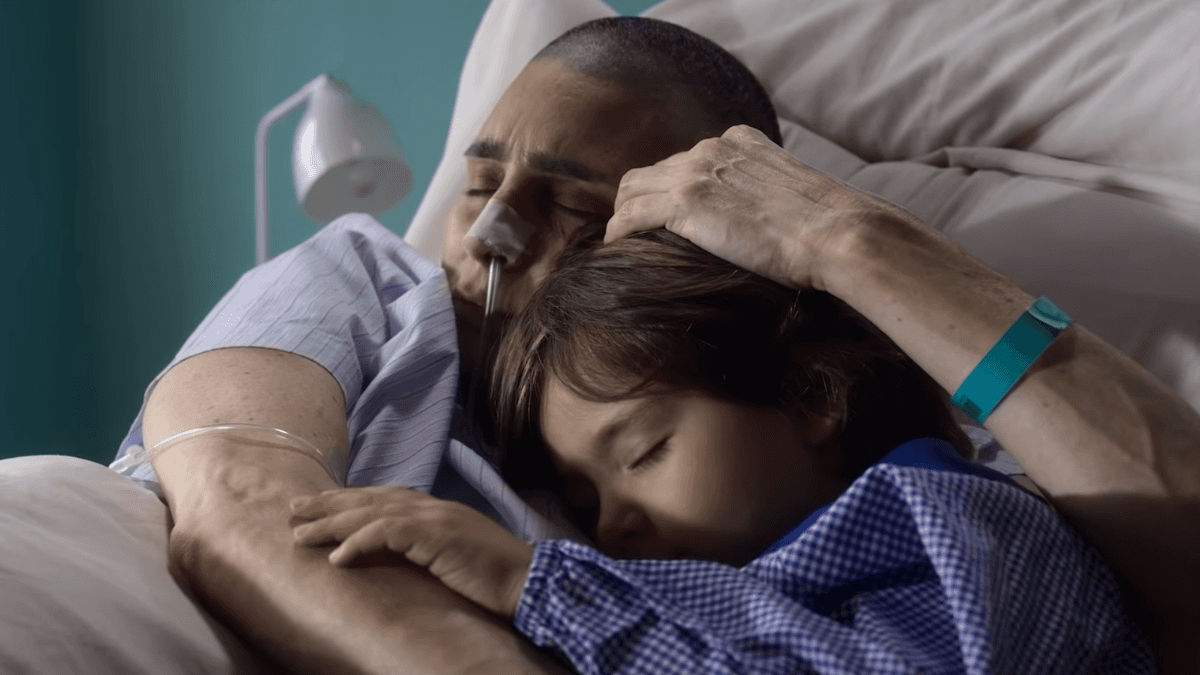
Marie (Valeria Bertuccelli) is dying. Cancer sucks. There’s nothing the doctors can do, including giving her the compassionate end she and her husband have decided on. Or, they could give it to her, but they’re hesitating. It’s much easier to waffle when you’re not the one writhing in mind-altering pain. Of course, Marie’s got a reason to hang on as long as she can: her 3 year old son, Tomy. Whatever time she may have left, she’ll use it to write a journal so that her son may know her even when she’s gone. In it, she’s funny and witty, imparting bits of wisdom, tenderness, and personality, and a few wishes for what his life might be. Meanwhile, on Twitter, she’s nearly the opposite – sarcastic and bold, attracting a keen audience who appreciate her honesty during an impossible time.
Bertuccelli has a tall order to deliver from a hospital bed. With a son, a husband, a bouquet of friends, and a social media following, she’s the hub for grief and the receptacle of medical disappointments. This is her end of life, yet she’s still trying to be so many things to so many people. The book for her son gives her last days meaning and purpose, the perfect metaphor for the importance of time and using it well. The film isn’t sugarcoating death, nor is it dramatizing it. It’s ugly, messy, sometimes joyous, sometimes desperate. It’s not glamourous but it’s also not an excruciating sob-fest. Loosely based on a true story, Carlos Sorin’s film is about treasuring what you have while you have it.
Black Beauty has been adapted many times, but in Ashley Avis’ movie, Black Beauty is female, and so is the little girl who loves her.
When we meet Black Beauty (voiced by Kate Winslet), she is a young Mustang running wild and free, just starting to be wary of new animals encroaching upon the land. Not wary enough, as it turns out; Black Beauty is captured and sent to live in a stable so she can be broken and sold. John (Iain Glen) who runs the stables and trains the horses isn’t a bad man, and he’s soon joined by his orphaned niece Jo (Mackenzie Foy). Jo is not your classic Horse Girl; in fact, she’s never ridden. But she must see a bit of herself in Black Beauty, who is also adjusting to new surroundings having just lost her parents and her home. Their bond is immediate and undeniable. Jo insists not on breaking Beauty, but on “partnering” her, based on friendship , respect, and gentleness. But the stables are a business, and Beauty is leased out to a wealthy family whose daughter is training to be competitive in dressage. Georgina (Fern Deacon) isn’t a natural horsewoman but makes up for what she lacks with spurs and whips. She is not kind to Beauty (nor to Jo), but sadly nor is she the worst owner that Black Beauty will encounter in her life.
Told from Black Beauty’s unique perspective (don’t worry, she’s not a talking horse, we merely hear her thoughts voiced by Winslet), we follow her as she’s transferred from home to home, owner to owner, many more pitiful or abusive than the last. Anna Sewell’s wildly popular novel from many moons ago opened people’s eyes to the mistreatment of horses, but it’s clear from Avis’ adaptation that things have not changed nearly enough for horses in nearly 150 years. Set in various modern American environments, Black beauty knows pain, overwork, and perhaps worse still, loneliness. The bond she shared with Jo endures and holding her memory in her heart is the only reason Beauty has the strength to go on.
I didn’t expect to like Black Beauty as much as I did. It doesn’t feel emotionally manipulative – Black Beauty is a horse, and though we inevitably anthropomorphize her, she isn’t asking to be pitied. But her indominable spirit is enviable and some pretty cinematography, we feel a sort of empathy, a sort of kinship with animals of all kinds, and an emotional attachment to Beauty herself, whose loyalty and resilience remind us of the four-legged family members in our own homes. Not without its flaws, Black Beauty is still a worthy version for 2020 audiences and a nice little treat on Disney+.




 ASSHOLES WATCHING MOVIES