Costume designer Jacqueline Durran received her fifth and sixth Oscar nominations this year for her work on both Beauty and the Beast, and Darkest Hour.
Her first film credit is as “wardrobe mistress” on the 1999 set of Eyes Wide Shut. 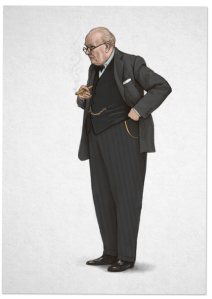 From there she was assistant costume designer on 2001’s Lara Croft: Tomb Raider and 2002’s Star Wars: Attack of the Clones. As head costumer she received her first BAFTA nomination and win for Vera Drake in 2005. In 2006 she got her first Oscar nomination for Pride & Prejudice, and followed that up with another in 2008 for Atonement. She won both a BAFTA and an Oscar in 2013 for Anna Karenina. She was a nominee once again in 2015 for Mr. Turner and this year she’s a double nominee – but does that secure her a second win?
Her competition this year is stiff: Mark Bridges, for Phantom Thread (he won the BAFTA), Luis Sequeira for The Shape of Water (he won the Costume Designers Guild award), and Consolata Boyle for Victoria and Abdul (a three-time Oscar nominee).
The Oscar winner for costume design is almost always a period piece. The Costume Designers Guild deals with this advantage by awarding separate prizes for contemporary-set films (I, Tonya won this year) and fantasy (Wonder Woman took home that prize). This year all the nominees are period films and in Durran’s case, both her movies had the added challenge of already being familiar to audiences.
Darkest Hour is the true story of Winston Churchill’s earliest and most difficult days as Prime Minister. Many of the shops on Savile Row who did Churchill’s actual suits still exist today and Durran delved into their ledgers to come up with exact looks 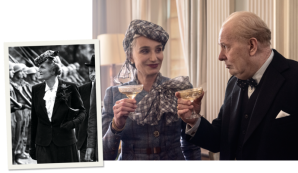 that were then tailored to fit Gary Oldman in a fat suit. She was able to consult old photographs of him to get the details just right. He was pretty fastidious in his wardrobe and a bit of a “dandy” according to Durran. She had a replica of his watch and watch chain made by the original watchmaker, Breguet. She also sourced hats from Churchill’s preferred company, Lock & Co. All of these wardrobe foundations allowed Oldman to look the authentic part while still making the character his own. For Durran, the most fun was probably in dressing Churchill’s wife, Clementine, played by Kristin Scott Thomas. Clemmy was a bit of a fashion risk-taker and was once a milliner, so her wardrobe choices were a bit eccentric and she nearly always had a fabulous hat. You can imagine the kind of fun a costumer can have with that kind of starting point.
Beauty and the Beast is fictional but no less well-known to audiences because of the animated Disney film that came before it. That creates an expectation, though 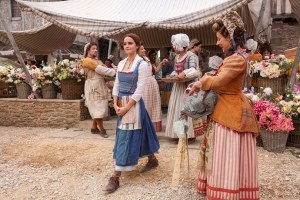 Durran chose not to recreate costumes in exact detail (which of course are lacking in simple line drawings). “My favorite bit of the whole movie is when Belle wakes up in the village, the window opens, and she says, ‘Bonjour!,’ and then you go into the song. You see the whole world of color and pattern—that’s how I wanted the village to be. That was created from an 18th-century reference: a collection of prints of French regional costumes,” says Durran. Emma Watson, who played Belle, informed a lot of the costume choices. Watson wanted Belle to seem like a more modern kind of princess, and her famous blue dress was made to be functional, allowing for movement and activity. The yellow dress, of course, is where the big time and money were spent. “In the end, it came down to the fact that, really, whatever you want to do with the dress, there is an expectation based on the animation. If you stray too far, it feels like you’re not giving the
 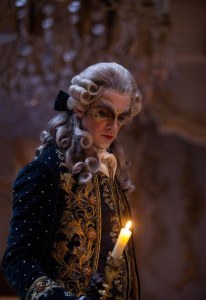 audience the dress they’re expecting. . . . But if I had actually produced the animated costume, it would have been quite simple and flat and lacking in detail. It’s not a very detailed drawing, when you get down to it. So, I looked to 18th-century France as an inspiration—the historical date and location of the movie. Also, Disney and everybody involved wanted Belle’s dress to be different from the Cinderella dress [in the 2015 live-action movie]. Emma didn’t want to be corseted. She was a more modern princess.” Not to leave out the Beast. Durran had painstakingly recreated the Beast’s costume down to the very last detail but in the end, the studio went with a CGI beast instead, and Dan Stevens ended up wearing one of those monstrous CGI motion capture suits instead. Durran sent her costumes to the animation lab where they studied the fabrics to capture the form and motion. But when he’s not the Beast, the costume work is incredible: “An amazing amount of work went into the prince’s costume in the opening ball sequence, which you don’t really see. It’s got a whole custom embroidery of different kinds of grotesque animals stitched into the pattern. It’s embellished with 20,000 Swarovski crystals that took five days to stitch on.”
Personally, I think Beauty and the Beast is a strong contender for this year’s Oscar. But you can’t discount Phantom Thread – that movie IS fashion, with Daniel Day Lewis playing the designer! You’d be a fool not to consider it. But The Shape of Water needs consideration also. Although the creature’s expressions were enhanced by CGI, the creature itself is not visual effects but a man (Doug Jones) in a very clever costume.
Who do you think will win this year’s Oscar for costume design?

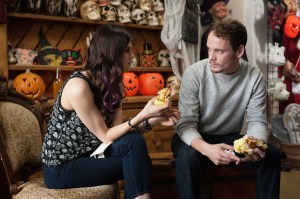 had made a promise on the devil-genie to love Evelyn forever, and she takes that shit seriously. So seriously that she digs herself out of her cold, dark grave and returns as a horny little zombie. Which may sound appealing until you account for the slipping flesh and her commitment to making Max’s life a living hell. And that’s before her cravings for brains start!
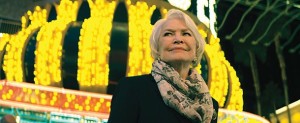 people want to keep everything, even if they cannot bear to look at it. Some people want to toss everything, keep only memories. There is no right answer. Toughest of all, the movie also explores the notable difference between losing an elderly father and discovering the hand-written love notes he once sent your mother while traveling on business, and losing your teenage daughter and discovering that without her passwords you have no access to any of the dozens of pictures she took every day of her short life.
 cast, but she wowed both director Todd Haynes and Julianne Moore with her audition. On set she communicated primarily through an American Sign Language interpreter, while Haynes sent many cast members on a walk through NYC wearing noise-cancelling headphones to get a sense of the city’s quiet side. Rose’s portions of the film are shot in black and white, and Simmonds has a terrific face for it – curious and expressive, her eyes lighting the way.
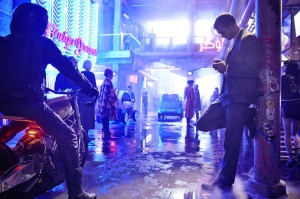 For me, the most memorable scene in Mute was a few-second long callback to director Duncan Jones’ debut, a marvelous little movie called Moon, starring Sam Rockwell, that you should track down immediately if you haven’t seen it yet. Apparently, Mute is intended to be the second entry in a very loose trilogy, an approach that Netflix seems to be very keen on at the moment (as evidenced by
  Are people being drawn to Mute because it’s related to Moon? Did anyone choose to watch Mute because of that link who otherwise would not have? Is Rockwell such a big box office draw that his inclusion got Mute off the ground? I have a hard time believing this one little throwaway scene helped Mute and yet, why else even bother?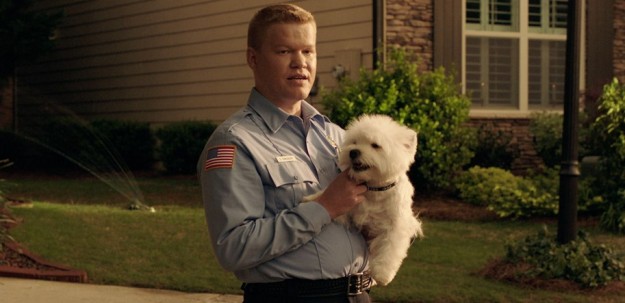
 she wants to know that he’ll be okay. But it’s creepy and invasive and neither Sam nor his prospective dates are super into this idea. Even Abbie’s support group is pretty skeptical. They’re also a pretty good source of humour in a movie that may have been overwhelmed by its maudlin theme. Thankfully the likes of Steve Coogan, Kate McKinnon, and Christopher Walken, all favourites of mine that I never dreamed would somehow end up sitting in the same little circle in the same film, go a long way to providing some comic relief.
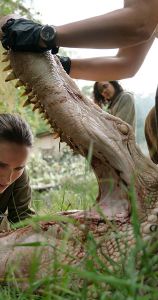 Inside, every living thing has been transformed. Mutations have made some things astonishingly beautiful, and other things the stuff of nightmares (imagine an alligator-shark hybrid). And now those things are also taking on human DNA.
 Poor Janet. She’s just achieved a major career coup and every single guest at her party will make a thunder-stealing announcement. It’s really not her night. It’s REALLY not her night.
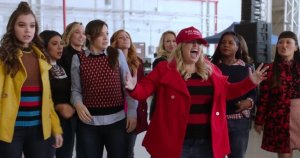 competing against bands that play instruments. How dare they! I thought college was supposed to prepare you for the real world but these ladies are literally not even prepared for guitars. Yeesh. (Not to give too much credit to the new “bands”, including Evermoist, led by Ruby Rose, because after seriously mocking the Bellas for being a “cover band”, it turns out they all do covers too! A Cranberries tribute is particularly poignant with the recent death of Dolores O’Riordan.)
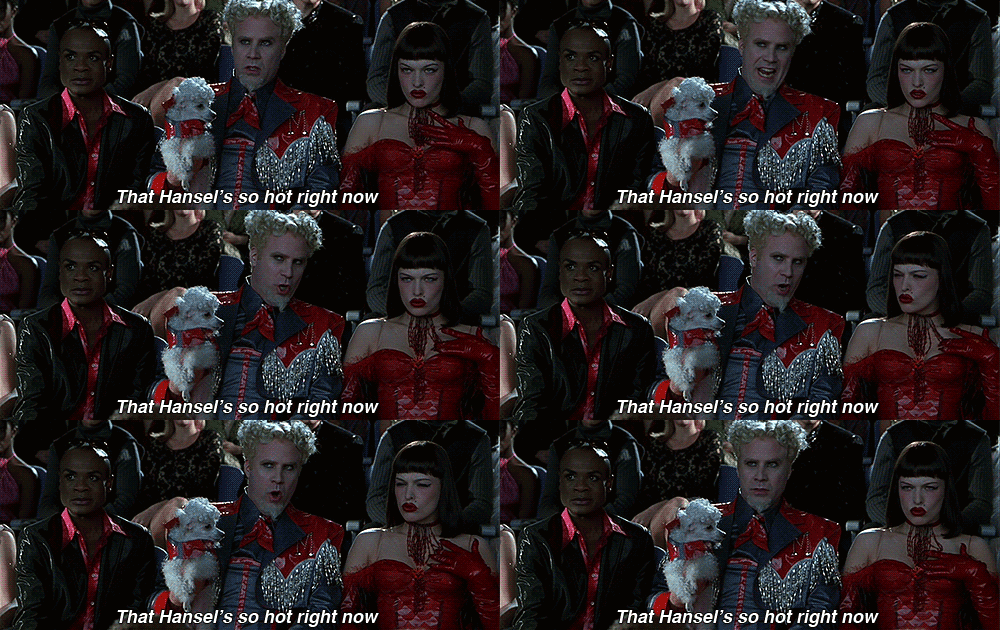
 ASSHOLES WATCHING MOVIES