Some people think that Netflix is saving the movie industry. Others think it’s killing it. I think neither is true, that all Netflix is is the future. Or rather, Netflix is now. The movie industry is changing and has changed. Some directors insist that their art can only be experienced on a big screen, others are embracing the flexibility that comes with a Netflix carte blanche. But Cannes, a major French film festival, has inserted itself into the discourse, reluctantly agreeing to include two Netflix titles in this year’s lineup, but insisting that next year’s rules will be different and only movies intended for a theatrical release will earn slots in their programming.
Amazon also earned boos from critics at its Cannes screening, this despite the fact that Amazon does partner up to bring some of its titles to the cinema, like last year’s Oscar contender, Manchester By The Sea. This year Amazon brought Wonderstruck to Cannes by the acclaimed director of Carol, Todd Haynes. Of Amazon, Haynes noted “The film division at Amazon is made up of true cineastes who love movies and really want to try and provide opportunity for independent film visions to find their footing in a vastly shifting market. They love cinema.”
Netflix makes movies and series for its at-home audience who pay a subscription fee that includes original content. At TIFF 2016, I saw 2 Netflix films (Mascots and Blue Jay) and found them to be just as worthy as any other content on offer. At this year’s Oscars, Netflix garnered a nomination for Ava DuVernay’s documentary 13th, and a win for its short documentary, The White Helmets. Traditional or not, Netflix movies do hold up.
Cannes jury president Pedro Almodovar doesn’t like it and made his position clear with this opening statement: “I personally do not conceive, not only the Palme d’Or, any other prize being given to a film and not being able to see this film on a big screen. The size [of the screen] should not be smaller than the chair on which you’re sitting. It should not be part of your everyday setting. You must feel small and humble in front of the image that’s here.” Fellow jury member Will Smith clashed with him on this, defending the streaming service “In my house, Netflix has been nothing but an absolute benefit. They get to see films they absolutely wouldn’t have seen. Netflix brings a great connectivity. There are movies that are not on a screen within 8,000 miles of them. They get to find those artists.” And that’s true: Netflix is a boon to indie gems and hard-to-find documentaries. It also allows people who find the cost of theatre-going restrictive to watch movies at home for a reasonable price. Of course, Netflix just so happens to be the distributor of Smith’s next big-budget movie, Bright.
And that’s the thing about Netflix today: it’s going after the big guns. For its first-ever Cannes screening, Netflix chose Okja, a film by the South Korean director of Snowpiercer, Bong Joon-ho. Okja stars Tilda Swinton, Paul Dano, Lily Collins, and Jake Gyllenhaal. It’s no slouch. Of the controversy, Joon-ho was typically humble: “I’m just happy he will watch this movie tonight. He can say anything—I’m fine. I loved working with Netflix. They gave me great support — the budget for this film is considerable. Giving such a budget to a director isn’t very common.” And Swinton was also quick to make light of the situation, saying “The truth is, we didn’t actually come here for prizes.” Okja received a four-minute standing ovation after its screening.
Later this festival, Netflix will screen the second of its two titles, Noah Baumback’s The Meyerowitz Stories, about a fractured family reuniting, starring Dustin Hoffman, Emma Thompson, Candice Bergen, Ben Stiller, and Netflix darling Adam Sandler.

 his case worker is yanking him away to yet another group home. Tom has bounced around in the foster care system and Mary’s compassion is inflamed. Tom runs away one wintry night, and the fact that he seems to have run to her home briefly for refuge preys on her imagination. As the days go by and a powerful winter storm pummels them, townspeople give Tom up for dead but Mary becomes haunted by his ghost.
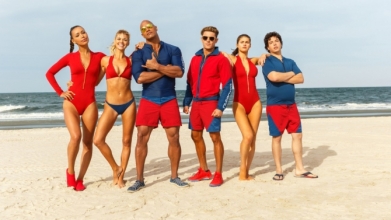 me certain they weren’t aware at all. The thing is, lifeguards save people who are struggling in the water. They have no business fighting crime. They shouldn’t touch dead bodies in a crime scene let alone attempt to solve the murders themselves. These lifeguards, however, take it upon themselves to impersonate doctors, take down drug lords, go undercover, break into morgues, confiscate evidence, and they do it all while on the clock, abandoning their actual jobs on the beach in order to do the jobs of police officers who don’t take the intrusion too kindly – although, in actuality, not unkindly enough. Because, you know, the lifeguards, instead of guarding lives, are actually putting them at risk, constantly, by doing this work.
 They’re all wrong on all counts. Chloe isn’t want she seems, and when Amy discovers her secrets she ends up not only fighting for her own life, but to keep intact the very same family that she’s up until now been eschewing. Seems like Chloe is the titular bad girl after all! Oh, teenage irony.
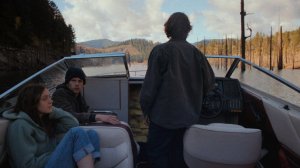 Night Moves isn’t so much about the environment as it is a character study between these three individuals trying to make a statement, and then living with the consequences. It’s slow, almost plodding. There’s no flashiness, just a creeping sense of guilt and paranoia.
 Cut to: a few years later, Sarah and Jessie are on the road again, headed toward Mindy’s wedding. Mindy’s future husband seems nice. Sarah’s husband seems to be out of the picture. And Sarah and Mindy? They haven’t seen each other since that road trip so things are suitably tense and complicated. Sarah might be trying to reestablish their earlier intimacy, but the day before Mindy’s wedding is probably neither the time nor the place. So if you’re hoping to see something awkward, you’re in luck!
 husband’s just left her for a secretary a fraction of her age. Eva’s been caring for her sick husband for a long time, so washes away her guilty feelings with generous dosages of mojitos and embraces the mistake, determined to live it up. These two chiquitas have nothing to lose so it’s all blackjack and boy toys until a) a dashing Billy Connolly enters the picture and b) the fuzz are on their tail. Well, not so much the fuzz as the insurance company trying to reclaim their losses, but you get the picture.
 Leigh (Kristen Bell) is reliving her adolescence, but it doesn’t seem to be making her any happier. She’s too young for a midlife crisis, but that’s essentially what this is, an existential reckoning. She’s depressed and lost; she went after everything she was supposed to but is finding adulthood to be not all it’s cracked up to be. Of course, none of her friends seem all that happy either. What magic ingredient is missing?
 Sebastian is an Argentinian student in Toronto for just one week; both know that the relationship (whatever it is) ends when he catches his flight back home. But the affair is irrepressible. They’re falling for each other whether or not they say the words, and it’s the kind of relationship that changes them, unlocks things hidden deep inside (and who can resist a boy with a dark and unspoken past?).
 ASSHOLES WATCHING MOVIES