
Arrival is exactly the kind of sci-fi film I’ve been waiting for all my life.
There are no guns, no star wars, no green men, no space cowboys, no mutually-assured destruction. The aliens touch down, and we’re not sure what their intentions are. Do we fire lasers at them? No. We study them. We gather together top academics, and we attempt to learn, peacefully (with the army on speed dial, just in case).
Amy Adams plays Dr. Louise Banks. Of all the people on Earth talking to  aliens, she’s the one who listens well enough to actually crack the code. And it’s a hell of a code, unlike anything our puny human brains can really comprehend. This deep gulf of understanding makes plenty of people nervous – people with their fingers hovering over big red buttons. Annihilation-type buttons. Dr. Banks puts her own life at risk to keep things from escalating to an out-and-out global (universal? galaxal?) war.
Amy Adams is as good at playing Dr. Banks as Dr. Banks is at solving language problems. Both are beautiful to watch. Director Denis Villeneuve worked doggedly to make sure all the science is sound, but it’s also almost magical. It makes me want to call it the movie Interstellar aspired to be: rooted in science, hinging on human connection.
Arrival is the most intimate of sci-fi films, the aliens (if that’s what they are) almost incidental to humanity’s expanding comprehension of time and memory. It’s like poetry. And it doesn’t hurt one bit that visually, it’s slick as hell. Bradford Young’s cinematography is nearly stark, but it is absolutely  arresting. It works in synchronicity with a hauntingly beautiful score by Jóhann Jóhannsson. Twinned together they remind you that though the plot feels startlingly realistic for a sci-fi film, there’s something otherworldly at play. Young’s work is atmospheric, Jóhannsson’s is pulsating.
It’s refreshing to have an alien encounter that relies on communication rather than violence, and to have a woman stepping in as Hero(ine) feels only natural. In fact, the only part of the movie that didn’t gel for me is a 2-minute montage that serves to pilot the plot further ahead and is narrated by Ian (Jeremy Renner). The rest of the story is told completely through the eyes of Louise, so to have her voice suspended during these few scenes is jarring and emotionally blunting.
Adams, though, is faultless; she turns out a character that is mature and complex, and I won’t be one bit surprised to see her name alongside Natalie Portman’s, and likely Emma Stone’s, come Oscar time.



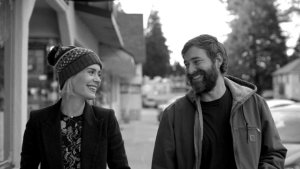 It stars Mark Duplass and Sarah Paulson, almost exclusively. They play high school sweethearts who bump into each other 20 years later. Agony and ecstasy, right there on the screen. And heaping spoonfuls of awkwardness, don’t forget that. Because they were in luuuuurv. The real deal. And now they don’t even know each other. It reminded me of a friend who had recently posted on Facebook that it was her ex-husband’s birthday, a date she can’t help but remember even if she no longer even knows if he’s alive. Isn’t it weird that we can lose track of people who used to be our whole worlds?
 sex was hot and heavy, and Annie Lennox was everything. Jim and Amanda will take you down your own worm hole, and if you don’t end the movie thinking about your own First Love, then you my friend have a cold, cold heart.

 It sounds promising on paper: a dystopian thriller meets sci-fi Groundhog Day. The protagonists, Renton and Hannah, keep waking up in bed when a bunch of bad guys burst in on them. Things don’t go well. But every time Renton gets shot in the face, they wake up in bed again, to do it all over, though not necessarily with better results.
 isn’t worth it. The dialogue put me off immediately. It has the look and feel of the kind of television show I would never watch. Even worse, it ends like it’s the pilot of a TV show that hopes to continue this mystery in vague and infuriating terms for the next 6 years. It isn’t, though. It genuinely believes itself to be a whole movie. Don’t believe it, not for a second: ARQ is to be avoided at all costs. Keep swiping left.
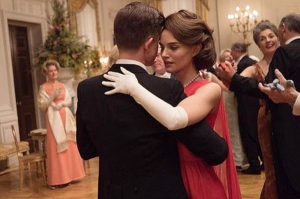 Larrain thought to himself, what if it was the other way around. What if he was sitting beside her? And in that thought was born a beautifully conceived film that puts its female character front and centre.
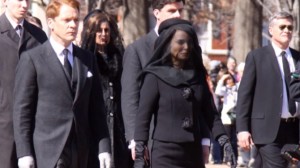 precise and offers up tantalizing looks behind the closed doors of Camelot.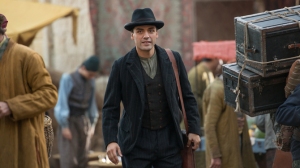
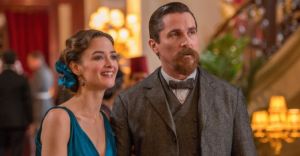 viewer in an awkward position: in order to root for our two heroes to get together, Chris and Maral, who’ve done nothing wrong, will have to die. That seems excessive, doesn’t it?
 father is working at keeping what’s left of the farm running. Clover, meanwhile, is trying to piece together what would make her young, whole-life-ahead-of-him, brother put a gun to his head. Neither is mourning in a conventional way, and they’re certainly not doing it together.
 When death is part of business, part of the lifestyle, part of every day, what toll does it take, and at what remove do they experience more personal brushes with mortality?
 ASSHOLES WATCHING MOVIES