Tim’s Vermeer

Johannes Vermeer was a Dutch painted from the 1600s. He was only moderately successful in life. He painted mostly domestic interiors – in fact, mostly the same two rooms of a house, with the same furniture, and women inside them. Years after his death he was rediscovered and renowned for the astonishing use of light in his paintings. His great masterpiece is Girl With A Pearl Earring.

Tim Jenison is a very successful inventor and engineer – he worked in computer graphics and 3D modelling software. He’s also an art enthusiast who fell in love with Vermeer and traveled the world to stalk his artwork. And he came up with an interesting theory: that Johannes Vermeer mastered light by using the technology MagMag-Spring14-Film-TimsVermeer_2available to him at the time. What’s that, you ask? And I’m glad you did. It’s astonishingly simple: a mirror. A fucking mirror. It becomes possible to project a living image directly onto a canvas and to match colour and light exactly. Exactly! It’s astonishing to see Jenison whip up an oil painting using this technique. So Jenison, who has a whole lot of money, decides to reconstruct one of Vermeer’s most-used rooms to see if you can reproduce one of his paintings. And Penn Jillette (of Penn & Teller), a personal friend of his, becomes his documentarian.
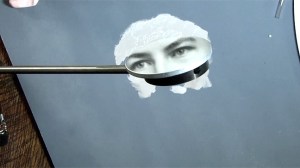
Film critics love this movie, calling it entertaining, fascinating, and profound. And indeed, it is compelling to watch a millionaire and his latest obsession; the lengths he’ll go to, the time he’ll devote to simply testing out a theory when he doesn’t even have a horse in the race. Art critics, however, are less enamoured with the film, which makes sense. Jenison is, after all, sticking it art world. He’s taking talent and genius off the table and claiming that, given the right tools, anyone could reproduce a masterpiece. And while that’s heartening for those of us lacking in the talent department, I’m guessing it stings quite a bit for those trying to follow a calling, or make a livelihood out of it.

Possibly because I am not myself an artist, I don’t really feel like it takes anything away from Vermeer even if he did use technology. Is it less impressive that we landed on the moon because we used technology? Of course not. So maybe Vermeer was less an artist-genius and more of a genius-genius. Good for him. Good for figuring it out, for developing techniques that allowed him to paint light years beyond what anyone else was doing, then or now. Good for him for making beautiful, impactful, lasting artwork. And no one is saying this method is easy, or any easier, than any other kind of painting. It just allows for camera-like accuracy. The bottom line hasn’t changed, we’ve just maybe discovered that Vermeer was even more interesting than we thought.

 

Monster

This movie came out in 2003. I bought the DVD and watched it once and never again – until now. Fifteen years later, it’s as rough as I remembered.

Aileen “Lee” Wuornos is a hooker past her prime. She meets Selby at a bar one night and it’s the oddest case of love at first sight. Lee (Charlize Theron) is smitten, and self-centered Selby (Christina Ricci) loves the attention she lavishes upon her.

Anyway, girlfriends are expensive. Pretty soon Aileen has to start working the highways again. One night, a trick goes wrong. Not that they’re ever right, but more wrong than usual. A john drives her int the woods and beats her unconscious before waking her back up with sodomy. Oh god. I can’t believe I just described that scene so flippantly! It’s HORRIFYING and I’m traumatized and I’m coping by being weirdly light hearted about it. Anyway, Aileen is in a bad way, but what he doesn’t know and she does is that she’s armed. She manages to to break away just long enough to shoot (and kill) him.

Is it weird to describe murder as empowering? Aileen is unsuitable for any other kind of work and though she’d like to quit prostitution, she and Selby can’t quite partying, so it’s back to working truck stops, only this time she only uses sex as the bait, and then murders them for cash and cars. This becomes another one of her addictions.

Aileen Wuornos is a real-life serial murderer. A lot has already been said about Charlize Theron’s physical transformation to play her, so I’m going to concentrate instead on what an interesting character she is. I mean, there’s no denying that Aileen herself is a victim. She even convinces herself it’s a justification for her increasing blood lust. What she does is undeniably wrong but society had already left her in the dust. Where, exactly, was Aileen’s place? That’s what earned Charlize her Oscar. She didn’t try to excuse away her crimes, but she did find empathy for her. Theron is intense as hell in this movie. Her eyes shoot laser beams with such focus you’d think her life depended on it – and in fact, for Aileen, it did. A moment’s inattention could have cost her her life. But otherwise she’s not at home in her body. Theron prowls as Aileen, her shoulders curling, discomfort in her very posture. Her performance is one for the ages.

Director Patty Jenkins treats Aileen with compassion, and she might be the first to do so. Monster doesn’t feel exploitative. Aileen might have had the morals beaten out of her, but we haven’t, and Jenkins’ framing of her always keeps this in mind. The first time Aileen kills, it’s in self defense. Subsequently though, she kills for every time a man has done her dirty, and that’s a very long list. When a tiny sliver of redemption offers itself, Aileen is unequipped to take it. But Jenkins refuses to objectify her; she treats her humanely, which is possibly more than Wuernos ever got in life.

A Star Is Born (1937)

1937: Janet Gaynor & Fredric March

Esther, a debatably young woman dreams of Hollywood and accepts money from her doting Granny to make the move. Unfortunately, thousands of Grannies appear MV5BMTg5OTQ3ODgyOF5BMl5BanBnXkFtZTcwODQyNjQ5Ng@@._V1_to be financing thousands of ingenues, and Hollywood is crawling with unemployed actresses. Esther is nearly down to her last dollar when she meets Norman Maine, a famous film star who eyes her both romantically and professionally. But as they fall in love and he helps her with her career, his own takes hit after hit. An unreliable alcoholic, Norman seems to have used up all the public’s good will.

Although a title card firmly denies this, it has been speculated that the story was inspired by the real-life marriage of Barbara Stanwyck and her first husband, Frank Fay. The character of Norman Maine is thought to be based on several real actors, including John Barrymore, John Gilbert, and John Bowers, who drowned off Malibu during the film’s production. This was the first all-colour film nominated for an Academy Award for Best Picture, and the first movie in Technicolor to be a critical and box office success. The muted colour palette helped, and so did the repeated jabs at the Hollywood machine. It was funny, and it cleverly avoided excessive melodrama. Esther’s ascent contrasts so starkly against Norman’s descent because the two are clearly in love, but it’s not enough to insulate them against the cruelties of Tinseltown. A true cautionary tale – I just wish Esther got to truly be the star in A Star Is Born, and that pesky Norman took more of a backseat.

As you know, this movie has been remade 3 more times – in the 50s, starring Judy Garland, and in the 70s, starring Barbara Streisand, and right now, starring Lady Gaga, in Bradley Cooper’s directorial debut. I find it a little ludicrous to cast the world’s biggest pop star as an unknown, and an “unattractive” one at that. When Babs did it, it meant something. Her beauty was unconventional, her ethnicity meant that she could have been overlooked. But her talented and fortitude shone through. Lady Gaga has already played the Super Bowl…so, let’s just say she’s a little harder sell. Even so, it’s getting rave reviews, and it’s headed for TIFF, where the hungry audiences will judge for themselves.


We Need To Talk About Kevin

Actually, we need to talk about Lynne Ramsay.

When a twisted movie comes out of the mind of Quentin Tarantino, we look at him and think – yeah, that makes sense. But Lynne Ramsay? You wouldn’t see it coming. But she does make these amazingly dark, fucked up films. And more often than not, she sticks kids into these movies, which makes them feel even bleaker, even blacker. She likes to make a film that is completely hers, and if she’s not happy, she walks (as she did with The Lovely Bones, and Jane Got A Gun) . She’s fantastically outspoken and she’s not afraid to leave a project if she doesn’t feel comfortable signing her name to it.

We Need To Talk About Kevin is adapted from the shocking novel by Lionel Shriver. we-need-to-talk-about-kevin-image-2Tilda Swinton plays Kevin’s mom, Eva. Eva always struggled to bond with Kevin, who cried incessantly around her but was rather sweet with others. Can a baby deliberately antagonize his own mother? As a child, Kevin finds ways to blackmail his mother into getting his way. When Eva and husband Franklin (John C. Reilly) have a second child, accidents escalate and Eva becomes fearful of Kevin while his father can always excuse his behaviour. This fundamental disagreement puts a strain on their marriage. As a teenager, Kevin (Ezra Miller) commits a massacre at his high school, murdering many students. Eva transforms her life to support him in prison.

This story is the most fantastic, uncomfortable episode of nature vs nurture that we’ve ever seen. Was Kevin born “bad”? How early can we detect evidence of psychopathy? How early can a baby pick up on his mother’s ambivalence?

As his mother, Tilda Swinton steals the show. Of course, the events are her own recollections, offered in retrospect, so she’s the mother of all unreliable narrators. But is she wrong? Despite its title, this isn’t really about Kevin, it’s about his mother. She’s never been perfect, sometimes openly hostile, and we experience the film through her broken mind. Swinton is volcanic – so much bubbling underneath, perhaps ready to blow. It is criminal that she didn’t get an Oscar nomination. That she didn’t get the win.

But the most interesting and surprising thing about the film is that Ramsay takes our darkest society impulse – a child slaughtering other children, and ultimately marries it with themes of redemption. Just whose redemption is perhaps unclear as nothing is overtly stated. Kevin is failed by the system and possibly by his parents. Eva knew what was coming and failed to do anything about it. The film is so troubling it veers into straight-up horror at times, and Ramsay is always there, confrontational, unblinking. Her close-ups dare you to look away.

The Lookout

Joseph Gordon-Levitt (also appearing in 50/50) stars in the only bank heist movie screening at Healing Fest 2015.

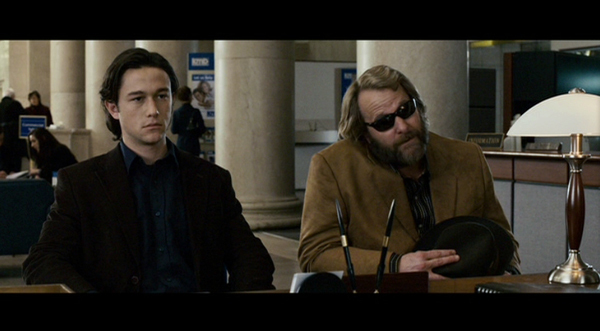
Chris Pratt (JGL) was hot shit back in high school until some reckless driving leaves him with a traumatic brain injury. Since the accident, he can’t concentrate quite like he used to and needs The Lookoutto make himself a list of instructions to even be able to do simple things like making himself a bowl of soup. After what seems at first to be a chance encounter with an old schoolmate, he soon finds himself in way over his head when he is manipulated into acting as accomplice in a bank robbery by a gang of low-lifes looking to take advantage of his disability.

The ski masks, shotguns, and double crosses only make up a small part of this indie thriller from writer-director Scott Frank. The Lookout tells the story of a young man who not only has to learn to live with a brain injury but with the consequences of his own actions. Two of his classmates didn’t survive the accident and Chris still can’t bring himself to visit his ex-girlfriend, the only other surivivor from the crash, who has lost one of her legs.

wlookout2

JGL apparently prepared for his role through sleep deprivation and strenuous physical exercise before filming to help give himself that confused and exhausted look. He’s made a career of playing likeable characters with more than their share of demons (Mysterious Skin, Brick, Looper) and his hard work pays off here. He keeps us invested in this story even as the plot twists start to seem implausible.

The Diving Bell and the Butterfly

How do you go on living if you wake up one day unable to speak, unable to move, and only able to blink one eyelid?

diving-bell-1

This is the seemingly impossible challenge faced by former real-life French Elle editor Jean-Domonique Bauby after, at the age of 43, he suffers a massive stroke. Bauby has team of talented and empathetic doctors, nurses, and speech therapists to guide him along the way but overcoming the understandable paralysis of self-pity will have to come from within. Learning to communicate again won’t be easy. Especially when, as you’ll soon see, communicating with his family wasn’t easy for him to being with.

Shot almost entirely through the one good eye of a paralyzed man, The Diving Bell and the diving_bell_04Butterfly could easily have been unwatchable. Instead, director Julain Schnabel offers us something life-affirming and almost excruciatingly beautiful. Schnabel’s lens takes us on a breathtaking journey through Bauby’s imagination while Bauby’s interior monologue, based on his own memoir, is painfully honest but often very funny.

The great Mathieu Amalric, who you may know from American films such as Quantum of Solace, Munich, and The Grand Budapest Hotel, gives an unforgettable performance, almost literally without moving a muscle. Also, watch out for the lovely Canadian actress Marie-Josée Croze as a speech therapist with unwavering faith and Max von Sydow as Bauby’s father. If you aren’t bothered by French subtitles- or a POV shot of one’s one eye being sewn shut, you just might be glad you gave this film a chance.


48 Christmas Wishes

Just when it seemed that Jay had reviewed all available made-for-TV Christmas dreck, 48 Christmas Wishes was suggested to us by Netflix. Netflix obviously has not been reading Jay’s reviews of similar fare. After a quick check to make sure we really hadn’t seen this one we pressed play, because we couldn’t leave our job unfinished.

48 christmas wishes48 Christmas Wishes deviates a bit from the standard formula because there is a dead dad who has not come back as a ghost, and a grieving widow who does not feel the need to latch onto the first available big city wreath salesman.  Instead, it has a family of three who lost their husband and father six years ago on Christmas, who are helped by three misguided elves-in-training to rediscover the Christmas spirit.


One might give credit to the writers for mixing up the standard formula for these films, but I suspect to the intended audience these changes came across as missed opportunities. Awkward romances, it turns out, are preferable to children’s shenanigans that felt ad-libbed due to their terribleness but the more we saw the more it felt they were part of the script. It’s just that the script was thrown together with no thought or care whatsoever.

As you’d expect, Christmas is saved by the end, thanks to three child-sized elves who literally ruin everything they touch. All part of Santa’s plan, as it turns out. Santa doesn’t take the time to explain why the fate of Christmas rested on fulfilling 48 Christmas Wishes from a small fictional town unfortunately named Minnedoza, but I’m sure there is a perfectly logical reason for that too.

I’m still waiting for one of these films to go dark and have the creepy ex-boyfriend turn out to be the serial killer he comes across as. 48 Christmas Wishes is not that film, though I think the adult elf (supervisor of the child-sized elves) came close to torching Santa’s workshop a few times. But maybe that was just me making my own Christmas wish, for the sake of decent movie-lovers everywhere, that this movie would disappear.

Postcards From the Edge

FISHER-1-articleLargeDirector Mike Nichols helps Carrie Fisher brings her best-selling confessional novel to the big screen. Based on her own life (her mother is the fabulous Debbie Reynolds), Carrie writes about a middle-aged troubled movie star (another Oscar-nominated performance by Meryl Streep) who survives rehab only to be relegated to house-arrest with her overbearing, scene-stealing Hollywood-icon mother (Shirley MacLaine).

The thinly veiled rivalry between mother and daughter makes for some pretty unsettling tumblr_nimcjrvp631qzheh0o1_500confrontations. Fisher and Nichols are both Hollywood elite themselves, which means there’s plenty of in-jokes and winks to paper over the lack of depth in the plot. There are no real insights into addictions or family drama here, but there’s an emotional wallop that just may get you, if the sight of MacLaine’s shapely legs in a slitted red dress don’t get you first.

Melodrama has never looked so good: cinematographer Michael Ballhous does career-defining work here, while Nichols does his usual smug, detached thing over in the corner. Do either of these things save it from the inevitable clichés? Not really, but you’re more disposed to forgiving them.

If you can look past the scandal-free safety of the film, there’s a secondary cast to make up the difference: Dennis Quaid as the sleazy boyfriend, Gene Hackman as her demanding director, Richard Dreyfus as her sensitive doctor, and was that Annette Bening I saw? IMDB says you bet your balls it was! She’s whoring it up with cynicism and wit.

If you were a fan of the book, you’ll notice the film has lost its acerbic edge. It’s all about the comedy here, and even an almost-lethal trip to the ER for a good old-fashioned stomach-pumping can’t quell the chuckles. MacLaine and Streep shine through showbiz and show tunes, and if it’s a little shallow, it’s also a good dose of fun.


Rise

Based on a true story, Rise is the story of Will, a young nurse falsely convicted of rape and sentenced to maximum-security prison. The story focuses on his unlikely friendship with a hardened fellow inmate, and the lawyer making sacrifices on the outside to get him out.

Writer-director Mack Lindon is that nurse, and Rise is his story. It’s personal to him. It means something. I hope the process of creation was cathartic for him because he understandably has some demons to exorcise.

The movie paints a pretty fair portrayal of both guards and prisoners, a rarity among prison movies. The movie doesn’t seek to make devils out of anyone, not even the woman whose lies have condemned him. It’s more a story of struggle and survival. However, I still would have liked to have at least heard from his accuser. Her voice is absent from the movie and that only raises red flags.

Prison is a degrading experience for anyone – but what does it do to an innocent man?


Ed

1996 – in retrospect, an insanely innocent time. Charles and Diana officially divorced. Nintendo 64 was flying off the shelves. Dolly the sheep was cloned. Deep Blue defeated chess champ Gary Kasparov. The Internet was growing in leaps and bounds (from 1 to 10 million host computers in a single year) but in the time before Snapchat and Google, we had ICQ and Ask Jeeves. Spice Girls has their first #1 hit with Wannabe and TV stars were jumping off the small screen and onto the big one: Helen Hunt did it in Twister, and the Fresh Prince in Independence Day, and Joey Tribbiani from Friends got to make a shit little movie called Ed.

Matt LeBlanc does not play the title character. That honour goes to an honest to god monkey. LeBlanc plays Coop, a farm boy turned minor league ball player who’s got a rocket arm but no experience – turns out, he’s a bit of a choker. So that’s why when the owner buys Ed the chimpanzee as team mascot, the chimp rooms with Coop.

ed-1996-00Turns out the chimp’s a bit of a ball player, and pretty soon he’s fielding third base and actually setting glove ablaze with his fast ball. The story is embarrassing, probably particularly for second-tier bit part Jim Caviezel, who maybe styled himself a more serious actor than, say, TV’s Matt LeBlanc, or, frankly, the monkey in a baseball cap.

In the film, Ed has a meta moment in which the chimpanzee Ed watches an episode of Friends, the very sitcom that made his co-star Matt LeBlanc a star. Ed’s watching clips of a discarded Friends cast member, Ross’s short-lived monkey, Marcel. Marcel was played by a real monkey on the show, but Ed is most assuredly not. He’s a poor combination of animatronic head and person in a monkey suit.

The role of “Ed” is attributed to both Jay Caputo and Denise Cheshire. Jay Caputo is a former gymnast turned stunt coordinator. He played apes in both Tim Burton’s Planet of the Apes (2001) and Rise of the Planet of the Apes ten years later. His movie credits include  Forrest Gump, Space Jam, Batman & Robin, and Thor, and Taurus World Stunt Award performances in Monkeybone, The Animal, and Swordfish. Denise Cheshire’s post-Ed credits include Jack Frost, Mighty Joe Young, and Men in Black II.

Ed is an unequivocally bad movie, with an unyielding 0% on Rotten Tomatoes and 4 Razzie nominations to its name (it “lost” worst screenplay, worst screen couple and worst picture to Striptease; Matt LeBlanc losing worst new star to another TV crossover, Pamela Anderson in Barb Wire).

And that’s all I have to say about that.